This site is operated by a business or businesses owned by Informa PLC and all copyright resides with them. Informa PLC's registered office is 5 Howick Place, London SW1P 1WG. Registered in England and Wales. Number 8860726.
Finovate Blog
Tracking fintech, banking & financial services innovations since 1994
It’s the last full week of September, which means that the calendar is ready to flip to the final quarter of 2026. Check out what fintechs are up to in this week’s look at the top fintech news. We’ll continue to update this post with news throughout the week.
DeFi
Aracore and Teizato work on institutional stablecoin settlement model between South Korea and Malaysia.
Spriveraises $10 million for mortgage prepayment tool.
Credit and analytics
Nationwide Building Society partners with EquifaxUK to give customers free access to their credit score.
Agentic commerce
GoCardless announces that it has processed the UK’s first agentic account-to-account transaction in the UK.
Wealth management
UK-based, Sharia-compliant, cross-border digital banking platform Nomoteams up with investment service provider AllFunds to establish a fully digital Sharia-compliant investment product.
Lending
Kastlesecures $24 million in Series A funding to support its AI workforce platform for consumer lending.
Will World Liberty Financial, the crypto venture linked to President Donald Trump, secure a bank charter? Will PayPal sell itself to Stripe? There’s a lot to mull over in the fintech headlines as the week begins. Be sure to check back here at Finovate’s Fintech Rundown all week long for the latest in news and announcements.
Digital banking
Regional financial institution Flagstar Bank ($87.7 billion in assets) partners with Fiserv to support its core modernization strategy.
Oman-based BankDhofarintroduces youth accounts to promote financial literacy among the country’s young adults.
Agentic AI
Alipayunveils China’s first full-stack agentic commerce platform.
This week’s edition of Finovate Global features recent fintech headlines from companies headquartered in Israel.
Tangos AI raises $20 million in seed funding
Tangos AI, an Israeli fintech that specializes in providing autonomous AI solutions for financial crime, fraud, and compliance investigations, has raised $20 million in seed funding. The round was led by Red Dot Capital Partners, and featured participation from Leaders Fund, Clarim, Venture Israel, Signal Fire, Clutch Capital, Selah Ventures, and Bright Data.
Founded in 2025 by Eyal Azoulay, Tangos offers an advanced AI-powered investigation platform that enables financial institutions, fintechs, government agencies, and other organizations to conduct complex investigations into suspicious activity faster, more accurately, and at greater scale. Tangos is unique relative to other compliance solutions insofar as it is built to perform investigative operations automatically. The platform uses domain-specific AI models, structured investigative workflows, and expert-trained reasoning systems to evaluate evidence, test hypotheses, validate findings, and provide comprehensive case studies that can be reviewed, approved, and acted upon by human investigators.
“Financial crime has evolved into a network problem that increasingly exceeds the capacity of traditional investigative processes,” Eyal Azoulay, Founder and CEO of Tangos, said. “Organizations have made tremendous progress in detecting risk, but the investigation process remains one of the largest operational bottlenecks in financial crime prevention. We built Tangos to bring the speed, scale, and consistency of autonomous AI to a process that has historically depended on highly manual work.”
Importantly, Tangos enables firms to expand their investigative capabilities without proportional increases in headcount. This is especially helpful at a time when the growth in fraud and financial crime is resulting in rising alert volumes, increased regulatory expectations, and a worldwide shortage of experienced financial crime investigators. Tangos empowers compliance and risk management teams to work more efficiently while at the same time boosting investigative quality, capacity, consistency, and regulatory readiness.
Western Union to acquire Israeli startup GMT for $70 million
In a transaction valued at more than $66 million, Western Union will acquire Israel-based fintech GMT.
“This marks a brand-new chapter for GMT, unlocking global opportunities, expanding our capabilities, and accelerating our growth,” GMT noted on its LinkedIn page. “We are incredibly proud of our journey so far and thrilled to continue innovating, building, and leading together as part of the Western Union family.”
Founded in 2001, GMT offers international money transfers and advanced payment solutions for Israelis, migrant workers, and their employers. GMT operates under a license from the Israel Securities Authority and holds a banking identification code from the Bank of Israel. Following completion of the transaction, GMT will become a part of Western Union, but will maintain its popular, Israeli brand. Eran Sarouk, GMT CEO, will continue to lead operations after the acquisition.
“The fact that a global company of Western Union’s scale chose GMT from among many international and local players is a tremendous badge of honor for the entire Israeli fintech industry,” Sarouk said. “The transaction will allow us to improve service availability and offer more accessible and advanced solutions to customers in Israel. Beyond that, this is an extraordinary opportunity to integrate the advanced technologies we developed here in Israel into Western Union’s global network.”
Mastercard teams up with Neema
Mastercard has expanded its partnership with Israeli fintech Neema to include a commercial arrangement to leverage the company’s technological infrastructure to support its global money transfer platform, Mastercard Move. The service is expected to launch “within months.”
Mastercard Move is Mastercard’s international money transfer arm. Mastercard Move provides an alternative to traditional cross-border transfers via the SWIFT banking network. In contrast to SWIFT-based transfers, which typically move through a chain of intermediary banks in a process that can be both time-consuming and expensive, Mastercard will use its partnership with Neema to enable companies and individuals outside of Israel to transfer funds into Israel faster, relying on local payment infrastructure rather than the common correspondent banking approach.
“This is another step in our mission to make global payments as seamless as local ones,” Neema noted in a LinkedIn post announcing the partnership. “We’re excited about what’s ahead and look forward to continuing to expand our global payment infrastructure with leading financial institutions and fintechs worldwide.”
Headquartered in Tel Aviv, Israel, and founded in 2015, Neema offers a global cross-border payments platform for financial institutions. Available in more than 120 countries and transacting in 80+ currencies, Neema delivers 98% of its transactions in real-time and provides access to more than seven billion accounts.
Here is our look at fintech innovation around the world.
Sub-Saharan Africa
South African fintech Bridgement raised $20 million to support AI-powered business lending.
Mastercardinked a commercial partnership with Israel-based payments platform Neema to enable real-time money transfers into Israel via Mastercard Move.
UK-based Taptap Send received three licenses from the Central Bank of the United Arab Emirates, enabling the firm to offer payments, digital wallets, and cards, and more in the country.
Nepal-based commercial bank, Machhapuchchhre Bank Limited (MBL), partnered with ZIGRAM for its AML and financial crime risk management technology.
Digital financial services company Atome Philippines secured a $81 million credit facility with Asia United Bank (AUB) to support its continued expansion in the Philippines.
Indian payment infrastructure company TotalPay earned authorization from the Saudi Central Bank to operate as an e-commerce payment technical service provider.
Tether invested $20 million in a strategic growth financing round for Brazil’s largest crypto exchange, Mercado Bitcoin.
Seattle-based commercial payments firm Convera partnered with Uruguay’s dLocal to enhance cross-border payments infrastructure and streamline international payments.
Asia-Pacific
Thailand’s Siam Commercial Bank teamed up with Citi to become the first financial institution to to live with its token clearing solution.
Indonesia announced plans to build an International Financial Centre designed to attract between $16.7 billion and $27.8 billion in foreign investment.
Singapore-based fintech M-DAQ Global signed plans to integrate with Vietnamese fintech group METech.
Data, analytics, and technology company Equifax unveiled Credit Abuse Risk, a new solution to help lenders fight first-party fraud.
The new offering leverages machine learning to identify common first-party fraud tactics such as credit washing and loan stacking.
News of Equifax’s Credit Abuse Risk predictive model comes on the heels of the launch of the company’s Synthetic Identity Risk tool. The solution empowers institutions to identify when fraudsters are using fake identities to set up credit accounts and obtain loans.
A new offering from international data, analytics, and technology company Equifax will help protect lenders from first-party fraud. Credit Abuse Risk is a new predictive model that leverages FCRA-regulated data to spot fraud tactics such as credit washing and loan stacking. The model will help lenders make more confident lending decisions.
“By focusing on application behavior in real time, Credit Abuse Risk quickly helps to reduce the potential for fraud and related costs,” Equifax Chief Product Officer for US Information Solutions Felipe Castillo said. “This supports a more confident lending environment and helps keep credit available for consumers.”
In a world of phishing and deepfakes, first-party fraud is a type of financial crime that often goes overlooked in conversations about fraud prevention. First-party fraud, unlike third-party fraud, involves fraud committed by the actual customer or account holder rather than by an external party impersonating someone else. Credit Abuse Risk is designed to detect two specific forms of first-party fraud: loan stacking, in which an individual applies for multiple loans in a short period of time with no intention of repaying the debt, and credit washing, in which an individual attempts to remove accurate but negative information from their credit report. Credit Abuse Risk identifies the behaviors associated with these types of fraud during prequalification, account origination, or portfolio review, enabling lenders to adjust loan terms based on FCRA-compliant insights.
Powered by machine learning, Credit Abuse Risk offers enhanced insights derived from behavioral indicators that detect atypical credit activity, and provides targeted decisioning that addresses the lifecycle of fraud. Credit Abuse Risk features comprehensive portfolio protection covering all credit tiers and actionable intelligence that empowers lenders to make real-time, regulated decisions on credit terms. This includes FCRA-compliant scoring with adverse action reason codes to ensure transparency in the event of application denials, restrictive credit term modifications, and related actions.
Credit Abuse Risk is part of Equifax’s suite of fraud solutions and works alongside the company’s Synthetic Identity Risk tools. Introduced earlier this month, Equifax’s Synthetic Identity Risk uses machine learning algorithms to detect fraud patterns—such as those related to synthetic identity fraud—that are often difficult to spot using traditional methods. Synthetic identity fraud occurs when a fraudster combines aspects of a real identity with fake data to create a new, fictitious identity. The fraudster then uses these fictitious identities to open credit accounts and secure loans on which they eventually stop making payments. The fact that these synthetic identities often include real data and appear in mostly legitimate means that these frauds can be difficult to detect and can persist for long periods of time. Equifax estimates that charge-offs per known synthetic identity cost companies on average $13,000.
“Synthetic identity fraud is a rapidly growing threat impacting the consumer lending ecosystem,” Castillo said. “With Synthetic Identity Risk, Equifax strengthens lenders’ fraud defenses, helping them to uncover hidden risks and ultimately shift from reactive loss recovery to proactive prevention. In doing so, they not only reduce their financial losses but they (also) safeguard and build long-term trust with their legitimate customers.”
Headquartered in Atlanta, Georgia, Equifax made its Finovate debut at FinovateFall 2011 in New York. The company’s differentiated data, analytics, and cloud technology help financial institutions, companies, employers, and public agencies make better decisions with more confidence. Along with Experian and TransUnion, Equifax runs one of the three major credit reporting agencies in the US, has nearly 15,000 employees around the globe, and operates or has investments in 24 countries in North America, Central and South America, Europe, and the Asia-Pacific region.
Equifax is publicly traded on the NYSE under the ticker EFX and has a market capitalization of $24 billion.
International data, analytics, and technology company Equifax UK has teamed up with Greece’s sole credit bureau Tiresias.
The strategic partnership is designed to help Tiresias develop modern business tools to enhance credit assessment, bolster fraud prevention, encourage responsible lending, and improve debt management.
Equifax UK is a division of Atlanta, Georgia-based Equifax located in London, England.
In Greek mythology, Tiresias was a blind prophet famous both for his clairvoyance and for being transformed into a woman for seven years by the Greek goddess Hera.
Tiresias is also the name of the sole credit bureau in Greece and is the latest strategic partner of global data, analytics, and technology company Equifax UK. The two entities are collaborating in an effort to boost financial inclusion, stimulate economic growth, and bring advanced credit assessment and fraud prevention to businesses and consumers in Greece.
“Our partnership with Tiresias is a testament to everything we have built at Equifax and the strength of our global solution capabilities and expertise in the marketplace,” Equifax UK Chief Strategy & Innovation Officer Craig Tebbutt said. “This collaboration will further strengthen Tiresias as a strategic pillar of the Greek economy, drawing on Equifax data, analytics capabilities, and cloud technology to drive insights and decision-making confidence, helping more people live their financial best.”
Tiresias will benefit from access to Equifax’s advanced data and analytics expertise, technology platforms, and best-in-class practices to assist the bureau as it develops new, modern products and services. Among these new offerings are business tools to enhance credit assessments, bolster fraud prevention, encourage responsible lending, and improve debt management. In a statement, Tiresias highlighted Equifax’s global reach, with operations in 24 countries, as well as the firm’s combination of differentiated data, analytics, and cloud technology.
“This marks a new chapter in the Greek credit market, where transparency, reliability, and innovation will combine to deliver modern, safe, and more effective services to benefit society, while safeguarding the rights and freedoms of individuals and protecting their personal data,” Tiresias Chief Executive Officer Ilias Xirouchakis said.
Founded in 1992 and based in Marousi—a suburb north of Athens—Tiresias is an interbank company that provides reliable data on the assessment of credit risk for businesses and private citizens. The company seeks to limit the over-indebtedness of individual borrowers, facilitate responsible lending, protect against fraud, and enhance the security of commercial transactions via its Tiresias Risk Control System (TSEK).
Headquartered in Atlanta, Georgia, Equifax has been a Finovate alum since 2011. The company’s UK-based division, Equifax UK, offers credit scores and credit reports, as well as identity protection tools. The company also provides resources to help consumers find the right loan, credit card, automobile financing, and insurance offers, as well as educational information on financial subjects ranging from debt management to mortgages.
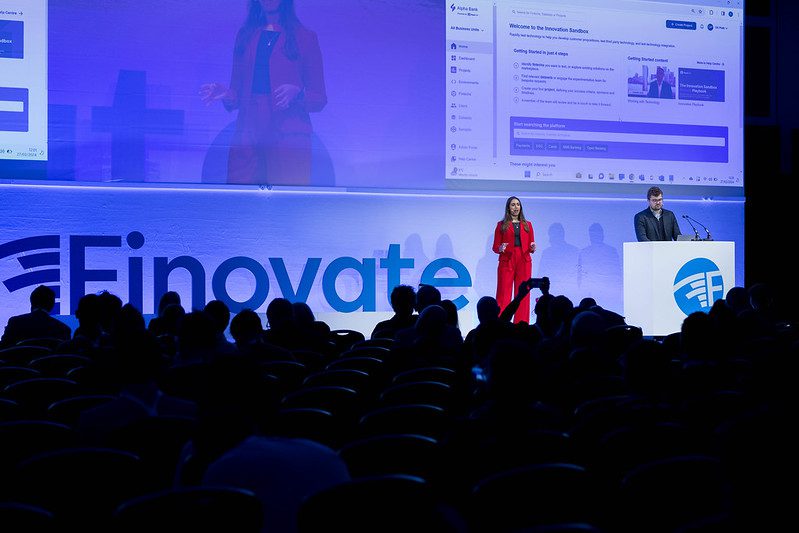
FinovateEurope 2025 kicks off this week at the Intercontinental O2 in London. Learn more about the conferences’s keynote speakers, power panels, demoing companies and more in our pre-show briefing.
In the meanwhile, here’s a look at some of the news making fintech headlines as the week begins. Be sure to check back all week long for more updates.
Payments
Backbase and MeaWalletteam up to bring advanced tokenization solutions to Australia and New Zealand.
Payments orchestration platform Yunopartners with Invest Qatar to as the company opens its new Middle East headquarters in the country.
Digital banking
Digital banking experience systems provider Plumeryannounces partnership with African digital identity verification provider, Smile ID.
As part of the Eastern U.S. prepares to enjoy the total solar eclipse today, fintech enthusiasts can also eclipse the competition with the latest news and updates in the fintech world. Check back for real-time updates on how the fintech landscape evolves this week.
Payments
Business payments and financial platform Airwallexlaunches its Borderless Visa card in Canada.
Mexican BNPL provider Kueskiintroduces in-store mobile payment solution.
Kyriba and Onyx by J.P. Morgan (Onyx) leverage the blockchain to streamline cross-border payments.
Arizona Financial Credit Union (AZFCU) selects NCR Atleos’ ATM as a Service (ATMaaS) to increase operational efficiencies within the self-service banking channel.
The Clearing House’s RTP experienced a record 76 million transactions valued at $42 billion in the first quarter of this year.
Corlyticsreceives investment from Verdane for its compliance technology.
Wealthtech
Investment research platform Teguslaunches its AI chat tool, AskTegus.
Open banking
Open banking powered account-to-account payment infrastructure provider Token.iointroduces new Chief Commercial Officer Ronnie d’Arienzo, new Chief Financial Officer Tatiana Okhotina, and new Chief Operations Officer Tim Corke.
Atto, a credit risk solutions provider based in the U.K., teams up with analytics software firm FICO to bring open banking data into U.K. credit scoring.
We’re starting off the week with a major acquisition in the U.K. lending space, as well as fintech funding news in payments, wealth management, and financial education.
Digital banking
Missouri-based Central Bank leveragesPersonetics’ AI-driven engagement platform to enhance financial wellness.
SaaS core modernization and transformation solution provider for banks Zafinunveils new tools – Dynamic Cohorts and Signals – to enhance customer personalization and engagement.
Digital banking experience platform Plumeryannounces availability on Google Cloud Marketplace.
Emporia State Federal Credit Union launches new app courtesy of a partnership with digital banking solution provider Bankjoy.
Bank integration provider AccessPaysecures $24 million in equity and debt financing.
Integrated payments company Bluefinadds 23 new devices, 6 new applications, and three new key injection facilities (KIFs) to its Encryption Management Services P2PE Component listing.
Germany payment management platform NX Technologiesraises $23.8 million (EUR 22 million) in Series B funding.
Stripeteams up with Amazon to power payments for Just Walk Out technology in Australia and Canada.
Desjardins partners with cloud banking firm nCino to leverage its Automated Spreading Solution to enhance lending.
Open banking
Dwollaexpands its partnership with MX to power account aggregation and verification.
Open banking platform Link Moneyforges partnership with Silicon Valley Bank to enhance ACH processing and money movement for merchants.
Wealth management
Online trading and investing platform Robinhoodlaunches rewards credit card for its Robinhood Gold subscribers.
Wealth-building platform Belongsecures $3.7 million (£2.95 million) in pre-seed funding.
Multi-asset class investment accounting platform FundGuardraises $100 million in Series C funding.
Financial education
Wealth building and financial education platform Goalsetterclosed a $9.6 million Series A extension round.
Cash management
Cash-flow management platform SettlelaunchesAutomatic 3-Way Matching for Purchase Orders.
Fraud prevention
Plaidforges partnerships with Sandbox Banking and RealPage to help fight fraud in the customer experience.
AI-powered fraud and risk platform DataVisorlaunches its end-to-end anti-money laundering (AML) solution.
Financial crime compliance company Napier AI reports that its customer Banco do Brasil has won the Celent Model Risk Manager 2024 Award for combatting financial crime.
Visaadds three new AI-powered risk and fraud prevention solutions.
Cryptocurrencies / Blockchain
Revolut and Layer 1 blockchain Sui team up to boost blockchain education and adoption.
Trading and investing platform eToroadds 12 new altcoins to its cryptocurrency offerings.
Identity management / verification
ID verification company AU10TIXunveils expanded Digital ID solution.
Insurtech
Rewards credit card company Yonder to offer its members a new travel insurance experience courtesy of a partnership with embedded insurance orchestration firm Qover.
New Jersey’s largest credit union, Affinity Federal Credit Union, partners with Insuritas to launch Affinity Insurance Agency.
PayPal Ventures and MassMutual Ventures lead $47 million Series C funding round for Indonesian insurtech Qoala.
Mortgagetech
Equifax UKteams up with Homely to help first-time homebuyers become “mortgage-ready.”
Shift4partners with Atlante to provide payments solution for electric vehicle charging.
Cryptocurrency / Blockchain
African-based blockchain payments network Zoneraises $8.5 million in seed funding.
Figure TechnologiesunveilsFigure Markets, a single platform where investors can trade a wide range of blockchain-native assets from crypto to stocks to alternative investments.
Financial inclusion
Building society Nationwideintroduces new digital service using British Sign Language (BSL) for deaf and hearing-challenged customers.
Insurtech
iPipeline, a digital solutions provider for the insurance industry, launched its OneView solution that tracks the progress and status of annuity orders in real-time.
Taxation / Accounting
Free Agentexpands its smart tax calculation functionality to all NatWest Group customers via their business banking app.
Equifax is launching a new consumer credit scoring model called OneScore.
OneScore leverages alternative data, such as telecommunications, utility, and speciality finance data found in the Equifax Cloud.
OneScore offers traditional credit history and payment data on more than 191 million consumers.
Data analytics and credit scoring company Equifax is launching a new consumer credit scoring model. OneScore, the new model, aims to increase the scorable population of credit-seeking consumers.
To accomplish this, the firm is leveraging alternative data, such as telecommunications, utility, and speciality finance data found in the Equifax Cloud. Equifax anticipates this increase in data will provide lenders with a more comprehensive financial picture of consumers.
OneScore offers traditional credit history and payment data on more than 191 million consumers and provides Equifax DataX and Teletrack finance data on 80 million consumers. Because the majority of U.S. consumers have at least one cell phone or utility bill in their name, these tools have the potential to increase credit scores by up to 25 points. This increase translates into a 20% rise in the number of scorable consumers; a population of 8.8 million people.
“Equifax has invested billions of dollars into unique data, verification insights, fraud reduction tools, powerful modeling techniques and cloud-based technology solutions that empower our customers to bring greater access to financial opportunity to more people in more places,” said Equifax CEO Mark W. Begor. “OneScore is a testament to the power of the Equifax Cloud in driving innovation that can increase the visibility of consumers to help expand access to credit and create new, mainstream financial opportunities.”
Founded in 1899, Equifax employs nearly 14,000 employees across the globe. The company earned $5.1 billion in revenue last year by offering its credit, identity, fraud, marketing, and workforce management tools to both individuals and businesses. Equifax has made OneScore available to U.S. lenders and service providers.
The financial services industry has been using alternative data to underwrite risk for some time now. However, what’s continually evolving in this space is the ability of scoring models to gather valuable data from diverse sources and derive meaningful insights from it. As AI advances, we can expect to see more significant strides in underwriting that will enable loans for borrowers who were not previously considered creditworthy under traditional models.
Data and analytics company Equifaxannounced its acquisition of digital identity player Kount this week. The deal, which is pending regulatory approval, is set to close for $640 million in the first quarter of this year.
Kount was founded in 2007 and offers a range of products and solutions, including chargeback protection, account takeover and bot protection, ecommerce fraud protection, and friendly fraud prevention. The company’s identity network, the Kount Identity Trust Global Network, leverages AI to link trust and fraud data from 32 billion digital interactions, 17 billion devices, and five billion annual transactions across 200 countries and territories.
All of Kount’s products will be integrated into Equifax’s Luminate Platform, a fraud platform that combines the company’s solutions with machine learning to give clients the information they need to make better decisions about fraud.
Kount has more than 9,000 clients across the globe, including Barclays, Staples, PetSmart, and Chase. Equifax anticipates the purchase will expand its global prevalence in digital identity and fraud prevention solutions.
“The acquisition of Kount will expand Equifax’s differentiated data assets to bring global businesses the information and solutions they need to establish identity trust online,” said Equifax CEO Mark W. Begor. “Equifax is taking advantage of our strong 2020 outperformance and cash generation to make this strategic acquisition. Our data and technology cloud investments allow us to quickly and aggressively integrate new data and analytics assets like Kount into our global capabilities and bring new market leading products and solutions to our customers.”
Kount employees will continue to work from the company’s headquarters location in Boise, Idaho, and will join Equifax’s U.S. workforce.
When it comes to taking advantage of the best that the world’s fintech has to offer, you won’t find financial services companies in Canada sleeping on the job. This week in the country’s payments space, Toronto, Ontario-based Versapay announced its acquisition of Solupay, a contactless payments company based in Ohio. We also learned that FinovateEurope alum unblu, which offers a digital conversational platform for FIs from its headquarters in Basel Switzerland, had teamed up with Calgary, Alberta-based digital technology solutions provider Celero.
By the end of the week, Canada’s largest credit education company, Borrowell, announced that it was partnering with multiple Finovate Best of Show winner MX. Borrowell, the first company in Canada to offer free credit scores via its partnership with Equifax, has launched a new bill tracking feature called Boost on its app. The company will use MX’s data cleansing technology to improve Boost’s analysis of user spending behavior to help users make better financial planning decisions.
“With MX, Borrowell is giving its customers greater clarity into how they can become more financially strong as a means to increasing credit strength,” MX Chief Customer Officer Nate Gardner said. “It is exactly this kind of innovation, partnership and money experience that MX loves to enable through our powerful data platform.”
Last week we featured an extended Q&A with Eric Rosenthal, Vice President and Managing Director for the Americas with Rapyd. If you’re interested in learning more about the fintech ecosystem in one of the most overlooked regions of the world, our conversation with Eric Rosenthal is a great place to start.
With that in mind, congratulations to Mexican challenger bank Klar, which raised $15 million in Series A funding in a round led by Prosus Ventures this week. Founded in 2019, Klar now has approximately $72 million in total debt and equity financing, and noted that the new capital will help the company build its engineering capabilities in its hubs in Berlin and Mexico.
“Klar is making credit accessible to all Mexicans, including those with no credit history,” Klar co-founder and Chief Financial Officer Daniel Autrique said. “We help people build credit by looking at how and where they spend their money, instead of being stuck with traditional credit scores that are backward looking and obsolete.” The company said that, since inception, it has issued more than 25,000 lines of credit among its 200,000 customers.
Here is our look at fintech around the world.
Sub-Saharan Africa
Stripe makes inroads in Africa with acquisition of Paystack.
A partnership between Standard Bank, Mastercard, and Google will help SMEs in Africa offer their services online as well as accept digital payments.
Trading Technologies teams up with Cape Town-based Applied Derivatives, which will distribute the TT platform from South Africa.
Central and Eastern Europe
PayRay, a factoring company based in Lithuania, receives banking license and begins banking operations in its home country.
Lithuanian online payments firm Interpaylink partners with iDenfy to provide remote user identification.
Advapay, a digital core banking platform provider based in Estonia, teams up with U.K.-based identity verification platform Sumsub.
Middle East and Northern Africa
Cairo, Egypt-based financial wellness platform NowPay raises $2.1 million in seed funding.
Central Bank of Bahrain launches the region’s first digital fintech lab, FinHub 973.
Commercial Bank of Dubai introduces cards and accounts for low-income consumers courtesy of partnership with Now Money.
Central and Southern Asia
Indian payments processor Razorpay secures $100 million in Series D funding, earning a valuation just over one billion.
Mastercard announces partnership with Indian regtech Signzy to bring the company’s video KYC technology to its banking customers.
Indian fintech Open partners with Equitas Small Finance Bank and Visa to offer business debit card.
Latin America and the Caribbean
Brazilian payment solutions provider Ebanx announces expansion of operations into five countries in Central and South America.
Venio, a mobile app that provides financing to the unbanked, goes live in Mexico.
Chile’s third largest bank, Banco de Crédito e Inversiones (BCI), partners with Temenos to launch new corporate bank in Peru.
Asia-Pacific
The People’s Bank of China holds lottery to distribute millions in digital yuan valued at $1.5 million.
Vietnamese online payment portal AppotaPay scores payment intermediary license from State Bank of Vietnam.
PayMaya, a mobile payments platform based in the Philippines, launches new mobile payment device PayMaya One Lite, that enables acceptance of a range of digital payment types.