This site is operated by a business or businesses owned by Informa PLC and all copyright resides with them. Informa PLC's registered office is 5 Howick Place, London SW1P 1WG. Registered in England and Wales. Number 8860726.
Finovate Blog
Tracking fintech, banking & financial services innovations since 1994
SettleMint has partnered with Ripple to integrate Ripple Custody into its Digital Asset Lifecycle Platform (DALP), bringing custody, issuance, compliance, settlement, and servicing together on one platform.
The partnership expands Ripple’s institutional digital asset footprint while strengthening SettleMint’s ability to offer financial institutions an end-to-end platform for managing tokenized assets.
The tie-up reflects tokenization’s shift from experimentation to implementation, as banks increasingly need integrated infrastructure to move digital asset initiatives into production.
Digital asset lifecycle management company SettleMint has entered a strategic partnership with blockchain solutions company Ripple to help banks custody, issue, and manage tokenized assets.
SettleMint will integrate Ripple Custody, Ripple’s institutional-grade digital asset custody infrastructure, with its own Digital Asset Lifecycle Platform (DALP), a composable digital asset lifecycle platform built for financial institutions, market infrastructure operators, and sovereign entities. DALP brings issuance, compliance, custody, settlement, and servicing onto a single platform, allowing financial institutions to manage the full lifecycle of a digital asset without relying on multiple vendors or separate systems to move from pilot to production. SettleMint’s DALP is currently used by financial institutions across North America, Europe, the Middle East, and Asia Pacific.
Ripple launched its digital asset custody infrastructure in 2024 and has since expanded its capabilities via new partnerships with Securosys and Figment, an integration with Chainalysis, and its acquisition of Palisade in November of 2025. Bringing Ripple’s custody solution into SettleMint’s DALP platform will allow institutions to hold and manage digital assets in a regulated, compliant way using a single vendor for custody, issuance, compliance, and servicing.
“Global capital markets are moving fully on-chain, and that shift only works when digital asset custody and lifecycle management operate as one system rather than two,” said SettleMint CEO Adam Popat. “Combining Ripple Custody and DALP gives institutions that single foundation, and this partnership lets us bring it to regulated markets globally.”
The offering is now live in Asia and will be available in other geographies as demand develops.
“Financial institutions across Asia Pacific are putting digital assets to work,” said Ripple Managing Director of Asia Pacific Fiona Murray. “They are asking how to do more without stitching together separate solutions for custody, issuance, and governance. This partnership gives them the foundation to roll out digital assets and future-proof them from there: Ripple Custody to hold and govern the asset, and SettleMint to manage its entire lifecycle.”
Founded under the name OpenCoin in 2012, Ripple debuted at FinovateSpring the following year. The company provides blockchain-based solutions across traditional and digital finance. Its solutions span global payments, custody, liquidity, prime brokerage, and treasury management tools for banks, fintechs, payment service providers, and crypto businesses.
The partnership extends the reach of Ripple’s custody infrastructure by embedding it within a broader digital asset management platform. For SettleMint, adding Ripple Custody strengthens DALP’s ability to serve as a single access point for institutions looking to issue and manage tokenized assets.
Just as we’re seeing with stablecoins, tokenization is moving from experimentation to implementation. As banks move tokenized assets into production, custody alone is not enough. Participating institutions will also need to add infrastructure for issuance, compliance, settlement, and ongoing asset management. Integrating these functions eliminates the need for institutions to stitch together multiple providers, making it easier for banks to move forward with digital asset initiatives.
August is off to an auspicious start in the fintech world, with news of acquisitions in behavioral biometrics and regtech, and good news for a pair of firms seeking approval to initiate digital asset operations in New York and the UK, respectively. Be sure to swing by Finovate’s Fintech Rundown all week long for the latest updates and fintech headlines!
Wealth management
Asset and wealth management software specialist ZILOlaunches its digital transfer agency platform, integration mutual fund administration with digital asset capabilities.
Payments
London-based financial services provider Teyaunveils new payments card machine.
Robinhoodreceives authorization from the UK’s Financial Conduct Authority (FCA) to offer cryptocurrency services in the country.
Capital markets tokenization platform Licuidoannounces strategic investment from Ripple.
Unlimit Crypto, a division of financial infrastructure company Unlimit, secures a Crypto-Asset Service Provider license from the Cyprus Securities and Exchange Commission.
Regtech
Enterprise financial controls and reconciliation automation company AutoRekacquires UK-based compliance platform Grath.
Credit unions
Appli, maker of AI-powered smart financial calculators, inks partnership with Florida-based Connect Credit Union.
We have officially entered the final week of June, which marks the ending of the first half of 2026. As we close out the first six months of this year, here’s a look at the top news headlines for this week. We’ll continue to add more announcements as the week progresses.
Payments
Nuvionteams with Visa Direct to strengthen real-time global payout capabilities for businesses operating across borders.
Bankaktiebolaget Nordiska (Nordiska) partnered with Finastra’s Swift Service Bureau to enhance access to the global Swift network and Sweden’s central payment rails.
E-commerce, banking, and payments ecosystem Bir teams up with payments platform Paysend to launch international money transfers in Azerbaijan.
Ripple participated in Flutterwave’s Series E round, helping push the African payments company’s total funding above $500 million and valuing it at $3.2 billion.
The partnership will embed Ripple’s RLUSD stablecoin and XRP Ledger into Flutterwave’s payment infrastructure to support faster settlement, liquidity management, remittances, and cross-border payments.
The deal highlights the growing race to control stablecoin infrastructure, with Ripple seeking to establish RLUSD and XRPL as foundational components of a major payments network rather than simply offering a standalone digital asset.
African payments infrastructure company Flutterwaverevealed that it has received an undisclosed amount of funding from digital asset company Ripple, which contributed to its Series E Round this week. The funds boost Flutterwave’s total raised to more than $500 million.
Notably, the new round values Flutterwave at $3.2 billion as the company moves into the next phrase of its stablecoin strategy that integrates stablecoin-powered settlement, liquidity, and remittance rails. The company hopes this new infrastructure will empower African businesses to bypass frictions associated with legacy payment systems.
Ripple is coming on as a strategic investor, and as such will embed Ripple’s stablecoin, RLUSD, into its payment rails and Send App to create a stablecoin-first payment architecture that eliminates traditional bottlenecks. Flutterwave will also leverage the XRP Ledger (XRPL) for faster transaction clearing and will deploy an API to bridge its domestic network with Ripple’s global payments network.
“Flutterwave has built one of the most advanced payments networks in Africa, and as its infrastructure evolves, stablecoins are becoming central to that story,” said Ripple Managing Director MEA Reece Merrick. “Our investment will establish RLUSD within that infrastructure, with Flutterwave driving stablecoin flows over the XRPL and deepening its role as a settlement layer for real-world payments across the continent. Together, we also plan to bring Ripple Payments’ speed and efficiency to cross-border transactions in the region, opening up faster, lower-cost financial services to businesses and consumers at scale.”
Flutterwave will use the funds to bridge traditional financial systems with next-generation digital asset infrastructure. Since it was founded in 2016, Flutterwave has processed over a billion transactions worth over $50 billion. The company accepts payments in more than 30 currencies, processing an average of 500,000 payments each day. In addition to its payments technology, Flutterwave also offers invoicing technology, business loans, and analytics tools. Adding to these capabilities, the company agreed to acquire Mono, an open banking technology company, earlier this year.
This funding announcement and strategic partnership are both reminders of the race for ownership and control in the new stablecoin economy. While Ripple is investing in Flutterwave’s growth, it is also bidding to establish RLUSD and XRPL as foundational components of a major payments network, controling how stablecoins move through the global financial system.
This week’s edition of Finovate Global looks at recent fintech headlines from the Eastern European nations of Bulgaria, Albania, and Hungary.
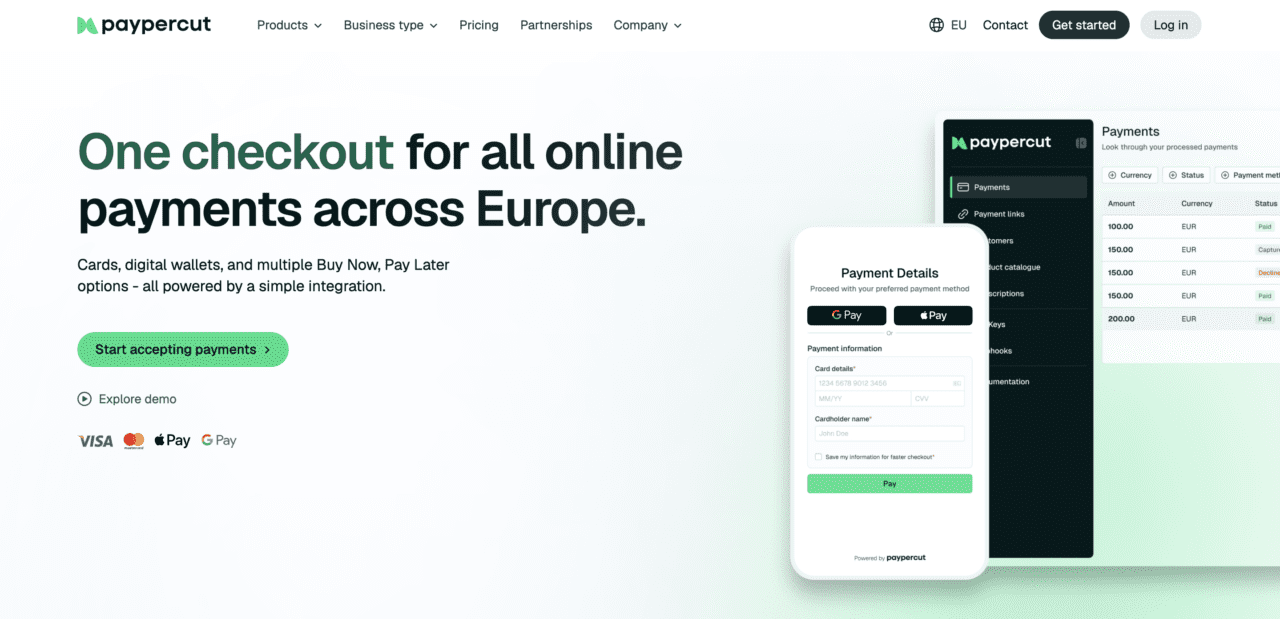
Bulgarian Fintech Paypercut Raises €5M
Paypercut, a fintech based in Sofia, Bulgaria, has secured €5 million in seed funding. The round was co-led by Concentric, Passion Capital, and Araya Ventures, and featured participation from additional investors including SMOK Ventures, Portfolio Ventures, BrightCap Ventures, BlackWood, SABAH.fund, MFG Invest, Main Set, and Matt Doka, a payment entrepreneur. Paypercut’s total funding now stands at €7 million.
Founded in response to the fragmentation of payments in Central and Eastern Europe, Paypercut has grown from a Buy Now, Pay Later aggregator into a more comprehensive payments platform. The company offers merchants access to card payments, local payment options, Buy Now Pay Later products, payment links, QR code payments, multi-currency settlement, and billing tools via a single integration. Paypercut raised €2 million in pre-seed funding in July 2025 and has onboarded more than 200 merchants in eight CEE markets since that time.
This week’s investment will help fuel Paypercut’s continued expansion across Central and Eastern Europe. The funding will also enable the firm to meet the capital requirements for an EMI license with the Central Bank of Ireland.
“CEE has always been treated as an afterthought by the payments industry, seen as too fragmented, too many local specifics, too complicated,” Paypercut Co-Founder and CEO Stoil Vasilev said. “We built Paypercut to fix that. This round gives us the resources to go further and faster: more markets, more payment options for merchants, and the infrastructure to move money in the way it should have always worked, instantly and at a fraction of the cost.”
In addition to its merchant payments operation, Paypercut is also developing stablecoin-based infrastructure for cross-border transfers in the region. The company will initially target high-volume corridors such as those between the Euro and the Polish Zloty (EUR-to-PLN) and the Euro and the Romanian Leu (EUR-to-RON).
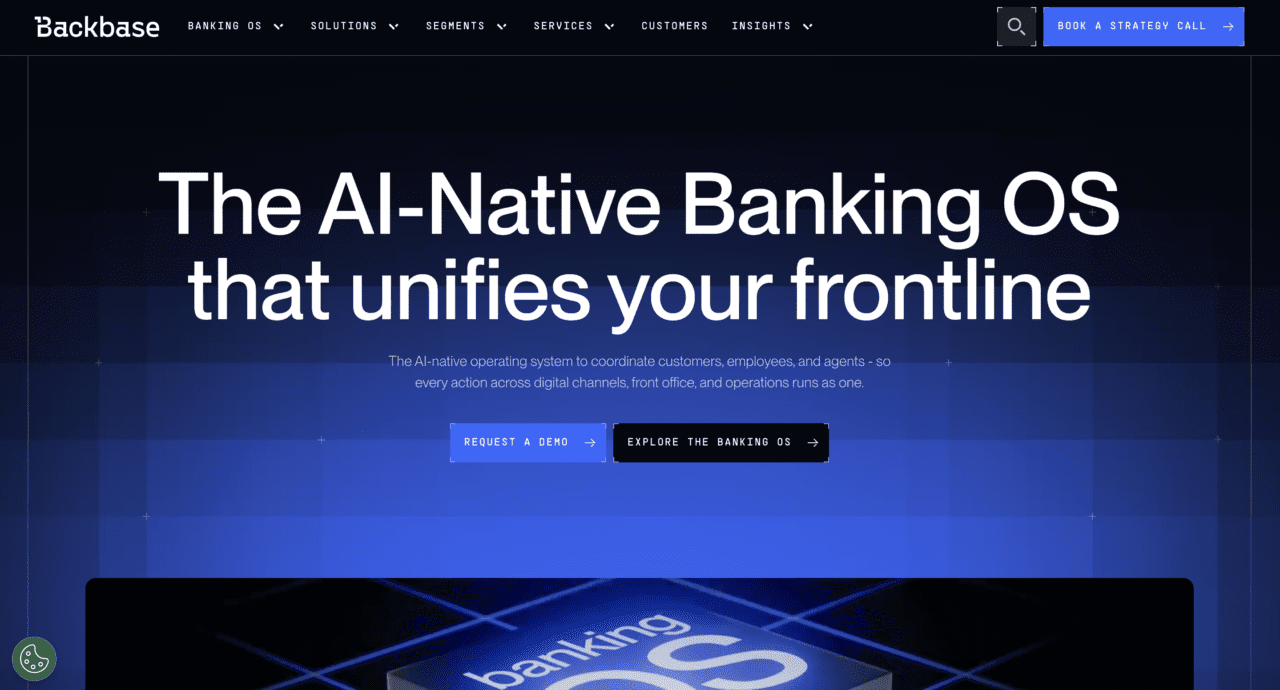
Albania’s Tirana Bank Goes Live with Backbase
Tirana Bank, named “Best Bank in Albania” in 2025 by Euromoney, has gone live with a “complete omnichannel retail banking experience” built on the Backbase AI-native Banking OS. The launch covers accounts, deposits, online loan and credit card applications, internal and outgoing transfers, card management, billpay, and financial insights. Tirana Bank will also enable Digital Assist in the employee app.
“This launch marks a significant step in our digital transformation journey, as we continue to invest in solutions that bring real, everyday value to our customers. TiBank+ is designed to deliver a seamless and intuitive banking experience, combining convenience with the trust and human connection that define our model,” Tirana Bank Chief Retail Business Officer Lila Canaj said. “Through our partnership with Backbase, we have accelerated this transformation, bringing to market a modern and scalable platform built to evolve with our customers’ needs.”
One feature that Tirana Bank anticipates its customers will appreciate is real-time spending insights, courtesy of Backbase’s personal finance management capabilities. Offering customers these insights is not a common occurrence in the region and will help Tirana Bank differentiate itself from its competitors. The institution is also going live with Apple Pay, becoming one of the few Albanian banks to offer the service via a mobile app.
“Albania is on its path to EU membership, its government has made digitalization a national priority,” Backbase Regional Vice President for South East Europe Robert Mihaljek said. “Tirana Bank looked at that moment and decided to lead it. They came to us with a clear ambition. Twelve months later, they are live with not only an MVP but a full retail APP. This is a first for Albania, and a reference for the Balkans.”
A four-time Finovate Best of Show winner, Backbase has been a Finovate alum since 2009. The Amsterdam-based fintech offers an AI-native banking operating system that converts fragmented banking operations into a unified frontline for the benefit of customers and employees alike. Founded in 2003, Backbase counts more than 150 leading banks and financial institutions around the world as users of its solutions for retail, small business, commercial, and private banking, as well as wealth management. Riddhi Dutta is CEO.
Can Crypto Make a Comeback in Hungary?
For many observers, liberal democracy was one of the big winners in the recent Hungarian election that saw the end of the Orbán regime. But could the victory of Péter Magyar and his pro-EU Tisza Party also be a good sign for crypto and digital assets in the country?
In 2025, Hungary announced an amended Crypto Act that criminalized unauthorized exchange services and established a validation regime on all crypto-to-fiat and crypto-to-crypto transactions. This incentivized some firms, such as Revolut, to withdraw from the Hungarian market entirely, while others suspended services due to regulatory uncertainty.
This also set off a confrontation with the EU, with the European Commission initiating infringement proceedings against Hungary’s validation regime, saying that it was in conflict with the EU’s MiCA framework. Interestingly, Orbán had previously been relatively pro-crypto, with his regime offering some of the lowest tax rates on crypto in Central Europe. This made Hungary—at least before 2025—an attractive jurisdiction for retail crypto investors in the region.
There are many reasons offered to explain the shift toward a more restrictive attitude in recent years—from the influence of MiCA and its mandates to the regime’s well-known preference for state control and supervision of key financial and industrial activities. But the question now is whether or not new politics will result in new policy? The correct answer, at this point, is that no one knows. What some observers have noted, however, is Magyar’s relatively more pro-EU stance on other issues and his general interest in re-aligning with European institutions more broadly. To this end, even something as straightforward as revising the country’s crypto policy to match MiCA’s mandates—and remove or revise current criminal penalties for policy violations— might be an initial positive sign toward restoring crypto’s status in Hungary.
Here is our look at fintech innovation around the world.
Central and Southern Asia
India travel fintech Scapia, which combines co-branded cards with travel booking, secured $63 million in funding in a round led by General Catalyst.
Raqami Islamic Digital Bank Limited (RIDBL) has been granted a Retail Banking License by the State Bank of Pakistan.
Via its Alipay+ gateway, Singapore’s Ant International announced the launch of cross-border mobile payment services in Latin America.
ACI Worldwide looked at the impact of real-time payments on growth in Peru, Chile, and Argentina.
Tearsheet profiled Brazilian digital financial institution Agibank.
Asia-Pacific
Singapore-based Crypto payments network Moonpay and controlling shareholder Seoryong Electronics announced a joint investment in Korean fintech Finger.
Vietnam Bank OCB selectedBackbase AI lead Chris Shayan as its Acting CEO.
African financial infrastructure company Anchor launched its Anchor MCP Server, becoming the first Nigerian fintech to make. its API documentation natively available to AI systems.
The Africa Report reported on the rise of mobile money in Ghana and how it is challenging the country’s incumbent banks.
Business Insider Africa looks at the fate of small business banking platform Brass which announced that it will be migrating its customers to Paystack Microfinance Bank.
Central and Eastern Europe
PayPalintroduced a pair of Buy Now, Pay Later products for its customers in Austria.
Ripplelaunched its RLUSD stablecoin in Turkey courtesy of partnerships with local platforms BiLira, Bitexen, and Bitlo.
Equifax UK forged a partnership with Polish credit bureau BIK to boost access to identity verification and fraud prevention technology.
Middle East and Northern Africa
Saudi Arabia-based fintech Stitch announced a pivot to focus on infrastructure and offering a financial operating system for banks.
UAE-based fintech Comfi AI secured pre-Series A funding from Yango Group’s Yango Ventures.
With FinovateSpring 2026 right around the corner—May 5-7—we wanted to take a moment here at Finovate Global to highlight the international companies that will be demoing their latest fintech innovations live on stage next week.
While both our European conference FinovateEurope and our flagship event FinovateFall tend to showcase the lion’s share of our international alums, we are thrilled to host these eight fintech innovators from Greece, India, Israel, Italy, Singapore, and Switzerland this year at FinovateSpring!
Join us next week—May 5-7—at the Sheraton San Diego Resort for FinovateSpring 2026. 1200+ senior-level fintech attendees. 600+ attendees from banks and financial institutions. 50+ live fintech demos. Save your spot. Book your room. And we’ll see you in sunny San Diego!
BankUniverse delivers a privacy-first ‘intent engine’ that identifies high-value prospects and automates conversion, increasing digital sales by 20%+ without sharing sensitive customer PII. Headquartered in Greece, the company was founded in 2024.
Cobalt automatically maps real system dependencies across complex banking environments, enabling agentic AI, real-time visibility, safer changes, reduced risk, and confident operations. Headquartered in Tel Aviv, Israel, the company was founded in 2025.
ContexQ is forensic Graph AI that detects fraud, money laundering, and hidden beneficial ownership by seeing the relationships every other AI misses. Headquartered in Singapore, the company was founded in 2024.
CRIF is a global technology company delivering credit bureau services, business intelligence, advanced analytics, decisioning platforms, and digital solutions that power smarter lending and risk management worldwide. Headquartered in Italy, the company was founded in 1988.
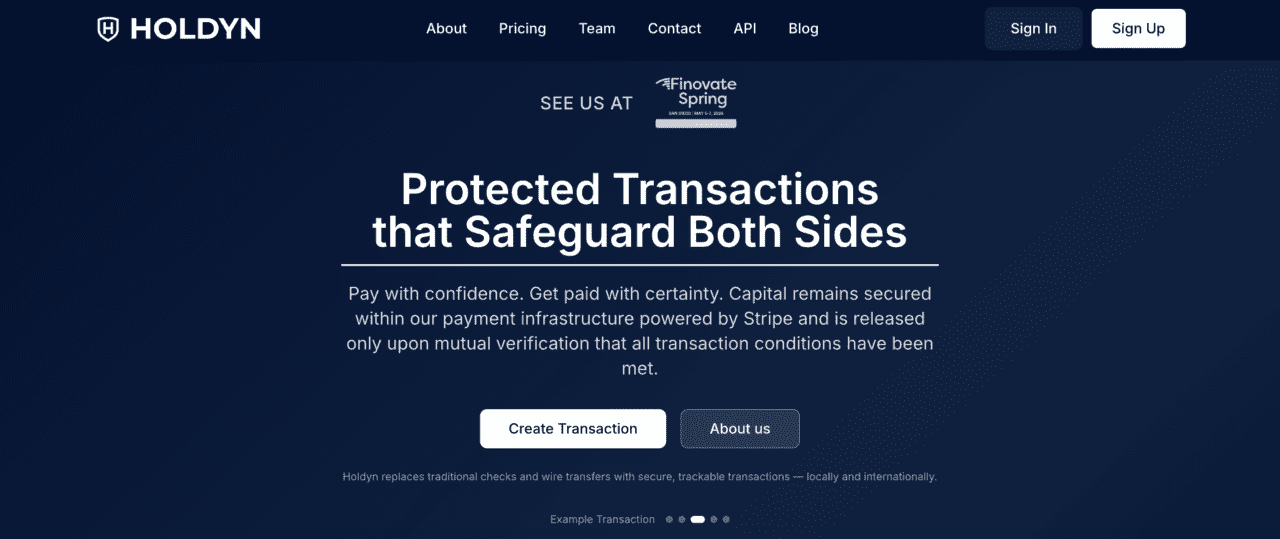
Holdyn is a trust-first fintech platform enabling secure, structured transactions, and conditional payments. In addition to moving funds instantly, Holdyn also allows users to define how and when funds are released, reducing counterparty risk in both local and cross-border transactions. Headquartered in Tel Aviv, Israel, the company was founded in 2025.
Nextvestment enables safe, self-service exploration while guiding advisors to intervene at the right moments, improving client engagement and advisor productivity without changing advisory models. Headquartered in Singapore, the company was founded in 2024.
uncharted group’s operating system turns commoditized AI into a proprietary, compounding advantage for investment firms. Headquartered in Zurich, Switzerland, the company was founded in 2024.
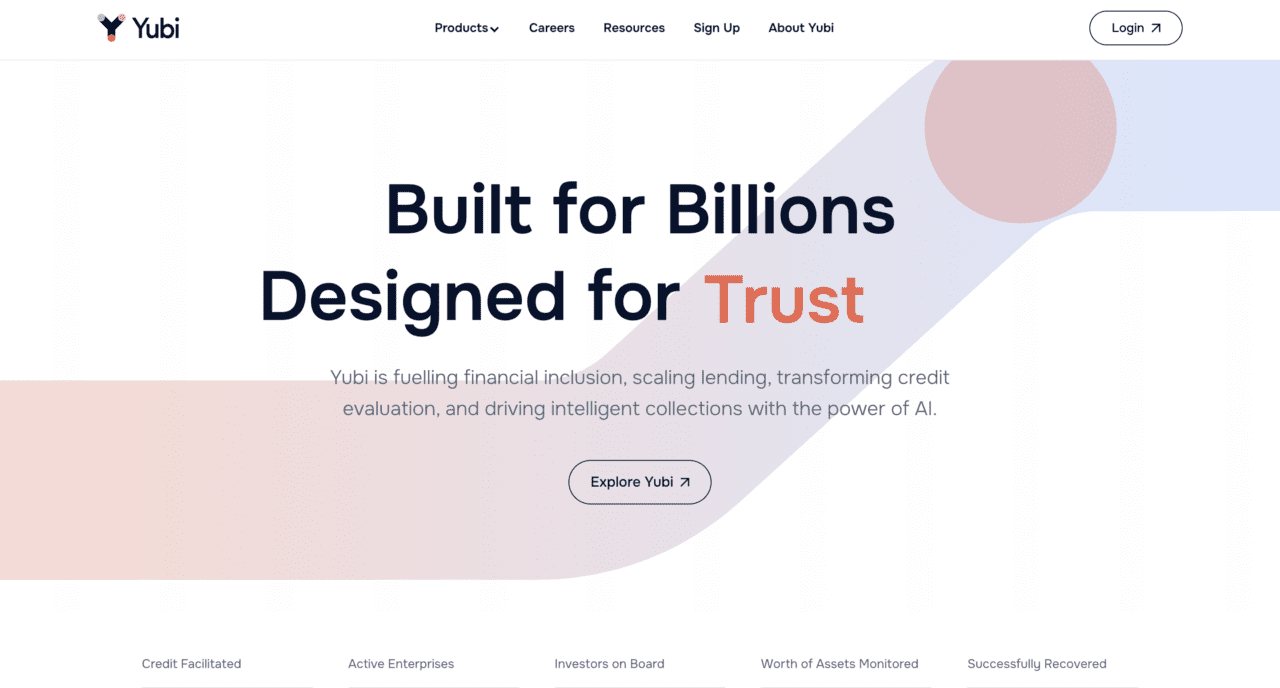
Yubi is India’s AI-powered debt marketplace—connecting 17,000+ enterprises with 6,200+ lenders, having facilitated over $36 billion in financing. Now they’re bringing this breakthrough technology to the U.S. Headquartered in Chennai, India and Delaware, the company was founded in 2020.
Here is our look at fintech innovation around the world.
Middle East and Northern Africa
Saudi Arabian financial app barq introduced international cross-border QR payments in partnership with Alipay+.
Dubai-based, B2B embedded finance platform Comfi raised $65 million in funding.
Blockchain-based enterprise solutions company Rippleopened the doors on a new regional headquarters in the UAE this week.
Central and Southern Asia
India-based fintech Pine Labs announced the acquisition of next-generation online checkout optimization platform Shopflo.
Central Asian digital banking ecosystem TBC Uzbekistan launched its AI assistant Lola.
Indian fintech Mobikwik secured approval from the Reserve Bank of India to initiate lending operations.
Latin America and the Caribbean
Cross-border payment infrastructure company TerraPay forged a strategic partnership with Nicaraguan remittance payout services company Banco de la Producción S.A (Banpro Grupo Promerica).
Argentina-based fintech belo secured $14 million in Series A funding in a round led by Tether.
The IMARC Group predicted that Mexico’s fintech market size will reach $67.2 billion by 2034.
Asia-Pacific
South Korea-based fintech RiskX secured seed funding for its technology that will enhance the pricing, risk analysis, and investor communication for structured derivatives.
Commonwealth Bank of Australia deployed an agentic AI system designed to detect emerging fraud and scam patterns in payments and transaction data.
Crypto payments network MoonPay joined Sungho Electronics and Seoryong Electronics in an investment in Soutk Korean fintech Finger as part of an effort to support a Korean won stablecoin ecosystem.
Sub-Saharan Africa
South African bank Absa Group Limited improved its self-solve cases of digital and card fraud by 47% by using WhatsApp to instantly confirm suspected fraud transactions with customers.
Nairobi, Kenya-based cross border payments company WapiPay secured approval from the Bank of Jamaica to begin operations in the country.
PitchBook looked at the state of VC funding for African fintechs.
Central and Eastern Europe
European paytech Nexi integrated new digital payment option, Wero, bringing it into Germany’s ecommerce system via its German subsidiary, Nexi Germany.
Austrian cooperative banking group Raiffeisenbankengruppe Oesterreich partnered with nCino for its unified corporate lending platform
Finom unveiled a new, standalone version of its accounting solution for freelancers and small businesses in Germany.
This week’s edition of Finovate Global showcases recent fintech news from Canada.
Royal Bank of Canada acquires mortgagetech Pinch Financial
The Royal Bank of Canada (RBC) has acquired Toronto-based mortgagetech Pinch Financial. Terms of the transaction were not disclosed, but the move is designed to accelerate the decisioning process for mortgage borrowers throughout the country.
“This acquisition helps us deliver on our commitment to bring the best solutions to clients on their path to home ownership,” RBC SVP of Home Equity Financing Janet Boyle said in a statement. “Pinch’s technology will help us accelerate our digital roadmap to deliver a quicker, more streamlined mortgage experience for Canadians.”
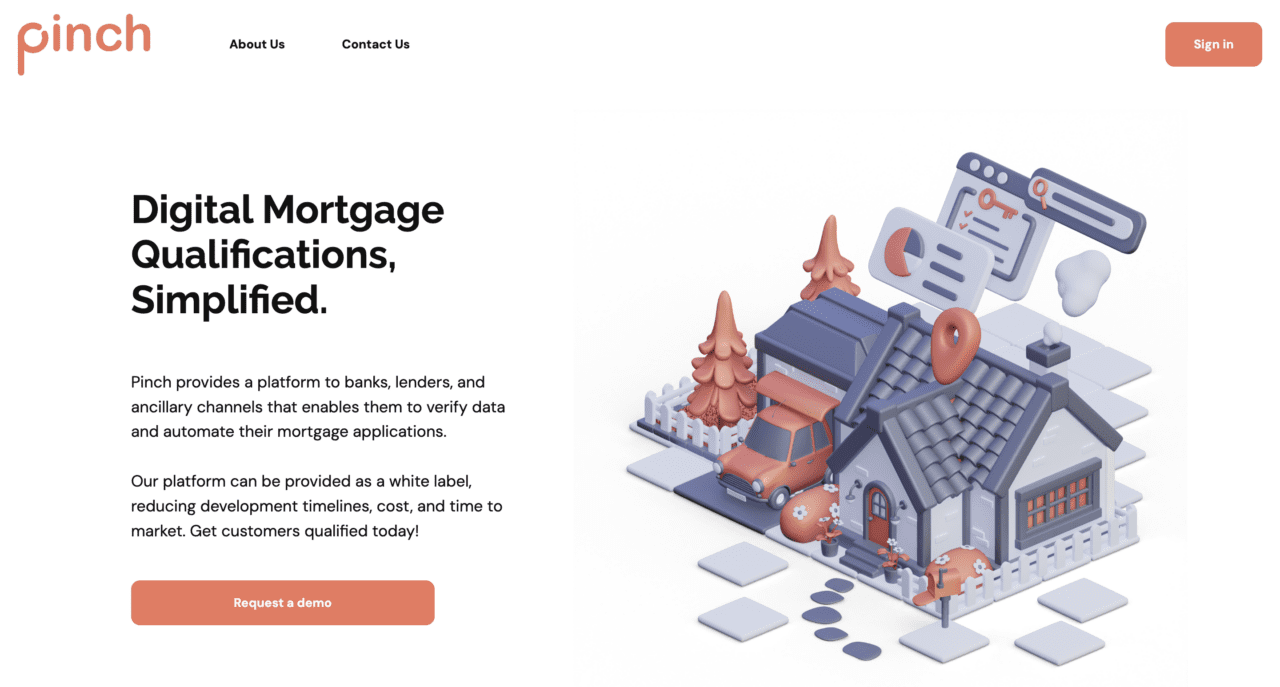
Founded in 2016, Pinch Financial offers banks, lenders, and other financial services providers a platform that allows them to verify data and automate mortgage applications. The company’s technology verifies identity, income, assets, liabilities, source of the down payment, and creditworthiness to establish whether a borrower meets the requirements—from TDS and FICO to LTV and net worth—for rate and underwriting eligibility.
RBC already plays a major role in Canada’s mortgage market. The acquisition of Pinch Financial will help the bank serve customers who prefer to apply for home loans online instead of in-person at a branch.
“We started Pinch to make mortgages more relevant and familiar for digital-first consumers—making the qualification process faster, simpler, and more transparent for borrowers,” Pinch Financial CEO Andrew Wells said. “This acquisition gives us the opportunity to bring our technology to more Canadians while being part of a team that shares our vision for innovation in financial services.”
Canada’s largest bank by market capitalization and assets—and one of the largest banks in the world—RBC serves more than 19 million clients in Canada, the US, and 27 other countries. Headquartered in Toronto, Ontario, and boasting more than 101,000 employees, RBC reported total assets of $1.9 trillion CAD as of October 31, 2025. Dave McKay is President and CEO.
Wealthsimple becomes first Canadian fintech to join SWIFT
Canadian fintech Wealthsimple has secured a big “first” and a big “second” this week. The firm became the first Canadian fintech and the second non-bank fintech in the world to become a member of the SWIFT global financial messaging network. The company is currently completing final technical integration and security certification ahead of a full launch with clients expected later this spring.
“Many Canadians rely on international wire transfers, and yet to date, the experience has been clunky and expensive. We want to fix that,” Wealthsimple VP of Payment Strategy Hanna Zaidi said. “Our SWIFT membership is going to unlock faster, simpler, and more transparent international money transfers for the more than three million Canadians who trust Wealthsimple.”
SWIFT’s international messaging network serves 11,000 financial institutions around the world, facilitating trillions of dollars in payment volume. SWIFT makes the sending and receiving of international money transfers more seamless and efficient, while also providing end-to-end tracking visibility with real-time status updates.
Wealthsimple’s SWIFT membership is part of the company’s overall strategy to lower costs and boost efficiency for money movement in Canada. Wealthsimple also announced that it will be an early adopter of the country’s pending Real-Time Rail (RTR) payment system, making its clients among the first to benefit from instant money movement between institutions.
Founded in 2014 and headquartered in Toronto, Canada, Wealthsimple offers a wide range of financial products and services, including managed investing, do-it-yourself trading, cryptocurrency, tax filing, spending, and saving. The company serves more than three million Canadians and has more than $100 billion in assets under administration. Co-founder Michael Katchen is CEO.
KPMG: Canada fintech investment “moderated” in 2025
The bad news is that investment in Canadian fintech slowed in 2025. The good news is that this moderating pace comes on the heels of record highs notched in 2024.
KPMG International recently unveiled its Pulse of Fintech H2’25 and FY25 report. The document depicts a fintech investment landscape in Canada that has returned to more historic levels, with “sustained interest in later-stage companies, platform acquisitions, and strategically important fintech subsectors such as artificial intelligence and digital assets.”
Specifically, the comparison is $2.4 billion across 113 deals in 2025 versus $9.9 billion across 161 deals in 2024. The report notes that much of the deal value in 2024 came from two sizable transactions: Nuvei’s $6.3 billion public-to-private buyout and Plusgrade’s $1 billion private equity deal. In 2025, the two largest investments in Canadian fintech were the $898 million private equity buyout of Converge Technology Solutions and Wealthsimple’s $536 million equity raise.
The report notes that investment activity in the sector picked up in the second half of 2025, especially with regard to gains in average deal value. Dubie Cunningham, a partner in KPMG Canada’s Banking and Capital Markets Practice specializing in fintech, indicated that she believed the strength in the second half of 2025 augured well for strength in 2026. “The investment appetite for Canadian fintechs will continue to grow in 2026, as investors prioritize quality, scale, and strategic fit, signaling a market that is maturing and aligning more closely with long-term value creation,” Cunningham said.
NCR Voyixagreed to sell its bank technology business in Japan to NTT Data.
An analysis of the Australian fintech sector by Deloitte Access Economics and FinTech Australia reported that the sector could grow to $71 billion in value by 2035.
Sub-Saharan Africa
Kenya and Rwanda inked an agreement that could enable digital payments companies licensed in one country to operate in the other.
South African fintech PayInc and First Capital Bank Botswana teamed up to launch instant cross-border payments.
The Fintech Times analyzed the fintech ecosystem of West African country, Burkina Faso.
Central and Eastern Europe
Part of Estonia’s Iute Group, IuteBank has begun operating as a regulated bank in Ukraine.
In 2026, some of the most innovative companies in fintech are expected to obtain banking charters in the US. From bunq to Zerohash, challenger banks and crypto infrastructure companies alike have determined that the next best step for their businesses is a license to offer full banking services to customers in the United States.
What’s interesting about the companies that are seeking US banking charters now is how they tend to fall into two broad camps: the neobank challengers and the crypto-insurgents. How do these two camps see the opportunity in the US and does either camp have an advantage in terms of the likelihood of success?
The challengers: From neobank to “real bank”
Many of the fintechs currently seeking US bank charters are some of the best known names in the industry. These include the UK’s Revolut, the EU’s bunq, Brazil’s Nubank—even the US’s PayPal, which sees a bank charter as a way to expand its operations in the States.
“Securing capital remains a significant hurdle for small businesses striving to grow and scale,” former PayPal CEO and President Alex Chriss said in December. “Establishing PayPal Bank will strengthen our business and improve our efficiency, enabling us to better support small business growth and economic opportunities across the US.”
For international firms, expanding operations is a major, though not the only, reason for coming to America. In the case of Nubank, which secured conditional approval from the US Office of the Comptroller of the Currency (OCC) in January, the goal is more than just expanding operations. As David Vélez, founder and CEO of Nu Holdings explained, “It’s an opportunity to prove our thesis that a digital-first, customer-centric model is the future of financial services globally.” While insisting that the company’s focus would remain on Latin America, Vélez noted “This step allows us to build the next generation of banking in the United States.”
Revolut also cited bringing a proven customer experience to the US as part of its rationale when it announced that it had applied to the OCC and Federal Deposit Insurance Corporation for a US national bank charter. “Filing for a national bank charter is a major milestone toward our vision of building the world’s first truly global banking platform,” Revolut Co-Founder and CEO Nik Storonsky said. “This charter will give us the direct control needed to innovate faster and deliver the Revolut experience to millions more Americans as we move toward our goal of 100 million customers.”
The cryptos: On the road to regulatory maturity
The other major category of aspirants for US bank charters is the crypto community. This includes stablecoin issuers like Circle as well as cryptocurrency exchange companies like Kraken. Circle secured conditional approval from the OCC in December to establish a national trust bank, named First National Digital Currency Bank. The company’s statement announcing the approval shed light on the reason why crypto companies like Circle are seeking bank licenses in the US.
“As a public company, we’re focused on operating under rigorous regulatory oversight and building the infrastructure that allows digital dollars like USDC to become a core part of global finance,” Circle CEO, Co-Founder, and Chairman Jeremy Allaire said. “This important milestone will give the world’s leading institutions greater clarity and confidence to build on Circle’s platform as stablecoins and blockchain technology move rapidly into the mainstream.”
For businesses in this space, the rewards of a US bank charter go beyond the ability to market products and services to a new market—even one as large as the US. For these firms, the chance to build and secure institutional credibility via a US banking license is an opportunity that cannot be missed. Combined with benefits such as direct access to payment rails, reserve backing, digital asset custody, and tokenization, it is little surprise that some of the most innovative companies in DeFi are seeking out US banking licenses. Speaking on behalf of Ripple, which secured conditional approval to establish a national trust bank in December, CEO Brad Garlinghouse emphasized the importance of a bank charter for regulatory compliance and public trust.
“The conditional approval of our trust bank charter represents a massive step forward—setting the highest standard for stablecoin compliance with both federal and state oversight,” Garlinghouse said. “While anti-innovation bank lobbyists may claim otherwise, we are ensuring RLUSD is the most transparent and responsibly managed stablecoin in the market today.”
Risk, opportunity, and cutting out the middleman
However different the reasons may be for neobanks and digital asset companies seeking out US banking licenses right now, there is an interesting commonality between the two camps. In both instances, firms are seeking ways to transition away from the “intermediary model” in which fintechs rely on sponsoring banks. There are myriad reasons why this decade-long paradigm has endured and why it is proving inadequate for many firms, such as growing awareness of risk (including both financial institution and third-party risk), as well as new opportunities (such as the OCC’s 2021 national bank trust policy shift).
But the general takeaway is that some of the most innovative fintechs in our industry are concluding that rather than try to “unbundle” or partner with a bank, it might now be the best strategy to just become one.
Digital asset company Ripple is expanding its digital payments platform, Ripple Payments, to create a single, end-to-end platform that consolidates the payments stack.
The California-based company aims to speed up settlement and reduce friction with a full payments infrastructure platform that allows fintechs to operate in the onchain economy by supporting payments made on both fiat and onchain rails. Using the new platform, organizations can collect money, hold it, convert it from fiat to stablecoin and back, manage liquidity, and pay it out.
Bringing all of these capabilities into a single place allows fintechs to manage their entire payments operation. Instead of using one provider for wallets, another for custody, another for FX, and another for payouts, fintechs can now do all of this through Ripple Payments.
Prompting this change are two acquisitions made in 2025. In November of last year, Ripple acquired digital asset custody company Palisade for an undisclosed amount. In August, the company purchased stablecoin-powered global payments platform Rail for $200 million. The added capabilities offer the ability to provision named virtual accounts and wallets, automate collection flows, and exchange and settle funds into operational accounts. Overall, Ripple Payments has processed more than $100 billion in total volume, with Rail adding another $10 billion annually.
“For the global financial system to evolve, fintechs and financial institutions need infrastructure that treats digital assets with the same rigor as traditional finance,” said Ripple President Monica Long. “Success in this space requires enterprise-grade infrastructure, extensive licensing, and deep liquidity—capabilities few can match. Ripple has built the blueprint for blockchain-based enterprise solutions designed to operate at global scale for regulated finance.”
By adding these new capabilities, Ripple can now handle the entire payment lifecycle. The company is positioning itself as more of a regulated global payments infrastructure provider that supports both fiat and stablecoins instead of simply a crypto rails provider. This new role places Ripple in competition with traditional cross-border payment processors and infrastructure vendors such as SWIFT, Visa Direct, Mastercard Cross-Border Services, and large correspondent banking networks, as well as fintech infrastructure players like Stripe, Adyen, and Airwallex.
By combining custody, liquidity management, FX, and payout orchestration into a single platform that supports both fiat and stablecoins, Ripple is positioning itself as a direct challenger to well-established incumbents.
Founded under the name OpenCoin in 2012, Ripple debuted at FinovateSpring the following year. The company provides blockchain-based solutions across traditional and digital finance. Its solutions span global payments, custody, liquidity, prime brokerage, and treasury management tools for banks, fintechs, payment service providers, and crypto businesses.
Ripple offers a stablecoin, RLUSD, that is designed to be used for settlement, liquidity management, and digital dollar transactions within its platform. RLUSD has surpassed $1 billion in market cap since launching in December 2024. Ripple’s cryptocurrency, XRP, is often used as a bridge asset to move value between currencies in cross-border payments.
Finovate alums raised more than $1.4 billion in the final three months of 2025. The funding total in the fourth quarter of the year is the best Q4 for alum funding in more than a decade. The historic Q4 also takes the annual total capital raised by Finovate alums to levels not seen since 2021.
As we learn more about the overall level of fintech funding in the fourth quarter and for the full year, it will be interesting to see if this impressive performance by Finovate alums reflects broader investment trends in the industry.
Previous Annual Comparisons
2024: $553 million
2023: $1.2 billion
2022: $2.7 billion
2021: $8.4 billion
A total of 46 Finovate alums reported funding in 2025, totaling more than $3.3 billion. This figure represents the largest fundraising year for Finovate alums since the blow-out year of 2021 in which more than $8 billion was raised.
Previous Quarterly Comparisons
Q4 2024: More than $132 million raised by seven alums
Q4 2023: More than $307 million raised by 11 alums
Q4 2022: More than $380 million raised by 15 alums
Q4 2021: More than $1.2 billion raised by seven alums
The pattern of billion+plus Q4s arriving every other year continued in 2025. 11 Finovate alums reported raising more than $1.4 billion in the fourth quarter of this year. This includes one company’s investment (Qolo’s fundraising in October) for which the amount is unknown. The last time Finovate alums raised a comparable amount in funding in the fourth quarter was in 2014, when 26 alums raised more than $1.4 billion.
Top Quarterly Equity Investments
The top equity investments of the quarter were the $500 million secured by both Avalara and Ripple. Also among the top fundraisings of the quarter was the $280 million raised in two separate, back-to-back rounds by MoEngage.
Here is our detailed alum funding report for Q4 2025.
October: More than $108 million raised by four alums
If you are a Finovate alum that raised money in the fourth quarter of 2025, and do not see your company listed, please drop us a note at [email protected]. We would love to share the good news! Funding received prior to becoming an alum not included.
Financial infrastructure and blockchain technology company Ripple has secured $500 million in new funding at a valuation of $40 billion.
The funding comes at time of great activity for the San Francisco, California-based fintech, which has announced six acquisitions in the past two years and whose stablecoin, RLUSD, topped the $1 billion market capitalization mark this month.
As OpenCoin, Ripple made its Finovate debut at FinovateSpring 2013.
We shared this news in yesterday’s Finovate weekly LinkedIn newsletter (subscribe if you haven’t). But we’re happy to share it with Finovate blog readers today. Financial infrastructure and blockchain technology company Ripple has raised $500 million in new funding, boosting the firm’s valuation to $40 billion. The funding follows the company’s recent $1 billion tender offer at the same valuation, and comes at a time of renewed interest in digital assets such as stablecoins and the growing importance of crypto services such as custody and trading.
“This investment reflects both Ripple’s incredible momentum and further validation of the market opportunity we’re aggressively pursuing by some of the most trusted financial institutions in the world,” Ripple CEO Brad Garlinghouse said. “We started in 2012 with one use case—payments—and have expanded that success into custody, stablecoins, prime brokerage, and corporate treasury, leveraging digital assets like XRP. Today, Ripple stands as the partner for institutions looking to access crypto and blockchain.”
The investment was led by funds managed by affiliates of Fortress Investment Group, affiliates of Citadel Securities, Pantera Capital, Galaxy Digital, Brevan Howard, and Marshall Wace. The fundraising comes as Ripple celebrates completing six acquisitions, including two valued at over $1 billion, in the past two years. The company, which first introduced itself to Finovate audiences at FinovateSpring 2013 as OpenCoin, has also expanded into new markets in prime brokerage and treasury management, adding to its existing footprint across payment, custody, and stablecoins.
This year, Ripple acquired stablecoin infrastructure company Rail to enhance its Ripple Payments offering as a full-service cross-border platform that leverages Ripple’s stablecoin RLUSD and XRP to make international fund transfers faster and more efficient for businesses. The acquisition of multi-asset prime brokerage firm Hidden Road in October—now integrated into Ripple’s Ripple Prime platform—enables Ripple to offer its institutional clients a range of financial services including trading, custody, and derivatives for both traditional and digital assets. The company’s purchase of Palisade, a digital asset wallet and custody firm, will bolster Ripple’s Ripple Custody offering. Ripple Custody provides banks and other financial institutions with safe and secure ways to store digital assets, stablecoins, and Real World Assets (RWA).
Just this month, RLUSD surpassed $1 billion in market capitalization. Reaching this milestone in less than a year after it was launched, RLUSD is now the 10th largest, US dollar-backed stablecoin. RLUSD is the primary stablecoin used by Ripple for payment flows, Ripple President Monica Long noted in an interview with CoinDesk, adding that Ripple has processed “nearly $100 billion in payments volume to date.” Also this month, Ripple announced that its digital asset spot prime brokerage capabilities were now available to customers in the US.
“The launch of OTC spot execution capabilities complements our existing suite of OTC and cleared derivatives services in digital assets and positions us to provide US institutions with a comprehensive offering to suit their trading strategies and needs,” Ripple Prime International CEO Michael Higgins said.
Founded in 2012, Ripple is based in San Francisco, California.
Crypto solutions provider for businesses Ripple has announced its acquisition of digital asset wallet and custody company, Palisade. The move is designed to enhance Ripple’s custody capabilities—specifically, the company’s Ripple Custody offering—to better serve the needs of fintechs, corporates, and crypto-native companies. Terms of the transaction have not been disclosed.
Ripple Custody supports banks and other financial institutions looking for safe, secure ways to store digital assets, stablecoins, and Real World Assets (RWA). Palisade’s secure, fast, and scalable “wallet-as-a-service” technology will enable Ripple to serve a broader range of customers and use cases, especially those high-speed use cases for customers that require an out-of-the-box solution built for high-frequency transactions, on- and off-ramps, and payments.
Ripple Custody is currently being used by a number of tier-1 global institutions such as BBVA, DBS, and Societe Generale. The solution serves as a “vault” for institutional cryptocurrency holdings, supporting the management of multiple vaults and a complete view across assets and venues. Ripple Custody provides a tamper-proof audit trail and cryptographic approval process to ensure compliance.
“Secure digital asset custody unlocks the crypto economy and is the foundation that every blockchain-powered business stands on—that’s why it’s central to Ripple’s product strategy,” Ripple President Monica Long said. “Corporates are poised to drive the next massive wave of crypto adoption. Just as we’ve seen major banks go from observing to actively building in crypto, corporates are now entering the market, and they need trusted, licensed partners with out-of-the-box capabilities. The combination of Ripple’s bank-grade vault and Palisade’s fast, lightweight wallet makes Ripple Custody the end-to-end provider for every institutional need, from long-term storage to real-time global payments and treasury management.”
Palisade’s technology offers fast wallet provisioning, multi-chain support, and DeFi integration. The solution also features strong governance and security features, such as Multi-Party Computation (MPC) that divides wallet keys into key fractions or “shards,” and zero-trust architecture which mandates strict verification for all users and devices that are attempting to access the network. Per the acquisition, Palisade’s technology will also integrate directly into Ripple Payments, supporting use cases that require faster, more efficient responses. It will also provide the core infrastructure for subscription payments and collection capabilities.
“Joining Ripple marks a new chapter for Palisade,” the company noted on its LinkedIn page. “Our technology will become a cornerstone of Ripple’s next-generation wallet infrastructure, accelerating their Payments and Custody products while expanding market reach globally. This partnership combines our technology with Ripple’s enterprise network and scale, regulatory expertise, and established market presence.”
A Finovate alum since its debut at FinovateSpring 2013 (as OpenCoin), Ripple today boasts a global payments network with more than 300 customers across 40+ countries and six continents. The company’s payments, custody, and stablecoin solutions enable banks and financial institutions to simply and securely integrate blockchain and digital assets into their operations while remaining compliant. With payments settlement in three to five seconds, and more than a million custody wallets in circulation, Ripple provides 90% international FX market coverage.
Ripple’s acquisition announcement comes just days after the fintech reported the launch of digital asset spot prime brokerage capabilities for US customers via its Ripple Prime offering. The launch was made possible by Ripple’s acquisition of multi-asset prime brokerage, Hidden Road, earlier this year, and will enable Ripple’s US-based institutional clients to execute over-the-counter (OTC) spot transactions across a wide range of digital assets including XRP and RLUSD.
“The launch of OTC spot execution capabilities complements our existing suite of OTC and cleared derivatives services in digital assets and positions us to provide US institutions with a comprehensive offering to suit their trading strategies and needs,” Ripple Prime International CEO Michael Higgins said.
Founded in 2012, Ripple is headquartered in San Francisco, California. Brad Garlinghouse is CEO.