U.S. Bank’s Meghan Kober on Applied Foresight and the Rise of the Participation Economy

U.S. Bank’s Meghan Kober on Applied Foresight and the Rise of the Participation Economy

What do banking consumers need most from their banks in 2026? How do these and other financial institutions translate major trends into actionable initiatives that solve problems for individuals, families, businesses, and communities? What role do partnerships between banks and fintech companies play in helping bring cutting-edge financial products and services to market?

We caught up with Meghan Kober, Senior Vice President and Head of Fintech Partnerships & Strategic Investments at U.S. Bank, to answer these and other questions confronting banks and their customers today. In her role at U.S. Bank, Kober leads a cross-functional team that scales innovation portfolios and drives enterprise value through strategic partnerships. Her expertise is in translating emerging drivers and market signals into applied strategies.

This interview is part of Finovate’s annual Women’s History Month commemoration. Previous installments include our salute to the women of FinovateEurope 2026 and our preview of the female founders and leaders who will represent their companies at FinovateSpring 2026, May 5-7.


U.S. Bank has long been active in innovation, but your role sits at a unique intersection. How does the Fintech Acceleration team build on that legacy today?

Meghan Kober: There’s a moment I often come back to early in my career, sitting inside a broker-dealer, trying to connect systems that were never designed to speak to each other. That experience shaped how I think about innovation today.

We’ve entered the Great Convergence. Innovation is no longer built inside a single institution. It is shaped across startups, venture firms, accelerators, and universities.

The challenge is not access to innovation. It is translation and direction. Signals are abundant, but without structure, they don’t convert into outcomes.

That is the role of the Fintech Acceleration team. Since 2020, we have built on U.S. Bank’s innovation foundation to act as a system layer across the enterprise. We translate external signals into enterprise execution across product, risk, and partnerships.

My broader thesis is that we are moving from an innovation economy to a participation economy. The institutions that win will not be the ones that invent the most, but the ones that enable the most people, businesses, and partners to participate in the system. Our role is to help design for those outcomes.

That idea of translation and direction is powerful. How do you take something as abstract as future trends and turn them into clear action inside a large, regulated organization?

Kober: We are operating in a period of convergence. AI, digital assets, and embedded finance are not evolving independently. They are compounding. That creates multiple futures unfolding at once.

The risk for large organizations is reacting too late or moving without alignment. In financial services, you cannot separate innovation from risk, legal, and compliance. Execution requires coordination from the start.

This is where applied foresight comes in. For us, it is not about predicting the future. It is about choosing which future to build toward.

We integrate signals from across venture, academia, and global markets. Through my work nationally in regions such as Utah and Minnesota, as well as globally with the University of St. Thomas and studying ecosystems in places like Tokyo and Seoul, we are looking at how infrastructure, capital, and policy shape participation at a systems level.

We then anchor those insights to a business problem and align with business line leaders.

Leadership, in this context, is about creating clarity. It is about giving teams direction so they can build with confidence. Foresight without execution is noise. Applied foresight is what turns signal into strategy.

When that clarity is in place, where do you see it driving the most meaningful outcomes today?

Kober: If you look at the U.S. economy, small businesses represent approximately 43.5 percent of GDP and nearly half of employment. They are one of the most important economic engines we have.

At the same time, many small businesses are still operating across fragmented systems, spending time managing tools instead of growing their business.

If we are serious about economic resilience, we have to reduce that friction.

In partnership with Shruti Patel, Chief Product Officer for Business Banking, and Business Banking leaders, we focused on how to embed financial services directly into small business workflows. That led to solutions like Business Essentials, partnerships with fintechs like Gusto, and capabilities like U.S. Bank Bill Pay for Business.

What is important here is not just the product. It is the system design. We are moving from standalone banking products to integrated operating systems for businesses.

The outcome is simple but powerful. Business owners get time back. They have better visibility. They can make better decisions. At scale, that drives job creation, stronger local economies, and a more resilient financial system.

That is what participation looks like in practice.

That kind of impact clearly depends on strong partnerships. What differentiates the way you approach fintech partnerships today?

Kober: The market has matured. We are no longer in a phase where experimentation alone is enough. Partnerships need to deliver outcomes and scale.

What differentiates successful partnerships is alignment and readiness. We start with a clearly defined business problem and align on shared outcomes from the beginning.

We typically partner with founders who have achieved product market fit, understand regulated environments, and are often backed by venture capital firms.

But what is often overlooked is that partnerships are not just about capability. They are about system effects.

When we partner with a startup, we accelerate our speed to market. We solve real problems for our clients. At the same time, we support that company’s growth, which drives job creation, attracts capital, and strengthens the ecosystem.

It creates a flywheel.

My role is not just to participate in that ecosystem, but to help shape how it connects. Where capital flows, where partnerships form, and where innovation translates into real economic outcomes.

You’ve mentioned participation a few times now. I’d love to connect that back to your own journey. How has your path shaped this perspective?

Kober: My path into fintech was not traditional, but in many ways that is what gave me this perspective.

I started by trying to understand systems: connecting data, teaching myself to code, and building dashboards to make better decisions. That curiosity led me into Minnesota’s innovation ecosystem, where I was inspired by leaders like Susan Langer, CEO of Spave, at Twin Cities Startup Week and became involved with the Minnesota Fintech Collective.

I had the opportunity to join and help build the Fintech Acceleration team alongside some great leaders, and over time, help scale that into a broader platform across the enterprise.

What I learned through that experience is that innovation is not a technology problem. It is a participation problem.

Who has access to networks. Who gets exposure to opportunities. Who is able to build, invest, and contribute.

Leadership is about expanding those surfaces. Creating more entry points into the system so more people can participate and shape it.

Looking ahead, how are technologies like AI and digital assets influencing how you think about the future of financial systems?

Kober: We are at an inflection point where financial infrastructure itself is being redefined.

AI is changing how decisions are made. Digital assets are changing how value moves. Together, they are enabling more programmable, intelligent systems.

But the real question is not what the technology can do. It is how we design systems around it.

At U.S. Bank, we are applying AI across operations and exploring digital asset capabilities, including stablecoin infrastructure on networks like Stellar. These efforts are grounded in real use cases and informed by collaboration across fintech partners, venture ecosystems, and global research.

The opportunity is significant, but so is the responsibility. These systems must be built with trust, resilience, and inclusion at their core.

If we get that right, we are not just improving financial services. We are redesigning how participation in the economy works.

Finally, during Women’s History Month, how do you define leadership in this moment, especially within fintech and financial services?

Kober: The strength of our financial system is directly tied to how many people can participate in it.

Throughout my career, I am grateful to have benefited from mentors, founders, investors, and institutions that created opportunities for me to step in, learn, and build. These ecosystems matter, spanning from accelerators and venture capital to universities and corporate leadership.

Leadership, to me, is about doing that intentionally and at scale.

It is about bringing applied foresight and direction to teams so they can build systems that drive resiliency and prosperity. It is about expanding who gets to participate in shaping the future.

Because ultimately, the next era of financial services will not be defined by who innovates the fastest.
It will be defined by who builds systems that work for the most people.


Photo by weston m on Unsplash

Celebrating the Women of FinovateSpring 2026: Founders, Leaders, and Innovators

Celebrating the Women of FinovateSpring 2026: Founders, Leaders, and Innovators

Finovate’s celebration of Women’s History Month continues!

This year FinovateSpring 2026 will feature a dozen female fintech founders and co-founders in its demo company line-up. Today, as part of our commemoration of Women’s History Month, we are excited to showcase these innovators, whose solutions are helping banks, credit unions, and lenders bring new financial products and services to their customers and members.

“I’m thrilled to welcome these incredible female founders to FinovateSpring,” Finovate VP and Director of Demos Heather Stowell said. Their innovative technologies and groundbreaking ideas are a testament to the transformative power of diversity in fintech. It has been inspiring to seek out and encourage these companies to apply to demo, and I can’t wait to see their vision come to life on stage.”


Meenakshy Iyer, Co-Founder and Chief Product Officer, ContexQ

ContexQ is forensic Graph AI that detects fraud, money laundering, and hidden beneficial ownership by seeing the relationships every other AI misses. Headquartered in Singapore, ContexQ was founded in 2024.

Simmi Sen, Co-Founder, Crebit Pay

Crebit Pay is a stablecoin-powered FX platform enabling low-cost, near-instant global payments for students, while helping credit unions onboard and serve international members. Headquartered in San Francisco, California, Crebit Pay was founded in 2025.

Anna Joo Fee, Founder and CEO, Goodfin

Goodfin expands access to institutional-grade investing opportunities. Its platform opens doors to private equity, venture capital, pre-IPO deals, and alternative asset classes that are typically reserved for large institutions or ultra-high-net-worth clients. Headquartered in San Francisco, Goodfin was founded in 2022.

Kelly Waltrich, Founder and CEO, Intention.ly

Intention.ly’s Advisor Brand Builder delivers a completely differentiated brand, website, and content engine in days, helping advisors attract ideal clients and outpace competitors. Headquartered in King of Prussia, Pennsylvania, Intention.ly was founded in 2021.

Alisha Chowdhury, Founder, Kiro Money

Kiro Money helps financial institutions grow deposits and product adoption by embedding intent-aware guidance that converts user uncertainty into action inside their platforms. Headquartered in San Francisco, California, Kiro Money was founded in 2024.

Zarina Tsomaeva, Founder and CEO, Loquat

Loquat enables banks and credit unions to scale faster by digitizing onboarding, cutting review times by 80% and unlocking new deposit growth. Headquartered in Miami, Florida, Loquat was founded in 2018.

Annabelle Lin, Co-Founder and Chief Revenue Officer, Nextvestment

Nextvestment enables safe self-service exploration while guiding advisors to intervene at the right moments, improving client engagement and advisor productivity without changing advisory models. Headquartered in Singapore, Nextvestment was founded in 2024.

Lisa Pent, Founder and CEO, PentEdge

PentEdge‘s AIMS gives community banks and examiner-ready AI governance platform—purpose-built for the $500 million to $100 billion institution navigating today’s federal AI risk guidance. Headquartered in North Creek, New York, PentEdge was founded in 2025.

Kathleen Craig, Founder and CEO, Plinqit

Business HYS by Plinqit levels the playing field for banks looking for much-needed deposit growth and for SMBs looking to do more with their cash. Headquartered in Ann Arbor, Michigan, Plinqit was founded in 2015.

Riya Jagetia, Co-Founder and CEO, Socratix AI

Socratix AI helps financial institutions cut fraud losses, reduce false positives, and scale operations without adding headcount—driving efficiency, trust, and stronger customer relationships. Headquartered in San Francisco, California, Socratix AI was founded in 2025.

Ashley Parekh, Co-Founder and CEO, Syntex

Syntex is digital onboarding software for banks that verifies documents, tracks approvals, and reduces small business onboarding from weeks to days. Headquartered in San Francisco, California, Syntex was founded in 2025.

Caitlyn Truong, Co-Founder and CEO, Zengines

Zengines modernizes off mainframes without losing critical logic, satisfying auditors faster, and making legacy systems searchable so transformation and compliance don’t stall. Headquartered in Bedford, Massachusetts, Zengines was founded in 2020.


Catch these and many more innovative fintech founders and CEOs this year at FinovateSpring 2026 in San Diego, May 5 through May 7! Tickets are on sale now. Save your spot. Book your room. And bring your sunscreen!

Celebrating the Women of FinovateEurope 2026

Celebrating the Women of FinovateEurope 2026

Finovate kicks off its Women’s History Month commemoration with this salute to the women who introduced their companies to our FinovateEurope 2026 audience last month in London.

These CEOs, founders, executives, and analysts demoed a range of fintech solutions to help banks and other financial institutions integrate enabling technologies, grow their businesses, and enhance the customer experience for financial services consumers everywhere.


Natalia Corobco, CEO, Founder, and Marzia Niccolai, Chief AI Officer, Francis

Francis helps financial institutions and fintechs tackling open finance problems put AI at the center of the client’s value proposition. Headquartered in London, England, Francis was founded in 2025. Demo video.


Triin Preem, Head of Strategic Partnerships, Northern Eruope, Mifundo

Mifundo helps banks grow business volume by up to 15%, reflecting the share of foreign and cross-border customers in most European markets, by enabling them to serve this segment effectively. Headquartered in Tallinn, Estonia, Mifundo was founded in 2022. Demo video.


Erin Smith, Policy & Impact Analyst, MyPocketSkill

A digital technology companies working at the nexus of fintech and edtech, MyPocketSkill is making Gen Z more money savvy and able to save and invest. Headquartered in London, England, MyPocketSkill was founded in 2020. Demo video.


Svitlana Vyetrenko, Founder & CEO, Outsampler

Outsampler improves research productivity by 40% so that portfolio managers can focus on high-value client conversations. Headquartered in Strasbourg, France, Outsampler was founded in 2025. Demo video.


Marya Bazzi, CEO & Co-Founder, Sea.dev

Sea.dev automated underwriting workflows, eliminating copy-paste and document collection so credit analysts can focus on higher-value analysis, faster decisions, and growth—ultimately serving more of the economy. Headquartered in London, England, Sea.dev was founded in 2024. Demo video.


Savannah Price, Founder & CEO, and Lizzie Collins, Chief of Staff, Serene

Serene transforms a compliance burden into sustainable growth. The company’s technology delivers insights that optimize collections, reduce arrears, empower front-line teams, and safely expand lending to underserved markets. Headquartered in London, England, Serene was founded in 2023. Demo video.


Magda Targosz, CEO, Skill Studio AI

Skill Studio AI reduces training costs by 95%, accelerating compliance readiness from weeks to minutes, and scales globally with 170-language support—eliminating a regulatory risk and operational bottlenecks. Headquartered in Dublin, Ireland, Skill Studio AI was founded in 2025. Demo video.


Ashley Parekh, CEO, Syntex

Syntex lets clients submit applications and documents digitally while giving bank teams visibility into approvals, document status, and ownership, reducing delays, drop-off, and lost deposits. Headquartered in San Francisco, California, Syntex was founded in 2025. Demo video.


FinovateSpring 2026 will take place at The Sheraton San Diego on May 5-7. Register today using this link and save 20%.

Making Small Business Lending Faster and Fairer: Our Q&A with Adlon Adams of Casca

Making Small Business Lending Faster and Fairer: Our Q&A with Adlon Adams of Casca

The business of helping small businesses secure the capital they need in order to grow is one of the areas in finance where fintech innovation has been most constructive.

In this Women in Fintech interview, conducted in partnership with William Mills Agency, we hear from Adlon Adams, Chief Operating Officer and Chief Revenue Officer at business lending innovator Casca. Adams talks about the importance of making financing easier to access for small businesses, and why developing real relationships with customers is key to understanding how to best help them solve their problems and overcome pain points.

Adams also talks about being a woman in leadership in a male-dominated industry and shares her advice for women who are building their careers in similar spaces.

Founded in 2023 and headquartered in San Francisco, California, Casca won Best of Show in its Finovate debut at FinovateSpring 2024 in San Francisco, and returned to the Finovate stage the following year for FinovateSpring 2025 in San Diego. The company’s loan origination platform is used by leading SBA lenders and FDIC-insured banks across the US, including institutions like Live Oak Bank and Huntington Bank.

In August, Casca secured $29 million in Series A funding in a round led by Canapi Ventures. The investment raised the company’s total capital to $33 million.


Tell us about your role at Casca. What drew you to the fintech space, and what excites you about this industry?

Adlon Adams: I serve as both COO and CRO at Casca, which means I support operations, sales, and strategy. It’s the vision of the founders and potential of this company that drew me into fintech.

The U.S. has seen a 45% jump in small business formation over the last decade, but capital access hasn’t kept pace. Casca’s mission is to help fix a broken system—to make business lending faster, fairer, and more accessible. Thanks to the work we’ve done with some of the nation’s leading SBA lenders, small businesses can access capital in a matter of days instead of months. This means businesses can go to their local bank and get what they need from a trusted source and avoid predatory rates and daily payments. I’m motivated by work that makes a tangible difference. 

On a personal note, I’m also proud to work alongside a team of fellow alumni and Stanford graduates. Our AI engineers and banking technology experts have built the first AI-native loan origination system that automates more than 100 manual steps out of old, dated processes.  We get to reimagine financial services in ways that change lives and build dreams.

What has it been like joining a startup in a new industry as one of the first executive hires, especially as a female now holding two leadership roles? What advice would you give to others stepping into executive roles at early-stage startups or in unfamiliar industries?

Adams: As one of Casca’s founding executive members, I’ve worn many hats, and have been stretched in ways I never expected. I’ve felt the weight of being one of the few female voices in leadership conversations. That can be daunting, but it’s also an opportunity to set an example for others and contribute fresh perspectives.

I constantly prioritize and reprioritize business needs, and must be comfortable making decisions with incomplete information. My advice: focus on what truly moves the needle each day, lean into curiosity, and trust that you deserve to be in the room—even if you’re new to an industry. Ask the right questions, surround yourself with people who help you learn, and stay focused on making an impact.

It’s both a challenging and incredibly rewarding experience. Pushing myself outside of my comfort zone is exhilarating; it ensures growth both for me personally and the company.

I understand you’ve spent a lot of time working on-site with banks, seeing their processes and challenges up close. As someone new to fintech, has that hands-on experience helped you learn the space more quickly? Would you recommend that approach to others entering the space?

Adams: That’s a resounding “yes!” I recommend anyone entering fintech get as close as possible to their end users on all levels, including those in the weeds of the day-to-day processes. Immerse yourself in their world, listen, and ask questions. Understanding their processes will enhance your technical knowledge and instill empathy for the people who use your product. The best solutions are built with close partnerships and collaborations like this.

For me, that means working alongside bankers, underwriters, credit analysts, and small business owners. It is invaluable to sit alongside loan officers, watching their workflows, and hearing their frustrations. Working hand-in-hand with banks like Live Oak Bank, the nation’s #1 SBA lender, gave me a front-row seat to how SBA lending works in practice. The experience also shaped Casca’s approach. By sharing in the frustrations of bankers, we designed a system that directly addresses their challenges. When you see how legacy systems force long timelines and delays to capital access, you understand the urgency of enabling same-week approvals and faster closings.

Why did Casca choose to focus on SBA lending? What gaps are you aiming to fill, and where do you see the greatest opportunities and challenges for financial institutions in this space?

Adams: SBA lending is a lifeline for small businesses, but it’s also one of the most complex and underserved segments of financial services. Traditional loan origination systems weren’t designed for SBA programs, leaving banks with slow, manual processes that limit their ability to serve this market. Alternative lenders saw this and built faster options, but often at the cost of predatory interest rates, burdening entrepreneurs with unsustainable debt. It is time to disrupt this market. Our AI-driven platform automates the hundreds of manual steps in SBA workflows and enables banks to serve entrepreneurs with fair, community-based rates at fintech-level speed.

The opportunity for financial institutions is enormous—commercial lending demand has grown 65% in the past decade. By streamlining SBA lending for traditional institutions, entrepreneurs can rely on their trusted financial partners for long-term success. Strengthening these local businesses helps the banks and their local communities in the process.

In your conversations with small business owners and entrepreneurs, what pain points or unmet needs are coming up most often?

Adams: The themes I hear most often are speed and simplicity. Business owners frequently feel forced into high-interest loans because they can’t wait months for a traditional bank process to finish. Start-ups often win new business because of their agility and grit, and they need access to capital to execute at the speed with which they do business. Others describe the SBA application process as overwhelming, with documentation and compliance requirements that take focus away from running their business. They simply don’t have the capacity to tackle such a challenging process.

Thankfully, we can alleviate these pain points, providing small business owners a sustainable path to growth. The impact is evident—banks using Casca are closing loans in days, which simply wasn’t possible with legacy systems.

How do you see small business lending evolving over the next few years, especially as AI continues to advance and gain traction?

Adams: We’re at a pivotal moment. AI is shifting small business lending from being manual and reactive to intelligent and proactive. In the coming years, I expect banks to use AI not just for faster loan processing, but also to better assess risk, personalize offerings, and expand access to credit for underserved groups.

Casca is already showing what’s possible: analyzing thousands of pages of financials in minutes and enabling banks to launch new products in weeks instead of years. With a pace of change this fast, we’ll soon begin to see a growing divide between institutions that embrace modern, AI-driven infrastructure and those still tied to legacy systems.

The winners will be the ones who use AI thoughtfully—enhancing transparency and fairness rather than replacing human judgment. My hope is that this evolution will give small business owners the fast, reliable access to capital they need to focus on building their businesses, rather than financing them. This has the potential to bring a new wave of innovation to the world.

Looking ahead, what’s next for Casca? Are there plans to expand beyond SBA lending? How do verticals like nonprofits and other underserved markets factor into the broader vision?

Adams: Looking ahead, Casca is focused on significant expansion across multiple dimensions. On the product side, the company plans to extend well beyond small business and commercial lending into additional loan categories and products. This expansion will be supported by continued platform enhancements, particularly around automation capabilities with deeper integrations into banking core systems. To support this growth, Casca is scaling its engineering, product, and customer success teams to accelerate product development and improve onboarding capabilities for financial institutions.

Any final advice for women entering fintech or stepping into leadership roles in male-dominated industries?

Adams: Trust your expertise and speak up confidently. You earned your seat at the table—own it. Don’t diminish your contributions or wait for permission to share your insights. Your perspective is valuable precisely because it may differ from the majority voice in the room.

Build genuine relationships, not just networks. Focus on creating authentic connections. The best advocates for change are often those who actively use their influence to amplify others.

Don’t do it alone. Seek out other women in fintech and adjacent industries. These relationships provide not just support, but strategic insight into navigating challenges that may be unique to your experience.

Lead with your values, but be strategic. You can push for change while being pragmatic about how you do it. Pick your battles, but don’t compromise on what matters most to you and your team.

Celebrate your wins—and help others celebrate theirs. In male-dominated spaces, women’s achievements are often overlooked. Make it a point to recognize your own successes and spotlight other women rising in the industry.

Finally, bring others up with you. As you advance, actively mentor, sponsor, and advocate for the next generation of women in fintech. Real change happens when we create pathways for those who follow.


Photo by Kampus Production

Fab Five: FinovateFall Scholarship Program Showcases Female-Led Fintechs

Fab Five: FinovateFall Scholarship Program Showcases Female-Led Fintechs

This year at FinovateFall 2025, our Sustainability & Inclusion Scholarship program will bring five female-led fintechs to the Finovate stage. Designed to help expand the Finovate demo line-up to feature more voices, more perspectives, and more cutting-edge innovation within fintech, our Sustainability & Inclusion Scholarship program helps shine a light on the next generation of fintech founders and startups.

Below are five companies, all female-founded and/or owned, that earned Sustainability & Inclusion Scholarships for this year’s autumn conference in the “Female Owned/Founded” category. Be sure to check them out live on stage next month at FinovateFall in New York, September 8 through 10.


Gentreo

Headquartered in Quincy, Massachusetts, and founded in 2018, Gentreo meets customers where they are and helps them get to where they want to be to create non-balance sheet recurring revenue. The company offers comprehensive life and estate planning to help families plan for life’s inflection points with accessible, affordable digital life and estate planning solutions. Renee Fry is Founder and CEO. LinkedIn.

Kaaj AI

Founded in 2024 and headquartered in San Francisco, California, Kaaj AI empowers banks and credit unions to deeply understand small business needs, serve them faster, grow their loan portfolio, and manage risk more effectively. The company provides an AI-powered platform to help lenders and brokers close more small business loans. Shivi Sharma is Co-Founder and President. LinkedIn.

Krida

Based in New York and founded in 2024, Krida reduces cycle times, manual tasks, and borrower drop-off, thereby giving banks a faster path to funded loans, higher throughput, and stronger community relationships. Krida automates application data intake, insights, and document generation to enable bankers to focus on building their businesses. Shivangi Khannais is Co-Founder.

MoneyPlanned

Launched in 2021, MoneyPlanned is headquartered in Bengaluru, India. The company empowers institutions to offer intelligent, automated financial planning—boosting advisor efficiency, reducing cost-to-serve, and delivering personalized client experiences at scale. MoneyPlanned’s end-to-end system uses automation, behavioral modeling, and machine learning to provide personalized financial planning in real time. Nikhila Putcha is Co-Founder. LinkedIn.

Warrant

Headquartered in Durham, North Carolina, and founded in 2024, Warrant accelerates compliant marketing, reducing review cycles from days to minutes. The company helps financial institutions see 3x gains in marketing revenue opportunities and reduce churn with faster customer communications. Austin Carroll is Founder and CEO. LinkedIn.

Personalization, Customer Centricity, and the Future of Fintech and Financial Services

Personalization, Customer Centricity, and the Future of Fintech and Financial Services

En route to FinovateEurope in London last month, a cab driver asked me what I did for a living. After giving it a few moments of thought (“fintech research analyst” doesn’t always cut it), I told him, “I get to meet interesting people and ask them interesting questions.”

This year at FinovateEurope, I had the opportunity to sit down with more than a baker’s dozen of fintech entrepreneurs, analysts, and authors to talk about some of the top trends in fintech and financial services. Here, as part of our Finovate Speaker Series, I’m looking forward to sharing these conversations with you over the next few weeks.

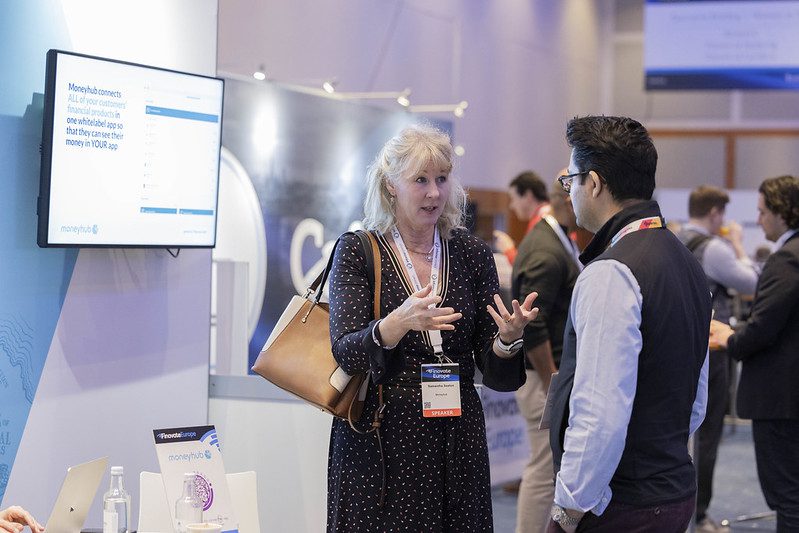
First up, in commemoration of International Women’s History Month, my interviews with Samantha Seaton, CEO of Moneyhub, and Anette Broløs, founder of Finthropology.

Samantha Seaton is CEO of open banking, open finance, and open data platform Moneyhub. The company’s technology helps transform data into personalized digital experiences and initiate payments. Seaton is also a Non-Executive Director at the Charities Aid Foundation Bank and at The Investing and Savings Alliance (TISA).

In our conversation, Seaton discusses the contemporary “obsession with personalization.” We also talk about the latest trends in financial services, the impact of AI, and what financial services can learn from other sectors when it comes to best leveraging new technologies.


How can the study of human cultures benefit banks? We posed this question to Dr. Anette Broløs, co-founder and Director of Finthropology.

For all the discussion of the power of data in financial services in recent years, Broløs believes that companies in this space have not yet done all they can do in order to take advantage of qualitative research that can help them become more customer-centric. As the co-author of the soon-to-be-released book, Customer-Centric Innovation in Finance, Broløs explains how methods common in anthropology can be effectively applied to financial services, potentially revealing insights that banks have been missing for years.

Humanizing the Digital Experience: A Conversation with NCR Voyix’s Erin Wynn

Humanizing the Digital Experience: A Conversation with NCR Voyix’s Erin Wynn

We’re starting off our Women in Fintech series this year with a conversation with Erin Wynn. As Executive Director of Product Management at NCR Voyix, Wynn helps both community banks and credit unions form strategies to implement their digital transformation and product roadmap initiatives.

Wynn also works as a mentor and coach for the company’s internal pre-sales teams. In this role, she helps ensure that sales engineers, solution architects and business analysts are supporting NCR Digital Banking’s vision and solutions.

We caught up with Erin Wynn to talk about her own beginnings in fintech, as well as what she is learning from her customers and clients about the most important trends in our industry.

NCR Corporation changed its name to NCR Voyix in the fall of 2023 as the company spun-off its ATM-based business, known as NCR Atleos. Headquartered in Atlanta, Georgia, the company has 35,000 employees globally, and trades on the NYSE under the ticker symbol “VYX.” NCR has been a Finovate alum since 2015.

How did you get started in fintech? What has led you to where you are today in your career?

Erin Wynn: I began my career in 1998, working at a bank, where I got my first taste of fintech. I worked so closely with one of our vendors, Digital Insight, that I even went to work for them for a few years before a different opportunity presented itself. In the long run, however, I knew Digital Insight was my home, and I returned to them in 2012. Digital Insight was acquired by NCR Voyix’s Digital Banking platform in 2014, but has managed to keep the familial relationship that drew me back here.

My dedication to being a lifelong learner has led me to amazing opportunities, holding various positions within NCR Voyix. I look at every experience as a chance to be curious and learn something new. Whether it be from a client, a colleague, or a partner, I believe everyone has something valuable to share and learn from.

My passion and deep understanding for how our products work and helping financial institutions achieve success have been central to my growth. As the executive director of product management for Digital Banking at NCR Voyix, I lean into my banking experience to help community financial institutions develop strategies for implementing digital transformation and better support their consumers and communities. I empower them to help customers and members improve their financial wellness — a topic I’m especially enthusiastic about (and one that’s driven my career in banking!).

Which digital banking features and capabilities are most resonating with clients? What trends are top of mind for customers?

Wynn: A significant trend we’ve seen is centered around personalization, which really means reminding the consumer that you know and care about them; they’re not just another number. This means creating digital experiences that feel like they’re catered to each user. Financial institutions are realizing that they can’t just compete on low loan rates or high deposit rates. Even if that’s what got the consumer in the door, it won’t be what keeps them there. The financial institutions that emphasize building and maintaining relationships, as well as providing meaningful tools and support (such as financial wellness resources), will be better positioned for loyalty and success.

Another major trend I’ve seen is finding ways to increase overall efficiency. This can mean embracing more automation or researching ways to better maximize current staff and technology. Our clients, like most people, are looking for ways to simplify processes and quickly solve problems. For example, NCR Voyix can support marketing automation, an area of typically high turnover within institutions, helping banks and credit unions make every interaction count.

What has been the impact of AI on banks and credit unions and their accountholders? How should financial institutions begin to incorporate AI into their organizations?

Wynn: AI has notable potential. It can create personalized interactions with each consumer at scale and significantly increase efficiencies. AI can help institutions approach certain processes in different ways. For example, more institutions are using AI when it comes to lending decisions instead of solely relying on traditional factors.

However, when it comes to AI and, especially, generative AI, banks and credit unions should know that the technology is only as strong as the data and information behind it. There is a lot of work to train AI to make AI effective; it’s not a magic bullet. You must give it the right data and training to effectively work, while continuing to provide human oversight.

My advice for banks and credit unions who are considering how to use AI is to first ask themselves what they’re trying to accomplish. For example, is there more of a need to enhance back-office efficiencies? Or are they trying to offer different ways to support users? Don’t try to do everything all at once; it will be too much. Understand that it won’t be perfect from day one. You’re going to have to experiment and improve the AI along the way. 

What does it mean to effectively humanize digital experiences? How can banks and credit unions accomplish this?

Wynn: Effectively humanizing the digital experience means leading with empathy throughout the user experience on their phone or online. This could be something as simple as analyzing the language used in an error message. Evaluate everything with a person in mind; are you providing them with relevant information in a human way, making them feel comfortable and supported along the journey? Of course, personalization is also a major factor here, as well. Money and finances are extremely personal, and they need to be treated with care.

Data is a core factor when it comes to humanizing digital. Effectively leveraging data can uncover crucial consumer behaviors, channel preferences, transactional patterns, and key events in the consumer journey. Employing technologies like AI enables financial institutions to analyze this data more effectively, anticipating member behaviors and offering contextual assistance, such as tailoring their website content to specific needs.

Looking ahead, I expect banks and credit unions to prioritize looking for ways to incorporate more empathy and personalization within their platforms, which will drive relationships and loyalty with their consumers.

Are there any leadership tips that you would like to share with other strong females in a male dominated industry?

Wynn: It all comes down to confidence. Knowing your worth and intelligence goes a long way. Surround yourself with a strong group of women who lift you up and encourage you. When you start to see yourself the way others see you, you are more likely to take a risk in your career or feel more confident to speak up. Also, recognize what motivates and drives you, and know that it’s okay if those things change over time. Everyone constantly evolves in their journey, and you’re sure to learn something every step along the way.


Photo by Pixabay

AI and the Fight Against Fraud: A Conversation with IDology’s Heidi Hunter

AI and the Fight Against Fraud: A Conversation with IDology’s Heidi Hunter

What are the opportunities and challenges of AI in the fraud prevention and identity verification space? We caught up with Heidi Hunter, Chief Product Officer for IDology, a GBG company, to find out.

IDology delivers a comprehensive suite of identity verification, AML/KYC, and fraud management solutions to help businesses drive revenue, deter fraud, and maintain compliance. Founded in 2003, IDology made its Finovate debut in 2012. GBG acquired the company in 2019.

Ms. Hunter joined GBG Americas in 2011 and has worked in both product innovation and customer success roles during her career with the company. She brings more than 13 years’ experience in supporting customers and helping them with their business needs through product innovation, support, and implementation roles.

Currently, Ms. Hunter is responsible for driving the company’s product roadmap and bringing new innovations to the identity verification market through strategic product development.


AI has brought on challenges and opportunities when it comes to fraud and financial crime. What are the principal challenges financial institutions are facing?

Heidi Hunter: There are four main areas of concern: cybersecurity and fraud, biased models, human oversight, and regulatory compliance.

Deloitte has written on the growing concern of AI as a cybersecurity and fraud threat, noting that 51% of executives interviewed believe that the cybersecurity vulnerabilities of AI are a major concern. One issue is the problem of more and better fake documents. AI will simplify creation of passports, driver’s licenses, and ID cards that are virtually indistinguishable from genuine ones. Another issue here is increased synthetic identity fraud. Generative AI is a productivity tool for fraudsters, creating highly realistic synthetic identities at scale.

Additionally, there is more effective phishing and social engineering. A recent study of 1,000 decision makers found 37% had experienced deepfake voice fraud. And Generative AI is used to fuel a surge in phishing tactics.

You also mentioned biased models, human oversight, and compliance.

Hunter: The use of AI and machine learning (ML) algorithms have come under scrutiny with concerns over data bias, transparency, and accountability. With regard to human oversight, 88% of consumers reported that they would discontinue a helpful personalization service if they didn’t understand how their data would be managed.

Lack of human oversight is also a regulatory concern. AI often lacks transparency, leaving businesses exposed when they must explain their decisioning, which has brought expectations of future regulation. AI-generated deepfakes are moving fast and policymakers can’t keep up.

Can the same technology that’s enabling fraudsters also enable FIs to thwart them?

Hunter: Yes, especially when AI is paired with human intelligence. AI benefits from experts charged with overseeing incoming and outgoing data. A trained fraud analyst accompanying AI-based solutions can catch new and established fraud trends. This includes novel threats that AI solutions on their own may miss.

From a compliance perspective, this means businesses can offer a more transparent solution and manage potential bias. Supervised AI can eliminate the need to manually verify an ID, and help provide the explanation needed for compliance and regulatory requirements.

Automation plays a major role in AI. So does human oversight. Can you talk about the relationship between AI and automation?

Hunter: Automation is typically rule-based and follows predetermined instructions, while AI can learn from data and make decisions based on that data. In other words, automation software operates on a set of predefined rules, while AI can make predictions and decisions based on the data it is presented with. The ‘predictions’ aspect of AI- and ML-based tech is where human supervision plays such an important role.

What is the proper balance between human oversight and AI? What role do humans have in an increasingly AI-powered world?

Hunter: Like with any tool, human-supervised AI is great when it’s one part of a larger identity verification (IDV) strategy.

Humans have a role at every ‘stage’ of AI use or implementation: in development, in terms of what data is being used to train a model; during deployment, where an AI-based tool is used and to what degree; and when it comes to holding AI-based tools accountable. This means analyzing a given output and what decisions a FI makes based on that output.

For identity verification specifically, how has human-supervised AI helped solve problems?

Hunter: Consumers also set the bar high for seamless interactions. For example, 37% of consumers abandoned a digital onboarding process because it was too time-consuming. Overcoming this challenge requires a comprehensive strategy. Human-supervised AI can play a critical role in the process, as it can quickly scrutinize vast volumes of digital data to uncover patterns of suspicious activity while also providing insight and transparency into how decisions are made.

Are businesses embracing human-supervised AI? What hurdles remain to broader adoption?

Hunter: Yes, because while there is a lot of excitement around what AI can do, several businesses and people in the academic community believe AI isn’t ready to make unsupervised decisions. As mentioned earlier, businesses show concern over AI operating on its own. Concerns range from ethical questions, to cybersecurity and fraud risks, to making a bad business decision based on AI. On a positive note, businesses are becoming more aware of benefits of supervised learning models.


Photo by cottonbro studio

Genpact’s Anu Sachdeva on Applying Generative AI in Finance

Genpact’s Anu Sachdeva on Applying Generative AI in Finance

Artificial intelligence has taken the technology world by storm – and fintech is no exception. But questions remain as to how AI can be best applied in the world of fintech and financial services.

I talked with Anu Sachdeva, Global Service Line & Solutions Leader at Genpact, during the FinovateFall conference last month to discuss the role of generative AI in particular in financial services. Among the topics covered were:

  • How banks can realize the true value of generative AI.
  • What use cases banks and other financial services organizations have found for generative AI.
  • What are the most important considerations for financial services organizations when adopting generative AI.

Check out the complete conversation.

Photo by Google DeepMind

Grasshopper Bank Partners with Financial Crime Assurance and Testing Specialist Cable

Grasshopper Bank Partners with Financial Crime Assurance and Testing Specialist Cable
  • New York-based digital bank Grasshopper announced a partnership with automated financial crime assurance and testing specialist Cable.
  • The partnership will enable the bank to enhance its own compliance and risk management capabilities.
  • Cable made its Finovate debut last September at FinovateFall.

Digital bank Grasshopper has turned to Cable for its automated financial crime assurance and testing capabilities. The bank will leverage Cable’s technology to deploy next-level automation that will enhance the advanced compliance and risk management capabilities of its own compliance program.

“Cable will help us and our fintech partners take advantage of the latest automation to gain superior visibility and comprehensive compliance insights, which will enable our clients to scale more efficiently and responsibly – back by the leading advanced compliance technology,” Grasshopper Chief Compliance Officer Chris Mastrangelo said.

Cable offers a solution that enables both banks and fintechs to automate their compliance assurance and effectiveness testing. The company’s Automated Assurance offering helps institutions discover regulatory breaches and control failures when they occur, empowering compliance teams to take immediate action. Cable’s technology streamlines a variety of manual processes including operations in quality control, stakeholder reporting, and record management. The company says that businesses have achieved nearly a 6x average return on investment in their first year using Cable. Clients using Cable’s complete suite of solutions have saved an average of $440,000 a year, according to the company. Cable demoed its technology at FinovateFall last year.

Based in New York, Grasshopper is a digital bank with total assets of more than $700 million. The institution caters to the “innovation economy,” serving small businesses, startups, venture capital and private equity, as well as fintechs. The bank’s partners include a number of Finovate alums including Visa, FIS, and Alloy. Grasshopper won Best Use of Tech in Banking at the 2023 Banking Tech Awards USA sponsored by sister publication Fintech Futures.

“As one of the most innovative BaaS providers, Grasshopper demonstrates that integrating cutting-edge compliance infrastructure and automation is mission-critical to the success of the best BaaS companies in today’s banking landscape,” Cable CEO Natasha Vernier said. Grasshopper will take advantage of Cable’s Partner Hub, which provides compliance infrastructure that is specifically designed for bank-fintech relationships. This includes automated risk assessments, automated assurance, quality assurance, management information, reporting, and more.

Vernier co-founded Cable with Chief Product Officer Katie Savitz in 2020. The company raised $11 million in Series A funding in May. Stage 2 Capital and Jump Capital provided the financing, along with existing investor CRV. This year alone, Cable has partnered with digital asset custody platform Palisade, embedded banking software platform Treasury Prime, U.K. bank Griffin, and crypto payments company Ramp.


Photo by Silas Jaeger

Women’s Mentorship Platform Penny Finance Partners With Plaid to Offer Automated Money Insights

Women’s Mentorship Platform Penny Finance Partners With Plaid to Offer Automated Money Insights
  • Financial mentorship platform for women, Penny Finance, has launched a new automated account integration.
  • The new offering comes courtesy of a partnership with financial data connectivity innovator Plaid.
  • Wall Street veteran Crissi Cole founded Penny Finance in 2020.

Penny Finance has added a new feature courtesy of the company’s partnership with Plaid. The financial mentorship platform for women announced the launch of a new automated account integration that will power enhanced money insights for its members. After linking their bank accounts to the Penny Finance platform, members will receive personalized, financial wellness reminders via email. Members will also get a customized version of Penny Finance’s education and mentorship guidance. This includes everything from helping members understand the differences between their various accounts, to strategies to maximize their financial opportunities. An example of the latter could be a suggestion to transition from a standard savings account to a high yield savings account.

“Managing your finances should be easy. You shouldn’t have to dig through statements, read a finance book, or ask your dad how to manage your money,” Penny Finance CEO and founder Crissi Cole said. “We are so excited to take the guesswork out of managing your money for the most high-potential group of investors out there: women.”

Cole founded Penny Finance in 2020. The company is the first personalized, tech-powered financial mentorship platform to offer real-world advice to women who lack access to a financial advisor. Earlier this year, the company earned a spot in the 2023 Techstars Future of Longevity startup accelerator in partnership with Pivotal Ventures. Penny Finance is among ten startups participating in the program.

Penny Finance began the year with the launch of an all-in-one community feature. The offering provides a welcoming space for women to come together and share advice on a variety of financial wellness topics. The Penny Finance team moderates the new feature, which hosts questions on everything from debt management to investing.

“Women are whip-smart,” Cole said when the community feature was introduced in January. “We are more educated, live longer, and yet, we typically retire with one-third of the wealth of a man. Why? The system wasn’t built for us. The world of finance is a ‘boys club’ with its own rules. But, the good news is, it’s not as complicated as they made it out to be.”

Plaid has been a Finovate alum for nearly a decade. The company introduced itself to Finovate audiences as part of our developers conference, FinDEVr SiliconValley, in 2014. In the years since, the financial data connectivity innovator has grown into a leading fintech that powers more than 7,000 apps and services with its API-first network. The company also facilitates connections to more than 12,000 financial institutions. Headquartered in San Francisco, California, Plaid was founded in 2013. Zach Perret is CEO.


Photo by Christina Morillo

Celebrating Earth Day with Finovate’s Environmental/Sustainability Demo Scholarship Winners

Celebrating Earth Day with Finovate’s Environmental/Sustainability Demo Scholarship Winners

The Finovate Sustainability and Inclusion Scholarship Program is an opportunity to showcase innovative startups that are embracing strong ESG principles as a key part of their offering. To commemorate Earth Day this weekend – and the importance of the “E” in ESG – we’re highlighting three companies that have earned scholarships in the Environmental/Sustainability category.

Daizy

Founded in 2019, Daizy won the Sustainability category of our Finovate Scholarship program in FinovateFall 2022. The company’s technology leverages AI to help investors access the data-driven stories behind the biggest companies in the U.S. Daizy has combined its expertise in ESG, analytics, data visualization, and natural language processing to offer an app that enables users to link their brokerages accounts, build watchlists, as well as track and search for new investment ideas using Daizy’s NLP portfolio, stock, and crypto search functionality.

Daizy Chief Operating Officer Andrew Peddar at FinovateFall 2022.

Based in the U.K., Daizy has raised $3 million in funding. Deborah Yang is co-founder and CEO. Follow Daizy on Twitter. Connect with Daizy on LinkedIn.


Energy Shares

Energy Shares won the Environmental category of our Finovate Demo Scholarship program for FinovateFall 2022. The company is a FINRA-registered broker-dealer and equity crowdfunding platform for utility-scale renewable energy projects in the U.S. Energy Shares facilitates access to investment opportunities in renewable energy projects, opportunities that were previously only available to institutional, corporate, and select retail investors. Via the Energy Shares platform, investors and developers can connect and collaborate to support renewable energy initiatives and support the growth of the renewable energy industry.

Energy Shares Social Media and Community Manager Chloe Breau and CMO Mark Kapczynski at FinovateFall 2022

Energy Shares was founded in 2020. The company is headquartered in Pasadena, California. Follow Energy Shares on Twitter. Connect with Energy Shares on LinkedIn.


Little Blocks

Hyderabad, India-based Little Blocks won the Environmental category of the Finovate Demo Scholarship program for FinovateEurope 2023. The company leverages industrial IoT sensors and blockchain technology to foster access to risk capital for expenses like machinery purchases. Little Blocks’ technology tokenizes each machine and ownership is distributed among the token holders, each of whom has a stake in the underlying cash flows. This enables manufacturers to pay based on the actual use of the machine rather than a fixed monthly loan repayment.

Little Blocks co-founder and CEO Hanu Panchakarla at FinovateEurope 2023.

Little Blocks was founded in 2022 and is funded by a grant from the Startup India Seed Fund.


Photo by Harry Cunningham @harry.digital