eToro Teams Up with Sentifi to Launch Social Sentiment Portfolio

eToro Teams Up with Sentifi to Launch Social Sentiment Portfolio
  • eToro launched its SocialSentiment portfolio of stocks with high ESG and social sentiment criteria this week.
  • The new offering was made possible courtesy of a partnership with alternative data provider – and fellow Finovate alum – Sentifi.
  • Sentifi’s technology analyzes more than 500 million tweet – and two million news articles, forums, and blog – in order to create its social sentiment rating (sentScore) for positive social chatter.

eToro has unveiled a new solution for investors looking for exposure to U.S. companies with strong ESG performance. The social investing network has teamed up with alternative data provider Sentifi to launch SocialSentiment, a new portfolio offering that features the top 10 stocks in the S&P 500 that meet ESG and social sentiment criteria. Rebalanced monthly, the initial roster of stocks in the SocialSentiment portfolio are: Verisign, Teradyne, Northern Trust, Mid-America Apartment Communities, Intuitive Surgical, Fifth Third Bancorp, F5 Networks, Equity Residential, Dollar Tree, and Allstate.

‘With this portfolio, we aim to offer retail investors exposure to stocks that are being discussed in a positive light on social and digital channels, adding an extra layer of insights,” eToro Head of Investment Portfolios Dani Brinker said. “We look forward to partnering with the Sentifi team, and working together to harness the power of social networks.”

Sentifi made its Finovate debut at FinovateAsia in Hong Kong in 2016, and returned to the Finovate stage a year later for FinovateEurope in London. The company’s AI-enabled technology analyzes more than 5,000 stocks, currencies, commodities, and indices – as well as passive and active mutual funds. Sentifi combines market metrics with social sentiment (sentScore) and an ESG score to create a roster of stocks that have both high ESG credentials and positive social chatter and awareness. Sentifi builds its sentScores by analyzing more than 500 million tweets, as well as two million news articles, forums, and blogs.

“The events over the past several years relating to the meme stock rallies are evidence of how the herd can change direction, and where these changes happen, which is largely in social networks and forums,” Sentifi CEO Marina Goche said. “Social networks, news, blogs, and forums are also a valuable source of changing risk for asset classes and offer dynamic views on ESG performance appreciation and degradation for companies globally — essential for constructing portfolios that outperform a benchmark.”

Investors can buy into the SocialSentiment portfolio with as little as $500. Investors can access tools and charts to track the portfolio’s performance, as well as monitor eToro’s social feed to stay up-to-date on developments in the sector. At this time, the portfolio is not available to investors in the U.S.

eToro’s SocialSentiment portfolio is the latest addition to the company’s suite of Smart Portfolios that give investors exposure to a variety of market themes. The portfolios are for long-term investments, feature unique investment strategies, are curated by eToro analysts, and give investors a way to gain exposure to a diverse range of major market trends without having to pay portfolio management fees.

Founded in 2007, eToro has more than 30 million registered users on its social investing network. Among Finovate’s earliest alums, the company won Best of Show in its debut at FinovateEurope in 2011.

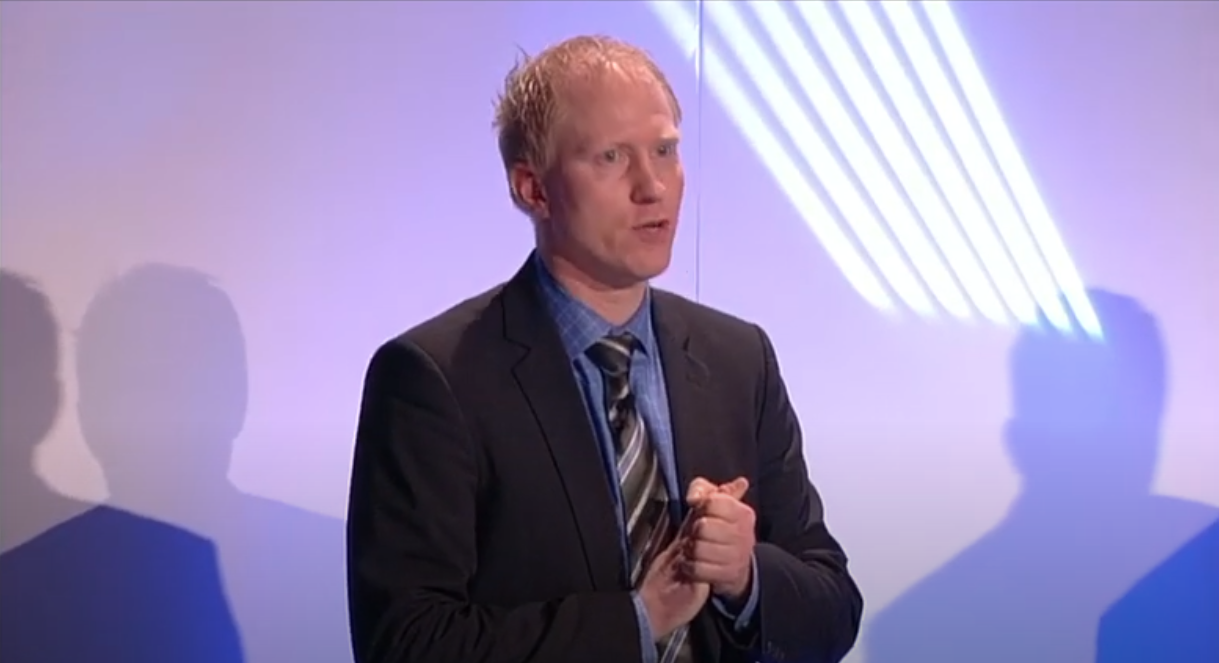

Photo by Leeloo Thefirst

FinovateEurope’s Alumni Alley: Pioneering PFM, French Fintech, and an Investor Social Network

FinovateEurope’s Alumni Alley: Pioneering PFM, French Fintech, and an Investor Social Network

FinovateEurope’s Alumni Alley is a great way for our pioneering alums to show that, more than a decade later, they are still driving fintech innovation. Check out our Finovate Alumni Alley hub for more information on how to get involved.

To celebrate the launch of this new opportunity, we’re going to highlight alums that demoed their technologies at some of the earliest FinovateEurope events. From Best of Show winners to late blooming breakouts, FinovateEurope has spent the past dozen years showcasing the companies that have become many of fintech’s favorites. Over the next few weeks heading into the winter holidays, we will share their stories here.


A Best of Show Winner – Meniga

One of four companies to win Best of Show in our inaugural FinovateEurope in 2011, Meniga introduced itself as a mobile PFM solution provider for retail banks in Europe. Hailing from Reykjavik, Iceland, and founded in 2009, the company partnered with Íslandsbanki to help its technology reach 5% of households within the first year of launch.

Today the company has grown into a digital innovation partner for more than 165 banks around the world and grown its workforce ten-fold. From its start as a white-label PFM innovator, Meniga has added to its finance management offering with Cashflow Assistant and Smart Money Rules solutions, and added a suite of data management solutions for consolidation, enrichment, and discovery to its product mix. The company also now offers Beyond Banking solutions for banks, as well. These products include customer engagement/empowerment solutions like Carbon Insight and solutions for SME customers such as Cashback Rewards and Market Intelligence.

Meniga co-founder Georg Ludviksson introducing Meniga to the FinovateEurope audience in 2011.

Long-time Meniga CEO and co-founder Georg Ludviksson stepped down in August. The company’s new CEO, Simon Shorthose, said in a statement that the company was in a “prime position for growth” due to the “rapid modernization of banking technology and the move to real-time cloud infrastructures.” He added “Meniga’s solutions are at the forefront of helping banks take their digital banking experience to the next level of hyper-personalization.”


A Late Blooming Breakout – Linxo

One of the benefits of FinovateEurope is not just the ability to showcase for companies in Europe in general, but also for the opportunity of countries not always associated with fintech innovation to show what entrepreneurs in their nations are up to.

France is one example of such a country and Linxo – which made its Finovate debut in 2011 and, nine years later, was acquired by Credit Agricole for an undisclosed sum – is one example of just such a company. Co-founded in 2010 by CEO Bruno Van Haetsdaaele and headquartered in France, Linxo demoed its platform that represented the first bank account aggregation service for French financial institutions.

Linxo co-founder and CEO Bruno Van Haetsdaele on stage at FinovateEurope 2011.

“This transaction enables us to accelerate and strengthen our services for the Crédit Agricole Group, while giving us the opportunity to develop our offering in France and internationally for our clients and prospects with Oxlin, our ACPR-authorized payment institution, and to continue the development of Linxo, one of France’s most popular personal financial management apps,” Van Haetsdaele said when the acquisition was announced.

More than three million users in France leverage Linxo’s mobile app to manage their budgets and simplify their finances. Linxo had raised more than $26 million in funding prior to its acquisition.


From Good to Great and Still Going – eToro

Helping investors navigate the financial markets was the goal of many fintechs that demoed their technologies on the Finovate stage in the early years. But one of the innovators in this space to make a big first impression that only has grown bigger over time is eToro.

Another company to win Best of Show in the first FinovateEurope, eToro was an established investing network with more than 1.5 million registered users from 120+ countries in 2011. The company is among the pioneers in social investing, with innovative solutions that helped novice traders and investors learn from successful, veteran traders and investors, and improve their own outcomes in the market.

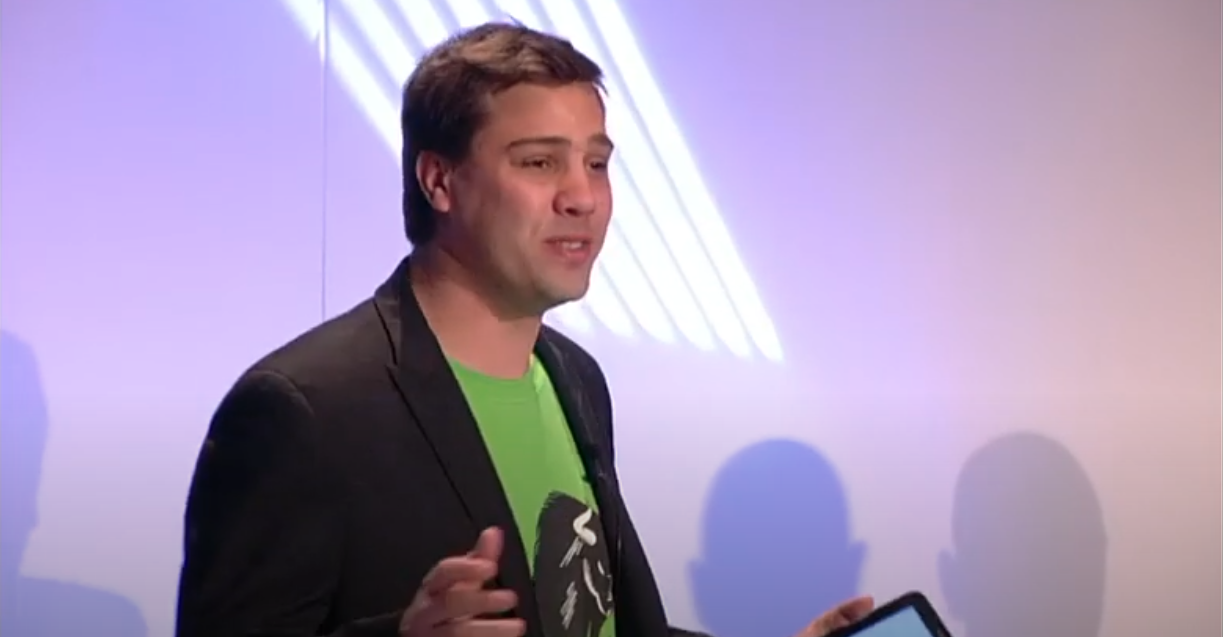
eToro CEO Yoni Assia demonstrating the eToro network at FinovateEurope in 2011.

Among the more popular companies to demo at FinovateEurope, with six Best of Show trophies won from 2011 through 2017, eToro today is still one of the biggest social investing communities in the world with more than 30 million registered users currently sharing their investment strategies on the platform. The company launched its mobile app in 2012, offered trading in cryptocurrencies in 2017 and, this year, unveiled both fractional share investing with zero commissions and eToro Options for options traders in the U.S.

This month, eToro teamed up with Broadridge Financial Solutions to enable proxy voting for investors on its platform. The ability to cast proxy votes will extend to investors holding fractional shares, as well. The partnership is a victory for advocates of corporate accountability by enabling eToro investors to weigh in on issues ranging from mergers and executive pay to ESG initiatives and goals.


Photo by Peter Spencer

Get Gatsby: Social Investment Platform eToro Acquires Option Trading App for $50 Million

Get Gatsby: Social Investment Platform eToro Acquires Option Trading App for $50 Million
  • Social investment platform eToro inked a definitive agreement to acquire stock and options trading app Gatsby for $50 million.
  • U.S.-based Gatsby offers a commission-free, stock and options trading solution geared toward Millennial and Gen Z investors and traders.
  • Making its first Finovate appearance in 2011, eToro has won Best of Show in every one of its six appearances on the Finovate stage.

Social investment platform eToro has agreed to acquire Gatsby, a U.S.-based, commission-free, stock and options trading app. The Israel-based company, which has won Best of Show awards in every one of its six appearances on the Finovate stage since 2011, will pay approximately $50 million for the trading company.

As part of the transaction, Gatsby’s co-CEOs and co-founders Jeff Myers and Ryan Belanger-Saleh – along with other senior Gatsby staffers – will join the eToro team. The acquisition of Gatsby will enable eToro to diversify its offering to investors and traders in the U.S., a factor that eToro CEO Yoni Assia called “a strategic focus” for his company.

“Through Gatsby we can provide U.S. users with access to a safe and simple way to trade options,” Assia said, “which we know are particularly attractive in challenging markets.”

Geared toward younger investors and traders, Gatsby was founded in 2018 as a way to bring commission-free options and stock trading to a demographic that has been overlooked until recently. Company co-founder Belanger-Saleh credited eToro as an inspiration for launching Gatsby, calling eToro a social investing pioneer and “the cool older sibling we’d love to hang with.” Joining the eToro team will be Gatsby’s president and chief operating officer (both co-founders), as well as Gatsby’s Chief Technology Officer, Head of Product, and others.

“We are incredibly excited to welcome the Gatsby team to the eToro family,” Assia said. “We have a shared mission of empowering investors through simple, transparent tools.”

The acquisition announcement from eToro comes less than a month after the company launched its private equity portfolio that enables individual retail investors to access private markets that would be otherwise inaccessible to them. eToro’s Private Equity Smart Portfolio gives users exposure to 14 publicly listed asset management and investment companies that manage alternative assets. These firms, including Apollo Global Management, Blackstone, and The Carlyle Group, all feature strong ROIs and get their revenues via a combination of management fees for asset allocation and performance fees based on realized profits.

“Our goal is to open the global markets so that everyone can trade and invest in a simple and transparent way,” eToro Head of Investment Portfolios Dani Brinker said. “With this portfolio we want to leverage the wave of private equity company listings and offer our users a new solution to diversify their portfolio and gain exposure to the revenues generated in private markets.”

Founded in 2007, eToro currently has more than 28 million registered users who share their investment strategies and make it easy for market newcomers to buy, hold, and sell assets ranging from stocks to cryptocurrencies.


Photo by Haley Black

eToro Expands into NFTs

eToro Expands into NFTs
  • Social investing platform eToro is launching eToro Art, a $20 million fund to support NFT creators.
  • Once the company’s $20 million collection of NFTs is complete, eToro will be one of the world’s leading NFT collectors.
  • eToro has made it clear that, while its new project supports creators, it is not an NFT marketplace.

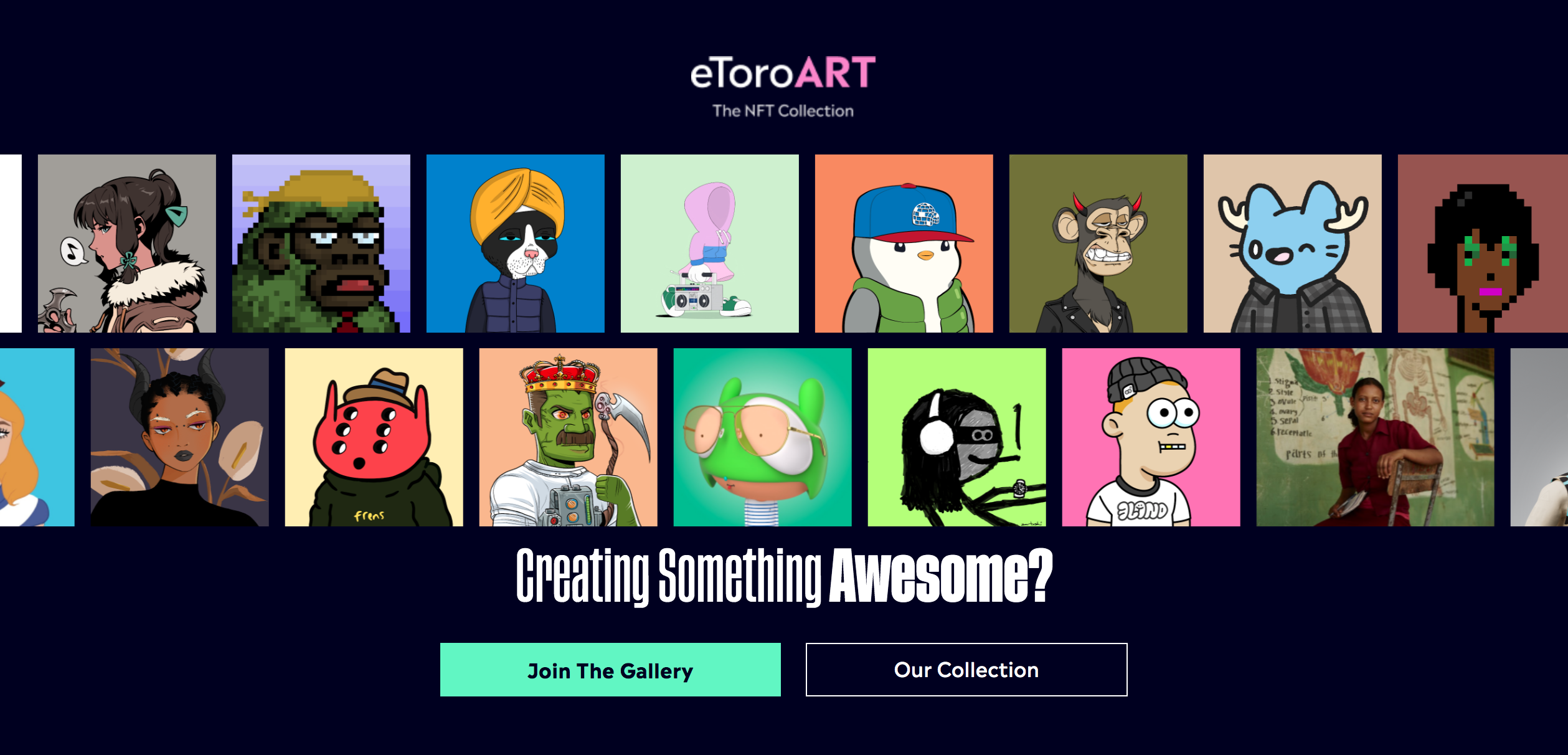
When it comes to trends in fintech, NFTs are red hot. To capture some of this heat, social trading and investment network eToro is launching etoro Art, a $20 million fund to support NFT creators, agencies, and brands by purchasing blue chip NFTs and investing in emerging creators and NFT projects.

As part of etoro Art, the Israel-based company has amassed its own collection of NFTs, which includes projects from Bored Ape Yacht Club, CryptoPunks, World of Women, and pieces from emerging artists. After eToro spends the full $20 million on NFTs, the company will be one of the world’s leading NFT collectors. This week, eToro will debut its NFT collection during an event at the Bass Contemporary Art Museum in Miami.

eToro Cofounder and CEO Yoni Assia said that the company’s entrance into the NFT space “is only natural” and that the move will serve as the bridge to bring its community of 27 million registered users into NFTs and the metaverse. “We’re incredibly excited to see the developments in this space over the coming months,” Assia added.

As part of today’s move, eToro will spend an additional $10 million to support up-and-coming creators and brands on new, emerging projects. Creators simply fill out an intake application and, if they are selected to participate, eToro will offer “a range of support and services” to help them bring their project to fruition.

“As the leading social investing platform, eToro is well positioned to lead this space,” said eToro Art Managing Director Guy Hirsch. He added, “eToro.art will bring creators and investors together through technology, uniting communities around art.”

The company is making it clear that it is not launching an NFT marketplace. “No NFTs may be purchased through eToro by use of the services provided by eToro, and eToro is not responsible for any trading activity in NFTs which may occur on any third-party platforms to which eToro may direct its customers,” the company said in a statement. Instead, eToro Art is simply an aggregation platform with referral to third-party platforms.

Founded in 2007, eToro went public in a $10 billion SPAC last year. The company was an early adopter of cryptocurrency, having purchased 100 bitcoin in 2012.


Photo by Andrey Metelev on Unsplash

eToro To Go Public in $10 Billion SPAC

eToro To Go Public in $10 Billion SPAC

Social trading and investment marketplace eToro announced today that it is making the leap to go public. In true 2021 style, however, the Israel-based company isn’t pursuing an IPO. Instead, eToro is merging with FinTech Acquisition Corp. V, a publicly-traded special purpose acquisition company (SPAC), in a deal worth $10 billion.

When the deal is finalized, the combined company will operate as eToro Group Ltd. and is expected to be listed on the NASDAQ.

The move to go public comes after a period of growth for the Israel-based company. Last year, eToro added more than five million new users and brought in $605 million in revenue, 147% higher than the revenue it saw in 2019. Additionally, average monthly registrations have grown from 192,000 in 2019 to 440,000 in 2020. In January 2021 alone, eToro added more than 1.2 million new registered users. Similarly, the number of trades executed on its platform has grown– from eight million average trades per month in 2019, to 27 million in 2020, and 75 million in January 2021 alone.

“We founded eToro with the vision of opening the global market for everyone to trade and invest in a simple and transparent way,” said eToro CEO Yoni Assia. “Today, eToro is the world’s leading social investment network. Our users come to eToro to invest, but also to communicate with each other; to see, follow, and automatically copy successful investors from all around the world. We created a new category of wealth management – social investing – and we are dominating the market as evidenced by our rapid expansion.”

eToro is the seventh fintech to use a SPAC to go public in the past few months, joining SoFi, BankMobile, Payoneer, MoneyLion, Apex, and OppFi.

eToro was founded in 2007 and has offices in Cyprus, the U.K., Australia, and the U.S. The company is among Finovate’s earliest alums, demoing at the very first FinovateEurope conference in 2011.


Photo by Quino Al on Unsplash

Four Fintechs Crowned Unicorns in the First 3 Weeks of 2021

Four Fintechs Crowned Unicorns in the First 3 Weeks of 2021

There’s not much room in 2021 for 2020-style pessimism. Sure, if you look, you can find plenty of things to be negative about so far this year. However, one aspect of 2021 that’s giving fintechs hope is the recent uptick in valuations across the fintech sector.

Despite last year’s global events, many fintechs received valuations exceeding $1 billion. In fact, in December 2020 alone, four fintechs, including eToro, Creditas, PhonePE, and GoCardless, received unicorn status.

This year seems to be off to a similarly bullish start, with four fintechs becoming unicorns in just the first three weeks of 2021:

Digit Insurance

India-based Digit Insurance became India’s first unicorn of 2021 after the country saw 11 new unicorns in 2020. Just 15 days into the new year, and after raising $18.5 million, Digit Insurance unveiled a new valuation of $1.9 billion.

Divvy

Spend management startup Divvy received a valuation of $1.6 billion after its Series D round on January 5. The $165 million came from new investors PayPal Ventures, Whale Rock, Schonfeld, and previous backers NEA, Insight Venture Partners, Acrew, and Pelion. The pandemic has spurred increased traffic to Utah-based Divvy; the startup has experienced a 500% increase in monthly sign-ups since March 2020.

Mambu

SaaS banking platform Mambu earned its unicorn title after landing a $135 million investment on January 7. The boost gave the Germany-based company a post-money valuation of just over $2 billion. Mambu will use the funds to increase its presence in Brazil, Japan, and the U.S.

MX

The second fintech unicorn to come out of Lehi, Utah is fintech data company MX. Founded in 2010, MX raised $300 million in Series C funding on January 13, bringing the company’s total capital to $505 billion and boosting its valuation to $1.9 billion. Company CEO Ryan Caldwell said that MX will use the funds to hire more staff and improve its data collection and enhancement capabilities.


Photo by Stephen Leonardi on Unsplash

eToro Reaches 13 Million Users, Spurred by COVID-19

eToro Reaches 13 Million Users, Spurred by COVID-19
photo credit: Hans Eiskonen on Unsplash

Across the globe, many people have shifted their attention to focus on two things: their health and their finances. Fintech companies have stepped up in recent weeks to help citizens with the latter. In fact, many are seeing record app downloads, usage, logins, and a surge of new users.

eToro is one such fintech. In fact, the U.K.-based company recently announced it has now reached 13 million active users. This milestone comes in part thanks to the comparatively large number of new users that have registered in the first quarter of this year. eToro saw more than a fourfold increase in the number of new users in the first quarter of 2020 than it saw in the first quarter of 2019.

“Coronavirus induced market volatility has been a focus for media globally and has brought the topic of investing increasingly onto people’s radars,” said eToro CEO Yoni Assia. “We have seen a large increase in trading volumes on eToro since the start of 2020 from both new and existing users.”

Activity on the stock-trading platform has also ramped up this year, with stock trading transactions increasing by 3x since January 1. Much of this activity can be attributed to the fact that eToro launched commission-free stock investing for its Europe-based users in May.

As for what’s next, eToro said it plans to expand its commission-free stock investing to users in the U.S. and Asia Pacific regions later this year. The company also noted that it plans to ramp up its acquisitions to keep up with customer demand.

EToro is, by all accounts, in the middle of a growth spurt. In addition to its boosted user numbers and acquisition plans, the company is also in the middle of a hiring spree. It is currently seeking to fill 60+ job vacancies at a time when many fintechs are laying off or furloughing their staff.

eToro’s Evolution

eToro’s Evolution

Social trading and investment platform eToro has never been one to stand still for very long. The company’s development cycle is fast enough to make even the most sprightly fintech jealous.

Roots

eToro was founded by David Ring, Ronen Assia, and Yoni Assia in 2007 with a mission to make trading accessible to anyone, anywhere, and reduce dependency on traditional financial institutions. The company has come a long way since its first iteration, which was, by today’s standards, simple.

Starting up

eToro started as an easy-to-understand online trading platform that made investing more digestible with the use of graphics. Three years after its initial launch in July of 2010, the company unveiled CopyTrader, its social trading platform that enables users to copy the trades of successful investors. The model proved popular among investors and gave eToro notoriety within the fintech industry. After CopyTrader the company launched a mobile app, introduced stocks, unveiled a new interface, and launched CopyPortfolio.

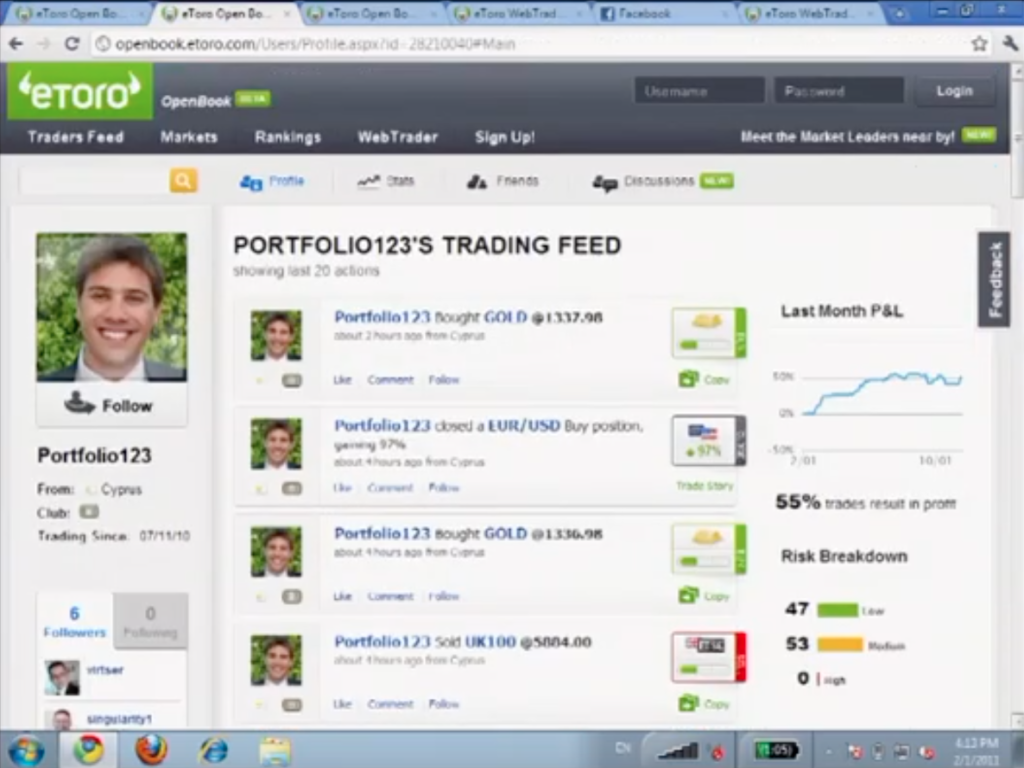
This screenshot from eToro’s FinovateEurope 2011 demo gives off major retro fintech vibes.

Move into cryptocurrencies

In 2013, eToro took a chance on cryptocurrencies, adding Bitcoin trading via CFDs. From there, the company continued to advance its cryptocurrency offerings. Here’s what the past seven years of innovation have looked like for eToro:

  • 2017: enabled users to trade and invest in Ethereum, XRP, Litecoin, and others
  • 2018: launched its cryptocurrency investment offering to users in the U.S.
  • 2019: partnered with TIE to deliver sentiment-driven investment strategies
  • 2019: launched the eToro Club, a personalized trading experience

Best of Show accolades

eToro’s most recent Finovate appearance was FinovateEurope 2017, where CEO and Founder Yoni Assia, along with VP of Product Tal Ben-Simon, took the stage to demo CopyFunds for Partners. The duo won Best of Show bragging rights for the presentation, marking eToro’s fourth Best of Show award since its first Finovate demo in 2011.

To see eToro’s evolution yourself, watch the company’s most recent 2017 demo in contrast with its 2011 demo.

FinovateEurope 2017

FinovateEurope 2011

Influencers as Innovation: Fintechs Turn to the Famous in Bid to Boost Visibility

Influencers as Innovation: Fintechs Turn to the Famous  in Bid to Boost Visibility
Photo by Vishnu R Nair from Pexels

Expensify’s 2019 Super Bowl advertisement – Expensify Th!$ – featuring Adam Scott and rap star 2Chainz – was not the first time a fintech leveraged the shine from pop culture to illuminate itself.

But as Snoop Dogg celebrates his first anniversary as a high-profile Klarna shareholder and RDC announces that it has hired a network of social media influencers to help promote its new digital banking app, it’s clear that firms are all-in when it comes to using celebrity to showcase everything fintech – from expense management to pay-later ecommerce solutions. Alec Baldwin, who has become one of pop culture’s more potent pitchmen, was recently enlisted by eToro to help boost its CopyTrader marketing campaign.

The financial world has been as much a fan of celebrity as a customer engagement tool as any other industry with brands to build. Today, Mastercard announced that it was working with Swedish singer Nadine Randle to produce a song that “integrates the payment giant’s ‘sonic brand.” The company’s ‘sonic brand’ identity itself is the fruit of a partnership between Linkin Park co-founder Mike Shinoda, who developed the score last year.

And from the local sports hero to the homecoming veteran, credit unions and community banks have long leveraged the willingness of regional-minded stars and celebrities to “give back” to the communities and neighborhoods they grew up in.

But as fintechs increasingly partner with and compete with these and other financial institutions – and take advantage of new forms of celebrity such as social media influencers – they are increasingly taking a page from the FI marketing playbooks when it comes to using star power to shine a light on the work they do.

Expensify CEO and founder David Barrett highlighted the way his company’s technology would make it easier for talents like 2Chainz to “make the most epic music video ever” in his Expensify Th!$ ad. But he also told Fast Company at the time that even though Expensify had the “strongest brand” in the expense management game, and was the fastest-growing such firm with the biggest customer base, “virtually nobody in the world knows who we are.”

The celebrity approach to marketing is not without its detractors. In a post at Medium.com last year, Millennium Management COO Ajay Nagpal noted data from the 2018 Sprout Social Index that suggested that consumers are more likely to buy a product or service recommended by a friend than a celebrity. Moreover, Nagpal raised an interesting question as to whether or not the star endorsement of a brand in fashion, for example, would have the same impact as the same star’s endorsement of a brand in wealth management or tax planning.

Perhaps it depends on the star. Last fall, Finovate audiences were treated to a surprise appearance from noted Canadian investor and star of the reality show Shark Tank, Kevin O’Leary, who provided an on-stage, end-of-demo endorsement of Bambu’s Beanstox investing solution. And it’s a good bet that “Mr. Wonderful” is likely to be a more powerful advocate for white- label, B2B robo advisory technology than he might be for, say, leggings …

Additionally, as Director of Brand Strategy at Weber Marketing Group John Mathes wrote for The Financial Brand, even the best celebrity branding works better over time rather than as a one-off. Calling the practice “borrowed interest,” Mathes warned that while carefully targeted star power can produce positive results “brand building is usually a slow process. It takes time. It’s not a single campaign or gimmick.”

The impact of celebrity and influencers on the visibility of and engagement with fintech remains to be seen. But maybe more to the point, the fact that a growing number of fintechs are adopting the same approach to brand-boosting as their peers and rivals in the rest of the financial world may be a positive sign for the fintech industry in and of itself.

Finovate Alumni News

On Finovate.com

  • NTT Data Acquires Digital Services Provider NETE.

Around the web

  • Temenos introduces robo-advisor and goal-based investing apps to its Temenos Infinity for Retail Banking.
  • eToro launches the shopping cart portfolio, an investment portfolio with global e-commerce stocks.
  • Taiwan’s Chailease selects NICE Actimize for AML compliance program.
  • Aite Group names Baker Hill NextGen Best-in-Class Commercial Loan Origination System.

This post will be updated throughout the day as news and developments emerge. You can also follow all the alumni news headlines on the Finovate Twitter account.

eToro’s Latest Acquisition Boosts its Crypto Presence

eToro’s Latest Acquisition Boosts its Crypto Presence

Social trading and investment platform eToro is making moves this month. In addition to launching CopyTrader in the U.S. last week, the company announced today it has acquired Delta, an app for tracking crypto portfolios.

Delta’s app helps its 1.5 million users track and analyze their crypto portfolios, offering information on more than 6,000 crypto assets traded on more than 180 exchanges.

The deal will close for an undisclosed amount, though TechCrunch rumors the purchase price is around $5 million. Delta is eToro’s second acquisition this year (and overall) after buying blockchain company Firmo in March.

“When we started eToro our goal was to disrupt the world of trading. We wanted to change the way people think about trading and investing, ultimately reducing dependency on traditional financial institutions and make trading and investing more transparent and fun,” said eToro Cofounder and CEO Yoni Assia. “This mission remains our guiding light and we will continue to evolve both organically and by acquisition in order to bring our customers the very best experience.”

eToro’s purchase of Delta shows the company’s increased commitment to the crypto space. Last year the company launched its subsidiary eToroX, a regulated digital asset exchange and crypto wallet to support tokenized asset trading. Doron Rosenblum, Managing Director of eToroX, said that Delta is “a great addition” to eToro’s crypto offering. Rosenblum also mentioned that he plans to integrate Delta into the eToroX platform to allow customers to trade from within the app.

Logistically, the Delta team will become part of eToroX, reporting to Rosenblum, but will continue working from its headquarters in Belgium.

And if you haven’t seen eToro’s video featuring Alec Baldwin pitching the U.S. launch of CopyTrader, here you go:

https://www.youtube.com/watch?v=GBBuFuHAxoY

eToro most recently showcasedCopyFunds for Partners at FinovateEurope 2017. Originally known for being a social trading platform, the company began pioneering bitcoin trading in 2013 via CFDs and in 2017 allowed clients to trade and invest in Ethereum, XRP, Litecoin, and other cryptocurrencies. eToro has raised $223 million since it was founded in 2007.

Finovate Alumni News

On Finovate.com

  • Avaloq Seeks Exit: M&A or IPO?
  • eToro’s Latest Acquisition Boosts its Crypto Presence
  • IBM and Bank of America Partner on Public Cloud for Financial Services

Around the web

  • DefenseStorm names Chief Revenue Officer Steve Soukup as its new President.
  • NICE Actimize introduces its new Federated Learning capability that offers higher fraud detection via Collective Intelligence.
  • Fiserv inks global agreement with German grocery industry leader ALDI.
  • GoCardless to use TransferWise’s API, TransferWise for Business product, and provide TransferWise’s FX rates to its customers.
  • PayKey forms SBI PayKey Asia, a joint venture with SBI Holdings that will support the sales and market launch of PayKey across the region.
  • ThetaRay taps Moran Goldwein as SVP for Human Resources.
  • Infinex to integrate Jemstep’s Advisor Pro to deliver digital advice to Infinex’s client firms.

This post will be updated throughout the day as news and developments emerge. You can also follow all the alumni news headlines on the Finovate Twitter account.