This site is operated by a business or businesses owned by Informa PLC and all copyright resides with them. Informa PLC's registered office is 5 Howick Place, London SW1P 1WG. Registered in England and Wales. Number 8860726.
Finovate Blog
Tracking fintech, banking & financial services innovations since 1994
Investing platform eToro announced plans to acquire Argentina-based financial app LB Finanzas to establish a regional hub in Latin America.
LB Finanzas offers investments in stocks, ETFs, cryptocurrencies, and money market funds, along with payment services and accounts in Argentine pesos and US dollars.
The deal marks eToro’s fourth acquisition of 2026 and will help the company expand its international footprint by leveraging LB Finanzas’ local expertise and infrastructure.
Investing platform eToroannounced plans to acquire Argentina-based financial app LB Finanzas in a move that will allow the London-based fintech to build a local presence in Latin America. LB Finanzas will serve as eToro’s hub in the new region. Terms of the acquisition were not disclosed.
LB Finanzas offers retail customers access to a range of financial services, including investments in stocks, ETFs, cryptocurrencies, and money market funds. The company also provides payment capabilities and accounts denominated in Argentine pesos and US dollars, combining everyday financial services with investment tools.
“LB Finanzas and eToro share the same belief: that everyone should have access to the tools and knowledge they need to grow their wealth,” said eToro Co-Founder and CEO Yoni Assia. “By combining LB Finanzas’ local expertise with eToro’s global scale and product offering, we can bring that mission to millions of people across one of the most dynamic regions in the world. This acquisition marks an important step in our commitment to building a localized presence in Latin America. LB Finanzas has built a comprehensive, all-in-one investment platform, and joining forces with them will allow us to move faster and go further across the region.”
Founded in 2007, eToro launched Bitcoin trading capabilities in 2013, but didn’t launch a dedicated crypto trading platform in the US until 2019. Today’s acquisition marks the company’s fourth purchase in 2026 after buying crypto wallet Zengo in April, crypto exchange Bit2C in May, and brokerage platform TradeZero in August.
Expanding into Latin America will help eToro tap into a growing market for digital investing and financial services while strengthening its international footprint. LB Finanzas’ established customer base, local market knowledge, and existing infrastructure will help eToro can expand into the new region without building operations from scratch. The acquisition will also allow eToro to bring its suite of investment products to customers in Argentina and potentially across the broader Latin American region.
“We started LB Finanzas in Rosario with a simple idea: that any Argentine should be able to invest with the same tools people use internationally,” said LB Finanzas Co-Founder and CEO Camilo Cristia. “Joining eToro lets us take that much further. For our clients, nothing changes today. What comes next is more products and more scale with the same team they already know.”
This week’s edition of Finovate Global features the latest fintech news from Canada.
Wealthsimple launches AI agent
Toronto-based fintech Wealthsimpleunveiled a suite of new solutions this week, including an AI-powered assistant. Named Penny, the AI assistant is able to send e-transfers, pay invoices, flag duplicate credit card charges, and help self-directed investors buy and sell stocks and exchange-traded funds (ETFs)—all within the Wealthsimple platform. Explicit client approval will be required before any transaction is completed.
“People don’t expect something good to happen at their bank, or with their money,” Wealthsimple Co-founder and Chief Product Officer Brett Huneycutt said. “We want to change that. Everything we introduced today, from our AI assistant to advanced trading tools, helps take friction and fear out of money.”
Operating entirely within the Wealthsimple environment—with no client data leaving the platform—Penny can interpret broader financial goals and plot out next steps rather than simply respond to direct commands. Wealthsimple is planning new integrations by early 2027 that will allow customers to connect their accounts to external AI tools such as ChatGPT and Claude. The company noted that client approval would need to be secured before setup and again in advance of any sensitive actions.
Wealthsimple’s AI agent arrives at a time when Canada’s biggest banks are restricting the ability of third-party AI agents to access their systems and pointing to cybersecurity concerns as the reason. By keeping all of its interactions within its own ecosystem while still providing AI-powered automation, Wealthsimple is addressing similar concerns in its own way.
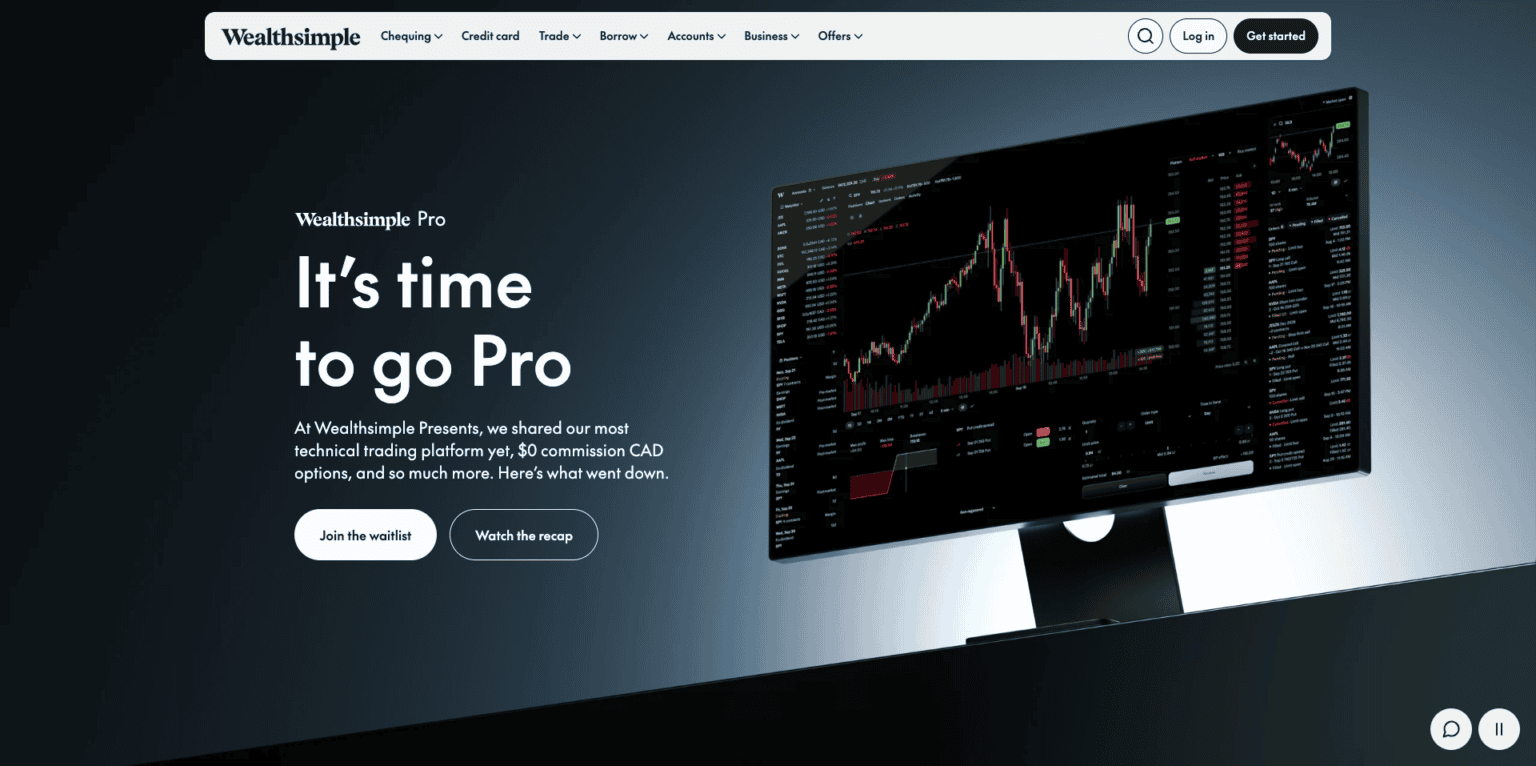
In addition to Penny, Wealthsimple also previewed Wealthsimple Pro, a consolidated trading platform that combines positions, watchlists, and Level 2 market data in a single view. The platform is expected in late November 2026. Wealthsimple also announced the launch of a new Canadian-dollar-backed stablecoin, CADD, also slated for late November. CADD will track the Canadian dollar on a one-to-one basis and offer a 3.25% annual “reward” on holdings kept at Wealthsimple. Another highlight of the company’s announcement was the introduction of the Wealthsimple Business credit card with no FX fees and 1% cashback.
Founded in 2014 and headquartered in Toronto, Ontario, Canada, Wealthsimple serves more than four million Canadians and has approximately $169 billion in assets under administration as of September 2026. The company offers a range of financial products across checking and spending, managed investing, self-directed trading, and tax filing. Co-founder Michael Katchen is CEO.
RemitBee and TerraPay team up on digital wallets
International money movement company TerraPay has partnered with Canadian cross-border payments platform RemitBee. The collaboration is designed to bolster the international remittance and business payout capabilities across key outbound corridors throughout the US, Asia, the Middle East, and Africa.
The partnership will enable faster, more reliable, and cost-efficient international transactions by bringing enterprise-grade cross-border payment capabilities to small businesses. Many of these businesses do not have the same high transaction volumes as the larger entities and, as such, often rely on slower, less efficient channels to move money. From remittances and supplier payments to freelancer compensation, remote payroll, and business settlements, the alliance between TerraPay and RemitBee will expand access to global payment infrastructure traditionally available only to larger enterprises.
“Canada is a high-potential cross-border payments market, but many smaller-value international transactions still move through expensive, fragmented, and slower channels,” TerraPay Head of Europe and Americas Ralph Koker said. “That’s what makes this partnership with RemitBee so relevant. By combining RemitBee’s strong local reach with TerraPay’s global payment network and digital wallet infrastructure, we are bridging the gap between domestic payment capabilities and international connectivity. This is interoperability solving a real market need, enabling businesses and individuals to access a more connected, transparent, and reliable global payments ecosystem.”
London-based TerraPay is an international money movement company with a payment network that connects mobile wallets, bank accounts, and cards worldwide. TerraPay connects its partners—including banks, MTOs, corporates, and fintech platforms—to more than 7.5 billion bank accounts in more than 156 countries. The company’s Xend wallet interoperability network enables secure, real-time cross-border payments to and from 3.7 billion wallets via a single, unified connection. TerraPay was launched in 2015. Ambar Sur is co-founder and CEO.
“Canadian small and medium-sized businesses often lack the transaction volumes to negotiate favorable exchange rates and face delays in cross-border payments,” RemitBee COO Manos Yoganathan said. “By partnering with TerraPay, we’re advancing our vision of making enterprise-grade payment infrastructure accessible to these businesses, expanding their reach across key global corridors and enabling seamless payments into digital wallets.”
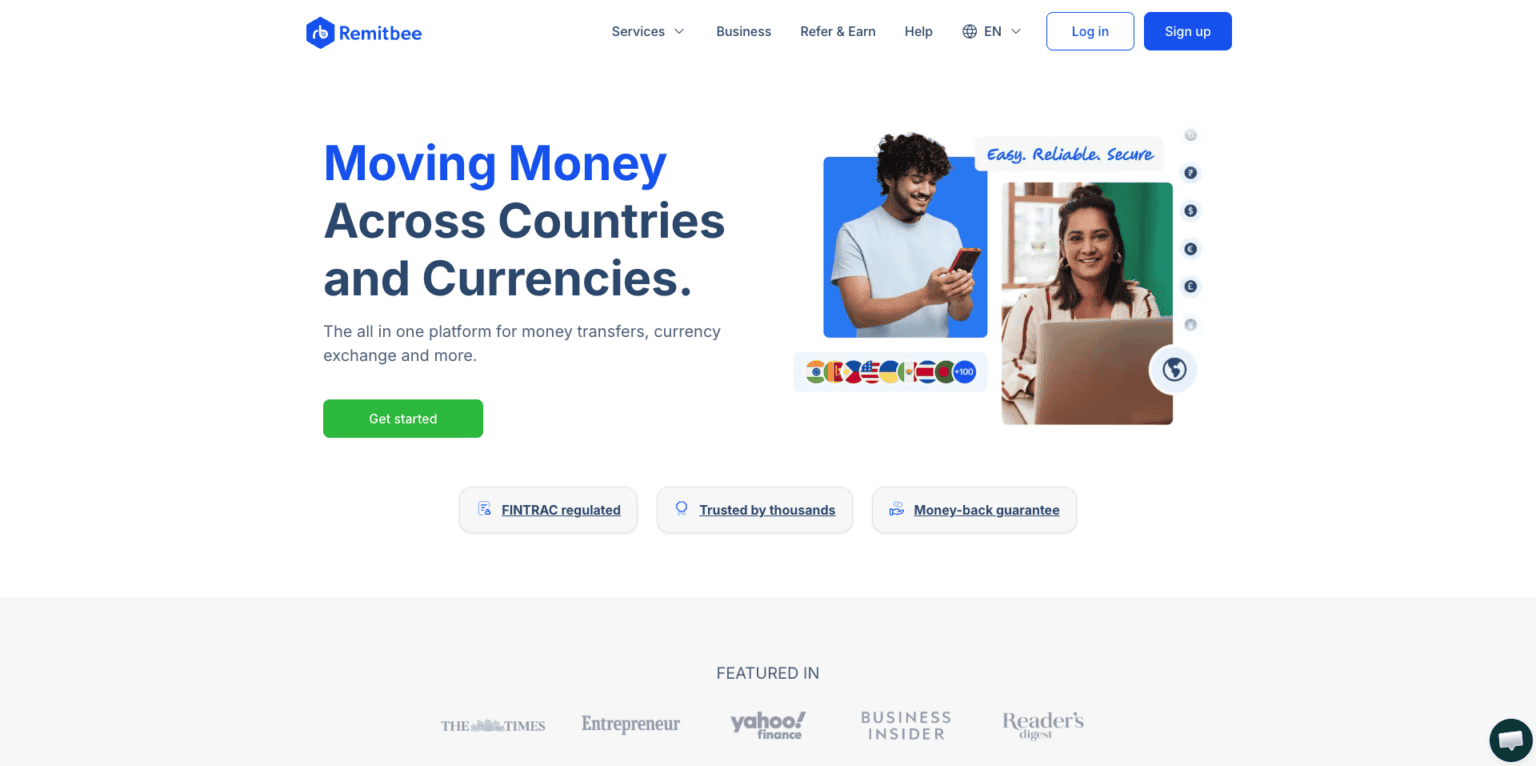
Founded in 2015 and headquartered in Mississauga, Ontario, RemitBee offers an all-in-one platform for money transfers, currency exchange, tax filing, billpay, mobile top-ups, and more. The company enables secure fund transfers from Canada to more than 150 countries around the world and provides seamless currency exchange between Canadian and US dollars. RemitBee offers both personal and business accounts, the latter featuring increased transaction limits, enhanced security, compliance, and dedicated business support.
Canada and EU agree to link real-time payment systems
The European Union and the Government of Canada have made a joint commitment to advance work in support of connecting Canada’s Real-Time Rail (RTR) with Europe’s instant payment systems. The agreement commits to “support work toward connecting instant payment systems to facilitate faster, lower-cost, and more seamless cross-border transactions, making it easier for Canadians and Europeans to conduct business, invest, and transfer funds across the two economies.”
As part of this initiative, Payments Canada announced that, along with its partners, members, and regulators, it will soon launch Canada’s real-time payment system, the Real-Time Rail. The payments infrastructure will serve as a “high-speed, information-rich digital highway” with Payments Canada noting that the “generational, critical national infrastructure” was made locally in Canada. The RTR has been designed to meet international standards and is purpose-built to leverage the global ISO 20022 financial messaging standard, an essential feature to support interlinking with instant payment systems in other markets around the world.
The payments partnership between Canada and the EU is part of a larger Alliance for the Future framework, announced at the end of October. Alliance for the Future, launched at the Canada-EU Summit, represents a new partnership of nations that “will leverage the strategic capabilities of Canada, the EU, and a variable geometry of like-minded nations to address common issues.” These issues include enhancing affordability for Canadians, more choice in banking and insurance services, and improving access to high-performance technology for Canadian scientists, in addition to promoting “faster payment systems.”
Here is our look at fintech innovation around the world.
Latin America and the Caribbean
ACI Worldwide and Circle teamed up to bring USDC settlement to Colombia.
Trading and investing platform eToroacquired all-in-one financial app LB Finanzas as part of its expansion into Argentina.
AML solution provider ThirdEye partnered with ID-Pal to bring its KYC/KYB technology to Australia and New Zealand.
Thai virtual bank CLICX inked a strategic partnership with Thought Machine for its core banking technology Vault Core.
Pine Labs teamed up with Stripe to bring unified commerce to Singaporean retailers.
Sub-Saharan Africa
Nigerian bank Rex Africa launched an AI-native bank, powered by Rex Microfinance Bank, with an AI agent called Rex Atlas.
Financial services provider Mukuru partnered with paytech Flash to add 170,000 cash pay-in points across South Africa.
Paymentology teamed up with South African tech firm Byte Orbit to power its intelligent spend management platform for SMEs, Paystashio.
Central and Eastern Europe
German fintech Pliant, which specializes in B2B payments, secured $80 million in funding in a round co-led by Seaya Nova and Speedinvest.
Lithuanian bank Mano Bank turned to regtech AMLYZE to combine customer risk assessment, transaction monitoring, customer and payment screening, and the management of related investigations.
This week’s edition of Finovate Global looks at recent fintech headlines from Guatemala, El Salvador, and Aruba.
Credit Assessment Platform CreditYa Launched in Guatemala
Colombia-based financial services company YUMIVI S.A.S has brought its AI-powered credit assessment platform, CreditYa, to Guatemala. CreditYa is a digital microcredit platform designed to provide small, fast, accessible, and reliable financing to individuals and small business owners. Founded by Wingston Oswaldo González Reyes, CreditYa’s entry into the Guatemalan market is the company’s first expansion beyond its native Colombia. The company’s Regional Operations Lead María Gabriela noted in a statement that the launch was “the first step in (the company’s) long-term commitment” toward making financial services more accessible to “every hard-working Guatemalan with a digital footprint.”
Gabriela added: “In Guatemala, business opportunities are often fleeting. Whether it is purchasing materials in advance to meet a sudden surge in orders or repairing store equipment that fails unexpectedly, entrepreneurs need timely access to fast and flexible financial support—not an endless approval process. Our goal is to eliminate delays through technology. Users only need to download the app, complete identity verification, and authorize data access within minutes to receive a preliminary credit assessment and, in most cases, gain access to financial support within 24 hours.”
Using advanced data analytics and AI intelligence, CreditYa delivers fast and convenient digital financial services to individuals and microenterprises in Latin America. The company has established partnerships with local payment gateways and data processing providers to ensure that its operations are compliant with local regulations. CreditYa will also work with community organizations to deliver financial education and boost financial inclusion in the Guatemalan market.
“We are not just a financial app,” Gabriela said. “We aspire to be a trusted partner for users as they pursue a better life and grow their businesses.”
Tether Introduces New Stablecoin Wallet
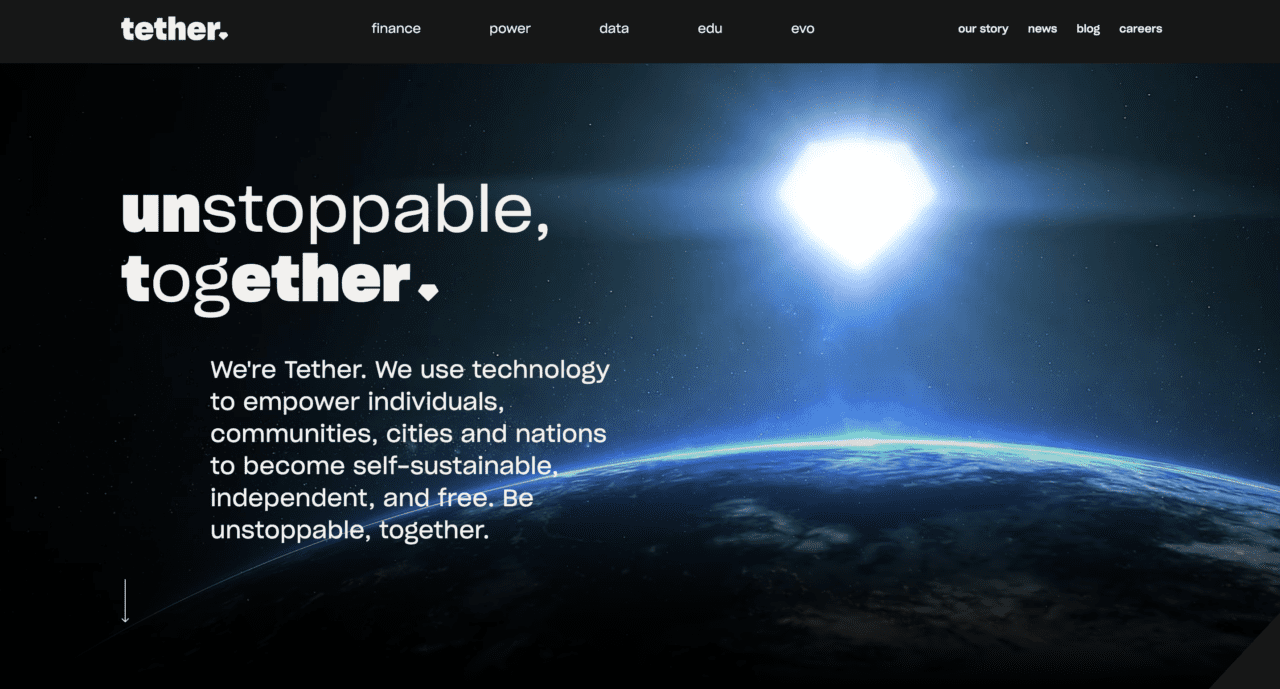
Digital asset company and issuer of the USDT stablecoin, Tetherlaunchedtether.wallet, the People’s Wallet, this week. Tether.wallet is a self-custodial digital wallet that puts the company’s international financial infrastructure directly into the hands of its users.
“Tether has achieved, without any doubts, the widest financial inclusion success story in the history of humanity,” Tether CEO Paolo Ardoino boasted. “With more than 570 million people already using Tether’s technology, the next step is making that digital infrastructure even more accessible and usable by the end users. The objective is to remove the complexity that has prevented broader adoption while preserving the properties that make the digital assets technology valuable.”
Until now, Tether operated primarily as part of the underlying layer of the digital economy, enabling liquidity, settlement, and payments across more than 160 countries, with its USDT stablecoin becoming among the most popular digital representations of the US dollar. The launch of tether.wallet puts this entire infrastructure in the hands of end users, enabling them to transact in digital dollars by way of USDT and USAT, gold by way of XAUT, and via Bitcoin. The wallet is built to remove the complexity that tends to limit broader embrace of digital assets, for example, enabling users to send funds with simple, straightforward, human-readable identifiers such as “[email protected]” rather than long, error-prone wallet addresses.
The solution is 100% self-custodial. All transactions are signed locally on the user’s device before being broadcast to the network, and private keys and recovery phrases remain under exclusive control of the end user.
“Tether.wallet is ‘the People’s Wallet’ because it truly reflects the natural evolution of Tether’s role, from building the foundation of the digital asset economy to making it directly usable by anyone, ready for a future in which tens of billions of humans, machines, and trillions of AI agents will transact seamlessly at the speed of light,” Ardoino said.
Founded in 2014, Tether named El Salvador as its formal headquarters last year after securing a license under the country’s Digital Asset Issuance Law. The goal was to capitalize on El Salvador’s status as an emerging crypto currency hub and its embrace of Bitcoin. The move gave Tether its first physical headquarters. The firm was previously incorporated in the British Virgin Islands.
Aruba-based AIB Bank Partners with Finastra for Digital Banking
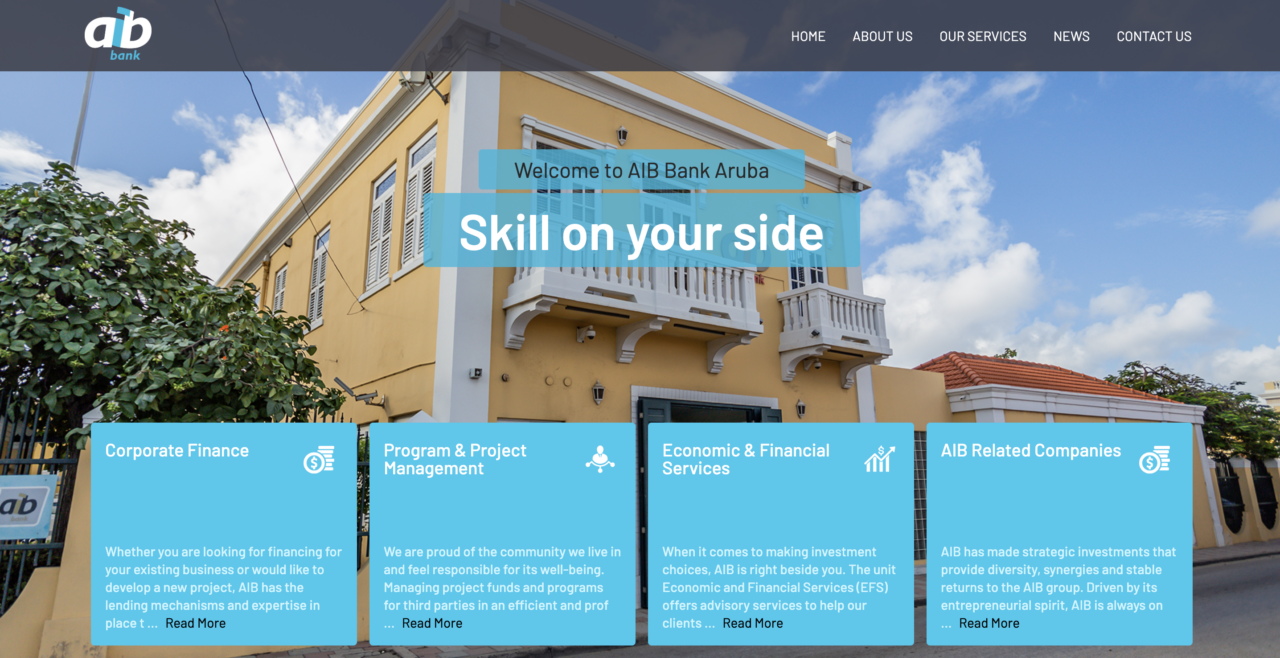
AIB Bank, an Aruba-based financial institution with nearly $2 billion in assets, has inked a deal with Finastra to deploy its Finastra Essence core banking solution. The deployment is part of AIB Bank’s goal of establishing the first fully digital bank in the country. Finastra Essence will deliver an enhanced core solution that blends broad and deep digital banking functionality with advanced technology to empower banks to offer customers faster transactions, greater reliability and security, and the kind of modern, personalized digital experiences that customers have come to expect.
“Choosing Finastra Essence allows us to position ourselves at the forefront of full-service digital banking innovation in Aruba and across the Caribbean,” AIB Managing Director Frendsel Giel said. “This transformation of our recently acquired commercial bank will not only enhance the way we serve our customers but also establish a solid foundation for accelerated growth and long-term success in Aruba and the region.”
Founded in 1987, AIB Bank is a privately owned financial institution based in Oranjestad, Aruba. The company specializes in loan syndication, agency services, corporate lending, program and project management, as well as advisory services, and has structured large and complex financing through Aruba and the region.
Formed via a merger between D+H Corporation and Finovate alum Misys in 2017, Finastra works with banks and other financial institutions to help them deliver secure and trusted mission-critical financial services technology. Headquartered in the UK, Finastra has more than 7,000 customers around the world using its financial services software, including 80% of the top 50 global banks, and moves $7 trillion in transactions every day. Chris Walters is Finastra’s CEO.
Here is our look at fintech innovation around the world.
Sub-Saharan Africa
PitchBook looked at the current state of venture capital funding for fintechs in Africa.
South African bank Capitec partnered with Wise Platform, Wise’s international payments infrastructure for banks and enterprises.
Visa Africa Fintech Accelerator reached 100 startups since inception with its fifth cohort.
Central and Eastern Europe
Germany’s Deutsche Börse purchased a 1.%% fully diluted stake in crypto platform Kraken.
Polish fintech PragmaGO, which provides financial services for small and medium-sized businesses, expanded to Croatia.
Cryptonews examined how the recent election in Hungary could rekindle debate on crypto policy and regulation.
Middle East and Northern Africa
Central Bank of the UAE unveiled its e-KYC platform
Trading and investment platform eToroannounced plans to acquire Israel-based crypto wallet Zengo.
Nu Mexico, the Mexican subsidiary of Brazil’s Nubank, topped the 15 million customer milestone, establishing itself as one of Mexico’s three largest financial institutions by customer base.
Uruguay-based cross-border payment platform dLocal partnered with Italy’s NEC to power international remittance payouts.
Aruba’s AIB Bank teamed up with Finastra and will deploy the fintech’s core banking solution Finastra Essence.
Asia-Pacific
Japan’s largest bank, Mitsubishi UFJ Financial Group, expanded its partnership with Finastra to support ACH payments in the US.
Indonesian bank CIMB Niaga, Google Cloud, and Artefact unveiled enterprise AI agents to bring greater personalization to the banking experience for customers.
Australian Trade and Investment Commission sent a delegation to Vietnam to support deepening fintech ties with the country.
eToro has acquired self-custodial wallet provider Zengo to deepen its digital asset capabilities and expand into on-chain finance.
The deal brings keyless wallet infrastructure in-house, positioning eToro to move beyond trading into custody, authentication, and transaction control.
As crypto evolves into infrastructure, owning the wallet layer could determine who controls the customer relationship.
Social trading and investment network eToroannounced it has acquired self-custodial crypto wallet provider Zengo for an undisclosed amount. eToro plans to leverage the acquisition to deepen its digital asset capabilities and bridge traditional finance with on-chain infrastructure.
Zengo was founded in 2018 and offers a crypto wallet with buy, sell, and swap capabilities to both individual and commercial users. The Israel-based company positions itself as a secure crypto wallet, offering Bitcoin vaults, theft protection, a Web3 firewall, and enterprise-grade compliance and controls for commercial users. Notably, Zengo is a pioneer in multi-party computation cryptography and is known for its keyless wallet architecture.
“We believe the future of finance will be increasingly digital, decentralized, and user-controlled, with self-custody playing an important role in that evolution,” said eToro Co-founder and CEO Yoni Assia. “Zengo has built an innovative and secure wallet experience, and this acquisition will enable us to accelerate its growth while continuing to provide users with choice in how they access digital assets.”
eToro will combine its multi-asset platform with Zengo’s non-custodial wallet technology to expand on its own digital asset capabilities while growing Zengo’s platform. “From day one, Zengo has focused on making self-custody simple and secure for everyday users,” said Zengo Co-founder and CEO Ouriel Ohayon. “Joining eToro allows us to accelerate that mission at a global scale. Together, we can expand access to self-custody and on-chain finance while connecting it to a broader investing ecosystem that bridges traditional and on-chain finance.”
Founded in 2007, eToro launched Bitcoin trading capabilities in 2013, but didn’t launch a dedicated crypto trading platform in the US until 2019. Today’s acquisition will help eToro expand into tokenized assets and emerging decentralized trading models such as prediction markets and perpetuals.
As the banking world increasingly normalizes decentralized finance, it may no longer be enough for fintechs and investment firms to simply offer traditional finance investing tools, especially as crypto evolves from an asset class into infrastructure.
By acquiring Zengo, eToro is positioning itself to participate more directly in on-chain activity, rather than simply offering access to facilitate trades. The deal is another example of fintechs pushing deeper into infrastructure. Self-custody wallets are emerging as the interface layer for on-chain finance. By bringing that capability in-house, eToro is positioning itself to control digital assets, storage, authentication, and transactions.
Social trading and investment network eTorounveiled that it will begin rolling out its stock lending program in the UK. The capability, which is available in Europe and the UK, enables eligible users to lend out their stocks.
Stock lending isn’t new. In fact, it has long been a passive revenue generator for large brokers and hedge funds. Bringing this capability to an alternative platform like eToro gives the fintech a competitive edge as it brings more transparent, value-added services to the retail trading market. As investor expectations increase, platforms that provide passive-income engines, improved liquidity, and greater control over their portfolios may gain more interest in an ever-crowded market.
Facilitating the launch are global financial services company BNY and stock lending program EquiLend. Under these partnerships, BNY is acting as custodian and clearing provider, while EquiLend identifies borrowers and facilitates the lending process. eToro anticipates that the new program will allow its investors to put their portfolios to work while retaining their investments.
As with most stock lending programs, borrowers post collateral, and investors can still sell their positions at any time. By partnering with institutions such as BNY and EquiLend, eToro aims to ensure operational safeguards that offer retail users institutional-grade risk management.
“Launching stock lending in the UK is a key step in our mission to make passive income opportunities available to every investor,” said eToro VP of Execution Services Yossi Brandes. “With the ability to lend not just US but also global stocks, we are maximizing the potential for our clients to generate additional revenues, and this rollout sets the stage for further expansion into new markets.”
Launching in the UK expands eToro’s partnership with BNY, which it leverages for clearing and custody services for its stock and ETF offering across 19 global exchanges.
“We are delighted to extend our relationship with eToro, delivering an integrated solution encompassing clearing, settlement, custody, foreign exchange and cash management to UK investors,” said BNY Executive Platform Owner of Global Clearing Victor O’Laughlen. “By combining the capabilities of eToro and EquiLend with the scale and deep expertise of BNY’s leading Global Clearing platform, this initiative aims to equip retail investors with an institutional-grade solution to support their investing journey.”
Israel-based eToro said that the move marks the next step in the company’s plan to expand stock lending access to retail investors worldwide.
For eToro, today’s launch is more than a feature. The expansion is a signal of the company’s strategic move into deeper monetization and institutional-grade services. Leveraging BNY’s clearing and custody infrastructure places eToro closer to the operational standards of traditional brokers while maintaining its core social-trading product. Adding features like these in partnerships with traditional financial institutions could help eToro attract more sophisticated retail investors looking for passive-income tools and greater flexibility.
Founded in 2007, eToro has since raised $693 million in funding. With more than 35 million registered users and investors on its trading and investing platform, the company offers trading and investing tools that are more accessible and collaborative. eToro launched in the US market in 2019, entering a space where Robinhood had already established a six-year presence.
eToro began 2025 with its public debut in May. The company is now listed on Nasdaq Global Select Market under the ticker ETOR. eToro has a current market capitalization of $3.5 billion.
Trading and investing platform eToro has partnered with French life insurance leader Generali to offer life insurance and a French retirement savings plan called a PER to customers in France.
The partnership comes days after eToro went public in the US on the Nasdaq stock exchange.
Founded in 2007, eToro has won Best of Show in all six of its Finovate appearances.
Stocks, bonds, and … life insurance?
That’s the deal that trading and investing platform eToro has struck with French life insurance provider Generali this week. The partnership between eToro and Generali will enable the platform to offer its users in France life insurance and a PER (Plan d’Épargne Retraite), a tax-advantaged French retirement savings plan.
The PER and life insurance contracts available through the alliance with eToro Patrimonie, eToro’s local subsidiary, provide both managed and self-directed options to serve a range of retail investor preferences and risk tolerances. Investors can also build their own investment allocations by choosing from among 500 different mutual funds, exchange-traded funds (ETFs), stocks, and dated bond funds.
“Introducing savings solutions for eToro’s users in France and opening a local subsidiary underscore our commitment to strengthen our footprint in a key market for the business,” said Julien Nebenzahl, President of eToro Patrimoine. “With these new products, we want to empower retail investors to build a robust savings portfolio that allows them to grow their wealth for the long-term.”
Among France’s leading insurers and asset managers, Generali France offers a range of insurance solutions including life, property, health, liability, and assistance coverage. The firm also provides wealth and asset management services to its eight million retail, professional, and corporate clients. Founded in 1832, the institution reported a revenue of €19.2 billion in 2024.
“We are delighted to support eToro, a globally recognized investment player, in the launch of its subsidiary in France and its savings offering,” Corentin Favennec, Partnerships Director at Generali Patrimoine, said. “Our 100% digital PER and life insurance products, which complement each other, perfectly fit into eToro’s value proposition to serve the wealth management needs of the French people.”
The launch of eToro’s new insurance offering comes in the wake of a number of product releases announced for the company’s customers in France. Last year, eToro enabled trading in local currency for eToro Money EUR accounts. The company also expanded the number of French-listed stocks from Euronext Paris that could be traded on the eToro platform. The insurance news in France also comes as eToro makes its debut as a public company on the Nasdaq. eToro raised nearly $310 million in its IPO last week, giving the platform a market capitalization north of $5.4 billion. The company’s successful offering was hoped by many to be a sign of resurgent strength for the IPO market.
Founded in 2007, eToro is a trading and investing platform with 40 million registered users in 75 countries. eToro’s customers can use the platform to buy and sell assets from 20 global stock exchanges, as well as trade and invest in more than 70 cryptocurrencies. A pioneer in collaborative investing, eToro offers a CopyTrader feature that enables users to automatically copy the buying and selling of other, more experienced, investors in real time.
eToro has won Best of Show in all six of its Finovate appearances beginning in 2011. The company most recently demoed its technology on the Finovate stage at FinovateEurope 2017.
Social trading platform eToro has confidentially filed to go public in the U.S. later this year.
The IPO potentially values eToro at over $5 billion, marking its second attempt at a public debut after a failed SPAC deal in 2022.
eToro’s IPO aligns with a renewed optimism in fintech, dubbed “fintech spring,” as companies like Klarna also signal plans to go public, signaling a resurgence in confidence and investment.
Social trading and investment network eToro is taking its multi-asset trading platform to the public markets. According to a report from The Financial Times, eToro confidentially filed a U.S. IPO later this year.
The IPO, which could value eToro at over $5 billion, won’t count as the company’s first attempt at going public. In 2021, eToro announced plans to merge with FinTech Acquisition Corp. V, a publicly-traded special purpose acquisition company (SPAC), in a deal worth $10 billion. The deal would have listed eToro on the NASDAQ, but the two parties agreed to end the deal after eToro’s valuation was cut by 15% in 2022, and the company failed to go public by the deadline specified in the SPAC arrangement.
By March 2023, eToro raised $250 million at a $3 million valuation. “Our 2023 to 2025 strategy focuses on scaling our brokerage business in our key markets and increasing profitability via revenue growth and cost management,” said company Founder and CEO Yoni Assia at the time of the fundraising. “eToro will continue to focus on profitable growth while helping to drive progress towards a world where everyone can invest in a simple and transparent way.”
Since that time, eToro launched$Cashtags on what was then Twitter, announced it would pay interest on users’ idle cash, and began publishing educational content on X.
eToro was founded in 2007 and has since raised $693 million in funding. With more than 35 million registered users and investors on its trading and investing platform, the company offers trading and investing tools more accessible and collaborative. eToro launched in the U.S. market in 2019, entering a space where Robinhood had already established a six-year presence.
The IPO filing announcement comes as fintech is entering what analysts are calling “fintech spring,” a hopeful time during which investors are more willing to invest and organizations are more willing to take risks. Many predicted that 2025 would see a lot of fintech IPOs. Klarna kicked things off, announcing last November that it is planning a 2025 IPO.
Social investing and trading platform eToro has partnered with social media platform X.
eToro will publish investment education content on X, leveraging investment experts and thought leaders from its eToro Academy.
Founded in 2007, eToro has won Finovate Best of Show awards on each of its six Finovate appearances.
It may not be a step on the road to making X a payments superapp, but the decision to partner with eToro to publish investment education content on the social media platform is among the most interesting fintech/financial-related moves from X to date.
eToro and X announced this week that they are working together to provide investment content on the social media platform via video, posts, and Spaces. The content will consist of insights and analysis from thought leaders from the investing community who will discuss a combination of breaking financial news, top trends in finance and investing, as well as investment fundamentals live on the platform. The material will be free to all X users and will be available in the U.S. and the U.K., as well as in France, Italy, Germany, Spain, and the UAE.
“We believe that there is power in shared knowledge,” eToro Co-founder and CEO Yoni Assia said. “It’s why we created a collaborative, social investment platform, and it’s why we prioritize financial education through our eToro Academy. Having been long-term collaborators with X, we are delighted to extend our partnership to provide more opportunities for financial learning and the sharing of investment insights on X.”
The partnership announcement comes with a renewed agreement for title sponsorship for X’s real-time Cashtag feature. This feature provides charting tools and data from TradingView on stocks, cryptocurrencies, and other assets, as well as the ability to trade and invest with eToro.
“Bringing eToro Academy to X is testament to the strength of the partnership we have built together and the continued growth of the financial investment conversation on X,” the social media platform’s CEO Linda Yaccarino said. “The continued success of our collaboration will bring more high-quality video content to the service, building on our innovation around cashtags and new features.”
To Yaccarino’s point about the growth of what used to be called “fintwit,” it’s worth knowing that there were more than 1.4 billion posts on X last year that were about trading or investing. This figure reflected year-over-year growth of 54%.
“We know that an increasing number of people turn to social media for accessible, relevant financial content,” Assia said. “It provides a forum for many who were excluded by more traditional channels. Partnering with X will enable us to deliver the very best in financial education to a global audience.”
Founded in 2007, eToro supports more than 35 million registered users and investors on its trading and investing platform. The company offers a collaborative investing community to help investors and traders learn the skills and develop the tools they need in order to reach their financial goals, whether through traditional assets or non-traditional assets. One of Finovate’s earliest and most popular alums, eToro won Best of Show in each of its six Finovate appearances from 2011 through 2017.
Happy Earth Day! Partnerships in payments and fundraising in the international investment/wealth management space are dominating fintech news headlines as the week begins.
Subscription management and billing platform Recurlyintroduces new dashboards with built-in benchmarks.
Klarnasells Hero, the virtual shopping platform it acquired in 2021, for $1.3 million (€1.3 million).
SplititunveilsFI-PayLater to empower banks to provide in-checkout installments for existing customers.
Identity verification
Financial crime risk data and fraud detection technology company ComplyAdvantageacquires knowledge graph builder Golden.
AU10TIXannounces $18 billion in business fraud prevented since 2021.
Small Business Tools
BaswareintroducesAP Protect, an AI-powered solution that empowers finance teams to protect their organizations against profit loss, invoice errors, and fraud.
Marqetapartners with OakNorth to offer commercial cards in the U.K.
Payroll
Ripplingraises $200 million in new financing with $13.5 billion valuation.
In the U.S., the tax deadline kicks off the week, but don’t let that get you down! Sit back, relax, and catch up on some of the latest fintech news headlines. Check back for real-time updates on how the fintech landscape evolves this week.
A newly announced partnership between institutional payment orchestration platform Paydock and Australia’s Commonwealth Bank (CBA) will give merchants in Australia the ability to offer their customers a range of new payment options. This new flexibility comes courtesy of PowerBoard, which provides a dynamic payments experience to customers via API, without requiring businesses to make major changes to their existing payments infrastructure.
“Our partnership with CommBank sets a global precedent for financial institutions,” Paydock CEO and founder Rob Lincolne said. “It shows not only how banks can bring flexible payment strategies to customers in record time with payments orchestration, but also it establishes a new paradigm whereby banks can become more competitive and deliver more value by working with fintech players.”
PowerBoard will make it easier for CBA to deploy the latest payment methods, types, providers, and processors to merchants. CBA General Manager of Merchant Solutions Karen Last noted growing customer interest in new payment options. In a statement, she highlighted alternatives such as account-to-account payments, digital wallets, and Buy Now Pay Later as reasons to pursue the partnership with Paydock.
“PowerBoard makes it significantly easier for Australian merchants to offer choice to customers and manage their payments ecosystems, without all the costly integrations,” Last said.
Headquartered in London, Paydock also maintains an office in Sydney, Australia. The company has raised $31.8 million (£25 million) in funding according to Crunchbase. This capital came in the form of a Series A investment in May that was led by IAG Silverstripe.
Commonwealth Bank of Australia is one of the top 50 banks in the world. Founded in 1911, CBA became a fully private bank in 1996. The institution is part of the “big four” of Australian banks, along with the National Australia Bank (NAB), ANZ, and Westpac. CBA had total assets of 1.2 trillion AUD as of 2022.
Speaking of Commonwealth Bank, the institution also announced this week that Bendigo Bank and fraud monitoring firm Satoriwill pilot CBA’s NameCheck technology. Launched this spring, NameCheck is built to prevent scams and mistaken payments. According to the bank, the solution has prevented more than 10,000 scam payments and reduced mistaken payments by more than $100 million, to date.
“With scams and fraud costing Australians and businesses billions of dollars annually, it’s clear a whole of ecosystem response is needed to combat this problem,” CBA Group Executive Business Banking Mike Vacy-Lyle said. “We are proud to be able to extend our industry-leading technology to others and contribute to protecting more Australians against cyber criminals.”
NameCheck leverages advanced technology and CBA’s access to payment data to help establish the accuracy of account credentials. Bendigo Bank will integrate NameCheck into its Up app. Financial fraud monitoring company Satori will also take advantage of the technology.
“We are excited to work with CBA and extend the NameCheck service to our corporate customer base to complement the existing AI driven financial controls monitoring service driving operational efficiency and preventing fraud,” Satori Executive Director of Growth Mark Bookatz said.
Founded in 2002, Satori is headquartered in Sydney, Australia. The company has more than 200+ customers in the APAC region who rely on its automated transaction monitoring services. These firms include Afterpay, Qantas, and Volkswagen Group.
The Australian government’s plans to regulate Buy Now Pay Later services are having a hard time keeping up with public enthusiasm for the payment option.
This week, the Reserve Bank of Australia (RBA) shared results of a survey that indicated a significant increase in use of Buy Now, Pay Later services. The specific demographic was individuals between the ages of 18 and 39. The survey showed that more than 40% of those in this cohort had used BNPL services in the past year. The survey, which had almost 1,000 participants, also noted an overall increase in the number of people using BNPL. Incorporating data from a Reserve Bank of Australia research paper from 2022, the RBA determined that there has been an increase of 8% in adult BNPL use since 2019.
Designing a regulatory framework for Buy Now Pay Later services in Australia has been on the government’s to-do list since the spring. The goal is to bring BNPL under the umbrella of existing credit regulations, including credit license requirements, and minimum standards on conduct, services, and products. This also includes mandating that BNPL companies conduct credit history checks. Overall the regulations, which will treat BNPL services as conventional lending products, are seen as among the toughest proposed.
But the rollout has hit a snag. The RBA has announced that the new regulatory framework for BNPL will arrive next year rather than at the end of 2023 as originally planned. The reason for the delay was “resourcing pressures” on the government’s legislation writing team. And while this will likely give New Zealand regional bragging rights over its larger neighbor when it comes to adoption of BNPL regulations, the impact of the delay on the Australian BNPL market should be slight.
Here is our look at fintech innovation around the world.
eToro announced it will pay investors 4.9% interest on idle cash held in their options account.
Users must have at least $5,000 in idle cash to benefit from the interest rate, but investors with less than that can pay a fee to receive the 4.9% interest.
The move not only indicates that eToro wants to keep hold of investors’ funds as they move their money out of risky investments, but it also signals that eToro likely won’t launch its own suite of banking tools any time soon.
After starting the year with a fresh $250 million in funding, social investment network eToro has experience with cash. Perhaps that’s why today the company is launching a feature that pays users interest on cash in their accounts.
The new option is meant to serve as another form of diversification for its investor clients. Currently eToro offers users the opportunity to invest in crypto, stocks, ETFs, and options trading. And while holding cash is usually considered a negative quality for investors, a high interest rate, combined with no risk of loss may make higher cash balances more palatable.
“Retail investors are constantly told to diversify their portfolio and ensure they’re maximizing their investments – our new high interest on cash offering helps investors make their money work even when it is at rest,” said eToro U.S. CEO Lule Demmissie. “Our high rate offering is accessible to real investors unlike other brokers who have high minimum balance requirements to earn their rates.”
The new interest on cash program is free for eligible users with an at-rest cash balance of $5,000 or more and the 4.9% interest is paid on cash reserves that are not actively invested. Users with a cash balance lower than $5,000 can still receive the 4.9% interest rate, but eToro will charge them a monthly fee.
Users can access the new interest on cash feature via eToro Options. At launch, accountholders will receive 4.9% APR on cash balances within their eToro Options account. This comes at a time when, in the U.S., the average yield for savings accounts is 0.61% APR.
As new and existing challenger banks bolster their offerings with high-yield interest rate accounts, it is becoming increasingly difficult (and more expensive) for banks to win over consumer deposits. Today’s move by eToro indicates two things. First, the company is seeking to stem the outflow of investor funds as they move their money from risky market opportunities into high-yield savings account safe havens. Secondly, it indicates that, unlike many other fintechs in the investing space, eToro is not planning to become a challenger bank by launching its own savings account and debit card any time soon.
A wealthtech pioneer, eToro was founded in 2007 and has received nearly $693 million in funding. The Israel-based company currently has over 32 million registered users from more than 100 countries on its platform. Yesterday, eToro announced it received approval from the Abu Dhabi Financial Markets Authority to operate in the UAE.