3 Ways Fiserv’s Payments Network Sale Could Reshape Payments

3 Ways Fiserv’s Payments Network Sale Could Reshape Payments

According to the Wall Street Journal, JPMorgan, Bank of America, Wells Fargo, and PNC are in conversation with Fiserv about acquiring its two debit payment networks, STAR and Accel. While there is not an official deal on the table, the initial discussions surrounding the sale raise important questions about the future of the payments infrastructure in the US. If a sale of the payment networks does take place, the impact would extend far beyond Fiserv. Here are three ways it could reshape payments.

Large banks could gain more control over payment economics

Right now, banks, card networks, and merchants each play a unique role. Banks issue cards, card networks route the transactions, and merchants pay the interchange fees. Much of the value of STAR and Accel is that they route debit transactions. If all of a sudden, banks own the network, the dynamics change. The large banks that end up owning the payment networks could capture more economics from transactions made on the networks. Some analysts have suggested that owning the networks could provide strategic advantages related to debit routing and interchange economics.

Community banks and fintechs could lose a neutral network partner

Fiserv currently serves a range of smaller financial institutions, including community banks, regional banks, fintechs, and credit unions. If Fiserv offloads STAR and Accel to some of the nation’s largest financial institutions, smaller institutions would have to rely on infrastructure owned by their competitors. This is of concern to smaller players, especially since banks like JPMorgan and Bank of America stand to profit more if competitors lose market share. Because of these conflicts of interest, payments infrastructure is most valuable when participants view it as neutral.

The race to own the infrastructure accelerates

Fintechs and banks alike have shown growing interest in moving down the stack to own more of the underlying financial infrastructure. Capital One’s acquisition of Discover would give the bank ownership of a major card network, reducing its reliance on Visa and Mastercard. At the same time, the rise of stablecoin payment rails is creating new infrastructure that bypasses traditional card networks altogether, while FedNow is giving banks direct access to real-time payment capabilities. Together, these developments show that banks and fintechs are no longer content to compete solely through customer-facing products. Increasingly, they are seeking greater ownership of the infrastructure that powers payments. Bringing more of the stack in-house can reduce dependence on third parties, provide greater control over the customer experience, and create new revenue opportunities.

Whether or not the deal ultimately happens, it shows that banks are no longer content to compete only on products and customer experience. Instead, banks are seeking ownership of the infrastructure that powers payments. If a deal goes through, it could reshape competition across banks, fintechs, merchants, and payment networks.


Photo by Vitaly Gariev on Unsplash

Finovate Podcast Features the Five Best of Show Winners from FinovateSpring 2026

Finovate Podcast Features the Five Best of Show Winners from FinovateSpring 2026

Finovate Podcast host Greg Palmer showcases the winners of Best of Show from FinovateSpring 2026 in his latest series of podcast conversations.

The five companies that won Best of Show represent many of the top trends in fintech today, from embedded finance and stablecoin-powered payments to mainframe modernization and AI-enabled personalization. In these interviews, we learn about the inspiration behind the founding of these innovative companies and the problems they are solving for banks, credit unions, other financial institutions, and their customers.


Finovate podcast host Greg Palmer talks with Caitlyn Truong, CEO and Co-Founder of Zengines.

Palmer and Truong discuss how Zengines addresses the challenge of managing legacy core banking applications written in older programming languages like COBOL, RPG, and PL1. Truong explains how her company is modernizing legacy mainframe applications without losing critical logic, satisfying auditors faster, and making legacy systems searchable so transformation and compliance do not stall.

EP 299: Caitlyn Truong, Zengines


Juan Jurado-Blanco and Armando Quintana, CEO and Chief Revenue Officer of Clockout, respectively, sit down with Greg Palmer in this Finovate podcast conversation.

The trio discuss the benefits of earned wage access as an offering for community banks and credit unions. Clockout’s technology enables users to access their earned wages the same day they work, rather than waiting for traditional biweekly or even monthly pay cycles. The solution embeds seamlessly into existing bank experiences.

EP 298: Juan Jurado-Blanco and Armando Quintana, Clockout


Oren Buskila, CEO and Co-Founder of Cobalt, talks with Finovate podcast host Greg Palmer about the challenge of financial institution system dependencies.

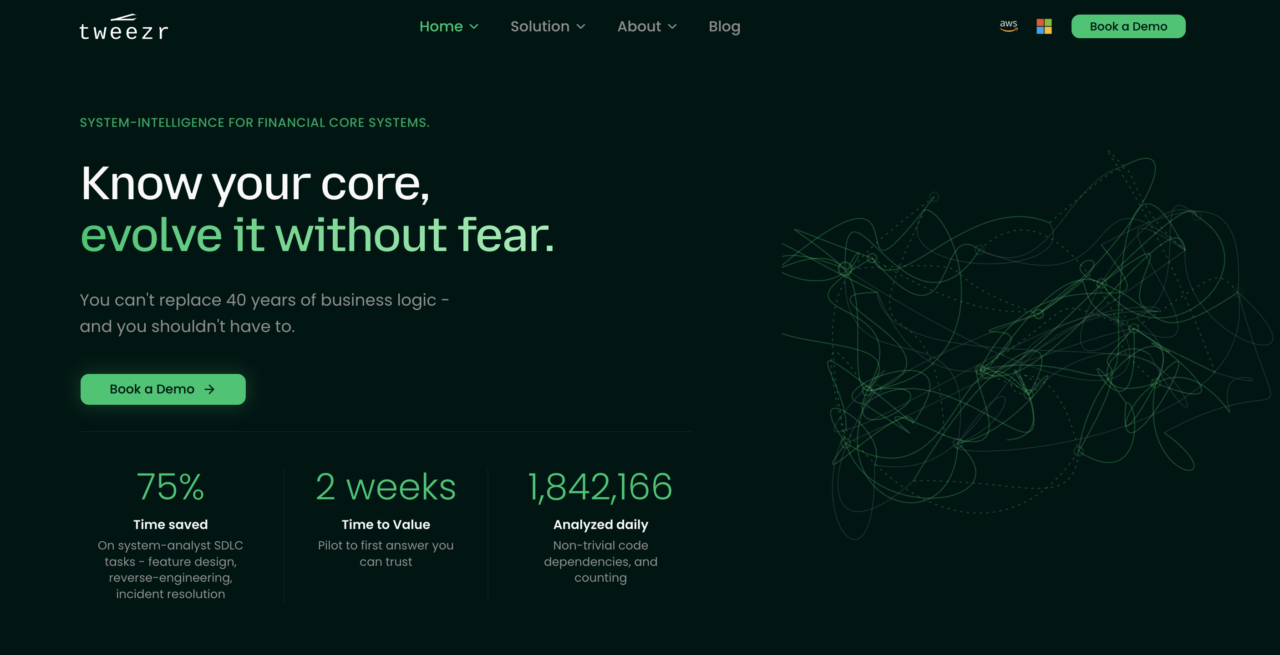
Cobalt offers a technology that automatically maps real system dependencies across complex banking environments, enabling agentic AI, real-time visibility, safer changes, reduced risk, and confident operations. Cobalt enables technical teams to anticipate the consequences of modifications before implementation, preventing failures and ensuring safer deployments.

EP 297: Oren Buskila, Cobalt


Podcast host Greg Palmer catches up with Craig McLaughlin (CEO) and Baron Conway (Chief Strategy Officer) of Finalytics.AI in the wake of the company’s second consecutive Best of Show win at FinovateSpring (2025 and 2026).

Palmer, McLaughlin, and Conway discuss how Finalytics.AI enables community financial institutions to deliver personalized, high-touch experiences through digital channels while leveraging the wealth of customer data these banks and credit unions possess.

EP 296: Craig McLaughlin and Baron Conway, Finalytics.AI


Host Greg Palmer interviews Crebit co-founders Jensen Coonradt (CEO) and Simmi Sen (Chief Product Officer).

In this podcast conversation, Coonradt and Sen explain how their company is modernizing international money transfers by leveraging stablecoin technology to send money across borders as easily as sending a text message. Crebit’s “stablecoin sandwich” approach enables users to on-ramp funds using local payment methods before settling into virtually any currency worldwide in minutes.

EP 295: Jensen Coonradt and Simmi Sen, Crebit

Three Top Takeaways from the HSBC, Google Cloud Partnership

Three Top Takeaways from the HSBC, Google Cloud Partnership

A newly announced, multi-year partnership between HSBC and Google Cloud will enable the financial institution to work with engineering teams from Google Cloud and DeepMind to develop new AI-powered tools and capabilities. The partnership will allow HSBC to benefit from access to Google’s latest agentic AI capabilities including Gemini and the Gemini Enterprise Agent Platform.

The agreement will enable more than 200 new AI use cases for HSBC over the next two years, with a focus on the highest value initiatives for investment and delivery. HSBC estimates each of these could return more than $100 million in either direct revenue gains or broader efficiency improvements.

“AI is becoming one of the defining technologies of our time, allowing us to create a personalized experience for each customer, delivered in real time and at scale, while keeping human judgment, decision-making, and accountability at the core,” HSBC Group CEO Georges Elhedery said. “A partnership like this one with Google Cloud helps us empower our colleagues with the tools they need to be future-ready, and supports our work in building a simple, agile, faster, and more personal HSBC.”

These new opportunities fall into three main categories: wealth management, fraud and financial crime, and support for frontline/relationship manager client service. Here is a closer look at each element of the new partnership and its implications for AI in banking and financial services.


Hyper-personalized wealth management

The partnership will enable HSBC to combine smarter, AI-driven insights with the expertise of relationship managers. This will transform the way the bank serves its wealth management clients and empower thousands of relationship managers to provide proactive, customized financial support and real-time advice to customers at every stage of the client journey.

What this says about AI: The ability to achieve hyper-personalization is increasingly regarded as the Holy Grail of customer engagement. AI enables banks and other financial institutions to leverage their data to better understand the unique needs of individual customers, businesses, and enterprises. This allows them to not only develop customized solutions and services that directly respond to each client, but also to respond quickly to shifting preferences and even anticipate emerging trends and circumstances that customers might not immediately recognize.

What this says about banks: More and more banks are realizing the opportunities in delivering wealth management services. This is driven by a number of factors, from the so-called Great Wealth Transfer and the growing number of high-net-worth households to the democratization of wealth management brought about by fintechs and robo-advisors.

Wealth management is also an area where more banks and financial institutions can provide greater value, especially for mid-tier and non-HNW customers for whom bespoke, concierge-level wealth management services are typically out of reach. AI plays a key role here, helping translate client data—from financial records to conversations with advisors—into actionable insights that lead to better and more accurate financial guidance. The fact that AI is able to provide this at a competitive cost means that these higher-value, higher-margin services can be offered to a wider range of customers.

Stronger financial crime risk management

HSBC will leverage its relationship with Google Cloud to deploy both generative and agentic AI to build a financial crime architecture that identifies fraud risk as early as possible. The bank’s goal is to detect and intervene twice as quickly once risk is detected across the nearly one billion transactions monitored by the bank every month for financial crime and fraud.

What this says about AI: Helping financial institutions detect fraud faster, including real-time monitoring, is one of the most broadly accepted use cases for AI technology. AI is able to analyze vast amounts of data in real time to detect suspicious patterns and activities that traditional, rules-based systems can miss, while also providing predictive analytics that can enable institutions to anticipate potential financial crime risks before they materialize.

What this says about banks: For banks and other financial institutions, financial crime risks have only grown larger in recent years. The Nasdaq Verafin 2026 Global Financial Crime report indicated that the economic impact of financial crime internationally has grown by $1.3 trillion in the past two years from 2023 to 2025. With regard to fraud-specific losses, fraud scams were the fastest-growing category costing $62 billion in 2025 alone. In the face of this, moves like HSBC’s to embrace AI-powered solutions for fighting fraud have become increasingly common. The 2026 Global Financial Crime report noted that 75% of financial institutions said they planned to boost their use of AI for financial crime detection.

Enhanced client service for frontline and relationship managers

Courtesy of the partnership, HSBC’s frontline staff and relationship managers will have expanded access to an AI-powered decision assistant that has already proven capable of reducing administrative and client meeting prep times from hours to minutes for thousands of users. HSBC will also codify regulatory procedures into an AI structure to give bankers consistently structured options and analysis to enhance decision-making and provide faster insights without losing human judgment and oversight.

What this says about AI: One of the great promises of automation and AI is freeing human labor and talent from mundane, often tedious, and inefficient manual processes. The fact that so much of AI innovation is being designed for in-house use by frontline workers and employees to enable them to better serve their clients underscores that AI, in its best light, actually creates space for more human connections between customers and service providers.

What this says about banks: Empowering frontline workers and relationship managers with AI-powered tools is helping a growing number of banks boost efficiency and reduce costs. From enhancing underwriting analysis to streamlining workflows, financial institutions are increasingly comfortable with AI-powered tools. This is especially the case when institutions deploy these solutions as complements to existing systems rather than as replacements for them.


Photo by Kit Suman on Unsplash

5 Things to Know about TradFi’s Move to Control Digital Money Infrastructure

5 Things to Know about TradFi’s Move to Control Digital Money Infrastructure

Late last week, a handful of the largest US banks revealed a plan to launch their own tokenized deposit network.

JPMorgan, Citi, Bank of America, Wells Fargo, and other major banks will launch the new network, which is set to launch by mid-2027. The banks are launching this new network in partnership with The Clearing House (TCH), a bank-owned consortium that operates critical US payment infrastructure, including the RTP network, which enables real-time payments between participating financial institutions.

The initiative will connect traditional banking infrastructure with blockchain-based payments while keeping deposits inside the banking system. Here are five things banks and fintechs should know.

TradFi’s answer to stablecoins

With a market value of more than $316 billion, stablecoins are no longer a crypto experiment. Stablecoin issuance is projected to reach between $3 trillion and $4 trillion by 2030. This growth has the attention of some of the largest banks in the world, warranting a coordinated response.

Similar to stablecoins, a tokenized network offers 24/7 infrastructure and programmable payments, allowing banks to deliver many of the benefits associated with stablecoins. Most notably, the tokenized deposits network will not require customers to move funds outside the traditional banking system, meaning banks will be able to retain their deposits.

Because tokenized deposits are still bank deposits, they retain the same regulatory treatment, accounting treatment, and credit-risk profile as traditional deposits. Tokenized deposits are different from traditional deposits in that they are represented on blockchain infrastructure instead of existing bank ledgers.

It’s about controlling infrastructure

For much of the past decade, fintech competition centered on who could best distribute products and services. Fintechs and banks competed to acquire customers, launch new apps, and build better digital experiences. Recently, however, firms have shifted their focus to controlling the infrastructure that powers financial services.

This race toward infrastructure can be seen in Stripe acquiring Bridge to gain stablecoin infrastructure, Visa’s and Mastercard’s recent investment in stablecoin settlement capabilities, and in banks’ efforts to build tokenized deposit networks. Rather than competing for customer relationships, these companies are positioning themselves to own the rails that move money.

The new tokenized deposit network creates a shared infrastructure layer for programmable deposits and real-time settlement, allowing participating banks to ensure they remain at the center of digital money movement.

The initial target is corporate treasury, not consumers

The new tokenized deposits network will initially be aimed at corporate treasury, which means it will likely not reach consumers before 2028.

TCH expects early demand to come from multinational corporations seeking treasury automation, real-time liquidity management, cross-border payments, and programmable payments. These are the same use cases that have helped stablecoins gain traction among businesses.

While some of these workflows and use cases are applicable to retail clients, businesses stand to benefit the most from real-time settlement, programmable payments, and always-on liquidity management. For that reason, the battle between tokenized deposits and stablecoins may take place in corporate treasury long before it reaches the consumer wallet.

A tokenized network offers 24/7 infrastructure

One of the biggest benefits of blockchain-based payments is that they do not operate on traditional banking schedules that have batch processing at the end of each day.

The new proposed network would allow tokenized deposits to settle 24 hours a day, 7 days a week. This continuous movement helps banks compete with stablecoin networks that already offer near-instant transfers at any time.

Smaller institutions will eventually need a position

With large financial institutions taking the lead on this new tokenized deposits network, where does that leave smaller community banks and credit unions? These smaller institutions will need to find their role in a world where money increasingly moves on programmable infrastructure.

Fortunately for these smaller institutions, the network is expected to be available to banks across the US, not just the largest institutions. As different digital asset infrastructure matures, financial institutions may need to determine their stance on whether they will issue, connect to, custody, or simply enable access to these new forms of digital money.


Photo by Markus Winkler on Unsplash

3 Takeaways from Bilt’s Breakup and Troubled Transition from Wells Fargo

3 Takeaways from Bilt’s Breakup and Troubled Transition from Wells Fargo

The recent crisis involving Bilt, a fintech that specializes in rent-payment rewards, is almost a perfect storm of the challenges faced by fintechs, banks, regulators, and their customers when it comes to third-party partnerships and their discontents.

This week, the Consumer Financial Protection Bureau (CFPB) reported that it had met with Bilt to discuss the issues surrounding the flawed transition process when its partnership with Wells Fargo ended in February of this year. The two companies had been working together since 2022 to offer the Bilt Mastercard. When the partnership ended, Bilt struggled to efficiently move customers into its new Bilt 2.0 structure. Customer complaints were rampant: rent and mortgage payments were returned, delayed, or debited without reaching intended recipients. Card declines were reported amid general confusion about the new arrangement. Massachusetts Senator Elizabeth Warren, who took an early interest in the problem, said that there had been a 1,300% spike in CFPB complaints due to the problems of the Bilt transition.

The CFPB’s statement today expresses confidence in the steps Bilt is taking to remedy the situation, including “reimbursing fees for more than 500 newly identified customers from its outreach following discussions with the CFPB.” The agency also noted that it would “continue monitoring Bilt’s efforts until it is satisfied that full redress will be provided and will share another update at such time.”

What are some of the biggest takeaways from Bilt’s breakup with Wells Fargo and its complaint-ridden transition process?


Partnerships are hard, breaking up can be harder

For all the understandable concern about making fintech/bank partnerships work, there is relatively little discussion about what fintechs should do—or need to do—when a partnership is ending to ensure that the transition does not negatively impact customers or damage relationships with other partners.

Arguably, this is the biggest single takeaway from the Bilt breakup and transition: whether it is because of a regulatory decision, a business challenge, or a bank failure, when transitions out of these partnerships go poorly, the negative impacts tend to fall disproportionately on consumers. There is also some question about who bears the responsibility of protecting customer data and funds during transitions. As such, when these events occur, they can have an industry-wide impact on consumer trust toward fintechs and can blunt innovation by making new technologies and services seem risky to end users and potential partners.


The human touch helps in a crisis

Even though there were reportedly issues with customers accessing live customer support due to “high volumes,” the fact that many Bilt customers were steered toward AI chatbots to resolve issues was a operational and, potentially reputational, mistake.

On the operational level, many customers reported that AI chatbots were unable to answer their questions or provide basic information, let alone resolve specific complaints. Reputationally, this can leave an impression that a firm does not care about effectively triaging customer problems, even if it is understandably not able to solve some problems immediately.

This is also a reminder that human agents that can respond with authentic empathy to confused and frustrated customers are still valuable at a time of increasingly agentic customer care.


Regulatory clarity requires regulatory authority

The lack of regulatory clarity about the ultimate responsibility for safeguarding consumer data and capital during transitions like the one involving Bilt and Wells Fargo is a real problem.

But this lack of clarity is compounded when the disposition of the regulatory body itself is difficult to discern. In its statement, the CFPB underscored its preference for a “collaborative process” rather than what is called a “protracted investigation, followed by a public enforcement action, which could be litigated for years before consumers get any redress.” This, plus a swipe at the Biden-era CFPB director Rohit Chopra, suggests that the CFPB prefers to pursue a less confrontational approach when it comes to holding companies accountable when their actions harm consumers.

This is perhaps better than no approach at all. Recall that the Trump Administration in February 2025 launched a near-shutdown of the CFPB, stopping all enforcement actions, halting new and ongoing investigations, and even locking staff out of buildings. Many of the administration’s actions have been put on hold by a federal court judge ruling in 2025, and oral arguments on a lawsuit challenging the administration’s actions against the CFPB were heard this February. In the meantime, a slimmed-down CFPB has changed its mission to focus on what it calls issues of “clear consumer harm, particularly fraud affecting servicemembers and veterans.”

How well this approach will serve the consumers harmed by the next failed fintech/bank partnership remains to be seen.


Photo by Javier Allegue Barros on Unsplash

6 Arguments For and Against Prediction Markets as Spain Cracks Down

6 Arguments For and Against Prediction Markets as Spain Cracks Down

Spain’s ministry of consumer rights blocked access to Kalshi and Polymarket this week. The country has paused the use of the prediction markets (also known as event contracts) as it determines whether their models are operating legally without a gambling license.

Spain joins France, Belgium, the Netherlands, and Romania, which have all limited or blocked access to Polymarket.

The controversy begs the question: are prediction markets useful forecasting tools, speculative tools, or simply gambling platforms wrapped in fintech language? With that in mind, here’s a look at three arguments for and three arguments against event contracts.

Three arguments for

Supporters argue that prediction markets are not necessarily about gambling, but rather about information discovery.

  • Prediction markets can aggregate information more efficiently than polls or experts
    Prediction markets force participants to put money behind their convictions, which essentially rewards accuracy with financial incentives. Supporters argue this makes them more effective than polls or expert commentary at forecasting future events because markets continuously absorb new information and update probabilities in real time.
  • Financial markets already operate as forms of event contracts
    If you’ve ever invested in single stocks, you’ve essentially participated in prediction markets. The only difference is that, with stocks, investors are limited to predicting the outcome of a company instead of an event. Bonds and derivatives are also a type of prediction as well, as bonds essentially price default risk and derivatives price probabilities. This raises the question, why is betting on election outcomes different from betting on interest-rate moves.
  • Prediction markets could improve forecasting
    Because they are a useful tool for crowdsourcing information, prediction markets can be used by businesses or governments to improve decision-making. Users are more likely to make predictions on events about which they are knowledgeable, and this information could be helpful for forecasting recessions, fraud, supply chains, elections, and demand. Because they can source this information quickly, prediction markets can surface truths faster than committees or social media.

Three arguments against

Opponents argue that event contracts cause unwanted externalities

  • They may incentivize harmful or unethical behavior
    Oftentimes, event contracts offer events surrounding wars, assassinations, elections, and disasters. These are uncomfortable things to bet on, as it may feel as if users are rooting for these outcomes. Additionally, this raises ethics concerns over investors profiting from others’ tragedies.
  • Markets can be manipulated
    Even though prediction market outcomes may appear more organic than the performance of publicly traded companies, they are not immune to manipulation. Deep-pocketed participants willing to absorb larger losses may attempt to distort market odds, while coordinated misinformation campaigns and bot-driven activity can artificially influence sentiment and pricing. As event contracts become more popular, concerns are growing that the markets themselves could shape public perception rather than simply reflect it.
  • They lack consumer protections and regulatory frameworks
    Across the globe, prediction markets are relatively new and therefore lack regulation, as they don’t fit cleanly into existing categories. It is unclear if they are considered securities, gambling, or derivatives and therefore lack proper regulatory oversight and consumer protection standards.

As prediction markets continue to grow in popularity, regulators will increasingly need to decide whether these platforms belong within financial services, gambling, or an entirely new category. Spain’s move suggests that many jurisdictions are still uncomfortable with the idea of turning elections, world events, and public sentiment into tradeable assets.


Photo by Dante Grime Kahan

5 Takeaways from Trump’s Executive Order on Fintech and Regulatory Frameworks

5 Takeaways from Trump’s Executive Order on Fintech and Regulatory Frameworks

In last week’s Finovate Weekly newsletter, I shared some thoughts on what fintechs might hope for from President Trump’s summit meeting with Chinese president Xi Jinping. While the meeting does not appear to have delivered anything of substance from a fintech or financial services perspective, Trump did sign an Executive Order (EO) shortly after returning from Beijing that actually has plenty for fintechs and financial services companies to think about—if not cheer for.

Let’s take a look at five top takeaways from the EO, titled Integrating Financial Technology Innovation into Regulatory Frameworks.


From containment to enablement

The executive order directs Federal financial regulators to review existing policies to “facilitate innovation and greater competition in the provision of financial services.” Even more directly, the order calls upon regulators to “take steps to encourage innovation by, and growth of, fintech firms and federally regulated institutions of all sizes.”

The “fintechs and friends” framing of the executive order is in and of itself telling. After years of trying to strike a balance between the needs of incumbent banks and financial services providers and insurgent fintech innovators, the EO suggests a potential shift from “containment” of fintech innovation to outright enablement.

More access to Fed payment rails

Operationally speaking, some of the biggest news in the EO might be the way it directs the Federal Reserve to review its approach to granting payment accounts and services. This includes potentially expanding access to Fed payment rails for fintechs and nonbanks. Practically speaking, this could incentivize easier access to Fed payment infrastructure, Fedwire, and settlement services typically reserved for bank intermediaries.

The EO criticizes “regulations, guidance, and policies” that it referred to as “relics of a time when financial services where predominantly provided in brick-and-mortar-centric settings.” While this potentially refers to a fairly broad range of existing directives, the tone clearly indicates a willingness to overhaul or at least revisit rules that fail to reflect our increasingly mobile, digital, and even agentic contemporary financial landscape.

Building better bank-fintech partnerships

The EO is also critical of “rules governing financial institution’s third-party risk management” which it claims unfairly favors incumbents “at the expense of innovators.” As such, the order directs regulators to examine supervisory practices, application processes, and guidance that may “unduly impede fintech firms from entering into partnerships with federally regulated institutions.”

This could positively impact opportunities for Banking-as-a-Service companies as well as sponsor bank relationships, charter applications, and more, potentially reducing some of the challenges and complexity brought on by regulatory uncertainty with regard to partnerships between banks and fintechs.

Crypto and stablecoins move toward the mainstream

With the passage of the GENIUS Act, it is clear that the administration is seeking to support, if not encourage, innovation in the digital asset space. This week’s executive order underscores that support, noting that President Trump signed an Executive Order in his first week in office that was designed to “secure” the United States’ position as the global leader in the “digital asset economy,” as well as to establish additional regulatory clarity and guidance for digital assets. Other EOs are also referenced, including the one in March 2025 that established the Strategic Bitcoin Reserve and US Digital Asset Stockpile.

Specifically, this week’s executive order directs the Federal government to “update its outdated regulations to allow integration of digital assets and other novel financial technology into traditional financial services and payment systems.” Clearly and increasingly, the Trump administration sees digital assets, blockchain technology, and stablecoins as key components of US financial system infrastructure rather than as niche products, isolated technologies, or speculative instruments.

A win for regulated fintechs?

From the wave of fintechs seeking bank charters to the increased regulatory clarity provided by recent executive orders, fintechs could be on the precipice of a “best of both worlds” scenario: a financial services industry that feels deregulated and more opportunity-rich due to what mighr actually be greater regulation and guidance. While there remains much to be seen in terms of how fintechs and nonbanks take advantage of this changing regulatory environment—from pursuing bank charters to more aggressively pursuing embedded and open finance technologies—it does seem clear that the US is positioning itself to be more competitive in a shifting, global fintech and financial services landscape


Photo by Tomasz Zielonka on Unsplash

5 Things to Know about the CLARITY Act

5 Things to Know about the CLARITY Act

The US Senate Banking Committee unveiled the latest version of the CLARITY Act this week. The Act aims to establish a clear regulatory framework for digital assets.

The CLARITY Act offers enforceable guardrails for digital asset markets in an effort to protect consumers and investors, counter illicit finance and security threats, and support innovation in the US.

The bill is controversial, as it includes provisions to limit liability for decentralized software developers and enters an ongoing debate around whether stablecoins should be permitted to offer yield or yield-like rewards. After more than 10 months of bipartisan negotiations, the Senate Banking Committee is preparing for a key procedural markup. Here are five things you need to know about the new version of the CLARITY Act.

More than crypto regulation

While crypto regulation is making headlines, the Act comes with broader stakes as it also attempts to define who controls the future infrastructure of digital finance in the US. Supporters argue the Act helps preserve a more market-driven and decentralized approach by defining the boundaries of governmental power while protecting the autonomy of private developers and individual users.

This debate extends beyond crypto trading and will ultimately determine who will own and govern the next generation of financial rails. Stablecoins, tokenized assets, and AI-driven financial agents are on the rise, and the rules governing those future financial rails are yet to be settled. The companies and platforms controlling the new infrastructure could hold influence similar to what cloud providers, mobile operating systems, and card networks hold today.

Delineates between securities and commodities

The debate over whether digital assets are considered securities has been around for about a decade. That’s why determining when a token is treated like a security and when it can transition into a commodity is one of the biggest goals of the CLARITY Act. The determination will dictate how exchanges and platforms operate, which regulator oversees it, and what disclosures are required.

Yield is a battlefield

The debate over whether or not stablecoins can pay yield (or yield-like rewards) has been a major sticking point between banks and crypto firms. While banks argue that stablecoin yield products could compete directly with deposits and pull money out of the traditional banking system, crypto companies argue that restrictions would hurt innovation and competitiveness.

The Act does not explicitly use the term “yield” in relation to stablecoins. However, it does establish a regulatory framework that distinguishes between different types of digital assets based on whether they provide a financial return, such as interest. The CLARITY Act implies that if a digital asset provides a right to interest, it would likely fall under the jurisdiction of securities laws rather than being treated as a digital commodity or a permitted payment stablecoin.

While separate stablecoin legislation continues to evolve in parallel in the form of the GENIUS Act, the CLARITY Act intersects with those debates because of how digital assets offering financial return may ultimately be categorized.

About global competitiveness

Supporters of the Act argue that it is less about embracing crypto speculation and more about preventing the next generation of financial infrastructure from being built outside the US. Europe, Hong Kong, the UAE, and Singapore have already moved ahead with digital asset frameworks, and if the US does not create a set of regulatory guardrails within this arena, banks, fintechs, and crypto firms will feel less safe innovating in the digital asset space.

Even if it passes, the debate is far from over

The legislation does not resolve every concern. In fact, there are still ongoing debates around AML protections, DeFi oversight, systemic risk, political conflicts of interest, and consumer protection. So while the CLARITY Act brings more regulatory transparency to crypto, it also accelerates a broader debate about who will govern the future infrastructure of digital finance as stablecoins, tokenized assets, and AI-driven financial systems become more integrated into commerce and payments.


Photo by akbar fathi

Four Fintechs Driving Payments, Infrastructure, and Embedded Finance

Four Fintechs Driving Payments, Infrastructure, and Embedded Finance

Financial infrastructure is becoming increasingly valuable as it powers payments and financial products. Instead of operating within closed systems, banks are now operating within broader ecosystems in which customers expect seamless integrations, faster money movement, and financial services experiences that become invisible within the customer journey.

Fintechs are working to satisfy the demand for this infrastructure using API-driven tools that can support real-time payments, cross-border transactions, and embedded finance use cases. At FinovateSpring 2026, we’re hosting a group of fresh fintechs that will showcase their solutions designed to simplify payments, modernize infrastructure, and unlock new revenue opportunities. From digital asset infrastructure to cross-border payments and operational platforms, these four companies leading the way.


AlphaPoint

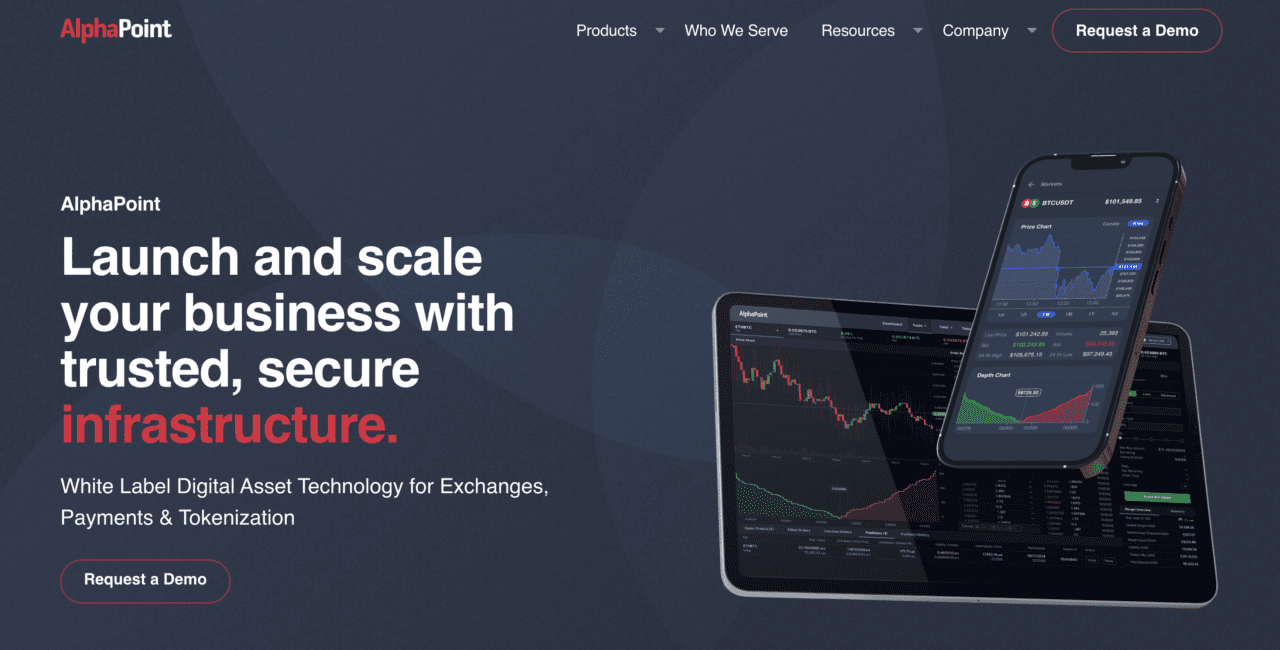
AlphaPoint enables smaller financial institutions to adopt stablecoin payments and treasury capabilities without the cost and complexity of building in-house infrastructure. Its platform provides the tools banks need to support digital asset transactions, helping them modernize payments and compete with larger, more technologically advanced players.

Founded in 2013 and headquartered in New York, AlphaPoint gives banks a faster path to integrating blockchain-based financial services, positioning them to participate in real-time, programmable money.


Quanto

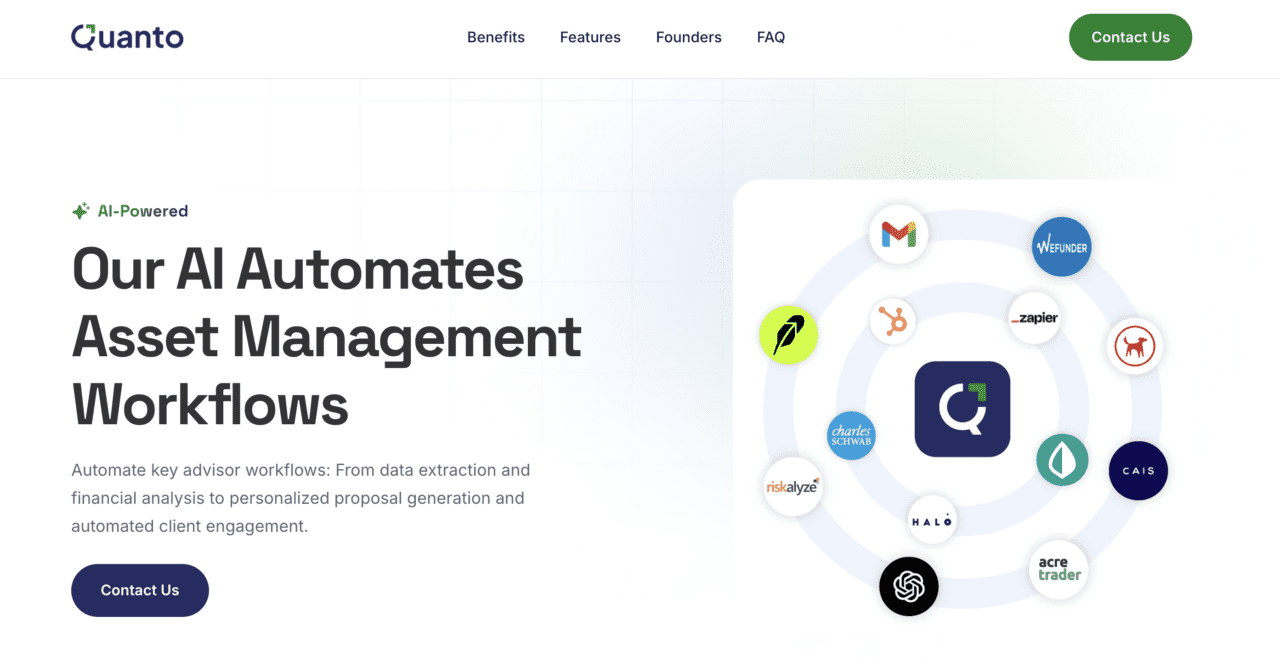
Quanto helps businesses reduce operational friction across financial workflows by streamlining back-office processes, allowing companies to focus on growth.

Founded in 2025 and headquartered in Chicago, Quanto helps organizations scale more efficiently, reduce complexity, and accelerate time to scale.


Reativ

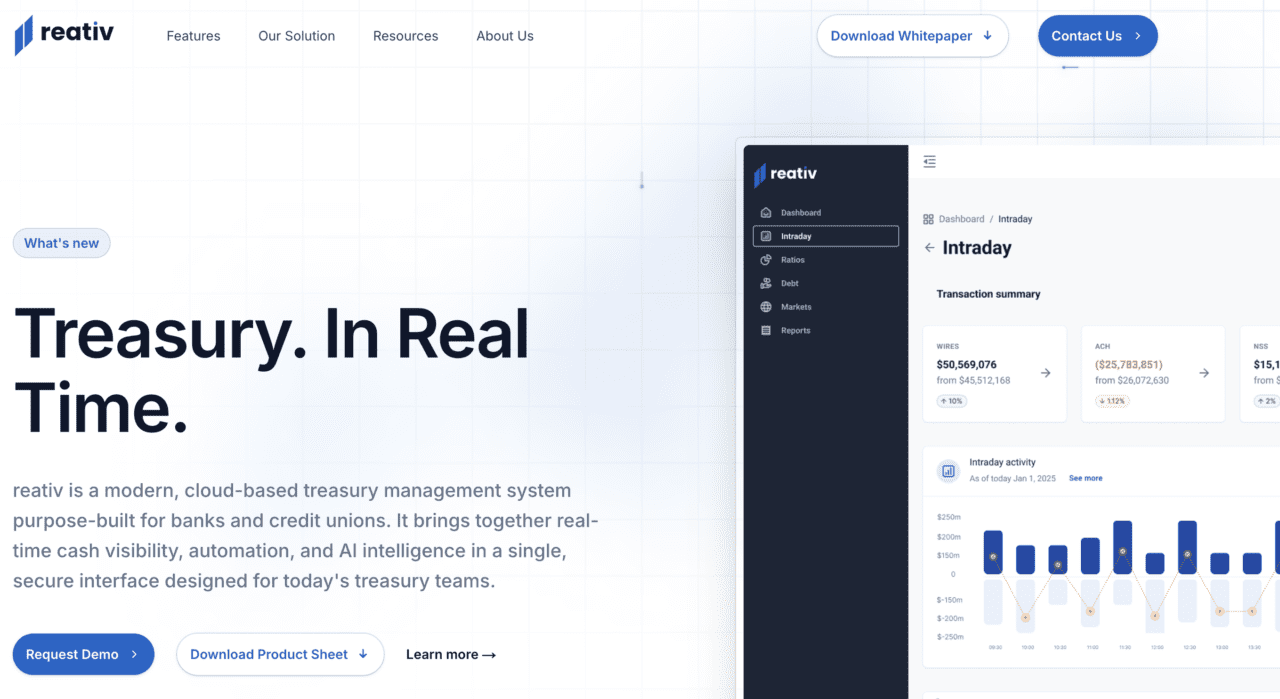
Reativ’s cloud-based treasury management system offers financial institutions real-time visibility into cash positions, liquidity, and risk. Its platform combines automation and AI-driven insights to help banks optimize cash usage, reduce operational costs, and improve decision-making.

Designed for regional and community banks as well as credit unions, Reativ can reduce operational expenses by up to 50% while enhancing regulatory readiness. Founded in 2026 and headquartered in Portland, Oregon, the company offers a modern, centralized approach to treasury management.


Clockout

Clockout helps financial institutions drive deposit growth and customer engagement through embedded financial wellness tools. Its platform is designed to increase direct deposits, boost per-user revenue, and differentiate banks and credit unions in competitive markets.

Founded in 2022 and headquartered in Tennessee, Clockout enables institutions to deepen relationships with their customers while creating new revenue opportunities tied to everyday financial activity.

Why banks should care

Banks are under pressure to offer faster money movement, integrate with third-party platforms, and meet rising customer expectations. At the same time, firms need to manage costs and are constrained by legacy systems.

Fintechs are helping bridge this gap with solutions that simplify treasury management, enable stablecoin and real-time payments, and streamline operational workflows that allow institutions to modernize without large-scale overhauls. At the same time, embedded finance and deposit-driving tools create new opportunities to grow balances, increase revenue per customer, and stay competitive in an increasingly platform-driven financial ecosystem.


Photo by Artur Łuczka on Unsplash

Five Companies Powering Financial Wellness and Consumer Engagement

Five Companies Powering Financial Wellness and Consumer Engagement

For financial institutions, growth involves deepening relationships with existing customers. At a time when switching financial institutions comes at a low cost and fintechs offer many of the same benefits as traditional banks, customer engagement and financial wellness have become strategic priorities.

For traditional financial institutions whose offerings can seem static, providing personalized experiences that help customers save smarter, build better financial habits, and feel more in control of their financial lives can help retain and win over clients. The banks that succeed will be those that can embed themselves into customers’ day-to-day financial decisions.

At FinovateSpring 2026, five companies are focused on helping banks do exactly that. From savings and financial wellness tools to engagement platforms and next-generation consumer experiences, these solutions are designed to drive loyalty, increase product adoption, and deliver measurable value to both customers and institutions.


Plinqit

Business HYS by Plinqit helps banks compete for deposits while giving small and medium-sized businesses (SMBs) more effective ways to manage their cash. The platform is designed to drive deposit growth by offering high-yield savings experiences tailored to business customers, an area where many traditional banks have struggled to differentiate.

Headquartered in Ann Arbor, Michigan and founded in 2015, Plinqit enables financial institutions to attract and retain SMB deposits without overhauling their existing infrastructure which ultimately helps level the playing field to compete against larger competitors and digital-first challengers.


Goodfin

Goodfin is expanding access to alternative investments by opening institutional-grade opportunities to a broader range of investors. Its platform is designed to help financial institutions and fintechs offer differentiated wealth-building tools such as private equity, venture capital, and pre-IPO deals that go beyond traditional stocks and bonds.

Founded in 2022 and headquartered in San Francisco, Goodfin enables banks to meet growing customer demand for access to alternative assets, while positioning themselves as gateways to more sophisticated investment opportunities.


Level

Level helps auto lenders reduce losses by identifying and recovering missed value in total loss insurance claims. Its AI-powered claims management platform centralizes workflows into a single portal, enabling lenders to detect undervalued claims and dispute them at scale.

Backed by licensed claims experts, Level combines automation with human oversight to increase recoveries, reduce deficiency balances, and accelerate time to payment. Headquartered in New York and founded in 2023, the company offers banks, credit unions, and lenders a way to improve operational efficiency while directly impacting the bottom line.


BankUniverse

BankUniverse delivers a privacy-first intent engine that helps financial institutions identify and convert high-value prospects without relying on sensitive personal data. By analyzing user intent signals rather than personal identifiers, the platform enables banks to drive digital sales while maintaining strong data privacy standards.

Founded in 2024 and headquartered in Greece, BankUniverse helps institutions increase conversion rates while navigating growing regulatory and consumer expectations around data protection.


Bluum Finance

Bluum Finance provides a unified platform for embedded investing, combining brokerage, custody, and reporting into a single API. Its infrastructure allows financial institutions and fintechs to launch fully compliant investment offerings quickly, without the complexity and cost typically associated with building these capabilities in-house.

Founded in 2025 and headquartered in Los Angeles, Bluum enhances its offering with AI-powered advisory tools that deliver personalized investment experiences. The platform is built for a wide range of providers looking to bring investing into their existing customer journeys.

Why banks should care

Financial wellness and engagement are quickly becoming primary drivers of growth instead of nice-to-have features. Banks are under pressure to increase deposits, deepen relationships, and create new revenue streams while competing with fintechs that are often more agile and user-focused. Platforms that help customers save more effectively, access new investment opportunities, or receive more personalized financial guidance can translate directly into higher balances, stronger loyalty, and increased product usage.

At the same time, these tools enable banks to expand their role in customers’ financial lives without significantly increasing operational complexity. Whether it’s embedding investing capabilities, improving digital acquisition, or unlocking overlooked sources of value in existing portfolios, financial wellness platforms offer a practical way for institutions to drive both customer outcomes and business performance.


Photo by www.kaboompics.com

Five Companies Advancing Credit Access and Lending Infrastructure

Five Companies Advancing Credit Access and Lending Infrastructure

One of the great promises of fintech innovation is the idea of democratizing finance. This includes everything from helping more deserving borrowers secure access to credit to helping a new generation of savers and investors learn good habits that will ensure financial wellness from young adulthood through retirement. As much of the fintech world becomes increasingly—and understandably—obsessed with the latest developments in AI and decentralized finance, a sizable contingent of innovators continues to solve practical problems for students, young savers, and credit-starved small businesses.

This year at FinovateSpring 2026 in San Diego, May 5 to May 7, we will introduce five fintechs that will show how their latest innovations use advanced technologies to simplify international payments for students, boost financial literacy for teens and their families, and enhance small business lending with AI-powered underwriting and alternative data.


Crebit Pay

Crebit Pay is a stablecoin-powered FX platform enabling low-cost, near-instant global payments for students, while helping credit unions onboard and serve international members.

Crebit Pay’s platform provides near-instant settlement and is 4-10% cheaper than traditional FX. It serves underserved corridors ignored by major providers, offering a stablecoin infrastructure that is fully invisible to users, fiat in and fiat out.

Founded in 2025, Crebit Pay is headquartered in San Francisco, California.


GenAspire

GenAspire offers real-world banking for the next generation. The company’s values-driven teen banking app and financial literacy program is trusted by more than 2,200 schools, designed for families, and built for community financial institutions. Designed for credit unions and community banks, GenAspire’s technology gamifies teen banking and incentives financial literacy.

Headquartered in Boynton Beach, Florida, GenAspire was founded in 2025.


Nextvestment

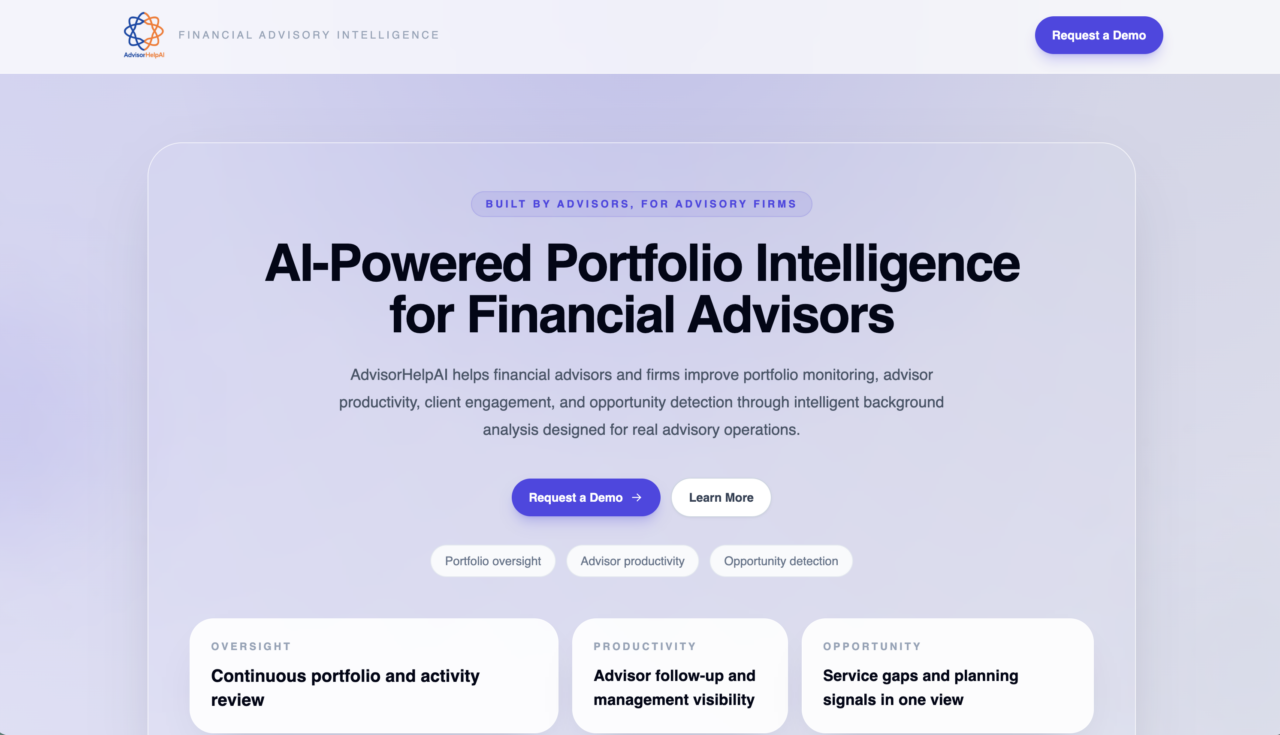
Nextvestment enables safe self-service exploration while guiding advisors to intervene at the right moments, improving client engagement and advisor productivity without changing advisory models. The company’s generative AI platform, designed for financial institutions, family offices, and individual advisors, delivers real-time insights, proactive compliance, and personalized client experiences.

Founded in 2024, Nextvestment is headquartered in Singapore.


PROVIDR

PROVIDR approves more qualified SME loans faster and cheaper but without additional risk through AI-driven, alternative-data underwriting, while reducing costs, improving accuracy, and growing market share. The company’s agentic credit platform gives loan officers the resources they need to make faster lending decisions, with more accuracy and full control.

Headquartered in Boston, Massachusetts, PROVIDR was founded in 2025.


Vine Financial

Vine Financial enables lenders to scale commercial portfolios without adding staff, accelerate deal approvals, and adopt responsibly—turning underwriting from a manual bottleneck into a strategic advantage. The company’s platform lets financiers and borrowers collaborate more effectively, orchestrating the process to ensure that deals flow smoothly.

Founded in 2019, Vine Financial is headquartered in Austin, Texas.

Why banks should care

Expanding access to underserved markets, enhancing financial literacy, and improving operational efficiency and productivity are three areas where fintechs like these can help banks reach more customers, boost engagement, and generate better margins. At a time when it is becoming increasingly difficult for financial institutions to differentiate themselves from the crowd, strategies that can help them attract new customers and empower current customers to become better stewards of their own financial lives are critical.

All of these goals also represent practical opportunities to use technologies such as AI and decentralized finance. AI is making it easier for lenders to analyze both traditional and alternative data to uncover qualified borrowers that traditional underwriting strategies have tended to overlook. Decentralized finance is poised to revolutionize payments, making low-cost, near-instant payment options more broadly available, helping financial institutions better serve international customers while creating new potential revenue streams. Lastly, the ability of AI and DeFi to help eliminate inefficiencies and reduce costs is another main reason why banks and other financial institutions should look closely at the real-world applications of these still-evolving technologies.


If you are enjoying our preview of the companies demoing at FinovateSpring this year, then join us in San Diego on May 5 through May 7. Tickets are on sale now. Save your spotBook your room. And bring your sunscreen!

Photo by Andrea Piacquadio

Five Innovators Transforming Financial Decisioning with Data and Analytics

Five Innovators Transforming Financial Decisioning with Data and Analytics

How can banks, credit unions, and other financial institutions transform the massive volumes of data they process every day into actionable insights that can drive better decision-making, identify inefficiencies, and engage more customers? How will technologies like AI specifically help financial institutions challenged by competition from non-bank rivals, ever-evolving consumer expectations, and regulatory uncertainty?

This year at FinovateSpring 2026, we are showcasing five innovative fintechs that will demonstrate their solutions to help banks, credit unions, and other financial institutions boost productivity, manage risk, and create compelling experiences for their customers and members.


Bloomfire

Bloomfire transforms financial organizations by centralizing knowledge, accelerating decision-making, ensuring regulatory compliance, reducing operational costs, and driving revenue growth through improved productivity.

Founded in 2011, Bloomfire is based in Austin, Texas.


ContexQ

ContexQ is a forensic Graph AI that detects fraud, money laundering, and hidden beneficial ownership by seeing the relationships every other AI misses.

Headquartered in Singapore, ContexQ was founded in 2024. The company’s technology resolves fragmented identities across more than one billion entities in 12+ languages, predicts emerging fraud patterns using Graph Transformers, and unifies risk and revenue intelligence in one graph.


Finalytics.ai

Finalytics.ai enables financial institutions to instantly unleash the power of AI by offering segment-of-one digital experiences for visitors informed by behavioral, transactional, and third-party data.

Founded in 2021, Finalytics.ai is headquartered in San Francisco, California.


Socratix.ai

Socratix AI helps financial institutions cut fraud losses, reduce false positives, and scale operations without adding headcount—driving efficiency, trust, and stronger customer relationships.

Headquartered in San Francisco, California, Socratix AI was founded in 2025.


Whatfix

Whatfix is an AI-native digital adoption platform that helps banks and other financial institutions accelerate system adoption, enforce compliance, and achieve measurable outcomes across mission-critical workflows.

Founded in 2013 and headquartered in San Jose, California, Whatfix offers technology that provides real-time contextual guidance powered by AI-driven ScreenSense, product analytics tied to workflow adherence and business outcomes, and mirror + AI roleplay for risk-free simulation and behavioral training.

Why banks should care

Managing risk, providing compelling personal experiences for customers, and keeping costs low are three paramount challenges for banks, credit unions, and other financial institutions in 2026. Fortunately, all three are areas where technologies such as automation, machine learning, and AI have proven their effectiveness in detecting fraud, customizing user journeys, and identifying workflow inefficiencies and bottlenecks.

Meeting these challenges by embracing fintech innovation is not only a way for banks to ensure regulatory compliance, stay ahead of fraudsters, and become more efficient—it also offers opportunities for specialization and differentiation within the field. At a time when more and more companies are adding financial services to their product mix, innovations that also help banks and credit unions stick out from the crowd are as valuable as ever.


If you are enjoying our preview of the companies demoing at FinovateSpring this year, then join us in San Diego on May 5 through May 7. Register today using this link and save 20%.

Photo by Markus Winkler