NCR Inks $50 Million Deal with State Bank of India

NCR Inks $50 Million Deal with State Bank of India

ncr_homepage_october2016

With FinovateAsia just over a week away (and tickets still available!), you’ll forgive us for having fintech-in-Asia on our minds. But the news that NCR has signed a deal with the largest financial institution in India to deploy more than 7,000 ATMs throughout the country over the next seven years is a great reminder of India’s role in the growth of Asian fintech.

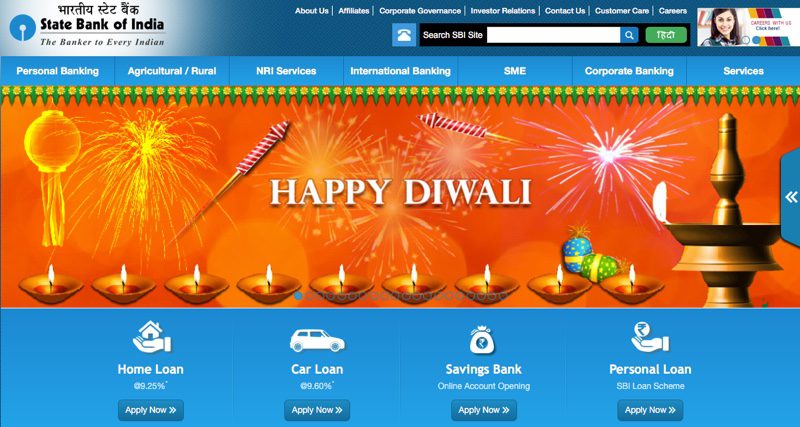
The $50 million agreement will help State Bank of India (SBI) expand its ATM network of more than 57,000 machines in more than 4,500 locations throughout the country. In their announcement, NCR emphasized that the SelfServ 22e ATMs were “conceptualized and ‘Made in India’ specifically for the Indian market” with high transaction-volume capacity and space-saving design geared toward use in underbanked communities in rural areas. To this end, the machines minimize power use and paper waste through low-energy LED lighting and fixed receipt lengths, as well.

The ATMs also feature NCR’s proprietary anti-skimming technology. “The ATM is increasingly becoming a global target for crime,” says Navroze Dastur, managing director of NCR India. He noted that the ability to defend against card data breaches and provide real-time notifications “will help SBI protect its brand reputation and strengthen consumer loyalty.”

sbi_homepage_october2016

With 2016 revenues of $41 billion and assets of $300 billion (2015), State Bank of India is a government-owned FI, founded in 1955, and based in Mumbai, Maharajahtra. SBI has more than 18,000 branches in India, and is one of the country’s largest employers with more than 290,000 workers on staff.

Founded in 1884 and headquartered in Duluth, Georgia, NCR demonstrated its Transaction Data Manager at FinovateSpring 2016. Last month, the company introduced its cloud-based developer portal, and unveiled its new business banking app. Also in October, NCR partnered with MX to launch a new data-driven money-management platform for FIs, NCR Money Management.

$500 Million Raised by 30 Alums in Q3 2016

$500 Million Raised by 30 Alums in Q3 2016

moneybag_goldcoinsFinovate/FinDEVr alums raised more than $490 million in the third quarter of 2016, essentially matching the investment haul from the previous quarter. The Q3 performance in 2016 fell short of the eye-popping third quarter from 2015, during which more than one billion was invested in our alums. But 2016’s third quarter still dwarfed previous third quarters in 2014 and 2013 by a large margin.

Previous quarterly comparisons

  • Q3 2016: More than $500 million raised by 29 alums
  • Q3 2015: More than $1 billion raised by 40 alums
  • Q3 2014: More than $194 million raised by 17 alums
  • Q3 2013: More than $171 million raised by 23 alums

The biggest equity deal of the third quarter was the $72 million raised by OurCrowd in September. Also notable were the $50+ million in funding scored by Interactions, Ripple, and Finova Financial. The top 10 overall investments for the third quarter of 2016 totaled $380 million or more than 76% of the quarter’s total alum funding.

Top 10 overall investments (equity only)

  1. OurCrowd: $72 million
  2. Interactions: $56 million
  3. Ripple: $55 million
  4. Finova Financial: 52.5 million
  5. LendUp: $47 million
  6. Behalf: $27 million
  7. Capriza: $23 million
  8. Signifyd: $19 million
  9. Jumio: $15 million
  10. Juvo: $14 million

Here is our detailed alum funding report for Q3 2016.

July 2016: More than $55 million raised by eight alums

August 2016: More than $256 million raised by twelve alums

September 2016: More than $182 million raised by nine alums

If you are a Finovate/FinDEVr alum that raised money in the third quarter of 2016, and do not see your company listed, please drop us a note at [email protected]. We would love to share the good news! Funding received prior to becoming an alum not included.

Finovate Debuts: ProActive Budget

Finovate Debuts: ProActive Budget

screen-shot-2016-10-25-at-3-57-29-pm

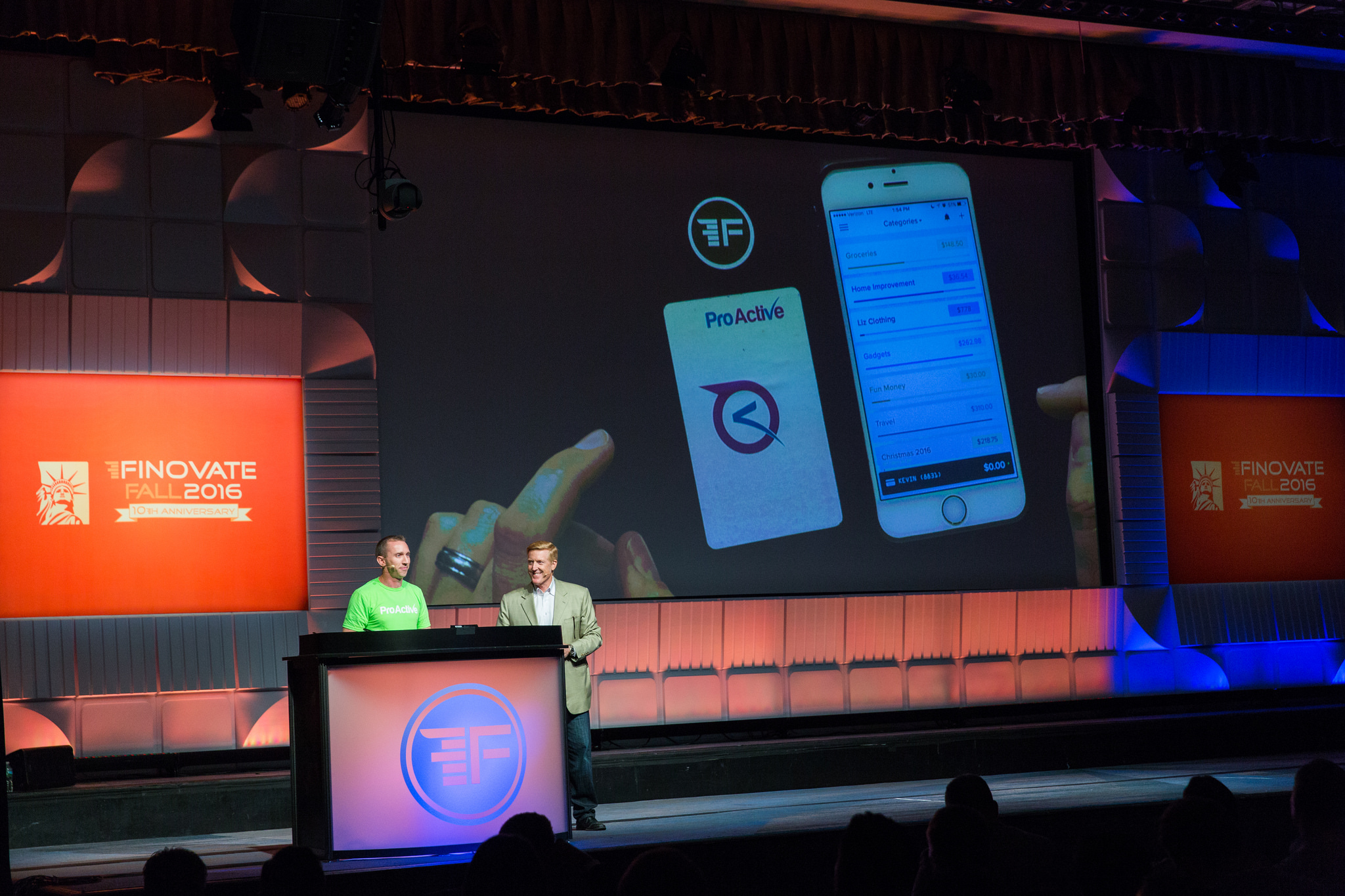
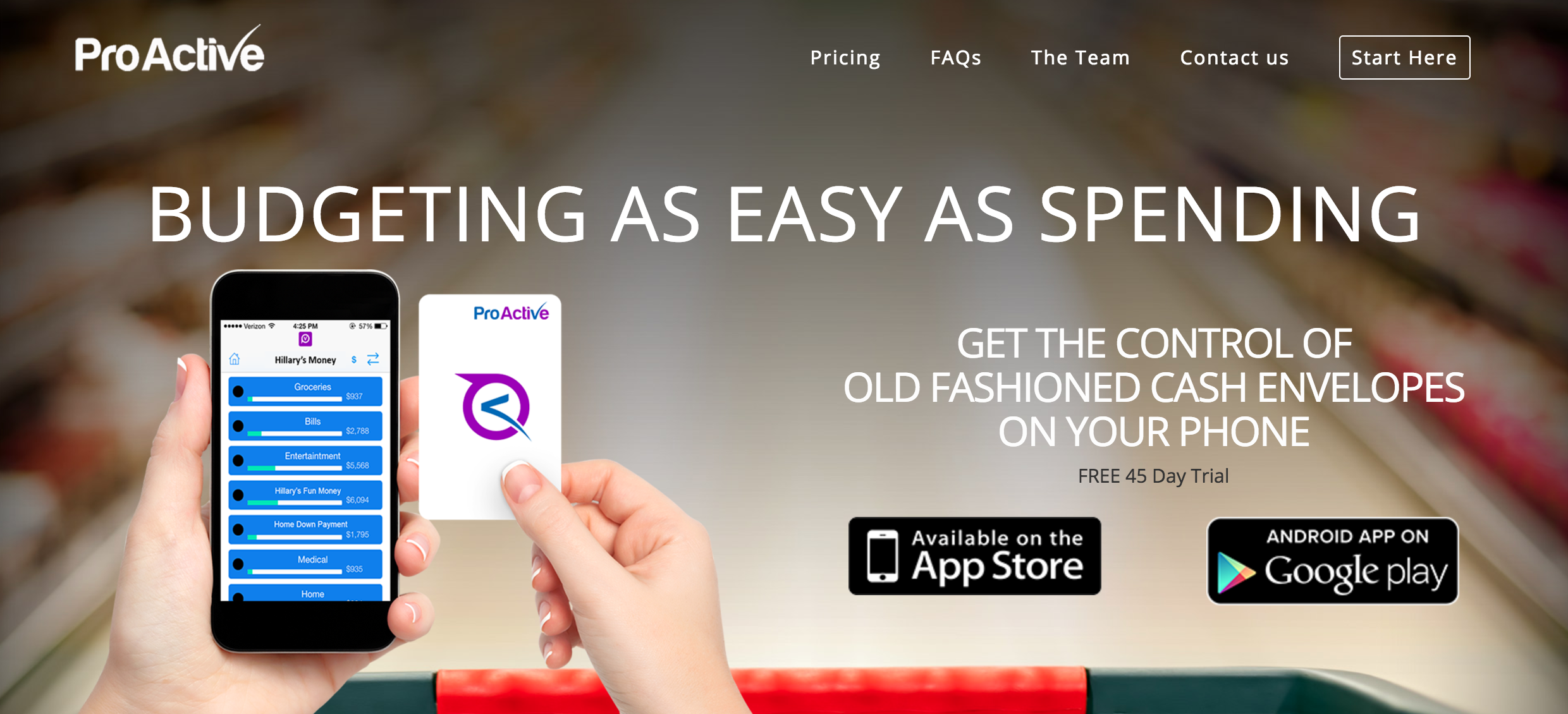
At FinovateFall 2016 in New York, ProActive Budget debuted a digital twist to cash envelope budgeting. Given the prolific, user-friendly financial management solutions of today, cash budgeting may seem dated, but it’s really not—many of us, myself included, have friends who still use this method of budgeting today. As the company’s adviser Ross Jardine said in ProActive Budget’s FinovateFall 2016 demo, “Personal finance apps don’t work. All those fancy graphs and charts rarely change behavior.”

ProActive Budget’s system works similarly to cash-envelope budgeting. But instead of opening an envelope and removing cash to spend in a certain category, users open the app and instantly load funds onto a specialized, prepaid card to make the transaction. As CEO and founder Ryan Clark says in the demo, the reason this works is that “both cash envelopes and ProActive require users to think before they spend … and that is the key to changing the behavior.”

Company facts:

  • $137,000 invested
  • 3 employees
  • Pre-sales
  • Live with 120+ users 2 weeks after Finovate demo
  • Founded in 2015
  • Headquartered in Utah
29101566893_f936eb82ab_kProActive Budget CEO and founder Ryan Clark demos the startup’s digitized cash-envelope budgeting system alongside Ross Jardine.

screen-shot-2016-10-28-at-10-36-29-amWe chatted with Ryan Clark, CEO and founder of ProActive Budget, for further insight into the startup and its goals for the long run. Clark has 10 years of experience as a personal finance adviser and has ranked in the top 10% of advisers nationwide.

Finovate: What problem does ProActive Budget solve?

Clark: Consumers want better budgeting, savings, and debt-elimination tools for their money. They want to teach their children about money and share or pay others easily. Financial institutions and advisers want better leads and user engagement, customer retention and acquisition. Employers want happier, more committed employees with fewer sick days and an easier way to do payroll

Finovate: Who are your primary customers?

Clark: We are B2C or B2B2C. Our customers are everyday people, but it may be delivered through existing B2B channels.

Finovate: How does ProActive Budget solve the problem better?

Clark: All existing budgeting apps fail to change spending behavior because they are reactive. You spend and then they tell you about it. They all lack the power to require thought at the critical moment of the purchase. Only cash envelopes have had this ability, but it’s cash-based. ProActive is cash-less and requires its users to think before they can spend, just like cash.

When the spending problem is solved, debt and savings take care of themselves. This builds trust, commits employees, reduces money fights with spouses, and makes people happier.

Finovate: Tell us about your favorite implementation of your solution.

Clark: Having come from the financial adviser/coach world, my focus was always in helping people create more wealth. I stopped selling investments because I saw that it did little for the masses. They needed more focus on the basics. Budgeting is one of those things where, if we solve it, everything else will take care of itself. It’s amazing! But there’s little money in it so the financial industry does nothing in that space.

My favorite implementation is through an adviser or coach. Our system will help instill the discipline the users want and get them out of the paycheck-to-paycheck grind and out of debt. It will move them along toward being a great saver and eventually a savvy investor because it gives them control—simple, easy, control.

Finovate: What in your background gave you the confidence to tackle this challenge?

Clark: I had a failure on some software we tried to build in my practice. I tried very hard to make a software initiative work. I read books about software and project management, but after a year we tossed in the towel. Six months later we organized ProActive and began building. This time I knew much better how to do software.

Finovate: What are some upcoming initiatives from ProActive Budget that we can look forward to over the next few months?

Clark: The most exciting is the release of our 2.0 version. This will give the currently available prototype a massive facelift and a host of new features. Watch for it in Q1 of 2017.

Finovate: Where do you see ProActive Budget a year or two from now?

Clark: In a year, I see us integrated with several banks, credit unions, adviser groups, and employers. Thousands are experiencing the peace and simplicity that comes from making choices before purchasing. They’re saving more, and their relationship with their spouse is better. They’ve had fewer money fights because of the increased communication and better decisions about money. Our testimonials page will be filled with such stories.

Check out ProActive’s live demo video from FinovateFall 2016 in New York:
Finovate Alumni News

On Finovate.com

  • Finovate Debuts: ProActive Budget
  • NCR Inks $50 Million Deal with State Bank of India

Around the web

  • Singapore-based FinGo Ventures chooses account-aggregation technology from eWise for new mobile payments and banking app.
  • Misys inks five-year licensing deal with Deutsche Bank.
  • iSignthis to provide IronFX with Paydentity services including digital KYC, payment gateway, and card tokenization.
  • Andy Rachleff returns as CEO of Wealthfront.

This post will be updated throughout the day as news and developments emerge. You can also follow all the alumni news headlines on the Finovate Twitter account.


Fintech Trending: RegTech Reality Check, Blockchain Bandwagon, and IBM’s New Wallet

Fintech Trending: RegTech Reality Check, Blockchain Bandwagon, and IBM’s New Wallet

makecompliancegreatagain_redhat

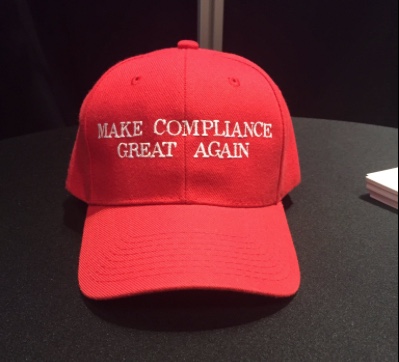
Hat, courtesy of Alloy, a customer-onboarding specialist that debuted at FinDEVr in October.

The dream of RegTech is alive at Finovate

Deloitte recently asked what we should make of regtech in a new report titled, “RegTech is the new FinTech: How agile regulatory technology is helping firms better understand and manage their risks.” To the extent that regtech represents technologies, strategies, and solutions designed to help firms better meet regulatory obligations, remain compliant, and/or secure their processes, there may be less new here than meets the eye. Compared to insurtech, regtech firms have been prominent players in the fintech firmament for years.

To its credit, Deloitte is aware of the “old-is-new-again” aspect of regtech. The report notes that “while the name is new, the marriage of technology and regulation to address regulatory challenges has existed for some time with varying degrees of success.”

Indeed. Consider companies like Gremln (F14), which demonstrated a social media platform specifically for regulated industries, and Finect (F13), which unveiled a compliant communication platform for financial professionals. Qumram (F16) provides software that helps ensure complaint communication by recording digital interactions from web, social, and mobile channels.

My Virtual Strongbox (F14) introduced the kind of secure document-storage technology that can help FIs better manage customer documentation. Global Debt Registry, another F14 presenter, provides compliance and risk-management solutions to the account-management industry. OutsideIQ (F16) enables FIs to uncover regulatory risk using a combination of machine learning and human analysis. FundAmerica (F15), arguably one of the most explicitly regtech companies to demo at Finovate, provides crowdfunding platforms with APIs for a wide variety of “mission-critical, back-end regulatory requirements.”

Additionally, there are a sizeable number of credit risk analysis innovators such as QCR (F15), CreditHQ (F16), and FICO (FD16); companies like Avalara (FD15) that help merchants recognize and satisfy sales-tax requirements (or by that token, even a VATBox (F15) that helps recover VAT fees for international travelers); and cloud-based auditing technologies like those available from Auvenir (F16), whose identity as a fintech company was a topic of our deliberations.

And all of this is to say nothing of the even larger number of security and authentication specialists whose technologies—at least by Deloitte’s definition—can be considered regtech. Note that Deloitte’s Ireland-based rundown of regtech companies includes Finovate alum Trustev (F14), whose online ID-verification technology is very much in the same category as dozens of other security, authentication, verification, anti-fraud innovators.

The question as to whether regtech as a “thing” (as the millennials say) can be separated from the broader fintech discussion is likely more of a marketing decision than anything else. Clearly regtech has the ranks; the issue is to what degree does distinguishing them as a type of innovator apart from the larger fintech world make it easier for these companies to attract top talent, develop necessary solutions, and raise the capital to drive and grow their businesses. From the perspective of fintech in general—and Finovate/FinDEVr in specific—we’re happier having regtech innovating from “inside the tent,” as opposed to being outside the tent trying to find a way in.

See also:

Blockchain bandwagon

Two more major players jumped on the blockchain bandwagon. IBM (FD16) showed its Hyperledger at FinDEVr last week and Visa (FD14) announced its cross-border payment system built on blockchain-like distributed ledgers, an apparent challenge to Swift. The technology is powered by Chain (FD15) which counts Visa, Capital One (FD15) and Citibank as investors. According to Javelin Strategy, banks will invest $1 billion this year in blockchain initiatives.

Mobile payments gets another huge player

Speaking of IBM, one of the more surprising announcements at Money2020 was the launch of IBM Pay, a private-label mobile payments and POS system. Details are sketchy, but in the IBM video below, it appears to be a Starbucks-like QR code system. It’s part of IBM’s Watson Commerce initiative.

Big Blue Goes Behaviorally Biometric with New Additions to Trusteer Pinpoint Detect

Big Blue Goes Behaviorally Biometric with New Additions to Trusteer Pinpoint Detect

ibm_homepage_october2016b

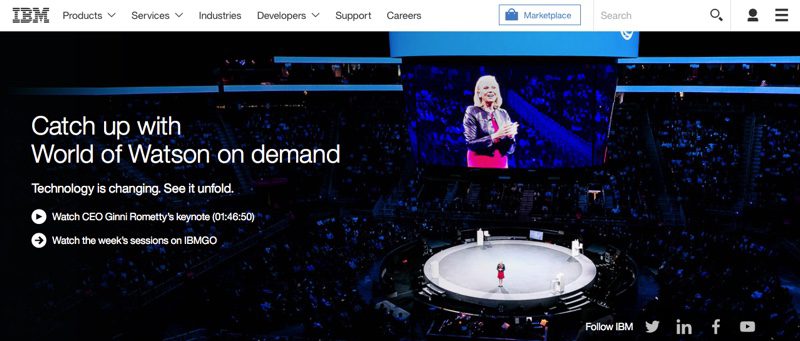
IBM on Thursday announced it will add behavioral biometric analysis to its digital banking-fraud-prevention solution, IBM Security Trusteer Pinpoint Detect. The enhancement comes courtesy of IBM’s billion-dollar acquisition of security innovator Trusteer in 2013. With the addition of behavioral biometric technology, IBM’s security solution will be that much more effective against fraudsters using stolen credentials to gain unauthorized access to bank accounts. “Given enough time and resources, cyber criminals can defeat passwords and security questions,” says Ravi Srinivasan, VP of strategy for IBM security. The difference is that behavioral biometrics is “based not on knowledge, but behavior.”

Using gesture modeling, which tracks, studies, and analyzes behavior of authorized users, the technology develops an increasingly accurate profile of what authorized, legitimate behavior looks like. This means that even with a user’s credentials, a fraudster will be unable to gain access unless they are able to replicate the way the user typically logs on and navigates the website.

ibmsecuritytrusteer_stage_ff16

Ayelet Shomer, IBM’s director of strategy and offering management, demonstrated IBM Security Trusteer at FinovateFall 2016.

Even if a fraudster was able to mimic a user’s mouse and click behavior, as the company’s financial crime-prevention strategist, Brooke Satti Charles told Fast Company, the technology is sensitive enough to detect “suspiciously identical” behavior. She compared this to a forged signature that may appear legitimate, but may include features that are incidental rather than part of a range of behaviors such as a random click or mouse movement. Charles added that the solution notes suspicious activity but does not automatically “lock out” users, ensuring a smooth experience for users while security administrators investigate on the backend. She also pointed out that Security Trusteer Pinpoint Direct focuses on patterns of movement on a page, not which pages are accessed, so visits to new areas of a website are not flagged as suspicious.

Founded in 1911 and based in Armonk, New York, IBM demonstrated its Security Trusteer technology at FinovateFall 2016. The company nicknamed “Big Blue” has more than 300,000 employees and 2015 revenues of more than $81 billion.

Finovate Alumni News

On Finovate.com

  • IBM Goes Behaviorally Biometric with New Additions to Trusteer Pinpoint Detect
  • DemystData lands $7 million round.

Around the web

  • New office in Sydney marks TradeShift’s expansion to Australia and New Zealand markets.
  • Bill.com partners with Quicken Loans, driving speculation the two will work on digital billpay.
  • Marqeta to deploy its network tokenization technology to make it easier to use payment cards with Apple Pay.
  • Signifyd teams up with Accertify to improve anti-fraud protections and reduce chargeback costs.
  • Free Enterprise highlights the biometric technology of Best of Show winner EyeVerify.
  • Personal Capital Appoints Eric Weiss as Chief Marketing Officer
  • NuData to power behavioral biometric security for Early Warning’s Zelle.

This post will be updated throughout the day as news and developments emerge. You can also follow all the alumni news headlines on the Finovate Twitter account.

FinovateEurope 2017 Application Deadline Has Arrived

FinovateEurope 2017 Application Deadline Has Arrived

feu2017_horizontalbanner_dark

We don’t mean to scare you this close to Halloween. But the deadline for applying to demo your technology at FinovateEurope 2017 is this Friday, 28 October. We’re looking forward to reading about all the innovations that CEOs, developers, and product specialists from around the world have been working on. So if you’ve got a fintech solution that’s ready for prime-time, consider it NOW time and submit your application today.

On 7/8 February 2017, FinovateEurope will return to one of the coolest spots—Old Billingsgate Market Hall—in one of the coolest cities in the world. And whether you were thumbs up or thumbs down on Brexit, we can all agree that London is still a great location to showcase the most innovative financial technologies and must-have solutions for banks, financial service providers, and even everyday consumers, savers, and investors.

finovateeurope_attendees_applauding

To apply to FinovateEurope, download our informational FinovateEurope 2017 pdf which gives you everything you need to know about the event. And if FinovateEurope sounds like the ideal place for you to present your technology in our unique, 7-minute, demo-only format, we strongly urge you to complete your application at europe2017.finovate.com/application and submit it to us by Friday, 28 October. We’ll review all the applications submitted for FinovateEurope and get back in touch with you as soon afterwards as we can.

Got questions? We’ve got answers. Email us at [email protected].


FinovateEurope 2017 is sponsored by Financial Technology Partners and KPMG, and is partners with SME Finance Forum and Verdict Financial. Additional sponsors and partners will be announced soon.

DemystData Lands New $7 Million Round

DemystData Lands New $7 Million Round

screen-shot-2016-10-27-at-9-42-47-am

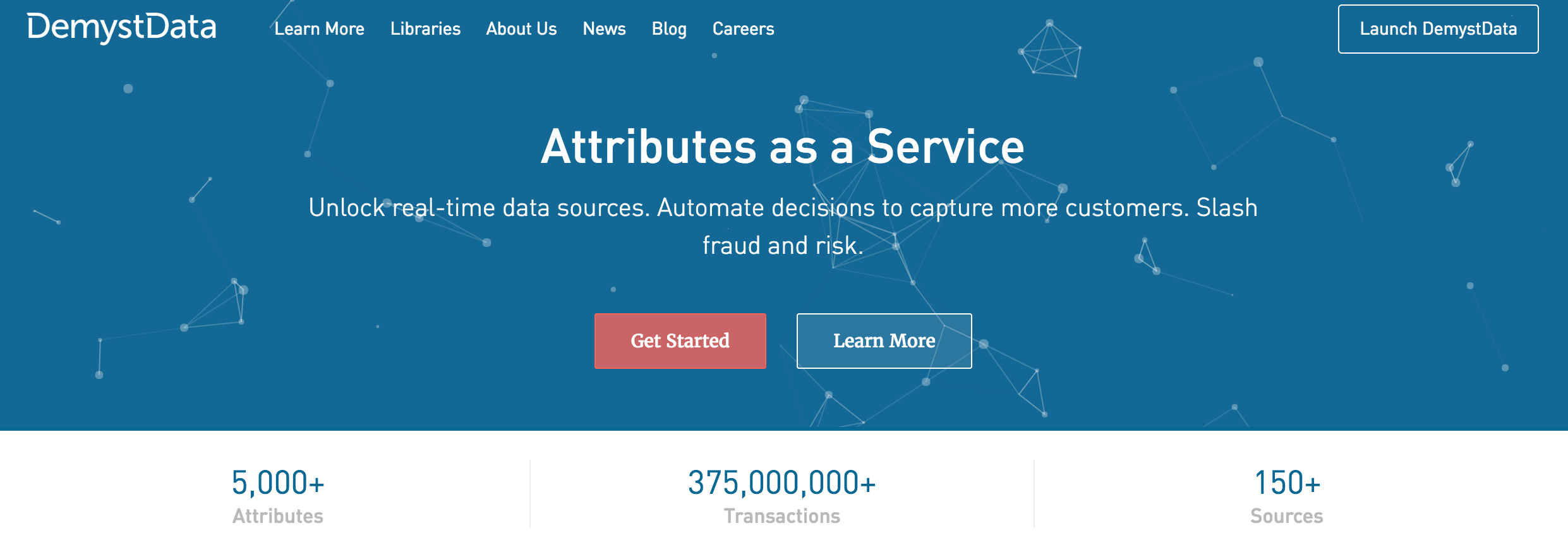
Data-as-a-service company DemystData this week announced it closed a $7 million Series B round led by MissionOG. Notion Capital and Singtel Innov8 also contributed to the round, which boosted the New York-based company’s total funding to $16 million.

To meet increased demand in the U.S. and Asia, DemystData will use the funds to build its team and expand data partnerships. The company leverages big data pulled from in-house and online sources to help banks make informed decisions, improve the user experience, and decrease risk. DemystData counts as customers some of the world’s largest banks and insurance companies across 10 countries.

“We provide the key to accessing valuable data 10 times faster while adhering to increasing privacy constraints,” CEO Mark Hookey is quoted in a press release. He noted the company helps clients “cut risk by up to 60% and increase acceptance and straight-through processing rates to convert more customers.”

DemystData also this week released the Atlantic Platform, an API that aims to “assess consumer and small-business risk on the back of massive streams of data, text, images, and log files, while improving compliance with emerging privacy law.”

At FinovateAsia 2012, DemystData debuted Credit-in-a-Box, a suite of tools that help banks leverage big data to make better lending decisions. The API aggregates publicly sourced consumer data in real-time to help lenders measure risk and assess customer value. Founded in 2010, the company recently earned a spot in the FinTech20 Hong Kong. In April 2015, DemystData was recognized as a top 100 private company in AlwaysOn’s OnFinance Top 100.

Video of the Week: Bank of America Demos AI Chatbot “Erica”

Via a chatbot named Erica, Bank of America this week demo’d its upcoming mobile AI capabilities. The feature will be available to the 21 million users of its mobile app via voice or text commands “in late 2017.” While it’s unusual for a major bank to discuss technology a year away from deployment, with all the hype around artificial intelligence and chatbots, BofA must have figured it was a good PR move.

The bank did not disclose whether it was building or buying the technology, but my guess is the latter. We saw a number of Finovate demos last month in this area and expect many more in 2017.

For more info, check out the American Banker story yesterday (free access).

Finovate Alumni News

On Finovate.com

  • DemystData Lands New $7 Million Round
  • FinovateEurope 2017 Application Deadline Has Arrived

Around the web

  • EyeVerify Update Improves Liveness Detection
  • TSYS renews card payment deal with Rabobank.
  • Student Loan Hero reviews FutureAdvisor.
  • InComm partners with Geoswift to facilitate cross-border payments for international students.
  • Misys to forsake initial public offering in 2016.
  • FICO introduces FICO Enterprise Security Score to indicate an organization’s vulnerability to cyberattack.
  • NuData Security announces partnership with Early Warning.
  • Zopa presents its 24-hour “Zopathon 16” for developers, designers, and “product people.”

This post will be updated throughout the day as news and developments emerge. You can also follow all the alumni news headlines on the Finovate Twitter account.

Useful UI: The Dashboard Metaphor

Useful UI: The Dashboard Metaphor

biz-dashboard-definition

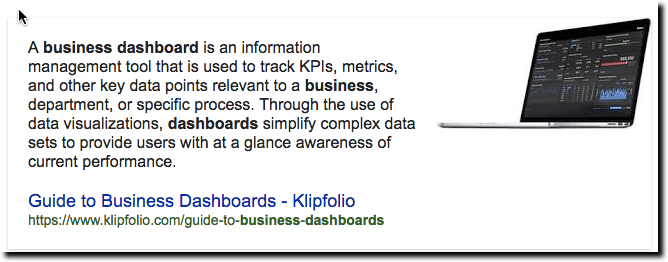
Every now and then a useful term comes into widespread use and it can be hard to decide whether it’s a fad (e.g., home banking) or something that will be around for decades (e.g., ATM). Dashboard is a term we are seeing more and more of. While it’s too soon to say if it will still be around in the next decade, let alone in 50 years, it’s a good word in wide use in consumer and business services today (see definition below).

redfin-dashboard
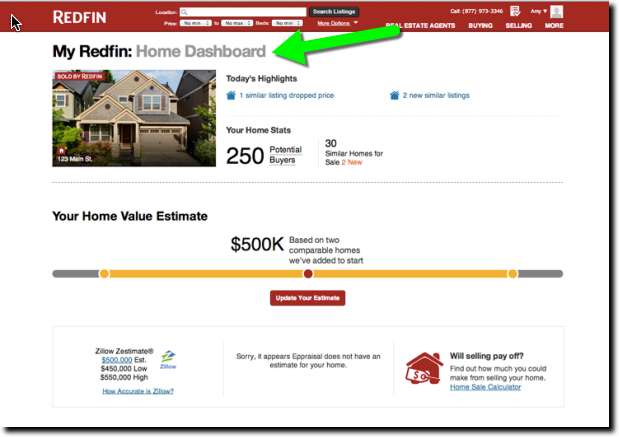
Redfin’s homeowner dashboard

Redfin, for example, sends new homeowners an email suggesting they log in to the Owner’s Dashboard of their new property. Redfin must be matching home-buying records to its user database to make the connections. It’s a nice touch. Who wouldn’t want to sit in the virtual driver’s seat of their most important asset and get a look around. And with home prices appreciating in most parts of the country, it’s a mighty fine view. In the example, the home value is up almost 15% since February.

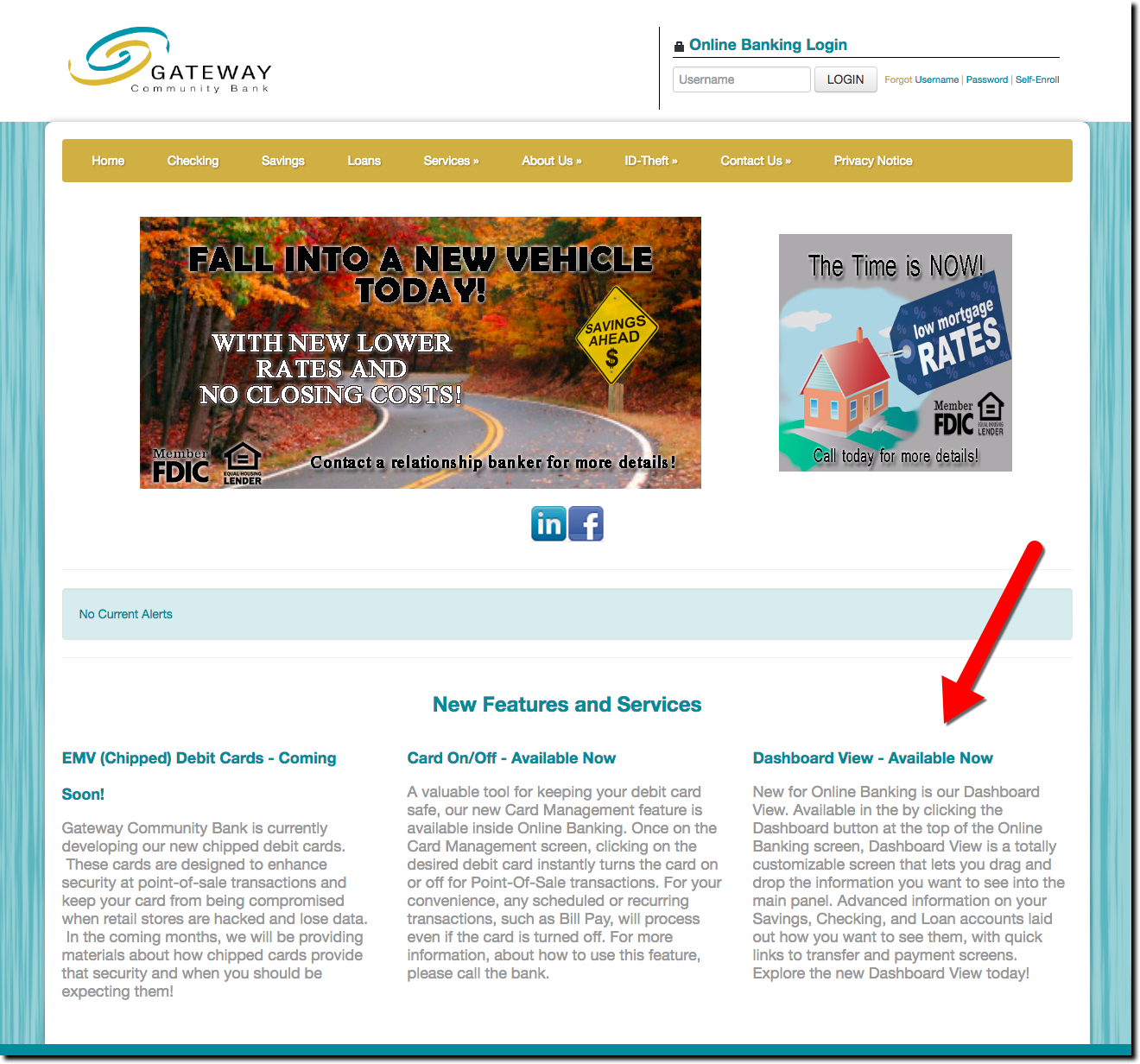
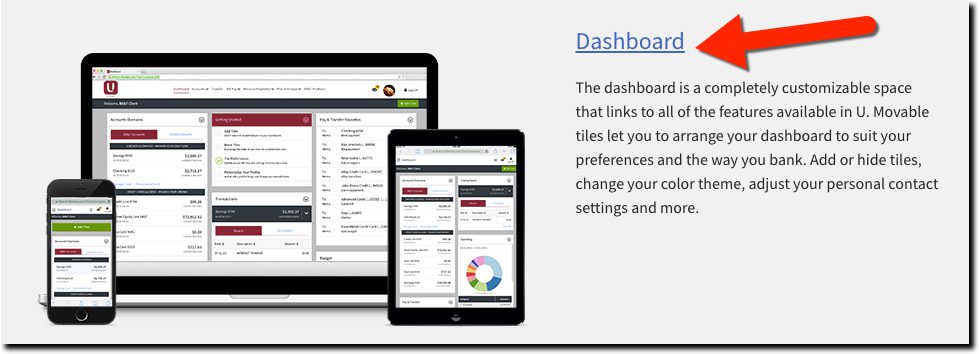
Banks should consider using similar language for their advanced digital banking services. Rather than a fancy name to confuse consumers, use Dashboard, which is not only easy to remember, but also has all the right connotations. One major bank already doing so is BB&T (see below), with its unique customizable mobile and desktop service, U. Another is Ohio-based First Financial Bank as well as $88 million Gateway Community Bank (screenshot below).

———

BB&T's U digital banking is centered around a "Dashboard"
BB&T’s U digital banking is centered around a “Dashboard”

———

Bottom line: The name of a digital service isn’t going to make or break it. But as we struggle with educating users on the features and benefits, the use of known terms can ease the learning curve.

———-

Gateway Community Bank homepage with news of its new "Dashboard View"
Gateway Community Bank homepage with news of its new “Dashboard View”