This site is operated by a business or businesses owned by Informa PLC and all copyright resides with them. Informa PLC's registered office is 5 Howick Place, London SW1P 1WG. Registered in England and Wales. Number 8860726.
Finovate Blog
Tracking fintech, banking & financial services innovations since 1994
Synctera has acquired Cable to add real-time compliance monitoring and automated control testing to its BaaS platform.
Cable enables continuous, end-to-end oversight of fintech programs, replacing traditional point-in-time compliance checks.
Financial terms of the deal were undisclosed.
In the BaaS world, compliance is quickly moving from a box-checking exercise to a continuous, provable requirement. That’s why embedded finance and BaaS fintech Synctera has acquired financial risk control platform Cable.
From Finovate’s perspective, this is a fun announcement to see, as both companies have demoed at Finovate in the past. Cable showcased its Automated Assurance product at FinovateFall 2022. Two years later, Synctera demoed its platform at FinovateFall 2024.
UK-based Cable was founded in 2020 to offer a financial risk control platform with automated testing and real-time alerts that help clients manage, track, and have full oversight of the controls. Cable works in conjunction with a firm’s existing compliance infrastructure to test whether controls, such as KYC, transaction monitoring rules, AML, and other workflows are functioning as designed.
“Synctera has always focused on helping banks and fintechs build and scale responsibly,” said Synctera Co-founder and CEO Peter Hazlehurst. “But execution alone isn’t enough. Banks need visibility into how those systems are performing in real time. Cable provides that missing observability layer, giving our partners confidence that controls are working as intended across their entire fintech ecosystem. Most solutions in this space are theater. Cable isn’t.”
While Cable initially launched to help firms manage financial crime, Cable has since doubled down on helping partner banks, including Axiom Bank, Quaint Oak Bank, and Griffin, manage their fintech programs. Instead of taking a sampling-based approach that only offers a snapshot in time, Cable helps sponsor banks approach compliance with continuous, end-to-end oversight of their fintech programs.
“Banks are being asked to stand behind the performance of increasingly complex fintech ecosystems,” said Natasha Vernier, co-founder of Cable. “That requires a fundamentally different approach: one that is continuous, data-driven, and verifiable. We built Cable to meet that need, and joining Synctera allows us to bring that capability to a much broader market.”
Once the acquisition is finalized, the Cable team will join Synctera to build out the compliance infrastructure banks and fintechs need to operate responsibly. Cable will also continue to serve its existing client base and will be available as a standalone offering.
As partner bank–fintech relationships scale, traditional oversight that only offers a point-in-time snapshot is no longer sufficient to meet regulatory expectations. Instead, banks are being pushed toward continuous, real-time visibility into how controls are performing across their ecosystems. By integrating Cable’s automated testing and monitoring capabilities, Synctera is positioning itself as not just execution infrastructure, but also as a built-in verification tool.
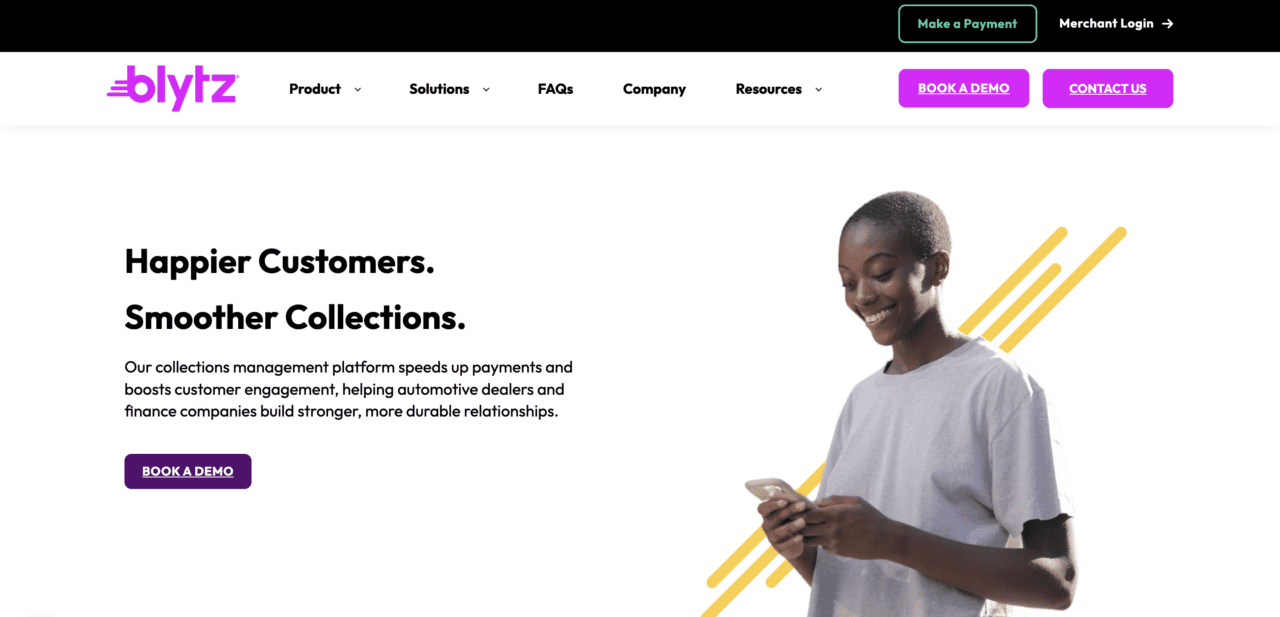
Utah-based payments and collections platform BlytzPay announced an “evolution” of its platform and the launch of Blytz, which connects payments, customer engagement, and automation in a single layer.
Blytz consists of three components: BlytzPay, a text-first billpay solution; BlytzCollect, which uses text-based payment links to enhance outreach; and BlytzCash, which facilitates in-person cash payments via a network of 88,000+ retailers around the US.
Founded in 2017, BlytzPay won Best of Show in its Finovate debut at FinovateSpring 2019 and again later that year at FinovateFall 2019 in New York. Robyn Burkinshaw is Founder and CEO.
BlytzPay, which won Best of Show in its Finovate debut at FinovateSpring 2019 and again later that year at FinovateFall, has announced an “evolution” of its platform and the launch of Blytz. Blytz represents a new iteration of the company’s intelligent payments and collections platform that connects payments, AI-powered customer engagement, and automation into a single operational layer.
The announcement reflects the company’s growth from a modern automotive payments solution into a comprehensive platform that supports automobile financing, property management, and consumer finance. BlytzPay helps companies enhance the way they communicate with customers, collect payments, and manage revenue operations.
“We didn’t just build a payments product; we built what actually happens around a payment,” Blytz CEO and Founder Robyn Burkinshaw said. “Conversations. Follow-ups. Real outcomes. The industry keeps pretending payments are just transactions, but they’re not. Blytz is payments and collections in one motion, which is the way it should have been all along.”
The Blytz platform includes three elements—BlytzPay, BlytzCollect, and BlytzCash—that connect payments, engagement, and automation into a single operational layer. BlytzPay supports modern, text-first, Bankless Bill Pay payment experiences to make it easier for customers to pay and for businesses to collect. BlytzCollect enables finance teams to leverage AI-driven voice and BlytzPay’s instant, text payment links to automate outreach and improve recency via on-time payments. BlytzCash delivers payment accessibility that allows customers to pay with cash in-person at any one of BlytzPay’s national network of more than 88,000 retailers. The platform helps turn data into automated conversations, frictionless payments, and real-time visibility resulting in faster payments, lighter workloads, and stronger customer engagement.
“Most payment providers are focused on processing transactions as cheaply as possible,” Burkinshaw said. “But businesses don’t just need transactions; they need better outcomes, because getting paid isn’t just about moving money—it’s about how you engage the customer before, during, and after the payment.”
The company noted that Blytz will be introduced across its website, product interfaces, and marketing materials over the next few weeks. Existing customers will be able to continue using the same products and services they are currently using within the broader Blytz platform and ecosystem.
Founded in 2017 and headquartered in Lehi, Utah, BlytzPay made its Finovate debut at FinovateSpring 2019 where it won Best of Show. The company returned to the Finovate stage later that same year for FinovateFall in New York, where BlytzPay again took home Best of Show honors. An innovator in the field of pay-by-text, the company offers a payments and collections management platform that boosts collections efficiency by up to 50% in as little as three months. BlytzPay boasts a 53% chargeback dispute win rate and notes that collection teams working for BlytzPay’s automobile dealership partners have reported time savings of 30%.
Round has raised $6 million and announced the launch of agentic workflow and autonomous payroll tools to automate treasury, AP, and payroll.
The company combines AI-driven automation with owned payment infrastructure to fully execute finance teams’ money movement commands.
By sitting in the flow of funds, Round introduces new competition for banks, treasury management system providers, and fintechs.
Treasury management company Round has closed $6 million in seed funding this week, boosting its total funding to $8.1 million. The London-based fintech is also unveiling two new products: Agentic Workflow Builder and Autonomous Payroll.
Today’s round was led by Alstin Capital. Existing investors including Passion Capital, along with new investors Backed VC and Love Ventures, as well as angel investors, also contributed. Uniquely, Round’s own clients also invested. Around 10% of the company’s customer base contributed to today’s round.
“We are building for the finance team of the future, one that understands the importance of automation to keep up with the pace of modern companies. AI tools are rapidly being deployed across the industry and finance teams do not need to be left behind,” said Round Cofounder Hayyaan Ahmad.
The company will use today’s funding to accelerate product development, expand its engineering and go-to-market teams, deepen integrations across banks and accounting systems, and scale its existing infrastructure. Round also has plans to launch community-focused events such as hackathons, hands-on workshops, and webinars.
Round’s new Agentic Workflow Builder, which is currently in early access, builds a workflow based on a natural language description. It allows finance teams to run workflows autonomously that previously required an employee. The Agentic Workflow Builder can run 24/7 and notify teams via Slack, WhatsApp, or email if something needs attention.
Similarly, Autonomous Payroll essentially helps payroll run itself, autonomously pulling funds and executing the payment on schedule. It eliminates the need for finance teams to log into multiple systems to make payroll each month.
Treasury, payroll, and accounts payable have historically been fragmented across banks, ERP systems, and manual workflows. By combining agentic AI with owned payment infrastructure, Round is aiming to collapse those layers into a single, autonomous system.
Round was founded in 2023 to reduce the manual work involved in treasury management by automating workflows. The company automates treasury, accounts payable, and payroll to save finance teams the manual, repetitive work involved in moving funds around to optimize yield.
Round differentiates itself from other automated workflow platforms because it owns and manages the infrastructure involved, such as wallets and payment rails. Clients can leverage that infrastructure, along with Round’s machine learning and intelligence to set rules for approval thresholds, payment schedules, and cash minimums, to ensure payroll obligations are met, and that idle cash is invested appropriately. Since launching its first automated workflows less than a year ago, Round has processed over $500 million.
With Round owning the infrastructure, banks, legacy treasury providers, and even fintechs face a new type of competition. Traditional treasury management systems such as Kyriba offer visibility and controls, but often rely on integrations with external banks and require manual execution. Newer fintechs like Ramp, Brex, and Airbase offer spend management and accounts payable tools, but do not offer full autonomous fund movement.
Moving forward, Round’s challenge will be client trust and regulatory oversight. While finance teams may be willing to automate workflows, they may be less willing to fully automate money movement, especially when it comes to payroll.
There may be April showers out your window, but the fintech landscape is all flowers this week. Take a look at all of the highlights from fintech funding, product developments, partnerships, and more below. We’ll continue to add more announcements as the week progresses.
Payments
Gr4vysupports agentic payments through orchestration and launches development kit to prepare merchants for AI commerce.
AdyenlaunchesIntelligent Money Movement to unify enterprise payments, liquidity management, and payouts.
GoCardlessgrows 22% in 2025, records first quarter of profitability.
Wiseplans to move public listing from London to Nasdaq in May.
Binance is adding prediction markets via a partnership with Predict.fun to enable one-click, fee-free bets on real-world events using existing account balances.
The move raises regulatory and ethical concerns, as prediction markets blur the line between forecasting and gambling and operate with limited oversight.
The move opens a new revenue stream while attracting retail users interested in event-based trading and deeper platform engagement.
Digital asset exchange platform Binance is adding a new revenue stream today. The Cayman Islands-based company has added prediction markets to the Binance App, allowing users to place bets on real-world outcomes across categories.
Binance has teamed up with Predict.fun, a forecasting platform that will host prediction markets on Binance’s platform. The newly integrated prediction markets will offer one-click, fee-free access, with no complex onboarding required. Users will be able to use their Spot and Funding Account balances.
“Prediction markets allow participants to take positions on future outcomes across areas like sports, economics, world events, culture, and crypto,” the company said in its announcement. “Each outcome (Yes and No) is represented by a share priced between $0.01 and $0.99, representing the collective belief of participants on the outcome’s likelihood — for instance, a share priced at $0.80 in a sufficiently deep market would suggest an 80% chance of the outcome occurring.”
As with all moves in the prediction markets space, the launch is not without controversy. Aside from the fact that Binance’s prediction market operates outside the supervision of any financial regulatory authority, prediction markets in general have a reputation for blurring the line between informed forecasting and speculative gambling, especially when tied to sensitive real-world events such as elections or geopolitical outcomes. Additionally, prediction markets are prone to manipulation, may incentivize undesirable behavior (especially among young men), and often lack the regulatory safeguards seen in traditional financial products.
By integrating prediction markets directly into its app, Binance is making it easier for its target market of young men to participate, while also inviting greater regulatory attention at a time when global authorities are already tightening oversight of both crypto platforms and event-based trading.
Binance isn’t the first player in the crypto market to add prediction markets to its platform. US-based Coinbaselaunched prediction markets in partnership with Kalshi four months back, while Crypto.com unveiled a standalone prediction market platform, OG, aimed at sports enthusiasts three months ago.
Overall, Binance’s new prediction markets offering opens up a potentially lucrative revenue stream while also serving as a powerful user acquisition tool, particularly among a growing group of retail traders drawn to event-based speculation.
This week’s edition of Finovate Global reviews recent fintech news and headlines from Thailand.
DV8 Public Company to Acquire Rakkar Digital
Pending regulatory approvals, DV8 Public Company has announced plans to acquire Rakkar Digital, a digital asset custody provider, and invest up to $3 million (THB100 million) in the firm. DV8 has inked a share sale and purchase agreement to buy Rakkar’s ordinary shares from its existing shareholders. The transaction marks DV8’s latest entry into regulated digital asset operations. The company invested in Korean digital asset treasury platform Bitplanet in 2025.
Rakkar Digital was established in 2022 as a joint project between SCBX, the parent company of Siam Commercial Bank, and Fireblocks, a global digital asset infrastructure provider. Headquartered in Singapore, Rakkar Digital provides institutional-grade digital asset and cryptocurrency custodian services and has more than $700 million in assets under custody. In a statement, DV8 noted that Rakkar Digital’s regulatory standing, operational framework, and trust among institutional customers made the company a wise acquisition and will help DV8 compete in Asia’s rapidly growing digital asset ecosystem.
Founded in 1978, DV8 Public Company is a media and advertising agency based in Bangkok, Thailand. Formerly known as Demeter Corporation Public Company Limited, the company rebranded in 2020 and is currently transforming itself into a builder of regulated digital asset infrastructure. DV8 announced this pivot last summer, appointing Thai business leader Chatchaval Jiaravanon as its new Chairman and raising approximately $7.4 million (THB 241 million) in funding.
Mastercard and Krungthai Complete Agentic Transaction in Thailand
Mastercard announced that it has completed a pilot project in Thailand to deliver its first authenticated agentic transaction in partnership with Krungthai Card Public Company Limited (KTC). The project featured Mastercard Agent Pay and was initiated by AI agents in a secure, transparent pilot environment with full consumer control. The transaction used tokenized credentials, authenticated by Mastercard Payment Passkeys, to provide customer verification and data protection.
“AI-driven innovation in payments marks a significant step forward for the financial industry,” Krungthai Card President and CEO Pittaya Vorapanyasakul said. “Our collaboration with Mastercard reflects our strategic commitment to integrating agentic commerce into KTC’s ecosystem—enabling smarter, more secure, and intuitive experiences for consumers. This milestone reinforces our role in advancing payment innovation in Thailand.”
The pilot project demonstrated how AI can complete everyday tasks for consumers safely and efficiently. In this instance, an AI agent booked transportation from Suvarnabhumi airport to Central Chidlom via global mobility provider Elife. Both the booking and the agentic transaction were facilitated by the AI agent, which was connected to Elife’s services network.
Thailand is the latest country where Mastercard has tested its innovations in agentic commerce. So far in 2026, the company has completed authenticated agentic transactions in Australia, New Zealand, Singapore, Malaysia, India, South Korea, Taiwan, and Hong Kong.
“Thailand continues to be one of the region’s most attractive travel destinations, and its dynamic travel environment provides an ideal, real-world testbed for agentic commerce,” Mastercard Country Manager for Thailand and Myanmar Winnie Wong said. “Through this collaboration with Krungthai Card (KTC), Mastercard’s first partner in Thailand to test agentic AI transactions, consumer-authorized AI agents can help make travel experiences more seamless, while embedding trust, authentication, and security directly into payments.”
KTC is a major Thai financial services provider that specializes in credit cards, personal loans, and other payment services. Founded in 1996, the company is headquartered in Bangkok.
Wise Secures Licenses for Wallet and Card Services in Thailand
International money transfer innovator Wise (formerly TransferWise) has obtained five licenses that will enable the firm to offer banking and financial services in Thailand. The UK-based company is the first non-bank to secure five licenses in the country: an electronic money service license, an electronic fund transfer license, an authorized money transfer agent license, an authorized electronic money business operator license (also known as an FX e-Money License), and a foreign business license.
These licenses reflect the relatively complex nature of Thailand as a market for international payments. However, the effort is likely to prove worthwhile. Thailand one of the most internationally connected economies in Southeast Asia, and the APAC region is an especially important one for Wise, accounting for 20% of the fintech’s global revenue.
“Thailand’s cross-border payments market has long been dominated by traditional banks, and Wise is bringing a faster, more transparent alternative,” Wise Head of Banking and Expansion for APAC SK Saraogi said. “With these licenses, customers will soon be able to manage money seamlessly whether they are sending it abroad or using it locally. Beyond Thailand, we see strong demand for our products across APAC and will continue to increase our regulatory footprint to bring our products to even more customers.”
A Finovate alum since 2013, Wise is an international fintech specializing in global money movement and management. Launched in 2011 as “TransferWise” by Kristo Käärmann and Taavet Hinrikus and headquartered in the UK, Wise supported more than 15 million individuals and businesses with its fund transfer services in fiscal 2025. The company processes £9 billion in cross-border transactions every month, saving customers around £1.5 billion a year.
Here is our look at fintech innovation around the world.
Asia-Pacific
Mastercardcompleted a pilot project that delivered the first authenticated agentic transaction in Thailand with Krungthai Card Public Company Limited.
Australian Payments Plus agreed to sell its payments app Beem to Bolt Group.
StraitsX and KBank established real-time payments between Singapore and Thailand.
Sub-Saharan Africa
African fintech Moniepoint acquired Sumac Microfinance Bank, accelerating its entry into the Kenyan market.
Paytech Flutterwave announced plans to establish a regional hub in Anambra, in the southeast part of Nigeria, to help target small businesses.
The Fintech Times reviewed Ghana’s fintech ecosystem.
Payment orchestration platform MoneyHash inked a new partnership with Bahrain-based Eazy Financial Services.
The Times of Israel looked at the current state of fintech investment in Israel.
Central and Southern Asia
Indian lending platform KreditBee achieved a valuation of $1.5 billion after raising $280 million in new funding.
A merger between CityPay and Chhito Paisa is expected to bolster Nepal’s fintech sector.
Glaas, an India-based embedded credit infrastructure company, raised $5 million in funding from Devesh Sachdev, who joined the company as co-founder and managing director.
Latin America and the Caribbean
Stablecoin issuer and infrastructure company Balboa Corporation launched in Panama.
Gusto acquired compliance platform Mosey to embed small business compliance tools into its payroll and HR platform.
The purchase allows Gusto to integrate state and local business registration, filings, and ongoing compliance directly into its platform that serves 400,000 small businesses.
Mosey will help Gusto attract compliance-first customers while adding value via new upsell opportunities.
Payroll, benefits, and HR management solutions company Gusto has acquired business compliance platform Mosey. Financial terms of the deal were not disclosed, but Gusto plans to leverage Mosey to help its customers manage their compliance obligations.
Mosey was founded in 2021 to help small business owners avoid common compliance pitfalls such as hiring without the right legal setup, configuring payroll incorrectly, and missing tax deadlines. “I started Mosey because I’d made every compliance mistake myself, and then I watched thousands of other businesses make the same ones,” said Mosey Founder Alex Kehayias. “The problem isn’t that small business owners don’t care about compliance, it’s that they shouldn’t have to become experts in it. Joining Gusto means we can bring that vision to the millions of small businesses that need it most.”
“Building a business is hard enough without compliance getting in the way,” said Gusto Co-Founder and Chief Product Officer Tomer London. “With Mosey now part of Gusto, we can do what Gusto has always done: take complexity off the plate of small business owners so they can focus on what they actually started their business to do. This is a natural extension of our vision to be the platform that helps small businesses start, hire, and grow.”
Acquiring Mosey will allow Gusto to offer state and local registration, filings, renewal, and ongoing compliance management directly within its own platform. Once integrated, Gusto’s 400,000+ small business clients will be able to hire, pay their teams, and manage their compliance obligations from a single place.
Specifically, Gusto will add:
State and local business registrations
Entity management, ongoing filings and renewals
Resolving agency mail
Real-time surfacing of new compliance obligations as businesses grow or expand to new states
Strategically, Gusto will be able to use Mosey’s technologies to attract clients seeking compliance strategies, but not necessarily HR capabilities. Additionally, it will allow Gusto to cross-sell Mosey’s compliance capabilities to its existing customer base.
This is another case of “rebundling” fintech, in which fintech platforms are piling on more capabilities to their long-standing platforms in order to add value and create a broader, more encompassing ecosystem for clients. The deal comes eight months after Gusto acquired retirement specialist Guideline to offer 401(k) retirement plans through its platform.
Gusto, originally known as ZenPayroll, was founded in 2011 and provides a cloud-based payroll, benefits, HR management, and business financial management solution. If the San Francisco-based company continues down its current path of expansion, it may eventually offer corporate credit cards and business banking tools.
Data and technology company Experian launched its Experian Express solution this week.
Experian Express is a self-service platform that will enable smaller lenders such as credit unions and community banks to credential, onboard, and access credit reports through a fully online, fully digital process.
Experian made its Finovate debut at FinovateSpring 2011. The company’s North American headquarters is in Costa Mesa, California.
International data and technology company Experian introduced its Experian Express solution this week. The new offering is a self-service platform that enables credit unions, community banks, and smaller lenders to digitally credential, onboard, and pull credit reports quickly and efficiently via a 100% online process. Experian Express provides data on more than 245 million credit-active consumers, ensures 99.9% data freshness in North America, and offers understandable, human-readable reports.
Writing about the new offering on the Experian blog, Nathalie Stecko, Marketing Program Manager for the company’s commercial solutions, highlighted the challenges faced by smaller lenders when it comes to securing reliable credit-reporting solutions. “Many available options frequently require technical integration, such as full Application Programming Interface (API) implementation or enterprise-level approvals, creating barriers that small lenders cannot easily overcome,” Stecko explained. “Minimum volume requirements further intensify the challenge, forcing smaller creditors to pay disproportionately high costs for the limited number of reports they need.”
Experian Express serves US lenders with lower-volume credit report access needs. The platform streamlines access to high-quality credit data, providing smaller lenders with real-time credentialing through a guided, online application process. Clients can choose between two subscription plans tailored for common credit workflows: the Essentials plan, suited for manual credit review, compliance checks, and basic fraud risk mitigation; and the Pro plan, which includes all Essentials features plus enhanced identity verification during the account opening process. Experian Express uses VantageScore 4.0, blending trended credit data with machine learning. This provides a more dynamic view of consumer credit behavior over the most recent 24 months. Clients can also enhance risk mitigation with built-in fraud prevention solutions such as Experian’s Fraud Shield or PreciseID.
“Small lenders play a vital role in expanding consumer access to credit,” Experian Chief Product and Analytics Officer Molly Poppie said. “Driven by our commitment to financial inclusion, Experian Express brings digital onboarding to a traditionally manual process, giving lenders a faster, more efficient way to obtain the credit insights they need to confidently extend credit and support consumers across the communities they serve.”
With North American headquarters in Costa Mesa, California, and a corporate headquarters in Dublin, Ireland, Experian leverages data, analytics, and software to help redefine lending practices, fight fraud, and promote financial wellness. The company operates in markets such as financial services, insurance, agrifinance, healthcare, and more. Listed on the London Stock Exchange under the ticker EXPN, Experian has 22,500 employees across 32 countries.
Bringing more personalized financial products and services to consumers is one of the great promises of enabling technologies like AI. It is also increasingly recognized as one of the best ways for banks, credit unions, and other financial services providers to differentiate their offerings from rivals—including those from Big Tech and Big Retail.
At FinovateEurope 2026 earlier this year, I spoke with Gregor Bierent, CEO of NF Innova, about how the company helps traditional banks embrace digital transformation through their innovative platform, FinTense. In our conversation, Bierent discussed the power of FinTense’s digital banking score, the importance of micro-personalization, and how AI-driven solutions can enhance customer experience and boost banking efficiency.
“We see that there is more and more drive and demand for banking to become more unique (and personalized). No matter which bank you’re working with, banking for private individuals or for the small and microenterprises, what we see is that user experience needs to be individual … Your banking needs are different from mine. You like different colors. You have different ways of finding something, of clicking and navigating. This is where personalization—or micropersonalization—kicks in.”
Gregor Bierent is a veteran C-level executive with a track record of growing and improving business in the international information technology and services industry. With a background in consulting, digital strategy, and enterprise software, Bierent has a demonstrated history in providing strong leadership and driving both revenue and profitability. He joined NF Innova as CEO in 2021.
NF Innova, a Noventiq company, helps banks achieve their digital transformation objectives. The firm’s FinTense digital banking platform enables incumbent banks to enhance customer engagement across all digital touchpoints, automate customer-facing processes, and adopt other innovations to better compete with fintechs and challenger banks. The company recently demonstrated its technology at FinovateEurope 2024, presenting its personalized banking experience module. Founded in 2015, NF Innova is headquartered in Belgrade, Serbia.
OnePay is partnering with Workday Wellness to embed banking, investing, and credit tools directly into employer HR and benefits platforms.
The integration shifts financial wellness from a passive benefit to an in-workflow experience, helping employers drive engagement and usage.
The partnership will also bring Enhanced Direct Deposit Switching (EDDS) to simplify payroll routing while helping OnePay acquire new customers and capture more deposits.
Walmart-owned digital banking platform OnePay is reaching more customers through its new partnership with Workday Wellness
The New York-based company has become a Workday Wellness partner for financial benefits. Under the agreement, Workday Wellness will integrate OnePay services with Workday Wellness to allow employers to bring OnePay’s banking, investing, credit building and other financial tools into the Workday experience.
Workday Wellness is owned by Workday, an enterprise AI platform for managing people, money, and AI agents. The company’s tools are used by more than 11,500 organizations across the globe, including more than 65% of the Fortune 500.
Workday Wellness offers employers a real-time view of which benefits their employees actually use and advises them on how to improve their offerings. Bringing OnePay’s financial tools into that experience will move financial wellness from a passive benefit to an embedded part of the employee experience, making it easier for workers to take action in real time and for employers to drive measurable engagement.
“Financial stress doesn’t disappear at the office door. Employers today know that when their employees stress about their finances, it directly affects their business. We’re partnering with Workday to bring comprehensive money tools into the systems employees already use every day,” said OnePay Chief Commercial Officer Thomas Hoare. “These tools are designed for simple rollout by employers and ease of use by employees, with the goal of helping people reduce stress and make real progress.”
For OnePay, embedding its financial tools within Workday Wellness will offer an advantage because it will meet end consumers where they already are within payroll, benefits, and HR. For employers, the integration helps close the gap between offering financial wellness benefits and actually driving usage by making financial wellness tools more visible, accessible, and actionable.
The partnership will also bring Enhanced Direct Deposit Switching (EDDS), a tool that allows employees to instantly set up or change payroll deposits within their employer’s platform. EDDS eliminates the need to manually add routing account numbers, accelerates financial onboarding, improves security, and enables instant switching of paycheck destinations.
On the surface, Workday Wellness and OnePay are offering EDDS to provide a smoother sign-up and paycheck allocation process. For OnePay, however, facilitating the process of direct deposit switching will help it onboard new customers and increase the amount of deposits of its existing clients.
“Financial wellbeing has become a strategic priority for employers,” said Workday Global Vice President, Partner Strategy & Growth Saqib Sheikh. “Welcoming OnePay into Enhanced Direct Deposit and Workday Wellness helps our customers provide a more holistic financial journey for their employees. Our upcoming direct deposit tools cut through the red tape, aiming to make it easier for employees to send their paychecks where they need them to go to help build a more secure financial future.”
Financial infrastructure is becoming increasingly valuable as it powers payments and financial products. Instead of operating within closed systems, banks are now operating within broader ecosystems in which customers expect seamless integrations, faster money movement, and financial services experiences that become invisible within the customer journey.
Fintechs are working to satisfy the demand for this infrastructure using API-driven tools that can support real-time payments, cross-border transactions, and embedded finance use cases. At FinovateSpring 2026, we’re hosting a group of fresh fintechs that will showcase their solutions designed to simplify payments, modernize infrastructure, and unlock new revenue opportunities. From digital asset infrastructure to cross-border payments and operational platforms, these four companies leading the way.
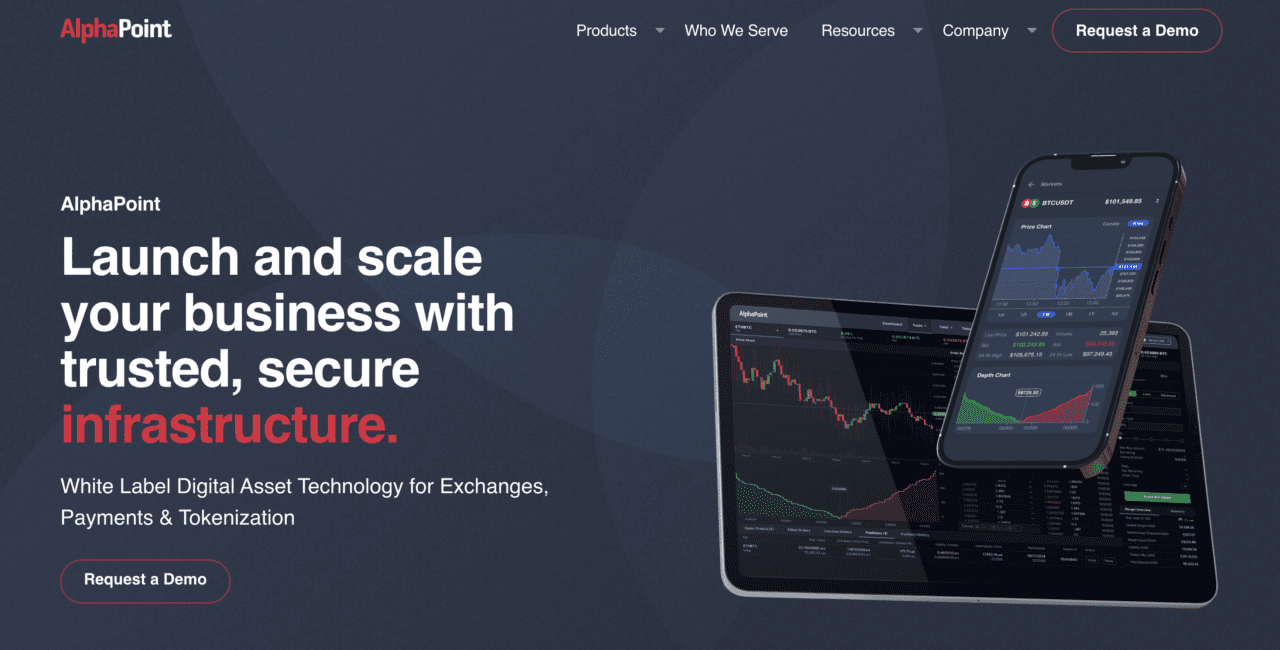
AlphaPoint enables smaller financial institutions to adopt stablecoin payments and treasury capabilities without the cost and complexity of building in-house infrastructure. Its platform provides the tools banks need to support digital asset transactions, helping them modernize payments and compete with larger, more technologically advanced players.
Founded in 2013 and headquartered in New York, AlphaPoint gives banks a faster path to integrating blockchain-based financial services, positioning them to participate in real-time, programmable money.
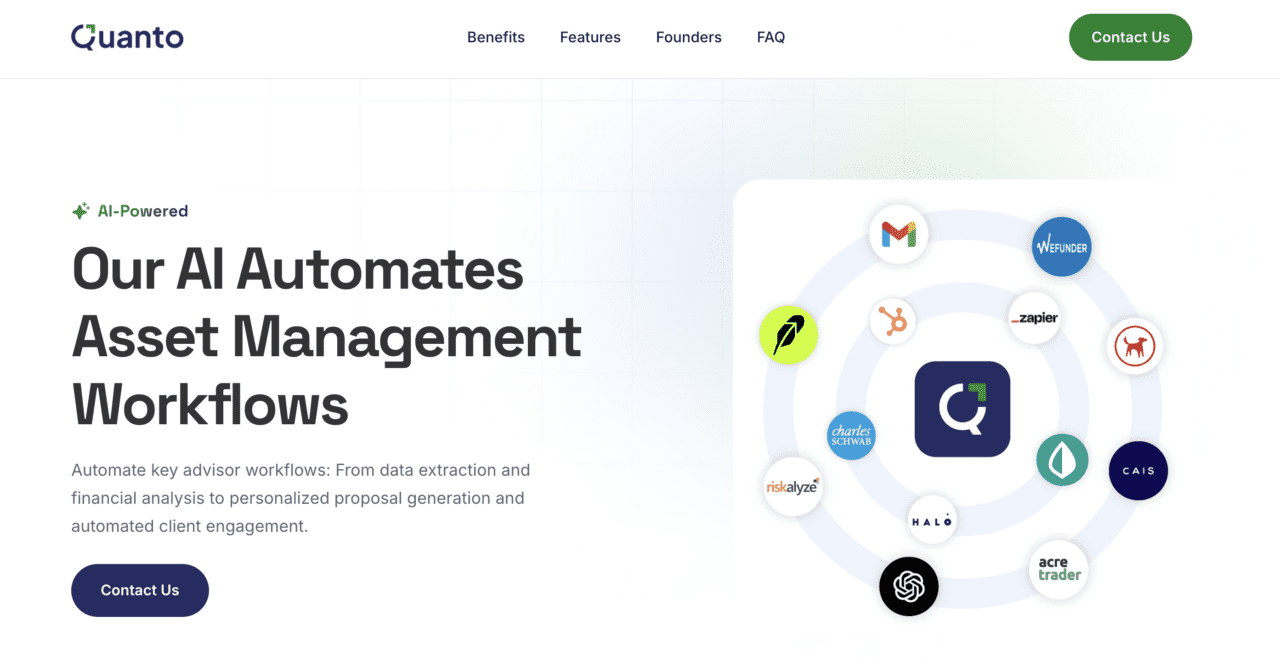
Quanto helps businesses reduce operational friction across financial workflows by streamlining back-office processes, allowing companies to focus on growth.
Founded in 2025 and headquartered in Chicago, Quanto helps organizations scale more efficiently, reduce complexity, and accelerate time to scale.
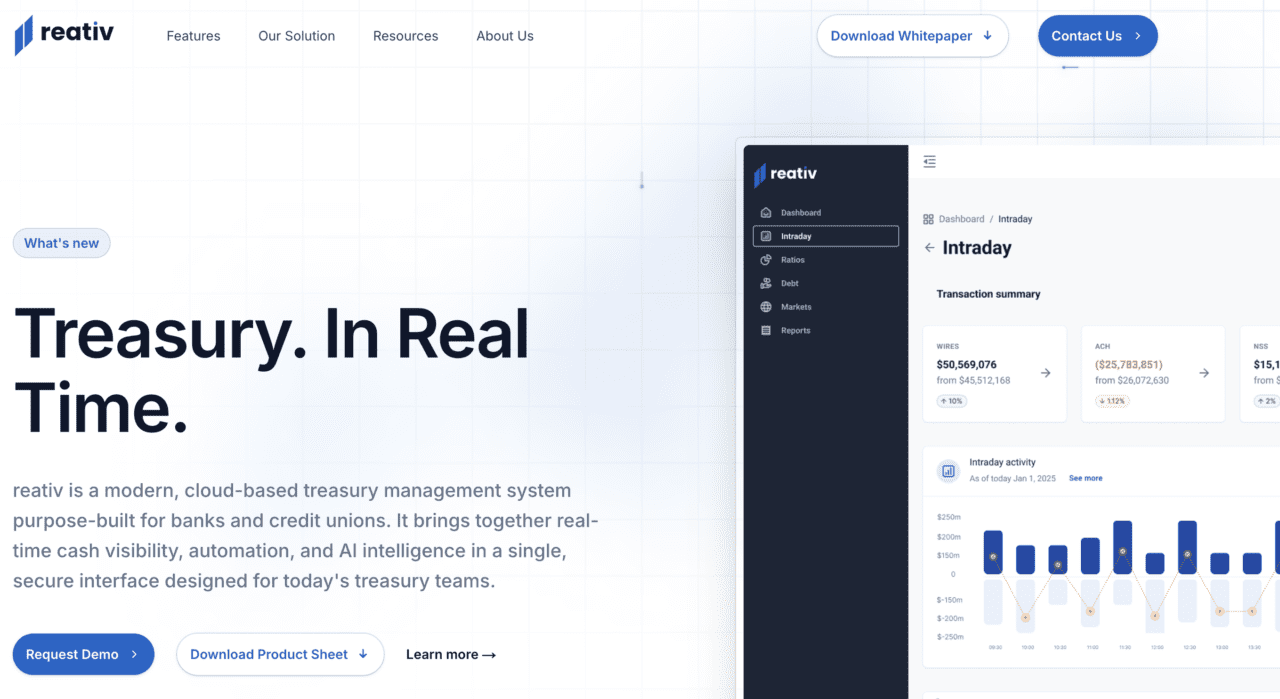
Reativ’s cloud-based treasury management system offers financial institutions real-time visibility into cash positions, liquidity, and risk. Its platform combines automation and AI-driven insights to help banks optimize cash usage, reduce operational costs, and improve decision-making.
Designed for regional and community banks as well as credit unions, Reativ can reduce operational expenses by up to 50% while enhancing regulatory readiness. Founded in 2026 and headquartered in Portland, Oregon, the company offers a modern, centralized approach to treasury management.
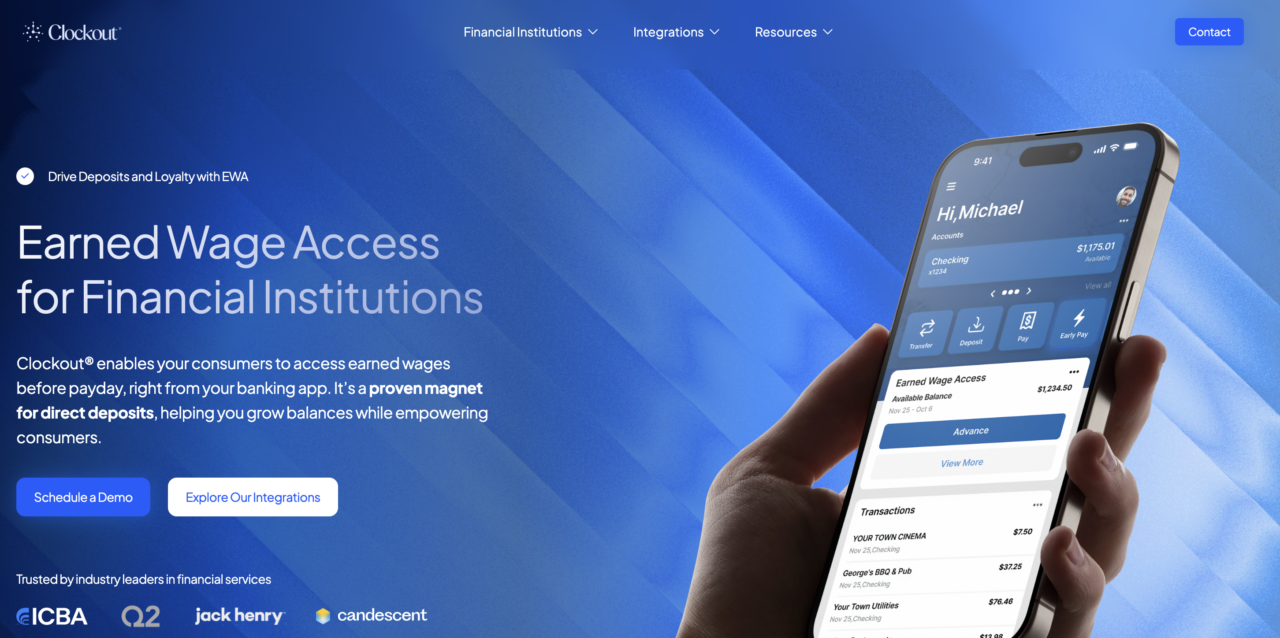
Clockout helps financial institutions drive deposit growth and customer engagement through embedded financial wellness tools. Its platform is designed to increase direct deposits, boost per-user revenue, and differentiate banks and credit unions in competitive markets.
Founded in 2022 and headquartered in Tennessee, Clockout enables institutions to deepen relationships with their customers while creating new revenue opportunities tied to everyday financial activity.
Why banks should care
Banks are under pressure to offer faster money movement, integrate with third-party platforms, and meet rising customer expectations. At the same time, firms need to manage costs and are constrained by legacy systems.
Fintechs are helping bridge this gap with solutions that simplify treasury management, enable stablecoin and real-time payments, and streamline operational workflows that allow institutions to modernize without large-scale overhauls. At the same time, embedded finance and deposit-driving tools create new opportunities to grow balances, increase revenue per customer, and stay competitive in an increasingly platform-driven financial ecosystem.
International money transfer company Paysend announced a follow-on investment of $25 million from Claret Capital Partners.
Paysend will use the capital to fuel the continued expansion of its global payments infrastructure and product suite, helping the firm compete with other major money transfer firms including Wise and Revolut.
Founded in 2016, Paysend most recently demoed its technology at FinovateSpring 2018.
UK-based international money transfer company Paysend has raised $25 million in a follow-on investment from Claret Capital Partners. No new valuation information was immediately available; the company reached a valuation of $700 million in 2021 following a Series B-II funding round.
The capital infusion adds to Claret’s 2020 investment in the company and will support Paysend’s continued development of its global payments infrastructure and product suite. The investment will also help the company expand its geographic footprint, launch new products for both its retail and enterprise customers, and position Paysend to compete with rivals including Airwallex and fellow Finovate alums Wise and Revolut.
“Paysend is delighted to work with a strong partner like Claret, who supports our vision to create the world’s largest cross-border digital network,” Paysend Group CFO Wilhelm Rohde said. “We are scaling rapidly on a global scale and this funding supports us in achieving our ambitions.”
Founded in 2016 by Abdul Abdulkerimov, Ronald Millar, and Alberto Macciani, Paysend made its Finovate debut at FinovateEurope 2016 and returned to the Finovate stage two years later for FinovateSpring 2018. Today, the international money transfer firm operates a digital payment network that connects more than 25 billion endpoints and serves more than 12 million customers around the world. Paysend supports cross-border transactions between 170+ countries, including international money transfers—certified by Mastercard, Visa, and UnionPay—that deliver funds in minutes in more than 95% of cases.
“We’re delighted to continue our partnership with Paysend,” Claret Capital Partners Senior Associate George Morgan said. “The team has built a highly scalable global payments platform and continues to execute strongly against its growth strategy. We are pleased to further support the business as it scales internationally and expands its product offering, building on the progress achieved since our initial investment.”
Paysend’s funding news comes just days after the company announced that its Paysend Enterprise division will support direct payouts into China via Alipay and WeChat Pay wallets. The move will help international businesses navigate a range of complex regulatory and settlement challenges when sending funds into China. Now, with a single API integration, Paysend Enterprise clients will secure access to global pay-to-card coverage, local pay-to-account rails across major markets, SWIFT capability for higher-value international transfers, and direct wallet payouts into China.
“China is a strategically important corridor for cross-border commerce, but it requires local expertise and infrastructure depth,” Paysend CEO Ben Chisell said. “By combining direct wallet access with broader global payout capabilities, Paysend Enterprise gives partners the flexibility to choose the right rail for each transaction—all within one scalable platform.”