This site is operated by a business or businesses owned by Informa PLC and all copyright resides with them. Informa PLC's registered office is 5 Howick Place, London SW1P 1WG. Registered in England and Wales. Number 8860726.
Finovate Blog
Tracking fintech, banking & financial services innovations since 1994
2026 begins in earnest today as the first full working week of the year gets underway. Be sure to check in with Finovate’s Fintech Rundown over the next few days to get you up and running with the latest in fintech news and announcements!
Universal Exchange (UEX) Bitgetopens its TradFi trading suite to all users.
TradeStationunveils the upcoming launch of TITAN X, its next generation of its flagship trading platform designed for active traders.
Crypto and DeFi
Telcoin, a digital asset bank that just won final charter approval from the Nebraska Department of Banking and Finance, launches its eUSD stablecoin.
Kast, a financial platform built on stablecoin rails, expands global payouts to 11 new local currencies including GBP, EUR, and CAD, as well as a multiple currencies in the Asia Pacific region.
This week’s edition of Finovate Globallooks at recent fintech headlines from South Africa.
Lesaka Technologies to Acquire Bank Zero
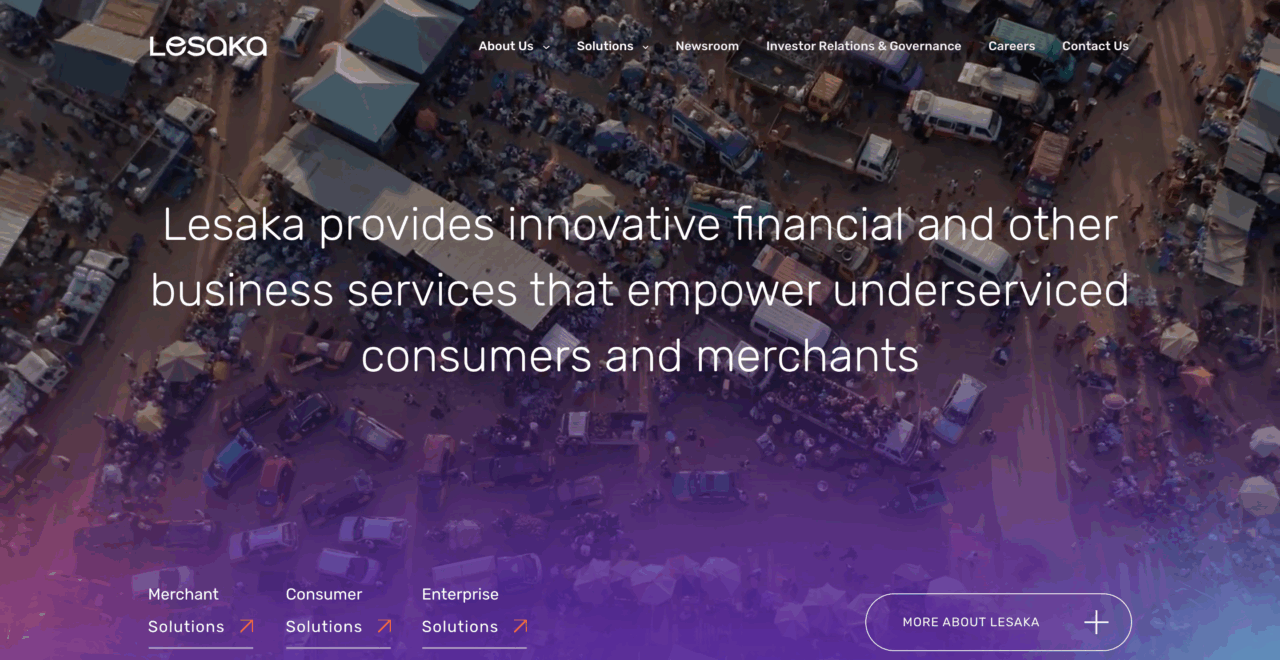
Lesaka Technologies, a fintech that provides low-cost financial services to underbanked South Africans, has secured approval from the Competition Commission to acquire Bank Zero. An app-only bank co-founded by Michael Jordaan in 2018 and publicly launched three years later, Bank Zero today has more than 40,000 funded accounts and deposits of more than $22 million. The financial institution offers personal and business banking solutions to both underbanked and tech-first customers.
Initially announced in July, the acquisition is valued at $60 million. The transaction consists of a combination of newly issued shares in Lesaka and up to $5 million in cash. Post-transaction, Jordaan will remain as Bank Zero’s chairman, and co-founder Yatin Narsai will continue to serve as CEO. Bank Zero’s entire management team will also remain in place.
Lesaka anticipates that the acquisition will fortify its balance sheet, enhance lending performance, and reduce the firm’s dependence on bank debt. The fintech suggested that the move could lower its gross debt by $57 million.
“The acquisition of Bank Zero is a transformative event in Lesaka’s journey, enabling us to better serve our consumers, merchants, and enterprise clients, by embedding a trusted, well-engineered neobank capability into our fintech platform,” Lesaka Chairman Ali Mazanderani said. “I am delighted to welcome the Bank Zero team to Lesaka as partners.”
Lesaka Technologies offers banking, lending, and insurance products to consumers and cash management, billpay, business funding, and card acquiring solutions to retail merchants in both the formal and informal sectors. Founded in 1997, the company is headquartered in Johannesburg, South Africa.
South African Retailer Explores New Banking Venture
One of South Africa’s largest discount retail groups may be getting into the banking business.
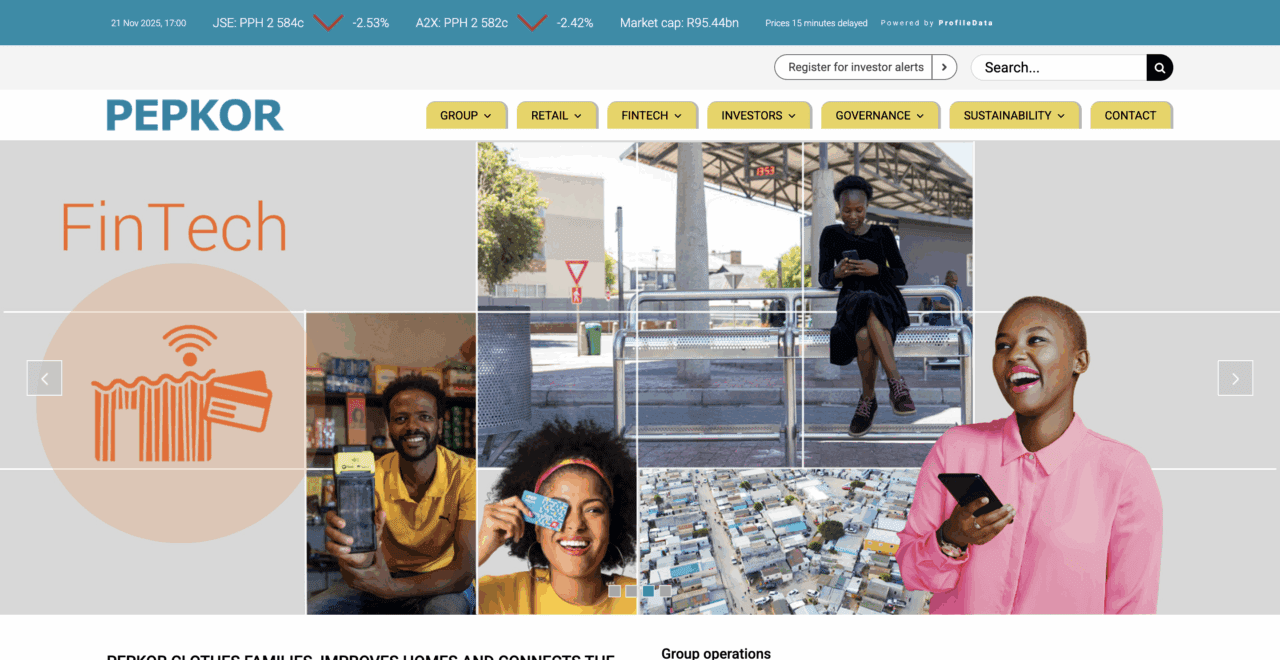
Pepkor Holdings operates more than 5,800 stores across a wide number of brands including PEP, Ackermans, and Tekkie Town. A subsidiary of Steinhoff International, Pepkor is reportedly looking to launch a new banking venture—informally referred to as “Pep Bank”—that will leverage the company’s market reach to offer zero-fee banking to millions of consumers with lower incomes. The company is said to be in conversation with Investec, seeking a partner to support the new bank’s regulatory, operational, and financial infrastructure.
There has been no public commentary from Pepkor on the initiative, and press reports assert that the talks are in “early stages.” Further, the launch of a new bank would require approvals from the South African Reserve Bank (SARB) and the National Credit Regulator, and no such engagement has been reported to date.
Speaking of launching banking operations in South Africa, Revolut announced that it has officially begun the process of securing a banking license in the country. The company has confirmed that it submitted a Section 12 application under the country’s Banks Act, the first step in becoming a licensed bank in South Africa. Revolut first signaled its intention to launch a bank in South Africa in September, highlighting the country as a “key growth market” with increasing rates of digital adoption and an openness to innovative financial products and services.
“Becoming a licensed bank will allow us to bring a full suite of products to the market and ensure we become the go-to financial app for millions of South Africans,” Revolut South Africa CEO Jacques Meyer said.
As a sign of the company’s growing engagement with the South African market, Revolut has appointed Dr. Gaby Magomola as Chairman of Revolut South Africa. A pioneer in the history of banking in South Africa, Dr. Magomola has served in senior executive roles at Citibank, Barclays Bank, First National Bank, and African Bank. He most recently served as Deputy Chairman of the Development Bank of Southern Africa (DBSA).
“Dr. Magomola’s experience is invaluable as we deepen our commitment to the South African market,” Meyer said. “His strategic counsel will be critical in navigating the local regulatory environment, ensuring we build a locally relevant service that addresses the financial needs of all customers in South Africa.”
Revolut’s presence in South Africa would bring significant additional competition to the country’s digital bank industry, which consists of TymeBank, Discovery Bank, and Bank Zero, which has been acquired by Lesaka Technologies, as we noted in this week’s column. Already one of the largest digital banks in the world, Revolut has said its expansion in South Africa is part of the company’s goal to grow its customer base from 65 million to 100 million by 2027. Revolut also seeks to be active in 30 markets by 2030.
Here is our look at fintech innovation around the world.
Asia-Pacific
Japan’s largest trust bank, Sumitomo Mitsui Trust Bank, selected SCSK Corporation and OneSpan to enhance security for its mobile banking operations.
Australian superannuation fund Brighter Super partnered with Napier AI to enhance its compliance infrastructure.
Is Jack back? South China Morning Post featured Alibaba Group Holding founder Jack Ma’s return to the campus of Ant Group.
Sub-Saharan Africa
South African fintech Lesaka Technologies received approval to acquire Bank Zero in a deal valued at $60 million.
Revoluthas applied for a banking license in South Africa.
South Africa’s Discovery Bank announced new crypto trading offering.
Central and Eastern Europe
Lithuanian regtech iDenfy unveiled its new solution that conduct instant license checks during the KYC process.
The European Payments Initiative (EPI) announced that Wero for e-commerce is now live in Germany.
Mastercardintroduced open loop transit payments in Azerbaijan.
Middle East and Northern Africa
Crypto payments company MoonPay expanded its partnership with Israel-based Zengo Wallet. The firm’s venture arm, MoonPay Ventures, also announced a strategic investment in the self-custodial crypto wallet.
First Abu Dhabi Bank teamed up with Thunes to enable global mobile wallet payouts.
Yuze Digital, a AI-powered fintech platform for freelancers and independent businesses, launched its pilot in India.
Pakistani fintech Abhi partnered with UAE-based digital platform Numou to help SMEs access financial services.
Indian fintech Yubi raised $46.4 million to enhance its debt marketplace, collection systems, and AI capabilities.
Latin America and the Caribbean
Uruguay-based cross-border payment platform dLocal partnered with global payouts orchestration company PayQuicker to help the firm serve more merchants in emerging markets.
Latin American accounts receivable management and collections automation platform Moonflow acquired Mexican fintech Kobro.
Dutch insurtech RISK has acquired Amsterdam-based savings app Dyme. Terms of the transaction were not disclosed. The deal will enable Dyme to boost its presence in the Netherlands as well as enter the German market. Courtesy of the agreement, both Dyme’s brand and management team will remain intact.
“From being featured on Dragon’s Den to becoming one of the largest finance apps in Europe and reaching profitability, our mission has always been the same: helping people take control of their money,” Dyme noted on its LinkedIn Page. “This step opens up some great opportunities for Dyme and its customers: expand the product, especially with great insurance packages and service, reach millions more people through the RISK ecosystem, and take Dyme international, beginning with Germany.”
Dyme currently has more than 600,000 consumers who have linked their bank accounts to the Dyme platform. The company’s app serves as a personal financial assistant to help users lower costs, and uses smart algorithms to automate subscription cancellations and provide financial guidance. Dyme announced its first profitable quarter in 2024, and has said that it has helped users save more than €40 million since inception. The acquisition will combine RISK’s market expertise and technological platforms with Dyme’s user-friendly financial solutions that enable users to easily manage their expenses, budgets, and more.
RISK offers an advanced IT platform, SureBase, that assists financial advisors, online labels, and insurers in product comparison and distribution. SureBase, according to RISK CEO Harm Vollmuller, will serve a key base for the new synergy between RISK and Dyme. “By combining that with our platforms and market knowledge, we can reach people at a time when financial breaking space is more important than ever,” Vollmuller said.
“This new facility is a testament to the trust and confidence Brand New Day Bank has placed in Factris and our vision for SME financing,” Factris CEO Brian Reaves said. “As we continue to scale across Europe, this partnership ensures we can meet the increasing demand for alternative financing and provide SMEs with the liquidity they need to thrive.”
Founded in 2017 and headquartered in Amsterdam, North Holland, Factris specializes in invoice factoring for small and medium-sized enterprises. The company offers selective factoring to enable companies to decide which specific invoices to factor, fund availability within 24 hours of invoice submission, credit insurance to protect against customer non-payment or bankruptcy, and debtor management for collections and account receivables.
Brand New Day Bank is a Netherlands-based digital-first, challenger bank and fintech that began operating in 2010. The financial institution serves both individuals and small-to-medium sized businesses with savings accounts, investment and pension products, tax-advantaged savings and investment solutions, and annuity payment services. Brand New Day Bank has more than €8 billion in assets.
Digital banking experience platform Plumeryannounced a suite of new features and integrations designed especially for credit unions in Canada. These new capabilities will give these institutions the ability to provide personalized, compliant, and modern digital banking experiences for their members.
The Amsterdam-based fintech leveraged a collaboration with Aequilibrium, a digital services and technology consultancy headquartered in Vancouver, British Columbia, to make sure its Canadian-ready platform is built based on the way that Canadian credit union members prefer to bank. This includes not just hyper-personalized, mobile-first, and intuitive digital journeys, but also support for everyday payments and transfers including billpay and Interact e-Transfers, and Canadian savings and lending products like GICs.
Plumery’s move comes as Canadian banks and credit unions face a range of challenges including evolving customer expectations, fintech competition, and the pressure to modernize their legacy systems. More immediately, Canadian credit unions are scrambling in the wake of Central 1 Credit Union’s announcement that it will wind down its digital banking platform Forge (formerly MemberDirect). More than 170 credit unions across Canada had been relying on the technology.
“With Forge winding down, Canadian institutions have a rare opportunity to modernize on their own terms, rather than being tied to outdated systems,” Plumery CEO and Founder Ben Goldin said. “Our platform provides an immediate, future-ready option that puts control back in the hands of credit unions. By working with Aequilibrium, we are combining global banking innovation with local expertise to deliver experiences that meet the unique needs of Canadian credit unions’ members.”
Founded in 2016, Plumery enables financial institutions to offer unique mobile and online experiences on top of either their modern or legacy core banking platforms up to 80% faster. Plumery’s technology features foundations that are pre-integrated into its digital banking journeys that accelerate app development and shorten time-to-market while maintaining complete control over both design and functionality.
India’s Bank of Baroda launched its eRUPI Person-to-Person (P2P) gifting solution.
TBC Uzbekistan extended financial services to non-residents.
Indian fintech Kiwi unveiled its interest-backed EMI on UPI.
Latin America and the Caribbean
Brazilian digital banking giant Nubank has applied for a US national bank charter.
Unlimit announced securing Principal Membership with Mastercard and Visa in Peru.
Brazi-based proptech Lastro raised $15 million in Series A funding in a round led by Prosus Ventures.
Asia-Pacific
Cambodian MSME-focused bank Chief Bank teamed up with payment solutions provider BPC to launch its new Chief Mobile 3.0 mobile app.
The People’s Bank of China opened a digital yuan operation center in Shanghai.
The Hong Kong Monetary Authority (HKMA) and the Hong Kong Science and Technology Parks Corporation (HKSTP) launched IADS Developer Hackathon to promote bank-fintech collaboration.
Mastercard Commerce Media has launched to leverage consumer-permissioned transaction data, giving 25,000 advertiser partners smarter targeting and delivering up to 22x ROAS across industries like retail, travel, and dining.
Mastercard’s partnerships with Citi, American Airlines, Microsoft, and WPP will expand scale, reach, and brand integration.
Retail media networks are surging, with spending projected to hit nearly $100 billion by 2028. Chase Media Solutions, which launched in 2024, is an example of how financial institutions are monetizing first-party data to serve personalized offers.
Mastercard announced that it will begin leveraging consumer-permissioned data via its new digital media network, Mastercard Commerce Media. The new media network will give Mastercard’s 25,000 advertiser partners access to transaction data from the 500 million enrolled consumers in order to power smarter, personalized commerce.
Through Mastercard’s proprietary Offers platform, advertisers can deliver tailored campaigns, such as cashback, discounts, and incentives, to audiences defined by their business goals. Using insights from consumer-permissioned data, Mastercard identifies the right customers and delivers relevant advertising content. Consumers can then activate offers on their enrolled card and complete the purchase, with Mastercard directly attributing the transaction to the campaign.
Beyond traditional cashback, Mastercard Commerce Media helps publishers strengthen brand loyalty by enabling programs where consumers earn rewards in a brand’s own cash currency, giving shoppers more purchasing power and brands deeper engagement. Looking ahead, Mastercard plans to expand distribution to new channels and deepen integrations across its broader services portfolio beginning in 2026.
Mastercard processed more than 160 billion transactions in 2024, and its new media network will deliver proprietary insights from transactions like these processed by Mastercard. Mastercard Commerce Media currently delivers a return on ad spend (ROAS) of up to 22 times for advertisers across retail, travel, entertainment, dining, and more.
“We understand how to connect advertisers to consumers and consumers to the products, services and experiences they value,” said Mastercard Chief Services Officer Craig Vosburg. “Mastercard Commerce Media is a natural extension of the trusted connections we’re known for and the work we already do across our unique suite of services. That means we’re not just well-positioned to bring a full-scale commerce media network to life—we’re best-positioned.”
Mastercard Commerce Media is launching in partnership with Citi, which will help the program grow faster, reach more users, and deliver more value. Mastercard already has ongoing ties with Citi, which will give Mastercard’s media network a head start in leveraging Citi’s infrastructure, customer base, and channels. Mastercard is also partnering with American Airlines, Microsoft, and WPP, which will help extend its footprint and connection to brands in the traditional media space.
As the use of consumer-permissioned data gains popularity across fintech subsectors, so too has the adoption of retail media networks. These networks allow institutions to monetize their first-party data by connecting brands with highly targeted audiences through trusted digital channels.
According to eMarketer, retail media networks will expand in the coming years. The firm estimates that retail media network spending will reach nearly $100 billion through 2028, reflecting both advertiser demand and consumer engagement with personalized content. An early trailblazer in the space is Chase Media Solutions, which launched in 2024 to leverage its transaction and cardholder data to serve personalized offers and marketing to its 80 million customers.
Verification platform Argyle announced a strategic investment round that featured participation from Mastercard, Bain Capital Ventures, Checkr, Rockefeller Asset Management, and SignalFire.
The investment follows Argyle’s launch of verification of assets powered by Mastercard’s open finance technology earlier this year.
New York-based Argyle made its Finovate debut at FinovateSpring 2022 in San Francisco. Shmulik Fishman is Co-Founder and CEO.
Consumer-powered verification platform Argyleannounced a strategic investment round that featured participation from Mastercard as well as existing investors Bain Capital Ventures, Checkr, Rockefeller Asset Management, and SignalFire. The amount of the investment was not disclosed.
“This investment is more than capital—it’s validation,” Argyle CEO and Co-Founder Shmulik Fishman said. “We’re deepening our ability to serve customers with a comprehensive verification platform built on real-time payroll connections and open finance capabilities. By combining these strengths, we’re eliminating friction from verification workflows and giving lenders, fintechs, and tenant screeners a smarter path to faster, more accurate decisions.”
Argyle’s investment announcement comes a year and a half after the company reported securing $30 million in Series C funding. That round was led by Rockefeller Asset Management’s Fintech Innovation Fund. This week’s investment also follows Argyle’s launch of verification of assets powered by Mastercard open finance technology in June of this year. This new offering enables Argyle customers to access real-time consumer-permissioned payroll connections covering 90% of the US workforce. Customers are also now able to generate GSE-compliant reports—including verification of income (VOI), verification of employment (VOE), verification of assets (VOA), and combined verification of assets/income (VOAI)—from a single platform.
Argyle noted that the investment is a sign of growing demand for consumer-permissioned verifications. In a statement, the company highlighted a series of recent partnership accomplishments, including Checkr’s ability to reduce verification timelines from days to seconds at 90% lower cost compared to legacy solutions, Regional Finance’s success in automating verifications for more than 65% of borrowers, and Mutual of Omaha’s saving of more than $50,000 per month on verification costs.
“Argyle has built critical infrastructure for a category that’s long been overlooked by modern fintech,” Bain Capital Ventures partner Ajay Agarwal said. “We’ve supported the company from the early stages, and this latest round reflects our continued belief in their team, their momentum, and the long-term potential of consumer-permissioned data to transform verifications across financial services.”
Founded in 2018 and headquartered in New York, Argyle made its Finovate debut at FinovateSpring 2022. At the conference, the company demonstrated its Link 4.0 design update, which provides a more transparent and trustworthy experience for customers when linking their accounts.
Identity and fraud prevention solution provider Alloy has teamed up with Mastercard to launch an enhanced customer onboarding solution for financial institutions and fintechs.
The joint offering will use both identity verification technology and open finance to streamline onboarding and fight fraud.
Founded in 2015, Alloy most recently demoed its technology at FinovateFall 2022.
Identity and fraud prevention platform provider Alloy has inked a global partnership with Mastercard to introduce an enhanced customer onboarding solution for financial institutions and fintechs. The new offering comes as these businesses cited a 60% increase in fraud in 2024, according to Alloy’s 2025 State of Fraud Report. The report further noted that 93% of those financial organizations surveyed planned to invest in ongoing fraud prevention measures this year, with 64% planning to deploy identity risk technology, as well.
“Fraud continues to be a significant challenge for financial institutions and consumers alike, underscoring the urgent need for robust fraud prevention measures,” Mastercard EVP and Global Head of Identity, Dennis Gamiello said. “This joint onboarding solution will be a game-changer in the fight to reduce fraud and deliver a seamless and secure customer experience.”
The joint offering from Alloy and Mastercard will leverage both identity verification and open finance to simultaneously streamline onboarding and fight fraud. The solution provides a consistent identity risk strategy and onboarding experience across channels. Alloy will leverage Mastercard’s global digital identity verification capabilities and suite of open finance-powered account opening solutions to support financial institutions as they manage fraud, identity risk, and secure account funding throughout the customer lifecycle.
At the same time, Mastercard solutions will be integrated and pre-configured in Alloy to enable seamless deployment. Customers will have access to 200+ risk and identity solutions available via Alloy that are designed to help boost customer conversion rates, reduce the amount of manual reviews, and provide comprehensive end-to-end coverage.
“Successful fraud prevention starts with a holistic approach to understanding identity. Our partnership with Mastercard will allow more financial institutions and fintechs to evaluate customer identities holistically,” Alloy Chief Product Officer Parilee Wang said. “The end result for those companies will be a better digital experience and less fraud risk, allowing their businesses to grow effectively.”
Founded in 2015 and headquartered in St. Paul, Minnesota, Alloy introduced itself to Finovate audiences at FinDEVr SiliconValley 2016, and returned to the Finovate stage six years later for FinovateFall 2022 in New York. More recently, Alloy was included in CNBC World’s Top Fintech Companies roster for 2025 and, in June, the company announced a partnership with IG Group to help the FTSE 250 online trading firm maintain regulatory compliance as it grows.
Headquartered in Ontario, Canada and founded in 2022, Cinareo Solutions complements workforce management platforms, helping them streamline contact center operations and mitigate risk by enabling precise resource allocation and decision-making that is driven by data.
Cinareo made its Finovate debut earlier this year at FinovateSpring 2025 in San Diego, demonstrating how its SaaS solution provides scenario-based capacity planning for both contact center agents and support staff. The company’s technology leverages industry-recognized statistical models and simulations to help businesses meet customer demands as well as vital financial KPIs.
We caught up with Karen Elliott recently to learn more about the field of capacity planning, the role of enabling technologies like AI, and how Cinareo Solutions helps contact centers ensure that the right person with the right skills is in the right place at the right time.
What role does capacity planning have in workforce management? What makes it challenging and how does Cinareo help companies better meet those challenges?
Karen Elliott: Capacity planning is the strategic backbone of workforce management. It determines how many people you need with the right skills, in the right place, at the right time, to meet service levels without overspending on labor. In contact centers, capacity planning sits upstream of scheduling—it uses historical data, forecasts, and business assumptions to set headcount and budget requirements weeks, months, or even years in advance. Effective planning ensures customer demand is met efficiently and profitably.
The challenge is that unpredictable demand, scattered data, and outdated tools make planning a constant challenge. Most organizations resort to using Excel spreadsheets and spend hours or even days of manual labor and embedded formulas to try to figure out the optimal plan. Cinareo streamlines the process by ingesting your data and enabling rapid “what-if” scenario modeling and multi-skilling simulation to create optimized plans for both agents and support staff with the click of a button.
Not only does Cinareo handle planning with ease, but the platform also creates financial budgets and recruitment and training plans so you know who to hire, and when, to ensure you meet your service targets.
Who are Cinareo’s primary customers? How do you reach them?
Elliott: Cinareo is an industry-agnostic platform for all contact centers. We have customers worldwide in financial institutions, telecom, travel, utilities, retail, and even government. We partner with CCaaS and WFM solutions to integrate directly into their platforms so that data can flow seamlessly into Cinareo. Any organization with variable demand, labor-intensive operations and service or cost targets would get huge benefits from using a platform like Cinareo.
We have a wide network of referral agents and ISV partners that recommend Cinareo to their clients when they see a clear need. Cinareo offers webinars and monthly product showcases to demonstrate the power behind the platform—or can even arrange custom demos and proof of concepts to make sure potential customers truly understand the benefits of a modern planning platform like Cinareo.
What in your background led you to pursue innovation in this field?
Elliott: I spent 12 years at the IBM Innovation Center earlier in my career within the User Experience group with a key focus on user-centric software solutions. After leaving IBM, I co-founded a professional consulting firm that specialized in contact center optimization that helped organizations improve their people, processes, technology, and knowledge.
Years of consulting highlighted a huge gap in the market in regard to capacity planning. We worked with countless private and public sector organizations that would build these complex spreadsheets to determine their optimal staffing and we decided there needed to be a better way, so we created Cinareo. It was built to complement any CCaaS or WFM platform in the market and integrate into whatever was the customer’s platform of choice. If customers switch platforms, they can take Cinareo with them—having a portable, agnostic solution was key to the design.
Another important goal was designing a platform that was simple and intuitive based on years of experience in user-centric design. We even have our customers as active members of the planning and design of the solution—this ensures that everything we build is focused on the needs and requirements of the people using the software.
What role do enabling technologies like AI play in developing innovative workforce management solutions?
Elliott: Capacity planning remains relevant in contact centers even if AI is involved, and it can take on a different but crucial role in optimizing the overall performance. While AI can now handle routine queries or simple updates, the reality is much more complex. Cinareo helps determine the right mix of AI-driven processes and human resources to meet the demand efficiently. Our customers are modelling their operations using Cinareo to determine the ideal balance of human agents vs bot and the ROI on an investment in AI as well.
Incorporating AI into Cinareo is a given—we are already full steam ahead in our strategic plans to ensure that AI-driven capacity planning can make a dramatic difference. But true innovation in customer support isn’t about replacing the people—it is about giving people the ability to work faster and smarter – and we are doing that with Cinareo.
You recently launched Flexible Monthly Planning. What is the value proposition with this new offering?
Elliott: We initially offered Cinareo as a strategic, long-term capacity planning platform where users could build 12-, 24- or 36-month plans. However, as we continued to enhance Cinareo, our customers were telling us they wanted more flexibility in their planning, so we built in the capability to do weekly planning up to 52 weeks in order for contact centers to create tactical plans over the short or medium term.
To continue to expand on Cinareo’s flexible platform, we recently launched more flexibility into our monthly planning as well, so customers can build a plan for any number of months up to 3 years in advance. These enhancements were all driven by the needs of our clients since our goal is to have our software reflect “the voice of the customer” and truly be user-centric.
You made your Finovate debut at FinovateSpring earlier this year. How was the experience?
Elliott: We had a fantastic debut at FinovateSpring! We generated a lot of great interest in the solution from the demo we provided. Prior to FinovateSpring, we had recently started onboarding more fintech clients and noticed an uptick in interest from banks, credit unions, and insurance agencies looking for a solution like Cinareo. We thought FinovateSpring would be a great opportunity to demo Cinareo to a wider audience and get fintech companies to see the realm of the possible with a modern capacity planning solution. There is such a clear need in this sector for a solution that will not only improve CX and EX, but also provide important KPIs like the cost per contact to help with financial management.
What can we look forward to seeing from Cinareo in the months to come?
Elliott: We are excited over some of the new features that are set to launch in the months to come—we have been scaling up significantly to meet customer demand. A couple new features that are soon to be released are multi-lingual functionality in addition to the ability to compare a plan with your historical data in a quick and easy way. We will be offering our clients a way to see how their plan performed against their actuals in both performance and staffing—down to the 15-minute interval level. This new feature will help our customers understand trends and patterns and be able to improve their planning moving forward.
That is just the tip of the iceberg—we have so many more exciting things planned over the next while. We would love to increase our customer base to have even more voices driving the future of our software! If you want to see how Cinareo can solve your capacity planning challenges, feel free to contact us.
Here is our look at fintech innovation around the world.
Middle East and Northern Africa
Whish Money teams up with Mastercard to enable cross-border payments to Lebanon.
Bank of Algeria joined the Pan-African Payment and Settlement System (PAPSS) launched by the African Export-Import Bank (Afreximbank).
Qatar-based AlRayan Bank went live with Finastra Corporate Channels.
Central and Southern Asia
India celebrated National Fintech Day earlier this week.
Ukrainian fintech Fintech Farm launched its mobile banking service Tezbank in Uzbekistan.
The Institute of Chartered Accountants of India (ICAI) announced plans to unveil new Information Systems Audit Standards to enhance audit practices for startups, fintechs, and e-commerce companies.
Latin America and the Caribbean
Brazil-based digital financial services platform Nubankintroduced Armando Herrera as new CEO of its Mexican operations.
Uruguayan cross-border payment platform dLocal teamed up with cross-border marketplace platform Tiendamia.
Puero Rico-based transaction processor and fintech EVERTEC announced plans to acquire a controlling stake in Brazilian fintech vendor Tecnobank.
The first month of Q3 is in the books, “Crypto Week” was declared in the US last week, and corporate earnings reports are dominating the conversation on Wall Street.
To start off the week of fintech news here on Finovate’s Fintech Rundown, we have word of new C-suite appointments, collaborations in payments and fraud prevention, as well as new solutions for identity protection.
Appdomelaunches customer identity protection solution for mobile apps, IDAnchor.
MastercardintroducesA2A Protect in the UK to help defend consumers against account-to-account payment fraud.
Digital banking
Finovate Best of Show winner 10x Bankingintroduces new Chief Revenue Officer Tom Bentley.
Nubankappoints Ethan Eismann as its first Chief Design Officer.
Crypto
Blockchain startup Bitzerosecures $25 million for its sustainable blockchain and HighPerformance Compute (HPC) data centers.
African paytech Peach Payments and South African crypto payments solution provider MoneyBadgerteam up to bring crypto payments to South African merchants.
This week’s edition of Finovate Global looks at recent fintech headlines from the South American nation of Peru.
EBANX partners with Peruvian digital wallet Yape
Brazilian payments company EBANX announced a direct integration with Peruvian digital wallet, Yape. Designed for cross-border commerce and relying on an easy user enrollment process, Yape enables users to pay for purchases on international ecommerce websites using either their Yape wallet balance or a linked card. The wallet supports recurring, one-click and on-file payment solutions and, in 2024, was responsible for the largest share of the volume transacted online through a digital wallet in the country. This is according to research from Payments and Commerce Market Intelligence (PCMI).
“With over 14 million active Peruvian users, Yape empowers millions of consumers with reliable daily transactions,” Yape Head of Payments Claudia Silva said. “This direct integration with EBANX marks a significant step in expanding our reach to global merchants, allowing them to tap into the vast potential of the Peruvian market.”
Digital wallets are a major component of Peru’s payment ecosystem. The fourth most commonly used payment in the country, digital wallets represented 10% of all digital commerce transactions in Peru in 2024. PCMI anticipates a digital wallet annual growth rate of 17% by 2027 and much of this growth, according to Silva, can be credited to Yape. According to the firm’s own data, Yape’s digital wallet delivers a 93% approval rate on transactions, an especially valuable achievement as digital wallets are increasingly becoming the preferred payment method for recurring transactions.
“Through its partnership with Yape, EBANX enables merchants to access a seamless, secure, and high-conversion payment solution that drives immediate results for one-time purchases as well as for subscription-based services and recurring payments,” said Juliana Etcheverry, Director of LatAm Country Growth—South Cone at EBANX. “This partnership goes beyond payments; it’s about fostering scalable, long-term growth for merchants in a rapidly evolving market.”
Founded in 2016, Yape is headquartered in Lima, Peru. The company’s payment app has more than 20 million users and more than 2.5 million affiliated businesses. Yape expanded to Bolivia in 2023, reaching two million users (“Yaperos”) a year later.
Paysafe goes live with PagoEfective ewallet in Peru
As if to underscore the rising popularity of digital wallets in Peru, payments platform Paysafe announced that it is expanding its eCash brand, PagoEfectivo, into a digital wallet. As a brand, PagoEfectivo has been a major force in Latin America’s eCash payment ecosystem, supporting the transactions of millions of online consumers. As a digital wallet, the brand will enable users to load funds instantly, make online transactions, receive payouts from participating merchants, transfer funds to others, and more.
“Our recent survey with Peruvian consumers found that 81% would use a digital wallet from PagoEfectivo,” Paysafe Head of Latin America Estaban Sarubbi said. “With that strong sign, we’re launching a solution that meets consumers’ payment needs.” Paysafe CEO Bruce Lowthers added, “Consumers in Peru already trust PagoEfectivo for everything from iGaming and digital goods to travel and ecommerce. With the launch of our new digital wallet, we’re giving them a more convenient way to pay—one that reflects Paysafe’s commitment to powering the experiential economy.”
Headquartered in London, Paysafe processed $152 billion in annualized transactional volume in 2024. A leading payments platform, Paysafe empowers businesses and consumers to connect and transact through its capabilities in payment processing, digital wallets, and online cash solutions. Delivering services across 260 payment types in 48 currencies, Paysafe’s integrated platform is designed for mobile-initiated transactions, real-time analytics, and facilitating the convergence between in-store and online payments.
Do Payment launches pay-in service Do Pay in regional expansion
Peruvian paytech Do Payment has launched its own pay-in service, Do Pay. The new offering is designed bring greater speed, lower costs, and more flexibility to the payments process by enhancing liquidity for clients and reducing reliance on intermediate parties. Do Pay also creates a single provider for both pay-in and pay-out payment solutions thanks to leveraging its own proprietary infrastructure and direct connections with banks, acquirers, and local payment networks.
“In Latin America, companies face a critical challenge: the slowness of fund availability, with delays of 48 to 72 hours and even up to one week, directly impacting their liquidity,” Do Payment Chief Product Officer Valentina Brero said. “Against global solutions poorly adapted to the region, Do Pay emerges as a service specialized in payment collection with the fastest settlement in the market, ideal for operators who need to use the funds for daily operations.”
Do Payment’s new offering enables firms to better manage a range of problems faced by companies in Latin America when it comes to collecting and making payments. These challenges include having to work with multiple partners—often different providers for both collecting and disbursements—as well as multiple technologies, high fees, and long waiting times. Do Pay, in contrast, enables firms to leverage a single platform for both collection and dispersal, which enhances operational liquidity and ensures that funds are credit faster.
Founded in 2022 by CEO Cristian Valderrama, Do Payment is based in Lima, Peru. The company is already active in seven countries—Peru, Mexico, Ecuador, Chile, Colombia, Panama, and the US—with its pay-out service. In addition to Peru, Do Payment will go live with its Do Pay pay-in solution in Mexico and Ecuador, with the goal of expanding to both Chile and Colombia subsequently. Do Payment also noted that it plans to grow its footprint in Brazil in the second half of 2025.
Here is our look at fintech innovation around the world.
Latin America and the Caribbean
Payments platform Paysafe launched its digital wallet, PagoEfectivo, in Peru.
Mexican fintech and edtech Mattilda partnered with payment orchestration platform Gr4vy to power its new white-label payments solution, Mattilda Pay.
Uruguay-based paytech dLocal announced plans to acquire Kenyan cross-border payments solutions provider AZA Finance.
Asia-Pacific
Revolutpartnered with Ant International to enable its customers to send money to China.
Visaunveiled its Security Roadmap for New Zealand, featuring a three-year plan to leverage AI to fight fraud and other cyberthreats against consumers and businesses in the country.
Worldpaywent live with domestic acquiring services in Thailand.
Sub-Saharan Africa
Nigerian cryptocurrency exchange Roqqu acquired Kenyan crypto startup Flitaa as part of its expansion into East Africa.
Daily Investor profiled South African entrepreneur Lungisa Matshoba, co-founder of Yoco.
South African paytech Stitch acquired Efficacy Payments in order to offer card acquiring services directly to merchants.
Central and Eastern Europe
Clarity AI acquired Berlin, Germany-based Sustainability-as-a-Service innovator ecolytiq.
Azerbaijan-based fintech PashaPay inked a Memorandum of Understanding (MoU) with Mastercard.
German online bank N26 announced plans to offer stock trading to customers in Austria and Germany.
Middle East and Northern Africa
Egypt’s Faisal Islamic Bank partnered with Intellect to launch its Shariah-compliant digital transformation.
According to research from Mordor Intelligence, the fintech market in the United Arab Emirates is expected to grow to more than $6.4 billion by 2030.
Egyptian digital investment platform Thndr raised $15.7 million in a round led by Prosus Ventures.
Central and Southern Asia
Pakistan-based ecommerce startup Bazaar Technologies announced that it is nearing profitability following its acquisition of Pakistani paytech Keenu.
Indian cross-border investing and financial management platform Belong is now available to non-resident Indians living in the UAE.
Central Asian digital banking ecosystem TBC Uzbekistan launched a new insurance vertical, TBC Insurance.
tapi is acquiring Arcus’ cash payments operations, including bill pay, top-ups, gift cards, and cash-in/out.
tapi will leverage the buy to expand its footprint in Mexico and strengthen its role as a regional payments leader.
Backed by Kaszek and Andreessen Horowitz, tapi expects to process over $2B in 2025—5x more than in 2024.
In a move to expand its regional footprint, Argentina-based tapiunveiled it will acquire the cash payments operations of Mastercard-owned Arcus.
Specifically, tapi will acquire Arcus’ service payment operations, mobile top-ups, gift cards, and cash-in/out services. tapi is making the move to expand its presence in Mexico and boost its reputation as a payments partner for banks, fintechs, retailers, and service companies across the region. The acquisition will enable tapi to offer a more seamless payment experience while promoting financial inclusion across Latin America. The company remains focused on expanding its Cash In/Out network to offer direct access to retailers in Mexico through strategic partnerships with OXXO, Chedraui, Finabien, 7-Eleven, SYStienda, and others.
“Integrating Arcus’ service and cash payment capabilities into tapi’s ecosystem marks a turning point in our journey as a company,” said tapi CEO and co-founder Tomás Mindlin. “This integration broadens our reach in Mexico, serving the country’s leading fintechs and banks and significantly expanding our physical footprint with thousands of Cash In/Out points, along with connections to the market’s most relevant service providers. To the cutting-edge technology and customer experience that have fueled our exponential growth in recent years, we now add reliable infrastructure and well-established relationships within the local financial ecosystem. We’re thrilled to become the strategic partner for the financial industry in Mexico and the region.”
For tapi users and clients, the acquisition will offer greater scalability and nationwide physical transaction coverage, access to a broad range of payment services through a single platform, and fast and reliable processing for daily financial needs.
“By integrating this technology with our API-first approach, we’re making it even easier for our partners to launch embedded financial experiences,” said tapi CTO and co-founder Nicolás Andriano.
tapi was founded in 2022 and two years later closed a $22 million Series A funding round led by Kaszek, with participation from Andreessen Horowitz. This brought the company’s total funding to $31 million. tapi expects to surpass $2 billion in annual volume in 2025, which is five times more than in 2024.
Arcus’ ArcusFI platform offers firms access to Mexico’s real-time payment system, allowing them to generate interbank CLABEs to send and receive payments to and from any participating firm in Banxico’s Interbank Electronic Payment System (SPEI). One of the key features of Arcus is Dimo, an electronic transfer service facilitated by Banxico that allows the beneficiary to link their cell phone number to their account through SPEI. Customers can use Dimo to transfer funds from the Arcus platform with just the recipient’s phone number.
With this payment method, you can make electronic money transfers from the Arcus platform using only the beneficiary’s cell phone number.
Logistically, Mastercard will retain the Arcus brand, as well as its capabilities in payment processing, settlement, and reconciliation through Mexico’s real-time payment system (SPEI).
Mastercard and MoonPay are partnering to launch stablecoin-powered cards, enabling users to spend crypto at over 150 million merchants worldwide.
MoonPay is leveraging its acquisition of Iron to provide API infrastructure that lets businesses manage stablecoin payouts, disbursements, and cross-border transactions.
This move signals growing mainstream adoption of stablecoins, with Mastercard aiming to make crypto wallets function like traditional bank accounts.
Mastercard announced today that it has teamed up with stablecoin infrastructure provider MoonPay to enable people and businesses to pay using stablecoins.
Under the partnership, businesses will leverage Mastercard-branded cards linked to users’ stablecoin balances. Mastercard will allow cardholders to spend their stablecoins, which MoonPay will convert to fiat currency, at the 150+ million locations where Mastercard is accepted.
MoonPay is using API-driven stablecoin infrastructure from Iron, which it acquired in March of this year. Iron will facilitate stablecoin-powered payments for businesses, which will turn crypto wallets into digital bank accounts for global transactions. The API will allow businesses, neobanks, and payment players to manage payouts, facilitate disbursements, improve cross-border money transfers, and offer stablecoin-based payouts to gig workers, contractors, and creators.
“By providing solutions that unlock stablecoin utility and ubiquity, we are redefining how money moves globally and driving a shift in payments as we know it,” said Mastercard EVP of Global Partnerships at Mastercard Scott Abrahams. “Together with MoonPay, we’re building innovative and secure connectivity between crypto and mainstream finance ecosystems, grounded by trust and driven by scale.”
Founded in 2019, MoonPay provides the infrastructure needed to buy cryptocurrencies using traditional payment methods like credit cards, Apple Pay, and bank transfers. It enables individuals around the world to easily convert fiat currency into digital assets without needing to navigate complex exchanges. MoonPay primarily serves consumers new to crypto, as well as fintechs offering wallets, NFT platforms, and decentralized apps seeking to simplify the crypto purchasing experience for their users.
“MoonPay serves the largest crypto wallets in the industry, and with Mastercard, we’re bringing convenient, trusted stablecoin-enabled cards to crypto users around the world,” said MoonPay CEO and Founder Ivan Soto-Wright. “Our acquisition of Iron and long-standing relationship with Mastercard allow us to power a new era of payments made with stablecoins at more than 150 million merchant locations worldwide.”
The partnership comes as stablecoins are growing at an incredible rate across the globe. According to the World Economic Forum, global stablecoin transaction volume surpassed $27.6 trillion in 2024, partially because they have emerged as a viable use case to bridge the speed of crypto and the trust of traditional finance. Mastercard’s move into stablecoin spending, backed by MoonPay’s infrastructure, could accelerate mainstream adoption by turning crypto wallets into practical spending tools for real-world purchases.
While Mastercard is leading the charge in stablecoin payments, it is not alone. Visa has been piloting USDC settlement on Solana, and PayPal recently launched its own stablecoin, PYUSD. Mastercard, however, has placed its focus on spendability via legacy rails, which may give it a unique head start in usability.
What remains to be seen, however, is how regulatory bodies will respond. With looser regulatory pressures in the US, now is an ideal time to launch a stablecoin-focused payments tool. However, if and when the regulatory pendulum swings in the other direction, fintechs may find themselves scrambling to sort out the compliance aspects of stablecoins.
Mastercard is enabling global stablecoin payments, allowing consumers and merchants to use stablecoins like cash using Mastercard’s network of merchant locations.
The launch is powered by MastercardCrypto Credential and Mastercard Move, ensuring secure, compliant blockchain transactions and seamless conversion between stablecoins and bank accounts.
The new stablecoin payments capabilities are made possible by partnerships with major crypto partners like MetaMask, Binance, and OKX.
Stablecoins are going mainstream, and Mastercard wants to lead the charge. The payments company announced this week that it is launching global stablecoin acceptance and payments capabilities in order to allow consumers and businesses to use stablecoins as easily as the money in their bank accounts.
The new capabilities will allow Mastercard to ensure that people can make and receive stablecoin payments at any time of day, in any geography. Key to this launch is Mastercard Crypto Credential, which ensures secure, compliant, and user-friendly blockchain transactions by verifying user identities and metadata.
“When it comes to blockchain and digital assets, the benefits for mainstream use cases are clear,” said Mastercard Chief Product Officer Jorn Lambert. “To realize its potential, we need to make it as easy for merchants to receive stablecoin payments and for consumers to use them. We believe in the potential of stablecoins to streamline payments and commerce across the value chain. Unlocking this is core to how we navigate the rapidly changing world, giving people and businesses the freedom they want by providing the choices they deserve.”
The payments company is leveraging partnerships with MetaMask, Kraken, Gemini, Bybit, Crypto.com, Binance, Monavate, and Bleap to offer consumers many of the same benefits they enjoy when paying with their credit cards. For example, customers in the crypto ecosystem can earn rewards, pay, and spend the stablecoins in their crypto wallets using their traditional payment cards at the over 150 million merchant locations that accept Mastercard payments across the globe. Customers can also withdraw stablecoins into their bank accounts with Mastercard Move.
Mastercard Move is the company’s comprehensive suite of money movement solutions designed to facilitate fast, secure, and flexible payments across channels. It enables individuals and businesses to send and receive funds globally through methods such as person-to-person transfers, business disbursements, and cross-border payments. Mastercard Move is particularly beneficial for crypto users as it allows them to seamlessly withdraw stablecoins into traditional bank accounts, bridging the gap between digital assets and traditional financial systems.
Mastercard is also partnering with crypto exchange platform OKX to launch the OKX Card, as well as with Nuvei, Circle, and Paxos to give merchants the option to receive their payments in stablecoins.
“OKX is pushing the boundaries of what’s possible in the world of digital assets,” said OKX Chief Marketing Officer Haider Rafique. “Our strategic partnership with Mastercard to launch the OKX Card reflects our commitment to making digital finance more accessible, practical, and relevant to everyday life. Together, we’re taking a significant step toward integrating stablecoins into daily transactions and creating richer experiences—while bringing new users on-chain through OKX’s leadership in crypto trading and our growing Web3 ecosystem.”
The stablecoin scene has been erupting this year. Not only have stablecoins been granted more regulatory clarity in the US, but they have also seen more mainstream institutional adoption, retail integration, and cross-chain interoperability, making them more easily transferrable across ecosystems. Additionally, they are used as a payments rail for smart contracts and tokenized assets, both of which have experienced recent growth.