
Finovate Global India: Raising Capital, Fighting Fraud, and Innovating in Payments

Finovate Global India: Raising Capital, Fighting Fraud, and Innovating in Payments

This week’s edition of Finovate Global looks at recent fintech headlines from India.


CRED raises $900 million in round led by Meta

CRED, a membership-based, credit rewards platform that offers solutions across payments, lending, insurance, wealth, and lifestyle, has secured $900 million in Series H funding. The round was led by Meta, and will be structured through a combination of primary and secondary share purchases. Meta will join the CRED cap table as a minority investor; CRED will earn a post-money valuation of $4.5 billion.

With 1.7 million members engaging with its platform every month, CRED processes more than 40% of credit card bill payments in India, and has seen its lending business grow to more than $2.5 billion in managed assets. The investment will enable the company to accelerate growth, build “institutional muscle,” and extend its leadership across verticals. The company announced that its founder, Kunal Shah, will transition from his operating role as CEO to head WhatsApp internationally. India is WhatsApp’s largest market, with more than 500 million users. Miten Sampat, who has led strategy and finance for CRED since 2020, will take the helm as interim CEO.

“I started CRED in 2018 with a belief that creditworthiness deserves to be rewarded,” Shah said. “In under eight years, that belief has turned into a new category: millions of members, $325 million in revenue, profitability, a full stack of licenses, and a strong brand. On this foundation, with additional capital and an extraordinarily talented team, CRED is poised to become an enduring institution for decades to come.”

CRED is headquartered in Bengaluru, Karnataka, India. The company’s investment announcement comes as the firm launches a new AI-powered credit coaching solution for CRED members. The AI credit coach provides personalized, real-time guidance based on the user’s credit profile to help them better understand their credit status and improve their credit health.


Navi UPI enhances fraud protection capabilities

Navi UPI, a popular UPI app, has unveiled Navi Secure, a new unified framework that combines the platform’s existing fraud prevention, risk monitoring, and user protection capabilities. The offering is designed to help merchants and users deal with the proliferation of increasingly sophisticated fraud attacks that leverage social engineering, compromised devices, false merchants, and more.

With intelligent risk signals, contextual alerts, and preventive safeguards embedded in the customer journey, Navi Secure helps firms reduce risk across a range of fraud scenarios, including scam-driven payments and manipulation-based fraud; compromised devices and apps; unsafe networks and environments; and high-risk entities and transaction behavior.
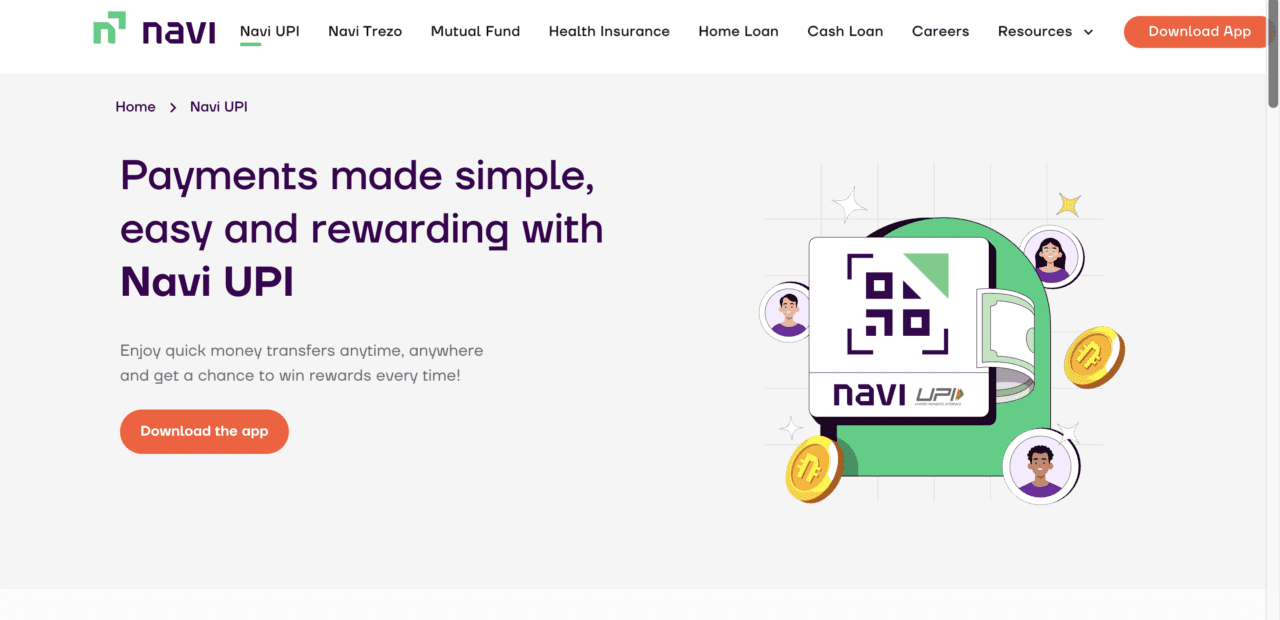
“Given digital payments have become central to everyday life, fraud prevention needs to be real time and contextual. Navi Secure reflects our commitment to building trust-first financial infrastructure, where safety is embedded into every transaction, not added as an afterthought,” Navi Limited MD and CEO Rajiv Naresh said. “By combining advanced risk intelligence with user-friendly safeguards, we are ensuring that customers can use UPI with confidence, knowing that Navi is actively working in the background to protect their money.”

Navi UPI is among the fastest growing financial services companies in India. The company’s UPI transaction volumes grew from more than 709 million to more than 824 million between January and May 2026. The company currently has 3.6% of India’s UPI market share; a market dominated by PhonePe (46.2%) and Google Pay (32.7%).

Bengaluru-based Navi is a financial services company that provides personal and home loans, insurance, mutual funds, and gold investing, as well as UPI, India’s flagship instant real-time payments system (Unified Payments Interface). Navi UPI is the company’s money transfer solution, which leverages UPI to deliver money transfers anytime, anywhere. Navi was founded in 2018.


Indian paytech Skydo expands to Canada

Payments platform Skydo has won its first regulatory approval outside of its native India. The Bengaluru-based company has secured an international payment license in Canada that will enable the company to offer two-way payment flows, including local collections and payouts, between India and Canada.

“Securing our first international license marks Skydo’s evolution from an India-focused cross-border payments platform to a multi-country payments operator,” Skydo CEO and Co-Founder Srivatsan Sridhar said. “With Canada, we are expanding beyond collections to enable seamless two-way payment flows and support growing India-Canada commerce.”
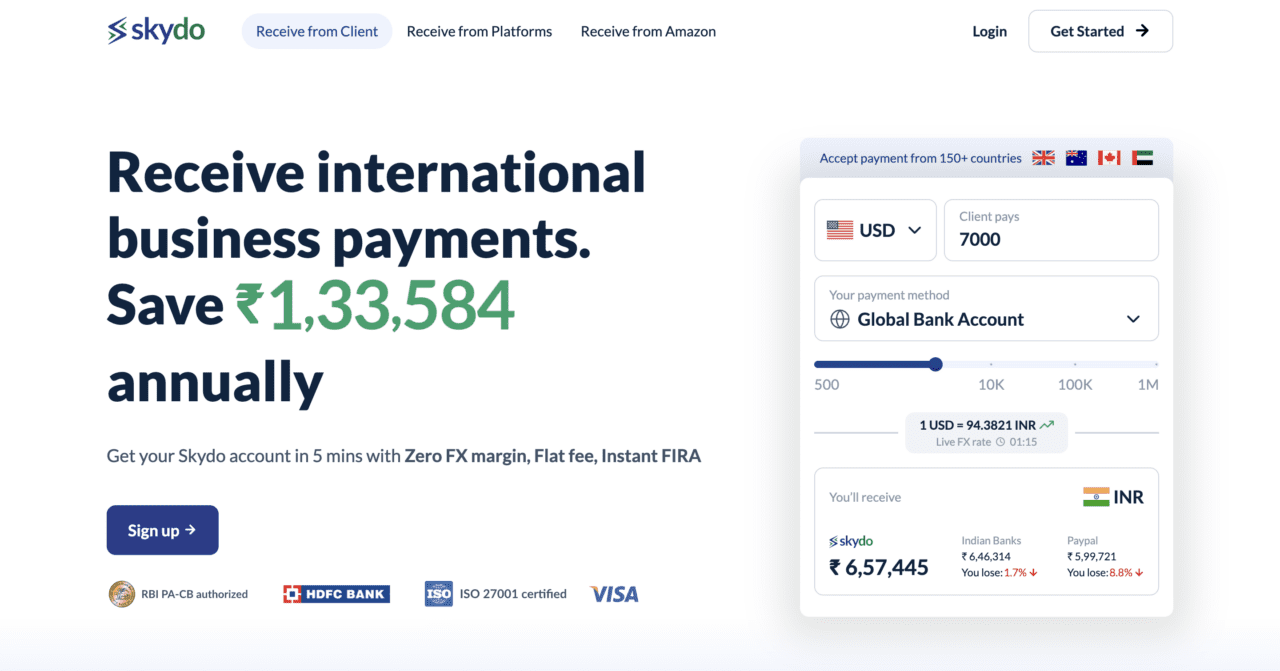
Founded in 2022, Skydo is a cross-border B2B payments specialist, reducing foreign exchange charges for businesses by more than 50%. The company partners with leading banks around the world, providing businesses with their own foreign virtual accounts to enable them to receive payments without tax or compliance complications. Supporting more than 150 countries, Skydo’s platform processes more than 200,000 payments a year and is used by 40,000+ Indian exporters.

Skydo has referred to Canada as a strategic market, given the scale of trade activity between India and Canada. In 2025, India and Canada reached $10.9 billion in bilateral merchandise trade. Both countries have indicated that they would like to more than double two-way trade, currently at just over $30 billion annually, to $70 billion by 2030.

“Our ambition is to build for the world, from India,” Skydo Co-Founder Movin Jain said. “Canada strengthens our global footprint, enables local collections and payouts, and creates a strong foundation for future expansion across North America.”

Skydo’s regulatory win in Canada comes just a month after the company received in-principle approval to operate as a Payment Service Provider (PSP) in the International Financial Services Centre (IFSC) at Gujarat International Finance Tec-City.


Here is our look at fintech innovation around the world.

Asia-Pacific

  • Japanese financial giant SBI Holdings agreed to acquire crypto exchange Bitbank for $298 million.
  • Singapore-based fintech platform Airwallex earned a valuation of $11 billion after securing $320 million in Series H funding.
  • Mynt, the parent company Philippine mobile payments and finance superapp GCash, has filed for an $1.5 billion IPO on the Philippine Stock Exchange.

Sub-Saharan Africa

  • Nigerian fintech Daya secured $2.4 million in pre-seed funding to expand its stablecoin payments technology for African businesses.
  • Kenya-based fintech WapiPay received a Money Services Business license from Canada’s Financial Transactions and Reports Analysis Center (FINTRAC).
  • Pan-African fintech DigiPay and French fintech Belmoney launched DigiTransfer, a mobile app that enables money transfers between France, Belgium, the Republic of the Congo, and the Democratic Republic of Congo.

Central and Eastern Europe

  • Albania launched its first fully digital bank, Jet Bank.
  • Mastercard and PrivatBank announced completion of Ukraine’s first payment executed by AI agent.
  • Austrian-Swiss global payout infrastructure startup Talentir raised €4 million in seed funding in a round led by Redstone.

Middle East and Northern Africa

  • Egyptian fintech MNT-Halan announced plans for an IPO that could give the company a valuation of $1 billion.
  • Lean Technologies and Ziina teamed up to launch the UAE’s first One-Tap Pay by Bank experience.
  • Israeli fintech Payoneer agreed to be sold to Canadian firm Nuvei for $2.7 billion.

Central and Southern Asia

  • Indian fintech Cred secured $900 million in Series H funding in a round led by Meta.
  • Karachi-based easypaisa digital bank inked a Memorandum of Understanding (MoU) with Binance to “explore innovative opportunities” in fintech, digital savings, and investment solutions.
  • Indian UPI app Navi UPI, unveiled a new unified safety framework, Navi Secure.

Latin American and the Caribbean

  • CSU Digital, the largest independent card processor in Latin America, has embarked upon its US expansion.
  • Iupana looked at how new governments in Colombia and Peru are seeking to bolster the fintech sectors of their respective countries.
  • Payward, financial infrastructure platform and parent company of Kraken, secured a Virtual Asset Service Provider (VASP) registrations from the British Virgin Islands Financial Services Commission (BVI FSC).

Photo by Shiv Prasad on Unsplash

Fintech Rundown: A Rapid Review of Weekly News

Fintech Rundown: A Rapid Review of Weekly News

After rumors swirled last week about Nuvei’s plans to acquire Payoneer, the deal has been made official this week. Nuvei has agreed to acquire the global payments solutions company for $2.75 billion to bolster its payments infrastructure. There’s plenty of other fintech news to catch up on this week, so we’ll continue to add more announcements as the week progresses.


Digital banking

CorTrust Bank selects Jack Henry to provide for local communities with competitive, flexible offerings.

Glia launches AI outreach as a growth engine for banks and credit unions.

Fiserv appoints Takis Georgakopoulos CEO.

First American Bank and Trust taps Jack Henry Technology to power next phase of growth.

Payments and commerce

Nuvei to acquire Payoneer for $2.75 billion.

Coinbase’s new tool can help agents trade and pay for premium research.

PayNearMe announces launch of Cash App Pay for real-money gaming.

CheckAlt joins U.S. Bank Connected Partnership Network to expand access to integrated receivables solutions.

Adyen announces Adyen Agentic as the universal translator for the next era of commerce.

Financial literacy

Barclays to acquire GoHenry.

Lending

AKUVO launches AKUVO IQ, a new portfolio intelligence solution.

Small business banking

Mercury launches Command, a new way to run business banking.

Brex and Tekion partner to bring embedded spend management to the modern auto dealership.

Fraud and compliance

Shield extends the compliance perimeter to AI-generated records and image-based content.


Photo by Marina Leonova

Fintech Rundown: A Rapid Review of Weekly News

Fintech Rundown: A Rapid Review of Weekly News

We’re fresh off an outstanding FinovateEurope conference in London (meet our Best of Show winners!) and already gearing up for our Spring event in San Diego. In the meanwhile, here’s a look at some of the fintech headlines that have crossed the wire in recent days. Be sure to check back here at the Fintech Rundown all week long for updates!


Digital banking

Oklahoma-based Blue Sky Bank partners with Jack Henry, deploying the fintech’s Banno Digital Platform along with other integrated solutions.

The Bank of Beirut UK goes live with Temenos for core banking and payments.

Fraud prevention

RiskOps platform provider Feezdai and regtech Neterium collaborate to enhance transaction screening for instant payments

Licensed payment institution Paytently partners with SEON for advanced fraud prevention and anti-money laundering controls.

Mortgagetech and proptech

UAE-based protech innovator Rentify launched its rent-native infrastructure player, Rentify Pay.

Digital savings and mortgage platform Tembo secures £16 million in growth funding in a round the featured new investor Gresham House Ventures.

Open finance

Backbase and Plaid team up to bring open finance to AI-powered banking.

Insurtech

UK-based embedded insurance company Wrisk acquired real-time financial intelligence platform Atto to build an integrated embedded finance platform.

DeFi

Payoneer teams up with stablecoin infrastructure platform and Stripe company Bridge to support its launch of new embedded stablecoin capabilities.

Netherlands-based paytech and stablecoin issuer Quantoz teams up with Visa, enabling the firm to issue irtual Visa debit cards as serve as a BIN-sponsor for third-party fintechs and platforms.


Photo by Aaron Burden on Unsplash

Payoneer Expands Services in Indonesia and Mexico

Payoneer Expands Services in Indonesia and Mexico
  • Payoneer is expanding local collection capabilities across Indonesia and in the Mexican Peso.
  • The investments aim to scale infrastructure and capabilities that support Payoneer’s global payments and commerce ambitions.
  • With nearly 2 million customers, Payoneer aims to offer further improved local access and cross-border payment efficiency through 2026.

Global payments company Payoneer made moves to help companies doing business in Indonesia and Mexico this week. The New York-based company expanded its global payment platform in Indonesia and enhanced local collection services in Mexico.

The new capabilities aim to help customers transact and receive funds from local buyers and ecommerce platforms. Payoneer anticipates its platform will facilitate the funds faster and at a lower cost, ultimately helping businesses tap into new, global markets.

In Indonesia, Payoneer will help small businesses collect funds from local businesses. The company aims to offer more control over foreign exchange management while providing increased access to a trade in the largest ecommerce market in Southeast Asia.

For global businesses looking to collect funds in the Mexican Peso, Payoneer has expanded its collection services in that currency. With the expansion, the company is aiming to reduce friction for global sellers who need to collect funds across multiple channels, supporting shifting international demand.

“Global trade is dynamic—reshaping in response to macro factors and trade policy,” said Payoneer SVP of Treasury and Payment Services Derek Green. “For over 20 years, Payoneer has supported and enabled our customers’ global ambitions. By expanding our capabilities in critical markets like Mexico and Indonesia, we continue to empower our customers as they look to expand into fast-growing markets, leveraging our ecommerce marketplace ecosystem to enable access to customer demand on Amazon Mexico, Walmart, Mercado Libre, and Shopee.”

Payoneer was founded in 2005 to help SMBs transact, do business, and grow globally. The company’s global financial stack helps remove barriers and simplify cross-border commerce to make it easier for businesses to connect to the global economy, pay, get paid, manage their funds across multiple currencies, and grow their businesses.

The new capabilities launched this week add to Payoneer’s existing local collection infrastructure across North America, Europe, Latin America, and Asia Pacific.

In today’s announcement, Payoneer disclosed that it plans to expand local collection capabilities in other high-growth markets in Latin America and Asia Pacific later this year to support its almost 2 million customers. 


Payoneer Taps Stripe to Improve Checkout for Cross-Border Merchants 

Payoneer Taps Stripe to Improve Checkout for Cross-Border Merchants 
  • Payoneer has partnered with Stripe to expand its Online Checkout, giving SMBs selling cross-border direct-to-consumer access to BNPL options and digital wallets.
  • The partnership will launch in the Asia Pacific where wallets and BNPL are often preferred over credit cards.
  • Payoneer, which went public in 2021 and has a market cap of around $2.5 billion, has rapidly grown Online Checkout to nearly $1 billion in annual volume.

Global payments company Payoneer is teaming up with payments infrastructure fintech Stripe to improve the checkout experience for global merchants. The strategic partnership will enable Payoneer to expand its Online Checkout offering for merchants selling cross-border goods direct-to-consumer.

Payoneer’s new capabilities will help small and medium-sized businesses (SMBs) accept more payment methods at their online point of sale. Stripe will help Payoneer facilitate buy now, pay later (BNPL) options like Affirm and Klarna, as well as digital wallets such as Apple Pay and Google Pay.

At launch, Payoneer’s new checkout capabilities will be available in the Asia Pacific region first, including in China and Hong Kong, geographies where digital wallets and BNPL are often preferred over credit cards.

Payoneer and Stripe expect that the partnership will help merchants enhance their customer conversion rates, improve acceptance rates, reduce fraud, and expand payment acceptance options for SMBs selling to direct-to-consumers browsing their own ecommerce sites.

“We are committed to simplifying cross-border online trade for SMBs,” said Payoneer Chief Growth Officer Adam Cohen. “This partnership with Stripe is a strategic step in our journey to expand our Checkout offering and deliver a best-in-class user experience at scale. By combining Payoneer’s local market distribution and expertise with Stripe’s exceptional checkout technology, we’re combining the strengths of both companies to deliver unmatched value to our customers.”

Launching new payment methods will help Payoneer attract SMB merchants, as it can help them compete globally by offering a sophisticated checkout experience with multiple payment options that are often offered by larger retailers.

Payoneer was founded in 2005 to help SMBs transact, do business, and grow globally. The company’s global financial stack helps remove barriers and simplify cross-border commerce to make it easier for businesses to connect to the global economy, pay, get paid, manage their funds across multiple currencies, and grow their businesses.

The New York-based company launched Payoneer Checkout in 2022 and has since scaled from zero to almost $1 billion in run-rate annual volume. From June 2024 to June 2025, Payoneer generated $30 million in revenue, representing over 100% year-over-year growth.

Payoneer went public via a SPAC merger with FTAC Olympus Acquisition Corp. in 2021. The company listed on the NASDAQ in June of that same year under the ticker PAYO and has a current market capitalization of approximately $2.5 billion.


Photo by HT_NGUYEN

Fintech Rundown: A Rapid Review of Weekly News

Fintech Rundown: A Rapid Review of Weekly News

Fintech was relatively busy last week, and so was the Finovate events team. FinovateSpring makes its San Diego debut next week, kicking off on May 7, and our speaker roster is fabulous! Here’s a look at more of this week’s fintech news. We’ll continue adding news to this post throughout the week, so stay tuned!


Payments

Reporting, reconciliation, and compliance software company Kani Payments announced a strategic partnership with UK-based travel payments company Swiipr.

Payoneer invests $2 million over the next three years to support Endeavor, the Global Network of Trust of, by and for entrepreneurs. 

Finzly’s AWS-powered platform Payment Galaxy completes a benchmarking initiative in collaboration with AWS, validating that it can handle large transaction volumes.

Thunes raises $150 million in Series D funding.

Business financial management

Versapay names Elizabeth Bramlage as Chief Marketing Officer.

Digital banking

NuMark Credit Union selects Alkami to power its digital banking platform.

Nubank’s Mexico arm receives regulatory approval from the Mexican National Banking and Securities Commission to begin the process of becoming a full-service bank.


Photo by fauxels

Payoneer Partners with Bancolombia’s Neobank Nequi

Payoneer Partners with Bancolombia’s Neobank Nequi

Global payments company Payoneer is growing its presence in Latin America this month. The New York-based fintech has partnered with Colombian Bank Nequi, Bancolombia’s Neobank.

By integrating Payoneer, Nequi will enable its users to transfer their dollars and euros from Payoneer to Nequi and receive them in Colombian pesos in a matter of minutes. Payoneer joins 30+ other services that Nequi offers. Notably, Payoneer will enable Nequi users to bring euros through the Nequi platform for the first time.

A business line of Bancolombia, Nequi’s digital financial platform seeks to help improve its more than 21 million users’ relationships with money. Nequi users can pay with the Nequi Card, pay for public services, recharge their cell phone, receive money from abroad, buy insurance or a bus ticket, and more.

“At Nequi we work to adapt to new global dynamics by facilitating the reception of international payments in an efficient and economical way,” said Nequi Business Strategy Leader María del Pilar Correa. “That is why this new integration with Payoneer has us very excited because we continue to strengthen the possibilities for our users and this will undoubtedly be a great option for freelancers, entrepreneurs and people who do international business, since they can receive payments from clients in other countries, with different currencies, in a fast and secure way at a global level.”

Once they link their account, Nequi savings accountholders can transfer up to $5,000 per month, with a maximum of $2,000 per transaction. Nequi low-value deposit accountholders can transfer up to $2,000 per month, with a maximum of $2,000 per transaction.

Payoneer was founded in 2005 to help small-and-medium-sized businesses to transact, do business, and grow globally. The company’s global financial stack helps remove barriers and simplify cross-border commerce to make it easier for businesses to connect to the global economy, pay, get paid, manage their funds across multiple currencies, and grow their businesses.

Payoneer went public via a SPAC merger with FTAC Olympus Acquisition Corp. in 2021. The company listed on the NASDAQ in June of that same year under the ticker PAYO and has a current market capitalization of $3 billion.

“By partnering with the most popular neobank in Colombia, Payoneer is helping to address a critical need in the region: enabling entrepreneurs in Colombia [to] receive payments with increased flexibility in fund usage,” said Payoneer SVP of Growth in Latin America Mar Fernández. “Working with Nequi to enhance our functionalities further fulfills Payoneer’s mission to empower businesses from anywhere in the world to scale to their businesses globally. We aim to support the ambitions and boost the international competitiveness of Colombian professionals.”

Payoneer has presented at FinDEVr New York in 2016, where it showcased integrating its Armor Payments API into a marketplace. Prior to that, the company demoed its commercial account at FinovateAsia 2013 in Singapore.


Photo by Camila Melo

Fintech Rundown: A Rapid Review of Weekly News

Fintech Rundown: A Rapid Review of Weekly News

As October gets underway in earnest, Finovate’s Fintech Rundown shares news of expedited payments to help those impacted by hurricane Helene, another partnership to help new Canadians secure credit, as well as a major investment in cross-border payments and a big acquisition in the fraud prevention space.

Be sure to check back all week long for more fintech news and updates!


Payments

Payoneer teams up with Tech Mahindra to optimize the company’s crowdsourcing platform, Populii.

Payments acceptance platform Cashflows partners with Mastercard to offer merchants Click to Pay.

FedNow will expedite Federal Emergency Management Agency (FEMA) payments and transactions for survivors of hurricane Helene.

The U.S. Faster Payments Council (FPC) releases its 2024 U.S. Instant Payments Adoption Quantitative Study.

Formerly WorldRemit, Zepz raises $267 million to support expansion into new African markets.

Woodforest Acceptance Solutions partners with FreedomPay.

Venmo introduces payment scheduling.

Lending & credit

Quarters and Nova Credit team up to help immigrants to Canada transfer their credit histories from their home countries.

Experian Consumer Services partners with non-bank consumer lender Oakbrook to offer debt consolidation loans.

Plaid partners with MoneyLion to provide lenders with cash flow underwriting insights.

LendingClub and Pagaya acquire assets of Tally Technologies.

SoFi launches two new credit cards: SoFi Everyday Cash Rewards and SoFi Essential.

Identity and fraud prevention

Experian acquires Brazilian cybersecurity firm ClearSale in a deal valued at $350 million.

Meta expands its information-sharing partnership with banks in the U.K. to help fight fraud and scams.

DeFi and crypto

21.co, parent company of cryptocurrency exchange-traded product (ETP) issuer 21Shares forges strategic partnership with Crypto.com.

UAE to exempt crypto transactions from Value Added Tax (VAT) effective in November.

Visa launches platform to enable banks to issue stablecoins and tokens.

Open banking / open finance

Open banking payments network TrueLayer secures $50 million extension of its Series E funding round.

Open finance operating company Fabrick partners to TerraPay to enhance cross-border payments in Europe.

Small business financial management

Ocrolus and On Deck issue their Small Business Cash Flow Trend Report for Q2 2024.

Communications

Customer interaction technology provider Glia launches its Unified Interactions Index Online Calculator.

Digital banking

Coreless banking platform provider XYB announced a collaboration with IBM.

Grasshopper Bank to acquire AAA Bank, Auto Club Trust.

Regtech

Ireland-based regtech Corlytics announces expansion of its U.S. operations.

Financial advisory and wealth management

U.K.-based digital advice platform Dynamic Planner unveils new CRM integration with Adviser Cloud.


Photo by Guzel’S

Payoneer to Acquire Skuad for $61 Million

Payoneer to Acquire Skuad for $61 Million
  • Payoneer is acquiring HR platform Skuad.
  • The deal is set to close for $61 million in cash and may include an extra $20 million in contingent funds and restricted stock units, depending on conditions.
  • Payoneer plans to integrate Skuad’s payroll and contract management solutions into its own offerings.

Hours after I published a piece highlighting summer acquisition activity in fintech, I woke up to this news: global digital commerce company Payoneer announced today that it has acquired HR platform Skuad.

While the purchase is slated for $61 million in cash, it could close for as much as $81 million. That’s because Payoneer may also pay an additional $10 million, contingent on Skuad’s performance metrics, and offer $10 million in restricted stock units, depending on key employee vesting.

“To accelerate our evolution and B2B momentum, we are excited to announce the acquisition of Skuad and welcome to Payoneer the talented entrepreneurs who share our vision of supporting global SMBs,” said Payoneer CEO John Caplan. “We are combining the strength and reach of Payoneer with Skuad’s comprehensive global workforce and payroll solutions to create a powerful platform that will enhance our customers’ ability to expand their teams worldwide and grow globally.”

Skuad was founded in 2019 to help businesses automate payroll management, local compliance, and taxation of their employees. The Singapore-based company, which has raised $19 million, helps businesses compliantly hire employees across more than 160 countries. Skuad also assists its clients in global payroll, allowing their employees to receive payment in their choice of 100+ currencies.

Founded in 2005, Payoneer offers multi-currency accounts and payment services to two million businesses across 190 countries. With a mission to “democratize access to financial services and drive growth for digital businesses of all sizes from around the world,” Payoneer helps users pay, get paid, and manage funds on a global scale. The company also offers working capital– providing advances to Amazon and Walmart sellers, as well as to small businesses.

Payoneer, which plans to integrate Skuad’s payroll and contract management offerings into its own, announced the acquisition of Skuad in an earnings announcement this week. Also during that call, Payoneer revealed a record revenue of $240 million, which is up 16% from last year’s figure.

“Twenty-five percent of Payoneer’s B2B customers are asking for enhanced workforce management capabilities, including payroll, employer of record and contractor management capabilities — so there is significant cross-sell potential with this acquisition,” the company said in a news release.

Payoneer went public via a SPAC merger with FTAC Olympus Acquisition Corp. in 2021. The company listed on the NASDAQ in June of that same year under the ticker PAYO and has a current market capitalization of $2.41 billion.


Photo by Pixabay

Payoneer Partners with Etsy to Streamline Payments to Sellers in Emerging Markets

Payoneer Partners with Etsy to Streamline Payments to Sellers in Emerging Markets
  • Payments platform Payoneer has collaborated with Etsy’s seller offering, Etsy Payments.
  • The partnership will enable Etsy to streamline payments to sellers, empowering entrepreneurs in emerging markets.
  • Payoneer made its Finovate debut ten years ago at FinovateAsia 2013.

Etsy Payments has a brand new partner. The company, the bespoke seller offering from global online marketplace Etsy, has announced a collaboration with payments platform Payoneer. The partnership will help Etsy streamline payments to sellers. It will also give entrepreneurs in emerging markets better opportunities to grow their businesses. This includes the ability to offer a broader range of services and to make payouts to sellers in their preferred currency.

The collaboration will launch in the Ukraine and Thailand initially. By the end of the year, the service will be live in India, Japan, Argentina, Chile, and Peru, as well.

“Through this partnership, we are able to leverage Payoneer’s global reach and world-class payment technology to bring efficiencies at scale and provide seamless payouts to sellers in their local markets and the currency of their preference,” Etsy VP & GM Payments and Risk, Chirag Patel said.

Founded in 2005 and headquartered in Brooklyn, New York, Etsy launched its Etsy Payments service in 2017. The option was previously called Direct Checkout and payments were processed by PayPal rather than Etsy. Etsy Payments enables sellers on the marketplace to offer buyers a wide range of payment options. These choices include Visa, PayPal, and Mastercard, as well as ApplePay, GooglePay, and Klarna, and buyers can transact in local currencies.

“This collaboration will help create opportunities for the often-underserved sellers in emerging markets, giving them better access to global demand,” Payoneer SVP Americas Ya Wen explained.

New York-based Payoneer made its Finovate debut in 2013 at FinovateAsia. The company returned to the Finovate stage two years later to present its technology at our developers conference FinDEVrNewYork. In the years since, Payoneer has grown into an international business payments platform with millions of customers, support for 70 currencies and 22+ languages, and coverage of more than 190 countries.

Payoneer began 2023 with a new Chief Financial Officer, Bea Ordonez. A few months later, the company introduced a new Chief Executive Officer, John Caplan, as well. So far this year, Payoneer has forged partnerships with software company Zoho, remote work outsourcing platform INSIDEA, Egyptian marketing firm Stllr, and cryptocurrency startup belo. The company acquired Israel-based data platform Spott in August and, in September, expanded its long-term relationship with Airbnb.

Payoneer is a publicly traded company on the NASDAQ exchange under the ticker PAYO. It has a market capitalization of $2 billion.


Photo by Oleksandr P

Payoneer Earns E-Money License from the U.K.’s FCA

Payoneer Earns E-Money License from the U.K.’s FCA
  • Payoneer received its e-money license from the U.K. Financial Conduct Authority.
  • The license will enable the digital commerce company to continue serving its U.K.-based customers.
  • Having earned the license, Payoneer now plans to grow its footprint in the U.K. region.

Global digital commerce company Payoneer received its e-money license from the U.K. Financial Conduct Authority (FCA) this week. The license will enable Payoneer to continue to provide its e-money services to U.K.-based businesses.

“The FCA traditionally sets the tone of financial regulation globally and therefore we are extremely proud to be receiving our e-money license in the U.K., said Payoneer Payment Services CEO and SVP of Payoneer Europe James Allum. “We’re excited to be able to continue serving our customers in the U.K. and with our relationship with the FCA. Our customers in the UK now have confidence in Payoneer’s consistent ability to provide regulated financial services of the highest standard.”

With the new U.K. money license, Payoneer will grow its footprint in the region, offering its digital money services to U.K.-based businesses.

Payoneer was founded in 2005 and offers multi-currency accounts to five million customers ranging from marketplaces, sellers, freelancers, gig workers, manufacturers, banks, suppliers, and buyers. With a mission to “democratize access to financial services and drive growth for digital businesses of all sizes from around the world,” Payoneer helps users pay, get paid, and manage funds on a global scale. The company also offers working capital– providing advances to Amazon and Walmart sellers, as well as to small businesses.

In 2021, Payoneer went public via a SPAC merger with FTAC Olympus Acquisition Corp. The company listed on the NASDAQ in June 2021 under the ticker PAYO. Scott Galit is CEO.


Photo by Pixabay

Instant Payments, TED, and PIX: Open Banking Advances in Brazil

Instant Payments, TED, and PIX: Open Banking Advances in Brazil

This week marks the beginning of Phase 3 of Brazil’s embrace of open banking. Phase 3 is the second-to-last stage of the implementation plan set out by the Brazilian Central Bank. According to reports, Phase 3 arrives about one month late – the original date was September 30th – but the changes that the newest phase of the open banking initiative will bring are significant enough to be worth the wait.

Divided into four parts, the goal of Phase 3 is to usher in the regulation of payment initiation from any online platform. This will initially involve enabling consumers to pay for products and services using PIX – without the consumer having to use their bank’s app. PIX is the smartphone-based, instant payments technology launched by the Brazilian central bank almost a year ago. The second part of Phase 3, enabling payments made with TED (transferência eletrônica disponível) and transfers between accounts of the same bank, is set to begin in mid-February of 2022; the third part, enabling payments via bank slip, is slated to begin in late June; and the fourth and final part of Phase 3, enabling payment by debit account, is set to go live at the end of September.

Payment initiation is only one component of the open banking project Brazil has undertaken. Giving consumers the ability to make price comparisons, as well as compare rates and credit offers, are also major new possibilities for consumers that will be available thanks to the introduction of open banking in the country. These elements are expected to begin at the end of March 2022.

“The initiation will have a great impact especially on fintechs, which may offer more practical solutions for consumers or improve your internal financial processes from direct payment,” Belvo General Director Albert Morales explained. “Large banks, on the other hand, should start to rethink prices and solutions offered, both to attract new users and to retain users.”

Brazil’s open banking project, approved in 2019 by the country’s central bank, is part of a larger modernization effort for the Brazil’s entire financial system. And while the global pandemic has played a major role in complicating the project’s original timeline, officials expect open banking to be fully implemented in the country by September of next year.

Read more about Brazil’s open banking project in this interview with Otávio Damaso, Regulation Director for Brazil’s central bank, conducted by The Paypers last month. Damaso explains why Brazil has embraced open banking, and how open banking fits into the larger context of regulatory changes and trends in the country.


Here is our look at fintech innovation around the world.

Sub-Saharan Africa

Central and Eastern Europe

Middle East and Northern Africa

Central and Southern Asia

Latin America and the Caribbean

Asia-Pacific


Photo by Aline Cardoso from Pexels