Expensify Brings its Corporate Card into Europe

Expensify Brings its Corporate Card into Europe
  • Expensify has expanded its partnership with Marqeta to launch the Expensify Card in Spain, Ireland, Poland, and the Netherlands.
  • The European rollout gives multinational businesses access to spend controls, virtual and physical cards, receipt matching, and no foreign transaction fees.
  • The launch reflects growing competition among US spend management providers to expand internationally, while highlighting Marqeta’s role in enabling cross-border card programs.

Business expense management company Expensify has expanded its partnership with card-issuing platform Marqeta to bring its corporate card offering into select European markets, including Spain, Ireland, Poland, and the Netherlands.

The Expensify Card, which the company originally launched in the US in 2019, offers multiple features that cater to businesses’ needs. In addition to automatic transaction coding and receipt matching, the card also offers real time visibility into spending, spending limits and category rules, virtual card creation, and integrations with major accounting platforms. Crucial to the international launch, the Expensify Card does not charge foreign transaction fees and can be connected to any GBP, EUR, or US business bank account with no minimums, deposits, or credit checks required.

“The Expensify Card works quietly in the background to keep your business spend controlled, compliant, and ready for accounting,” said Expensify Founder and CEO David Barrett. “It’s a preaccounting assistant that eliminates hours of reconciling transactions, chasing receipts, and reimbursing employees. One of our US customers, Pivot Bio, cut down on their expense report audit times by 90%. We can’t wait to share that same time savings with millions of businesses in the UK and EU.”

The launch represents the Expensify Card’s first broad commercial expansion beyond the US, following a UK and EU beta introduced in 2025. The European launch extends the company’s ability to serve multinational businesses with its unified spend management platform. It also serves as another example of how US spend management providers such as Brex and Navan are investing more resources into international expansion to support multinational businesses. While the demand for global corporate spend management tools and card providers expands, global reach has become an important competitive differentiator.

Fueling this launch is Marqeta’s multinational card-issuing capabilities. Leveraging Marqeta’s platform, Expensify is offering physical, virtual, and tokenized cards. Businesses can use the cards for a variety of use cases, including travel, one-time vendor purchases, and departmental expenses. Additionally, Marqeta’s card capabilities enable Expensify clients to set spend controls by cardholder, authorize transactions in real-time, and provide insights into spending patterns that can help improve cashflow visibility and budgeting.

“With multinational card issuing capabilities built into our platform, we are uniquely positioned to support this type of international scale, enabling customers to enter new markets and grow their card programs while simplifying the complexities that come with global expansion,” said Marqeta Chief Revenue Officer Todd Pollak.

For Marqeta, the partnership is another example of how embedded card issuing providers are key enablers of global fintech growth. Rather than building payments infrastructure market by market, fintechs are increasingly relying on third parties with established regulatory, issuer, and network relationships to accelerate international expansion.

Founded in 2009, Marqeta provides infrastructure and tools to help companies build and manage their own payment programs. The company, which just expanded its partnership with Klarna, processed nearly $383 billion in annual payment volume in 2025 and has increasingly focused on helping customers scale internationally through its multinational issuing capabilities.

Marqeta and zerohash Enable Stablecoin Spending on International Card Networks

Marqeta and zerohash Enable Stablecoin Spending on International Card Networks
  • Card issuing platform Marqeta has announced a partnership with digital asset infrastructure provider zerohash.
  • The collaboration will integrate zerohash’s stablecoin infrastructure into Marqeta’s card issuing capabilities to enable companies to offer stablecoin payments to their customers without having to rebuild their core systems.
  • A Finovate alum since 2016, Marqeta is headquartered in Oakland, California.

Card issuing platform Marqeta and digital asset infrastructure provider zerohash have teamed up to enable Marqeta customers to embed stablecoin payments directly into both new and existing financial products. The integration of zerohash’s stablecoin infrastructure into Marqeta’s card issuing capabilities means organizations will benefit from the ability to offer stablecoin payments to customers without having to rebuild core systems or accept additional regulatory burdens.

“Our customers are building the next generation of financial products, and that requires new ways to manage and move money,” Marqeta Interim Chief Product Officer Anthony Peculic said. “By integrating with zerohash, we will be able to give our customers a full solution to deliver multinational and stablecoin-backed card programs that meet the needs of their users, while also being compliant and ready for global scale.”

Courtesy of the collaboration, Marqeta customers will be able to spend their digital dollars at tens of millions of merchants around the world using a standard payment card, with merchants paid in fiat currency. Marqeta will manage card issuance, acceptance, and bank and network relationships. zerohash will provide the underlying infrastructure that supports custody, compliance, and liquidity for on-chain money custody and movement.

The partnership between the two companies comes at a time when stablecoin adoption is accelerating throughout financial services. In February of this year, for example, stablecoin monthly transaction volumes reached $7.2 trillion, topping the ACH network’s $6.8 trillion for the first time. zerohash saw its own transaction volume grow 6.9x year-over-year in 2025, with transaction frequency up more than 2x. Having partnered with crypto companies to power debit card offerings in the US and Europe that enable spending in fiat currency based on crypto holdings, Marqeta will now be able to expand its capabilities to enable crypto and non-crypto companies to make stablecoin-based payments a part of their offering.

“Compatibility between stablecoins and traditional payment networks is a critical unlock for users’ onchain money, while also opening new opportunities for traditional businesses through stablecoin-backed cards,” zerohash CEO and Founder Edward Woodford said. “zerohash’s role is to abstract the complexity behind the scenes so stablecoins can be leveraged as a seamless part of everyday payments and money movement.”

A cryptocurrency, stablecoin, and tokenized asset infrastructure provider, zerohash offers an API and an embeddable dev kit that enables innovators to launch solutions for cross-border payments, commerce, trading, payroll, remittance, tokenization, and on/off-ramps. Headquartered in Chicago, Illinois, and founded in 2017, zerohash serves fintechs, marketplaces, banks, brokerages, trading platforms, and more with regulated crypto trading and staking, real-time stablecoin payments, and tokenized financial products. The company supports more than 100 different assets, has more than seven million end customers, and a global regulatory footprint across the European Union, Latin America, Australia, New Zealand, Bermuda, and the US. The firm also operates regulated entities in 51 US jurisdictions.

A Finovate alum since 2016, Marqeta debuted at our developer conference, FinDEVr Silicon Valley. The Oakland, California-based fintech offers card issuing, including virtual cards and tokenization, as well as processing and settlement services with Just-in-Time (JIT) funding and dynamic spend controls. Marqeta’s solutions enable businesses to transform real-time data into personalized, optimized solutions to enhance consumer loyalty, capital efficiency, and more. Processing nearly $400 billion in annual payment volume in 2025, Marqeta operates in more than 40 countries around the world.

Marqeta’s partnership announcement with zerohash comes as the firm reports that it has expanded its collaboration with fellow Finovate alum Expensify. The spend management software platform is leveraging Marqeta’s card issuing platform to bring its solution to customers in the UK and EU.

“Businesses across Europe are seeking expense management tools that are simple, automated, and designed to save them time and money,” Expensify Chief Strategy Officer Daniel Vidal said. “Through our expanded partnership with Marqeta, we’re able to bring our proven corporate card capabilities to Europe, delivering the same high-quality spend management solutions our US customers rely on to businesses of any size across the region.”


Photo by Travel with Lenses from Pexels

INETCO Unveils Fraud Investigation Solution BullzAI

INETCO Unveils Fraud Investigation Solution BullzAI
  • Transaction monitoring and fraud prevention company INETCO unveiled its fraud investigation tool, BullzAI Investigate.
  • A module within INETCO’s BullzAI fraud prevention platform, BullzAI Investigate uses agentic AI to scale fraud prevention operations, reduce false positives, and help prioritize high-risk cases.
  • INETCO made its Finovate debut at FinovateSpring 2015. The Vancouver, Canada-based company was founded in 1984.

Real-time transaction monitoring and payment fraud prevention solutions provider INETCO has launched its new fraud investigation tool, BullzAI Investigate. The new, AI-assisted solution leverages specialized agents to compile transaction data, analyze behavioral patterns, and triage incoming alerts. BullzAI Investigate then steers analysts toward the highest-risk cases and produces explainable, auditable risk scores for each recommendation.

Running on a proprietary small language model that is deployed inside the client’s own system, BullzAI Investigate keeps sensitive data on premises. The solution also uses analyst feedback to refine and improve system performance via a supervised machine-learning cycle. The company noted that the new module is designed to reduce false positives and the amount of manual effort required to analyze large volumes of fragmented transaction data. This enables fraud teams to focus on higher-priority threats.

“INETCO BullzAI Investigate gives banks and payment service providers an intelligent way to scale the productivity of their fraud operations, reduce false positives, and prioritize high-risk cases,” INETCO Chief Technology Officer Ugan Naidoo said. “Agentic AI automates the heavy lifting by collating transactions, triaging alerts, and delivering explainable risk scores that support faster, more transparent decisions. Rather than replacing analysts, INETCO BullzAI Investigate serves as an intelligent partner that works continuously behind the scenes, allowing fraud teams to investigate more effectively while human oversight remains firmly in control.”

INETCO BullzAI Investigate has shortened fraud investigation times from as much as 30 minutes to as little as 20 seconds in early deployments. The company also reported a 97% to 99% reduction in investigation time, reviews that were up to 90 times faster, and recommendation precision of approximately 95%.

The new offering adds to INETCO BullzAI, the company’s cyber fraud prevention platform launched in September 2021. When initially unveiled, the platform was notable for its ability to detect and block fraudulent payment transactions in milliseconds before they complete and without interrupting legitimate payments. The platform was most recently deployed by Saudi Arabian fintech solutions provider Alhamrani Universal in December via INETCO’s global partner, Stanchion Payments.

“INETCO BullzAI gives us real-time visibility across thousands of self-service and digital payment transactions—revealing which financial institutions and merchants are active, how transactions are performing and where suspicious behaviors or anomalies occur,” Alhamrani Universal Chief Operations Officer Mario Rouhana said. “By understanding the behavioral patterns of every user, terminal, and device, we can scale our business with confidence, respond instantly to emerging threats and reinforce the trust our customers, partners, and regulators place in Alhamrani Universal as a leader in secure digital transformation.”

Headquartered in Vancouver, British Columbia, Canada, and founded in 1984, INETCO made its Finovate debut at FinovateSpring 2015. Today, the firm monitors more than 100 billion transactions a year, serving financial institutions and payment service providers around the world with end-to-end, secure payment visibility, adaptive modeling, and real-time fraud prevention.


Photo by Caio from Pexels

2026 Finovate Awards Finalists Announced!

2026 Finovate Awards Finalists Announced!

After days (weeks!) of deliberation, the finalists for the 2026 Finovate Awards have been chosen. The shortlist is now on its way to our panel of esteemed industry judges who are tasked with picking this year’s winners in more than 30 categories ranging from alternative investing and lending to financial inclusion and payments!

“This year’s field of nominees was excellent, making for an incredibly competitive process,” Finovate VP and Director of Fintech Strategy Greg Palmer said. “It made for some difficult decisions for our judges as we had to decide who to advance, but it says great things about the current state of our industry. It’s exciting to see so much strong work being done across so many different areas within fintech, and congratulations to our finalists for rising to the top of the pile!”

Check out this year’s Finovate Award finalists.

The Finovate Awards showcase the financial institutions, fintechs, and founders who are driving fintech innovation today. Now in its eighth year, the Finovate Awards celebrate the diversity of stakeholders in the fintech ecosystem and provide a forum for these companies and individuals to make the case for the positive impact their innovations are bringing to our industry.

Coming up!

Now that the finalists have been selected, our team of judges will spend the next few weeks reviewing and choosing the winners in each of our 30+ award categories. The winners will be announced on September 10 at FinovateFall in New York City.

Questions about the Finovate Awards? Reach out at [email protected].


Photo by Andrea Piacquadio from Pexels

Chime Launches In-App Investing

Chime Launches In-App Investing
  • Chime has launched Chime Invest, allowing users to trade stocks and ETFs commission-free or choose an Atomic Invest-managed portfolio.
  • The new feature aims to lower investing barriers with no account minimums and management fees ranging from 0% to 0.25%, depending on membership tier.
  • Chime Invest strengthens Chime’s push to become a broader financial platform and reflects fintech’s wider shift toward rebundling banking, investing, lending, and other services in one app.

Digital bank Chime is giving its users one more reason to spend more time in its app with the launch of Chime Invest, a new investment capability. With the new investing tool, users can buy stocks and ETFs commission-free or use an expert-managed portfolio option.

The managed accounts are managed by Atomic Invest, an SEC-registered investment adviser that offers users a diversified portfolio personalized to their goals and risk profile with up to $500,000 of protection by SIPC. For Chime Prime members, the managed accounts do not require balance minimums or charge management fees. Chime Plus members face a 0.10% annual management fee, while all other Chime members are charged 0.25% for the managed portfolio option.

According to a Gallup Economy and Personal Finance survey, around 40% of Americans report that they do not own any stock. Chime anticipates that its new investing feature will lower barriers to entry in investing by not requiring an account minimum and by offering a managed portfolio option for those who may be intimidated to make trades on their own.

“The hardest part of investing is often getting started and sticking with it,” said Chime CEO and Co-founder Chris Britt. “Millions of people already trust Chime with their money every day. By bringing investing into the app they already know and love, we’re making it easier to turn saving into investing and investing into long-term wealth.”

The average Chime member opens the app five times a day and makes approximately 50 transactions each month. Adding investing tools within its app will not only make it easy for users to begin investing, but it also gives existing investors another reason to keep their financial activity within the Chime ecosystem instead of turning to a third-party brokerage.

Chime was founded in 2012 and is well known in fintech for offering tools and services that cater to lower-to-middle income consumers. The challenger bank offers an earned wage access tool that allows users to receive their paycheck up to two days earlier when they set up direct deposit, a credit-building tool, and a feature that will spot users up to $200 to avoid account overdrafts. The fintech has three membership tiers with varying benefits based on the direct deposit amount.

The addition of Chime Invest is another example of how fintechs are rebundling multiple services into singular apps to become more comprehensive financial platforms. Instead of competing solely on checking accounts or payments, companies are increasingly layering on adjacent services such as investing, lending, insurance, financial planning, and even mobile telco plans to deepen customer relationships and increase lifetime value.

For traditional banks, the rebundling trend increases competition by demonstrating that consumers increasingly expect everyday banking and long-term wealth-building tools to coexist within a single digital experience. For fintechs, it underscores that customer engagement is becoming more valuable than customer acquisition as a competitive advantage.

Chime Invest will be generally available to members in the coming weeks.

OnePay Teams with Upgrade to Add Personal Loans to its Banking App

OnePay Teams with Upgrade to Add Personal Loans to its Banking App
  • Walmart-backed OnePay has partnered with Upgrade to launch personal loans ranging from $1,000 to $50,000 directly within the OnePay app.
  • OnePay will use existing customer data to streamline applications and underwriting, potentially extending same-day offers to eligible users.
  • The partnership advances OnePay’s super app ambitions while giving Upgrade access to a larger customer base and highlighting fintech’s broader rebundling trend.

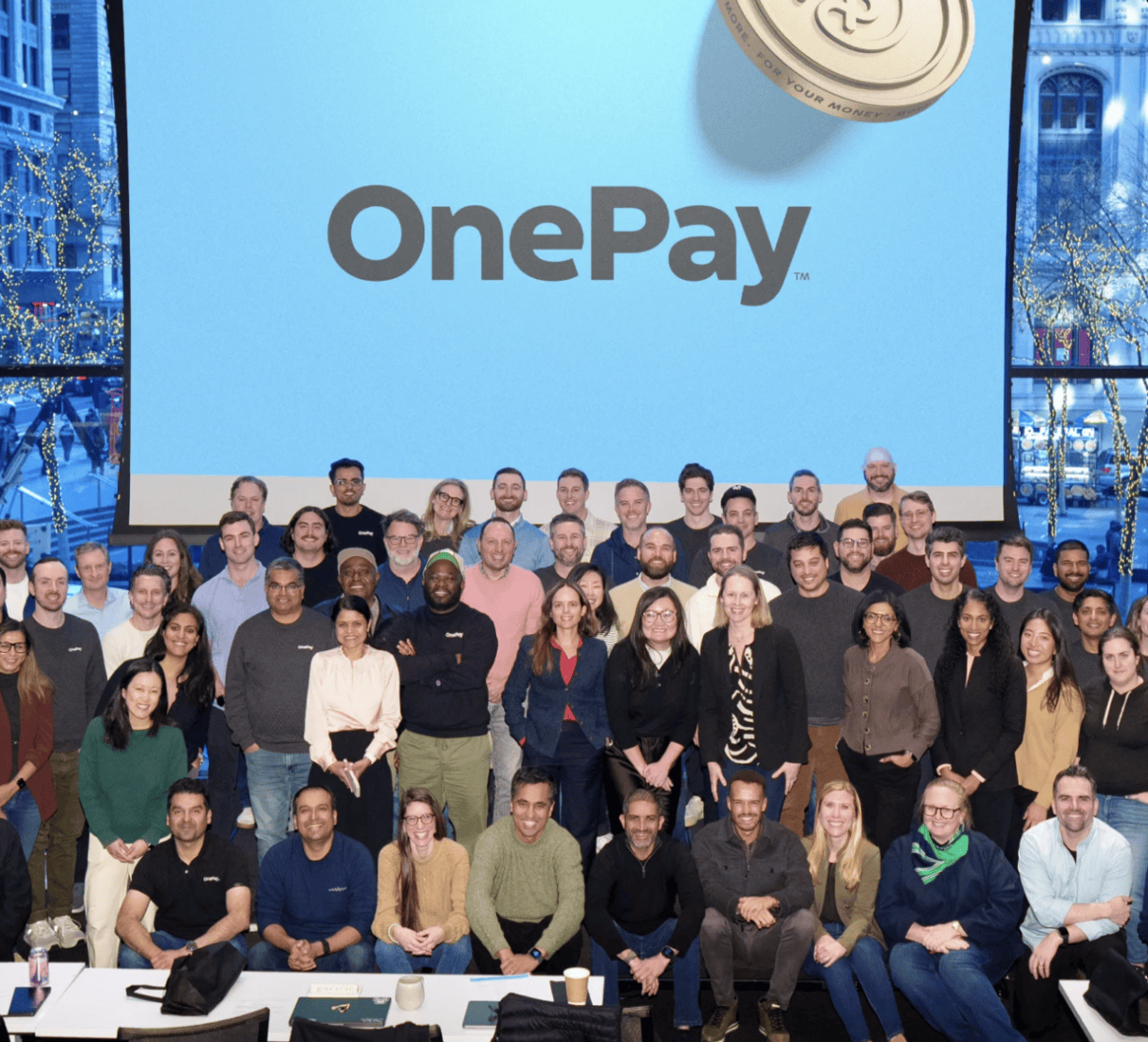
Walmart-backed digital banking platform OnePay is getting an upgrade this week. The New York-based company has teamed up with alternative lender and fellow digital banking platform Upgrade to launch Personal Loans, bringing a new element into its banking app.

With the new Personal Loans product, OnePay will allow eligible borrowers to apply for a loan ranging from $1,000 to $50,000, receive and accept an offer with APRs ranging from 7.74% to 35.99%, and pay back their loan within the OnePay app. The company sees the new product as a significant step forward in its mission to make everyday financial services simpler, more accessible, and more useful.

“Getting access to credit in America today is harder than it should be,” said OnePay CEO Omer Ismail. “It’s never been more important to give consumers access to financing that’s simple, transparent, and meets them where they already are—and we’re excited to partner with Upgrade to introduce another financing option for our customers with OnePay Personal Loans.”

Because it can leverage information customers have already shared, OnePay can reduce repetitive entry during the application process, minimizing friction. Additionally, because OnePay is able to leverage customer information such as their average daily balance, overdraft occurrences, and spending habits for underwriting purposes, it is able to extend financing offers as soon as the same day to some of its active customers.

OnePay has tapped San Francisco-based Upgrade for the lending infrastructure and expertise, offering it the ability to offer larger-dollar lending directly within its app. Founded in 2017, Upgrade offers checking and savings accounts, personal loans, credit cards, and rewards programs that focus on low fees and responsible credit usage to help consumers improve their financial lives. With more than 7.5 million customers, Upgrade has facilitated over $42 billion in credit with tools such as its Upgrade Card, which encourages customers to pay off balances quickly and avoid revolving debt and build credit responsibly.

“Our personal loans offer consumers the breathing room they need to get on the best financial path,” said Upgrade CEO and Co-founder Renaud Laplanche. “We’re proud that this partnership makes that resource more accessible to millions of OnePay customers.”

The addition of a personal lending product is a major step for OnePay, which has been building out its banking super app since it was founded in 2021. By embedding unsecured lending directly into its app, OnePay is evolving beyond a digital wallet and deposit platform into a more comprehensive financial services hub. The partnership is another example of recent rebundling efforts in fintech. Rather than building every product in-house, digital banking providers are increasingly partnering with specialized fintechs to quickly expand their offerings.

For Upgrade, the deal opens the door to OnePay’s growing customer base, while OnePay gains proven lending infrastructure and underwriting expertise without taking on the complexity of developing it internally. As competition among digital banking platforms intensifies, strategic partnerships like this one are becoming an increasingly common way to deepen customer relationships and increase engagement.

Buckzy Payments and FinXP Enable Cross-Border Payments for Businesses

Buckzy Payments and FinXP Enable Cross-Border Payments for Businesses
  • Cross-border payments and embedded finance platform Buckzy Payments announced a strategic partnership with European payment infrastructure provider FinXP.
  • The partnership will enable Buckzy clients to access direct SEPA payment capabilities from FinXP. FinXP customers will benefit from Buckzy’s global banking network and stablecoin infrastructure.
  • Headquartered in Toronto, Ontario, Canada, Buckzy Payments made its Finovate debut at FinovateFall 2019 in New York.

Real-time cross-border payment network Buckzy Payments has forged a strategic partnership with European payments and banking service provider FinXP. The partnership is designed to enable businesses operating internationally to access European and international payment capabilities by combining FinXP’s regulated European infrastructure—including euro accounts and SEPA payment capabilities—with Buckzy’s real-time international payment network and stablecoin infrastructure.

The partnership will enable eligible Buckzy clients to access FinXP’s direct SEPA payment capabilities, while FinXP’s clients will benefit from Buckzy’s international banking network and stablecoin infrastructure. This bolsters FinXP’s existing cross-border payment capabilities and extends its reach across additional markets and currencies.

“Europe is a critical market for our clients and an important part of any global payments proposition,” Buckzy Payments CEO Abdul Naushad said. “FinXP brings direct SEPA access, regulatory expertise, and a strong understanding of complex payment requirements. This partnership enhances Buckzy’s ability to provide clients with an integrated route into European accounts and SEPA Instant Payments, while extending the international reach available to FinXP clients.”

The partnership will help customers of both companies manage European accounts, collections, and payouts; extend their reach to new international markets and currencies; reduce reliance on disconnected providers; and enhance payment visibility, reconciliation, and operational efficiency. The two fintechs will initially connect European account and SEPA capabilities with Buckzy’s international cross-border payments infrastructure. Buckzy and FinXP also announced plans to explore potential opportunities in automated account provisioning, embedded payment services, multi-currency payment flows, and API-led financial infrastructure.

“Buckzy and FinXP share a common objective: to make international payments simpler, faster, and more accessible for businesses,” FinXP Co-founder and CEO Jens Podewski said. “Buckzy brings strong global payment connectivity and modern API infrastructure, while FinXP contributes regulated European account and payment capabilities. By combining these strengths, we can offer clients a more complete solution across Europe and international markets.”

FinXP offers IBAN accounts, card issuing, SEPA Direct Debit, clearing services, payout solutions, and an omnichannel payment gateway to enable its customers to make and receive payments in whatever form they prefer. A licensed Electronic Money Institution authorized by the Malta Financial Services Authority and a specialist in the B2B payments space, the company began 2026 with news of its partnership with B2B financial services platform ONE.io. FinXP helped the London-based firm build a new Euro account solution as well as launch its USD payment platform. Founded in 2014, FinXP processes €4 billion annually.

Headquartered in Toronto, Ontario, Canada, Buckzy Payments made its Finovate debut at FinovateFall 2019. At the conference, the company demonstrated its money transfer ecosystem that enables users to send and receive money in real time. The solution supports bank-to-bank transfers, international bill payments, digital wallet transfers, top-ups, and more. Serving financial institutions, fintechs, e-commerce marketplaces, and multinational companies, Buckzy is a registered money services business with FINTRAC (Financial Transactions and Reports Analysis Centre of Canada). The company was founded in 2018.


Photo by Lara Jameson from Pexels

Fintech Fundraising Has Changed. What Should Founders Focus On?

Fintech Fundraising Has Changed. What Should Founders Focus On?

Many of us fondly remember when, just a handful of years ago, VC funding was abundant. It was a golden era in which startups competed for investor attention, valuations climbed quickly, and founders optimized for growth.

Fast forward five years, and the situation is much different. Venture funding has become much more selective, and while it often favors cutting-edge technologies such as AI and the blockchain, investors have much higher expectations than they did at the dawn of the decade, wanting to see proven traction much earlier. Between the changing economics and new technologies, it is clear that the fundraising environment for fintechs has evolved.

AI is reshaping where venture dollars go

By now, it’s no secret that AI-focused fintechs and ideas are garnering a lot of VC funding. According to CB Insights’ State of Venture 2025 report, AI startups raised $226 billion in 2025, a figure that represented 48% of all global venture funding. This doesn’t mean investors have lost interest in fintech. Instead, fintech companies are increasingly expected to demonstrate how AI strengthens their product, operations, or competitive moat.

All of this is happening while deal counts continue to decline and total venture funding has increased, suggesting that more money is flowing to fewer companies. In other words, fintech fundraising has become increasingly challenging. Generalist investors who previously backed broad fintech opportunities may now devote more attention to AI infrastructure and applications. Therefore, fintech founders need to explain not only why their business matters, but also how AI strengthens their competitive advantage.

Investors are rewarding efficiency more than growth

In 2021, many investors were myopically focused on growth. Today, it is clear that the “growth at all costs” mentality has ended as investors have shifted their focus to long term sustainability. Higher interest rates, a more disciplined venture market, and several years of valuation resets have encouraged investors to prioritize sustainable businesses over rapid expansion. Five years ago, investors used to focus on how fast a company can grow and today they are asking if companies can survive, scale responsibly, and solve a meaningful problem.

What is clear is that investors are looking for sustainable unit economics, realistic customer acquisition costs, recurring revenue, capital efficiency, and credible pathways to profitability. The question has shifted from “How quickly can this company grow?” to “Can this company build an enduring business?” In the fundraising environment of 2026, disciplined execution and financial resilience have become just as compelling as ballooning growth projections.

Relationships matter more than ever

In a world where funding is more competitive than ever, what’s the best move for a founder? Just as with enterprise sales, relationships, fit, and timing matter when it comes to fundraising. At a time when fewer companies are receiving funding, warm introductions and a precise founder-investor fit become the two elements that can make the difference between getting a meeting and getting funded.

Given this, the strongest approach for founders is to spend time building relationships before formally raising capital. Instead of pitching everyone, founders’ strategy looks like building credibility with the right investors.

What’s a founder to do?

None of these changes mean fundraising has become impossible. But they do mean that founders need a different playbook than they did just a few years ago.

That’s one reason Finovate launched the new IMPACT Funders & Founders event. As fundraising becomes more relationship-driven and investors become more selective, founders benefit from opportunities to meet qualified investors, hear directly from active VCs, and build connections before they need them most.

The good news is that capital will continue flowing to companies solving meaningful problems. The founders who understand and adapt to today’s investment landscape will be best positioned to secure it.

Finovate’s IMPACT Funders & Founders event takes place on September 11, 2026 in New York. Reserve your spot today and check out our blog coverage for more detail on what to expect.

For more founder-focused insights on the current market, check out a panel conversation from FinovateSpring where investors discussed where investment will continue, shared their thoughts on M&A expectations, and analyzed whether or not the bubble has already burst in fintech.


Photo by Edge Training

Fintech Rundown: A Rapid Review of Weekly News

Fintech Rundown: A Rapid Review of Weekly News

Congratulations to Spain for winning on the global stage of the World Cup yesterday! The country won against Argentina a final match with a score of one to zero after a nearly six-week long event. Today we turn to examine who is winning in fintech. Here’s a look at the top news headlines for this week. We’ll continue to add more announcements as the week progresses.


AI in banking

FIS partners with Anthropic to use Mythos 5 through Project Glasswing to bolster its security.

Databricks announces strategic funding at a $188 billion valuation.

Identity and verification

Know Your Customer (KYC) orchestration platform Fourthline announces plans to merge with identity verification platform Veridas.

Payments

Payfinia and Member Access Processing (MAP) team up to deliver embedded payments for credit unions.

Airwallex enables Wero payments for merchants throughout Europe.

Domopay selects Salt Edge to provide open banking capabilities for rent collection.

European paytech Teya upgrades its offering with billpay and cashback cards.

Buckzy Payments and FinXP forge strategic partnership to enable cross-border payments for merchants in Europe.

DeFi

Crypto.com announces $400 million strategic investment from Citadel Securities.

Digital asset platform MoonPay acquires Glide for its deposit and payments technology.

Stablecoin infrastructure firm Cyclops secures $20 million in Series A funding in a round led by Nava Ventures.

Wealth management

Investment platform Stratiphy opens its public funding round.

Lending

Financial marketplace ClearScore partners with open-banking-powered lender Abound for its automated debt consolidated technology, Clearer.

Digital banking

Banking platform Lumin Digital raises more than $70 million in new capital from its own clients.

Business financial management

Spend management software company Expensify unveils ints new corporate Expensify Card for users in the UK and select countries in the EU.


Photo by Sam Williams on Unsplash

Stable Launches StablePay to Bring Stablecoin Payments to the Mainstream

Stable Launches StablePay to Bring Stablecoin Payments to the Mainstream
  • Stable has launched StablePay, enabling users to send and receive USDT globally in seconds with no transaction fees.
  • The app hides blockchain complexity by allowing payments through phone numbers, email addresses, or QR codes while supporting fiat and stablecoin transfers.
  • StablePay also offers yield on idle USDT and plans to expand its on- and off-ramp capabilities, payment integrations, and referral features.

Stablecoin blockchain Stable launched StablePay to allow global users to send and receive USDT instantly and for free. The tool is built on StableChain, Stable’s settlement infrastructure, to remove technical complexities of operating in crypto.

StablePay is marketed both as a direct-to-consumers product and to and payment providers. The company aims to bring the benefits of stablecoin infrastructure within a TradFi-like experience that allows users to transition between stablecoins and fiat without the difficulties of managing wallets, gas fees, or blockchain accounts. While StablePay brings the simplicity of TradFi payments, it does not have the multiple intermediaries that TradFi has or take days to settle. StablePay settles borderless USDT payments in seconds with no fees or delays.

“Money should move as fast as the internet does,” said Stable CEO Brian Mehler. “The world’s largest financial institutions are already shifting to stablecoin-native settlement; that is the direction where payments infrastructure is heading. StablePay puts the benefits of stablecoins into a product anyone can use, no crypto knowledge required: speed, global reach, and near-zero cost.”

Founded in 2025, Stable is a Layer 1 blockchain that uses USDT as its native gas token, eliminating the need for users to hold a separate, potentially volatile cryptocurrency to pay transaction fees. The company is already powering live payment flows across multiple regions, with early use cases spanning peer-to-peer transfers, cross-border remittances, and international payroll.

Like other consumer payment apps, StablePay lets users send money using a phone number, email address, or QR code, hiding the complexity of blockchain addresses from end users. Beyond payments, the app also includes an Earn feature that enables users to generate yield on idle USDT, similar to how consumers earn interest on cash held in a high-yield savings account.

Looking ahead, Stable plans to add broader on- and off-ramp support, new payment integrations, and referral-driven growth features in the coming months.


Photo by Pixabay

Where Are They Now? Updates from Six FinovateFall 2025 Best of Show Winners

Where Are They Now? Updates from Six FinovateFall 2025 Best of Show Winners

Last year’s FinovateFall conference brought together attendees, fintechs, and bank representatives from across the world.

On the second day of the event, 63 companies took the stage to showcase their newest solutions. Of that group, six fintechs brought home Best of Show honors for the work they showcased on stage.

With FinovateFall coming up September 9 through 11, we wanted to look at how last year’s Best of Show winners have grown and influenced their markets. Here’s a look at what Casap, Eko, Krida, LemonadeLXP, LendAPI, and Vertice AI have been up to since taking home Best of Show.


Casap

What won Best of Show: Casap impressed the audience with its AI-powered platform that helps financial institutions automate disputes, reduce fraud losses, accelerate resolution times, and strengthen customer relationships.

Where they are now: Since winning Best of Show, Casap has continued expanding its dispute automation platform, reporting customer results including 97% chargeback win rates, 51% fewer fraud losses, and 40% lower call volumes. Earlier this year, the company also participated in Filene’s FiLab program, where credit unions evaluated how Casap’s AI can reduce manual workloads and improve member experiences during fraud disputes.


Eko

What won Best of Show: Eko demonstrated how embedded investing can help financial institutions increase digital banking engagement, grow deposits, and improve customer retention.

Where they are now: Since FinovateFall, Eko has continued expanding its embedded investing platform with additional financial institution deployments, including Brooklyn Cooperative Federal Credit Union. The company remains focused on helping banks and credit unions integrate investing directly into digital banking rather than sending customers to third-party brokerage platforms.


Krida

What won Best of Show: Krida showcased technology that shortens lending cycle times, reduces manual work, and minimizes borrower drop-off, helping banks originate loans faster while improving customer relationships.

Where they are now: While Krida has kept a relatively low public profile since its Best of Show win, the company continues developing its lending automation platform aimed at streamlining loan origination and underwriting for community financial institutions.


LemonadeLXP

What won Best of Show: LemonadeLXP earned Best of Show for InsightAI, its platform that helps financial institutions improve employee education, customer knowledge, and operational efficiency through AI-powered learning.

Where they are now: Over the past year, LemonadeLXP has continued investing heavily in AI-powered employee enablement while expanding its leadership team. In November, the company launched AI Conversations, an AI-powered voice conversation training tool that helps make employees more confident. LemonadeLXP was also selected to demo at FinovateFall 2026 in New York.


LendAPI

What won Best of Show: LendAPI demonstrated a collaborative platform that enables technology, risk, and compliance teams to build lending products together on a shared infrastructure.

Where they are now: LendAPI has continued expanding its embedded finance platform, positioning itself for the emerging era of agentic AI in lending. The company started the year by surpassing 100 million credit applications processed on its platform, and has since strengthened its leadership team with new appointments, launched instant commercial DDA onboarding for credit unions, and joined an accelerator program.


Vertice AI

What won Best of Show: Vertice AI showcased its AI-powered customer growth platform, which translates customer data into personalized product recommendations and marketing campaigns for community financial institutions.

Where they are now: Since winning Best of Show, Vertice AI has grown its customer base to more than 80 clients, formed a strategic partnership with Ceto, teamed up with Member Driven Technologies (MDT), and launched a new CUSO called CUltivate. Additionally, the company’s Vertice COMPOSE solution was selected for Filene’s FiLabs 2026 Testing for its acceleration of compliant, personalized CU marketing at scale. Best of all, Vertice AI was selected to demo at FinovateFall in New York this September.


If you’d like to see the next generation of fintech innovators before everyone else does, join us in New York September 9 through 11 for FinovateFall 2026. There’s still time to get exclusive hotel discounts if you book your room before August 17.


Photo by Ivana Rodriguez

Spreedly Unbundles Its Payment Vault

Spreedly Unbundles Its Payment Vault
  • Spreedly is launching a standalone payment vault, enabling merchants to securely store and manage payment credentials without adopting the company’s full payments orchestration platform.
  • The portable vault supports more than 100 payment providers, giving merchants greater flexibility to switch processors, build their own routing logic, and expand payment capabilities without migrating stored credentials.
  • By unbundling its vault, Spreedly is challenging the traditional processor lock-in model and increasing pressure on payment providers to offer more open, interoperable payments infrastructure.

Payments orchestration platform Spreedly launched a standalone payment vault that gives merchants the ability to securely store and control their own payment credentials without using Spreedly’s payments orchestration platform.

Unbundling the payment vault means a merchant can now use Spreedly’s vault separately from its other products to securely store payment credentials; continue using its existing payment processor, even if it is with Stripe, Adyen, or Worldpay; keep their existing payment routing logic; and have the option to decide whether to adopt Spreedly’s orchestration platform or build its own.

“The vault has become the control point in modern payments,” said Spreedly CEO Justin Benson. “More of what determines payment performance now lives in the credential itself, and providers are finally opening up to let merchants own it. Merchants want that control—the ability to run the providers they have today and change course tomorrow. An independent vault lets them start now and decide the rest as they grow. They shouldn’t have to commit to everything on day one.”

The standalone vault offers merchants a direct path to additional payment capabilities on the Spreedly platform without migrating payment credentials, PCI DSS Level 1 tokenization that keeps raw payment data out of merchant systems, and portable payment credentials that work across more than 100 payment providers with no processor lock-in. Additionally, Spreedly’s built-in network tokenization and account updater services help keep payment credentials current and improve authorization rates.

Spreedly’s stored credential transactions now account for 40% of its transaction volume. That figure, which is up from 34% in 2022, reflects merchants’ increasing demand for payment strategies built around portable credentials rather than a single payment processor.

Spreedly said that it is unbundling the payment vault because the value of where the payment sits has changed in five major ways:

  1. The vault is no longer passive storage because the payment credential and who controls it have become a competitive advantage as network tokenization, account updater services, and stored-credential optimization increasingly determine authorization rates and payment performance.
  2. Payment providers that used to control credentials are increasingly supporting merchant-controlled vaults and credential portability. This removes a long-standing barrier to adding or switching providers.
  3. A growing number of merchants want to own the routing and decisioning layer that sits outside of their providers.
  4. As AI agents begin initiating purchases, merchants in control of portable payment credentials will be best positioned to support them.
  5. Keeping their payment vault independent helps merchants preserve optionality without being locked into a commitment.

“A vault shouldn’t lock you into anyone’s roadmap, including ours,” said Spreedly CTO Mike Rivers. “When credentials stay portable, a merchant can run a single provider per region today and add routing, orchestration, or new payment methods whenever they’re ready. Portability is what keeps the future open.”

The launch will likely intensify competition across the payments ecosystem. Traditionally, processors and gateways have strengthened customer retention by controlling merchants’ stored payment credentials, making it costly to switch providers. By offering a standalone, portable vault, Spreedly is challenging that model and encouraging merchants to treat payment credentials as infrastructure they own rather than an asset managed by a single payments provider. If the strategy gains traction, it could put pressure on processors, gateways, and orchestration platforms alike to make their own ecosystems more open and interoperable.

Spreedly was founded in 2007 to help merchants build their payments stack on a single platform. The North Carolina-based company’s payment orchestration stack processes over $50 billion in annual transaction volume on behalf of more than 400 customers across 100+ countries. Spreedly also offers fraud prevention, payment optimization tools, and more. Among the company’s clients are BMW, CLEAR, HBO Max, Hopper, Lemonade, Getty, Warner, The New York Times, and others.


Photo by Polina Tankilevitch