
Fintech Rundown: A Rapid Review of Weekly News

Fintech Rundown: A Rapid Review of Weekly News

It’s a holiday shortened week in the US, with Independence Day (also known as the Fourth of July) just days away. With that in mind, we’ll keep you posted with all the fireworks in the fintech headlines this week here on the Fintech Rundown!


Payments

Philippines-based fintech Mynt readies for a $1.5 billion IPO for its mobile payments platform and mobile wallet GCash.

Maldives Premier Bank (MPB) partners with Finastra for its Financial Messaging API, enabling resilient, secure, always-on payment connectivity.

Paysafe joins Primer platform to streamline card payments for online merchants.

Investing

Education Community Alliance partners with InvestiFi for in-platform investing.

Financial wellness

Family technology company Greenlight launches its smart home display—Family Hub—to help families manage finances, chores, and more.

Lending

Baker Hill and Lumos, a specialist in predictive credit intelligence for small business lending, announce a partnership to help community banks and credit unions expand lending opportunities.

Financial services app Tabby secures a consumer finance license and a SME finance license from the Saudi Central Bank (SAMA.)

Identity and authentication

AI-native risk intelligence solution provider for financial crime and national security operations Quantifind secures $200 million in funding in a round led by Summit Partners.

Post-quantum authentication and digital identity solutions provider Wultra raises $7.75 million in Series A funding.

Agentic AI

Communication risk management platform for financial services Shield added new AI agents to AmplifAI, its agentic suite for digital communications surveillance and investigations.

AI transformation specialist Tavant launches its next-generation platform for agentic software engineering, data modernization, and enterprise AI automation.

Business finance

Canadian business finance platform Float Financial raises $60 million in Series C funding in a round led by Inovia Capital.

Xero introduces industry benchmarking intelligence for small businesses.

Fraud and risk

Shield introduces the a governed AI agent designed to close compliance alerts autonomously.


Photo by Ray Hennessy on Unsplash

Fintech Rundown: A Rapid Review of Weekly News

Fintech Rundown: A Rapid Review of Weekly News

We have officially entered the final week of June, which marks the ending of the first half of 2026. As we close out the first six months of this year, here’s a look at the top news headlines for this week. We’ll continue to add more announcements as the week progresses.


Payments

Nuvion teams with Visa Direct to strengthen real-time global payout capabilities for businesses operating across borders.

Bankaktiebolaget Nordiska (Nordiska) partnered with Finastra’s Swift Service Bureau to enhance access to the global Swift network and Sweden’s central payment rails.

E-commerce, banking, and payments ecosystem Bir teams up with payments platform Paysend to launch international money transfers in Azerbaijan.

Investing

BitDelta Pro selects Iress to power multi-asset trading platform.

AI in Banking

Lloyds targets more than 1,000 new AI roles as it expands agentic AI capability.

Santander empowers employees with AI in order to generate €1 billion in business value.

Embedded finance

Embedded B2B payments infrastructure provider TransferMate inks a strategic partnership with AI-native, agentic, source-to-pay spend management platform Raindrop Systems.

Debt markets

9fin appoints Amit Lalwani as Chief Revenue Officer to lead next phase of global growth.

Small business banking

Rippling launches Business Banking for same-day payroll processing.

DeFi

Blockchain data platform for enterprises Allium raises $40 million in Series B funding.

Ripple receives preliminary approval for its Crypto Asset Service Provider (CASP) license in the EU.

Open finance

Open finance infrastructure provider Spare announces a strategic partnership with UAE-based property technology platform Rewa.

Lending

AI-native loan origination platform for community and regional banks Lama AI raises $20 million in Series A funding.

Credit unions

Jordan Credit Union chooses Mahalo Banking for its Thoughtful Banking platform.


Photo by Luis Quintero

Finastra Unveils New Analytics Solution for Lenders Data Insights 2.0

Finastra Unveils New Analytics Solution for Lenders Data Insights 2.0
  • Digital financial services software company Finastra unveiled its new analytics solution for lenders this week, Data Insights 2.0.
  • Available for Finastra’s mortgage origination solution, Originate Mortgagebot, Data Insights 2.0 gives lenders a comprehensive view of the borrower journey through the application process to identify areas of friction and applicant drop-off.
  • Finastra was formed via a merger between Finovate alum Misys and D+H in 2017. Chris Walters is CEO.

A new analytics solution offered by Finastra will help mortgage lenders convert more applications into funded loans. The new tool, Data Insights 2.0, is available for Finastra’s mortgage origination solution, Originate Mortgagebot, and gives lenders an accurate view of the borrower journey through the mortgage application process to identify where applicants tend to drop off. Data Insights 2.0 helps lenders pinpoint performance gaps to enhance their own processes, and features peer and industry benchmarking based on anonymized data from 1,000+ mortgage originators to allow them to measure their performance against the market.

“We knew we were losing applicants at specific points in the process, but we couldn’t figure out why,” United Bank VP and Mortgage Production Manager Brenda Stoerkel said. “Data Insights showed us exactly where the process was breaking down. By fixing our mobile experience and adjusting our communication timing, we saw our completion rates improve. Having the right information to make better decisions makes both our operations and our borrower experience stronger.”

Data Insights 2.0 offers real-time application exit point tracking as well as conversion analysis and geographic heat maps of application activity. The technology also provides insights into borrower demographic profiles, performance metrics for credit score distribution channels, and submission timing analysis. This will enable lenders to identify areas of friction in the application process better—including hard-to-understand forms, slow response times from the system, or a poor mobile experience—enabling them to accelerate approval timelines, enhance communication, and deliver a better experience for applicants. Data Insights 2.0 also provides peer benchmarking against industry standards to deliver a market-wide context for performance. These metrics—including applicant exit points, conversion rates, loan-to-value ratios, and more—enable lenders to move quickly from insight to action.

“Lenders have access to a considerable amount of data, but they need real insights to help them optimize their business,” Finastra Chief Product Officer for Lending Rick Foresta said. “We built Data Insights 2.0 to cut through the noise. It tells you what’s actually happening in your mortgage pipeline and what you should do about it to make it easier for people to buy homes.”

Formed via a merger between Finovate alum Misys and D+H in 2017, Finastra provides financial services software to more than 7,000 customers, including 40 of the world’s top 50 banks. Active in more than 110 countries around the world, the London-based company offers solutions for lending (LoanIQ and LaserPro), payments (Global PAYplus and Payments To Go), and universal banking (Essence), facilitating $7 trillion in transaction value daily.


Photo by Álvaro Serrano on Unsplash

Fintech Rundown: A Rapid Review of Weekly News

Fintech Rundown: A Rapid Review of Weekly News

The first month of summer is upon us! Whether your plans over the next several weeks include time away in exotic locations or sticking to the grindstone, Finovate’s Fintech Rundown is here with the fintech news you need to know. Be sure to check back all week long for the latest updates!


Lending

Finastra launches Data Insights 2.0, an analytics solution that helps lenders transform complex data into actionable insights.

Baker Hill launches one-click loan participation exchange with Participate to help financial institutions scale commercial lending.

Experian brings personal loan shopping to ChatGPT with new AI-powered experience.

Cross River extends $250 million forward-flow commitment for Figure’s crypto-backed loans.

Lili embeds business credit solutions to help small businesses access capital faster.

Embedded finance

Embedded payments and financing solutions provider Adyen teams up with venue management platform ROLLER.

Germany embedded finance fintech Riverty secures regulatory approval for a Luxembourg banking license and plans to initiate operations in July 2026.

Agentic AI

Saris, an agentic workflow platform for banks and credit unions raises $28.8 million in funding.

Open finance

The Bank of International Settlements (BIS) and the Global Legal Entity Identifier Foundation (GLEIF) demonstrate new identify verification strategies for SMEs using open finance to initiate cross border payments.

Digital banking

Jack Henry partners with Woodforest National, a $9 billion, multi-state bank based in The Woodlands, Texas.

Brazil’s Nubank introduces new offering for customers between 16 and 18 years old called NuCel that combines 5G mobile connectivity with a savings feature.

Payments

European Pay by Bank network TrueLayer acquires Dutch consumer payments company In3.

Finix and Cybersource announced a new integration to modernize merchant payments.

PingPong and Visa partner to launch new card-to-account, B2B payment solution.

Investing

AlphaSense raises $350 million at $7.5 billion valuation.


Photo by Sean Oulashin on Unsplash

Finastra Brings Payments Innovation to Japan’s MUFG

Finastra Brings Payments Innovation to Japan’s MUFG
  • Financial services software provider Finastra has announced an extension of its long-term partnership with Japan’s MUFG (Mitsubishi UFJ Financial Group).
  • MUFG will deploy Finastra’s GlobalPayplus payments hub to support ACH services in the US.
  • Finastra was formed via a merger between Finovate alum Misys and D+H in 2017. The company is headquartered in the UK.

Financial services software provider Finastra just inked a big deal with Japan’s biggest bank.

MUFG (Mitsubishi UFJ Financial Group), the largest bank in Japan, has selected Finastra’s Global PAYplus to support ACH services in the United States. The announcement marks an expansion in a partnership between MUFG and Finastra that dates back more than five years when MUFG first initiated its ISO 20022 migration.

The current agreement will extend Finastra’s modern, unified payments architecture across three major regions, representing MUFG’s successful payment architecture transformation in both Japan and Europe. Adopting a modern, standardized platform will enable MUFG to achieve greater efficiency for both domestic and cross-border payments, with straight through processing rates exceeding 95% across its international operations.

“In 2021, we began our ISO 20022 journey with a bold decision to replace the core payment engine with a completely new one,” MUFG Americas CIO Alla Whitston explained. “After careful evaluation, we selected Finastra as our partner to first modernize our legacy ACH platform, benefiting from their global payments’ expertise and modern technology stack. Global PAYplus offers highly configurable capabilities to modernize our payments systems more broadly too, driving ISO 20022 compliance, and providing the flexibility to launch new services.”

Finastra’s GlobalPAYplus will deliver the scale, resilience, and configurability necessary to support MUFG’s operations worldwide, managing growing digital payment volumes and adapting to local market needs. The solution is a modular, composable, multi-cloud, multi-country, multi-rail, highly configurable, ISO 20022-native, API-based payment hub designed to enable banks and other financial institutions to modernize their payment infrastructures. The technology has more than 300 customers around the world and processes more than $7 trillion in payments value daily.

“MUFG’s continued investment is a strong signal of where banking is headed—toward modern, unified, and highly adaptable payments infrastructure,” Finastra EVP of Payments Barry Rodrigues said. “We’re proud to partner with them on this journey, helping deliver the resilience, speed, and flexibility that banks need today, while building a foundation that can evolve with future demands.”

Forged via a union between Finovate alum Misys and D+H (Davis + Henderson) in 2017, Finastra today is a trusted financial services software partner for more than 7,000 customers—including 40 of the world’s top banks. The company has expertise in lending, payments, and universal banking, and includes scalable, mission-critical solutions such as Loan IQ, LaserPro, Trade Innovation, Payments to Go, and Financial Messaging in its product portfolio—along with Global PAYplus. The company is headquartered in London. Chris Walters is CEO.


Photo by Jezael Melgoza on Unsplash

Finovate Global Central America and the Caribbean: Credit, Stablecoins, and Wallets

Finovate Global Central America and the Caribbean: Credit, Stablecoins, and Wallets

This week’s edition of Finovate Global looks at recent fintech headlines from Guatemala, El Salvador, and Aruba.


Credit Assessment Platform CreditYa Launched in Guatemala

Colombia-based financial services company YUMIVI S.A.S has brought its AI-powered credit assessment platform, CreditYa, to Guatemala. CreditYa is a digital microcredit platform designed to provide small, fast, accessible, and reliable financing to individuals and small business owners. Founded by Wingston Oswaldo González Reyes, CreditYa’s entry into the Guatemalan market is the company’s first expansion beyond its native Colombia. The company’s Regional Operations Lead María Gabriela noted in a statement that the launch was “the first step in (the company’s) long-term commitment” toward making financial services more accessible to “every hard-working Guatemalan with a digital footprint.”

Gabriela added: “In Guatemala, business opportunities are often fleeting. Whether it is purchasing materials in advance to meet a sudden surge in orders or repairing store equipment that fails unexpectedly, entrepreneurs need timely access to fast and flexible financial support—not an endless approval process. Our goal is to eliminate delays through technology. Users only need to download the app, complete identity verification, and authorize data access within minutes to receive a preliminary credit assessment and, in most cases, gain access to financial support within 24 hours.”

Using advanced data analytics and AI intelligence, CreditYa delivers fast and convenient digital financial services to individuals and microenterprises in Latin America. The company has established partnerships with local payment gateways and data processing providers to ensure that its operations are compliant with local regulations. CreditYa will also work with community organizations to deliver financial education and boost financial inclusion in the Guatemalan market.

“We are not just a financial app,” Gabriela said. “We aspire to be a trusted partner for users as they pursue a better life and grow their businesses.”


Tether Introduces New Stablecoin Wallet

Digital asset company and issuer of the USDT stablecoin, Tether launched tether.wallet, the People’s Wallet, this week. Tether.wallet is a self-custodial digital wallet that puts the company’s international financial infrastructure directly into the hands of its users.

“Tether has achieved, without any doubts, the widest financial inclusion success story in the history of humanity,” Tether CEO Paolo Ardoino boasted. “With more than 570 million people already using Tether’s technology, the next step is making that digital infrastructure even more accessible and usable by the end users. The objective is to remove the complexity that has prevented broader adoption while preserving the properties that make the digital assets technology valuable.”

Until now, Tether operated primarily as part of the underlying layer of the digital economy, enabling liquidity, settlement, and payments across more than 160 countries, with its USDT stablecoin becoming among the most popular digital representations of the US dollar. The launch of tether.wallet puts this entire infrastructure in the hands of end users, enabling them to transact in digital dollars by way of USDT and USAT, gold by way of XAUT, and via Bitcoin. The wallet is built to remove the complexity that tends to limit broader embrace of digital assets, for example, enabling users to send funds with simple, straightforward, human-readable identifiers such as “[email protected]” rather than long, error-prone wallet addresses.

The solution is 100% self-custodial. All transactions are signed locally on the user’s device before being broadcast to the network, and private keys and recovery phrases remain under exclusive control of the end user.

“Tether.wallet is ‘the People’s Wallet’ because it truly reflects the natural evolution of Tether’s role, from building the foundation of the digital asset economy to making it directly usable by anyone, ready for a future in which tens of billions of humans, machines, and trillions of AI agents will transact seamlessly at the speed of light,” Ardoino said.

Founded in 2014, Tether named El Salvador as its formal headquarters last year after securing a license under the country’s Digital Asset Issuance Law. The goal was to capitalize on El Salvador’s status as an emerging crypto currency hub and its embrace of Bitcoin. The move gave Tether its first physical headquarters. The firm was previously incorporated in the British Virgin Islands.


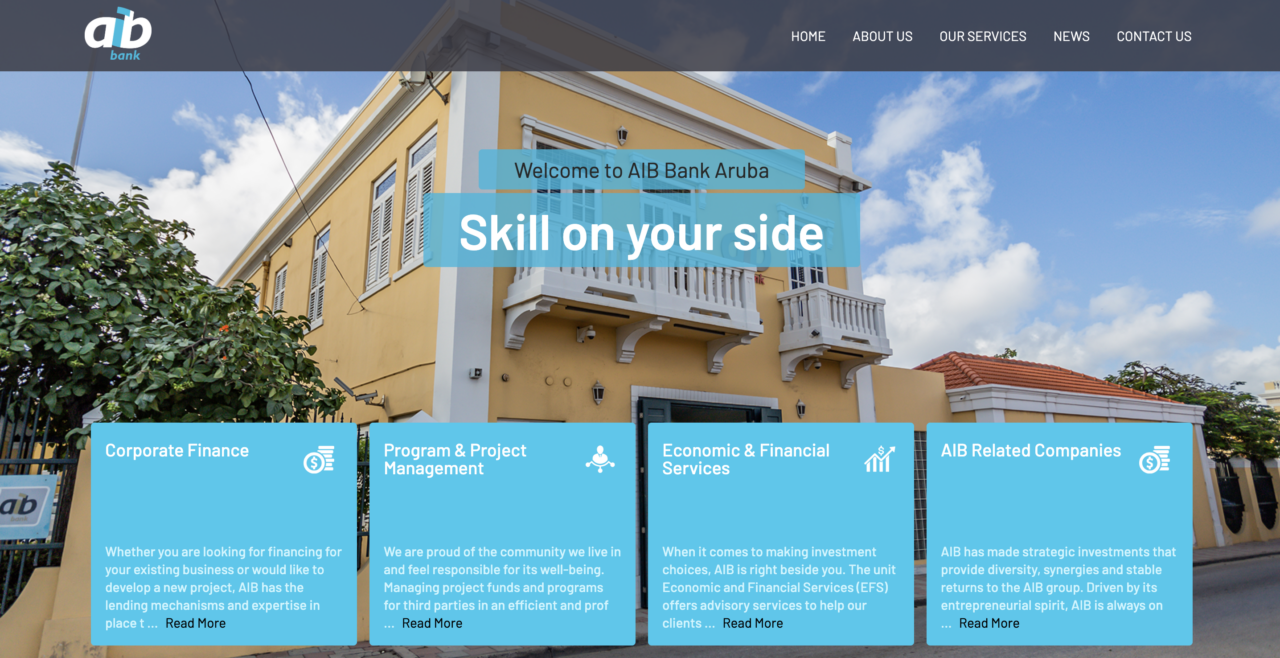
Aruba-based AIB Bank Partners with Finastra for Digital Banking

AIB Bank, an Aruba-based financial institution with nearly $2 billion in assets, has inked a deal with Finastra to deploy its Finastra Essence core banking solution. The deployment is part of AIB Bank’s goal of establishing the first fully digital bank in the country. Finastra Essence will deliver an enhanced core solution that blends broad and deep digital banking functionality with advanced technology to empower banks to offer customers faster transactions, greater reliability and security, and the kind of modern, personalized digital experiences that customers have come to expect.

“Choosing Finastra Essence allows us to position ourselves at the forefront of full-service digital banking innovation in Aruba and across the Caribbean,” AIB Managing Director Frendsel Giel said. “This transformation of our recently acquired commercial bank will not only enhance the way we serve our customers but also establish a solid foundation for accelerated growth and long-term success in Aruba and the region.”

Founded in 1987, AIB Bank is a privately owned financial institution based in Oranjestad, Aruba. The company specializes in loan syndication, agency services, corporate lending, program and project management, as well as advisory services, and has structured large and complex financing through Aruba and the region.

Formed via a merger between D+H Corporation and Finovate alum Misys in 2017, Finastra works with banks and other financial institutions to help them deliver secure and trusted mission-critical financial services technology. Headquartered in the UK, Finastra has more than 7,000 customers around the world using its financial services software, including 80% of the top 50 global banks, and moves $7 trillion in transactions every day. Chris Walters is Finastra’s CEO.


Here is our look at fintech innovation around the world.

Sub-Saharan Africa

  • PitchBook looked at the current state of venture capital funding for fintechs in Africa.
  • South African bank Capitec partnered with Wise Platform, Wise’s international payments infrastructure for banks and enterprises.
  • Visa Africa Fintech Accelerator reached 100 startups since inception with its fifth cohort.

Central and Eastern Europe

  • Germany’s Deutsche Börse purchased a 1.%% fully diluted stake in crypto platform Kraken.
  • Polish fintech PragmaGO, which provides financial services for small and medium-sized businesses, expanded to Croatia.
  • Cryptonews examined how the recent election in Hungary could rekindle debate on crypto policy and regulation.

Middle East and Northern Africa

Central and Southern Asia

Latin America and the Caribbean

  • Nu Mexico, the Mexican subsidiary of Brazil’s Nubank, topped the 15 million customer milestone, establishing itself as one of Mexico’s three largest financial institutions by customer base.
  • Uruguay-based cross-border payment platform dLocal partnered with Italy’s NEC to power international remittance payouts.
  • Aruba’s AIB Bank teamed up with Finastra and will deploy the fintech’s core banking solution Finastra Essence.

Asia-Pacific

  • Japan’s largest bank, Mitsubishi UFJ Financial Group, expanded its partnership with Finastra to support ACH payments in the US.
  • Indonesian bank CIMB Niaga, Google Cloud, and Artefact unveiled enterprise AI agents to bring greater personalization to the banking experience for customers.
  • Australian Trade and Investment Commission sent a delegation to Vietnam to support deepening fintech ties with the country.

Photo by Rodrigo Escalante on Unsplash

Fintech Rundown: A Rapid Review of Weekly News

Fintech Rundown: A Rapid Review of Weekly News

Welcome to Finovate’s final Fintech Rundown of 2025! DeFi and crypto have dominated the fintech news in recent weeks, with some companies in the space launching stablecoins and stablecoin-related services, while others announce expansion into new markets. We will update this post over the next several days to keep you informed on the final big headlines of the year.


Investing and wealth management

An investor group led by Permira and Warburg Pincus has announced plans to acquire Clearwater Anaytics in a transaction valued at $8.4 billion.

DeFi and crypto

Coinbase launches Stablecoins-as-a-Service solution, Custom Stablecoins.

Cryptocurrency exchange Bybit re-launches in the UK.

SoFi launches fully reserved stablecoin.

US-based digital currency platform CoinFlip opens its Crypto Center in Mexico City.

AI

Pendo announces the general availability of its Agent Analytics solution.

Insurtech

AI-native commercial insurer Nirvana Insurance raises $100 million in Series D funding.

Payments

Visa and Aldar announce strategic collaboration and live implementation of end-to-end voice-enabled agentic payments.

Digital banking

Financial services software company Finastra announces opening of new offices in Atlanta and in Trivandrum, India.

Fraud prevention and financial crime

ComplyAdvantage partners with Sutherland to launch an AI-powered compliance solution for banks and fintechs.


Photo by Aaron Burden on Unsplash

FintechOS and Finastra Forge Strategic Partnership to Modernize Account Originations

FintechOS and Finastra Forge Strategic Partnership to Modernize Account Originations
  • FintechOS and Finastra have forged a strategic partnership designed to modernize the account origination process for small businesses and consumers.
  • The partnership will integrate the Finastra Phoenix core system and MalauzAI Digital Banking into the FintechOS platform.
  • Finastra was formed via a merger between D+H Corporation and Finovate alum Misys in 2017. FintechOS has been a Finovate alum since FinovateFall 2021.

A newly announced strategic partnership between FintechOS and Finastra will help modernize the account origination process for small businesses and consumers. The pact will integrate both the Finastra Phoenix core system and MalauzAI Digital Banking into the FintechOS platform to make the account opening process faster, easier, and more secure for both in-person and online applicants.

“Our collaboration with Finastra is a direct response to the market’s demand for faster innovation,” FintechOS SVP of Growth Ash Govindia said. “By integrating our low-code digital onboarding and origination platform with Finastra’s core system, we are empowering financial institutions to launch sophisticated, customer-centric products in weeks, not months.”

The combination of a reliable core and digital banking system with a low-code origination platform and AI-powered product engine will help institutions avoid issues common to both traditional and online account opening processes. The integration will enable Finastra customers to configure pricing, tiers, bundles, and eligibility rules, and publish them to mobile, web, and banker-assisted journeys. This will reduce time to market and make operations less complex. The combined capabilities will be available to joint customers of both companies.

“Our goal is to help community and regional financial institutions deliver compelling experiences wherever customers engage,” Finastra General Manager, US Core and Digital Banking, Joe Gomez, said. “FintechOS complements Phoenix and MalauzAI by adding a flexible product and pricing layer that simplifies account opening while supporting personalized offers across channels. Together we make it easier to innovate while maximizing existing investments.”

Headquartered in London, Finastra leverages its expertise in lending, payments, universal banking, treasury, and capital markets to provide software solutions to more than 8,000 customers in more than 130 countries. This includes 45 of the world’s top 50 banks. Formed in a merger between Misys and D+H Corporation in 2017, the company recently announced a partnership with Belize Bank Group, which has deployed the company’s cloud-native core banking solution, Essence.

FintechOS made its Finovate debut at FinovateFall 2021 and returned to the stage earlier this year for FinovateFall 2025. Based in London and founded in 2017, the company offers an AI-driven product engine that integrates seamlessly into banks’ existing systems. The technology features low-code capabilities and composable architecture that facilitate rapid digital transformation and innovation without replacing current core infrastructure. Last month, the company announced that it has forged a strategic partnership with HCLTech to accelerate digital transformation and core modernization for banks and insurers.


Photo by Lukas

Fintech Rundown: A Rapid Review of Weekly News

Fintech Rundown: A Rapid Review of Weekly News

Tomorrow is the final day of the third quarter of 2025, which means that Wednesday marks our entrance into October. Historically, fall has been the busiest season for fintech announcements, so we’re ready to keep up with all of the new developments. Here is some of the biggest news from this week so far. We’ll continue adding news to this post throughout the week, so stay tuned!


BaaS and embedded finance

Worldpay launches embedded lending, banking and card issuing for platforms partners.

Payments

Citi and Dandelion collaborate to transform cross-border payments and enable near-instant payments into digital wallets across the globe.

Swift to add blockchain-based ledger to its infrastructure stack.

Solaris selects ACI Worldwide’s Connetic to future-proof payments infrastructure.

Finastra unveils intelligent routing module for payment routing.

Paze to become the official jersey patch partner of the Atlanta Hawks. 

Blockchain and decentralized finance

Deutsche Bank conducts first euro transaction via blockchain.

Fraud and compliance

SEON secures $80 million in Series C funding; unveils comprehensive AI suite that reduces investigation time by

Fenergo enhances FinCrime OS with native identity and verification to deliver compliance in one platform.

Lending and credit

Carrington Labs partners with decisioning platform TaranDM to bring cashflow underwriting directly into automated decisioning.


Photo by Daka

Finovate Global: Workforce Management and Capacity Planning with Cinareo Solutions’ Karen Elliott

Finovate Global: Workforce Management and Capacity Planning with Cinareo Solutions’ Karen Elliott

This week’s edition of Finovate Global features an interview with Karen Elliott, CEO and Co-Founder of Cinareo Solutions.

Headquartered in Ontario, Canada and founded in 2022, Cinareo Solutions complements workforce management platforms, helping them streamline contact center operations and mitigate risk by enabling precise resource allocation and decision-making that is driven by data.

Cinareo made its Finovate debut earlier this year at FinovateSpring 2025 in San Diego, demonstrating how its SaaS solution provides scenario-based capacity planning for both contact center agents and support staff. The company’s technology leverages industry-recognized statistical models and simulations to help businesses meet customer demands as well as vital financial KPIs.

We caught up with Karen Elliott recently to learn more about the field of capacity planning, the role of enabling technologies like AI, and how Cinareo Solutions helps contact centers ensure that the right person with the right skills is in the right place at the right time.


What role does capacity planning have in workforce management? What makes it challenging and how does Cinareo help companies better meet those challenges?

Karen Elliott: Capacity planning is the strategic backbone of workforce management. It determines how many people you need with the right skills, in the right place, at the right time, to meet service levels without overspending on labor. In contact centers, capacity planning sits upstream of scheduling—it uses historical data, forecasts, and business assumptions to set headcount and budget requirements weeks, months, or even years in advance. Effective planning ensures customer demand is met efficiently and profitably.

The challenge is that unpredictable demand, scattered data, and outdated tools make planning a constant challenge. Most organizations resort to using Excel spreadsheets and spend hours or even days of manual labor and embedded formulas to try to figure out the optimal plan. Cinareo streamlines the process by ingesting your data and enabling rapid “what-if” scenario modeling and multi-skilling simulation to create optimized plans for both agents and support staff with the click of a button. 

Not only does Cinareo handle planning with ease, but the platform also creates financial budgets and recruitment and training plans so you know who to hire, and when, to ensure you meet your service targets.

Who are Cinareo’s primary customers? How do you reach them?

Elliott: Cinareo is an industry-agnostic platform for all contact centers.  We have customers worldwide in financial institutions, telecom, travel, utilities, retail, and even government.  We partner with CCaaS and WFM solutions to integrate directly into their platforms so that data can flow seamlessly into Cinareo.  Any organization with variable demand, labor-intensive operations and service or cost targets would get huge benefits from using a platform like Cinareo. 

We have a wide network of referral agents and ISV partners that recommend Cinareo to their clients when they see a clear need.  Cinareo offers webinars and monthly product showcases to demonstrate the power behind the platform—or can even arrange custom demos and proof of concepts to make sure potential customers truly understand the benefits of a modern planning platform like Cinareo.

What in your background led you to pursue innovation in this field?

Elliott: I spent 12 years at the IBM Innovation Center earlier in my career within the User Experience group with a key focus on user-centric software solutions.  After leaving IBM, I co-founded a professional consulting firm that specialized in contact center optimization that helped organizations improve their people, processes, technology, and knowledge. 

Years of consulting highlighted a huge gap in the market in regard to capacity planning.  We worked with countless private and public sector organizations that would build these complex spreadsheets to determine their optimal staffing and we decided there needed to be a better way, so we created Cinareo.  It was built to complement any CCaaS or WFM platform in the market and integrate into whatever was the customer’s platform of choice.  If customers switch platforms, they can take Cinareo with them—having a portable, agnostic solution was key to the design. 

Another important goal was designing a platform that was simple and intuitive based on years of experience in user-centric design.  We even have our customers as active members of the planning and design of the solution—this ensures that everything we build is focused on the needs and requirements of the people using the software.

What role do enabling technologies like AI play in developing innovative workforce management solutions?

Elliott: Capacity planning remains relevant in contact centers even if AI is involved, and it can take on a different but crucial role in optimizing the overall performance. While AI can now handle routine queries or simple updates, the reality is much more complex. Cinareo helps determine the right mix of AI-driven processes and human resources to meet the demand efficiently. Our customers are modelling their operations using Cinareo to determine the ideal balance of human agents vs bot and the ROI on an investment in AI as well.  

Incorporating AI into Cinareo is a given—we are already full steam ahead in our strategic plans to ensure that AI-driven capacity planning can make a dramatic difference. But true innovation in customer support isn’t about replacing the people—it is about giving people the ability to work faster and smarter – and we are doing that with Cinareo. 

You recently launched Flexible Monthly Planning. What is the value proposition with this new offering?

Elliott: We initially offered Cinareo as a strategic, long-term capacity planning platform where users could build 12-, 24- or 36-month plans.  However, as we continued to enhance Cinareo, our customers were telling us they wanted more flexibility in their planning, so we built in the capability to do weekly planning up to 52 weeks in order for contact centers to create tactical plans over the short or medium term. 

To continue to expand on Cinareo’s flexible platform, we recently launched more flexibility into our monthly planning as well, so customers can build a plan for any number of months up to 3 years in advance.  These enhancements were all driven by the needs of our clients since our goal is to have our software reflect “the voice of the customer” and truly be user-centric.

You made your Finovate debut at FinovateSpring earlier this year. How was the experience?

Elliott: We had a fantastic debut at FinovateSpring!  We generated a lot of great interest in the solution from the demo we provided. Prior to FinovateSpring, we had recently started onboarding more fintech clients and noticed an uptick in interest from banks, credit unions, and insurance agencies looking for a solution like Cinareo.  We thought FinovateSpring would be a great opportunity to demo Cinareo to a wider audience and get fintech companies to see the realm of the possible with a modern capacity planning solution. There is such a clear need in this sector for a solution that will not only improve CX and EX, but also provide important KPIs like the cost per contact to help with financial management.

What can we look forward to seeing from Cinareo in the months to come?

Elliott: We are excited over some of the new features that are set to launch in the months to come—we have been scaling up significantly to meet customer demand.  A couple new features that are soon to be released are multi-lingual functionality in addition to the ability to compare a plan with your historical data in a quick and easy way.  We will be offering our clients a way to see how their plan performed against their actuals in both performance and staffing—down to the 15-minute interval level.  This new feature will help our customers understand trends and patterns and be able to improve their planning moving forward.

That is just the tip of the iceberg—we have so many more exciting things planned over the next while. We would love to increase our customer base to have even more voices driving the future of our software! If you want to see how Cinareo can solve your capacity planning challenges, feel free to contact us.


Here is our look at fintech innovation around the world.

Middle East and Northern Africa

  • Whish Money teams up with Mastercard to enable cross-border payments to Lebanon.
  • Bank of Algeria joined the Pan-African Payment and Settlement System (PAPSS) launched by the African Export-Import Bank (Afreximbank).
  • Qatar-based AlRayan Bank went live with Finastra Corporate Channels.

Central and Southern Asia

  • India celebrated National Fintech Day earlier this week.
  • Ukrainian fintech Fintech Farm launched its mobile banking service Tezbank in Uzbekistan.
  • The Institute of Chartered Accountants of India (ICAI) announced plans to unveil new Information Systems Audit Standards to enhance audit practices for startups, fintechs, and e-commerce companies.

Latin America and the Caribbean

  • Brazil-based digital financial services platform Nubank introduced Armando Herrera as new CEO of its Mexican operations.
  • Uruguayan cross-border payment platform dLocal teamed up with cross-border marketplace platform Tiendamia.
  • Puero Rico-based transaction processor and fintech EVERTEC announced plans to acquire a controlling stake in Brazilian fintech vendor Tecnobank.

Asia-Pacific

  • Japanese fintech JPYC announced plans to launch the first yen-denominated stablecoin this fall.
  • Thailand unveiled a new pilot program to enable visitors to convert cryptocurrencies into the local Thai Baht to facilitate purchases.
  • New Zealand-based small business management platform Xero partners with UAE-based Wio Bank PJSC.

Sub-Saharan Africa

  • Digital payments provider Peach Payments launched real-time clearance (RTC) payouts for merchants on its platform in South Africa.
  • South African fintech Street Wallet raised $350,000 in new funding.
  • African business bank Absa Business Banking selected Network International as its digital payments technology partner.

Central and Eastern Europe

  • OYAK ANKER Bank GmbH migrated its core banking systems to Berlin, Germany-based Mambu’s platform.
  • Turkish investment platform Midas raised $80 million in Series B funding.
  • Disruption Banking looked at the increasing popularity of crypto in Lithuania.

Photo by Derek Sutton on Unsplash

Finovate Global Ireland: Investing in Payments and Partnerships

Finovate Global Ireland: Investing in Payments and Partnerships

This week’s edition of Finovate Global looks at recent fintech headlines from Ireland.


Nomupay Raises $40 Million at $290 Million Valuation

Courtesy of an investment from SBPS, a subsidiary of Japan’s SoftBank, Irish fintech Nomupay has secured €35 million ($40 million) in new funding. The capital gives the company a valuation of $290 million and comes as part of an alliance that will enable Nomupay to expand its reach into the Asian market.

“Since our inception in 2021 we have been robustly active in the region; the SBPS investment now enables us to double down and support inter regional commerce by adding additional countries and payment methods to the platform in order to support bi-directional access between Japan, Asia, and the rest of the world,” Nomupay Group CEO Peter Burridge said.

Nomupay’s unified payment platform streamlines payment processes—including acquiring, treasury, and payouts—for businesses operating in fragmented, emerging markets. The company aggregates local payment methods into a single, consistent API; and offers treasury and reconciliation tools that provide real-time visibility, automated fund flows, and multi-currency management. Nomupay helps businesses go to market faster and in-line with local regulations, without needing to engage with multiple PSPs and other partners.

The partnership will enable Nomupay to expand and solidify its presence in Asia by way of Japan. SBPS will benefit from access to Nomupay’s single API and gateway-agnostic, single, back office platform, offering a range of payment options and scalability.

“With Nomupay as a key partner, we will leverage Nomupay’s payment solutions to support our clients entering the Asian market,” SBPS Representative Director, President, and CEO Jun Shimba said. “Nomupay offers a wide range of services in the payment field in Asia, and can meet flexible and diverse needs. Nomupay is a highly reliable partner.”

Founded in 2021, Nomupay is headquartered in Dublin, Ireland.


TransferMate Announces Strategic Partnership with Deutsche Bank

Embedded B2B payments infrastructure-as-a-service company TransferMate has forged a strategic partnership with Deutsche Bank. The partnership will enable TransferMate to provide in-country collections, cross-border payments, and local fund storage. Working with Deutsche Bank only adds to TransferMate’s extensive local collection capabilities, helping make the company’s platform among the largest fintech payment infrastructures in the world.

“Our collaboration with Deutsche Bank is another significant milestone as we continue to grow our global footprint and be the embedded B2B partner of choice,” TransferMate CEO Gary Conroy said. “This partnership further strengthens our reach, our capabilities, and the value we bring to our partners and their clients.”

Initially, the partnership will focus on facilitating operations in APAC markets, with other regions to be added over time as TransferMate leverages Deutsche Bank’s extensive international network. In a statement, Deutsche Bank’s Head of Cash Management & Head of CB APAC MEA, Ole Matthiessen, highlighted the opportunity in APAC.

“This strategic collaboration between TransferMate and Deutsche Bank underscores the immense potential of fintech-bank partnerships in accessing and scaling global markets, particularly navigating the high-growth yet diverse Asia Pacific landscape. This showcases the strength of our offering, aligning seamlessly with our Global Hausbank strategy,” Matthiessen said.

Founded in 2010 by Terry Clune, TransferMate manages a global payments network that covers 200+ countries and territories and 140+ currencies. The company is headquartered in Kilkenny, Ireland.


Paytech Splink Partners with Global Payments

Payments platform Splink announced a strategic partnership with international payment processor Global Payments this week. The collaboration will enable Splink to go live with Global Payments’ SoftPOS technology, which enables any smartphone to accept tap-to-pay transactions with no additional, external hardware required.

“Splink brings excellent technology combined with commercial agility and an impressive team that perfectly complements our infrastructure, distribution, reach, and the key attributes we look for in a partner,” Global Payments Head of UK and Ireland Partnerships Tom Woods said. “We’ve had some recent successes together with key merchant wins in Ireland and the UK and we’re excited to see the partnership grow.”

Founded in 2019 by Mark Lyttleton and headquartered in Dublin, Splink offers a flexible payments solution that allows businesses to choose from among more than 20 different payment options. Splink enables companies to receive and request payments, as well as set up an online shop that helps boost transaction volumes. Splink’s solution is also available as a white-label offering, allowing companies to set up their own digital payments business and add a new source of recurring revenue.


Here is our look at fintech innovation around the world.

Central and Eastern Europe

Middle East and Northern Africa

  • UAE-based fintech Qashio raised $19.8 million in both equity and non-equity financing.
  • Saudi Arabian fintech Nqoodlet secured $3 millioon in seed funding to help SMEs access financing.
  • Zain Fintech launched its Bede Mobile Wallet in Sudan.

Central and Southern Asia

  • Singapore-based KYC, data intelligence, payments, and debt collections solutions provider Decentro raised Rs 30 crone ($3.5 million) ahead of plans to relocate to India.
  • Indian fintech Spense secured $1.85 million in pre-seed funding.
  • The National Bank of Kazakhstan unveiled its new, crypto card, retail payments initiative.

Latin America and the Caribbean

  • Uruguayan fintech dLocal acquired cross-border payments company AZA Finance.
  • Finastra and consulting firm TCMpartners teamed up with Banco de Costa Rica as the firm launches its International Trade Automation Project.
  • Swedish Pay-by-Bank solutions company Zimpler earned certified Payment Institution (PI) status in Brazil.

Asia-Pacific

  • Malaysia’s KAF Digital Bank went live with Temenos SaaS to power its new Islamic digital bank offering.
  • Hong Kong-based LianLian announced a strategic partnership with UnionPay.
  • Australian fintech platform Complii Fintech Solutions to bring its capital raising solution to the UK.

Sub-Saharan Africa


Photo by Gregory DALLEAU on Unsplash

Finastra Sells Off Treasury and Capital Markets Division

Finastra Sells Off Treasury and Capital Markets Division
  • Finastra is selling its Treasury and Capital Markets (TCM) division to an affiliate of private equity firm Apax Partners.
  • TCM will become a standalone company under Apax ownership and will receive investment to accelerate product innovation, enhance cloud capabilities, and improve the customer experience.
  • The deal is expected to close in the first half of 2026.

UK-based financial services software provider Finastra announced that it is selling its Treasury and Capital Markets (TCM) business unit to an affiliate of private equity firm Apax Partners. Once the transaction closes in the first half of 2026, Apax will rebrand TCM and operate it as a standalone business.

The deal gives Finastra room to double down on its core banking software, while TCM gains the backing to modernize and grow under independent ownership.

Finastra’s TCM facilitates risk management, regulatory compliance, and capital markets operations with its suite of software products, which include Kondor, Summit, and Opics. The business unit has more than 340 financial institution clients.

Under the ownership of Apax, TCM will be able to invest further in new product development, marketing, and technology infrastructure. Additionally, Apax will help TCM sharpen its strategic and operational focus, enhance its customer experience, and accelerate its cloud technology offering.

“We’re excited to partner with the TCM team as the business begins a new chapter as an independent organization,” said Apax Partner Gabriele Cipparrone. “With the backing of the Apax Funds, we expect TCM to benefit from accelerated innovation and enhanced operations, delivering even greater value to its clients.”

In addition to TCM, Apax has invested in other companies in the application software industry. Some of the firm’s more notable investments include Paycor HCM, Zellis Group, ECi Software, OCS / Finwave, Azentio, EcoOnline, and IBS Software.

Finastra anticipates that selling TCM will streamline its product portfolio and free up cash to reinvest in the business.

“This sale marks an important milestone for Finastra that will help further launch our next phase of growth with a focused suite of mission-critical financial services software,” said Finastra CEO Chris Walters. “It will provide capital to accelerate our strategy and reinvest in our core business, while providing our award-winning TCM platform with the backing of an experienced, long-term technology investor to support its continued success moving forward.”

With customers in 135 countries, Finastra serves 8,100 financial institutions with its software applications across lending, payments, and retail banking. The company was founded in 2017 as a combination of Misys and D+H. Earlier this year, Finastra appointed Chris Walters as CEO.