Stripe Acquires Clerky to Offer Legal Infrastructure for Startups

Stripe Acquires Clerky to Offer Legal Infrastructure for Startups
  • Stripe has acquired startup legal infrastructure provider Clerky, expanding beyond payments into startup formation and ongoing corporate operations.
  • The deal could help Stripe bring companies into its ecosystem earlier, establishing relationships during incorporation, fundraising, and hiring before startups ever need payment processing.
  • Clerky complements Stripe Atlas with deeper legal workflows and attorney relationships, strengthening Stripe’s push to become a broader operating infrastructure layer for startups.

Payment infrastructure fintech Stripe is getting into a new infrastructure layer this week. The California-based company has acquired Clerky, a company that offers legal infrastructure that startups need during and after formation. Terms of the deal were not disclosed.

Clerky was founded in 2011 to help startups with legal paperwork surrounding incorporation and post-incorporation documentation, board actions, SAFEs and convertible notes, hiring documentation, stock and option issuances, and ongoing corporate maintenance. It also offers startup attorneys a private workspace that makes it easy to work with a startup’s clients and colleagues.

“As startup attorneys in Silicon Valley, we saw how our clients would try to get paperwork done faster and cheaper, but ended up paying us more in the end to fix everything,” Clerky said in its blog post. “We started Clerky to provide the experience our clients were looking for, but with our legal expertise built into the products.”

Acquiring Clerky will help Stripe bring startups into its ecosystem even earlier. Instead of waiting until a business needs payments, Stripe will use Clerky to help establish the relationship during incorporation, fundraising, and hiring. Ideally, Stripe will retain that company as it scales.

Additionally, Clerky will help Stripe expand Atlas from formation into startup operations. Atlas, which Stripe launched in 2016, lets founders incorporate a Delaware company, obtain an EIN, issue founder equity, file an 83(b) election, generate SAFEs, and then move directly into banking and Stripe’s payments ecosystem. While Atlas and Clerky overlap when it comes to startup formation, Clerky brings deeper legal workflows and relationships with startup attorneys.

Given these two elements, Stripe could possibly offer a more holistic startup ecosystem that helps startups incorporate, establish equity, fundraise, hire employees, accept payments, and manage money. While Stripe hasn’t announced this exact integration, it may help increase ecosystem stickiness.

Today, Clerky’s startup clients account for 23% of all Silicon Valley seed and pre-seed financings and together have raised over $140 billion in venture capital. Additionally, Clerky counts hundreds of attorney and paralegal clients that use its platform to work with their customers. Under Stripe’s ownership, Clerky plans to continue to build its client base and provide the same high level of service to startups and attorneys that it has in the past.

Stripe’s move is another example of fintechs moving upstream. By helping startups with formation and legal infrastructure before they ever need payment processing, Stripe can establish relationships earlier in a company’s lifecycle and potentially grow alongside those businesses. The acquisition also reflects Stripe’s broader evolution from a payments provider into an operating infrastructure layer for startups, giving founders more reasons to remain within its ecosystem as their companies scale.

Photo by KATRIN BOLOVTSOVA

Socure Secures New Investment, Acquires Fraud Platform Fravity

Socure Secures New Investment, Acquires Fraud Platform Fravity
  • Trust infrastructure for global identity and risk intelligence, Socure, has secured a strategic growth investment of $156 million, boosting the firm’s valuation to $5.2 billion.
  • In addition to the funding announcement, Socure announced that it is acquiring Fravity, an agentic AI platform for risk and compliance.
  • Socure has been a Finovate alum since 2013. Fravity made its Finovate debut last year at FinovateFall 2025 in New York.

Socure, which offers trust infrastructure for global identity and risk intelligence, has received a $156 million strategic growth investment that gives the firm a valuation of $5.2 billion. The investment was led by Summit Partners and included participation from Goldman Sachs Alternatives, Wells Fargo, and Docusign, among others. The funding also included both primary capital and an existing employee secondary tender offer.

“What stands out to us about Socure is the combination of durable growth and disciplined execution at this scale. We have followed this market closely for years, and we believe Socure is well positioned to bring identity, fraud, and compliance workflows onto a single platform,” Summit Partners Managing Director Matt Hamilton said.

The numbers for Socure are strong. The company closed Q2 2026 with $364 million in total ARR, 63% year-over-year ARR growth, 1.3x net dollar retention, and 0.01% logo churn. The company also noted that its international volume now represents a “double-digit” share of Socure’s network, up from two years ago.

In addition to the investment, Socure announced that it is acquiring agentic AI platform Fravity, which automates fraud, risk, and compliance operations. A Finovate alum that made its debut at FinovateFall 2025, Fravity provides AI agents that power deep investigations and execute workflows for onboarding, business due diligence, dispute resolution, and AML compliance. Founded in 2024, Fravity will add a native, first-party agent development platform and agentic operations layer to Socure’s RiskOS, an orchestration and decisioning platform that serves the firm’s 3,000+ customers. Integrating the two firms is expected to be relatively straightforward; Socure and Fravity share many enterprise clients, and the founding teams of both companies have collaborated across multiple companies for more than ten years. Fravity’s agentic AI capabilities will be delivered through Socure’s RiskOS platform as “RiskOS_Agents.”

“Stopping financial crime in the age of AI is getting harder every day, and there is no version of this where institutions hire their way out of it,” Socure Co-Founder and CEO Johnny Ayers said. “The solution will come from the infrastructure with the platform, proprietary data, first-party agents, and vertical domain expertise. Fravity, now as RiskOS_Agents, gives us the agent-building and ontology layer, wired into the nucleus of RiskOS, on top of our proprietary data and models, providing the complete loop to maximize customer decisioning accuracy. We are grateful for the support of Summit Partners and our other investors as we deliver on our vision for the future.”

Socure’s funding and acquisition come at a time when banks are spending significant amounts of time and money fighting fraud. Intelligence platform Liminal reported that organizations in the US spend $100 billion a year staffing internal and outsourced fraud, compliance, and risk management teams. Nevertheless, Liminal also noted that AI-powered fraud attacks have increased 8,000% over the last year, creating alert volumes that are increasing faster than fraud teams can staff for. Add to this the time spent on reviews—Liminal noted that 53% of banks spend at least an hour reviewing each alert, and 37% manually review more than 40% of their alerts—and the challenges facing banks and other organizations become all the more clear.

In contrast, Fravity has reduced cost per case by 80%, accelerated case resolution by up to 5x, and reduced false positives by as much as 70% across its current deployments. With its capabilities delivered as RiskOS_Agents, the technology will be wired directly into Socure’s proprietary datasets, purpose-built models, and downstream decision outcomes to maximize accuracy. Furthermore, RiskOS_Agents can learn from approximately 10 billion decisions a year and millions of resolved cases across the Socure network, creating a closed feedback loop that standalone agentic AI vendors cannot be easily replicated.

Socure serves customers in 190+ countries across financial services, e-commerce, government, healthcare, telecom, and gaming. The company’s clients include the top five US banks, four of the Magnificent Seven, 160 organizations throughout the public sector, and more than 600 fintechs.


Photo by Ashkan Forouzani on Unsplash

Meet the FinovateFall 2026 Sustainability & Inclusion Scholarship Winners!

Meet the FinovateFall 2026 Sustainability & Inclusion Scholarship Winners!

Now in its fifth year, the Finovate Sustainability & Inclusion Scholarship Program has helped bring dozens of innovative fintech startups to the attention of banks, credit unions, investors, and journalists. This year, for FinovateFall, the Finovate Scholarship Program is proud to support six fintechs that are innovating in fields such as lending, customer service, small business financial management, fraud prevention, and biometric-enabled commerce.

The Finovate Scholarship Program spotlights underrepresented fintech founders and startups whose innovations support climate sustainability, diversity, financial inclusion, and responsible corporate governance. Scholarship winners are granted complimentary demo participation and are included in Best of Show voting, making them eligible to win the conference’s Best of Show award.

“This year’s scholarship recipients have added incredible depth to our demo lineup,” Finovate VP and Senior Director of Startup Ecosystem Heather Stowell said. “From socially conscious platforms addressing real-world challenges to companies setting new standards in responsible governance, plus groundbreaking work from BIPOC and female founders, these teams represent the diverse thinking that’s driving the industry forward. It’s exactly this mix of founders and fintech themes that makes our demo showcase so compelling.”

FinovateFall 2026 will be held at the Times Square Marriott Marquis in New York from Sept. 9—11. Tickets are available now. Save your spot. Book your room. And join us in New York for the most unique fintech event of the fall.


Goodbuy

Goodbuy transforms small-business engagement into a new growth channel, enabling financial institutions to drive account activation, deposits, and interchange through connected community commerce. Goodbuy was founded in 2021 and is headquartered in Boise, Idaho.

Goodbuy is a scholarship winner in our Female Founded/Owned category, which is available to fintechs with female founders or owners. Goodbuy will be represented at FinovateFall by co-founders Cara Oppenheimer (Chief Executive Officer) and Cary Telander Fortin (Chief Impact Officer).


FinZee AI

FinZee AI connects biometric data from wearable devices to real-time financial decision-making, stopping impulse buying before it happens. Founded in 2025, the company is based in Kapolei, Hawaii.

FinZee AI was one of the winners in the Social category, which is available to firms with socially conscious fintech solutions.


Kita Technologies

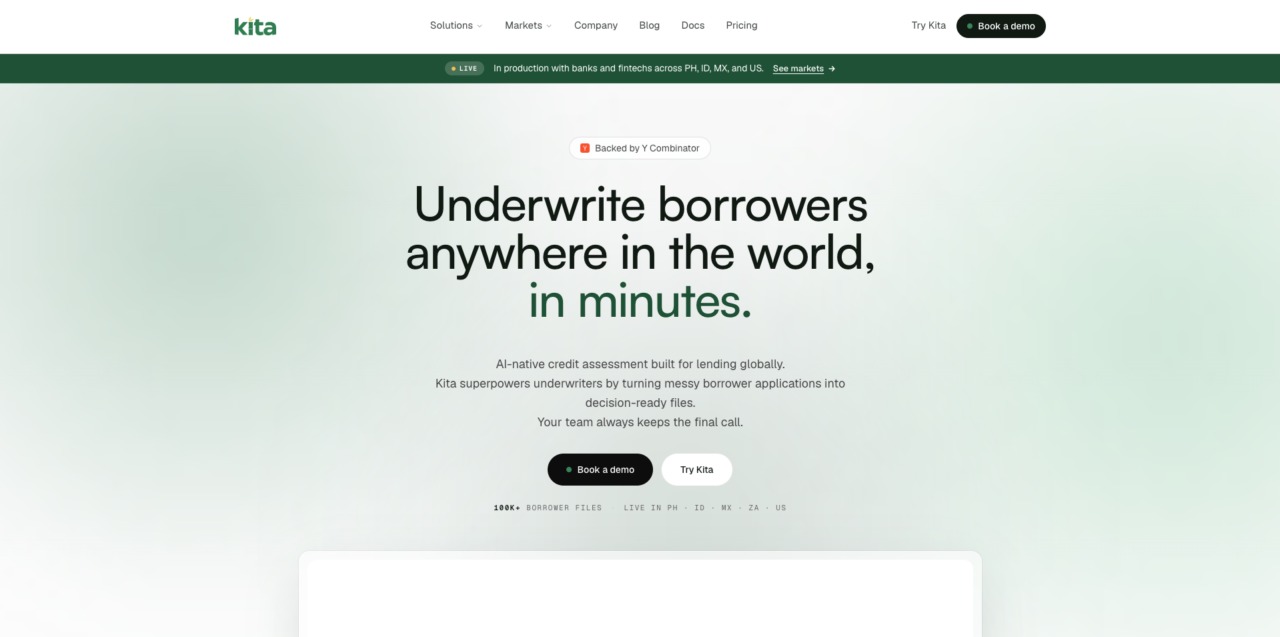
Kita is an AI-powered lending operations platform that transforms borrower documents into fraud-checked underwriting signals in minutes. Kita Technologies was founded in 2025 and is headquartered in San Francisco, California.

Kita Technologies is a winner in the Female Founded/Owned category, which is available to companies founded or owned by women.


McCarthy Hatch

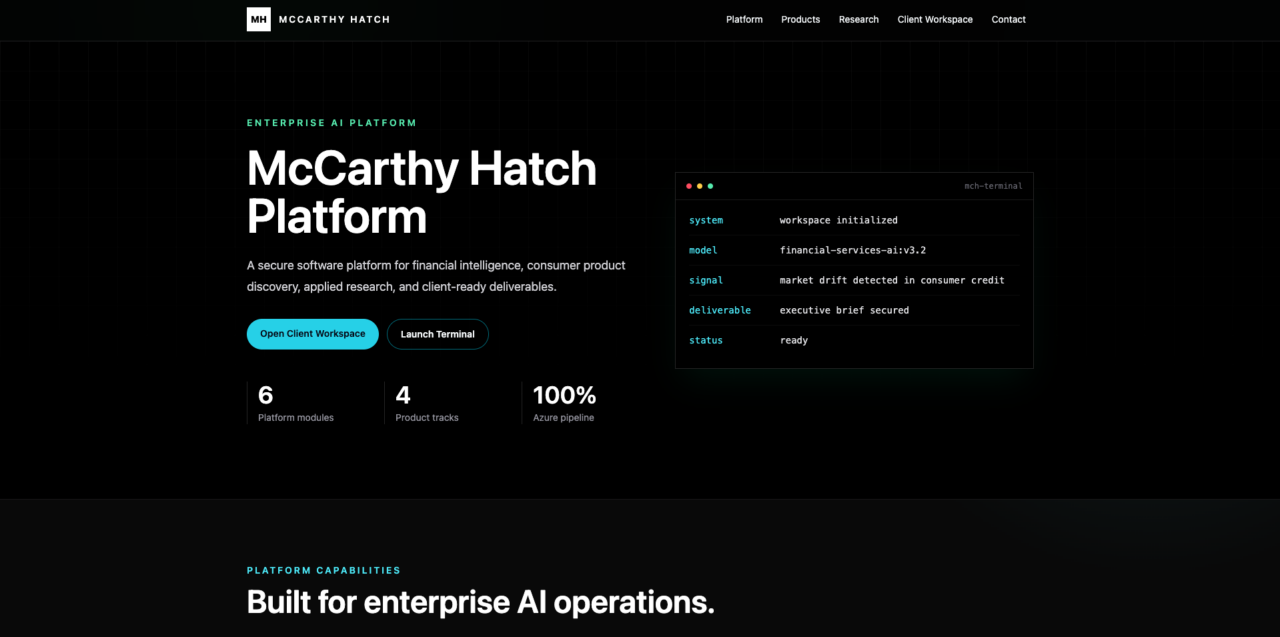
Headquartered in Los Angeles and founded in 2024, McCarthy Hatch is the company behind FSAi, an AI-powered analytics platform that detects systemic consumer harm patterns in financial services by analyzing customer complaints.

McCarthy Hatch is a scholarship winner in the Governance category, which is available to companies that emphasize responsible governance and leadership.


On Time Harvest

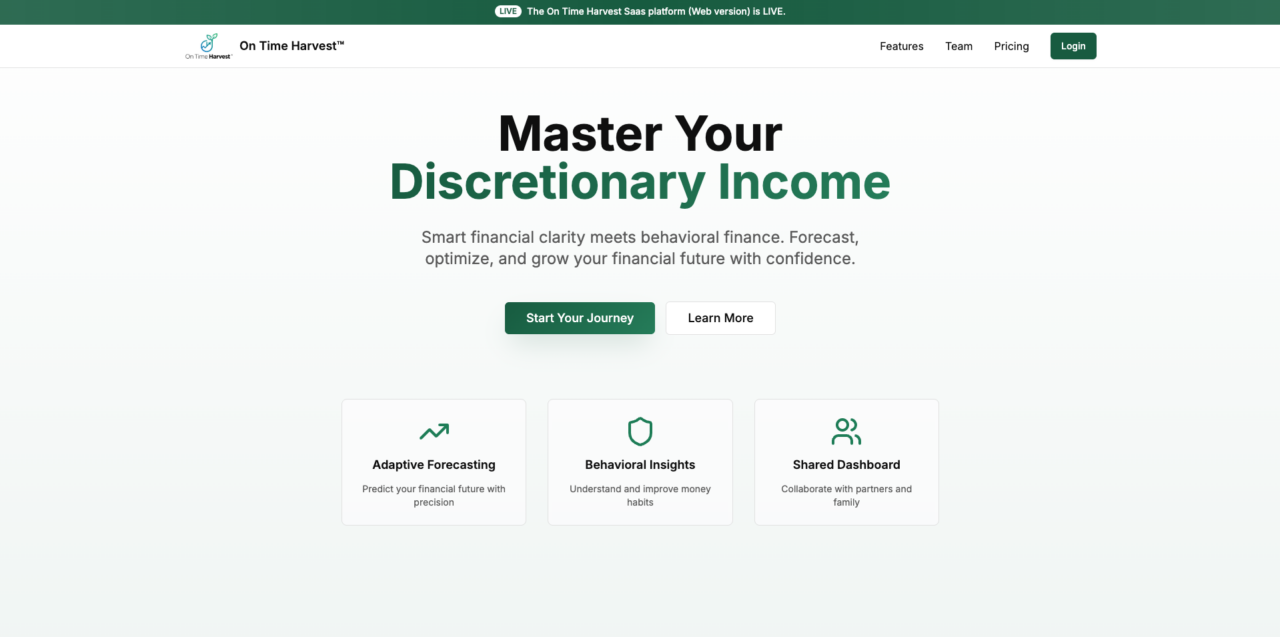
On Time Harvest is an AI-powered fintech platform that forecasts discretionary income up to five years in advance, delivers financial education and analysis, and builds responsible safeguards for BNPL. The company was founded in 2025 and is headquartered in Waldorf, Maryland.

On Time Harvest is a scholarship winner in our BIPOC Founded/Owned category. BIPOC refers to Black, Indigenous, and people of color.


RangersAI

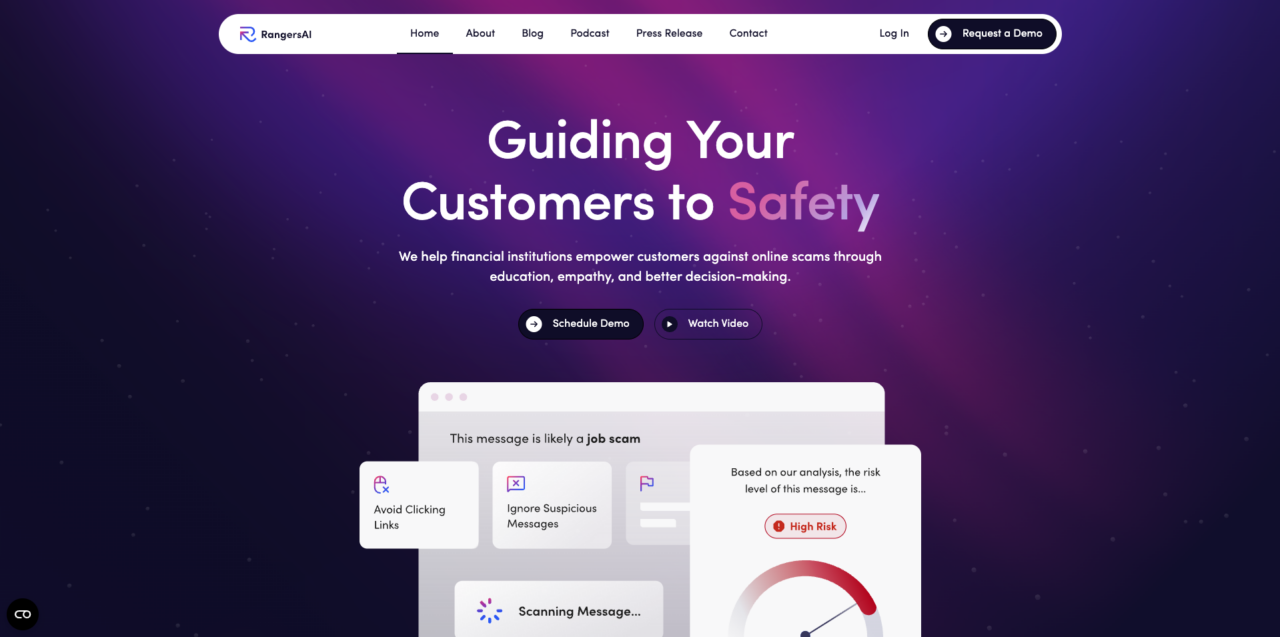
RangersAI offers an AI-powered scam resilience platform that helps financial institutions empower consumers to avoid scams through real-time guidance, in-context education, and trusted digital interactions. RangersAI was founded in 2024 and is headquartered in Boca Raton, Florida.

RangersAI is a scholarship winner in our Social category, which is available to companies with socially conscious fintech solutions.

Basware to Acquire Trustpair for Undisclosed Amount

Basware to Acquire Trustpair for Undisclosed Amount
  • Basware has agreed to acquire payment fraud prevention company Trustpair, with the transaction expected to close later in 2026.
  • The acquisition will extend Basware’s invoice lifecycle assurance through payment, combining its AP automation capabilities with Trustpair’s AI-driven account validation and payment fraud prevention.
  • The deal reflects the convergence of AP automation, payments, and fraud prevention as AI-driven fraud increases demand for end-to-end transaction security.

Enterprise payment solutions company Basware announced it has agreed to acquire payment fraud prevention company Trustpair this week for an undisclosed amount. The transaction is expected to be completed later in 2026. 

Basware, provider of AP automation, e-invoicing, and compliance tools, anticipates that Trustpair’s fraud prevention tools will enhance its invoice lifecycle management tools by delivering invoice lifecycle assurance that covers the entire transaction. Basware will use its tools to confirm that an invoice is legitimate and approved, while Trustpair will confirm that the payment reaches the intended supplier.

Trustpair was founded in 2017 to secure enterprise payments using its AI-driven risk intelligence. Today, the South Carolina-based company serves more than 600 organizations by automating manual account validation to serve as a centralized, strategic layer of payment security.

“Trustpair was built around a simple belief: approving the right invoice is not enough if the money ultimately reaches the wrong account,” said Trustpair Co-Founder and CEO Baptiste Collot. “By bringing our capabilities together, we see the opportunity to give finance teams stronger protection across the full journey, from supplier onboarding and invoice approval through payment. Trustpair will continue to operate with the same team, platform, and commitment to our customers and partners across the finance environments they already use. Basware’s reach and resources will help us accelerate beyond what we could have achieved alone.”

Once the acquisition is finalized, Trustpair will leverage Basware’s intelligence spanning 2.5 billion invoices and 20 million suppliers to strengthen its validation models and gain a faster route to a wider customer base.

Founded in 1985, Basware’s invoice lifecycle management platform offers governed autonomy, continuous compliance, financial integrity, and enterprise control. By governing the entire AP process end-to-end across every country, and every ERP, Basware helps enterprises automate accounts payable while maintaining the controls needed to ensure invoices are legitimate, compliant, and accurately processed. Basware counts more than 6,500 customers worldwide, including DHL, Heineken, and NBC Universal Media.

“AI may be the most powerful productivity tool of our generation,” said Basware CEO Jason Kurtz. “Unfortunately, it is also becoming one of the most powerful tools ever placed in the hands of criminals. A finance team can do everything right on the invoice and still send the money to the wrong bank account. Basware has spent more than 40 years protecting the invoice. Bringing Basware and Trustpair together extends that protection through the payment itself. Together, we will offer the first end-to-end invoice-to-payment assurance in the market, strengthening financial integrity and continuous compliance across the invoice lifecycle.”

As AI tools proliferate, AP automation tools are expanding to better manage financial risk across the transaction lifecycle. AI is making payment fraud increasingly sophisticated, which means that validating and approving an invoice is no longer sufficient to ensure a legitimate transaction. Embedding payment validation into AP workflows gives platforms like Basware an opportunity to move beyond automating financial processes to protecting the movement of money itself. For fintechs, the shift could further blur the lines between AP automation, payments, and fraud prevention as businesses look for platforms that can manage and secure a transaction from invoice through payment.


Photo by Kindel Media

Fideo Intelligence Launches Fraud Fighting Solution Fideo Lens

Fideo Intelligence Launches Fraud Fighting Solution Fideo Lens
  • Fraud prevention and identity verification company Fideo Intelligence has launched its investigative intelligence platform Fideo Lens.
  • Fideo Lens enables fraud and financial crime teams to discover hidden relationships between identities, accounts, devices, and behaviors at a time when fraud attacks increasingly involve multiple connected entities and organizations.
  • Headquartered in Denver, Colorado, Fideo Intelligence made its Finovate debut at FinovateFall 2025 in New York.

Financial crime prevention specialist Fideo Intelligence has unveiled its investigative intelligence platform Fideo Lens. The new offering helps fraud and financial crime teams uncover hidden relationships between identities, accounts, devices, and behaviors, enabling them to better address the increasingly coordinated nature of fraud attacks.

Starting with a single identity signal, fraud investigators can use Fideo Lens to visualize and connect data associated with that identity and convert fragmented identity data into interactive investigative intelligence within minutes, reducing the time spent on manual searches across multiple systems. Fideo Lens gathers relevant entities, people, devices, identifiers, behaviors, and activity into one interface, making it easier to spot potential connections between individual signals. This accelerates the fraud investigation process while enabling teams to make more confident decisions.

“Fraud and financial crime rarely exist as isolated events anymore; they play out across networks of connected identities, devices, and organizations,” Fideo Intelligence CEO Chris Harrison said. “Most investigators still have to piece those relationships together manually. Fideo Lens helps investigative, fraud, and financial crime teams uncover hidden connections in minutes, so they can move faster on critical cases and disrupt financial crime networks to prevent losses or additional risk.”

Search-based fraud investigations can fail to identify the relationships within the coordinated network of aliases, shared devices, and interconnected accounts that increasingly underpin modern fraud and financial crime. As a result, fraud investigators have had to spend significant time piecing together fragmented data from multiple, disconnected systems in order to see the entire network. In contrast, Fideo Lens gives teams interactive relationship mapping, broad identity intelligence, faster entity resolution, stronger network analysis, explainable findings, and continuously refreshed intelligence to help investigators spot emerging relationships and changing risk patterns.

“Analysts and investigators should not have to spend most of their time jumping between disconnected systems,” Harrison added. “Fideo Lens turns fragmented identity data into a clear view of the people, accounts, and devices involved, helping teams investigate cases faster and improve fraud and recovery outcomes.”

Fideo Intelligence made its Finovate debut at FinovateFall 2025 in New York. At the conference, the Denver, Colorado-based company demonstrated Fideo Verify, its AI-powered identity verification and fraud prevention platform for banks, credit unions, fintechs, and financial platforms. Fideo Verify combines multiple identity verification strategies, such as synthetic ID detection, device analysis, and breach exposure, into a single API. Powered by Fideo Intelligence’s Identity Fraud Intelligence Network, Fideo Verify streamlines risk decisions, lowers operational costs, and continuously learns by analyzing dynamic data.

Founded in 2024, Fideo Intelligence screens more than 95 billion transactions a year. The firm is backed by Baird Capital, Blue Note Ventures, and Foundry Group.

FinovateFall 2026 will showcase more than 70 innovative fintech companies. Join us September 9–11 at New York’s Marriott Marquis Times Square for three days of cutting-edge fintech demos, expert insights, and high-impact networking.


Photo by MINEIA MARTINS

Nayax Agrees to Acquire IPS Group

Nayax Agrees to Acquire IPS Group
  • Nayax plans to acquire smart parking technology provider IPS Group to expand its presence in parking and curb management.
  • The acquisition will combine IPS’ parking technology and 250,000-space footprint with Nayax’s payments infrastructure and global reach, creating new expansion and cross-sell opportunities.
  • The deal reflects Nayax’s “land and expand” M&A strategy and the broader convergence of payments and vertical software as payment providers move beyond transaction processing.

Global commerce, payments, and loyalty platform Nayax announced plans today to acquire smart parking technology provider IPS Group from Windjammer Capital Investors for an undisclosed amount.

Founded in 2000, IPS offers payment-enabled smart parking technology that processes millions of consumer payment transactions each year. The platform operates using physical infrastructure such as meters, combined with mobile and text-based payments, enforcement and permitting software, vehicle detection tools, and curb data analytics.

Nayax will tap IPS, which has two decades of experience building parking technology with an established base of more than 250,000 parking spaces. Nayax anticipates that its established reach across more than 120 countries will help IPS expand into new markets while giving its own customers access to a parking and curb management solution, adding cross-sell opportunities to Nayax’s existing offering. Nayax estimates that IPS will boost its addressable cashless opportunity to approximately $342 billion by 2029.

“Cities run some of the most demanding unattended commerce anywhere, with strict compliance requirements and infrastructure that must last a decade,” said Nayax CEO Yair Nechmad. “Together with IPS we can give cities a unified platform for the curb and run parking alongside EV charging.”

Nayax was founded in 2005 and offers cashless payment, IoT service, and management solutions for unattended retail stores. The Maryland-based company’s tools work best for high-frequency, low-value transactions for which Nayax provides end-to-end hardware, software, payments, and loyalty.

Acquisitions play a major role in Nayax’s growth strategy. In addition to today’s deal, the company has made 10 acquisitions over the past 21 years, following a “land and expand” playbook of acquiring established solution providers in specific verticals and integrating them with Nayax’s payments infrastructure. The strategy allows Nayax to leverage the acquired companies’ industry expertise and customer relationships while using its payments stack and global reach to scale their businesses into new markets.

“IPS fits perfectly into our M&A playbook,” said Nayax Chief Strategy Officer Aaron Greenberg. “We seek companies in verticals where payments and software work together, using our payment stack and infrastructure to take these businesses global. From hardware quality to payments strength, it is exactly the platform a combined Nayax-IPS represents.”

The deal shows how unique payments infrastructure can help organizations expand into specialized verticals. Rather than building industry-specific software and distribution from scratch, payments companies can acquire established vertical platforms and layer their existing payments capabilities onto them. The acquisition also reflects the continued convergence of payments and vertical software. As payments become increasingly embedded within industry-specific platforms, payment providers have an opportunity to move beyond transaction processing and own more of the technology their customers use to operate.


Photo by Joshua Santos

Bluefin Teams with Visa for In-Person Payment Acceptance

Bluefin Teams with Visa for In-Person Payment Acceptance

Digital payments and data security company Bluefin announced it has partnered with Visa on a new card-present acceptance tool. The new offering combines Bluefin’s PCI-validated point-to-point encryption (P2PE) solution with Visa Acceptance Solutions to bring increased security to in-person payment acceptance.

The in-store payment acceptance tool offers merchants, software providers, and enterprises a unified approach to accepting payments by combining payment acceptance, PCI-validated security, tokenization, device lifecycle management, and enterprise payment infrastructure into a single solution. Bluefin will power the P2PE piece, while Visa’s Visa Acceptance Solutions is taking on the payment processing, tokenization, and global payment services elements.

“Enterprise organizations are no longer looking for individual payment technologies—they’re looking for infrastructure that enables secure commerce across every channel,” said Bluefin Founder and Chief Strategy Officer Ruston Miles. “Our collaboration with Visa Acceptance Solutions reflects a shared vision that secure payment acceptance should be delivered as an integrated platform rather than a collection of independent components.”

Bluefin was founded in 2007 to bring security to payments by developing technology to devalue sensitive data at the point of entry. Since then, the company has expanded to focus on broader data security infrastructure that protects sensitive data in motion across systems, platforms, and environments. Combining P2PE, vaultless tokenization, and orchestration powers Bluefin’s new model for securing transactions.

The new tool will bring Bluefin clients simplified deployment, centralized device management, developer APIs and SDKs, and reduced PCI compliance scope. While Bluefin is launching the payment acceptance tool with select Ingenico Lane series devices, the tool is capable of expanding to additional ecosystems.

“By combining Visa Acceptance Solutions with Bluefin’s card-present security infrastructure, we’re helping organizations simplify deployment, reduce complexity, and build a stronger foundation for the future of enterprise commerce,” added Miles.

Teaming up with Visa helps Bluefin consolidate traditional, fragmented technology stacks. Rather than separately integrating payment acceptance, processing, encryption, tokenization, and device management, it offers merchants the option to access those capabilities through a unified platform. This raises the bar from offering an individual piece of the payments stack to helping businesses abstract the complexity of managing payments across channels.

Bluefin works with more than 300 partners and 40,000 businesses and protects more than $350 billion in transactions annually. The Atlanta, Georgia-based company showcased its payment technology at FinDEVr 2014 under the name Bluefin Payment Systems.


Photo by cedric george

Scalable Capital Enables Agentic Investing, Opening Platform to ChatGPT, Claude, and Grok

Scalable Capital Enables Agentic Investing, Opening Platform to ChatGPT, Claude, and Grok
  • German digital banking and investment company Scalable Capital has opened its platform to major AI assistants including OpenAI, Claude, and Grok.
  • Clients of Scalable Capital will be able to connect their accounts to their preferred AI assistant via this new Agentic Investing capability, and have the assistants conduct a range of operations from developing savings plans to executing trades.
  • Founded in 2014, Scalable Capital made its Finovate debut at FinovateEurope 2016 in London.

If you didn’t get enough German fintech news with last week’s edition of Finovate Global, then we’ve got another story for you!

Munich-based digital banking and investment firm Scalable Capital has opened its platform to major AI assistants, including OpenAI’s ChatGPT, Anthropic’s Claude, and X’s Grok. Announced this week, the new Agentic Investing capability can be activated in clients’ profile settings, allowing them to connect their account to their AI assistant of choice.

“Agentic investing represents the greatest technological shift in financial technology since internet banking,” Scalable Capital Founder and Co-CEO Erik Podzuweit said. “By opening our platform, we are setting the benchmark for how humans, AI, and the capital markets interact.”

Clients will have access to all key features of Agentic Investing from day one: trading, establishing savings plans, managing watchlists, and creating price alerts. Agentic Investing offers native search for stocks, ETFs, and derivatives like options—with news, real-time quotes, and historical price data available free of charge. Clients will also be able to take advantage of Scalable Insights, which enables human investors and AI assistants alike to conduct in-depth portfolio analysis, including diversification health checks, scenario analyses, sector and regional breakdowns, and risk assessments.

Agentic Investing enables clients to manage a wide range of actions using simple, natural language prompts. From creating personalized newsletters and monitoring model portfolios to developing savings plans, managing trade orders, and building custom tools like interactive dashboards, the new offering delivers enhanced personalization and efficiency.

The new capability is the latest iteration of Scalable Capital’s AI ecosystem. In August of last year, the company unveiled Insights, an AI-powered chatbot that responds to financial queries and provides real-time analysis directly through the Scalable Capital app. The company noted that it will continue expanding Agentic Investing and integrating AI across more areas of its platform to support clients as they build their wealth. To facilitate integration, Scalable Capital provides both a Command Line Interface (CLI) and a Model Context Protocol (MCP) server. The CLI application can be installed directly on a user’s device. MCP is a standard originally developed by Anthropic that is now supported by major AI assistants to connect with external providers.

Founded in 2014 and headquartered in Munich, Germany, Scalable Capital made its Finovate debut at FinovateEurope 2016. The firm offers individuals accounts that enable them to save and borrow, as well as invest in stocks, ETFs, cryptocurrencies, funds, and more. The company’s digital wealth management business creates and manages globally diversified ETF portfolios for clients.


Photo by Lander Lai

Is IMPACT for You? Funders & Founders Event Comes to FinovateFall

Is IMPACT for You? Funders & Founders Event Comes to FinovateFall

Running alongside FinovateFall on September 11 in New York City, IMPACT Funders & Founders is a special opportunity for innovative fintech startups and scale-ups to connect with venture capitalists, corporate investors, and industry leaders.

For investors, IMPACT offers an early look at some of the best investment prospects in fintech, targeted one-on-one meetings with startups, and insights from experts on common challenges faced by fintech investors today. For founders and startups, IMPACT provides opportunities to network individually with top VCs, angel investors, and private equity firms, pitch directly to leading investors, and learn from veteran fintech executives on how to grow and scale.

IMPACT is a one-of-a-kind event. But is IMPACT for you? Here’s a look at our updated agenda, including a peek at our Pulse Roundtables, a special opportunity for candid, off-the-record conversations between funders, founders, and attendees.

Remember that IMPACT Funders & Founders is its own event and requires a separate pass from FinovateFall 2026. Create your package and secure your Funder or Founder & Startup Pass at our IMPACT Funders & Founders hub.


The day begins with IMPACT Funder & Founder Meetings: pre-scheduled, 10-minute, one-on-one meetings directly connecting startups with active investors. This session is followed by a dual-track conference-within-a-conference with one stage dedicated to the issues and concerns of fintech startups and another stage focused on the challenges faced by fintech investors. Each stage will consist of keynotes, fireside chats, and power panels covering a range of topics from AI and investment trends to tokenized assets and navigating regulatory change.

For Funders

Opening Keynote: The Future of Venture Capital: Navigating Change. This opening keynote will focus on how AI, tokenized assets, and innovative fund structures are reshaping the venture capital landscape.

Power Panel: GP-LP Evolution and Market Dynamics. This power panel will explore evolving dynamics between GPs and LPs, including co-investment trends, GP-led transactions, and strategies for navigating global capital flows.

Keynote: The Advantage Shift: How AI, Regulation, and Trust are Reshaping Competitive Advantage. Featuring Cate Taylor, CEO of communications and corporate affairs advisory firm Bayes Global.

Lightning Round Presentations: These 10-minute talks feature industry professionals sharing their insights on key issues in fintech and investing, including:

  • Mindset Ventures Managing Partner Boaz Albaranes on The Liquidity Problem: How Venture Capital Adapts to 15-Year Private Companies
  • Sidecut Ventures Managing Partner Mike Ma on Why Capital Efficiency is Replacing Growth-at-all-Costs
  • Thomson Reuters Ventures Investor Alex Carvalho on Fintech Valuations After the Reset: What Deserves a Premium Multiple?
  • Global PayTech Ventures Managing Partner Kristofer Perez on The Return of Consumer Fintech: AI Enables Opportunities in Lending, Payments, and Personal Finance

Check out the Pulse Roundtables! Our Pulse Roundtables are a unique opportunity for candid, peer-led conversations between attendees. For Funders, we’re featuring discussions on distribution as the new moat and the evolving landscape of crypto and digital assets.

For Founders

Fireside Chat: A Fintech Success Story. This fireside chat will highlight the pivotal moments that defined a company’s trajectory.

Power Panel: Fundraising Playbook—Tactics That Work Now. This power panel will discuss best practices for startups seeking funding, from the first meeting to the term sheet.

Keynote: The Visibility Gap and How to Get Found in the Era of AI. Featuring Greg Matusky, Founder and CEO of financial services PR agency Gregory, and host of the AI-focused podcast The Disruption is Now.

Fireside Chat: AI as Your Growth Engine. This fireside chat will focus on how startups are using AI to scale faster and cheaper. This chat will be moderated by Steven Ramirez, CEO of Beyond the Arc, in conversation with Fintech Sandbox Co-Founder Sarah Biller.

Lightning Round Presentations: These 10-minute talks feature industry professionals sharing their insights on key issues in fintech and investing, including:

  • Launch Factory Partner Alessandro Rinaldi on Building Strategic Networks and Advisory Boards
  • Accutive Fintech Strategist and Evangelist Derek Corcoran on GTM Strategy: From Zero to Market Traction
  • Finkr COO and Co-Founder Paul Mullins on Talent Strategy: Building High-Performing Fintech Teams

Don’t forget the Pulse Roundtables! For Founders, we’re offering conversations on developing scalable operational strategies and coordinating go-to-market efforts with growth and market expansion, as well as a look at how to leverage AI-driven insights to optimize customer acquisition, retention, and deal closure.

The day concludes with our IMPACT Startup Spotlight, featuring a series of pitches from a curated group of fintech startups and scale-ups. Scheduled for the spotlight are:

  • Fed Alcius, Founder, Rends.ai
  • Annie Burtoff, Founder, Confidio
  • Alisha Chowdhury, CEO & Co-Founder, Kiro Money
  • Betiana Darderes, Founder & CEO, Palomonte Labs
  • Alex De Marco, Founder & CEO, MoneyStack
  • Paigaam Dhaliwal, Co-Founder, Alt Indices
  • Mario Jiménez Gárate, Founder & CEO, CredX.AI
  • Carla Garcia, Founder & CEO, My Plan Keeper
  • Connor Gillooly, Founder & CEO, CreditMark
  • Anaïs Howland, Founder & CEO, Oasive
  • Timothy Li, CEO, LendAPI
  • Vijay Parwari, Founder & CEO, Code Comprehend
  • Bart Vanhaeren, Co-Founder & CEO, Young Early Starters
  • Brett Vasconcellos, Co-Founder & CEO, Paywhere
  • Jay Zigmont, Founder & Chief Visionary, Childfree Trust

LendAPI Partners with EDGE to Integrate Cashflow Intelligence

LendAPI Partners with EDGE to Integrate Cashflow Intelligence
  • Loan origination and management platform LendAPI has partnered with cashflow bureau EDGE.
  • The partnership will enable LendAPI to help lenders integrate cashflow intelligence into their lending workflows, giving them access to EDGE consumer reports, scores, and risk attributes.
  • Founded in 2024, LendAPI won Best of Show in its Finovate debut at FinovateFall 2025 in New York.

Loan origination and management platform LendAPI has teamed up with cashflow bureau EDGE. The partnership will enable lenders to access EDGE consumer reports, cashflow scores, and risk attributes directly within LendAPI’s decisioning and servicing workflows.

EDGE aggregates bank account and transaction data, transforming it into explainable, machine-learning-derived scores and attributes for lending and rental screening. LendAPI is used by credit unions, community banks, and consumer and embedded finance lenders to configure products, automate decisioning, originate loans, and manage portfolios from a unified lending platform. The partnership will make EDGE cashflow bureau intelligence available to LendAPI customers. EDGE consumer reports, cashflow-derived scores, and risk attributes will be accessible inside LendAPI’s Rules Studio and Model Studio. This data will also be available to inform post-origination servicing via LendAPI’s loan management system, Embarc.

Access to EDGE will enable lenders using LendAPI to incorporate cashflow intelligence into the workflows where credit decisions are made and managed. One use case, which also underscores the ability of EDGE to reach creditworthy, underserved borrowers, is conducting thin-file income and ability-to-pay assessments on unsecured personal installment products such as Buy Now, Pay Later and debt consolidation loans. EDGE enables lenders to build cashflow-informed policies such as these and test them in a sandbox environment before putting them into production.

“Our customers do not want another data contract to administer,” LendAPI Co-Founder and CEO Timothy Li said. “EDGE scores and attributes are now configurable in Model Studio and Rules Studio, so a lender can stand up a cashflow-informed credit policy in an afternoon, validate it against their own portfolio, and carry those insights through to servicing in Embarc.”

LendAPI’s partnership with EDGE comes as the cashflow bureau unveils an expanded suite of scores, including an Account Health Score, a Liquidity Stability Score, and an Early Payment Default (EPD) score. The Account Health Score gives lenders a current view of a borrower’s financial health. The Liquidity Stability Score evaluates near-term repayment capacity for products such as cash advance and earned wage access. The EPD Score assesses the risk of early default for installment and other longer-duration credit. The newly expanded suite is built on EDGE’s growing data lake of bank transaction and loan performance data from its network of participating lenders.

The partnership will also make EDGE’s bank aggregation solution, EdgeConnect, available through the LendAPI platform to give lenders a single path from account data to cashflow bureau intelligence inside a unified lending ecosystem. EDGE joins nearly 30 data and infrastructure providers available via the LendAPI partner catalog.

“EDGE was built to help lenders act on cashflow data, not just access it,” EDGE Founder and CEO Brian Reshefsky said. “Our partnership with LendAPI gives lenders a direct path to use EDGE consumer reports, scores, and attributes inside the systems where lending teams already work. That is how cashflow intelligence moves from standalone analysis to improved decision-making across the lending lifecycle.”

Chicago, Illinois-based EDGE offers a predictive intelligence platform that uses alternative data for consumer risk scoring and predictive behavioral mapping. The company’s data lake combines consumer-permissioned bank transaction data with loan performance at scale to deliver predictive risk analytics and modeling attributes curated for immediate action in underwriting decisions. Founded in 2021, the company helps lenders boost conversions of consumers who are often overlooked when traditional risk assessments are used.

Founded in 2024 and headquartered in Irvine, California, LendAPI won Best of Show in its Finovate debut at FinovateFall 2025. At the conference, the company demonstrated how its all-in-one platform enables lenders to launch a variety of financial products in minutes with full underwriting, model implementation, and third-party data integration.


Photo by Tierra Mallorca on Unsplash

Brazil’s Inter Pag Selects ACI Worldwide for Payment Orchestration

Brazil’s Inter Pag Selects ACI Worldwide for Payment Orchestration
  • Inter Pag has partnered with ACI Worldwide to modernize and scale its merchant acquiring infrastructure as Brazil’s payments market evolves.
  • ACI’s acquiring platform will bring payments intelligence, AI-driven fraud prevention, analytics, ecommerce tools, and orchestration to Inter Pag, which serves more than 100,000 Brazilian businesses.
  • The deal reflects a broader shift driven by real-time payments like Pix, as acquirers increasingly differentiate themselves through fraud prevention, intelligence, orchestration, and other value-added services.

Inter Pag, the merchant acquiring business of Brazil’s Banco Inter, has partnered with ACI Worldwide to modernize its payments infrastructure and support its next phase of growth.

Specifically, ACI Worldwide’s ACI Acquiring Platform will provide Inter Pag with cloud-enabled acquiring capabilities, payments intelligence, AI-driven fraud prevention, analytics, ecommerce tools, and payment orchestration. Inter Pag anticipates that tapping ACI’s acquiring platform will help simplify operations and strengthen resiliency while supporting its efforts to scale, innovate, and bring new payment services to market.

“Modernizing our acquiring infrastructure is an important part of our strategy as we continue to evolve our payments capabilities and strengthen the experience we provide to merchants,” said Banco Inter Head of Technology Gustavo Cunha Borges. “We were looking for a platform that would provide the flexibility, scalability, and resilience required for the next phase of our modernization journey. The ACI Acquiring platform provides a strong foundation to support innovation, operational efficiency and future growth.”

Inter Pag serves more than 100,000 small and medium-sized businesses across Brazil, enabling merchants to accept debit and credit cards through physical POS terminals, Tap to Pay on mobile devices, Pix payments, and payment links integrated with Banco Inter’s digital account. Since Pix launched in 2020, the instant payments system has grown to nearly 170 million users and is now the country’s most widely used payment method.

The rise of Pix and other alternative payment methods is also changing the demands placed on Brazil’s acquirers, which increasingly need infrastructure capable of handling higher transaction volumes, real-time payments, stronger fraud controls, and faster product development.

“Brazil has become one of the most dynamic payments markets in the world. The success of Pix, the growth of digital commerce, and rapidly changing merchant expectations are accelerating the need for modernization across the acquiring industry,” said Brazil ACI Worldwide Head of Sales Vlademir Santos. “Reliable, secure and resilient payment processing remains essential, but increasingly acquirers also need payments intelligence, AI-driven insights, orchestration capabilities, and the flexibility to innovate faster. Modern payments infrastructure is no longer just about processing transactions. It’s about turning payments into a strategic growth engine.”

The rise of real-time payments across the globe is changing the role of merchant acquirers. As rails such as Pix make instant payments increasingly ubiquitous, acquirers have an opportunity to differentiate themselves through the services surrounding the transaction, including fraud prevention, payments orchestration, analytics, and merchant tools. For fintechs, Brazil offers insight into how competition may evolve from simply facilitating the transaction into adding intelligence and value around it as real-time payments mature.


Photo by Kaique Rocha

Fintech Rundown: A Rapid Review of Weekly News

Fintech Rundown: A Rapid Review of Weekly News

It’s Monday again, which means it’s time for another look at the weekly fintech news. So far this week, there’s a spike in business banking news. Here’s a look at what else is trending. We’ll continue to add more announcements as the week progresses.


Business banking

Starling launches agentic AI assistant for business.

Helcim closes $53 million CAD Series C funding round to power payments for small and mid-sized businesses across North America.

Payload secures strategic investment from Fifth Third for its embedded business payments platform.

Stablecoins and tokenized deposits

Standard Chartered and HSBC execute first live tokenized deposit transaction on Swift’s blockchain-based ledger.

Decentralized finance

Binance launches Binance Agent OS, a developer platform built as part of Binance Intelligence.

Credit union technology

Member Driven Technologies (MDT) partners with AI development and consulting firm OnTrac AI to extend MDT’s Transcormational Consulting capabilities with deeper AI readiness, strategy, and implementation expertise.

Open finance

Personetics and Plaid team up to help banks secure a broader view of customers’ financial lives and enhance personalization efforts.


Photo by Mikhail Nilov