This site is operated by a business or businesses owned by Informa PLC and all copyright resides with them. Informa PLC's registered office is 5 Howick Place, London SW1P 1WG. Registered in England and Wales. Number 8860726.
Finovate Blog
Tracking fintech, banking & financial services innovations since 1994
Growing up in Montana, community banking was the only type of banking I ever knew until I left town for college. My best friend’s mom worked at the bank down the street, and all of the tellers recognized my parents when we walked into the branch. My mom started her own business by obtaining a working line of credit after presenting a business plan and a promise.
As a kid, I thought every town worked this way. Now, decades later, looking back on those experiences offers important insights into banking.
Community banking, especially in a small town, has always depended on trust, reputation, personal connections, and long-term relationships. When I switched to a digital-only bank in 2006, that sense of connection largely disappeared. My relationship with the bank felt less personal and more centered on the transactions I was making.
That disconnect may help explain why so many fintechs now invest heavily in recreating digitally what community banks have spent generations building in person. Personalization, customer engagement, financial wellness, AI assistants, and customer relationship management may sound modern, but the underlying ideas are not. Community banks have long relied on knowing their customers, understanding their needs, and building loyalty over time. In 2026, those same goals remain priorities across the financial services industry.
Because community banks already understand many of the qualities customers value most, they do not need to imitate megabanks. They do, however, need technology that helps them extend those strengths. With the right partners, community banks can serve customers faster, automate manual work, strengthen fraud detection, and give employees more time to focus on meaningful customer interactions. The opportunity will help strengthen the relationship-driven model by supporting it with digital tools and workflows that meet rising customer expectations.
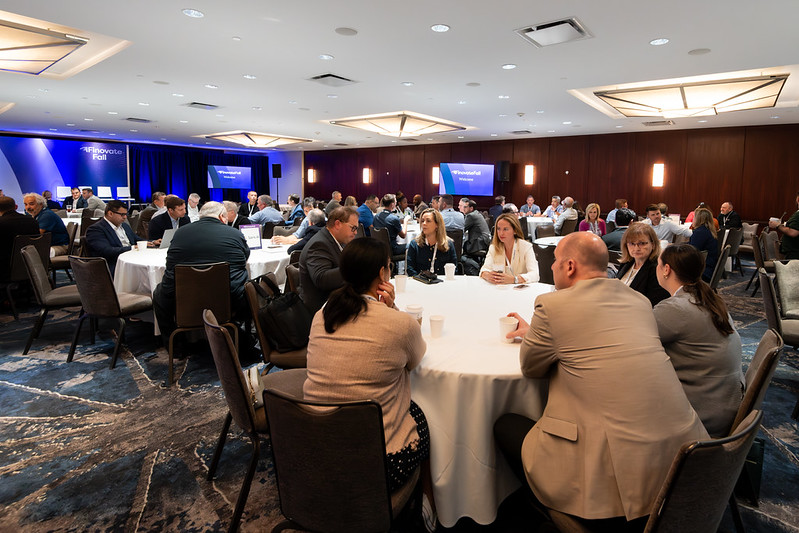
This technology gap is exactly what the Community Bank Spotlight at FinovateFall seeks to bridge. On September 11, we’re hosting a special breakfast session open only to community banks and a few selected fintechs, that will provide executives a place to share best practices, talk through common challenges, and discover innovative solutions.
If you’re interested in attending the Community Bank Spotlight at FinovateFall, reach out to [email protected] to get yourself on the guest list. Keep in mind that space is limited, and only community bank employees are eligible to attend.
FinovateFall is just three weeks away! This year’s event features three industry stages: AI and Innovation, The Future of Money, and Customer Experience and Trust. Each stage is designed to offer banking and fintech leaders insight into what’s working in practice, what’s breaking under the pressure of new technology and regulations, and what institutions need to rethink about their current operations.
AI and Innovation
Artificial intelligence has moved beyond experimentation. The conversations at FinovateFall will focus on what comes next, such as transitioning from AI copilots to semi-autonomous agents, measuring the ROI of AI projects, and examining where investments are still falling short. Sessions will explore enterprise-scale AI development, practical approaches to modernizing legacy technology, the rise of agentic commerce, and the front-office opportunities that promise the greatest competitive advantage. Attendees will leave with a clearer understanding of where AI is creating real business value today and where the next wave of innovation is headed.
The Future of Money
Stablecoins, AI agents, and data-driven lending are reshaping how money moves and how financial decisions are made. This stage explores the technologies and strategies that will define the next generation of financial services, from the growing role of stablecoins in banking and payments to AI-powered financial decision-making and precision lending. Industry leaders will also examine how payment strategies are evolving amid increasing competitive and regulatory pressure. Attendees will walk away with practical insight into where financial institutions should focus their investments as the infrastructure of money continues to change.
Customer Experience and Trust
Delivering exceptional customer experiences increasingly depends on earning and maintaining trust. Sessions in this stagea will explore how financial institutions can use personalization and AI to create more relevant customer journeys while strengthening security, reducing fraud, and building lasting customer confidence. The discussions on this industry stage will examine experience transformation, digital identity, financial crime prevention, and how banks can turn trust into a competitive advantage while maintaining growth.
Together, these three industry stages on Friday, September 11 will offer a concentrated look at the moves that will define banking’s next chapter. If you register for FinovateFall before August 21, you can still save up to $400.
At a time of unprecedented competition and growing demand for more responsive, more personalized services, how are credit unions evolving to not only keep the members they have engaged, but also to grow and build their membership ranks? What are the most innovative fintech companies in the industry doing to help credit unions keep pace with digital transformation efforts, take advantage of innovations such as embedded finance, and make the most of investments in AI and cybersecurity?
FinovateFall 2026’s Credit Union Spotlight is an invite-only opportunity for credit union professionals and the fintech innovators who support them to network and discuss the challenges that credit unions are facing today. The spotlight will also showcase new solutions dedicated to helping credit unions meet those challenges: from growing memberships and deposits to launching new services powered by enabling technologies like AI.
The Credit Union Spotlight begins with an exclusive networking breakfast and coffee with your peers and colleagues in the credit union industry to facilitate dedicated conversations and networking. Next, a specially curated selection of fintechs will provide brief introductions and join assigned tables to discuss their solutions. After each conversation and discussion, the companies will rotate to a new table to ensure that every attendee has the opportunity to engage with our fintech innovators. Credit unions and fintechs are encouraged to follow up afterwards or arrange to meet during later networking breaks during the conference.
As Finovate VP and Informa Director of Fintech Strategy Greg Palmer noted on the importance of the Credit Union Spotlight: “A lot of fintech innovators are building solutions specifically with credit unions in mind; on the flip side, more and more CUs are looking to fintech companies to help them modernize and grow. The Credit Union Spotlight is a place for both sides to come together to share ideas, discuss new innovations, and talk candidly about where and how to deploy fintech to the greatest effect.”
Space at the Credit Union Spotlight is limited and only employees of credit unions are eligible to attend. To be a part of this exclusive session, reach out to session coordinator [email protected] to save your spot on the guest list.
And if you’re a fintech building solutions for credit unions and their members, the Credit Union Spotlight could be a great opportunity to showcase your innovation directly to credit union executives. Reach out to us at [email protected] to learn more.
Interested in hearing more insights from credit union leaders? Check out our roster of credit union executives who will be speaking on our main and industry stages at FinovateFall 2026 next month.
Wednesday, September 9
Sherry Wu, Chief Technology Officer, University of Michigan Credit Union, will share her insights on our Power Panel: Agentic AI Will Be Revolutionary—As AI Moves from Theory to Pilots, What Are the Opportunities? How FIs are Using AI to Make or Save Money. 5:15 pm—5:45 pm.
Thursday, September 10
Ben Maxim, Chief Digital Strategy & Innovation Officer, MSU Federal Credit Union, will join our Expert Debate: Show Me the Money—Proven AI Use Cases That Delivered ROI in 12 Months. 10:45 am—11:20 am.
Friday, September 11
Ning Duong, President and CEO, Financial Center First Credit Union, will share her insights as part of our Power Panel on our Customer Experience & Trust stage: Customer-Centric Banking & Experience Transformation—From Product Led to Life-Stage, Personalized, AI-Enabled Engagement. 11:25 am—11:55 am.
Darius Wise, President and CEO, Red Rocks Credit Union, will join our Power Panel: Distribution Wars—Deposits, Embedded Finance & Platform Economics. How Can Banks and Credit Unions Acquire, Retain, and Monetize Customers in a Fragmented Ecosystem? 2:10 pm—2:40 pm.
Ami Iceman Haueter, Chief Research and Digital Experience Officer, MSU Federal Credit Union, will be a part of our Power Panel: Bank—Fintech Partnerships: From Competition to Collaboration & Co-Creation. 2:55 pm—3:25 pm.
FinovateFall 2026 is just over a month away. Coming to New York’s Marriott Marquis Times Square, from September 9 through 11, this year’s FinovateFall conference will feature both the familiar—in the form of our signature, seven-minute live fintech demos and standout keynote addresses—and the new, as represented by initiatives ranging from our Credit Union Spotlight to our Executive Debates to our special IMPACT Funders and Founders event.
With so much on offer, it can be easy to miss or overlook a session, panel, or address. To this end, we’re going to spend the next few weeks highlighting some of the presentations we think you won’t want to miss. Today, we look at some of the mainstage addresses on the agenda across all three days of the conference.
Special Address: If You Already Own the AI, Then Why Are You Still Shopping
Featuring Melissa Solis, CEO of Inbenta, this presentation will discuss why most customer experience AI fails on the basics and how to tell apart a vendor that actually delivers from one that just demos. Solis also will offer a framework for auditing your customer experience against what you actually need rather than simply what you are being sold.
Headquartered in Texas, Inbenta offers an agentic AI platform, Encore, that serves financial services, e-commerce, healthcare, and travel with more than 98% accuracy, near-zero hallucinations, full auditability, and more than 850 integrations to help avoid vendor lock-in.
Special Address: Introducing Madison—Agentic Workbench for Banks
This session, led by Siva Surendira, Founder and CEO of Lyzr AI, will show how Architect by Lyzr enables business users to describe a problem and get a working, governed AI agent in minutes. Surendira will also explain how thousands of those AI agents provide leadership with a live, crowdsourced view of where automation ROI truly lives.
Lyzr is a category leader in agentic AI infrastructure. The company’s technology powers the internal AI platforms of firms including Accenture and Prophet.
In this special address, Charlie Schilling, CEO of Macabacus, explains why trust rather than caution is what unlocks AI’s full value in finance: trust that the model being built is accurate, trust that the data is consistent across the pitch, and trust that every piece of content is on brand.
Based in New York, Macabacus is a productivity and brand compliance suite for investment banks, private equity, venture capital, financial planning and analysis (FP&A) teams, and consulting firms.
Quick Fire Keynote: Fraud in the Age of AI. How to Respond When the Attacker Has Better Tools Than You
Senior Director, Global Banking and Payments Intelligence for JD Power, Jennifer White, will share her insights on the challenges faced by banks, credit unions, financial services providers, their members and customers when it comes to the rise of AI-powered fraud and financial crime. White will discuss how fraud and financial crime are being increasingly globalized and industrialized, and how defenses against these threats must evolve in order to keep individuals and systems safe.
JD Power is a leader in business-critical data and intelligence that supports automated decision-making. The company’s proprietary data, advanced analytics, and deep industry expertise supply lenders, insurers, original equipment manufacturers, and other firms with guidance and intelligence about customer interactions with their brands, products, and services.
Out of the Box Keynote Address: AI-Enhanced CX to Create Trust and Loyalty
Jon Lakefish, Founder of the Lakefish Group, will deliver a practical guide to all the AI tools currently available to help enhance the customer experience and how to make the most of them. Lakefish will also host a special hands-on, interactive session in the afternoon (1:10 pm—2:00 pm) in which he will walk participants through real scenarios so they can experience firsthand how AI can save time and money, while enhancing decision-making.
Lakefish Group provides speaking and hands-on workshops, as well as consulting and training, to help businesses take advantage of modern, practical AI tools to enhance their marketing and branding initiatives.
Lending has always depended on a financial institution’s ability to assess risk, make informed decisions, and deliver capital efficiently. But many of the systems supporting that process remain slow, fragmented, and heavily manual. Commercial lenders still spend days gathering documents and spreading financials, while consumers and small businesses increasingly expect faster decisions, flexible payment options, and seamless digital experiences.
The companies demoing at FinovateFall 2026, taking place on September 9 through 11 in New York, are approaching these challenges from several angles. Some are using AI to accelerate underwriting and automate operational work. Others are embedding financing and flexible payment options directly into digital banking, helping institutions identify household opportunities, or rebuilding commercial lending around borrower self-service. Together, these six companies demonstrate how smarter technology can help financial institutions improve speed, efficiency, and access to financing.
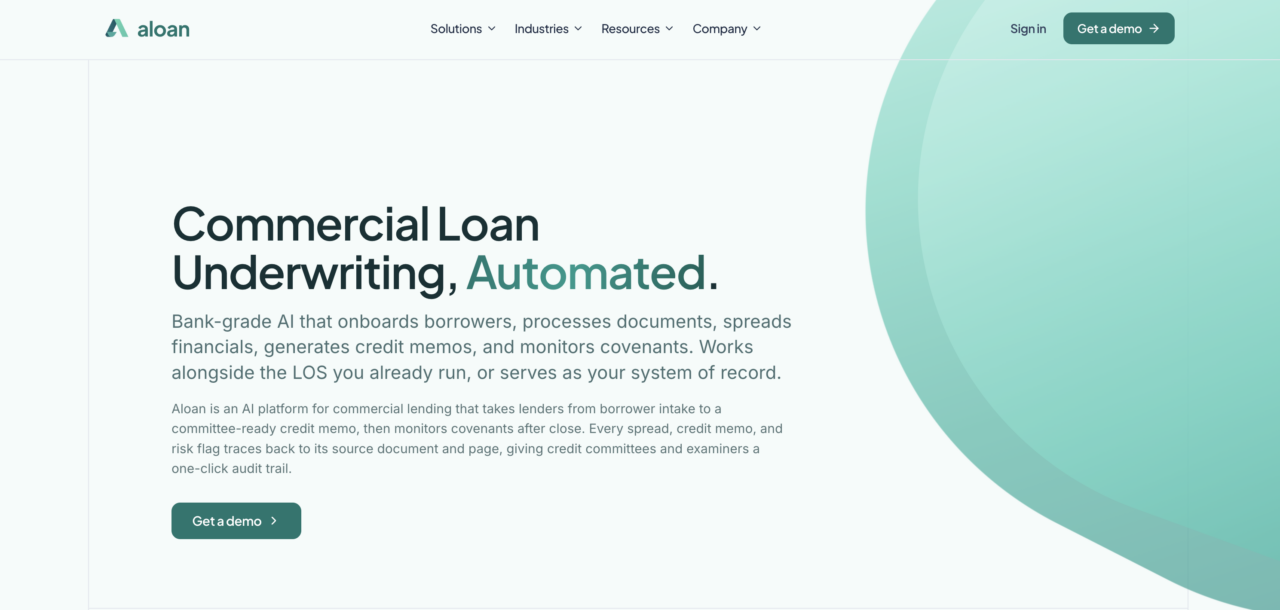
ALoan uses AI to automate commercial underwriting and help lenders move from borrower documents to a completed credit memo in less than 30 minutes. The platform spreads financial information from tax returns, bank statements, and borrower financials, applies the lender’s credit policies, and links each figure and conclusion back to its original source. By automating document collection, financial spreading, and credit memo preparation, ALoan enables commercial lending teams to increase throughput and reach term sheets faster without adding staff or replacing existing systems.
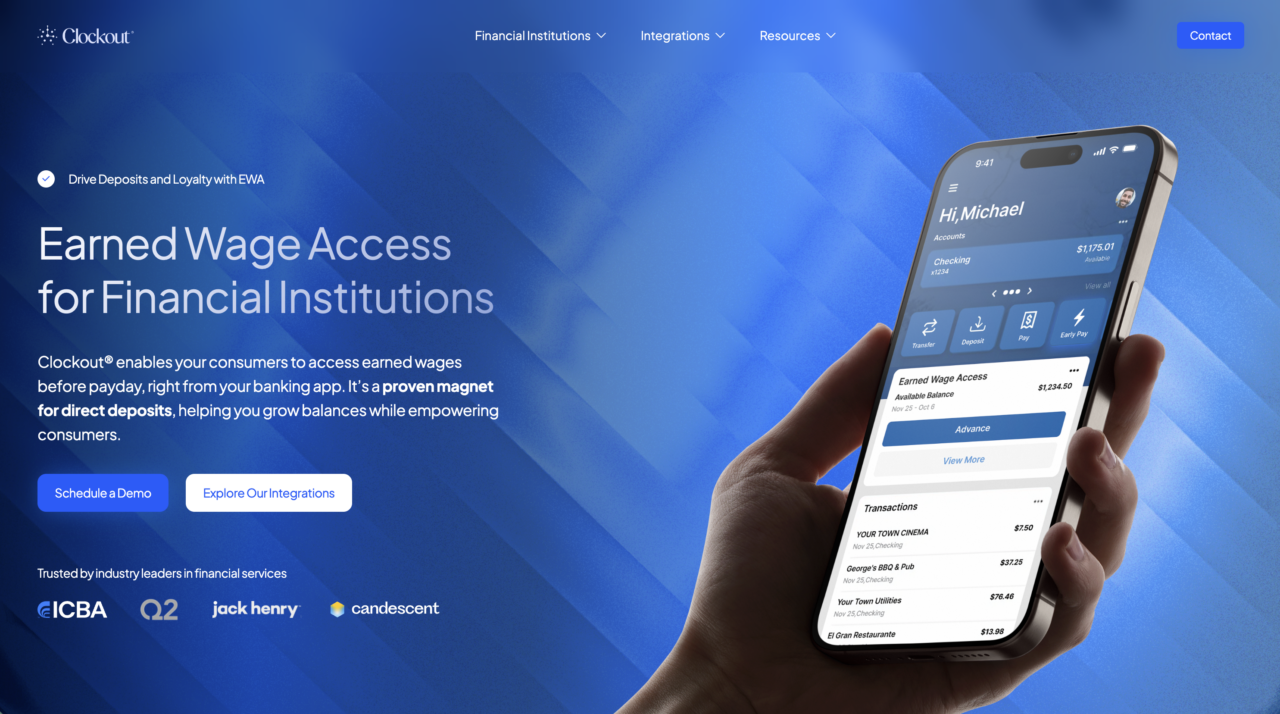
Clockout helps banks and credit unions embed financial wellness and liquidity tools into their customer experiences. The platform is designed to increase direct deposit relationships, generate new fee revenue, and strengthen customer engagement by providing users with more ways to manage short-term financial needs. For financial institutions seeking to deepen primary account relationships, Clockout offers a way to combine financing access with broader financial wellness.
equipifi enables banks and credit unions to offer Buy Now, Pay Later (BNPL) and flexible payment options directly within their digital banking platforms. Its technology allows financial institutions to present personalized purchasing power and financing offers based on customer behavior and purchase intent, including through real-time mobile notifications. By bringing BNPL inside the banking relationship, equipifi helps financial institutions participate more directly at the point of sale rather than ceding that interaction to third-party providers.
OptimaFI’s Household Insights platform gives community banks and credit unions a household-level view of customer accounts and performance. The platform benchmarks institutional data against more than 14 billion private peer data points and provides segment-level recommendations related to growth and risk. Because it does not require a core integration, financial institutions can begin using the platform in a matter of days to identify opportunities across deposits, lending, and broader household relationships.
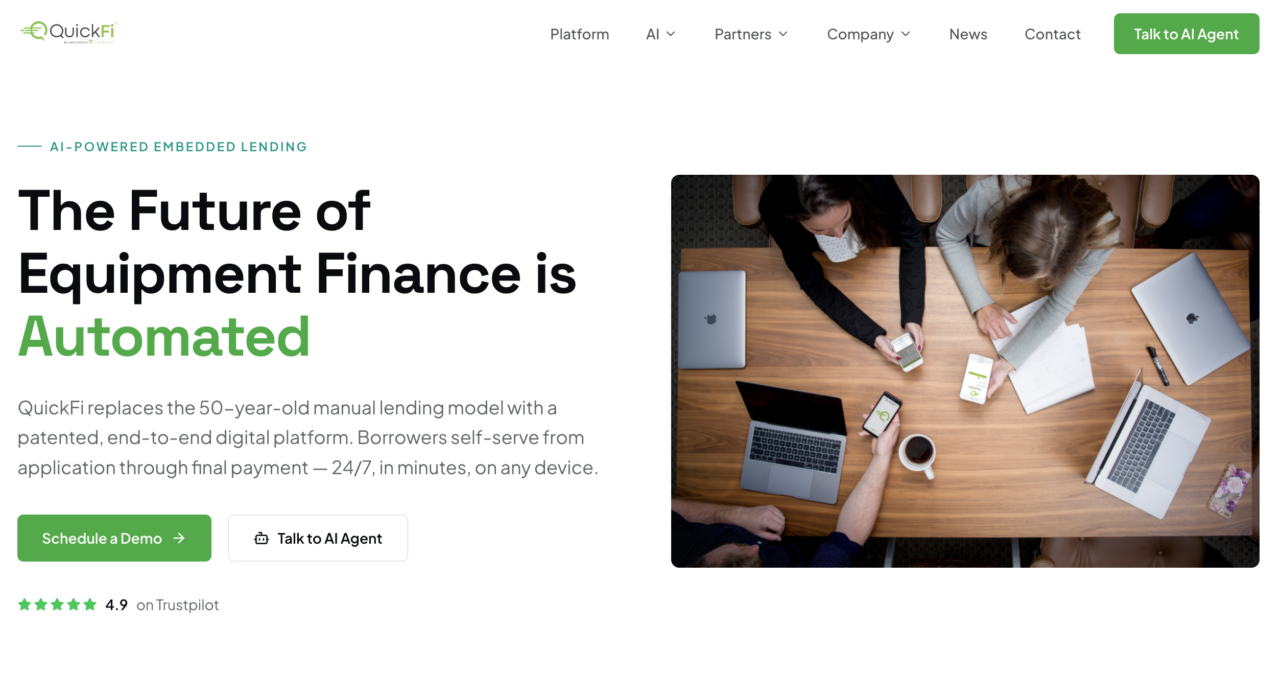
QuickFi offers an end-to-end digital platform for commercial equipment financing that allows borrowers to self-serve from application through final payment. The company replaces manual, paper-heavy lending processes with a digital experience that can deliver financing decisions and documentation in minutes, 24 hours a day. QuickFi helps banks and equipment manufacturers serve small business borrowers more efficiently while reducing the staffing and operating costs associated with traditional commercial lending models.
Voyager AI brings personalization and intelligence to complex commercial lending workflows. The platform unifies document collection, financial spreading, underwriting, compliance, and credit memo preparation while learning an institution’s specific lending policies and standards. By automating manual steps and identifying missing information earlier in the process, Voyager AI helps lenders deliver faster, more consistent experiences while allowing employees to spend more of their time on borrower relationships, structuring, and credit judgment.
Why banks should care
Speed has become a competitive advantage in lending. Borrowers are less willing to wait weeks for a credit decision when another provider can deliver an answer in hours or minutes. At the same time, banks and credit unions are under pressure to grow loan portfolios without proportionally increasing headcount or operational expense. Technologies that automate underwriting, document collection, reconciliation, and servicing can help institutions make faster decisions while preserving the judgment and oversight required for responsible lending.
The definition of lending is also expanding. Flexible payments, embedded financing, household intelligence, and digital self-service are blurring the lines between traditional loans, payments, and financial wellness. Financial institutions that treat these capabilities as part of a broader customer relationship may be better positioned to capture more borrowing activity, deepen engagement, and compete with nonbank providers. The companies demonstrating at FinovateFall 2026 show how institutions can modernize both the front-end borrower experience and the operational infrastructure that supports the lending process.
In the run-up to FinovateFall, which takes place on September 9 through 11 in New York, we asked several speakers for their perspectives on technologies shaping financial services, the biggest challenges facing banks, and why they keep coming back to Finovate.
Below is a preview of what nine speakers had to say ahead of this year’s event.
Michael Reynolds, Business Technology Executive at KeyBank
Michael Reynolds leads intelligent automation at KeyBank, where he oversees robotic process automation, intelligent document processing, low-code development, and generative AI initiatives. Under his leadership, KeyBank’s digital workforce now performs the equivalent of more than 500 employees’ worth of work.
Why Finovate?
“Finovate is one of the few conferences where you can see real, working technology, not concept slides. The live demo format lets banks quickly assess what is production-ready, identify emerging fintech partners, and compare innovation across multiple categories in just a few days. Finovate highlights hundreds of fintech demos and attracts a large audience of banking decision-makers, making it a highly practical venue for both learning and networking.”
What will banks need to prioritize over the next 18 months?
“Banks will need to prioritize AI-powered productivity and agentic automation. The winners will be institutions that combine AI with strong governance, security, and operational integration, not those simply deploying chatbots.”
Where is AI making the biggest impact today?
“Inside our organization, the most immediate impact is in operations and employee productivity: automating manual processes, accelerating knowledge retrieval, improving service delivery, and helping teams focus more time on higher value work while maintaining appropriate controls and oversight.”
Sam Kilmer, Managing Director at Cornerstone Advisors
Sam Kilmer leads Cornerstone Advisors’ work with fintechs, financial institutions, and private equity firms. A longtime banking executive and host of the Fintech Hustle podcast, he spends much of his time helping organizations navigate innovation and partnerships.
Why Finovate?
“Finovate is fast-paced, so likes hit fast and dislikes are over quickly. It exposes me to a lot of earlier stage companies.”
What should the industry focus on next?
“Banks will need to improve showing outcomes and storytelling authentically to stand out from increasingly AI-generated content and claims.”
Andrew Endicott, CoFounder at Gilgamesh Ventures
Andrew Endicott is Co-Founder of Gilgamesh Ventures, an early-stage fintech venture capital firm investing globally in companies from pre-seed through Series A. Before becoming an investor, he co-founded credit card fintech Petal and recently authored the book Is Finance Technology?
Why Finovate?
“Great mix of financial institutions and fintechs all in one place. Really excited to be part of it.”
What financial services problem still needs solving?
“There are many problems in finance that are unsolved, but I feel that wire transfers are a big one.”
Katherine Avery, Founder at Chimayo Consulting
Katherine Avery is founder of Chimayo Consulting and a veteran enterprise risk executive with more than two decades of experience spanning banking, capital markets, commodities, digital assets, and AI governance. She helps financial institutions build governance frameworks that keep pace with rapidly evolving technology.
Why Finovate?
“Finovate earns its place because it’s practitioner driven rather than vendor theater. The demos are live and unscripted, judged by people who actually implement this technology, which forces a level of rigor other conferences don’t demand.”
What should banks prioritize over the next 18 months?
“Banks need to operationalize AI governance now, not after deployment. The institutions that treat model risk management, explainability, and third party AI oversight as foundational, rather than bolted on post-launch, will be the ones still standing when regulators catch up to the pace of adoption, which they will within this window.”
What is one change you believe will fundamentally reshape fintech in the next five years?
“The change I believe will fundamentally reshape fintech in the next five years is the shift from AI as a discrete tool to AI as an embedded decision maker across underwriting, monitoring, and customer interaction. That shift collapses the old boundary between innovation and risk functions. Governance can no longer sit downstream of deployment.”
What is one fintech trend you believe will accelerate in the final quarter of 2026?
“One trend I expect to accelerate in Q4 2026 is the move toward agentic AI in back office and compliance functions. Institutions are getting more comfortable letting AI take bounded, delegated actions in monitoring and control testing, and that comfort will keep building through year end.”
What is one problem in financial services that fintech still hasn’t solved well enough yet?
“The problem fintech still hasn’t solved well enough is third party risk visibility. Banks are stitching together more vendors and platforms than ever, and most risk frameworks still can’t see deep enough into that supply chain to catch concentration or contagion risk before it becomes a real event, not just a checkbox on an assessment.”
Vivek Valecha, SVP of Intelligent Automation at Xebia
Vivek is Senior Vice President of Intelligent Automation at digital engineering company Xebia, where he leads the charge on Agentic AI to help enterprises move beyond automation into autonomous, intelligent decision-making that reimagines customer experience and unlock new levels of employee productivity.
Why Finovate?
“Finovate stands apart because it’s built for demos, not just discussions. It’s one of the few conferences where banks and fintechs see technology in action rather than in slide decks — that hands-on, no-fluff format is exactly where real partnerships and practical ideas take shape.”
What should banks prioritize over the next 18 months?
“Banks should prioritize agentic AI. Banks have spent the last few years automating discrete tasks — the next wave is about deploying AI agents that can reason, make decisions, and orchestrate multi-step processes with minimal human intervention. Institutions that move from “AI-assisted” to “AI-agentic” will have a real competitive edge in speed, cost, and customer experience.”
What is one change you believe will fundamentally reshape fintech in the next five years?
“In five years, autonomous AI agents will handle entire workflows—from underwriting to fraud investigation to customer servicing—with humans stepping in only for exceptions. That shift won’t just improve efficiency; it will fundamentally redefine what “operations” even means inside a bank.”
Jalak Jobanputra, Founder and Managing Partner at Future Perfect Ventures
Why Finovate?
Finovate offers founders an unmatched feedback loop by putting live product demos in front of banks, investors, and potential distribution partners. With only minutes to present, founders quickly discover whether their product solves a real problem.
What is one fintech trend you believe will accelerate in the final quarter of 2026?
One of the biggest fintech trends through late 2026 will be the rise of agent-initiated payments, as AI agents begin making transactions on users’ behalf. This will require merchants, payment processors, and banks to develop secure authorization frameworks. At the same time, stablecoin settlement is moving from pilot programs into real treasury and B2B use, making machine-speed transactions practical.
What is one problem in financial services that fintech still hasn’t solved well?
The industry’s biggest unresolved challenge remains digital identity. Customers still repeatedly verify themselves, share excessive personal data, and rely on fragmented systems that are increasingly vulnerable to AI-powered fraud. Secure, portable, user-controlled identity has existed technically for years, and the growth of AI agents may finally create the commercial incentive needed for widespread adoption.
Courtney Rowan, Chief Digital & Transformation Officer at Citadel Credit Union
Why Finovate?
Finovate is unique because you don’t watch presentations, you watch products. There are no slide decks, no marketing pitches, and nowhere to hide. Every company has seven minutes to demonstrate a real product solving a real problem.
What is one technology or capability that banks should prioritize in the next 18 months?
The biggest opportunity for banks over the next 18 months is embedding AI into everyday work and member experiences. At Citadel, we’re already seeing meaningful impact through employee productivity and operational efficiency, and that’s creating the foundation for even bigger gains in personalization and growth. Longer term, the greatest opportunity is combining those operational gains with personalized member experiences and growth.
What is one change you believe will fundamentally reshape fintech in the next five years?
The biggest change will be the move from AI as a feature to AI as an operating model. Every financial institution will have access to the technology, but the winners will be those that fundamentally redesign how they work. That’s the challenge we’re tackling at Citadel because we believe AI should make banking more personal, more efficient, and more accessible, not less human.
What is one fintech trend you believe will accelerate in the final quarter of 2026?
The biggest trend heading into Q4 is the move from AI pilots to AI at scale. The institutions that can prove measurable business value will pull ahead quickly. At the same time, fintech still hasn’t fully solved proactive financial guidance. We’ve digitized banking, but we haven’t yet personalized financial wellness and advice at scale.
Patricia Montesi, EVP Qolo
Why Finovate?
Finovate rewards the working product over the best narrative. B2B payments infrastructure also gets little stage time elsewhere, and the treasury leaders and platform CTOs who care about it are hard to find in one room.
What is one fintech trend you believe will accelerate in the final quarter of 2026?
In Q4, faster payments stop being a capability and become a product line. The rails are live. The commercial layer is not: pricing, liquidity management, exception handling. Banks that spent two years connecting to instant rails are now being asked what revenue those rails produce.
What is one problem in financial services that fintech still hasn’t solved well enough yet?
This points to what fintech still has not solved: exceptions. We are excellent at the happy path. A payment that is returned, disputed, partially funded, or stuck between two systems is still handled with spreadsheets and email threads. That is where cost hides and where examiners look first. It requires one source of truth across issuing, money movement, and accounts, and most stacks were assembled rather than designed.
Katherine Avery, Founder of Chimayo Consulting
Why Finovate?
Finovate earns its place because it’s built around live demonstrations, not theoretical panels. In a space full of overpromised roadmaps, seeing what a tool actually does gives me a much sharper read on whether a vendor understands the governance burden they’re creating for bank clients.
What is one technology or capability that banks will need to prioritize in the next 18 months to stay competitive?
For the next 18 months, the priority isn’t a new capability, it’s governance infrastructure catching up to adoption. Banks have moved fast deploying AI across operations and risk, but many still lack a proper model inventory, defined testing cadences, and clear escalation paths when a model drifts or fails. That gap is where examiner scrutiny is heading.
Where are you seeing the most practical impact from AI inside your organization?
The most practical impact I’m seeing today is in operational risk and compliance, particularly transaction monitoring and third-party due diligence, where AI is triaging volume that used to require manual review. Unglamorous compared to customer-facing AI, but it’s where governance frameworks are being tested in real time.
What is one change you believe will fundamentally reshape fintech in the next five years?
The change I believe will fundamentally reshape fintech over the next five years is the shift from AI as a standalone product feature to AI as embedded infrastructure across risk, compliance, and operations. Once model decisions are woven into core processes rather than bolted on, governance stops being optional and becomes the determining factor in which institutions can scale these tools safely and which get sidelined by regulatory exposure.
What is one fintech trend you believe will accelerate in the final quarter of 2026?
The trend I expect to accelerate in Q4 2026 is embedded AI governance tooling, fintechs building compliance and model risk controls directly into their platforms rather than treating them as an afterthought their bank partners have to solve. Firms are getting more disciplined about vendor due diligence, and fintechs that can demonstrate governance maturity out of the gate will close deals faster.
What is one problem in financial services that fintech still hasn’t solved well enough yet?
The problem fintech still hasn’t solved well enough is third-party risk transparency at scale. Organizations are expected to maintain oversight of increasingly complex vendor and subcontractor chains, but most fintechs still can’t give their bank partners real-time visibility into where data actually flows or which fourth parties are involved. That gap creates real regulatory exposure on both sides.
See them on stage at FinovateFall
These are just a few of the perspectives you’ll hear at FinovateFall this September. From AI governance and intelligent automation to venture investing and emerging fintech trends, our speakers bring firsthand experience from the institutions building—and funding—the future of financial services.
Browse the full agenda and register today to hear these experts, watch live fintech demos, and connect with leaders from across the banking and fintech ecosystem.
While it used to be largely experimental, AI has quickly evolved into a practical tool that is reshaping how banks and fintechs operate. Today’s AI platforms are helping bankers, advisors, operations teams, and customer service representatives work more efficiently by automating routine tasks, surfacing insights faster, and reducing the amount of manual work required to serve customers.
At FinovateFall 2026, which takes place September 9 through 11 in New York, we’ll see 68 companies take the demo stage, more than a dozen of which will use their seven-minute slot on stage to demonstrate how they’re putting AI to work across financial services. From advisor copilots and employee training to customer support, analytics, workflow automation, and personalized banking experiences, these fintechs are helping financial institutions become more productive without sacrificing the customer and partner relationships that remain central to banking. Below are 14 companies that will showcase how AI can help banks, credit unions, and fintechs work smarter.
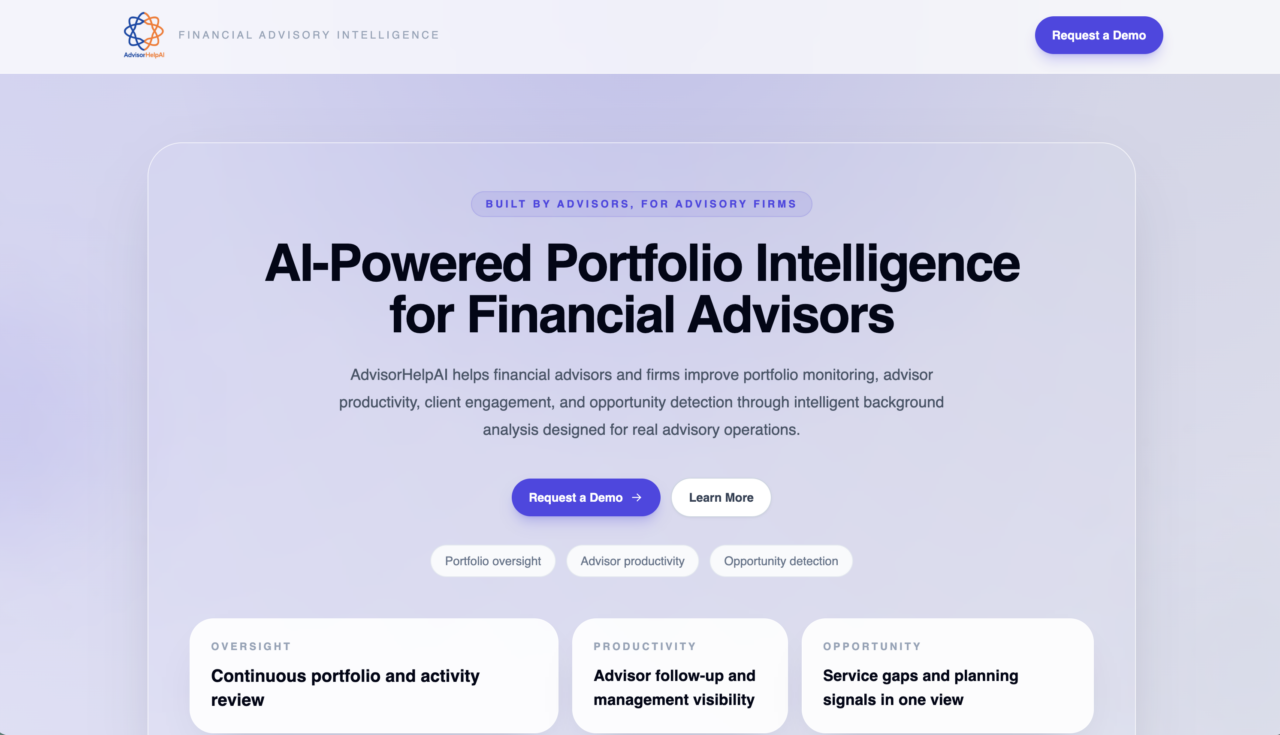
AdvisorHelpAI equips financial advisors with an AI-powered assistant designed specifically for wealth management. The platform helps advisors quickly access firm knowledge, prepare for client meetings, summarize documents, and streamline administrative work, allowing advisors to spend more time building client relationships instead of searching for information.
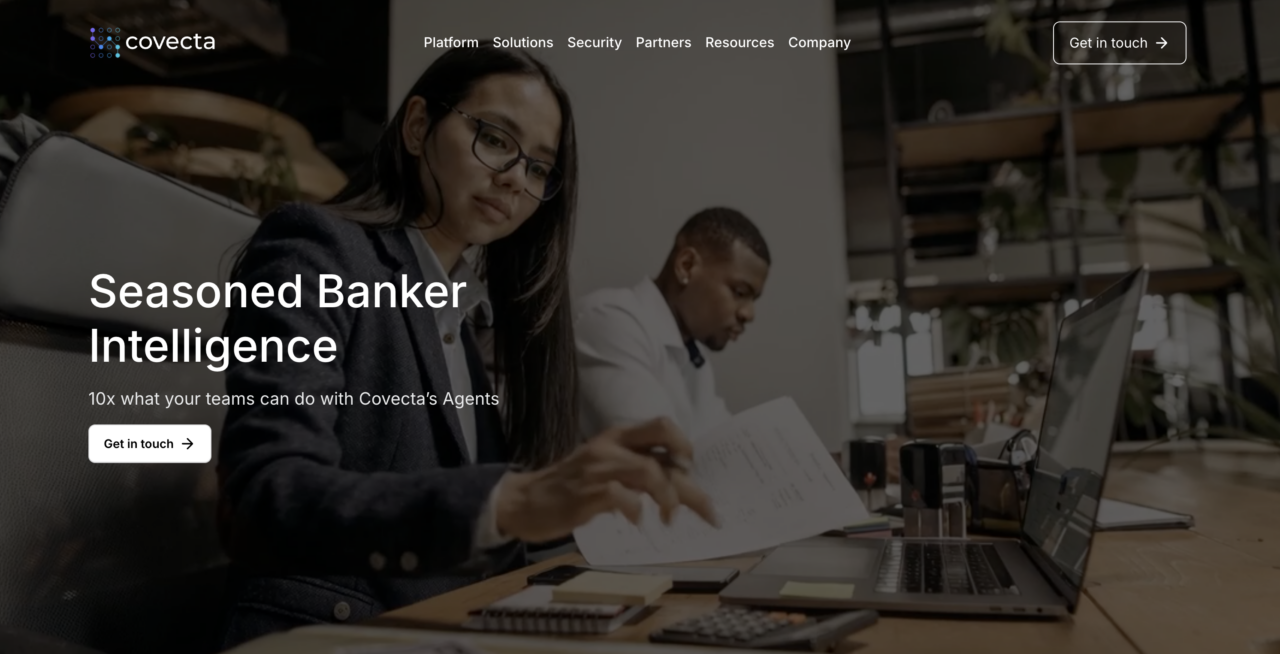
Covecta uses AI to help financial institutions automate knowledge work and improve operational efficiency. By organizing institutional knowledge and making it instantly accessible through conversational AI, the platform helps employees find answers faster and reduces time spent navigating internal documentation and procedures.
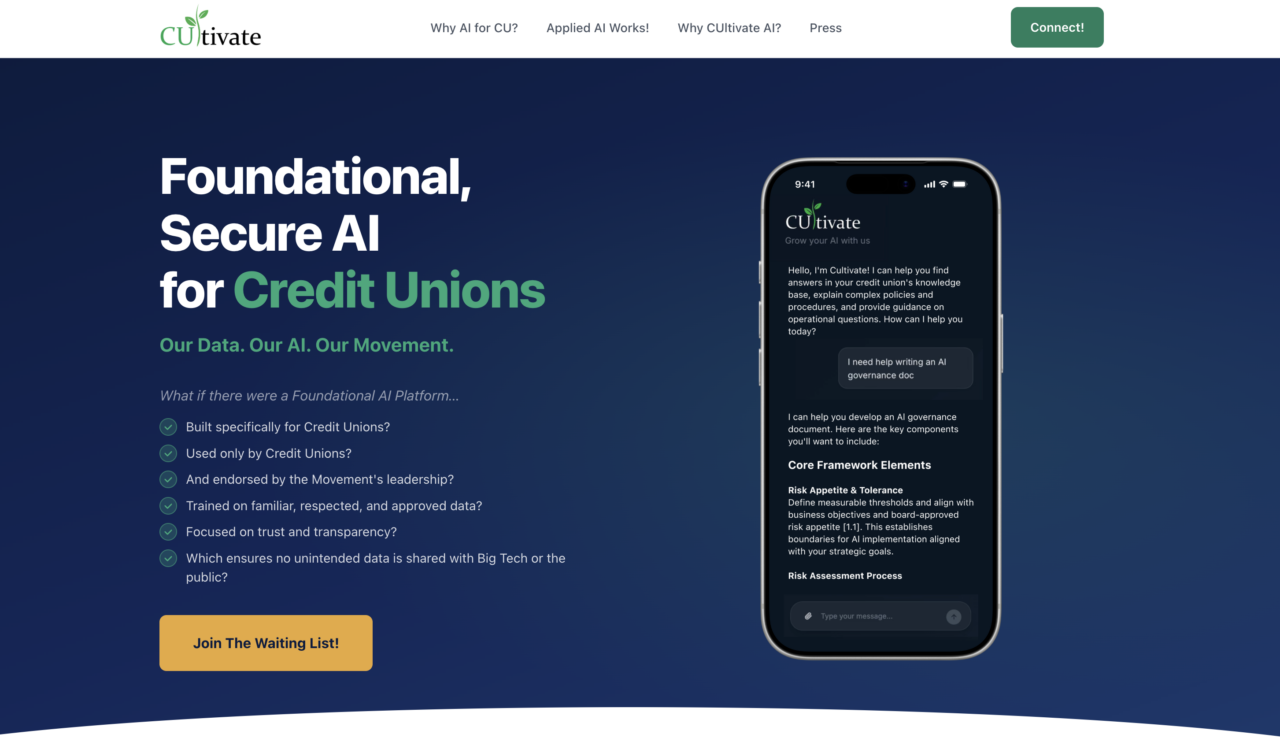
Built specifically for credit unions, CUltivate leverages AI to improve employee productivity and member service. The platform helps staff quickly locate policies, procedures, and operational guidance, enabling faster responses while creating a more consistent member experience.
FinzeeAI helps credit unions connect biometric data from wearables to real-time financial decisions in order to stop impulse buying before it happens. The company provides an intelligence layer between the user’s money and their health to intervene in real time when the shopper’s body signals stress, stopping the impulse purchase from happening.
GPTAdvisor brings generative AI capabilities to financial advisors, helping automate research, summarize complex financial information, and assist with client communications. The platform aims to reduce administrative burdens while allowing advisors to focus on delivering higher-value financial advice.
Inbenta combines conversational AI, chatbots, and intelligent search to improve customer support. Its platform enables financial institutions to resolve customer inquiries more quickly through self-service while seamlessly escalating more complex issues to human representatives when needed.
Lemonade LXP helps banks train and support employees using AI-powered learning experiences. Rather than relying on static training materials, financial institutions can provide personalized guidance that helps employees build knowledge, stay compliant, and confidently serve customers.
Palomonte Labs’ Cube2 makes financial APIs AI-readable to enable developers and AI agents to safely understand and execute financial integrations. The AI infrastructure enables AI agents to automate financial integrations and maps business use cases into validated AI workflows.
Pyramid Insights applies artificial intelligence to help financial institutions uncover meaningful business insights from large volumes of operational and customer data. By surfacing trends, opportunities, and performance metrics more quickly, the platform supports better-informed business decisions.
ScreenSteps provides AI-assisted employee guidance that helps frontline staff complete complex banking processes accurately and consistently. The platform delivers step-by-step instructions within existing workflows, reducing training time while improving service quality and compliance.
Titan AI helps financial institutions automate routine banking tasks while providing employees with AI-powered assistance for everyday operations. The company’s platform is designed to improve efficiency, reduce manual effort, and enhance customer service across the organization.
Tweezr uses AI to simplify internal workflows and help teams complete operational tasks more efficiently. By reducing repetitive manual work and improving process execution, the platform enables financial institutions to accomplish more with existing resources.
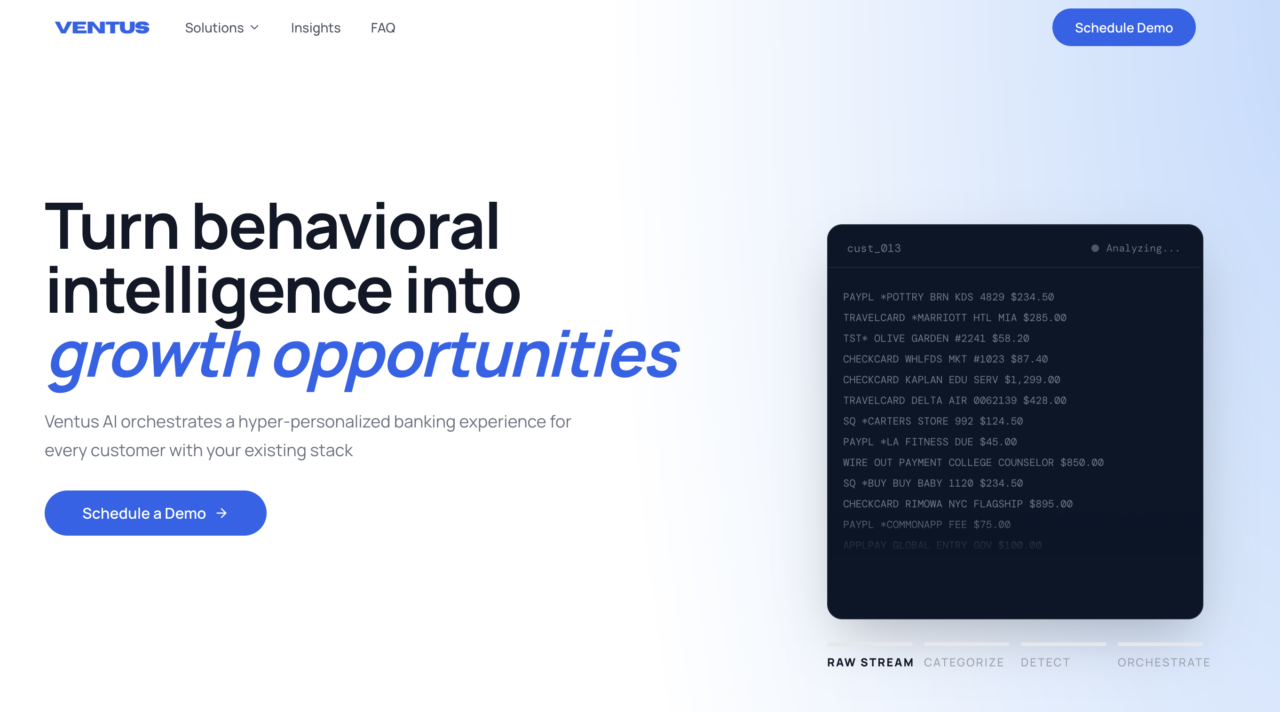
Ventus AI transforms raw banking transactions into semantic customer intelligence, enabling personalized experiences, smarter analytics, and human-centered digital banking without changing core infrastructure. The tool offers plug-in intelligence for any core banking system, turns transactions into dynamic personas, and detects life events before customers tell their bank.
Vertice AI’s OPTIMIZE transforms institutional growth goals into optimized, AI-executed marketing campaigns with human approval at the strategic level. The company offers autonomous campaign planning and execution with one-click approval, delivers end-to-end, goal-driven campaign optimization, and provides AI-generated, compliant, personalized multi-channel marketing.
Why banks should care
The conversation around AI in banking has matured considerably over the past two years. Financial institutions are moving beyond asking whether they should adopt AI and are instead determining where it can deliver measurable value. The greatest opportunity often comes when eliminating the repetitive work that prevents employees from focusing on customers, strategic decisions, and higher-value activities. AI-powered copilots, knowledge assistants, workflow automation, and intelligent analytics can improve productivity across nearly every department, from the contact center and lending operations to wealth management and compliance.
In looking at the companies demonstrating at FinovateFall 2026, it is clear that AI has become an enabling technology that touches every aspect of financial services. Whether banks are looking to improve employee efficiency, strengthen customer service, accelerate decision-making, or uncover deeper business insights, these solutions demonstrate practical ways to deploy AI today. For financial institutions seeking to compete in an increasingly digital marketplace, understanding these emerging capabilities may prove just as important as evaluating the next generation of payments, lending, or fraud technologies.
It may feel like peak summer now, but the fall is right around the corner. That means our flagship fintech conference—FinovateFall 2026—is only weeks away!
Don’t worry—you’ve got plenty of time to buy your ticket (taking advantage of early-bird savings) and book your room. You’ve also got all the time in the world to learn more about what we’ve got in store for you this year. We’ll be introducing many of the event’s top attractions over the coming days and weeks here on the Finovate blog. For now, to whet your appetite for our autumn event, here’s a look at the recently released FinovateFall 2026 agenda.
Day One—September 9
FinovateFall 2026 starts strong with a battery of live, fintech demos featuring companies innovating in AI-enabled back-office automation, financial literacy, lending, transaction intelligence, embedded finance, and wealth management. The morning will also feature special addresses on topics such as AI and e-commerce and the global economic and geopolitical landscape. We will also present our Breaking News session featuring top fintech analysts discussing the latest headlines that everyone at FinovateFall will be talking about. Heading into the lunch break, we’ll showcase another round of demos from companies offering solutions to automate payments, enhance customer communications, fight fraud, and help institutions meet regulatory requirements.
The demo sessions after the lunch break will feature a range of innovators demonstrating their solutions for financial advisors building out their wealth management offerings, banks seeking to benefit from advanced payment technologies, and small businesses looking for affordable, flexible financing. The day’s content ends with a keynote address on stablecoins and tokenized deposits and our power panel on the opportunities that agentic AI is bringing to financial institutions featuring panelists from Prudential, University of Michigan Credit Union, and Gradient Labs.
Day Two—September 10
The second day of FinovateFall starts with a Finovate favorite: our Analyst All Stars presentations, which borrow our seven-minute format from our demoing companies to present recent research on fintech trends ranging from the relationship between banks and fintechs to AI visibility to adaptive customer onboarding. The morning will also include a special address from Macabacus CEO Charlie Schilling on why trust, not caution, is what unlocks AI’s full value in finance.
Our demoing companies return to the stage on Day Two, with technologies that are enabling lenders to streamline mortgage processing, helping advisors boost customer engagement, and bringing voice security solutions to banks and other financial institutions. The day will feature a total of four demo sessions with fintech innovators delivering rapid-fire demonstrations of their solutions for lending and underwriting, fraud prevention and dispute resolution, authentication and identity verification, payments, and more.
The final content presentations of the day will include a Special Address from Jawwad Rasheed of Camunda, a Quick Fire Keynote from J.D. Power Senior Director Jennifer White, and a Power Panel on financial crime risk moderated by StrategyBRIX CEO and Managing Partner Jas Randhawa. Our Best of Show awards will be held at the end of the day on Day Two during the drinks and networking reception.
Day Three—September 11
With the demos done and Best of Show trophies awarded, Day Three of FinovateFall is all about content: this is true for both our invite-only opportunities such as our Community Bank Spotlight & Breakfast and our IMPACT Funders & Founders event, as well as for our general session and industry stage presentations.
In the plenary, FinovateFall attendees will enjoy a pair of special addresses including an out-of-the-box keynote from AI expert Jon Lakefish on AI-enhanced CX to create trust and loyalty. The morning will also feature a Power Panel on the customer experience as a profit engine, moderated by Beyond the Arc’s Steven Ramirez.
Following a morning break, it’s time for our industry stages—conferences within the conference that allow for deeper examinations and discussions on topics such as AI & Innovation, Customer Experience & Trust, and The Future of Money.
Back in the general session after the lunch break, Day Three of FinovateFall resumes with a pair of Power Panels: one on embedded finance and platform economics and another on bank-fintech partnerships and the transition from competition to collaboration and co-creation. The day concludes with our Fireside Chat on the current US administration and its approach to financial services and fintech regulation, followed by our Investor All-Stars roundtable featuring investors from across the country talking about where the smart money is investing in fintech and why.
This is just a quick overview. There’s so much more to FinovateFall this year—from our pre-event exclusives for banks and credit unions on September 8 to our Executive Briefings on Women in Fintech, Community Banking, Embedded Finance, and more. To learn more about everything FinovateFall 2026 has to offer, check out the agenda, now available at our FinovateFall hub.
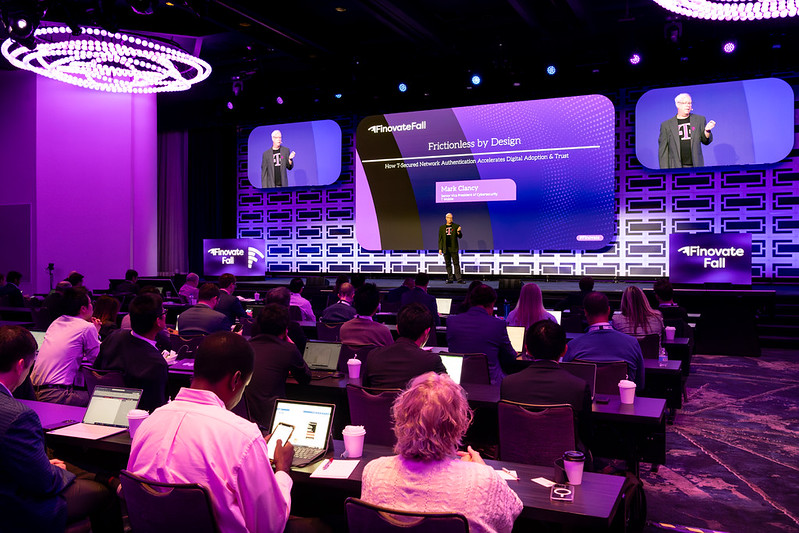
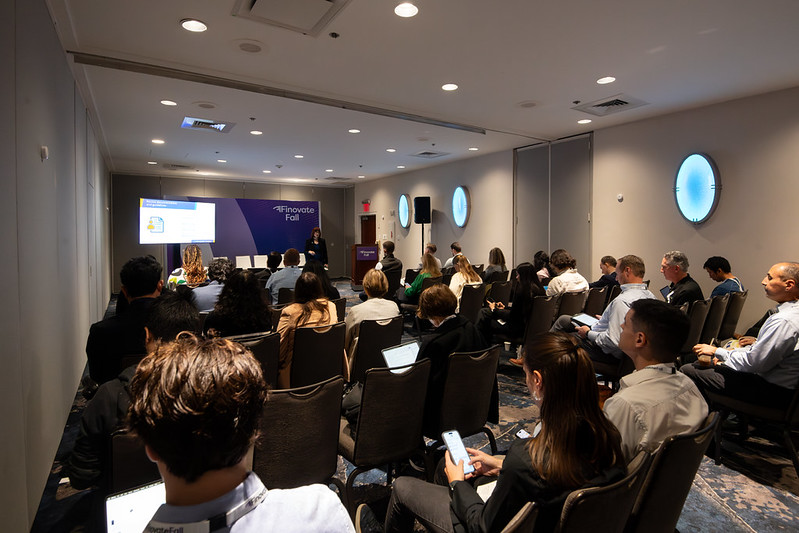
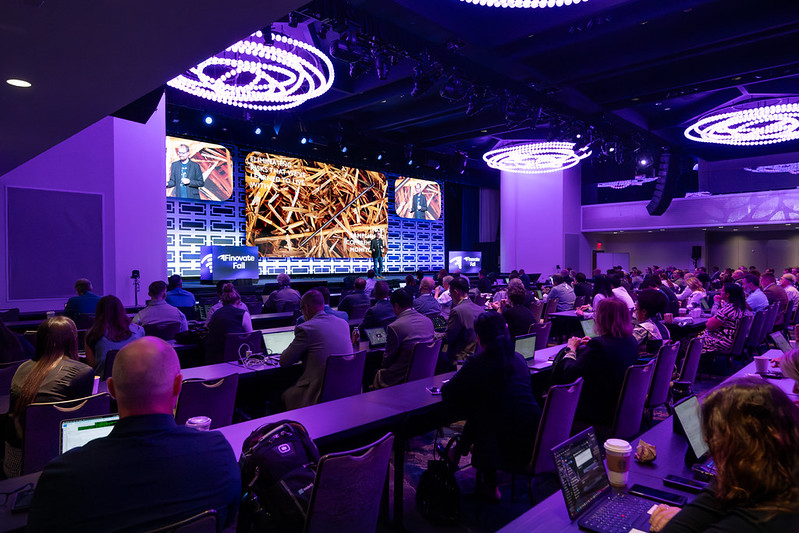
Last year’s FinovateFall conference brought together attendees, fintechs, and bank representatives from across the world.
On the second day of the event, 63 companies took the stage to showcase their newest solutions. Of that group, six fintechs brought home Best of Show honors for the work they showcased on stage.
With FinovateFall coming up September 9 through 11, we wanted to look at how last year’s Best of Show winners have grown and influenced their markets. Here’s a look at what Casap, Eko, Krida, LemonadeLXP, LendAPI, and Vertice AI have been up to since taking home Best of Show.
What won Best of Show: Casap impressed the audience with its AI-powered platform that helps financial institutions automate disputes, reduce fraud losses, accelerate resolution times, and strengthen customer relationships.
Where they are now: Since winning Best of Show, Casap has continued expanding its dispute automation platform, reporting customer results including 97% chargeback win rates, 51% fewer fraud losses, and 40% lower call volumes. Earlier this year, the company also participated in Filene’s FiLab program, where credit unions evaluated how Casap’s AI can reduce manual workloads and improve member experiences during fraud disputes.
What won Best of Show: Eko demonstrated how embedded investing can help financial institutions increase digital banking engagement, grow deposits, and improve customer retention.
Where they are now: Since FinovateFall, Eko has continued expanding its embedded investing platform with additional financial institution deployments, including Brooklyn Cooperative Federal Credit Union. The company remains focused on helping banks and credit unions integrate investing directly into digital banking rather than sending customers to third-party brokerage platforms.
What won Best of Show: Krida showcased technology that shortens lending cycle times, reduces manual work, and minimizes borrower drop-off, helping banks originate loans faster while improving customer relationships.
Where they are now: While Krida has kept a relatively low public profile since its Best of Show win, the company continues developing its lending automation platform aimed at streamlining loan origination and underwriting for community financial institutions.
What won Best of Show: LemonadeLXP earned Best of Show for InsightAI, its platform that helps financial institutions improve employee education, customer knowledge, and operational efficiency through AI-powered learning.
Where they are now: Over the past year, LemonadeLXP has continued investing heavily in AI-powered employee enablement while expanding its leadership team. In November, the company launchedAI Conversations, an AI-powered voice conversation training tool that helps make employees more confident. LemonadeLXP was also selected to demo at FinovateFall 2026 in New York.
What won Best of Show: LendAPI demonstrated a collaborative platform that enables technology, risk, and compliance teams to build lending products together on a shared infrastructure.
Where they are now: LendAPI has continued expanding its embedded finance platform, positioning itself for the emerging era of agentic AI in lending. The company started the year by surpassing 100 million credit applications processed on its platform, and has since strengthened its leadership team with new appointments, launched instant commercial DDA onboarding for credit unions, and joined an accelerator program.
What won Best of Show: Vertice AI showcased its AI-powered customer growth platform, which translates customer data into personalized product recommendations and marketing campaigns for community financial institutions.
Where they are now: Since winning Best of Show, Vertice AI has grown its customer base to more than 80 clients, formed a strategic partnership with Ceto, teamed up with Member Driven Technologies (MDT), and launched a new CUSO called CUltivate. Additionally, the company’s Vertice COMPOSE solution was selected for Filene’s FiLabs 2026 Testing for its acceleration of compliant, personalized CU marketing at scale. Best of all, Vertice AI was selected to demo at FinovateFall in New York this September.
If you’d like to see the next generation of fintech innovators before everyone else does, join us in New York September 9 through 11 for FinovateFall 2026. There’s still time to get exclusive hotel discounts if you book your room before August 17.
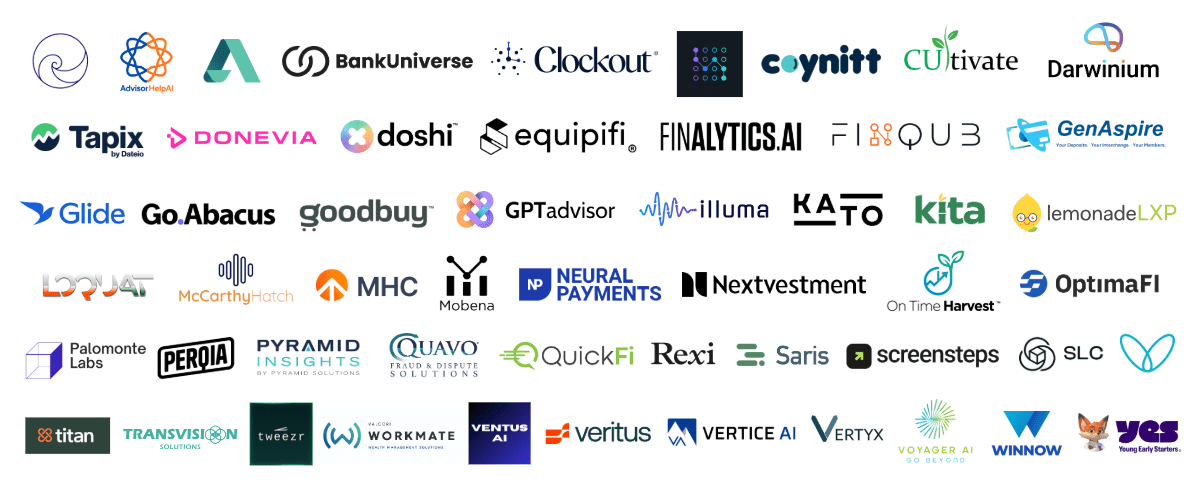
At FinovateFall this year, we’re selecting 68 innovations that will reshape how financial services operate, and we’re ready to name names. We know many of you prefer to see the demo lineup before securing your delegate pass, so without further ado, here’s 80% of the lineup featuring breakthrough technologies you haven’t seen before and innovation trends you need to know.
The initial wave of selected companies represents many dynamic areas of fintech development—here are just four to give you a sneak peek:
Payments and Cross-Border Solutions: Payments, cross-border solutions, and payment infrastructure modernization feature prominently, with companies developing unified payment hubs that integrate multiple payment rails, blockchain-based remittance systems, and embedded international payment capabilities. These innovative solutions target the growing demand for seamless cross-border transactions and represent exciting new revenue diversification opportunities.
Digital Experience and Security: Privacy-focused customer analytics platforms, streamlined onboarding processes, and voice-based security authentication represent the industry’s cutting-edge response to evolving customer expectations and regulatory requirements around data protection.
Risk and Compliance: Real-time fraud prevention systems, automated reconciliation tools, and AI-powered dispute resolution platforms address the persistent challenge of managing operational risk while maintaining processing speed—and we’re eager to see these solutions in action.
AI-Powered Operations: The largest category, AI-Powered Operations, focuses on autonomous compliance processes, including AML investigations that require minimal human intervention, AI-driven lending workflows that accelerate decision-making, and intelligent back-office automation systems. These groundbreaking solutions address the industry’s ongoing challenge of balancing regulatory compliance with operational efficiency in ways we haven’t seen before.