This site is operated by a business or businesses owned by Informa PLC and all copyright resides with them. Informa PLC's registered office is 5 Howick Place, London SW1P 1WG. Registered in England and Wales. Number 8860726.
Finovate Blog
Tracking fintech, banking & financial services innovations since 1994
With the wealth of conversation about AI at FinovateSpring just a few weeks ago, what are some of the key takeaways on how businesses are understanding and deploying the technology?
One of the more compelling presentations on this issue was the keynote address provided by Chris Nichols. Nichols is President of Institutional Banking at SouthState Bank where he supports innovation, AI, digital assets, loan pricing, asset-liability management, open banking, payments, and fintech investing. He is also producer of the Banker-to-Banker blog. Based in Winter Haven, Florida, SouthState Bank traces its roots back to First National Bank, founded in 1933 in South Carolina. Today, the institution has more than 370 branches across eight states and, last year, completed a major $2.49 billion acquisition of Texas-based Independent Bank Group. SouthState Bank reported total assets of $66 billion as of Q3 2025.
In his keynote, Why Agentic AI is Truly a New Frontier in Financial Services & How Agentic Commerce Will Reshape the Retail Landscape, Nichols suggested that the intersection of tokenization, a technology that comes to us from blockchain technology, and agentic AI, the leading iteration of AI technology today, will radically change payments and commerce and, as an impact, change the way we order our professional and personal lives. These developments also introduce a major challenge and opportunity for banks. Here are some takeaways from his address.
Tokenization, Micropayments, and Smart Money
Nichols pointed out that tokenization and blockchain-based payments are poised to significantly reduce friction and costs for most transactions. This is huge for cross-border payments especially, but the technology would help enable 24/7 settlement, off-hour transactions, smart contracts, programmable money, and other capabilities.
It is easy to point to the cost of transactions like wire transfers and paper checks. But even instant payments as currently configured are significantly more costly than what is promised in a world of tokenized payments. In addition to payments that, in Nichols’ words, could cost less than a penny, the infrastructure that supports tokenized payments would also enable true micropayments and transactions of less than a cent. Such payments may have had little utility a few years ago, but the rise of the subscription economy and the gig workforce have created demand for a new kind of payment flexibility.
“As we think this through, we see commerce evolving dramatically,” Nichols said from the FinovateSpring stage. “If you are a content provider or another type of digital agent and you need 1/30,000th of a cent, it changes the face of commerce.”
Not only will tokenization make transactions faster and less expensive, transactions will also become intelligent. The ability to program money, to create smart contracts that are executable only when certain conditions are present, could revolutionize lending in finance, claims processing in insurance, and fractional ownership of assets in real estate—to name a few likely use cases.
Agentic Commerce’s Autonomous Participants
Interestingly, Nichols pointed out that what many of these smart contracts and programmable money technologies are likely to do is send commands not to human actors but to AI agents who will carry out the requisite tasks. Nichols used the example of planning and traveling to FinovateSpring in San Diego as work that will soon be completed almost 100% by AI agents acting on an individual’s behalf—from travel planning and hotel booking to registration fees and hotel bill.
What was especially noteworthy about Nichols’ observation was the role of discovery that these autonomous actors will play in a world in which they—the AI agents—are doing the research, inquiry, and even negotiation with various merchants, vendors, and other agents. “Yes, although humans will initially remain in control, the major debate is how much autonomy people are willing to give their agents,” Nichols said in response to an audience question. “The next evolution will likely involve validating agents independently, rather than always validating them via a human intermediary. Eventually, agents may even create other agents.”
AI Orchestration as an Opportunity for Banks
Where does this leave banks?
One major role for banks in this emerging environment is that of an orchestration platform. In this view, banks evolve into 21st century financial services facilitators, moving beyond deposits and money movement to serve as the infrastructure layer for a wide variety of financial workflows for multiple participants. The tasks of the bank would be to coordinate, automate, and secure the actions of everyone and everything from individual consumers and businesses to merchants and suppliers, and from payment rails and compliance systems to lenders and third-party platform partners—and their AI agents.
“For example, consider a property management company,” Nichols suggested. “An agent could upload lease agreements, read and structure them into smart contracts, enable renter payments, collect security deposits, and authorize recurring monthly payments. Renters could pay using credit cards, ACH, cash deposits at a branch, or deposit tokens.” Nichols explained how these funds could then be routed automatically to the property management company, which would take its share before forwarding the balance to the property owner. He pointed out that this process reduces credit risk for banks and removes the burden and potential error of the many intermediate manual processes. Nichols also noted that this was an opportunity for banks—and not just the largest institutions, either. “Agentic capabilities are making it easier than ever for smaller institutions to adapt,” he said.
“We believe banks will play a more central role in this future, often through partnerships with fintechs,” Nichols concluded. “Banks can help commercial customers move from analog sales processes to more agent-driven systems … Banks can help businesses become discoverable, move customers through the sales funnel, and handle both onboarding and follow-up processes.”
If you’re in the US, you may be pouring an extra cup of caffeine after an activity-filled long weekend. While you were away, however, the rest of the fintech world kept moving. This week, we’ll continue to add more announcements as the week progresses.
Payments
Marqetaexpands account and money movement offering in Europe, building on strong regional momentum.
With new enabling technologies like stablecoins and AI moving quickly and classic fintechs like Mint.com and Dwolla making their exits, it feels like fintech is entering a new era. This is especially true in lending, where new capabilities are enabling faster, more efficient, and in many cases more customer friendly tools than we had five years ago.
Looking back at the dawn of the decade, most lending innovation focused on digitizing the application process, facilitating the onboarding process, and turning loans faster. While some of those elements are still in place today, lending has changed with better intelligence, different distribution, and new infrastructure layers underneath credit itself.
Here’s a look at what’s changed:
Underwriting is becoming continuous instead of episodic
We used to think of the FICO score as the gold standard in underwriting. Today, however, underwriting is no longer done as a snapshot in time. Instead, lenders are using cash flow underwriting to get a view of the borrower’s creditworthiness over time by considering their account balance, overdraft occurrences, loan repayments, and other risk indicators.
Cash flow underwriting is becoming increasingly common, especially as consumers become more comfortable with open banking and the concept of sharing their financial data across platforms.
Embedded lending changed consumer expectations
Embedded lending itself is not new. Uber, for example, began experimenting with vehicle financing for drivers as early as 2014. What’s changed is how targeted, contextual, and embedded these lending experiences have become.
Today, financing is increasingly surfaced directly within the software platforms, marketplaces, and operational tools where consumers and businesses already spend their time. Point-of-sale platform Toast, for example, uses merchants’ daily sales data to underwrite loans and proactively surface financing offers within the Toast platform itself.
As consumers and businesses become more accustomed to contextual lending experiences like these and embedded buy now, pay later options they are relying less on traditional bank websites or standalone loan marketplaces to search for credit products.
The interface layer Is shifting
In addition to competition from software platforms and merchant ecosystems, a third distribution channel is beginning to emerge in lending: large language models (LLMs).
Consumers are increasingly turning to platforms like ChatGPT, Claude, and Gemini for both information and guidance and decision-making, including financial decisions. As these tools become more integrated into consumers’ daily lives, many borrowers may begin consulting an AI assistant before visiting a bank website or browsing a loan marketplace. Instead of searching manually for financing products, consumers may increasingly ask an LLM to help evaluate their situation and recommend the most suitable lending option.
That shift becomes even more significant as financial data aggregation moves into these environments. Through Plaid’s partnership with OpenAI, for example, ChatGPT can now aggregate and contextualize a consumer’s financial accounts, giving the platform a much richer understanding of cash flow, spending behavior, obligations, and financial goals.
As a result, the lender may still technically originate and hold the loan, but the customer relationship shifts to the interface layer. In this emerging model, the LLM becomes the discovery engine, recommendation layer, and engagement channel sitting between the consumer and the financial institution.
What scales vs. what doesn’t
Looking back at the lending technologies demoed on the Finovate stage five years ago, there is a noticeable divide between the ideas that generated excitement in the moment and the solutions that ultimately achieved scale.
Many of the products that struggled to move beyond the demo phase shared a common challenge: they required consumers to significantly alter their existing behaviors, communication methods, or digital environments. Metaverse-based banking and lending experiences, for example, were fun to watch on stage, but they never aligned with how most consumers wanted to interact with financial products in everyday life. In many cases, they required users to adopt entirely new platforms, devices, or behaviors before their value could even be realized.
By contrast, the lending solutions that have scaled most successfully are the ones that meet consumers where they already are. Buy now, pay later (BNPL) is perhaps the clearest example. Rather than requiring consumers to seek out financing separately, BNPL options are surfaced directly at checkout within the shopping experience itself. As a result, installment financing has become an expected feature for many higher-ticket purchases rather than a niche alternative payment method.
What credit looks like by 2030
Five years from now, much of today’s lending ecosystem will still look familiar. Regulated financial institutions will continue to originate loans, underwriting will remain central to managing risk, and compliance will remain a critical consideration not only for lenders, but also for fintech partners, platforms, and emerging distribution channels.
What may look very different, however, is the interface layer between the consumer and the lender.
Consumers may interact less directly with banks and more through AI assistants, software platforms, wallets, and embedded ecosystems that help evaluate financing options on their behalf. As LLMs become more integrated into everyday decision-making, they may fundamentally reshape how consumers discover, compare, and select credit products. In that environment, traditional loan marketplaces could become far less relevant as financing recommendations are surfaced contextually and conversationally through AI-driven interfaces rather than through manual product searches.
FinovateSpring 2026 may be over, but the demos are just getting started. All 54 videos from the demo stage are now available to watch for free on Finovate.com and the Finovate YouTube channel.
This year’s demos showcased how fintechs are rethinking everything from AI-powered banking and embedded finance to fraud prevention, lending, payments, customer experience, digital identity, and wealth management. Earlier this month in San Diego, fintechs took the stage to deliver Finovate’s signature live, seven-minute demos in front of an audience of financial institutions, investors, analysts, and industry leaders.
Whether you attended FinovateSpring and want to revisit your favorite presentations or missed the event and want to catch up on the latest fintech innovation, the full demo lineup is now available on demand.
And stay tuned, because there’s more content on the way.
Recorded keynote presentations, panel discussions, fireside chats, and additional conference sessions will be added to the Finovate YouTube channel in the coming weeks, offering even more insight into the trends shaping financial services in 2026.
In last week’s Finovate Weekly newsletter, I shared some thoughts on what fintechs might hope for from President Trump’s summit meeting with Chinese president Xi Jinping. While the meeting does not appear to have delivered anything of substance from a fintech or financial services perspective, Trump did sign an Executive Order (EO) shortly after returning from Beijing that actually has plenty for fintechs and financial services companies to think about—if not cheer for.
Let’s take a look at five top takeaways from the EO, titled Integrating Financial Technology Innovation into Regulatory Frameworks.
From containment to enablement
The executive order directs Federal financial regulators to review existing policies to “facilitate innovation and greater competition in the provision of financial services.” Even more directly, the order calls upon regulators to “take steps to encourage innovation by, and growth of, fintech firms and federally regulated institutions of all sizes.”
The “fintechs and friends” framing of the executive order is in and of itself telling. After years of trying to strike a balance between the needs of incumbent banks and financial services providers and insurgent fintech innovators, the EO suggests a potential shift from “containment” of fintech innovation to outright enablement.
More access to Fed payment rails
Operationally speaking, some of the biggest news in the EO might be the way it directs the Federal Reserve to review its approach to granting payment accounts and services. This includes potentially expanding access to Fed payment rails for fintechs and nonbanks. Practically speaking, this could incentivize easier access to Fed payment infrastructure, Fedwire, and settlement services typically reserved for bank intermediaries.
The EO criticizes “regulations, guidance, and policies” that it referred to as “relics of a time when financial services where predominantly provided in brick-and-mortar-centric settings.” While this potentially refers to a fairly broad range of existing directives, the tone clearly indicates a willingness to overhaul or at least revisit rules that fail to reflect our increasingly mobile, digital, and even agentic contemporary financial landscape.
Building better bank-fintech partnerships
The EO is also critical of “rules governing financial institution’s third-party risk management” which it claims unfairly favors incumbents “at the expense of innovators.” As such, the order directs regulators to examine supervisory practices, application processes, and guidance that may “unduly impede fintech firms from entering into partnerships with federally regulated institutions.”
This could positively impact opportunities for Banking-as-a-Service companies as well as sponsor bank relationships, charter applications, and more, potentially reducing some of the challenges and complexity brought on by regulatory uncertainty with regard to partnerships between banks and fintechs.
Crypto and stablecoins move toward the mainstream
With the passage of the GENIUS Act, it is clear that the administration is seeking to support, if not encourage, innovation in the digital asset space. This week’s executive order underscores that support, noting that President Trump signed an Executive Order in his first week in office that was designed to “secure” the United States’ position as the global leader in the “digital asset economy,” as well as to establish additional regulatory clarity and guidance for digital assets. Other EOs are also referenced, including the one in March 2025 that established the Strategic Bitcoin Reserve and US Digital Asset Stockpile.
Specifically, this week’s executive order directs the Federal government to “update its outdated regulations to allow integration of digital assets and other novel financial technology into traditional financial services and payment systems.” Clearly and increasingly, the Trump administration sees digital assets, blockchain technology, and stablecoins as key components of US financial system infrastructure rather than as niche products, isolated technologies, or speculative instruments.
A win for regulated fintechs?
From the wave of fintechs seeking bank charters to the increased regulatory clarity provided by recent executive orders, fintechs could be on the precipice of a “best of both worlds” scenario: a financial services industry that feels deregulated and more opportunity-rich due to what mighr actually be greater regulation and guidance. While there remains much to be seen in terms of how fintechs and nonbanks take advantage of this changing regulatory environment—from pursuing bank charters to more aggressively pursuing embedded and open finance technologies—it does seem clear that the US is positioning itself to be more competitive in a shifting, global fintech and financial services landscape
Embedded payments infrastructure company NMI has acquired account-to-account (A2A) payment infrastructure innovator Dwolla.
The acquisition creates a combined entity that will process nearly $700 billion in annual transaction volume and will fortify NMI’s status as a major embedded money movement infrastructure firm.
Dwolla has been a Finovate alum since 2011, winning Best of Show honors in its appearances at FinovateSpring 2011 and FinovateSpring 2012.
Embedded payments infrastructure company NMI has acquired account-to-account (A2A) payment infrastructure provider Dwolla. The acquisition combines NMI’s payment acceptance, channel distribution, onboarding, and merchant lifecycle management with Dwolla’s capabilities in account-to-account infrastructure, real-time payments, open banking, and many-to-many funds flow. NMI will benefit from additional payment acceptance, orchestration, and money movement capabilities, enabling its ISO, ISV, and SaaS platform clients to accept, manage, and move money across a greater number of rails and use cases via a single infrastructure provider.
“This acquisition is a continuation of our strategy to build the most robust, white-label, embedded payments platform for our channel and enterprise partners,” NMI CEO Steve Pinado said. “Dwolla gives us modern, API-first, A2A infrastructure that strengthens our ability to help businesses accept, manage, and move money across more uses cases and more rails.” Pinado also noted that the acquisition will enable NMI to be a player in the emerging generation of money movement technologies and solutions including agentic payments and stablecoin-enabled settlement.
The acquisition creates a combined entity that will processes nearly $700 billion in annual transaction volume and fortify NMI’s status as a major embedded money movement infrastructure firm. NMI currently supports more than 6,000 technology partners with its modular, white-label platform, enabling them to provide seamless, scalable payment experiences across online, in-app, brick-and-mortar, mobile, and unattended channels. Courtesy of the Dwolla acquisition, NMI’s partners will be able to build on NMI’s capabilities to offer bank and real-time payments, and other sophisticated payment flows such as marketplace seller payouts, loan disbursements, payroll, supplier payments, and more. This will enable these companies to serve firms in industries ranging from insurance and lending to property management and healthcare.
In a statement, Dwolla CEO Dave Glaser noted how Dwolla has helped companies operate bank payments at scale thanks to an API-first infrastructure layer that unifies ACH and real-time rails while standardizing status, exception handling, and reporting. He also outlined how he thinks the combination of Dwolla and NMI will improve the payments process for businesses. “By joining NMI, we can bring those capabilities to a broader ecosystem of partners, while giving Dwolla customers access to NMI’s omnichannel payment acceptance capabilities through a single, flexible, white-label platform. Together, we can help software companies, payment professionals, and fintech innovators deliver more ways to pay and move money with less complexity.”
Founded in 2008 and headquartered in Des Moines, Iowa, Dwolla has been a Finovate alum since winning Best of Show in its Finovate debut at FinovateSpring 2011. A pioneer in peer-to-peer (P2P) and account-to-account (A2A) payments, Dwolla was among the first fintechs to offer lower-cost money transfers, direct ACH connectivity, and a developer-friendly, API-first strategy that enabled companies to embed payment capabilities into their platforms. Ahead of its time then, Dwolla has since benefitted from a surge in interest in account-to-account payments and embedded finance, facilitating more than 126 million transactions a year with an annual transaction value of more than $82 billion.
Schaumburg, Illinois-based NMI was founded in 2000. The company offers a modular payment acceptance platform and gateway that enables SaaS platforms, ISOs, banks, and other financial institutions to leverage payments to boost growth, drive loyalty, and develop new revenue streams. NMI’s technology serves more than 1.2 million active merchants, more than 235,000 connected devices, and features 150+ processor connections to give its partners flexibility to design the payment experiences that best suit their unique needs and business models. Dwolla is NMI’s most recent acquisition, having acquired Sphere Commercial Division in 2023 and Finovate alum Agreement Express in 2022.
Eisen, a fintech that specializes in end-to-end escheatment and unclaimed property compliance automation, has secured $18.5 million in funding. The capital comes in the form of a $10 million Series A led by MissionOG and a previously unannounced $8.5 seed round led by Index Ventures. Cowboy Ventures, First Round Capital, Homebrew, and Restive Ventures also participated in the investment.
Eisen innovates in an often-overlooked area of financial services: escheatment and the recovery of unclaimed property. State law requires that abandoned funds eventually be turned over to the government in a legal process called escheatment. While each state has its own rules regarding dormancy periods, notice requirements, and remittance deadlines, the concept of escheatment is designed to help protect consumers when financial institutions lose track of them. Nevertheless, the process of retrieving those assets can be both complex and cumbersome. As such, it is little surprise that more than 30 million Americans have unclaimed property in state custody, with states holding a combined $70 billion in consumer assets: from retirement accounts and life insurance proceeds to forgotten savings accounts and emergency funds. Out of all of this, only $4.5 billion was returned to owners in 2024.
In response, Eisen’s technology streamlines the compliance lifecycle from dormancy tracking and due diligence through to state reporting, remittance, and audit defense. The company offers a Tax Compliance Suite to support 1099 filing, TIN matching, and B-notice handling, as well as disbursement services. This reflects the firm’s evolution beyond improving the escheatment process and a recognition that many of the same issues that plague escheatment also impact other compliance operations.
“We started with escheatment because the gap there is the widest, but the same operational pattern shows up across the compliance stack,” Eisen Co-founder and CEO Allen Osgood wrote in a blog post announcing the investment. “Eisen’s platform now covers escheatment, disbursement, and 1099 reporting. Operational teams use Eisen to replace manual work and prevent dormant-account risk. Executives use it to reduce regulatory exposure, retain customer assets, and protect customer trust.”
Last year, Eisen prevented more than 31% of at-risk assets from being lost to state custody. The company monitors nearly $16 billion in balances across tens of millions of accounts at firms including Adyen, Binance.US, BitGo, and PeoplesBank. Eisen’s platform integrates state-by-state requirements directly into account operations, enabling financial institutions to identify dormancy risk earlier, reduce manual compliance work, and keep more customer assets in customer accounts.
“Every dollar in state custody represents a real person who never expected their money to disappear,” Osgood added. “The rules governing dormant assets weren’t built for crypto wallets, fintech platforms, or digital-first banking. Most institutions are sitting on 5x to 10x more liability than they realize. Eisen prevents that loss before it happens.”
Founded in 2021, Eisen made its Finovate debut at FinovateFall 2024 and returned to the Finovate stage earlier this year at FinovateSpring 2026 in San Diego. At the conference, the company demonstrated its Eisen Dashboard, a real-time compliance command center that features account-level detail views with state-specific rules, eligibility and due diligence tracking by reporting year, a disbursement hub with daily reconciliation and fraud protection, and an outreach hub to manage owner communications. Eisen is headquartered in New York.
This month marks the launch of a new series of interviews with companies that recently made their debuts on the Finovate stage. I had a great opportunity earlier this month to catch up with a number of companies demoing at FinovateSpring in San Diego, and am looking forward to introducing our blog readers to these innovative fintechs!
First up, we checked in with Joe Steuter, Partner and Chief of Client Strategy with Intention.ly. Founded in 2021 and headquartered in King of Prussia, Intention.ly is a growth consultancy and marketing agency for financial services companies. At FinovateSpring this year, Intention.y demoed its Advisor Brand Builder platform that enables breakaway advisors, fast-evolving firms, and acquiring enterprises to build professional, high-impact brand identities and brand stories.
What problem does Intention.ly solve and who does it solve it for?
Joe Steuter: Intention.ly helps financial services firms grow by solving one of the industry’s most persistent challenges: brand differentiation. Beyond that, the challenge of differentiation with speed to market and thoughtful measurement to trace ROI to marketing efforts. Advisors, RIAs, enterprises, fintechs, bank managers, insurance reps, and asset managers are all competing in a market that can feel like a sea of sameness, where firms often sound alike, look alike, and struggle to clearly articulate why they are different.
That problem becomes especially acute for financial advisors and advisor enterprises. Building a strong brand has traditionally required a long, labor-intensive process with an outside partner that may not deeply understand the financial services industry. The alternative is often a fast, templated website build or brand message that saves time but leaves firms looking, sounding, and positioning themselves like everyone else.
Advisor Brand Builder (ABB) was created by Intention.ly to eliminate that tradeoff. It gives advisors and enterprises a faster, smarter way to build authentic, differentiated brands grounded in who they are, who they serve, and why they matter.
More broadly, Intention.ly solves growth challenges for financial services companies by combining strategy, brand, marketing, technology, content, and execution. We help firms move from ambiguity to clarity, from disconnected marketing efforts to cohesive growth systems, and from generic positioning to a brand presence that can actually support business development.
How does Intention.ly solve this problem better than other companies?
Steuter: Intention.ly solves this problem differently because we combine deep financial services expertise with technology, creative strategy, and execution. We are not a generalist agency learning the industry from the outside. Our team has spent decades building brands, shaping narratives, and helping financial services firms differentiate in a highly complex, highly regulated, and often highly commoditized market.
Advisor Brand Builder, which was the experience shown to the crowd at FinovateSpring 2026, is a strong example of how we approach innovation. The traditional branding process can take months or even years, especially when multiple stakeholders, decision-makers, and rounds of discovery are involved. ABB condenses that process into a guided, AI-backed experience that can build a brand foundation in weeks.
But speed is only part of the story. ABB is not just an automated template. It combines guided discovery, industry-specific intelligence, AI-assisted brand development, and human expertise from strategists, writers, designers, and marketers. The result is faster, but still substantive.
The platform captures the advisor’s authentic story, creates messaging and visual identity, builds a cohesive brand guide, generates assets, and extends that foundation into digital presence and website direction.
That combination of executional speed with truly differentiated campaigns and messaging is where our team stands out. We help firms move faster without sacrificing authenticity, quality, or differentiation. And in an industry that is evolving at a faster pace than ever before, this couldn’t be more crucial to a firm’s growth.
Who are Intention.ly’s primary customers? How do you reach them?
Steuter: Intention.ly’s primary customers are growth-minded financial services firms. That includes independent RIAs, breakaway advisors, hybrid firms, broker-dealers, custodians, asset managers, fintechs, banks, large insurance companies, and innovative enterprises that support advisor communities.
With Advisor Brand Builder specifically, we are solving for both individual advisor firms and the enterprises that serve them. For an advisor or breakaway team, ABB provides a faster path to a credible, differentiated brand, complete with messaging, visual identity, brand assets, and website direction. For larger enterprises, ABB creates a scalable way to support many advisors without forcing every firm through a slow, custom, one-off branding process.
We reach our customers through a combination of relationships, industry presence, referrals, thought leadership, partnerships, events, and direct engagement with firms that are actively trying to grow. Because Intention.ly is deeply embedded in the financial industry, many of our conversations begin with trust and shared context.
The firms that come to us are usually facing a transition point: launching, rebranding, going independent, entering a new market, scaling advisor support, or trying to create a more modern growth engine. Our value is helping them move from intention to execution with clarity, speed, and confidence.
Can you tell us about a favorite implementation of your technology, or a particularly valuable partnership experience?
Steuter: One recent example is Brick by Brick Wealth Management, a firm moving from a large wirehouse environment into the independent space. That kind of transition requires much more than a new name or logo. The team needed to create a complete brand identity, clarify its value proposition, reframe the value they brought to clients, develop a differentiated story, and launch a digital presence that could support the next stage of the business.
Through Advisor Brand Builder, we helped bring that work together in roughly six weeks. The process started with the concept for the firm’s name and evolved into a full brand story, visual identity, messaging system, brand assets, and website presence.
What made the implementation special was the balance between speed and authenticity. Brick by Brick needed to move quickly, but they also needed a brand that felt real, personal, and credible. ABB allowed us to capture the firm’s underlying story and translate it into something polished, differentiated, and usable.
That is exactly the kind of moment Advisor Brand Builder was built for. We’ve taken more than 25 firms of every size through this system, and it often works most effectively when advisors need to make a major business move, but they cannot afford to spend months stuck in an identity crisis. They need a brand that gives them clarity, confidence, and momentum.
What in your background gave you the confidence to respond to this challenge?
Steuter: My confidence comes from the team I surround myself with and the more than two decades I’ve spent helping financial services firms and startups tell their story. Collectively, as an organization, our confidence comes from having spent decades inside the financial services industry, working directly on the same challenges our clients face. Our CEO, Kelly Waltrich, built the firm to respond to the challenge she saw as most prevalent in financial services: a lack of purpose-led strategy and growth driven by disciplined execution and measurable goals. Every member of our team carries that same extensive industry experience where they’re drawing on years of having built brands, shaped messaging, led marketing strategies, supported advisor growth, launched campaigns, guided firms through transitions, and helped financial services companies tell more compelling stories.
Advisor Brand Builder is just one product of that experience. We have seen firsthand how difficult it can be for advisors to differentiate themselves. Many firms have a powerful story, but they struggle to articulate it. Others know they need a more modern brand, but the traditional process feels too slow, too expensive, or too disconnected from the realities of their business.
Over time, we saw the same pattern again and again: advisors needed both strategic depth and speed. They needed industry expertise, not generic branding exercises. They needed a process that could uncover what made them different and turn it into messaging, design, assets, and a digital presence.
We were not starting from theory. We were translating years of real financial services brand-building experience into a more scalable, technology-enabled process.
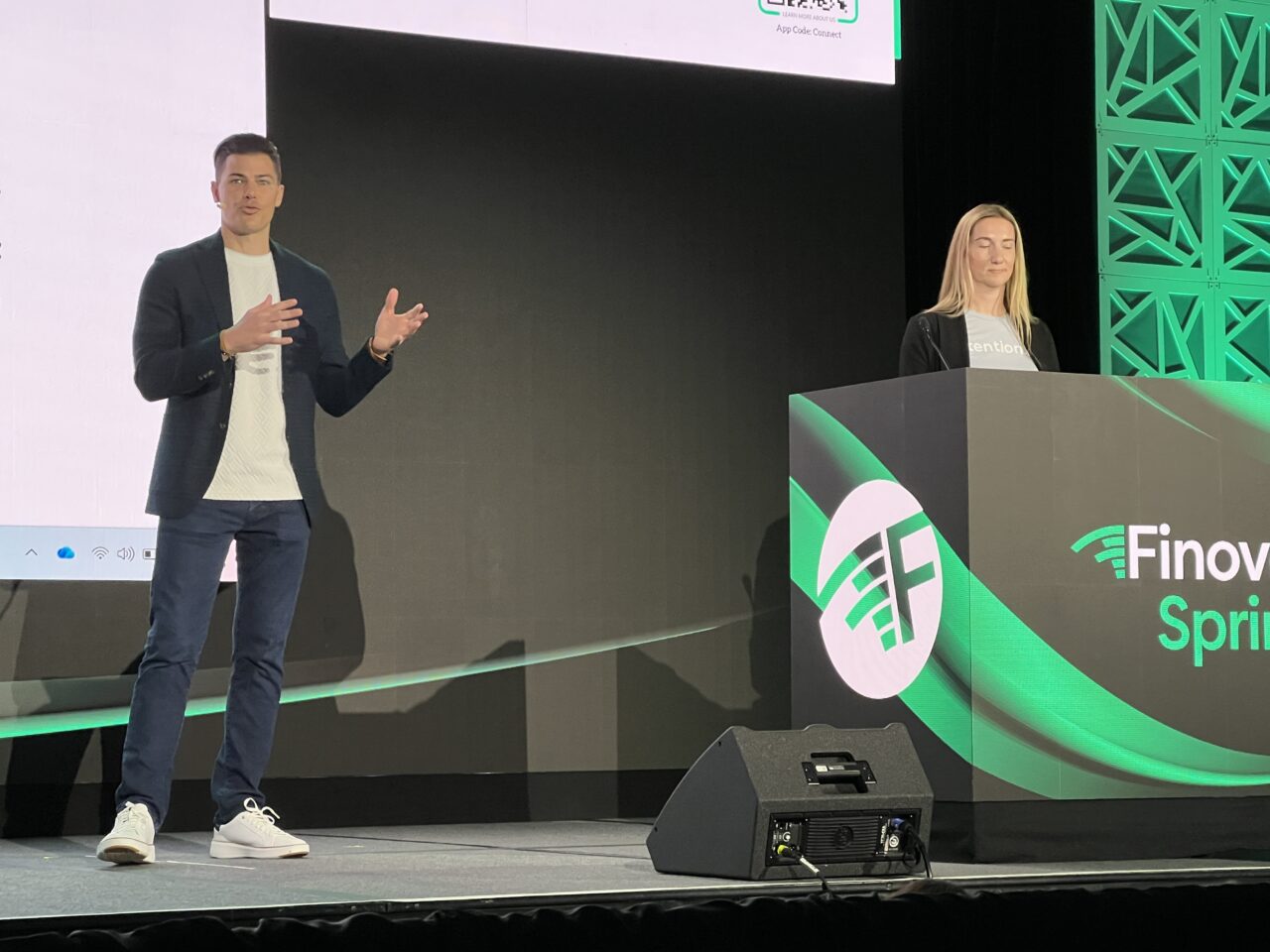
Left to right: Joe Steuter, Partner, Chief of Client Strategy, Intention.ly, and Jamie Recio, Head of Social Media, Intention.ly
You recently opened new offices in Omaha, Nebraska. How does the opening of a Midwest hub drive Intention.ly’s mission?
Steuter: Opening a Midwest hub in Omaha is an strategic step in Intention.ly’s growth and mission. It was also a very personal endeavor for me, as I live in Omaha and understand just how much of a financial hub the city is to this industry. Omaha has a deep connection to financial services, wealth management, fintech, and advisor platforms, and it gives us a strong presence in a market with exceptional industry talent.
Our mission is to help financial services firms grow with more clarity, intention, and impact. To do that well, we need to stay close to the firms, advisors, platforms, and people shaping the future of the industry. Omaha gives us another center of gravity for that work, located in the middle of everywhere.
It also reflects a belief I’ve always held: innovation in financial services is not limited to the coasts. Some of the most important companies, platforms, and advisor communities in our space have been built right here. Having a hub that is centrally located allows us to deepen relationships, expand our team, and support clients from a place that understands the advisor ecosystem.
You demoed at FinovateSpring in May of this year. How was the experience?
Steuter: FinovateSpring was a great experience because it gave us the opportunity to show Advisor Brand Builder in action to an entirely new corner of the industry. The conference brought together firms in accounting, banking, credit unions, private capital, insurance tech, and other sectors outside our normal realm of exposure (wealth management). Branding can feel abstract when described conceptually, but the demo allowed us to walk the audience through the actual experience: guided discovery, AI-assisted brand development, messaging, visual identity, brand assets, and website direction.
The format was especially valuable because ABB is designed to solve a very specific tension in the market. We were able to demonstrate that there is a better path—one that provides speed without losing substance.
The demo also helped us tell the broader Intention.ly story. We are a branding and marketing growth engine design firm with decades of financial services experience, and ABB represents how we are turning that expertise into scalable technology.
The conversations after the demo were energizing. The feedback reinforced what we already believed: advisor differentiation is a real problem, enterprises need scalable ways to support it, and the market is ready for solutions that combine AI with human expertise.
What are your goals for Intention.ly?
Steuter: Our goal is to become the leading marketing and growth partner for the industry’s top 100 companies. We want to help ambitious firms build stronger brands, clearer strategies, better marketing systems, and more effective paths to sustainable growth.
For Advisor Brand Builder, our goal is to change the equation around advisor brand development. We believe advisors should not have to choose between a long, expensive branding engagement and a generic template that makes them look and sound like everyone else. ABB gives them another option: a guided, AI-backed, human-refined process that creates a differentiated brand foundation in weeks.
At the enterprise level, our goal is to make differentiated branding scalable—quite a contradiction traditionally. Large wealth management organizations need ways to support many advisors efficiently, but without stripping away individuality. ABB gives enterprises a framework for helping advisors show up with more clarity, consistency, and authenticity.
More broadly, Intention.ly is focused on helping financial services firms spend less time stuck in identity, messaging, and execution challenges, and more time earning new business. Stronger brands create more confidence. More confidence creates better growth conversations. And better growth conversations create stronger firms and better-served clients.
The second half of May begins with raft of announcements highlighting continued innovation with—and investment in—both stablecoins and AI. Be sure to check back here at Finovate’s Fintech Rundown for the latest in fintech news and headlines.
Payments
National Australia Bank acquires account-to-account payments platform Banked.
Embedded BNPL provider equipifi has raised $34 million in Series B funding to help banks and credit unions offer pay-over-time options directly within their own platforms.
equipifi’s infrastructure enables consumers to access BNPL through their existing banking app and debit card without opening a new account, filling out an application, or using a third-party provider.
equipifi’s growth reflects a broader shift in BNPL from a standalone fintech product into embedded financial infrastructure.
Buy now, pay later (BNPL) infrastructure company equipifi has raised $34 million in Series B funding. The new round boosts the Arizona-based company’s total funding to $49 million.
The investment was led by Left Lane, with participation from existing investors Curql, PHX Ventures, New Stack Ventures, SixThirty Fund, Baleon Capital, Rise of the Rest, and SaaS Ventures. New strategic partners, SWBC and the Bankers Helping Bankers Fund, also contributed.
equipifi was founded in 2021 to offer consumers access to pay-over-time solutions from their preferred banking provider, not through a third party. The company’s solution helps banks and credit unions compete in an era when consumers have begun to expect BNPL as an option and crave flexibility without the need for a credit card. equipifi powers BNPL for millions of checking accounts with its tool that natively embeds BNPL options inside the bank’s own platform without requiring the user to fill out an application or undergo a credit check.
“A consumer opens their banking app,” the company explained on its website. “There’s a flexible payment option waiting for them. On the debit card already in their wallet. No new account. No application. No third-party service. They select their preferred term, tap accept, and they’re done. The institution just created a loan in real time, kept the relationship at the top, and gave the consumer something they didn’t think their bank could do.”
equipifi views its embedded BNPL offering as an infrastructure play. The company calls it “infrastructure for modern credit” that places flexible payments options inside financial institutions’ existing platforms. equipifi plans to use today’s $34 million round to bring flexible payments to every financial institution in the country.
The BNPL trend is interesting because when it first emerged over a decade ago, it wasn’t necessarily something customers were looking for. Now, however, BNPL tools have almost become table stakes. equipifi has proven that BNPL is no longer just a standalone fintech product competing against banks. Instead, it can work as embedded infrastructure that banks themselves want to own and integrate directly into their existing customer relationships. In this case, equipifi is positioning itself less as a consumer brand and more as an infrastructure provider powering the next generation of flexible payments behind the scenes.
Small business management and accounting platform Xero has launched its live integration with Anthropic’s AI assistant Claude.
The integration comes less than a month after Xero announced its multi-year partnership with Anthropic. It will enable users to leverage real-time financial intelligence to gain insights into revenue, profit, contacts, receivables, as well as financial health and cash position.
Founded in 2006, Xero has been a Finovate alum since 2011. Sukhinder Singh Cassidy is CEO.
The live integration follows the company’s multi-year partnership announced in March. The goal of the partnership is to integrate Claude’s AI directly into Xero and to bring Xero’s financial data and tools into Claude.ai. The partnership will give small businesses and their accounting and bookkeeping teams the ability to put real-time financial intelligence to work managing their company’s finances.
“Every day, millions of small business owners ask the same questions: Why is cash tight this month? Which invoices are overdue? Can I afford to hire?” Xero Chief Product & Technology Officer Diya Jolly said. “To run their business efficiently, small business owners and their accountants and bookkeepers need to be able to answer these questions and act on them in real time, whether using Xero or Claude. This partnership delivers on that.”
The integration marks the first time that Xero customers will be able to work with their financial data inside an AI platform. It will reduce the amount of time spent doing manual work, from pursuing invoices to compiling cash flow across multiple reports, and will proactively surface insights that would otherwise be time-consuming to discover. The integration will also provide a new way for Claude to power financial workflows for small businesses at scale.
Users with active Xero subscriptions can take advantage of the integration immediately, bringing their financial data directly into their Claude discussions without having to change tools. Insights generated by Claude are delivered directly to Xero customers, enabling them to take actions such as reviewing the complete report or invoice detail to uncover total earnings, discover outstanding payments, and gain visibility into business health via insights into assets, liabilities, and cash flow.
“When customers engage in wide-ranging conversations with Claude about their business strategy or day-to-day operations, they can now use Claude to instantly pull up their cash position, check overdue invoices, or see how profit is tracking, all without breaking their flow of work,” Jolly added. “That’s what it means to have Xero wherever you work, and it’s part of our commitment to ensuring customers can leverage Xero at every point in their decision-making process.”
A Finovate alum since 2011, Xero serves more than 4.9 million customers around the world with its small business accounting platform. The company’s technology offers all-in-one paperless record-keeping, automated bank reconciliation and invoice reminders, as well as smart data and insights such as trend analysis and customizable reporting. The platform connects to more than 1,000 third-party apps to deliver an integrated, streamlined business solution. Sukhinder Singh Cassidy is CEO.
We recently commemorated Asian American and Pacific Islander Heritage Month with a feature highlighting the Asian American and Pacific Islander fintech innovators that introduced their companies to our FinovateSpring 2026 audience.
Today, as part of our continued commemoration, we turn our attention—and our thanks—to the Asian American and Pacific Islander mainstage speakers and panelists who shared their insights and experiences with us at last week’s event in San Diego.
Theodora Lau is the founder of boutique consulting firm, Unconventional Ventures. She is a public speaker, an advisor, the author of Banking on (Artificial) Intelligence (2025), and co-author of The Metaverse Economy (2023) and Beyond Good (2021). Lau also hosts One Vision, a podcast on fintech and innovation.
At FinovateSpring this year, Lau participated in a number of executive briefings and power panels on AI in financial services.
Kristie Han, Principal, Canapi Ventures
Kristie Han is a Principal at Canapi Ventures, a venture capital firm investing in early to growth-stage software and fintech companies. Han brings a decade of experience investing in AI and software companies and leading Series B to pre-IPO opportunities across AI apps.
At FinovateSpring, Han participated in our power panel on the role of collaboration and co-creation in bank-fintech partnerships.
Kevin Lee, Chief Technology Officer & Key Pursuits Leader, NICE
Kevin Lee serves as Chief Technology Officer and Key Pursuits Leader at NICE, where he leads the company’s technology vision and its most strategic customer engagements by aligning platform capabilities, AI strategy, and architectural vision to deliver differentiated outcomes.
At FinovateSpring this year, he delivered a special address on AI agents in financial services.
Huyen Tran, VP of Innovations, U.S. Bank, and Founder, Elys Ventures
Huyen is a fintech product and strategy leader at U.S. Bank and founder of Elys Ventures, with two decades of experience building and scaling global digital platforms and financial services solutions. She is the founder of Elys Ventures, through which she invests in early-stage fintech and health tech companies with a product-driven investment approach.
This year at FinovateSpring, she participated in our Women in Fintech Briefing: How Can We All Make Sure We Are Moving the Needle?
Huong Tran, Founder and Managing Partner, 6igma Ventures
Huong Tran is the Founder & Managing Partner of 6igma Ventures, an early-stage venture fund focused on fintech infrastructure and applied AI platforms bridging Asia and the United States. She founded 6igma Ventures to connect high-growth Asian markets with the US technology ecosystem, investing in structural opportunities shaping the next generation of financial and technology infrastructure.
At FinovateSpring, Tran participated in our Impact+ Investor Power Panel for fintech startups.
Sherry Wu, Chief Technology Officer, University of Michigan Credit Union
Sherry Wu is the Chief Technology Officer (CTO) at the University of Michigan Credit Union (UMCU), where she aligns IT strategy with the credit union’s mission. With over 25 years of experience in IT leadership at IBM, Ford, and HPE, Wu also served on the board of People Driven CU and currently advises Algebrik AI and CU 2.0.
At FinovateSpring, she participated in our power panels on AI and how credit unions can thrive without big bank budgets.
Gary Fan, Chief Operating Officer, RBB
Gary Fan is the Chief Operating Officer of RBB, a publicly traded bank with over $4 billion in assets. As COO, Gary leads enterprise-wide growth initiatives, digital transformation, product and service innovation, and strategic M&A activity. He is also responsible for optimizing cross-functional operations and driving continuous business model evolution to stay ahead in a rapidly changing financial landscape.
This year at FinovateSpring, Fan participated in our panel discussion on the current challenges and opportunities facing community banks.