This site is operated by a business or businesses owned by Informa PLC and all copyright resides with them. Informa PLC's registered office is 5 Howick Place, London SW1P 1WG. Registered in England and Wales. Number 8860726.
Finovate Blog
Tracking fintech, banking & financial services innovations since 1994
Spring has sprung, March Madness is in the air, and the fintech headlines are filled with new payment solutions to enhance face-to-face commerce, new developments in the tokenized asset space, and a range of announcements on agentic AI including new tools, new partnerships, and new deployments.
Be sure to check back with Finovate’s Fintech Rundown all week long for the latest in fintech news!
Payments technology company Splititunveils its Splitit Go mobile and API-based solution that brings card-linked installment payment options to in-person commerce.
Fraud prevention and identity verification
Digital identity and compliance platform ComplyCubeunveils its expanded fraud intelligence suite.
Finix and Plaid team up to enhance bank verification and streamline money movement.
Australian fintech Vivi Moneychooses Pismo’s infrastructure to launch new AI-native financial solution on Visa’s global payment network.
Constant AI, an agentic AI firm that specialists in lending operations for credit unions, launches AI Skip-A-Pay agent, Nia.
AI platform Go AbacusunveilsThe Go1, an on-prem AI hardware solution to give banks data sovereignty. Catch Go Abacus in its Finovate debut at FinovateSpring 2026 in San Diego.
Insurtech
AI assistant for financial advisors, Zocks, introduces its new AI assistant for life insurance. See Zocks make its Finovate debut at FinovateSpring 2026 in San Diego, May 5-7.
DeFi
Q2partners with digital asset platform Stablecore to enable banks and credit unions to offer stablecoins, tokenized deposits, and other digital asset products.
TAPP Engine and KoreInside team up to bring financial stablecoins to private capital markets.
Compliance and fraud prevention platform Sumsub has teamed up with digital asset infrastructure solutions provider Fireblocks to provide Travel Rule compliance.
The Travel Rule is a regulation mandated by the Financial Action Task Force (FATF) designed to fight money laundering and terrorist financing. The rule requires financial institutions and Virtual Asset Service Providers (VASPs) to share specific information about the sender and receiver of funds during certain transactions. Enacted to defend traditional financial transactions from money laundering and terrorist financing, the rule has been extended to cover cryptocurrencies and digital assets.
Courtesy of the partnership, Sumsub’s Travel Rule solution will be natively integrated into the Fireblocks platform. This will provide both financial institutions and VASPs with real-time, automated, and dynamic verification for virtual asset transactions. Fireblocks users will benefit from complete control over compliance workflows, enabling them to customize these workflows to fit their preferred risk profiles. The integration features automated and encrypted Travel Rule data exchange between VASPs, supporting faster and more secure stablecoin payments.
“We’re excited to partner with Fireblocks to bring native Travel Rule compliance directly into one of the world’s leading digital asset infrastructure platforms,” the company noted on its X page. “Together we’re setting a new standard for Travel Rule compliance—secure, automated, and designed for scale—helping businesses power faster, safer, and fully compliant stablecoin payments.”
The Sumsub/Fireblocks partnership comes at a time of increased interest in stablecoins, with stablecoin volumes nearing $1 trillion per month in 2025, twice the levels of the previous year. The rise of stablecoins has put pressure on the fragmented settlement rails and compliance workflows of VASPs and other financial institutions. Further, evolving regulations—from MiCA in the European Union to the latest moves from the FATF—are driving firms to improve their ability to manage financial risks associated with virtual assets, including both implementation and operationalization of the Travel Rule.
“As digital asset payments and stablecoin adoption accelerate, our customers need compliance solutions that are robust and operationally seamless,” Fireblocks SVP of Corporate Development & Partnerships Adam Levine said. “By integrating Sumsub’s Travel Rule solution directly into the Fireblocks platform, we’re giving institutions the flexibility to meet global regulatory requirements while maintaining efficient, streamlined transaction workflows.”
Per the partnership, Fireblocks will remain the hub for transaction processing. Sumsub will provide secure, real-time Travel Rule data exchange to enrich the transaction workflow, facilitating access to 1,800+ VASPs across top protocols including GTR, CODE, Sygna, the Sumsub protocol, and more. The data sharing between counterparties in virtual asset transfers is fully embedded in the Fireblocks platform to ensure scalable, friction-free compliance.
New York-based Fireblocks is a digital asset infrastructure company that helps organizations build, manage, and scale their businesses on the blockchain. The company streamlines stablecoin payments, settlement, custody, tokenization, and trading operations across a large ecosystem of banks, payment providers, stablecoin issuers, exchanges, and custodians. Fireblocks counts 2,200 organizations among its customers including Finovate alums like Worldpay and Revolut. The company secures more than $10 trillion in digital asset transactions across 100 blockchains.
Founded in 2015 and headquartered in London, Sumsub (“Sum & Substance”) made its Finovate debut at FinovateEurope 2020 in Berlin, Germany. At the conference, the company demonstrated its all-in-one technical and legal solution to help firms meet KYC/KYB/AML requirements. The company’s technology helps accelerate verification, reduce costs, and detect fraud, and is used by more than 4,000 companies around the world. Andrew Sever is company Co-Founder and CEO.
This week’s edition of Finovate Global looks at recent fintech headlines from the South American countries of Argentina, Brazil, and Uruguay.
Ualá Raises $66 Million at $2.75 Billion Valuation
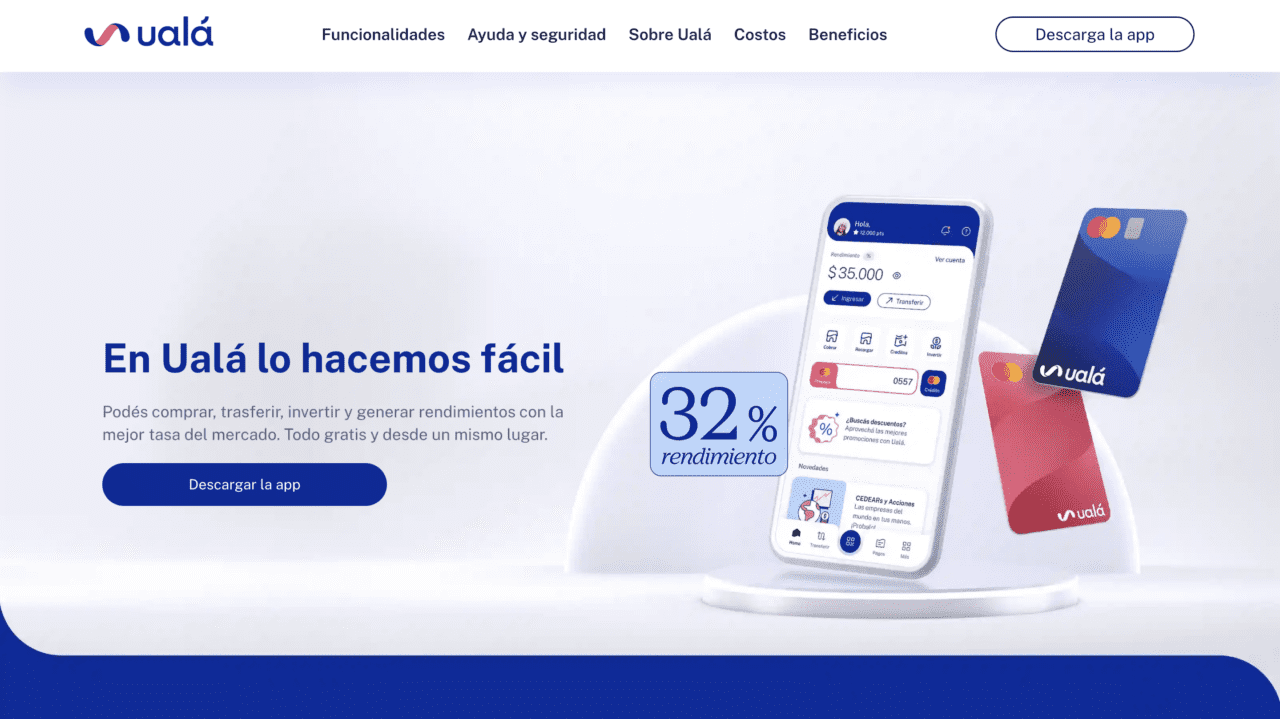
In a funding round that featured participation from Mexican media titan TelevisaUnivision, Argentina-based fintech Ualá has added $66 million in funding to its Series E round. The additional funding brings the round’s total to $366 million and gives the company a valuation of $2.75 billion.
The capital comes via an equity sale and will be used to fuel Ualá’s growth throughout Latin America—with a particular emphasis on expansion in Mexico. Ualá Founder and Chief Executive Officer Pierpaolo Barbieri praised the participation of TelevisaUnivision, which he called a “very relevant and influential outlet, across Spanish-speaking markets but especially in Mexico.” Barbieri added, “It will help us create confidence and closeness with a lot of Mexicans that still don’t know us.”
The first close of the Series E round was led by Allianz X, German insurance company Allianz SE’s venture capital arm. Also participating in the first close were Stone Ridge Holdings Group and Pershing Square Foundation. Additional investors in the extension round were not named.
Founded in 2017 in Argentina, Ualá offers financial services including payment accounts connected to an international Mastercard prepaid card, as well as savings accounts, loans, investments, business collection solutions, and more. The company has nine million users in the region, including in countries such as Argentina, Colombia, and Mexico.
Ualá began the year by announcing the availability of six new mutual funds in its ecosystem, including one fund denominated in dollars. In February, the company integrated an advanced artificial intelligence platform, powered by OpenAI’s GPT-4, into its customer service process.
dLocal partners with Temu, Belmoney
Uruguayan fintech and cross-border payments company dLocal announced a pair of partnerships in recent days. First, dLocal launched a new collaboration with Europe-based, remittance-as-a-service (RaaS) provider Belmoney. The goal of the partnership is to facilitate cross-border payouts, leveraging the integration of more than 900 local and alternative payment methods (APMs) such as credit and debit cards, bank transfers, and instant transactions. The collaboration is also designed to boost service reliability and efficiency for those making cross-border transactions in countries including Bangladesh, Ecuador, Peru, and Pakistan.
“Our partnership with dLocal is a game-changer in the remittance space,” Belmoney CEO and Founder Bruno Pedras said. “By integrating with dLocal’s comprehensive network, we can significantly lower costs, improve transaction speeds, and provide a better cross-border payments experience for both senders and recipients.”
Second, dLocal announced that it has formed a strategic partnership with Temu, the international e-commerce platform of China’s PDD Holdings. Together, the two companies seek to provide shoppers in Africa, Asia, and Latin America with new seamless and secure payment options that are suited to local preferences. Millions of customers in 15 emerging markets in these regions stand to benefit from the collaboration.
“By partnering with dLocal, we’re excited to extend these benefits to millions of customers in emerging markets, ensuring that more people can enjoy accessible, convenient shopping experiences,” a Temu spokesperson said in a statement.
Launched in 2022, Temu is an online marketplace that offers consumer goods at significantly discounted prices. Shipping goods directly from the People’s Republic of China, Temu reportedly has more than 292 million monthly active users of its app worldwide. The app was among the most popular in US app stores for both iOS and Android in 2024.
Founded in 2016, dLocal is headquartered in Montevideo, Uruguay. The country’s first unicorn, dLocal offers an all-in-one payment platform that enables companies to accept and disburse a wide range of local payment methods and currencies. In 2024, the company processed more than $25 billion worth of payments. dLocal works with 700+ merchants, supports 900 payment methods, and operates in more than 40 countries. A publicly traded company on the Nasdaq exchange under the ticker DLO, dLocal has a market capitalization of $2.7 billion. Sebastián Kanovich is CEO.
Ant International’s Bettr brings embedded finances services to ecommerce merchants in Brazil
Speaking of partnerships between businesses in Asia and Latin America, we learned this week that Bettr, Ant International’s AI-driven lending business, has gone live in Brazil. Bettr will help expand lending opportunities for small and medium-sized enterprises (SMEs) by working with local partners such as AliExpress. Through this partnership, Bettr will introduce a new financing solution, Bettr Working Capital, for local merchants working on AliExpress’s platform.
“This collaboration reinforces our commitment to helping small and medium-sized businesses thrive by providing accessible and efficient financial tools that can take their operations to the next level,” LatAm director of AliExpress Briza Bueno said. “In this way, we are not only supporting the individual growth of these entrepreneurs but also contributing to the advancement of e-commerce in the country.”
Bettr Working Capital will be introduced gradually; the first round of disbursements began this week. The technology analyzes merchant sales records and other unstructured business data from AliExpress to make smarter, tailored, more affordable loan solutions. This will help small and medium-sized businesses better manage cash flow and expand into new markets.
Headquartered in Singapore, Ant International is an international digital payments and financial technology provider. Bettr is the company’s digital lending business, which specializes in serving micro, small, and medium-sized enterprises (MSMEs). The firm combines emerging technologies like AI and data-driven credit modeling to offer secure financial solutions that better fit borrower needs.
Here is our look at fintech innovation around the world.
Latin America and the Caribbean
Argentina-based fintech Uala raised $66 million at a valuation of $2.75 billion in an extended Series E round.
Remittance company Pomelo integrated with Visa clearing house in Mexico.
Asia-Pacific
Indonesian ride-hailing service InDrive teamed up with Singapore’s Fingular and Indonesia’s Sharia-compliant P2P lending platform Ammana to launch its new inDrive.Money app.
Malaysian wealth management platform Versa raised $6.8 million in Series A funding.
Japan’s international payment brand JCB partnered with integrated payment provider First Cash Solution, expanding JCB Card acceptance in Germany.
Sub-Saharan Africa
African payments technology giant Flutterwave integrated with Pay With Bank Transfer to support businesses in Ghana.
Mastercardextended its collaboration with London-based Paymentology to boost financial inclusion in South Africa.
Compliance and fraud prevention platform Sumsubannounced a partnership with the Association of Fintechs in Kenya.
Central and Eastern Europe
Lithuanian identity verification provider iDenfy announced a collaboration with mobility provider Evemo.
Estonian fintech Hoovi raised €8 million in funding via a structured bond issue from Finland’s Multitude International Bank.
Moldova-based digital wallet and electronic money institution (EMI) Paynet partnered with open banking services provider Salt Edge.
Middle East and Northern Africa
Israeli fintech FINQ became the first Israeli company to secure a US Securities and Exchange Commission (SEC) Registered Investor Advisor (RIA) license without relocating to the US.
Egyptian fintech Fawry inked a strategic agreement with Contact Financial Holding to expand access to Buy Now, Pay Later (BNPL) services.
Core banking provider Tuum and verification platform Sumsub announced a partnership this week.
The collaboration will help banks, fintechs, and financial institutions enhance fraud prevention without compromising the user experience.
Tuum won Best of Show in its Finovate debut at FinovateEurope 2024 in London. Sumsub made its Finovate debut at FinovateEurope 2020 in Berlin.
A newly announced partnership between core banking provider Tuum and full-cycle verification platform Sumsub will give banks, fintechs, and financial institutions the ability to streamline customer onboarding and enhance fraud prevention without adding friction to the user experience.
The integration of Sumsub’s compliance solutions will help financial institutions deal with the growing threat of fraud and financial crime. This includes a global, fourfold increase in AI-driven deepfake scams. Adding to this challenge is the proliferation of new regulations that are tightening compliance requirements and mandating greater security and operational resilience.
“Regulatory compliance and fraud prevention are no longer just obligations—they are critical to long-term success in financial services,” Tuum Partnerships Director Peter DeSouza said. “With new frameworks like PSD3 and DORA shaping the industry, banks and fintechs must embed resilience, security, and real-time fraud detection into their core operations.”
Through the partnership, banks and fintechs working with Tuum will benefit from automated identity verification and AI-powered fraud detection and transaction monitoring. This will enable them to onboard customers faster and comply with international KYC/AML regulations. Tuum-powered institutions will also benefit from the ability to securely scale and operate in multiple markets thanks to real-time decisioning and continuous risk monitoring.
“As financial institutions navigate increasingly complex regulatory landscapes, seamless compliance and fraud prevention are more critical than ever,” Sumsub Business Development Director for EU/UK Julia Bonda said. “Over three-quarters of fraud now occurs beyond the onboarding stage, with identity fraud in Europe surging by 150% year-over-year in 2024.”
Making its Finovate debut at FinovateEurope 2020 in Berlin, Sumsub offers a full-cycle verification platform including customizable solutions for KYC, KYB, transaction monitoring, and fraud prevention. Founded in 2015, the company has more than 4,000 clients in industries such as fintech, trading, e-commerce, crypto, transportation, education, and more. Sumsub’s customers include Bitpanda, Bybit, Wirex, and TransferGo. Andrew Sever is the company’s Founder and CEO.
Of late, Sumsub has forged partnerships with the Association of Fintechs in Kenya (AFIK), workforce payroll and payments platform Papaya Global, and Latin America-based corporate expense management company Clara. Most recently, the company announced a partnership with Duolingo to bolster security for the language-learning app’s English language proficiency test, the DET.
Headquartered in the UK and Estonia, Tuum won Best of Show in its Finovate debut at FinovateEurope 2024. At the conference, the company demonstrated how its modular, cloud-native, API-first banking platform leverages a microservices architecture to provide high scalability and flexibility along with lower maintenance costs. In the year since then, Tuum has secured partnerships with numerous fintechs including TransactionLink, CREALOGIX, DDCAP ETHOS, Ozone API, Flexys, ComplyAdvantage, and audax. The company was founded in 2019. Myles Bertrand is CEO.
This week’s edition of Finovate Global looks at recent fintech news and headlines from Australia.
Digital private equity manager Moonfare goes live in Australia
Eligible investors in Australia stand to benefit from the arrival of digital private equity investing platform Moonfare. The Berlin-based company announced that it is bringing its wealth management technology to what is now its 23rd country. Moonfare Asia Pacific head Adam Banks, who joined Moonfare in October, noted that the firm’s APAC investor relations team is already “in active discussions with potential clients” in Australia.
Founded in 2016, Moonfare enables eligible investors to access a selection of curated funds from managers such as KKR, EQT, and the Carlyle Group. The company’s proprietary portfolio investments provide diversification and low minimums across a range of strategies, including buyout, growth equity, venture, and infrastructure. Investors on the platform can also participate in secondaries, private credit, and co-investments.
“There is clearly a growing appetite for private equity investing in Australia,” Moonfare Founder and Co-CEO Steffen Pauls said. “But so far access has been limited, especially for people wanting exposure to non-domestic managers and strategies. Moonfare’s digital private equity platform plans to fill that gap by providing seamless access to globally leading top-quartile managers.”
Moonfare boasts more than €3.3 billion ($3.4 billion) in assets under management and access to more than 110 funds. The company began the year with the appointment of Heike Hövekamp as Chief Legal & Compliance Officer. Hövekamp joins Moonfare from Société Générale, where she was Head of Compliance.
Australian regtech Nuj raises $4 million in seed funding
Is there any debate that 2025 is shaping up to be the year of regtech? The fact that regtech increasingly seems to provide fertile ground for new fintech startups may be yet another indication of the growing importance of this subsector.
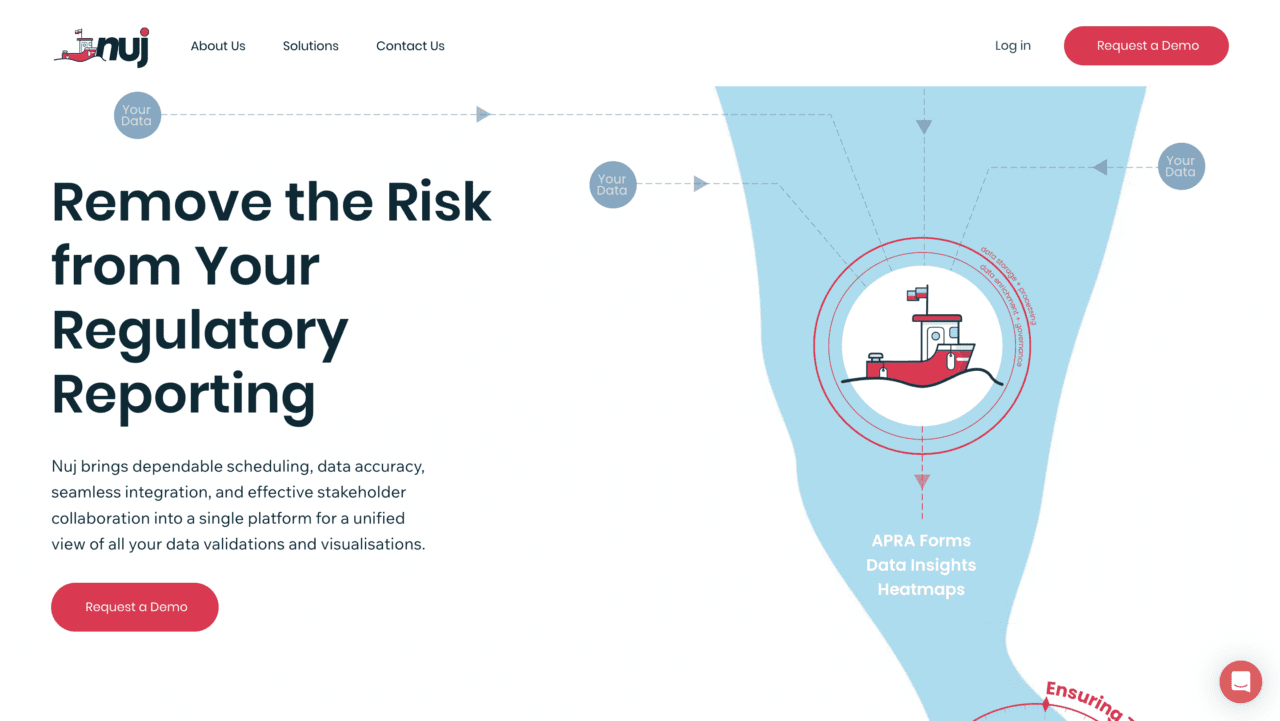
Australia’s Nuj is another fintech startup that is taking advantage of interest in regtech. The company announced that it has raised $4 million in equity and debt financing to develop its superannuation data platform. A superannuation is Australia’s pension program, created to benefit of employees. They are similar in many respects to an individual retirement account (IRA) or a 401(k) in the US.
Mimecast Co-Founder Peter Bauer led a $2 million seed round as part of an overall $4 million equity and debt package. He praised Nuj’s “powerful data platform that addresses an expensive challenge across the super industry — one of staying ahead in compliance with regulations.” Founded in 2020 by Matthew McKenzie, Nuj is a data platform and insights engine that sits between superannuation funds and the regulator. The technology provides real-time insights to superannuation trustees and executives, enabling them to better manage their risk programs. The company’s platform is used by institutions such as MUFG, AMP, and Equity Trustees.
The investment in Nuj comes as regulatory reporting requirements and calls for increased transparency for superannuation funds are growing. McKenzie noted that funding will help “fuel (the platform’s) capabilities for faster data processing and sharper insights, empowering funds to make informed decisions, and driving better financial outcomes.”
Headquartered in Sydney, Nuj was founded in 2020.
Ozone API and ProductCloud team up to help Australian firms meet open banking regulations
A new partnership between Ozone API and ProductCloud will help companies in Australia comply with Open Banking API regulations, specifically Consumer Data Right legislation. The partnership will provide Australian companies with a technology platform that enables them to quickly and securely deliver open APIs aligned to the most recent version of the Australian Consumer Data Standard.
“Our platform is already helping banks and financial institutions around the world to deliver standards compliant with open banking APIs, including in line with the CDR standard,” Ozone API Co-founder and CEO Huw Davies said. “We’re really excited to combine our global expertise in open finance with ProductCloud’s innovative product management platform. Together, our solutions remove the complexity of achieving and maintaining CDR compliance, allowing organizations to focus on their core business.”
Founded in 2017 and headquartered in London, Ozone API is a leading standards-based platform designed to take the complexity out of open banking and help companies meet regulatory and commercial requirements for open APIs. In addition to its partnership with ProductCloud, Ozone API also recently announced its collaboration with FinovateEurope 2024 alum ShareID to, in the words of ShareID CEO and Co-founder Sara Sebti, “enhance the Open Banking ecosystem” and, as Ozone API GM for Europe James Bushby put it, “strengthen trust in open finance.”
Melbourne-based ProductCloud offers a cloud-based, SaaS solution that streamlines product information management for financial institutions. Serving banks, neobanks, mutuals, and non-bank lenders, ProductCloud provides a single tool for both Open Banking Product Reference Data and Design and Distribution Obligation compliance. The company was founded in 2020.
“Since launching ProductCloud back when CDR kicked off, we had our sights on being the go-to Product Information Management and CDR Compliance platform for financial institution product managers,” ProductCloud Co-founder and CEO Mark Evans said. “Partnering with Ozone API is an exciting development because they have also been a pioneer in Open Finance. Collaborating with our respective SaaS platforms and out-of-the-box APIs will provide a unique offering for rapid and cost-effective open banking compliance.”
Here is our look at fintech innovation around the world.
Central and Eastern Europe
Romanian crowdfunding service provider, Venevo, partnered with regtech solutions hub iDenfy.
Lithuanian fintech ArcaPay agreed to be acquired by UK-based financial services provider Ebury.
International money movement firm TerraPay partnered with airport retailer Dubai Duty Free.
Central and Southern Asia
India-based payments and API banking firm, Cashfree Payments, raised $53 million in funding at a valuation of $700 million.
Egyptian fintech Halan Microfinance Bank expanded into Pakistan with a pledge to invest $10 million in 2025.
Indian fintech Cred became the first fintech platform to provide access to India’s central bank digital currency project.
Latin America and the Caribbean
Payment orchestration provider Yuno to launchMastercard Payment Passkey Service across Latin America.
Kuady teamed up with BridgerPay to enhance payment solutions throughout Latin America.
Latin American ecommerce company MercadoLibre now offers transactions using its payment processors in Argentina via Brazil’s instant payment system, Pix.
Verification provider Sumsub announced a partnership with blockchain data platform Chainalysis this week.
The integration will bring automated crypto transaction monitoring and secure data storage, as well as ensure regulatory compliance.
Sumsub made its Finovate debut at FinovateEurope 2020 in Berlin, Germany.
Full-cycle verification provider and FinovateEurope alum Sumsubannounced an integration with blockchain data platform Chainalysis this week. The partnership brings Sumsub’s Transaction Monitoring and Travel Rule solutions to the Chainalysis platform. This will enhance regulatory compliance and secure data storage, as well as provide automated crypto transaction monitoring for Chainalysis’ clients.
In a statement, the companies suggested that the partnership will help encourage greater digital compliance for businesses in the crypto space with functionality like unified workflows and automated transaction monitoring. Sumsub’s Transaction Monitoring solution is designed to help firms deal with the estimated $48+ billion in total fraud losses last year alone. The solution gives fraud and risk teams a single tool to manage the transaction monitoring process with provides fewer false positives and more efficient case management.
Additionally, the technology enables real-time fraud detection, and users can connect KYC, AML, and KYB verification with transaction monitoring for further vigilance against suspicious activity. With Travel Rule, Sumsub automates data transfers with counterparties to make sure firms remain compliant with regulatory obligations in different jurisdictions around the world.
“This partnership enables us to offer access to over one billion mapped addressses across multiple blockchains to those customers who use Sumsub’s Transaction Monitoring and Chainalysis crypto risk solutions,” Sumsub co-founder and Chief Innovation Officer Jacob Sever explained. “Sumsub’s solution’s enhanced capabilities, integrated with Chainalysis’ analytics and key management model, are reshaping the landscape of crypto compliance and security in the digital realm.”
Sumsub made its Finovate debut at FinovateEurope 2020 in Berlin, Germany. The company currently has more than 2,000 clients in fintech, crypto, e-commerce, transportation, gaming, and more. Businesses working with Sumsub have experienced 2.4x return on investment (ROI), $3.2+ million in net present value (NPV), and a payback period of less than six months.
So far in 2024, Sumsub has forged partnerships with B2B Gaming Services and embedded finance integrator AAZZUR. The company began the year teaming up with digital banking technology firm Plumery. In February, Sumsub launched its deepfake detection solution for video identification, an industry-first, and made its non-doc verification solution available in the U.S.
Headquartered in London, Sumsub – which stands for “Sum & Substance” – was founded in 2015. Co-founder Andrew Sever is CEO.
This week marks both the one-year anniversary of Silicon Valley Bank’s collapse and St. Patrick’s Day. Let’s see if this week’s news projects a luckier year for fintechs. Check back for real-time updates on how the fintech landscape evolves this week.
N26launches its Instant Savings accounts in 13 new markets in Europe.
Backbase and West Monroe team up to combine Backbase’s Engagement Banking Platform with West Monroe’s financial services advisory and digital experience capabilities.
Cryptocurrency
Blockchain data platform Chainalysisintegrates with verification provider Sumsub to enhance regulatory compliance, and provide automated transaction monitoring for its clients.
Digital banking technology company Plumery forged a technology partnership with identity verification platform Sumsub.
Via the partnership, Plumery has integrated Sumsub’s verification technology into its banking engagement platform.
Headquartered in London, Sumsub made its Finovate debut at FinovateEurope 2020 in Berlin.
Mobile and digital banking technology company Plumery will integrate verification technology from Sumsub into its banking engagement platform. The integration comes courtesy of a newly announced technology partnership between the two companies. Of Sumsub’s various capabilities, Plumery first will launch Sumsub’s Know Your Customer (KYC) suite.
“Using our APIs, Plumery has been able to create a completely seamless end-to-end onboarding journey for its users,” Sumsub co-founder and CEO Andrew Sever said. “Through this partnership, we can now combine their innovation-focused digital experience … with the highest levels of compliance and fraud protection, provided by our platform.”
Plumery’s banking engagement platform, Headless, enables banks, fintechs, and financial institutions of various types to build apps on top of its APIs. Headless can be deployed without requiring companies to make changes to the user interface (UI) of their apps or to their core banking technology. The partnership with Sumsub will add KYC and anti-money laundering (AML) solutions to verify new customers by leveraging data such as email addresses, tax residency, and proof of address (PoA). The solution will also screen identity documents and make sure new users pass liveness tests as part of the verification process.
The goal of the combined offering is to give both traditional and challenger banks the ability to provide customizable onboarding flows for their customers while remaining fully compliant. In a statement, the companies noted that the integration can save businesses up to 80% on implementation costs and time. The integration also saves companies more than 50% of onboarding costs for each customer.
“Digital and mobile onboarding has become an essential part of any digital banking experience in the last five years,” Plumery CEO Ben Goldin said. “Now, together with Sumsub, our joint customers can integrate this capability faster and more cheaply than ever before, to launch new propositions and whole banks in record time.”
Founded in 2015, Sumsub – which stands for “Sum & Substance” – has raised more than $37 million in funding, according to Crunchbase. The company made its Finovate debut four years ago at FinovateEurope 2020 in Berlin. At the conference Sumsub demoed its all-in-one technical and legal platform that manages all of a company’s KYC/KYB/AML requirements. The solution enables firms to covert more customers, accelerate the verification process, lower costs, and reduce fraud.
Sumsub began the year with an announcement that it had joined the MENA FinTech Association (MFTA). The company’s new membership in the six-year old organization will help it boost business growth in the Middle East and Northern Africa, as well as raise awareness about the challenges of identity fraud in the region.
Identity verification innovator Sumsub introduced a new full-cycle identity verification solution this week.
The new offering addresses new trends in identity verification – including the rise of deepfakes and synthetic fraud.
Headquartered in London, Sumsub made its Finovate debut at FinovateEurope 2020 in Berlin, Germany.
Identity verification specialist Sumsublaunched a new full-cycle identity verification solution this week. The new offering, according to company co-founder and CEO, Andrew Sever, is designed to address accelerating fraud threats. This includes what Sever indicated was “an alarming 70% of fraud activity” taking place after the KYC stage.
Broadly speaking, the new platform is a response to four trends in identity verification: the increase in global fraud, the trend toward non-document verification and digital IDs, tightening regulations in a number of industries, and the democratization of AI technology and innovation. This latter development has created a new challenge in the form of deepfakes and synthetic fraud.
Sumsub’s new offering combines user and business verification, transaction monitoring, fraud prevention, and case management solutions into a single, unified dashboard. The technology enables users to orchestrate identity verification flows and offers unlimited customization. The AI-enabled platform monitors and analyzes data at every stage to identify potentially suspicious behavior.
“The new platform is the unique solution to an equation with three variables, conversion, anti-fraud, and compliance, many leaders in the verification industry struggled to solve until today,” Sumsub co-founder and CTO Vyacheslav Zholudev explained. Zholudev noted that Sumsub provides the highest pass rates across emerging and developed countries, and is among the few providers to openly share conversion rates. “It’s crucial that Sumsub breaks down borders for businesses by bringing top-notch customer experiences customized to different jurisdictions.”
Founded in 2015 and headquartered in London, SumSub stands for “Sum & Substance.” The company made its Finovate debut at FinovateEurope 2020 in Berlin, Germany. At the conference, the company demoed its KYC/AML checks and risk management toolkit. The toolkit helps business convert more customers, verify more customers faster, lower costs, and identify fraud.
SumSub prevents more than 50,000 fraud attempts every month, covering 220+ countries and territories. The company raised $30 million in Series B funding in December of last year. The round was led by Flint Capital.
London-based regtech Sumsub has partnered with Paris-based money transfer company Tempo.
The partnership will help Tempo enhance its user identity verification operations and reduce fraud in line with French regulations.
Sumsub made its Finovate debut at FinovateEurope 2020 in Berlin, Germany.
London-based regtech Sumsub – which stands for Sum & Substance – has teamed up with Paris-based money transfer company Tempo. The partnership will enable the French fintech to leverage Sumsub’s technology to verify user identities and secure customer data in line with KYC and AML regulations. Tempo will benefit from access to a range of KYC services and the partnership already has enabled Tempo to meet AML compliance requirements as established by French regulators.
“We are glad to offer our all-in-one verification platform to global digital payments providers like Tempo, making money transfers more accessible to people worldwide,” Sumsub CEO and co-founder Andrew Sever said. “With Sumsub’s KYC. KYB, transaction monitoring and AML solutions, it’s easier for businesses to expand to international markets and increase their client base while staying fully compliant with regulations and ensuring bulletproof fraud protection.”
Sumsub made its Finovate debut two years ago at FinovateEurope 2020 in Berlin, Germany. At the conference, the company demoed its KYC/AML Checks and Risk Management Toolkit, which enables businesses to accelerate verification, and lower costs by as much as 6x, as well as detect and eliminate digital fraud. The company offers global coverage of more than 200 markets and combines best-in-class technology with human legal expertise to enable Sumsub to help companies in diverse regulatory regimes.
In a statement, Tempo France CEO Alla Zhedik highlighted the fact that Tempo is licensed by the Bank of France. “This imposes strict compliance obligations,” Zhedik said. “And that is where KYC plays a great role and is also why the joint project with Sumsub is so important for us.” Zhedik added that the partnership not only helped minimize fraud and money laundering risks, but also gives Tempo “access to the most advanced customer data processing solutions.”
With more than 2,000 customers in verticals ranging from fintech and digital assets to transportation and gaming, Sumsub claims to have achieved some of the highest conversion rates in the industry, reaching more than 91% in the U.S., and more than 95% in the U.K. The company said that is is able to verify users in less than 50 seconds on average.
Sumsub’s partnership news comes one month after the company announced that it was joining Brazilian fintech association, ABFintechs. Also in November, Sumsub reported that Markor Technology, provider of B2B and B2C technology solutions for iGaming operators, had selected Sumsub to provide enhanced verification and fraud protection.