This site is operated by a business or businesses owned by Informa PLC and all copyright resides with them. Informa PLC's registered office is 5 Howick Place, London SW1P 1WG. Registered in England and Wales. Number 8860726.
Finovate Blog
Tracking fintech, banking & financial services innovations since 1994
Inter Pag has partnered with ACI Worldwide to modernize and scale its merchant acquiring infrastructure as Brazil’s payments market evolves.
ACI’s acquiring platform will bring payments intelligence, AI-driven fraud prevention, analytics, ecommerce tools, and orchestration to Inter Pag, which serves more than 100,000 Brazilian businesses.
The deal reflects a broader shift driven by real-time payments like Pix, as acquirers increasingly differentiate themselves through fraud prevention, intelligence, orchestration, and other value-added services.
Inter Pag, the merchant acquiring business of Brazil’s Banco Inter, has partnered with ACI Worldwide to modernize its payments infrastructure and support its next phase of growth.
Specifically, ACI Worldwide’s ACI Acquiring Platform will provide Inter Pag with cloud-enabled acquiring capabilities, payments intelligence, AI-driven fraud prevention, analytics, ecommerce tools, and payment orchestration. Inter Pag anticipates that tapping ACI’s acquiring platform will help simplify operations and strengthen resiliency while supporting its efforts to scale, innovate, and bring new payment services to market.
“Modernizing our acquiring infrastructure is an important part of our strategy as we continue to evolve our payments capabilities and strengthen the experience we provide to merchants,” said Banco Inter Head of Technology Gustavo Cunha Borges. “We were looking for a platform that would provide the flexibility, scalability, and resilience required for the next phase of our modernization journey. The ACI Acquiring platform provides a strong foundation to support innovation, operational efficiency and future growth.”
Inter Pag serves more than 100,000 small and medium-sized businesses across Brazil, enabling merchants to accept debit and credit cards through physical POS terminals, Tap to Pay on mobile devices, Pix payments, and payment links integrated with Banco Inter’s digital account. Since Pix launched in 2020, the instant payments system has grown to nearly 170 million users and is now the country’s most widely used payment method.
The rise of Pix and other alternative payment methods is also changing the demands placed on Brazil’s acquirers, which increasingly need infrastructure capable of handling higher transaction volumes, real-time payments, stronger fraud controls, and faster product development.
“Brazil has become one of the most dynamic payments markets in the world. The success of Pix, the growth of digital commerce, and rapidly changing merchant expectations are accelerating the need for modernization across the acquiring industry,” said Brazil ACI Worldwide Head of Sales Vlademir Santos. “Reliable, secure and resilient payment processing remains essential, but increasingly acquirers also need payments intelligence, AI-driven insights, orchestration capabilities, and the flexibility to innovate faster. Modern payments infrastructure is no longer just about processing transactions. It’s about turning payments into a strategic growth engine.”
The rise of real-time payments across the globe is changing the role of merchant acquirers. As rails such as Pix make instant payments increasingly ubiquitous, acquirers have an opportunity to differentiate themselves through the services surrounding the transaction, including fraud prevention, payments orchestration, analytics, and merchant tools. For fintechs, Brazil offers insight into how competition may evolve from simply facilitating the transaction into adding intelligence and value around it as real-time payments mature.
It’s Monday again, which means it’s time for another look at the weekly fintech news. So far this week, there’s a spike in business banking news. Here’s a look at what else is trending. We’ll continue to add more announcements as the week progresses.
BinancelaunchesBinance Agent OS, a developer platform built as part of Binance Intelligence.
Credit union technology
Member Driven Technologies (MDT) partners with AI development and consulting firm OnTrac AI to extend MDT’s Transcormational Consulting capabilities with deeper AI readiness, strategy, and implementation expertise.
Open finance
Personetics and Plaidteam up to help banks secure a broader view of customers’ financial lives and enhance personalization efforts.
For years, financial institutions have talked about delivering more personalized experiences. But personalization is evolving beyond simply putting a customer’s name in a message or recommending a product based on broad demographic segments. In the last few years, banks and fintechs have been using behavioral and transactional data, AI, incentives, and contextual insights to understand what customers need and deliver relevant experiences at the moments when they are most likely to act.
At FinovateFall 2026, taking place September 9 through 11 in New York, a diverse group of companies will demonstrate new approaches to customer engagement and financial wellness. Their technologies range from hyper-personalized digital banking and transaction intelligence to financial education, community commerce, loan repayment incentives, and investing tools for the next generation. Below, we’ve highlighted nine companies that will take the stage at FinovateFall to illustrate how financial institutions can turn customer data and everyday financial interactions into opportunities to build stronger, more valuable relationships.
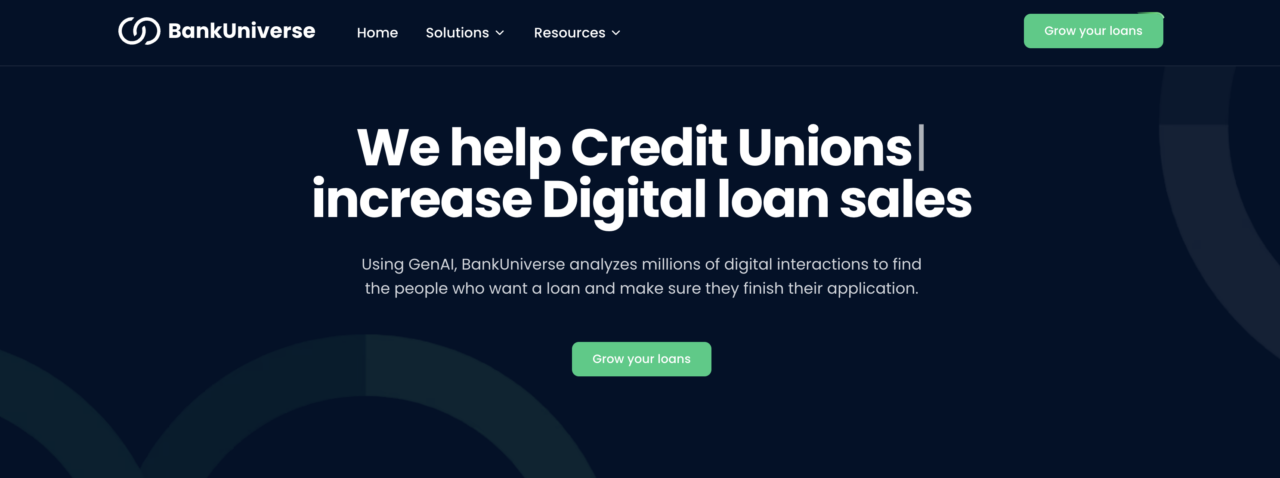
BankUniverse helps financial institutions identify consumers who demonstrate an intent to purchase a financial product and then improve the digital journey that converts those prospects into customers. Its privacy-first platform analyzes digital interactions using GenAI and helps banks optimize product journeys and target relevant audiences without sharing sensitive personal information with third parties. The company says its technology can increase digital sales by more than 20%.
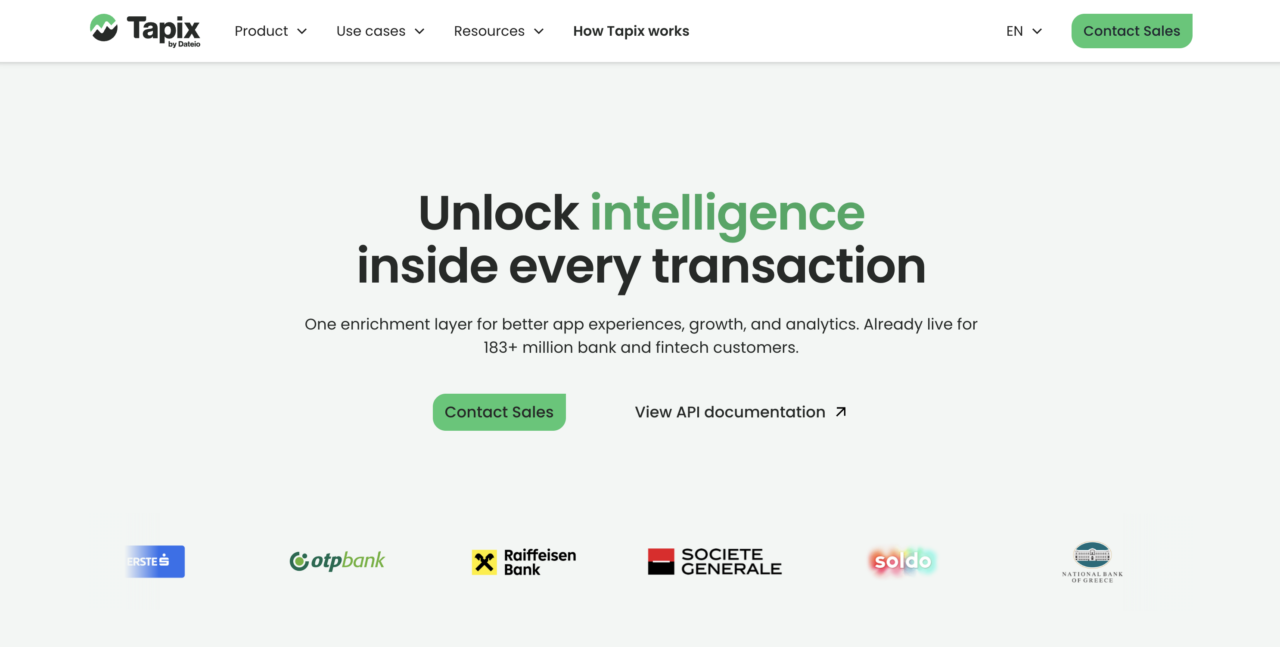
Tapix turns raw payment data into usable transaction intelligence, enriching transactions with information such as merchant names, logos, locations, and categories. That cleaner data foundation can power everything from clearer transaction histories and subscription identification to personal financial management, customer analytics, and hyper-personalized communications. Tapix can also help reduce disputes and chargebacks by giving customers a clearer understanding of where and how they spent their money.
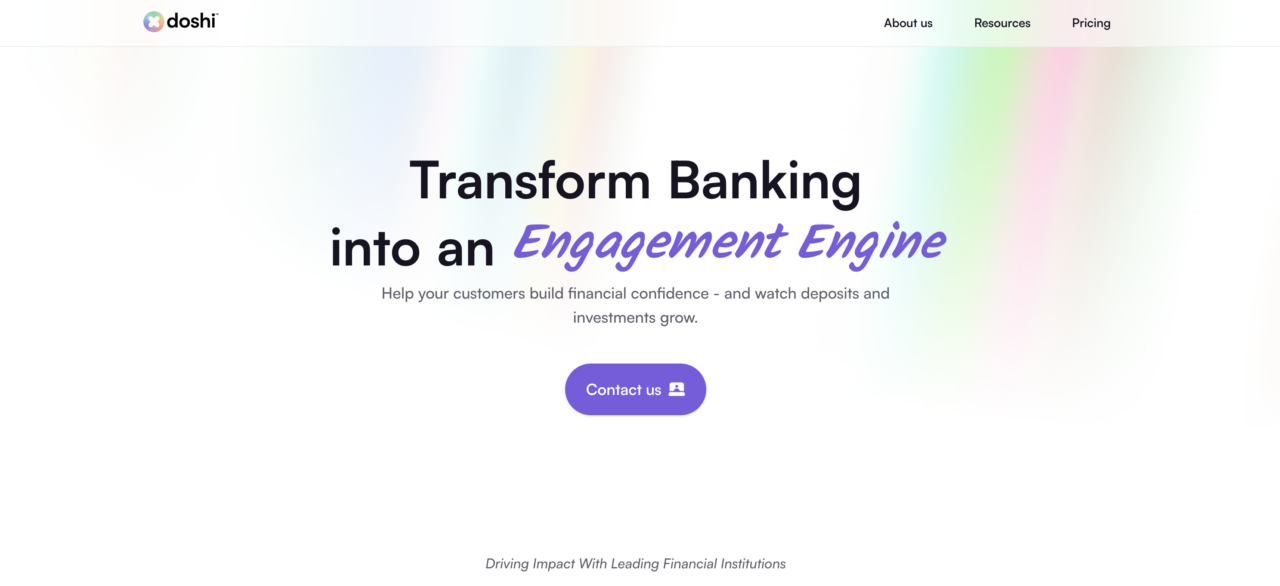
Doshi provides an AI-native engagement layer that combines financial education with gamification to help banks better understand when customers may be ready for additional financial products. As users learn and interact with educational experiences, Doshi turns behavioral signals into product-readiness insights that financial institutions can use to deliver more timely and relevant engagement. The approach gives banks a way to connect financial wellness initiatives with measurable customer growth.
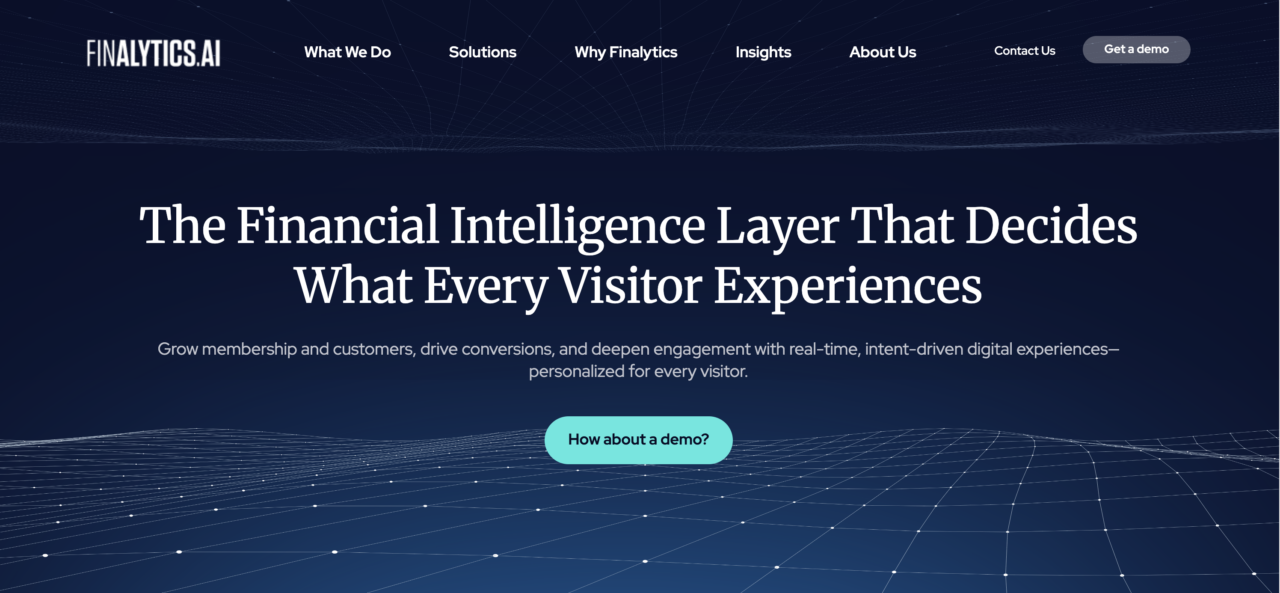
Finalytics.ai helps financial institutions create “segment-of-one” digital experiences using behavioral, transactional, and third-party data. Its AI models continuously analyze available information to determine which content, messages, and offers are most relevant to an individual visitor at a particular moment. The result is a digital banking experience designed around individual intent rather than broad customer segments.
GenAspire helps community financial institutions build relationships with the next generation of customers through a white-labeled teen banking app and financial literacy program. Students learn about saving, budgeting, and spending through lessons, quizzes, rewards, and real-world financial experiences, while parents retain visibility and controls. For credit unions and community banks, GenAspire also serves as an acquisition channel, distributing their branded banking experience through school partnerships and helping institutions establish relationships with young customers before they select their first primary financial institution.
Goodbuy helps credit unions turn community commerce into a customer engagement and growth channel. Its credit union-branded marketplace connects individual members with local small businesses, giving businesses exposure to new customers while providing members with incentives to shop locally using their financial institution’s cards. The model is designed to drive small business account acquisition and deposits while also generating greater card usage and interchange revenue.
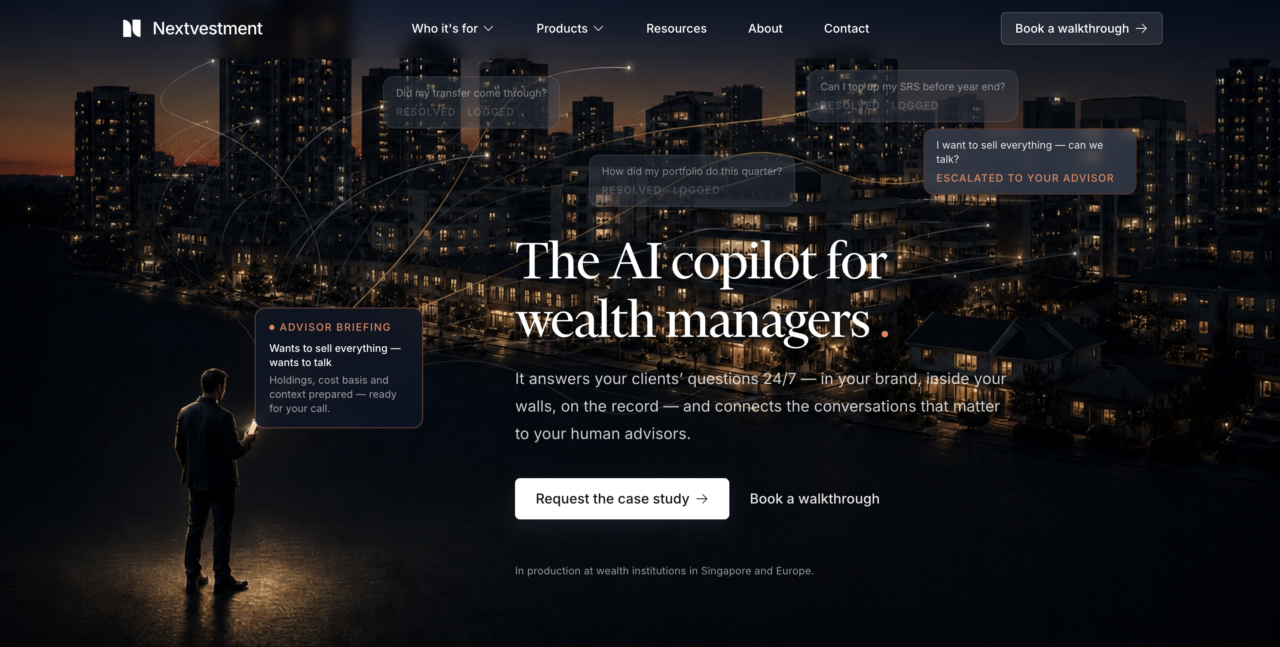
Nextvestment brings AI-powered self-service to wealth management, allowing clients to explore investment ideas and financial questions on their own while helping advisors identify moments when human intervention may add the most value. The platform is designed to improve engagement without replacing the existing advisory relationship, giving clients greater freedom to explore while helping advisors focus their attention where it is most needed.
Perqia helps lenders improve loan repayment behavior by turning payments into a more engaging customer experience. The platform uses cash-flow-timed incentives and rewards to encourage borrowers to prioritize their loan payments and pay before accounts become delinquent. Borrowers receive a self-service experience with visibility into upcoming payments and incentives, while lenders gain insights that can help improve engagement, reduce delinquencies, and lower collection costs.
Young Early Starters (YES) combines financial education with real-world investing to teach children how markets and long-term investing work. Designed for children ages eight to 18, the platform allows young users to learn about companies and investing before putting real money into stocks and ETFs. Parents set budgets and limits and approve individual trades, pairing hands-on investing experience with more than 300 educational lessons. For banks and other financial institutions, the model offers another avenue for establishing financial relationships earlier in a customer’s life.
Why banks should care
Personalization has historically been treated largely as a marketing challenge. Banks would determine which customers fit a segment, identify the product most likely to appeal to that segment, and deliver a targeted message. But the companies above demonstrate a broader opportunity built on better transaction data, behavioral signals, rewards, financial education, and AI. These tools can indicate when a customer is ready for a new financial product, encourage positive repayment behavior, create engagement long before a customer needs a financial product, and help banks determine what an individual customer needs in real time.
In 2026, customer engagement is more than clicks, logins, and open rates. Banks and credit unions need to give customers reasons to deepen their relationships and keep coming back. The companies coming to the FinovateFall 2026 demo stage show how financial institutions can use technology to make those interactions more relevant, timely, and useful.
Growing up in Montana, community banking was the only type of banking I ever knew until I left town for college. My best friend’s mom worked at the bank down the street, and all of the tellers recognized my parents when we walked into the branch. My mom started her own business by obtaining a working line of credit after presenting a business plan and a promise.
As a kid, I thought every town worked this way. Now, decades later, looking back on those experiences offers important insights into banking.
Community banking, especially in a small town, has always depended on trust, reputation, personal connections, and long-term relationships. When I switched to a digital-only bank in 2006, that sense of connection largely disappeared. My relationship with the bank felt less personal and more centered on the transactions I was making.
That disconnect may help explain why so many fintechs now invest heavily in recreating digitally what community banks have spent generations building in person. Personalization, customer engagement, financial wellness, AI assistants, and customer relationship management may sound modern, but the underlying ideas are not. Community banks have long relied on knowing their customers, understanding their needs, and building loyalty over time. In 2026, those same goals remain priorities across the financial services industry.
Because community banks already understand many of the qualities customers value most, they do not need to imitate megabanks. They do, however, need technology that helps them extend those strengths. With the right partners, community banks can serve customers faster, automate manual work, strengthen fraud detection, and give employees more time to focus on meaningful customer interactions. The opportunity will help strengthen the relationship-driven model by supporting it with digital tools and workflows that meet rising customer expectations.
This technology gap is exactly what the Community Bank Spotlight at FinovateFall seeks to bridge. On September 11, we’re hosting a special breakfast session open only to community banks and a few selected fintechs, that will provide executives a place to share best practices, talk through common challenges, and discover innovative solutions.
If you’re interested in attending the Community Bank Spotlight at FinovateFall, reach out to [email protected] to get yourself on the guest list. Keep in mind that space is limited, and only community bank employees are eligible to attend.
Airwallex has partnered with Affirm to enable merchants in 35 countries to offer BNPL options to eligible US customers at checkout.
Airwallex merchants can add Affirm without an additional integration, giving shoppers access to interest-free and longer-term installment payment options.
The partnership expands Affirm’s distribution while helping Airwallex merchants offer more competitive checkout experiences and potentially boost conversion and transaction sizes.
Global payments platform Airwallex has teamed up with flexible payments company Affirm to allow merchants in 35 countries to provide flexible payment options at checkout to their eligible US customers.
Without additional integration, merchants can bring Affirm’s buy now, pay later (BNPL) capabilities, allowing shoppers to choose a payment schedule that works best for their cashflow at the point of sale. Among Affirm’s flexible financing options are four interest-free installments or monthly installments of up to 24 months. Affirm will not charge late fees and shows shoppers what they will pay upfront.
In addition to bringing flexibility to end customers, Affirm’s tools also bring benefits to merchants. The relaxed payment terms often support higher conversion and larger transactions. Merchants on Airwallex can offer Affirm payments seamlessly. Airwallex now supports more than 160 payment methods across the world.
“Merchants choose Airwallex to maximize local payment options for shoppers around the world, otherwise, they’re leaving conversion on the table,” said Airwallex VP of Financial and Strategic Partnerships Jason Gottlieb. “We’re thrilled to partner with Affirm and provide its familiar and transparent payment options to help our international merchants drive more US sales.”
Adding Affirm helps merchants compete with other point-of-sale checkout experiences by bringing more payment options into the checkout flow. And because accessing Affirm through Airwallex doesn’t require an additional integration, it reduces the complexity for merchants looking to modernize their payments experience.
For Affirm, the partnership offers another avenue for distribution. Partnerships with platforms like Airwallex allow the BNPL provider to reach large groups of merchants through technology they already use, rather than establishing a standalone relationship with each merchant. Affirm has pursued a similar strategy through partnerships with payment providers including Worldpay and Fiserv, expanding the number of places consumers can encounter its financing options.
Founded in 2015, Airwallex holds 85+ regulatory licenses and permits across 50 markets that enable customers to operate in 200+ countries and regions and support multi-currency checkout at scale. The Singapore-based company helps more than 676,000 businesses worldwide manage their financial operations and build and monetize their own financial products.
FinovateFall is just three weeks away! This year’s event features three industry stages: AI and Innovation, The Future of Money, and Customer Experience and Trust. Each stage is designed to offer banking and fintech leaders insight into what’s working in practice, what’s breaking under the pressure of new technology and regulations, and what institutions need to rethink about their current operations.
AI and Innovation
Artificial intelligence has moved beyond experimentation. The conversations at FinovateFall will focus on what comes next, such as transitioning from AI copilots to semi-autonomous agents, measuring the ROI of AI projects, and examining where investments are still falling short. Sessions will explore enterprise-scale AI development, practical approaches to modernizing legacy technology, the rise of agentic commerce, and the front-office opportunities that promise the greatest competitive advantage. Attendees will leave with a clearer understanding of where AI is creating real business value today and where the next wave of innovation is headed.
The Future of Money
Stablecoins, AI agents, and data-driven lending are reshaping how money moves and how financial decisions are made. This stage explores the technologies and strategies that will define the next generation of financial services, from the growing role of stablecoins in banking and payments to AI-powered financial decision-making and precision lending. Industry leaders will also examine how payment strategies are evolving amid increasing competitive and regulatory pressure. Attendees will walk away with practical insight into where financial institutions should focus their investments as the infrastructure of money continues to change.
Customer Experience and Trust
Delivering exceptional customer experiences increasingly depends on earning and maintaining trust. Sessions in this stagea will explore how financial institutions can use personalization and AI to create more relevant customer journeys while strengthening security, reducing fraud, and building lasting customer confidence. The discussions on this industry stage will examine experience transformation, digital identity, financial crime prevention, and how banks can turn trust into a competitive advantage while maintaining growth.
Together, these three industry stages on Friday, September 11 will offer a concentrated look at the moves that will define banking’s next chapter. If you register for FinovateFall before August 21, you can still save up to $400.
Micronotes has rebranded as Eligen after selling its Cross-Sell digital engagement business to embedded fintech provider Array.
Eligen will focus on helping banks and credit unions use credit bureau data to identify qualified borrowers and deliver personalized, prescreened credit offers.
The company aims to help banks grow loan portfolios by automating borrower targeting and using post-campaign analytics to improve future campaigns.
Digital engagement solutions provider Micronotes is revamping for the new era of fintech this week. The Massachusetts-based company has relaunched as Eligen after selling off its Cross-Sell business to Array.
The new brand will help lenders proactively identify consumers who already meet certain credit criteria and send them a firm offer of credit. In the long term, Eligen plans to bring in additional data and expand offer types.
Unlike traditional marketing campaigns that target consumers based on broad characteristics, Eligen uses credit bureau data to identify consumers who meet a lender’s specific credit criteria. For example, the platform may identify a consumer who holds an auto loan with another lender at a higher interest rate than the bank or credit union can offer. Eligen can then calculate the potential savings and help the institution send the consumer a personalized, prescreened offer to refinance the loan.
The approach allows financial institutions to target borrowers who are more likely to qualify for the products being offered, while automating much of the work involved in identifying prospects and executing campaigns. Eligen also provides post-campaign analytics that lenders can use to measure results and refine subsequent campaigns.
“Community institutions are sitting on a structural advantage—trust, rates, and local presence—but losing on speed and targeting,” said Eligen CEO Joe Heller. “Focusing our efforts means our clients get a better acquisition engine that uses post-campaign analytics to improve over time. This allows them to compete regardless of institution size.”
As part of the change, Eligen will no longer operate the Cross-Sell tool, a predictive digital engagement and marketing tool that allowed banks to conduct conversational “interviews” within online banking platforms to help financial institutions identify sales opportunities, measure customer satisfaction, and pitch relevant financial products. Cross-Sell has been sold to embedded fintech products provider Array.
Eligen was originally founded as Micronotes in 2008 to help financial institutions use their data to better engage their customers, foster involvement, and ultimately build new revenue. Under the new brand, the company noted that much of the operation will continue as it did when the company operated as Micronotes. The company’s employees, client contracts, and Experian partnership will all remain unchanged.
As Eligen, the company will double down on its focus on using credit bureau data to help banks automate campaigns using targeted offers and actionable post-campaign analytics to grow their loan portfolios.
Between last week’s announcement that it now allows parents to send money to their kids on Google Wallet and today’s press release stating that it has added Venmo as a payment option on Google Play, it appears that Google is rethinking payments. Here’s a look at the top fintech news headlines for this week. We’ll continue to add more announcements as the week progresses.
Lending has always depended on a financial institution’s ability to assess risk, make informed decisions, and deliver capital efficiently. But many of the systems supporting that process remain slow, fragmented, and heavily manual. Commercial lenders still spend days gathering documents and spreading financials, while consumers and small businesses increasingly expect faster decisions, flexible payment options, and seamless digital experiences.
The companies demoing at FinovateFall 2026, taking place on September 9 through 11 in New York, are approaching these challenges from several angles. Some are using AI to accelerate underwriting and automate operational work. Others are embedding financing and flexible payment options directly into digital banking, helping institutions identify household opportunities, or rebuilding commercial lending around borrower self-service. Together, these six companies demonstrate how smarter technology can help financial institutions improve speed, efficiency, and access to financing.
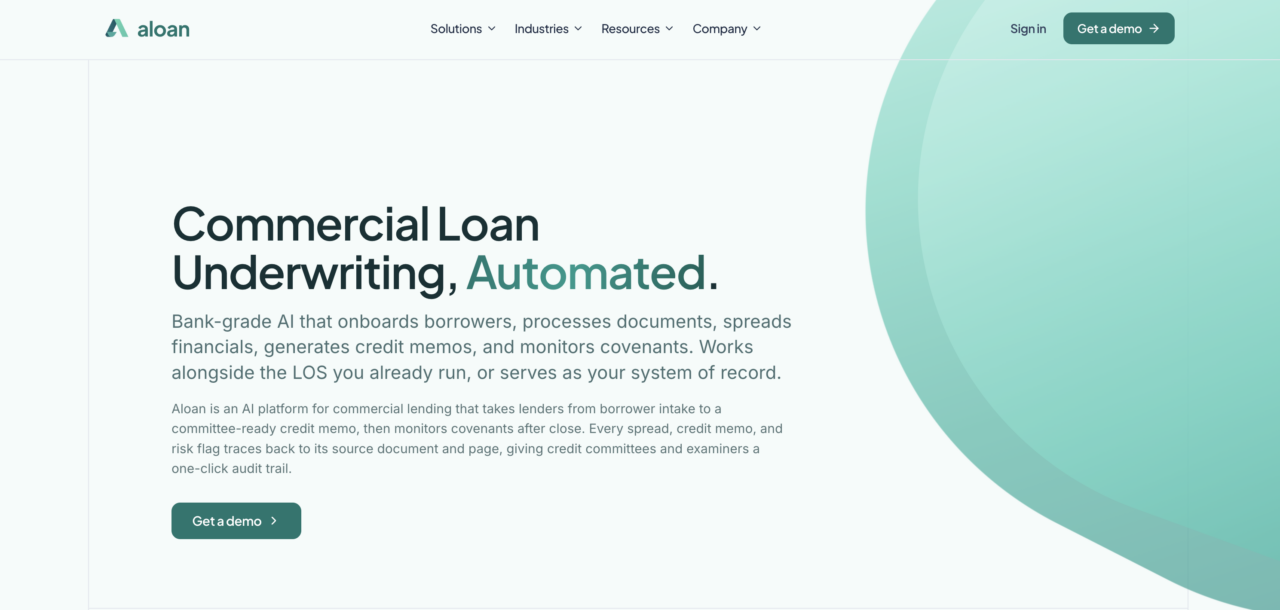
ALoan uses AI to automate commercial underwriting and help lenders move from borrower documents to a completed credit memo in less than 30 minutes. The platform spreads financial information from tax returns, bank statements, and borrower financials, applies the lender’s credit policies, and links each figure and conclusion back to its original source. By automating document collection, financial spreading, and credit memo preparation, ALoan enables commercial lending teams to increase throughput and reach term sheets faster without adding staff or replacing existing systems.
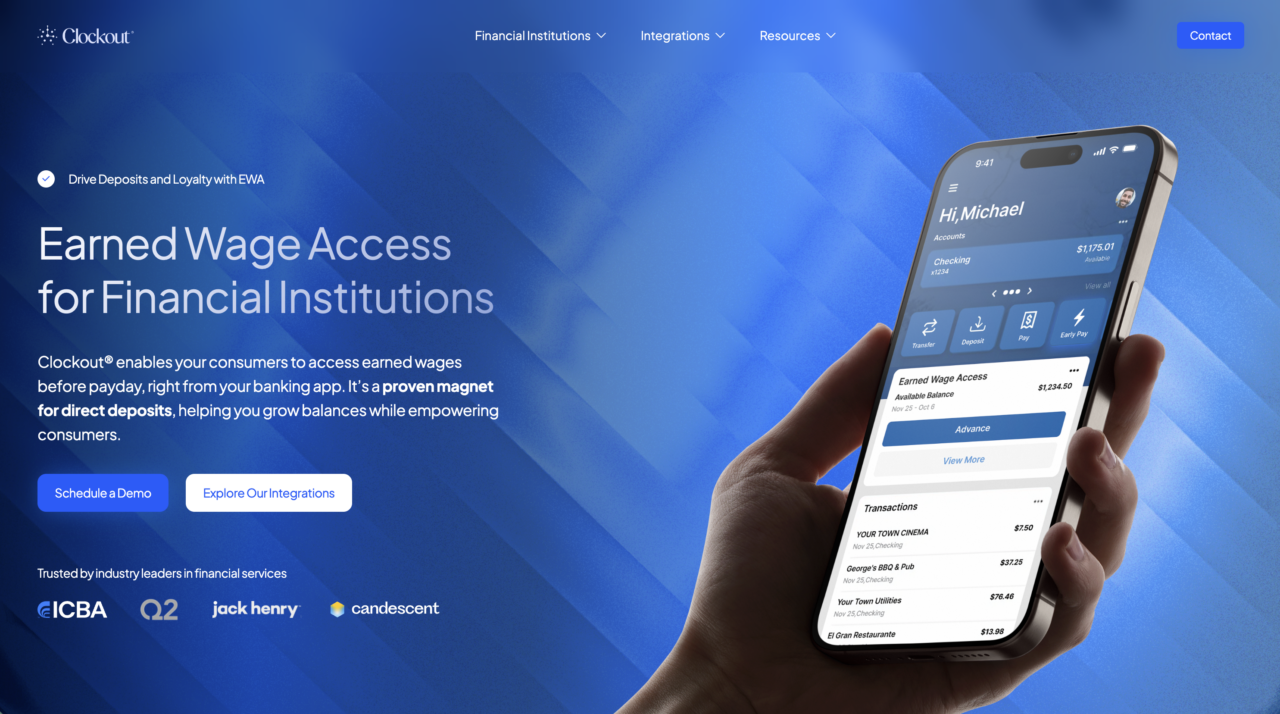
Clockout helps banks and credit unions embed financial wellness and liquidity tools into their customer experiences. The platform is designed to increase direct deposit relationships, generate new fee revenue, and strengthen customer engagement by providing users with more ways to manage short-term financial needs. For financial institutions seeking to deepen primary account relationships, Clockout offers a way to combine financing access with broader financial wellness.
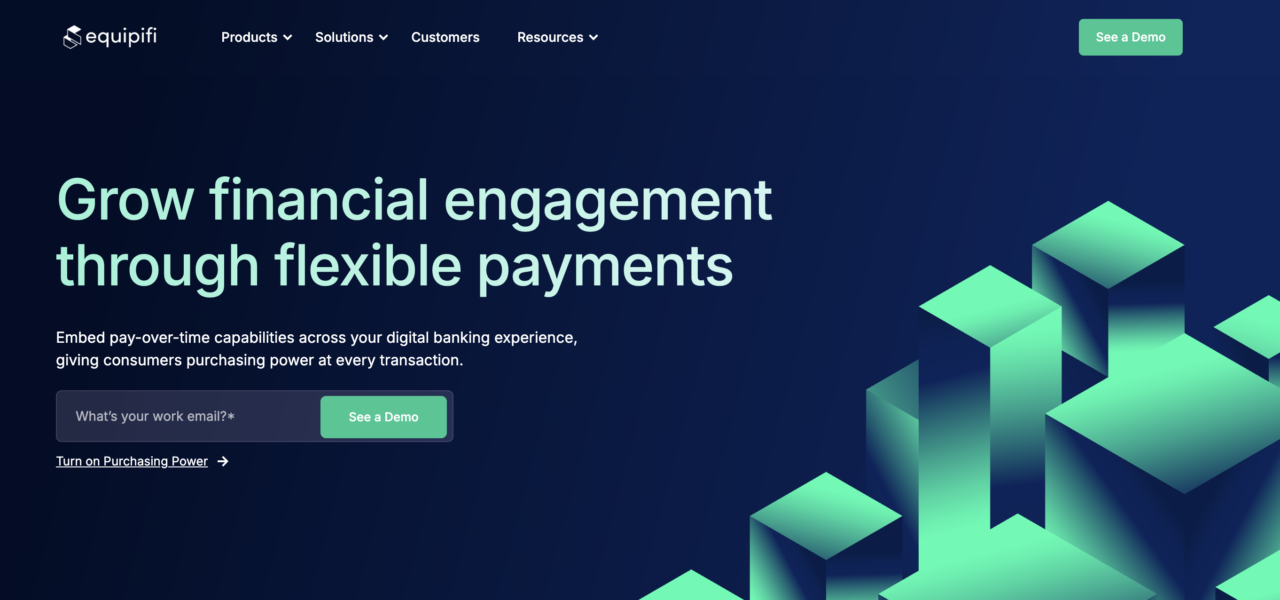
equipifi enables banks and credit unions to offer Buy Now, Pay Later (BNPL) and flexible payment options directly within their digital banking platforms. Its technology allows financial institutions to present personalized purchasing power and financing offers based on customer behavior and purchase intent, including through real-time mobile notifications. By bringing BNPL inside the banking relationship, equipifi helps financial institutions participate more directly at the point of sale rather than ceding that interaction to third-party providers.
OptimaFI’s Household Insights platform gives community banks and credit unions a household-level view of customer accounts and performance. The platform benchmarks institutional data against more than 14 billion private peer data points and provides segment-level recommendations related to growth and risk. Because it does not require a core integration, financial institutions can begin using the platform in a matter of days to identify opportunities across deposits, lending, and broader household relationships.
QuickFi offers an end-to-end digital platform for commercial equipment financing that allows borrowers to self-serve from application through final payment. The company replaces manual, paper-heavy lending processes with a digital experience that can deliver financing decisions and documentation in minutes, 24 hours a day. QuickFi helps banks and equipment manufacturers serve small business borrowers more efficiently while reducing the staffing and operating costs associated with traditional commercial lending models.
Voyager AI brings personalization and intelligence to complex commercial lending workflows. The platform unifies document collection, financial spreading, underwriting, compliance, and credit memo preparation while learning an institution’s specific lending policies and standards. By automating manual steps and identifying missing information earlier in the process, Voyager AI helps lenders deliver faster, more consistent experiences while allowing employees to spend more of their time on borrower relationships, structuring, and credit judgment.
Why banks should care
Speed has become a competitive advantage in lending. Borrowers are less willing to wait weeks for a credit decision when another provider can deliver an answer in hours or minutes. At the same time, banks and credit unions are under pressure to grow loan portfolios without proportionally increasing headcount or operational expense. Technologies that automate underwriting, document collection, reconciliation, and servicing can help institutions make faster decisions while preserving the judgment and oversight required for responsible lending.
The definition of lending is also expanding. Flexible payments, embedded financing, household intelligence, and digital self-service are blurring the lines between traditional loans, payments, and financial wellness. Financial institutions that treat these capabilities as part of a broader customer relationship may be better positioned to capture more borrowing activity, deepen engagement, and compete with nonbank providers. The companies demonstrating at FinovateFall 2026 show how institutions can modernize both the front-end borrower experience and the operational infrastructure that supports the lending process.
When we announced IMPACT Funders & Founders, we described it as a new kind of event designed to bring together fintech founders and the investors backing the next generation of fintech in a setting built for meaningful conversations, targeted networking, and real fundraising opportunities.
The inaugural IMPACT event, taking place alongside FinovateFall on September 11 in New York City, features venture capitalists, startup founders, corporate investors, accelerators, and ecosystem builders who are actively shaping fintech’s next chapter. Rather than focusing on broad industry trends alone, these speakers will tackle the practical questions founders and investors face every day, such as raising capital, scaling a company, navigating exits, leveraging AI, embedded finance, and the changing venture landscape.
Learn from investors writing today’s checks
Whether you’re raising your first institutional round or preparing for growth-stage funding, one of the biggest advantages of IMPACT is direct access to active investors.
The speaker roster includes partners from venture capital firms, private equity firms, and strategic investors who are evaluating fintech opportunities every day. They’ll discuss what they’re looking for in founders, how investment priorities are evolving, and where they see the greatest opportunities in today’s market.
Hear from founders who’ve been there
Building a fintech company is about far more than securing funding. IMPACT speakers include founders who have navigated product launches, customer acquisition, regulatory hurdles, hiring, scaling, and fundraising firsthand.
Expect candid conversations about the realities of building a fintech company, including the lessons learned from both successes and setbacks.
Gain practical insights from fintech operators
Alongside founders and investors, the program features experienced executives from banks, fintechs, and industry organizations who understand what it takes to bring new financial products to market.
Sessions will explore topics including:
AI and emerging technologies
Go-to-market strategy
Customer acquisition and growth
Bank partnerships
Regulatory considerations
Fundraising strategy
Scaling operations
Explore the full speaker lineup
The IMPACT speaker roster continues to grow as additional investors, founders, and industry leaders are announced, but here is a taste of who you can expect to see on stage.
InvestiFi raised $20 million in a strategic funding round led largely by credit unions and fintech investors to expand its embedded investing platform for community financial institutions.
Community banks and credit unions are increasingly competing with fintechs like Robinhood, Wealthfront, Betterment, and Coinbase for the primary customer relationship, making embedded investing a key retention strategy.
The investor lineup signals strong industry confidence that integrated wealth management tools will be critical for smaller financial institutions to remain competitive with digital-first providers.
Credit Union Service Organization (CUSO) InvestiFi has landed $20 million in a funding round led by Vibe Credit Union, with participation from BankTech Ventures, ICCU (Idaho Central Credit Union), Navari (formerly CUSG), United Financial Credit Union, Coastal Credit Union, Mid Minnesota Credit Union, Truity Credit Union, and Southpoint Credit Union.
“What makes this raise especially meaningful is that so much of it comes directly from the consumer-focused financial institutions and strategic partners who use our platform every day,” said InvestiFi CEO and Founder Kian Sarreshteh. “They aren’t just customers — they’re believers in our mission to democratize investing and to make sure community financial institutions can compete and win in this space.”
InvestiFi plans to use today’s funds to scale its platform and increase adoption among credit union members and community bank customers. Specifically, the organization’s goal is to help these smaller financial institutions retain and gain back deposits from the 43% of Millennial and Gen Z users who have transitioned to third-party investment platforms because they felt that their credit union or community bank didn’t offer adequate investing options.
While community banks and credit unions used to compete against each other and larger banks, this is no longer the case. Fintechs like Robinhood, Wealthfront, Betterment, and Coinbase have become commonplace among users. And because these fintech options are increasingly offering savings tools, checking accounts, and even credit cards, there is also increased competition for the primary customer relationship. InvestiFi’s tools that allow community banks and credit unions to embed investing tools directly within their website or app will help retain primacy.
The makeup of the investor base is perhaps as noteworthy as its size. With many of InvestiFi’s own credit union customers participating, the raise shows how community financial institutions are increasingly investing in fintech infrastructure they view as essential to remaining competitive with larger banks and digital-first financial providers.
“For generations, credit unions have earned trust by helping members save, borrow, and achieve their financial goals,” said Vibe Credit Union Chief Operations and Strategy Officer Jeff Pascoe. “The next chapter is helping them build wealth through that same trusted partnership. As a credit union, we believe we have a responsibility to invest in innovations that strengthen not only our own members’ experience, but the future of the credit union movement itself. InvestiFi helps make that future possible.”
InvestiFi, which enables credit unions and community banks to offer digital investing directly within online banking, was founded in 2020. The organization helps its 60 financial institution clients offer tools like fractional investing, guided investing, IRAs, cryptocurrency trading, and stablecoins.
Interested in hearing more about specialized tools for community banks or credit unions? Register for FinovateFall and enroll in the Credit Union Spotlight or the Community Bank Spotlight to get a dedicated networking space where you can share best practices, talk through common challenges, and discover innovative solutions designed for you.
In the run-up to FinovateFall, which takes place on September 9 through 11 in New York, we asked several speakers for their perspectives on technologies shaping financial services, the biggest challenges facing banks, and why they keep coming back to Finovate.
Below is a preview of what nine speakers had to say ahead of this year’s event.
Michael Reynolds, Business Technology Executive at KeyBank
Michael Reynolds leads intelligent automation at KeyBank, where he oversees robotic process automation, intelligent document processing, low-code development, and generative AI initiatives. Under his leadership, KeyBank’s digital workforce now performs the equivalent of more than 500 employees’ worth of work.
Why Finovate?
“Finovate is one of the few conferences where you can see real, working technology, not concept slides. The live demo format lets banks quickly assess what is production-ready, identify emerging fintech partners, and compare innovation across multiple categories in just a few days. Finovate highlights hundreds of fintech demos and attracts a large audience of banking decision-makers, making it a highly practical venue for both learning and networking.”
What will banks need to prioritize over the next 18 months?
“Banks will need to prioritize AI-powered productivity and agentic automation. The winners will be institutions that combine AI with strong governance, security, and operational integration, not those simply deploying chatbots.”
Where is AI making the biggest impact today?
“Inside our organization, the most immediate impact is in operations and employee productivity: automating manual processes, accelerating knowledge retrieval, improving service delivery, and helping teams focus more time on higher value work while maintaining appropriate controls and oversight.”
Sam Kilmer, Managing Director at Cornerstone Advisors
Sam Kilmer leads Cornerstone Advisors’ work with fintechs, financial institutions, and private equity firms. A longtime banking executive and host of the Fintech Hustle podcast, he spends much of his time helping organizations navigate innovation and partnerships.
Why Finovate?
“Finovate is fast-paced, so likes hit fast and dislikes are over quickly. It exposes me to a lot of earlier stage companies.”
What should the industry focus on next?
“Banks will need to improve showing outcomes and storytelling authentically to stand out from increasingly AI-generated content and claims.”
Andrew Endicott, CoFounder at Gilgamesh Ventures
Andrew Endicott is Co-Founder of Gilgamesh Ventures, an early-stage fintech venture capital firm investing globally in companies from pre-seed through Series A. Before becoming an investor, he co-founded credit card fintech Petal and recently authored the book Is Finance Technology?
Why Finovate?
“Great mix of financial institutions and fintechs all in one place. Really excited to be part of it.”
What financial services problem still needs solving?
“There are many problems in finance that are unsolved, but I feel that wire transfers are a big one.”
Katherine Avery, Founder at Chimayo Consulting
Katherine Avery is founder of Chimayo Consulting and a veteran enterprise risk executive with more than two decades of experience spanning banking, capital markets, commodities, digital assets, and AI governance. She helps financial institutions build governance frameworks that keep pace with rapidly evolving technology.
Why Finovate?
“Finovate earns its place because it’s practitioner driven rather than vendor theater. The demos are live and unscripted, judged by people who actually implement this technology, which forces a level of rigor other conferences don’t demand.”
What should banks prioritize over the next 18 months?
“Banks need to operationalize AI governance now, not after deployment. The institutions that treat model risk management, explainability, and third party AI oversight as foundational, rather than bolted on post-launch, will be the ones still standing when regulators catch up to the pace of adoption, which they will within this window.”
What is one change you believe will fundamentally reshape fintech in the next five years?
“The change I believe will fundamentally reshape fintech in the next five years is the shift from AI as a discrete tool to AI as an embedded decision maker across underwriting, monitoring, and customer interaction. That shift collapses the old boundary between innovation and risk functions. Governance can no longer sit downstream of deployment.”
What is one fintech trend you believe will accelerate in the final quarter of 2026?
“One trend I expect to accelerate in Q4 2026 is the move toward agentic AI in back office and compliance functions. Institutions are getting more comfortable letting AI take bounded, delegated actions in monitoring and control testing, and that comfort will keep building through year end.”
What is one problem in financial services that fintech still hasn’t solved well enough yet?
“The problem fintech still hasn’t solved well enough is third party risk visibility. Banks are stitching together more vendors and platforms than ever, and most risk frameworks still can’t see deep enough into that supply chain to catch concentration or contagion risk before it becomes a real event, not just a checkbox on an assessment.”
Vivek Valecha, SVP of Intelligent Automation at Xebia
Vivek is Senior Vice President of Intelligent Automation at digital engineering company Xebia, where he leads the charge on Agentic AI to help enterprises move beyond automation into autonomous, intelligent decision-making that reimagines customer experience and unlock new levels of employee productivity.
Why Finovate?
“Finovate stands apart because it’s built for demos, not just discussions. It’s one of the few conferences where banks and fintechs see technology in action rather than in slide decks — that hands-on, no-fluff format is exactly where real partnerships and practical ideas take shape.”
What should banks prioritize over the next 18 months?
“Banks should prioritize agentic AI. Banks have spent the last few years automating discrete tasks — the next wave is about deploying AI agents that can reason, make decisions, and orchestrate multi-step processes with minimal human intervention. Institutions that move from “AI-assisted” to “AI-agentic” will have a real competitive edge in speed, cost, and customer experience.”
What is one change you believe will fundamentally reshape fintech in the next five years?
“In five years, autonomous AI agents will handle entire workflows—from underwriting to fraud investigation to customer servicing—with humans stepping in only for exceptions. That shift won’t just improve efficiency; it will fundamentally redefine what “operations” even means inside a bank.”
Jalak Jobanputra, Founder and Managing Partner at Future Perfect Ventures
Why Finovate?
Finovate offers founders an unmatched feedback loop by putting live product demos in front of banks, investors, and potential distribution partners. With only minutes to present, founders quickly discover whether their product solves a real problem.
What is one fintech trend you believe will accelerate in the final quarter of 2026?
One of the biggest fintech trends through late 2026 will be the rise of agent-initiated payments, as AI agents begin making transactions on users’ behalf. This will require merchants, payment processors, and banks to develop secure authorization frameworks. At the same time, stablecoin settlement is moving from pilot programs into real treasury and B2B use, making machine-speed transactions practical.
What is one problem in financial services that fintech still hasn’t solved well?
The industry’s biggest unresolved challenge remains digital identity. Customers still repeatedly verify themselves, share excessive personal data, and rely on fragmented systems that are increasingly vulnerable to AI-powered fraud. Secure, portable, user-controlled identity has existed technically for years, and the growth of AI agents may finally create the commercial incentive needed for widespread adoption.
Courtney Rowan, Chief Digital & Transformation Officer at Citadel Credit Union
Why Finovate?
Finovate is unique because you don’t watch presentations, you watch products. There are no slide decks, no marketing pitches, and nowhere to hide. Every company has seven minutes to demonstrate a real product solving a real problem.
What is one technology or capability that banks should prioritize in the next 18 months?
The biggest opportunity for banks over the next 18 months is embedding AI into everyday work and member experiences. At Citadel, we’re already seeing meaningful impact through employee productivity and operational efficiency, and that’s creating the foundation for even bigger gains in personalization and growth. Longer term, the greatest opportunity is combining those operational gains with personalized member experiences and growth.
What is one change you believe will fundamentally reshape fintech in the next five years?
The biggest change will be the move from AI as a feature to AI as an operating model. Every financial institution will have access to the technology, but the winners will be those that fundamentally redesign how they work. That’s the challenge we’re tackling at Citadel because we believe AI should make banking more personal, more efficient, and more accessible, not less human.
What is one fintech trend you believe will accelerate in the final quarter of 2026?
The biggest trend heading into Q4 is the move from AI pilots to AI at scale. The institutions that can prove measurable business value will pull ahead quickly. At the same time, fintech still hasn’t fully solved proactive financial guidance. We’ve digitized banking, but we haven’t yet personalized financial wellness and advice at scale.
Patricia Montesi, EVP Qolo
Why Finovate?
Finovate rewards the working product over the best narrative. B2B payments infrastructure also gets little stage time elsewhere, and the treasury leaders and platform CTOs who care about it are hard to find in one room.
What is one fintech trend you believe will accelerate in the final quarter of 2026?
In Q4, faster payments stop being a capability and become a product line. The rails are live. The commercial layer is not: pricing, liquidity management, exception handling. Banks that spent two years connecting to instant rails are now being asked what revenue those rails produce.
What is one problem in financial services that fintech still hasn’t solved well enough yet?
This points to what fintech still has not solved: exceptions. We are excellent at the happy path. A payment that is returned, disputed, partially funded, or stuck between two systems is still handled with spreadsheets and email threads. That is where cost hides and where examiners look first. It requires one source of truth across issuing, money movement, and accounts, and most stacks were assembled rather than designed.
Katherine Avery, Founder of Chimayo Consulting
Why Finovate?
Finovate earns its place because it’s built around live demonstrations, not theoretical panels. In a space full of overpromised roadmaps, seeing what a tool actually does gives me a much sharper read on whether a vendor understands the governance burden they’re creating for bank clients.
What is one technology or capability that banks will need to prioritize in the next 18 months to stay competitive?
For the next 18 months, the priority isn’t a new capability, it’s governance infrastructure catching up to adoption. Banks have moved fast deploying AI across operations and risk, but many still lack a proper model inventory, defined testing cadences, and clear escalation paths when a model drifts or fails. That gap is where examiner scrutiny is heading.
Where are you seeing the most practical impact from AI inside your organization?
The most practical impact I’m seeing today is in operational risk and compliance, particularly transaction monitoring and third-party due diligence, where AI is triaging volume that used to require manual review. Unglamorous compared to customer-facing AI, but it’s where governance frameworks are being tested in real time.
What is one change you believe will fundamentally reshape fintech in the next five years?
The change I believe will fundamentally reshape fintech over the next five years is the shift from AI as a standalone product feature to AI as embedded infrastructure across risk, compliance, and operations. Once model decisions are woven into core processes rather than bolted on, governance stops being optional and becomes the determining factor in which institutions can scale these tools safely and which get sidelined by regulatory exposure.
What is one fintech trend you believe will accelerate in the final quarter of 2026?
The trend I expect to accelerate in Q4 2026 is embedded AI governance tooling, fintechs building compliance and model risk controls directly into their platforms rather than treating them as an afterthought their bank partners have to solve. Firms are getting more disciplined about vendor due diligence, and fintechs that can demonstrate governance maturity out of the gate will close deals faster.
What is one problem in financial services that fintech still hasn’t solved well enough yet?
The problem fintech still hasn’t solved well enough is third-party risk transparency at scale. Organizations are expected to maintain oversight of increasingly complex vendor and subcontractor chains, but most fintechs still can’t give their bank partners real-time visibility into where data actually flows or which fourth parties are involved. That gap creates real regulatory exposure on both sides.
Matan Gavish, Founder of Factify
What will banks need to prioritize in the next 18 months to stay competitive?
Over the next 18 months, banks will need to prioritize the infrastructure that allows AI to move from experimentation into production safely. The challenge is no longer whether AI can perform a task. It is whether a bank can ensure that an AI system is operating on the right information, following the right rules, and escalating when it should.
Where are you seeing the most practical impact from AI inside your organization today?
Today, I see the most practical impact in operations, particularly workflows that are repetitive but still require judgment, policy interpretation, and human review. That is where AI can create significant efficiency, provided banks can make its decisions reliable, governed, and provable.
What is one fintech trend you believe will accelerate in the final quarter of 2026?
The trend I expect to accelerate through the end of 2026 is the move from copilots to agents. Financial institutions will increasingly expect AI not just to answer questions, but to complete workflows and make decisions.
What is one problem in financial services that fintech still hasn’t solved well enough yet?
The problem fintech still has not solved well enough is reliability at that level of autonomy. We have become very good at giving AI access to more data and more tools. We are much less effective at guaranteeing that it uses the correct information, follows the organization’s actual rules, and can prove why it took a particular action.
See them on stage at FinovateFall
These are just a few of the perspectives you’ll hear at FinovateFall this September. From AI governance and intelligent automation to venture investing and emerging fintech trends, our speakers bring firsthand experience from the institutions building—and funding—the future of financial services.
Browse the full agenda and register today to hear these experts, watch live fintech demos, and connect with leaders from across the banking and fintech ecosystem.