This site is operated by a business or businesses owned by Informa PLC and all copyright resides with them. Informa PLC's registered office is 5 Howick Place, London SW1P 1WG. Registered in England and Wales. Number 8860726.
Finovate Blog
Tracking fintech, banking & financial services innovations since 1994
Welcome to the first week of February! Both FinovateEurope and Valentine’s Day are just around the corner, and there’s lots to love about this week’s fintech news headlines. Below, we’ve aggregated the top news in fintech for the week. We’ll continue to add more announcements as the week progresses.
Verisavelaunches credit card processing fee optimization program for professional services firms.
NCR Atleos and Heart of England Co-operative extend relationship to enhance financial inclusion.
STAR Financial Bank partners with CorServ to meet demand for enhanced commercial credit cards.
dLocalpartners with DHL Express Brazil to automate Pix payments and accelerate parcel release.
Wealth management
UK-based Novum Investment Managementsecures investment form UK local government pension fund to launch and scale Doris, a new offering to help transition people from saving to investing.
NymCardenables stablecoin settlement with Visa in the Gulf Cooperation Council (GCC) region including countries such as Saudi Arabia, the UAE, and Oman.
Credit, data, and analytics
Analytics software firm FICOforges global partnership with technology consulting and digital solutions provider Tech Mahindra to help companies integrate AI-powered decisioning and advanced analytics.
Payoneer is expanding local collection capabilities across Indonesia and in the Mexican Peso.
The investments aim to scale infrastructure and capabilities that support Payoneer’s global payments and commerce ambitions.
With nearly 2 million customers, Payoneer aims to offer further improved local access and cross-border payment efficiency through 2026.
Global payments company Payoneer made moves to help companies doing business in Indonesia and Mexico this week. The New York-based company expanded its global payment platform in Indonesia and enhanced local collection services in Mexico.
The new capabilities aim to help customers transact and receive funds from local buyers and ecommerce platforms. Payoneer anticipates its platform will facilitate the funds faster and at a lower cost, ultimately helping businesses tap into new, global markets.
In Indonesia, Payoneer will help small businesses collect funds from local businesses. The company aims to offer more control over foreign exchange management while providing increased access to a trade in the largest ecommerce market in Southeast Asia.
For global businesses looking to collect funds in the Mexican Peso, Payoneer has expanded its collection services in that currency. With the expansion, the company is aiming to reduce friction for global sellers who need to collect funds across multiple channels, supporting shifting international demand.
“Global trade is dynamic—reshaping in response to macro factors and trade policy,” said Payoneer SVP of Treasury and Payment Services Derek Green. “For over 20 years, Payoneer has supported and enabled our customers’ global ambitions. By expanding our capabilities in critical markets like Mexico and Indonesia, we continue to empower our customers as they look to expand into fast-growing markets, leveraging our ecommerce marketplace ecosystem to enable access to customer demand on Amazon Mexico, Walmart, Mercado Libre, and Shopee.”
Payoneer was founded in 2005 to help SMBs transact, do business, and grow globally. The company’s global financial stack helps remove barriers and simplify cross-border commerce to make it easier for businesses to connect to the global economy, pay, get paid, manage their funds across multiple currencies, and grow their businesses.
The new capabilities launched this week add to Payoneer’s existing local collection infrastructure across North America, Europe, Latin America, and Asia Pacific.
In today’s announcement, Payoneer disclosed that it plans to expand local collection capabilities in other high-growth markets in Latin America and Asia Pacific later this year to support its almost 2 million customers.
Nubank has received conditional approval from the US OCC to form a national bank, marking a major regulatory milestone as it begins the setup phase for entering the US market.
Unlike past challenger bank attempts, Nubank enters the US from a position of strength, with more than 127 million customers, strong engagement, and $783 million in quarterly net income.
Regulators require Nubank to fully fund the bank within 12 months and begin operations within 18 months.
Brazil-based digital bank Nubank (also known as Nu) just achieved a long-standing goal. The fintech received conditional approval from the US OCC for the formation of a de novo national bank, Nubank, N.A.
Announcing the approval, Nu Founder and CEO David Vélez framed the move as a strategic validation of the company’s long-held belief in digital-first banking. “This approval isn’t just an expansion of our operation; it’s an opportunity to prove our thesis that a digital-first, customer-centric model is the future of financial services globally,” said Vélez. “While we remain fully focused on our core markets in Brazil, Mexico, and Colombia, this step allows us to build the next generation of banking in the United States.”
The conditional approval, granted about four months after Nu initially submitted its application, places the company in the early setup stage of forming a US national bank. During this period, Nu must meet a series of requirements set by the OCC and secure additional approvals from the FDIC and the Federal Reserve. Regulators also require the company to fully fund the bank within 12 months and begin operations within 18 months.
After Nu receives full regulatory approval for a national bank charter, it will operate under a comprehensive federal framework that allows it to launch deposit accounts, credit cards, lending, and digital asset custody. Nu plans to establish strategic hubs in Miami, San Francisco, Northern Virginia, and the North Carolina Research Triangle.
Cristina Junqueira, Nu’s co-founder and CEO of its emerging US business, highlighted the regulatory milestone as a step toward establishing credibility and competitiveness in a crowded market. “Receiving federal approval for a national bank charter is a significant step in our journey to becoming a solid, compliant, and competitive regulated institution in the US,” said Junqueira. “We look forward to delivering the transparent, efficient financial experiences already trusted by more than 127 million customers around the world to our future customers in the US.”
Founded in 2013, Nu has operated in its home country of Brazil as a fully regulated financial institution since 2016 and announced that it plans to obtain its full banking license this year. The fintech also operates in Colombia and has an expansion plan in Mexico, where it is waiting on approval from the Comisión Nacional Bancaria y de Valores to organize as a banking institution.
While international expansion efforts have been slow, the company’s customer acquisition growth has not. With more than 127 million customers, Nu is known throughout fintech for its high customer engagement level, reaching an activity rate exceeding 83%. In the third quarter of last year, the fintech reached a record revenue of $4.2 billion, which represents a 39% year-over-year growth.
It’s important to note that Nu’s entrance into the US market will likely succeed where other challenger banks have failed. Monzo, N26, and Bunq have all tried and failed to secure a US license from the OCC, while Revolut still does not have a US banking license, either. The difference is that Nu is massively profitable with relatively low customer costs. The company reported $783 million in net income in the last quarter alone.
For Nu, which caters to a largely Hispanic customer base, the US is full of opportunity. There are more than 65 million Hispanics living in the US, many of whom are left out of traditional banks in the US due to high fees, limited access to credit, and legacy onboarding models that fail to reflect their financial realities. Nu’s success in Latin America has been built on designing for inclusion at scale. The fintech boasts transparent pricing, an intuitive digital experience, and unique underwriting. Bringing this successful model to the US while navigating one of the world’s most demanding regulatory environments, would be a huge win for Nu, and perhaps could serve as a model for other overseas challengers seeking to launch in the US.
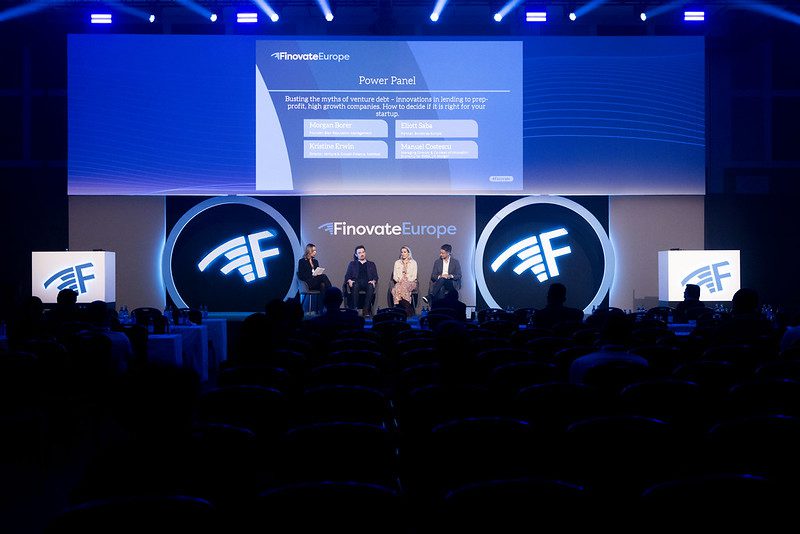
As FinovateEurope returns to London on February 10 and 11, the spotlight on the second day of the conference shifts from demos to deep discussion. On February 11, FinovateEurope’s Industry Stages run in parallel with one another, giving attendees the opportunity to dive into strategic conversations shaping financial services in 2026.
This year’s event features five Industry Stages: Artificial Intelligence; Banking, Regulation & Risk; Customer Experience; Lending; and Payments. Each stage is designed to offer banking and fintech leaders more than just theory. The sessions focus on what’s working in practice, what’s breaking under the pressure of new technology and regulations, and what institutions need to rethink about their current operations.
Artificial Intelligence: from pilots to production
The AI stage will feature discussions on one of the biggest challenges facing financial institutions today: moving beyond experimentation. The sessions will explore lessons learned from early AI agent pilots, governance frameworks to combat “shadow AI”, and how banks can scale AI responsibly. Highlights include a keynote from Richard Davies, CEO of Allica Bank, who will speak about the realities of implementing AI in production. The stage will also host panels tackling ROI, data readiness, and responsible AI as a competitive necessity.
Customer Experience: personalization without losing the human touch
On the Customer Experience stage, the conversation moves past buzzwords to focus on execution. Sessions will examine how open data enables hyper-personalization, why mindset can be the biggest challenge, and how banks can retain empathy while scaling. A standout power panel brings together leaders from J.P. Morgan, Invesco, and PolyAI to explore what banks can learn from other industries as customer expectations are being reset by the evolution of enabling technologies.
Payments: instant, intelligent, and under threat
Payments are quickly evolving across the globe, especially with new regulations such as PSD3 and new capabilities and enabling technologies such as instant payments, stablecoins, and cross-border modernization. Panels will focus on how data-centricity and AI can unlock growth while strengthening security, especially as fraud losses and cyber threats keep rising.
Banking, regulation & risk: resilience in a volatile world
Regulatory pressure and operational resilience will be the center of the conversation on this stage, where discussions will span DORA, dispute management, and the risks embedded in cloud and AI adoption. These sessions are especially relevant for banks navigating complex vendor ecosystems while being asked to do more, faster, and with greater accountability.
Lending: capturing the embedded opportunity
The Lending stage will look at how banks can reclaim growth by meeting unmet needs, especially in small business and embedded lending. Panelists will explore how AI is reshaping credit decisioning, how regulation is evolving, and where incumbents can realistically compete with fintech challengers.
Together, these five Industry Stages on February 11 will offer a concentrated look at the decisions that will define banking’s next chapter. If you register for FinovateEurope before January 30, you can still save £300.
ThetaRay has launched Ray, an Agentic AI investigation suite designed to help banks automate and standardize transaction monitoring investigations amid rising alert volumes and regulatory scrutiny.
The platform targets growing regulatory demands from frameworks such as the EU’s AMLR and FinCEN’s AML/CFT directives by delivering faster, more consistent, and audit-ready investigations with traceable, explainable AI.
Ray helps firms create compliance-critical workflows and scale AML operations without relying on manual processes or increasing headcount.
Financial crime detection company ThetaRay has launched a new set of tools to help firms keep up with evolving regulations in the face of advanced fraud. Called Ray, the new Agentic AI investigation suite aims to help banks conduct transaction monitoring investigations.
Ray is embedded into ThetaRay’s Investigation Center, an Agentic investigation suite designed for banks, fintechs, and payments platforms balancing high alert volumes with rising regulatory demands. Ray combines autonomous investigations with on-demand analyst support. The fintech anticipates Ray will ultimately help banks reduce the time it takes to resolve cases and create more consistency in investigations that span internal teams and jurisdictions. ThetaRay created Ray toautonomously handle the full investigation by validating the geolocation, analyzing patterns, and scanning adverse media to prepare a structured, audit-ready case-file document.
The launch is strategic and comes at a time when regulators across the globe are raising their expectations for investigative quality and documentation. The EU’s new Anti-Money Laundering Regulation (AMLR) and AML Authority framework require stronger due diligence, more rigorous monitoring and record-keeping, and consistent compliance controls across jurisdictions. In the US, FinCEN’s AML and Counter Financing of Terrorism (CFT) directives require transparent, evidence-based investigations and Suspicious Activity Report (SAR) narratives.
“This is an incredibly important moment for us and for the industry,” said ThetaRay CEO Brad Levy. “I couldn’t be more energized by the opportunity to tackle one of the biggest challenges in financial crime compliance. Our mission is simple: to help make global markets more modern and secure for all. The future will be shaped by people who care and by megatechs and specialized fintechs working closely together to raise the bar for transparency, accountability, and lasting trust.”
However, as regulators require higher investigative quality, documentation, and more defensible decisions, alert volumes continue to rise and place a strain on investigation teams, requiring manual data gathering.
“Financial institutions are moving beyond experimentation toward real, production-grade use of Agentic AI in compliance-critical environments,” saidMicrosoft Global Head of AI Strategy and GTM for Payments and Banking Tyler Pichach. “Platforms like Ray demonstrate how Agentic AI, when deployed on a secure and governed cloud like Microsoft Azure, can help banks modernize complex investigation workflows while meeting regulatory expectations for transparency, control, and trust.”
With Ray, firms can prepare for this increased strain by using it to automate evidence collection, behavioral and counterparty analysis, open-source checks, and document review and narrative generation. Built and deployed on Microsoft Azure, Ray offers an on-demand AI assistant that supports questions from analysts and deeper exploration.
“Manual investigations inevitably vary from analyst to analyst. Ray introduces a consistent reasoning framework across the entire operation, reducing subjectivity, and ensuring that each case, no matter who handles it, stands up to scrutiny,” said ThetaRay Regulatory Affairs Manager David Shapiro. “Most importantly, Ray was built so that every decision is traceable back to evidence. In a regulatory environment that demands transparency, AI explainability is the foundation.”
As regulators require more defensible, consistent, and transparent investigations, financial institutions are under pressure to modernize workflows that rely on manual analysis and fragmented tools. By embedding Agentic AI directly into the investigation process, ThetaRay is positioning Ray amid the next generation of AML operations in which regulators require speed, consistency, and explainability.
Founded in 2013, ThetaRay offers transaction monitoring, transaction and customer screening, and customer risk assessment suites to help firms fight financial crime. The Israel-based company helps its 100+ institutional clients leverage AI to monitor 15 billion transactions valued at $20 trillion on an annual basis.
Fiserv and Affirm are bringing BNPL to debit cards, enabling banks and credit unions to offer pay-over-time capabilities through existing debit programs without building new lending infrastructure.
Offering BNPL with bank-issued debit cards shifts installment lending from the merchant checkout to bank-owned channels, allowing financial institutions to retain customer relationships, data, and engagement within their own apps and card programs.
The model positions banks as the primary gateway for flexible payments, placing BNPL distribution within core payments infrastructure.
Core banking platform and payments player Fiserv is bringing buy now, pay later (BNPL) capabilities to its debit cards.
The Wisconsin-based company is collaborating with Affirm to bring pay-over-time capabilities to its debit card programs, empowering Fiserv clients, including community banks and credit unions, to offer their end customers flexible payment options without having to build new lending products.
According to Fiserv, the move is designed to help smaller financial institutions compete more effectively while keeping customer relationships anchored to their own debit products. “Community and regional banks and credit unions want to meet evolving consumer expectations around greater flexibility in how they pay for purchases all the while building a strong relationship with their primary financial institution,” said Fiserv Head of Card Services Erik Wichita. “This partnership gives our clients a practical, scalable way to offer such payment flexibility through their existing debit products—helping them compete effectively, deepen customer and member relationships, and drive top-of-wallet engagement with their products.”
Today’s announcement comes four years after Affirm and Fiserv first teamed up, integrating Affirm’s Adaptive Checkout to Fiserv’s Carat global commerce hub. The move allowed merchants using Carat to offer BNPL to their shoppers.
Adding pay-over-time capabilities to debit cards instead of just offering the option at the point-of-sale moves the payment from a merchant-led experience to a bank-centric one. Instead of being offered only at checkout with participating retailers, debit-based BNPL allows shoppers to access installment payments across a wider range of purchases and merchants, using their preferred payment card. For banks and credit unions, this model retains the customer relationship, data, and engagement within their own debit programs and mobile apps.
Affirm, for its part, sees the partnership as a way to bring pay-over-time options directly into the primary banking relationship, rather than positioning BNPL as a standalone checkout experience. “Millions of consumers depend on their local financial institutions, including for their top-of-wallet debit cards,” said Affirm CRO Wayne Pommen. “By partnering with Fiserv, we’re helping these institutions offer transparent pay-over-time options so customers can get the flexibility they need from the banks and credit unions they already depend on, rather than having to look elsewhere. We’re excited to enable this co-branded offering for Fiserv’s partners, allowing them to natively offer Affirm’s flexible payments through their existing debit cards.”
Fiserv and Affirm are aiming to make an easy transition for banks by managing all of the technical aspects, including real-time underwriting, loan origination, and funding. As a further benefit, consumers can use Affirm anywhere their debit cards are accepted. Additionally, Affirm’s 420,000 merchant partners give cardholders access to custom financing offers.
The companies are enabling banks and credit unions to participate in BNPL economics without giving up customer ownership to third-party point-of-sale providers. This could reshape how flexible payments are delivered and position banks as the primary gateway for installment lending.
Fiserv has been involved in the payments space since it was founded in 1984. The company serves merchants, banks, and fintechs with payments tools, customer analytics, and fraud prevention technology. Fiserv is publicly listed on the NYSE under the ticker FI and has a market capitalization of $35.39 billion.
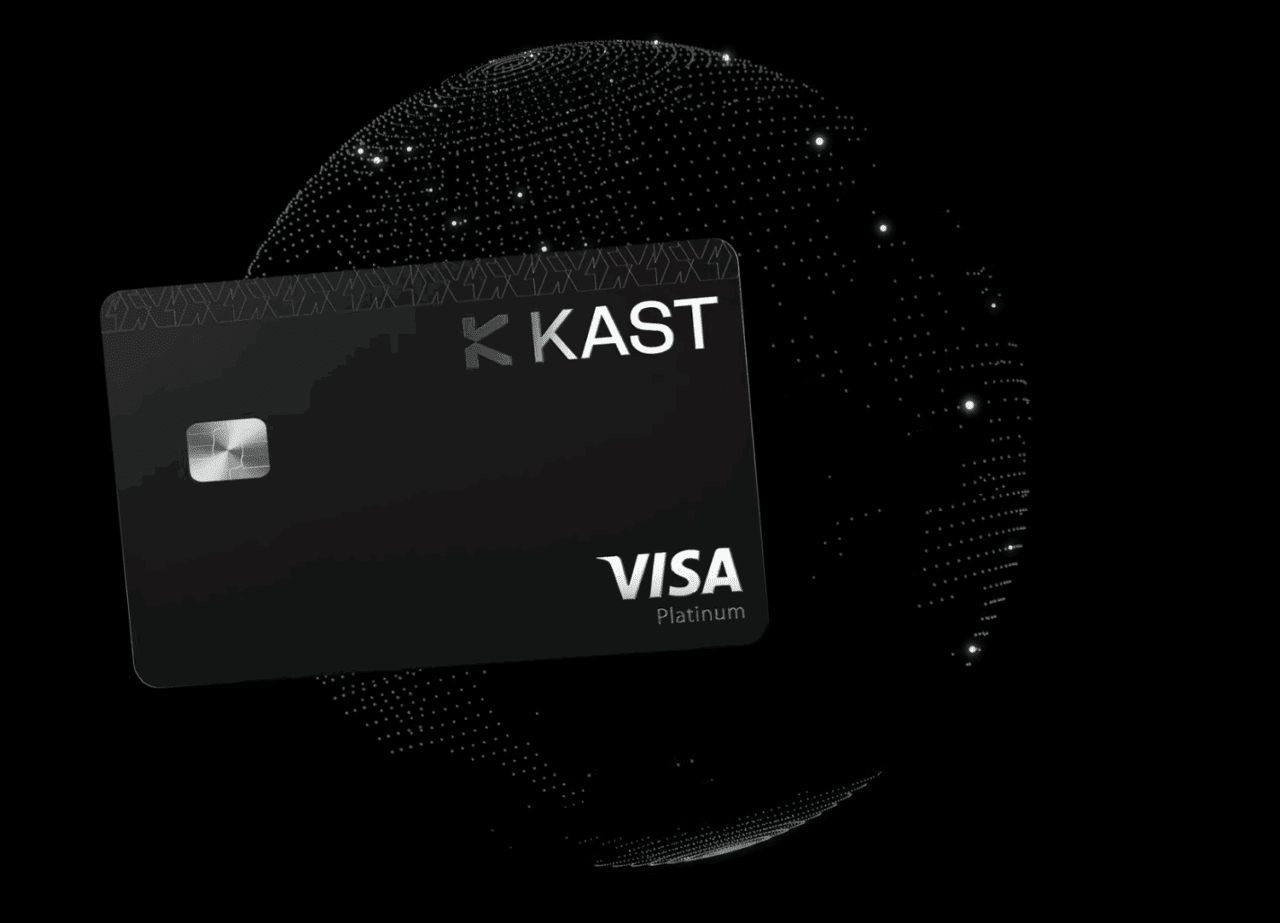
Kast has launched Kast Earn, a yield-bearing cash management feature that uses Gauntlet’s institutional-grade DeFi vaults to generate variable APY (currently 4%–9%) on user deposits.
User funds are deployed via onchain lending strategies and actively managed using quantitative risk models, with earnings accruing continuously and remaining liquid through Kast’s spending account.
The move positions Kast in direct competition with banks and money market funds.
Stablecoin-based challenger bank Kast is making its stablecoin banking platform more enticing this week. The company is launchingKast Earn, a tool that allows accountholders to earn yield on funds in their account.
Powered by Gauntlet, Kast Earn will employ users’ deposits for onchain lending, allowing users to earn yield on fiat funds in their account. Founded in 2018, Gauntlet offers an automated risk platform with institutional-grade vaults that enable decentralized finance to provide risk-adjusted yields at scale. Kast said it partnered with Gauntlet because of its experience building quantitative decentralized finance strategies.
When a user deposits US dollars, their funds go into the Gauntlet USD Alpha vault, which is designed to generate sustainable yield by prioritizing long-term, risk-adjusted returns and proactively adapting as markets change. This vault has $73.8 million in total value locked, or TVL (roughly equivalent to assets under management).
Once a user deposits funds, their capital is distributed across a diversified set of established digital lending markets and actively managed using quantitative risk and performance models developed by Gauntlet. The yield compounds continuously through Vault Share tokens, and the users’ earnings are reflected in the rising value of their shares. Accountholders can cash in on their shares at any time by transferring funds back to their KAST spending account. While the rate of return is variable, the vault currently offers a variable APY between 4% and 9%.
Founded in 2024, Kast bridges traditional finance and decentralized finance by offering a digital money app where users can deposit cash, USDC/T, and crypto. It also allows users to spend their crypto like cash with its Solana payment cards that are accepted at more than 150 million merchants and ATMs and in over 160 countries.
In 2025, Kast evolved from a simple solution to spend stablecoins into a full-fledged global money app. Last year alone, the company launched MOVE cashback, KAST Convert, USD virtual accounts, global bank transfers, and KAST Tags to add more bank-like functionality.
By offering yield-bearing cash management, Kast is placing itself in competition with banks and money market funds. By embedding onchain lending and quantitative risk management directly into a consumer-facing banking app, Kast is testing whether DeFi-based yield products can be delivered with the simplicity, liquidity, and trust. If users are able to trust Kast’s offerings as much as those from their traditional financial institutions, offerings like Kast Earn could change how both challenger banks and incumbents think about generating returns on customer balances in a stablecoin-driven financial system.
PayPal has acquired Cymbio to accelerate its push into agentic commerce, adding marketplace and drop-ship automation capabilities that help merchants sell across AI-driven channels like Microsoft Copilot and Perplexity.
The deal builds on an existing partnership between the two players, which first teamed up in October 2025.
The acquisition reinforces PayPal’s broader ambitions in agentic commerce.
PayPal just acquired drop-ship and marketplace automation platform Cymbio for an undisclosed amount. The move fits with PayPal’s push into agentic commerce, as Cymbio’s payment orchestration platform helps brands sell across agentic channels, including Microsoft Copilot and Perplexity.
Financial terms of the deal, which is expected to close later this year, were undisclosed.
PayPal’s acquisition comes three months after PayPal first partnered with Cymbio to launch agentic commerce services, a suite of solutions to help merchants attract customers in an AI-powered commerce environment.
“PayPal has established itself as a leading commerce partner for merchants looking to sell within top AI platforms,” said PayPal Executive Vice President and General Manager of Small Business and Financial Services Michelle Gill. “Acquiring Cymbio’s technology and team will enhance our agentic commerce capabilities and accelerate the expansion to more of our merchants. By making their product catalogs discoverable on AI surfaces, merchants can increase sales while expanding product choice to the millions of consumers shopping on AI platforms today.”
Cymbio was founded in 2015 and is headquartered in Tel Aviv. The company’s marketplace and social commerce automation platform facilitates collaboration between brands and retailers by automating processes such as product listing, inventory management, pricing, order fulfillment, and returns. Cymbio connects to 800 brands’ and retailers’ internal systems to enable strong collaborations that can be scaled quickly. The company has raised $35 million from investors including PayPal Ventures, and counts Balmain, Reebok, Abercrombie & Fitch, New Balance, Steve Madden, and Fabletics among its customers.
Once the deal is finalized, PayPal will use Cymbio to power Store Sync, one of PayPal’s agentic commerce services that allows merchants’ product data to be discoverable within AI channels. Store Sync drops orders to merchants’ existing fulfillment and management systems. The system allows the merchant to remain the merchant of record and retain customer relationships and control over their brand.
As a pioneer in fintech, PayPal is seeking to be an early mover in agentic commerce as well. In late 2025, the company rolled out agentic commerce services to help merchants connect product catalogs and checkout experiences to AI platforms like Perplexity. PayPal has also collaborated with AI ecosystem partners such as OpenAI to support instant checkout via the Agentic Commerce Protocol. It is clear that the company is seeking a top spot in the agentic commerce battlefield.
OnePay is expanding its partnership with Klarna to launch Swipe to Finance, a feature that will enable eligible customers to convert debit card purchases into post-transaction installment payment plans.
Specific details of the terms around post-purchase financing have not been disclosed, but the feature will position OnePay alongside players like PayPal and Affirm by offering flexible repayment options beyond the point of sale.
Swipe to Finance strengthens OnePay’s push to compete with digital banks such as Chime and Dave, adding to its growing suite of banking, payments, investing, and crypto tools backed by Walmart’s scale and embedded distribution.
Walmart-owned digital banking platform OnePay is deepening its ties with BNPL player Klarna to launch Swipe to Finance, a new feature that will offer customers the option to pay over time even after they’ve made the transaction.
“Not every purchase comes at the right time,” said Thomas Hoare, Chief Commercial Officer at OnePay. “Customers want and deserve financial flexibility when they need it most, which is why we’re excited to offer new ways for them to pay over time and do it simply, transparently, and all in the OnePay app.”
After making a purchase with a OnePay debit card, eligible customers can use the OnePay app to convert transactions into fixed-term payment plans. While the company has not disclosed details about launch timing, eligible purchases, or available plan options, OnePay’s post-purchase financing may resemble models offered by PayPal and Affirm, which allow users to either pay in four installments or spread payments over longer repayment periods ranging from three to 36 months.
“Post-purchase payments are becoming a core part of how people manage money,” said David Sykes, Chief Commercial Officer at Klarna. “With Swipe to Finance powered by Klarna, we’re giving customers a simple, transparent way to take control of payments after the fact, directly in the OnePay app. It’s another step in expanding smarter payment options and meeting consumers wherever they choose to pay.”
This week’s Swipe to Finance announcement comes about 10 months after OnePay and Klarna first teamed up to offer BNPL options at the point of sale for consumers. The company hinted at plans to deepen ties with Klarna even further, stating, “Additional products and features are planned for later this year that expand OnePay’s types of flexible payment options and can reach new customers.”
Today’s announcement comes at a time of major growth for OnePay, which is seeking to compete with well entrenched digital banks such as Chime and Dave. Last fall, the company partnered with DriveWealth to offer embedded investing tools and teamed up with Zero Hash to facilitate bitcoin and ether trading within its app. In addition to these new capabilities, the OnePay app also offers traditional banking tools such as a high-yield savings account, peer-to-peer money transfer capabilities, and cross-border payments. However, the app also differentiates itself from traditional banks and even other digital banks with a credit builder card, tax filing service, and even a low-cost mobile phone plan via a partnership with Gigs.
OnePay is seeking to compete with entrenched digital banking players such as Chime and Dave. The company is well positioned to do so thanks to its second-mover advantages and embedded distribution through its parent company, Walmart, which launched OnePay in January 2021 in partnership with Ribbit Capital. In January 2022, Walmart expanded OnePay’s capabilities by acquiring two fintech platforms, Even and ONE, which helped Walmart create its version of a financial services super app.
Financial institutions are scaling digital products, expanding into new markets, and automating their decision-making more than ever in 2026, which makes managing controls, models, and regulatory obligations just as important as stopping fraud.
At FinovateEurope 2026, two new fintechs are showing how banks can move beyond manual processes and static controls toward more dynamic, data-driven approaches to compliance and risk. Check out how the following companies are helping banks reduce cost, improve transparency, and turn regulatory requirements into tools for smarter decision-making.
FinovateEurope 2026 will take place at London’s InterContinental O2 on February 10 and 11. Tickets are available now. Visit our FinovateEurope hub today and take advantage of big early-bird savings!
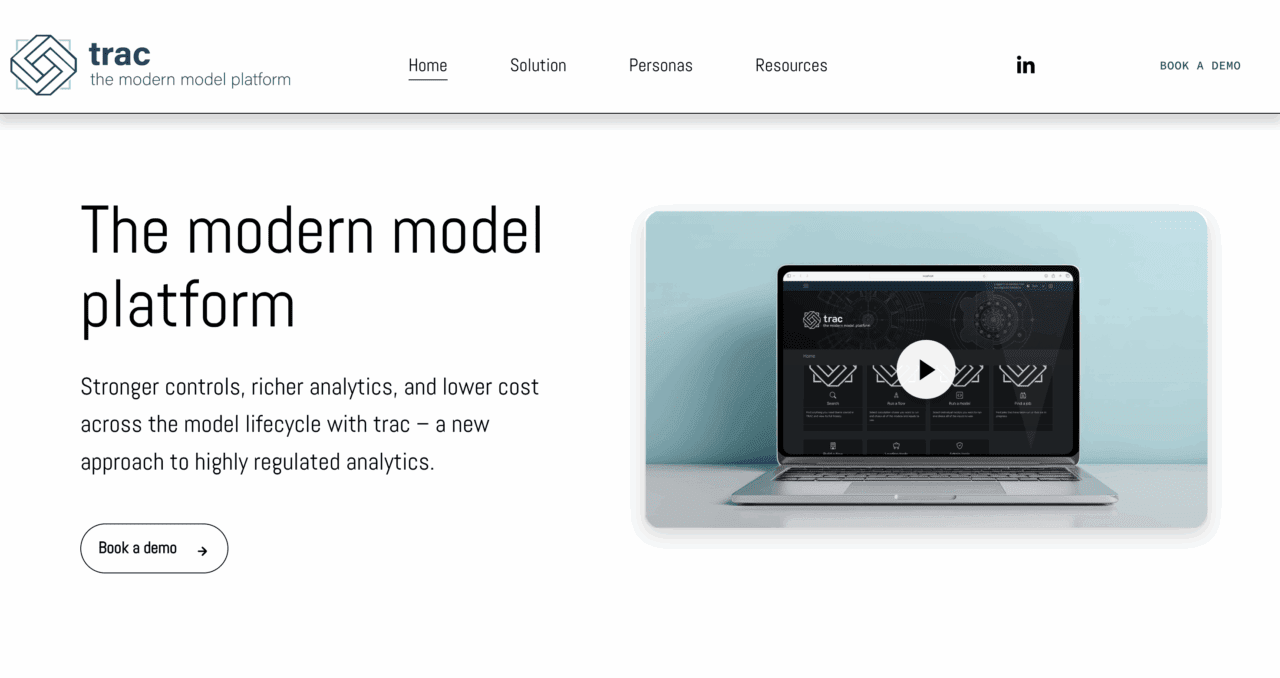
UK-based FINTRAC helps financial institutions automate controls and workflows across the model lifecycle, enabling stronger governance with less manual effort. Its platform replaces fragmented, spreadsheet-driven processes with centralized controls, audit-ready documentation, and richer analytics that improve transparency across risk, compliance, and model management teams.
Because its tools are integrated into banks’ existing systems, FINTRAC allows banks to reduce costs while maintaining regulatory compliance in real-time.
Serene helps firms turn compliance and collections data into actionable insights by helping lenders optimize arrears management, reduce defaults, and expand access to credit by combining compliance discipline with frontline intelligence.
Serene positions compliance as a feedback loop that improves decision-making across collections and lending operations. The company offers organizations data and guidance to enable them to balance risk management with customer outcomes while remaining compliant.
Why banks should care
As banks continue to digitize lending, payments, and risk decisioning, compliance and control functions can no longer rely on manual processes. In fact, regulators are increasingly expecting firms to implement continuous governance, which places more pressure on teams to move faster, adopt AI-driven models, and reduce operational cost.
Fintechs like FINTRAC and Serene are good examples of how compliance and risk intelligence are being embedded into everyday operations. By automating controls and leveraging compliance data for actionable insights, banks can improve transparency, strengthen risk management, and scale more confidently.
Airwallex is acquiring Paynuri to enter South Korea, securing payment gateway, prepaid electronic payment instrument, and foreign exchange business registrations to support cross-border payments and FX services.
The move gives Korean businesses access to Airwallex’s global financial platform, enabling multi-currency spending, international payments, and cross-border expansion.
The acquisition signals intensifying competition in APAC payments, as Airwallex uses its fresh Series G capital to accelerate regulatory access, expand headcount locally, and strengthen its position against regional fintechs and global incumbents.
Commercial payments and banking platform Airwallex is expanding its global reach this week. The Singapore-based company is acquiring Paynuri, an entity that holds payment gateway and prepaid electronic payment instrument licenses in South Korea. Financial terms of the deal are undisclosed.
Airwallex plans to use these licenses to empower companies in Korea to expand across borders by offering Korean businesses a comprehensive platform for managing their financial operations across multiple markets and currencies. The acquisition will also give Airwallex the benefit of Paynuri’s South Korea Foreign Exchange Business registration, an accreditation that will further support cross-border payments and FX services in Korea.
“We are excited by this significant investment by Airwallex into the Korean market,” said Invest Seoul President and CEO Lee Jihyung. “We believe Airwallex’s entry will strengthen the financial operating environment for both Korean and global companies in the market.”
Airwallex’s spending capabilities, for example, allow businesses to manage company spending across multicurrency payment cards, expense management, and bill payments. The company’s multi-currency account facilitates the management of global banking, FX conversion, and international transfers, while its payments offerings allow businesses to accept online and in-store payments across the globe in more than 160 payment methods.
“This acquisition marks a pivotal milestone for Airwallex as we expand the global reach of our financial platform,” said Airwallex General Manager of APAC, Arnold Chan. “Korea’s fast-growing ecommerce, creative, and entertainment sectors present immense opportunities for Korean businesses on the global stage. Our goal is to support these businesses with a more efficient solution to expand beyond borders.”
Airwallex, which already operates across Japan, Hong Kong, Singapore, Malaysia, Indonesia and Vietnam, has been growing rapidly in the APAC region. In 2025, the company reported an 85% year-over-year increase in revenue and a 71% year-over-year boost in transaction volume. Globally, during the month of December 2025, Airwallex achieved $1.2 billion in revenue and recorded $266 billion in transaction volume.
To meet this demand, Airwallex will boost its workforce in Korea with plans to add 20 employees across multiple functions by the end of this year.
Founded in 2015, Airwallex holds 80 licenses and permits that enable customers to operate in 200+ countries and regions and support multi-currency checkout at scale. In 2025 alone, the company extended its regulated and local capabilities across 12 new markets, securing licenses and launching products in France, the Netherlands, Israel, Canada, Korea, Japan, New Zealand, Malaysia, Vietnam, Brazil, Mexico, and the UAE.
Today’s investment comes about six weeks after Airwallex’s $330 million Series G fundraise, which valued the company at $8 billion. Airwallex’s expansion into the Korean market is a direct result of that investment.
By securing payment, prepaid, and foreign exchange approvals in South Korea, Airwallex is positioning itself to serve Korean businesses that are scaling internationally while avoiding the delays associated with organic licensing. The move also strengthens Airwallex’s position against both regional fintechs and global incumbents vying to serve global businesses.
Gusto is testing stablecoin payouts for global payroll through a partnership with zerohash.
The beta test is using regulated on-chain settlement infrastructure to enable faster, more transparent cross-border payments.
If successful, the beta could signal stablecoins’ shift into core payroll infrastructure, modeling how HR and payroll platforms can adopt digital assets in a compliant, scalable way.
Payroll, benefits, and HR management solutions company Gusto revealed today that it is testing stablecoin payout capabilities across its global payments. The California-based fintech will leverage a partnership with digital asset infrastructure provider zerohash.
Founded in 2017, zerohash is a crypto, stablecoin, and tokenization platform that brings instant money movement to banks, brokerages, and fintechs. With more than six million end customers, the company has settled $65 billion in transaction volume, is available in more than 200 jurisdictions, and supports over 100 assets.
Gusto said it chose zerohash for its deep regulatory expertise, operational maturity at scale, and the ability to support global expansion securely and seamlessly.
In teaming up with zerohash, Gusto will use zerohash’s regulated on-chain settlement infrastructure to allow its clients to receive their earnings in digital dollars. Gusto will use zerohash’s stablecoin rails to enhance speed and transparency to allow workers to receive payments in the form of stablecoins.
When compared to traditional cross-border payments, which can take three-to-seven days to settle, stablecoins will allow Gusto to move funds from employer to worker across the globe in minutes. In addition to real-time settlement, leveraging digital currencies will also allow for on-chain traceability and compatibility with both custodial and self-custodial wallets.
Pointing to the growing mismatch between global workforces and legacy payment infrastructure, zerohash Founder and CEO Edward Woodford said stablecoins offer a faster and more flexible alternative for moving money across borders. “As the workforce increasingly becomes more global and more digital, traditional payment rails can no longer meet the speed and accessibility that modern businesses require,” said Woodford. “Gusto is one of the most forward-thinking platforms for businesses, and we’re proud to provide the infrastructure that enables them to deliver instant, transparent, and flexible payouts across borders. Stablecoin rails unlock real-world benefits for millions of workers, and this partnership is a major step toward modernizing how money moves.”
Gusto, originally known as ZenPayroll, was founded in 2011 to provide a cloud-based payroll, benefits, and HR management solution. The company’s tools help businesses track time and attendance, onboard new employees, manage existing talent, and more. With more than 400,000 small business clients, Gusto processes tens of billions of dollars of payroll each year and provides employee benefits, including 401(k) accounts, which are powered by the company’s 2025 acquisition of retirement specialist Guideline.
According to Samant Nagpal, Head of Payments and Risk at Gusto, the partnership allows the company to introduce stablecoin payouts while maintaining the compliance and scalability required for global payroll. “At Gusto, our mission is to grow the small business economy. We believe payment choice is integral to helping small businesses and their teams thrive, which is why we’re committed to ensuring they can pay anyone, anywhere, anytime,” said Nagpal. “zerohash’s regulatory posture and global infrastructure allow us to offer stablecoin payouts in a way that is simple, compliant, and scalable. This partnership means that we can deliver a faster, more seamless global payments experience for our customers and their teams.”
This partnership is another example of how stablecoins are shifting from experimental use cases into core financial infrastructure, especially in cross-border payments. Testing stablecoin payouts within a regulated framework gives Gusto the ability to expand payment choice for its small business customers. While Gusto’s trial of stablecoin payouts is still in beta, if successful, the approach could set the standard for other HR and payroll platforms as global workforces continue to grow.