This site is operated by a business or businesses owned by Informa PLC and all copyright resides with them. Informa PLC's registered office is 5 Howick Place, London SW1P 1WG. Registered in England and Wales. Number 8860726.
Finovate Blog
Tracking fintech, banking & financial services innovations since 1994
Have you been keeping up with the conversations on the Finovate Podcast?
Podcast host and Finovate VP Greg Palmer has interviewed an interesting range of guests in the first few months of 2026. From Best of Show winners to venture capitalists to fintech founders, Palmer’s podcast guests provide great insights into some of the most compelling innovations and the most important trends in our industry. Below are some of the conversations Greg has hosted so far this year.
Greg Palmer interviews FinovateEurope Best of Show winner Tweezr on updating legacy systems through LLMs and AI.
In this podcast conversation Greg Palmer sits down with Matt Ober, Managing Partner at Social Leverage, for a perspective on fintech investment trends in 2026.
Finovate podcast host Greg Palmer interviews Joel Blake, OBE, founder and CEO of GFA Exchange on the challenge and reward of democratizing access to finance.
Squarespace is launching Squarespace Balance, a new financial account that lets merchants manage earnings, spending, and cash flow directly within Squarespace Payments.
Balance builds on Squarespace’s growing suite of financial tools that help entrepreneurs run and scale their businesses online.
Bringing business banking capabilities into its platform helps Squarespace compete with companies like Ramp and Shopify.
Website building and hosting platform Squarespaceunveiled its latest tool to help entrepreneurs run their businesses online. The New York-based company is debuting Squarespace Balance this week, a new account designed to help merchants manage business finances and earn rewards.
Balance sits within Squarespace Payments, the company’s payment solution that integrates with a business’ online store, allowing merchants to accept payments through Squarespace. With Balance, merchants can access funds within hours, earn rewards on their balances, and spend using their Squarespace Visa Commercial card. Balance offers a unified view of a business’ earnings, spending, and cash flow management on the same platform as the rest of the business.
“Squarespace Balance rounds out our suite of financial tools by offering a native financial account that helps merchants manage their business finances and earn rewards, all in one place,” said company SVP of Commercial Dan Chandre. “It reflects our belief that financial services should feel like a natural extension of running a business, not another system entrepreneurs have to manage.”
Because it brings banking capabilities in-house, Balance allows merchants to receive and spend their money in the same platform where they run their business, without needing external banking integrations. The move will help Squarespace compete with other software platforms that are embedding financial services directly into their products. Companies such as Ramp, Shopify, and Stripe have all expanded into financial accounts, corporate cards, and cash management tools that keep businesses operating inside their ecosystems.
Offering a native financial account alongside payments and financing tools like Squarespace Capital, Squarespace is positioning itself to capture more of the financial activity of its existing customers while simplifying financial management for small businesses that would otherwise rely on multiple providers.
Squarespace Balance is currently available to new users in the US and will be expanded to the company’s existing users in the coming months.
Squarespace launched Payments in 2023, and has since been focused on growing its financial tools available to support small businesses. As part of this expansion, the company launched Squarespace Capital in 2025 to offer merchants flexible financing to help them grow their business. Additionally, Squarespace offers tools such as Pay Links, which helps merchants accept payments via links; Tap to Pay, which allows merchants to accept in-person payments without additional hardware, as well as shipping tools, invoicing capabilities, and more.
Originally founded in 2003, Squarespace’s platform has helped millions of customers across more than 200 countries build and run their businesses online. In addition to payments capabilities, the company also offers websites, domains, marketing tools, and appointment scheduling.
Agentic AI infrastructure company Lyzr AI has raised $14.5 million in Series A+ funding. The round was led by Accenture and gives the company a valuation of $250 million.
This week’s investment follows Lyzr AI’s successful $8 million Series A round in October.
Headquartered in Jersey City, New Jersey, Lyzr AI made its Finovate debut at FinovateFall 2025 in New York.
Agentic AI infrastructure platform Lyzr AI has secured $14.5 million in a Series A+ round led by Accenture. The investment gives the Jersey City, New Jersey-based startup a valuation of $250 million, and comes less than a year after the company’s $8 million Series A round in October. In a statement on its LinkedIn page, Lyzr AI noted that the investment will help it further develop its “foundational technology platform to power the post-generative AI landscape.”
“Enterprise AI adoption is accelerating,” the company’s note continued. “But not the kind that lives in slide decks and conference rooms. The kind that passes 300-question technical audits. The kind that runs inside a customer’s own VPC. The kind that survives VAPT and red teaming before it ever touches production. That is the standard Lyzr was built for.”
Lyzr’s platform enables companies to build, design, and deploy AI agents that can complete tasks, interact with enterprise tools and data sources, and automate workflows including customer onboarding, loan servicing and origination, regulatory monitoring, claims processing, and more. With more than 100 production-ready AI agents available, Lyzr’s technology streamlines processes for banking, insurance, human resources, marketing, and sales, and is used by companies including AWS, Hitachi, NTT Data, and Nvidia.
“The true strength of Lyzr’s enterprise platform lies in the compounding value of our ecosystem,” the company wrote. “We have built an architecture designed to drive mutual growth and strategic alignment across the board, delivering measurable success for our customers, consulting partners, hyperscalers, and LLM providers alike.”
Founded in 2023, Lyzr made its Finovate debut at FinovateFall 2025 in New York. At the conference, the company demonstrated how its Lyzr Studio enables customers to build agents, knowledge graphs, responsible AI guardrails, and agent evaluation in a single location. The builder-focused platform offers businesses an open source framework with embedded Safe & Responsible AI guardrails.
Lyzr’s fundraising announcement comes just days after the company announced a strategic partnership with business AI transformation and enterprise integration firm Pronix Inc. The two companies will work together to help accelerate the adoption of agentic AI by businesses, combining Lyzr’s technology with Pronix’s expertise in digital transformation and modernization. Lyzr also recently announced that it is working with data infrastructure and agentic AI company GWC Data.AI, which joined Lyzr’s Partner Accelerator for Lyzr (PAL) program in late February.
Bilt is acquiring travel commission platform Sion for $30 million, marking the company’s second acquisition in less than a year.
Bilt expects that the deal will strengthen its travel rewards offering.
Integrating Sion’s technology will help Bilt connect travel advisors to its hospitality platform, helping members book travel experiences while creating a more differentiated rewards program.
Loyalty platform Bilt has acquired commission management platform Sion for $30 million to strengthen its travel rewards. Today’s acquisition marks Bilt’s second acquisition in under a year.
Founded in 2018, Sion offers commission reconciliation for travel agencies. The New Jersey-based company manages more than $7 billion in travel booking revenue, helping more than 8,000 travel advisors get paid faster and operate more efficiently.
“Travel businesses don’t need another intermediary trying to compete with them,” said Sion Co-Founder Irving Betesh. “They need modern infrastructure and software that solves real operational problems. Sion has built a best-in-class experience around one of the biggest pain points in travel, commissions. We’re excited to join the Bilt team, allowing us to further accelerate what we can deliver for travel businesses and advisors serving travelers around the world.”
Bilt will leverage Sion’s technology and team to further extend its hospitality platform to travel advisors which will be used to build a network of advisors who can deliver travel experiences for Bilt Members. The company said that buying the commission reconciliation platform helps Bilt build a hospitality platform that offers a more robust rewards experience for cardholders. What started with housing payments and neighborhood services now extends to travel.
Through Sion, travel advisors will be able to leverage Bilt’s platform to manage their workflows, serve clients, and grow their businesses. Advisors will also have access to commission reconciliation and tracking, invoice follow-up automation, and new tools for managing bookings and payments more efficiently.
“Bilt’s hospitality platform already helps properties and merchants deliver their best customer experience, and with Sion, we’re extending that to travel advisors,” said Bilt Founder and CEO Ankur Jain. “By giving travel advisors the tools to run their entire business more effectively, we’re building a network of the world’s best travel advisors, and our members benefit from that. This is what building a membership truly centered around where you live looks like.”
As the popularity of embedded banking rises, so does competitive pressure in the space. Loyalty platforms are evolving beyond simple credit card points programs into robust ecosystems that influence how consumers book, shop, and experience services. By bringing travel advisor infrastructure into its platform, Bilt is positioning itself to play a larger role in how its members plan for and purchase travel, which ultimately creates a more differentiated and sticky rewards experience.
Once the acquisition closes, Sion will operate independently under the leadership of its co-founders. The company will maintain its existing clients and services.
Bilt was founded in 2021 to offer a loyalty rewards program and credit card that allows renters to earn points when they pay their rent, building credit with every payment. With no annual fee, the Bilt Mastercard credit card also allows cardholders to earn points on select dining experiences, rideshare purchases, and travel purchases. These points can be redeemed for travel, fitness classes, home decor, and even a down payment on a future home.
In 2026, financial services have jumped well beyond the AI experimentation phase. At this point, firms are no longer considering whether or not to adopt AI, and are instead thinking about deployment strategies that will improve operations, decision-making, and internal productivity.
When organizations apply AI to their everyday processes, they can analyze data more effectively, automate workflows, glean insights, and help teams make better decisions with less manual effort. Regardless of the subsector, AI-driven platforms are becoming essential to creating modern banking infrastructure.
At FinovateSpring 2026, a fresh group of five companies will demonstrate their newest technologies that help banks turn AI from a buzzword into a practical tool for operational intelligence and efficiency.
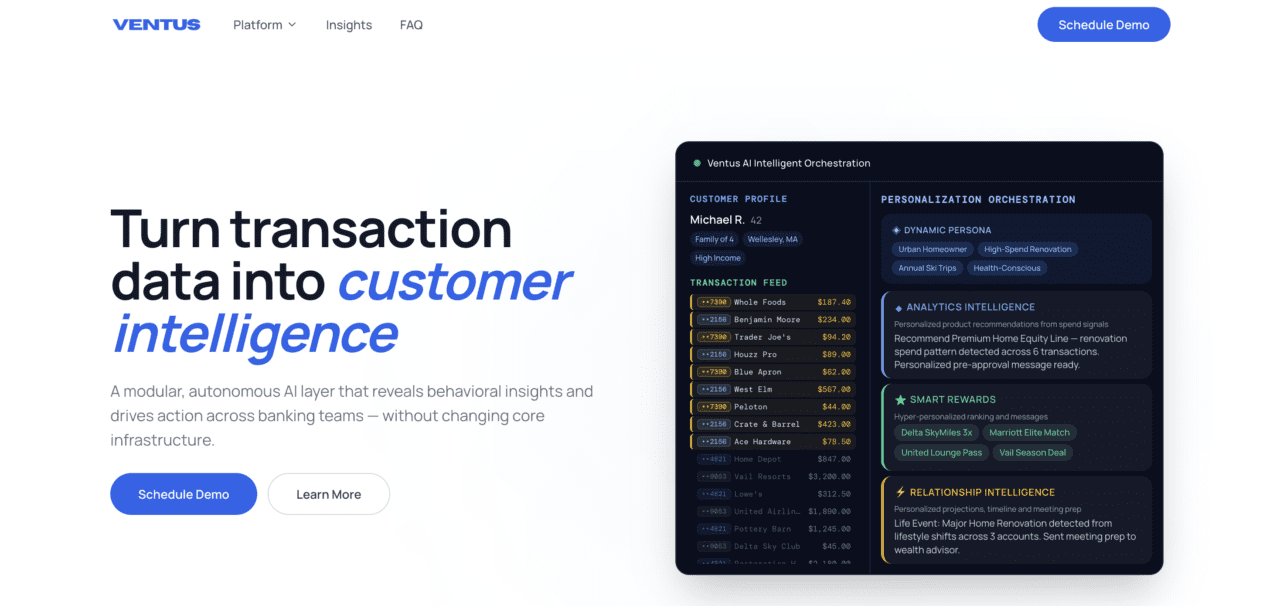
Founded in 2025, Ventus AI transforms raw banking transaction data into semantic customer intelligence to enable personalized experiences, smarter analytics, and human-centered digital banking without changing core infrastructure.
The Delaware-based company helps banks and wealth managers turn transactions into dynamic personas, proactively detect customer life events, and offer plug-in intelligence for any core banking system.
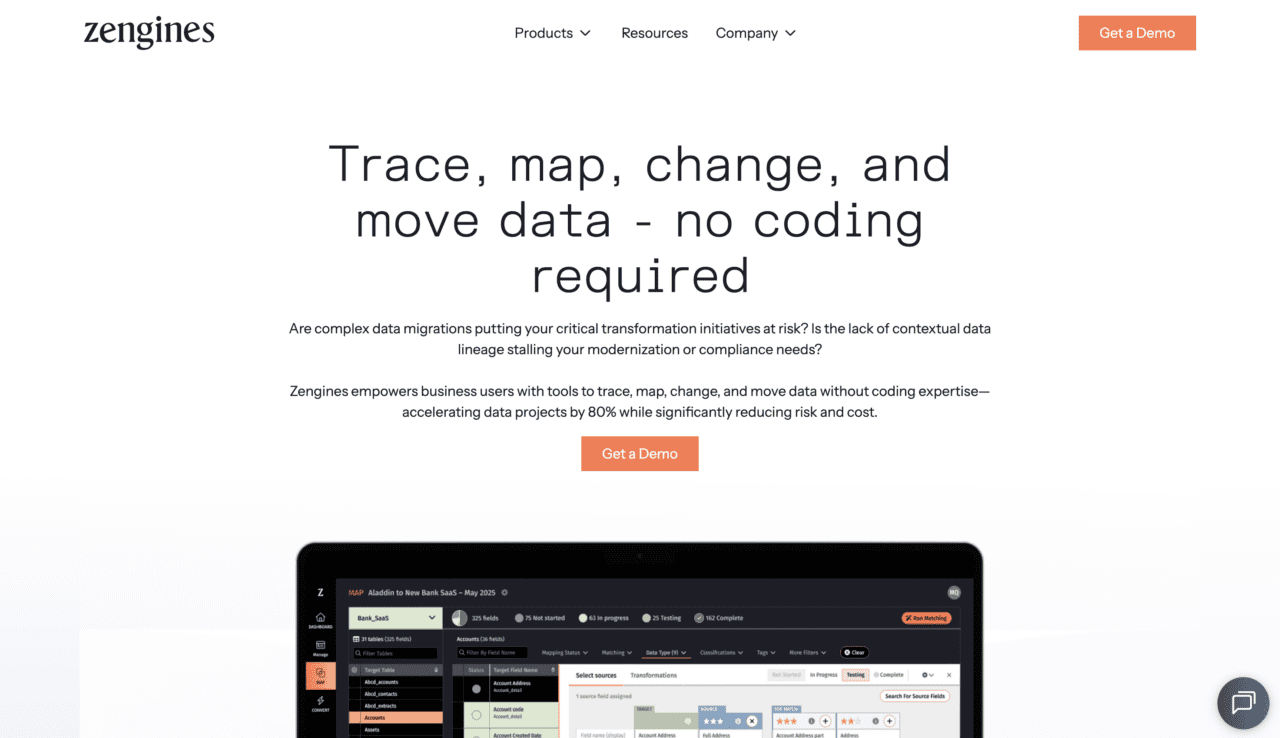
Zengines addresses data transformation challenges to modernize mainframes without losing logic. The platform helps organizations work with legacy code to seamlessly migrate data into modern systems. The company offers two products: Data Lineage, which offers critical and easy-to-understand insights into firms’ legacy systems; and Data Migration, which empowers business analysts to drive the entire process without coding expertise.
Headquartered in Bedford, Massachusetts, Zengines’ modern approach makes legacy systems searchable, which helps firms satisfy auditors faster so transformation and compliance don’t stall.
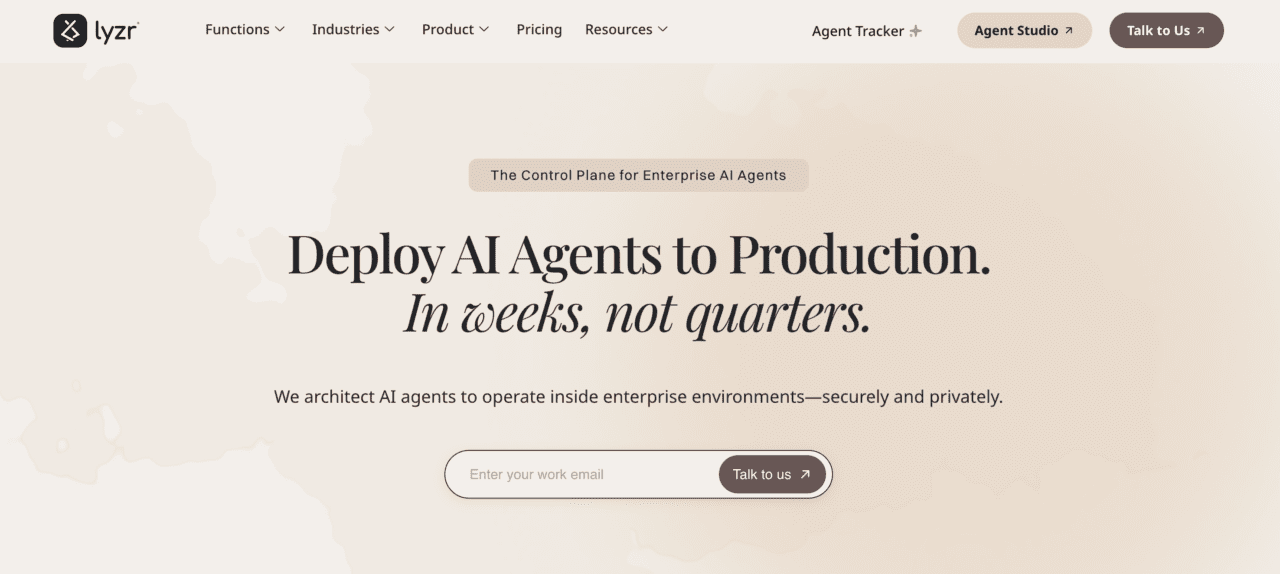
Lyzr Architect is an enterprise AI platform that converts natural language into governed, production-ready agentic applications. Founded in 2023, the company offers a platform that enables secure, compliant deployment across banking, financial services, and insurance enterprises.
The New Jersey-based company helps convert natural language into production-grade multi-agent applications, provides deterministic validation with governance and audit logging, and offers full-stack apps, exportable code, and GPU-optimized model execution.
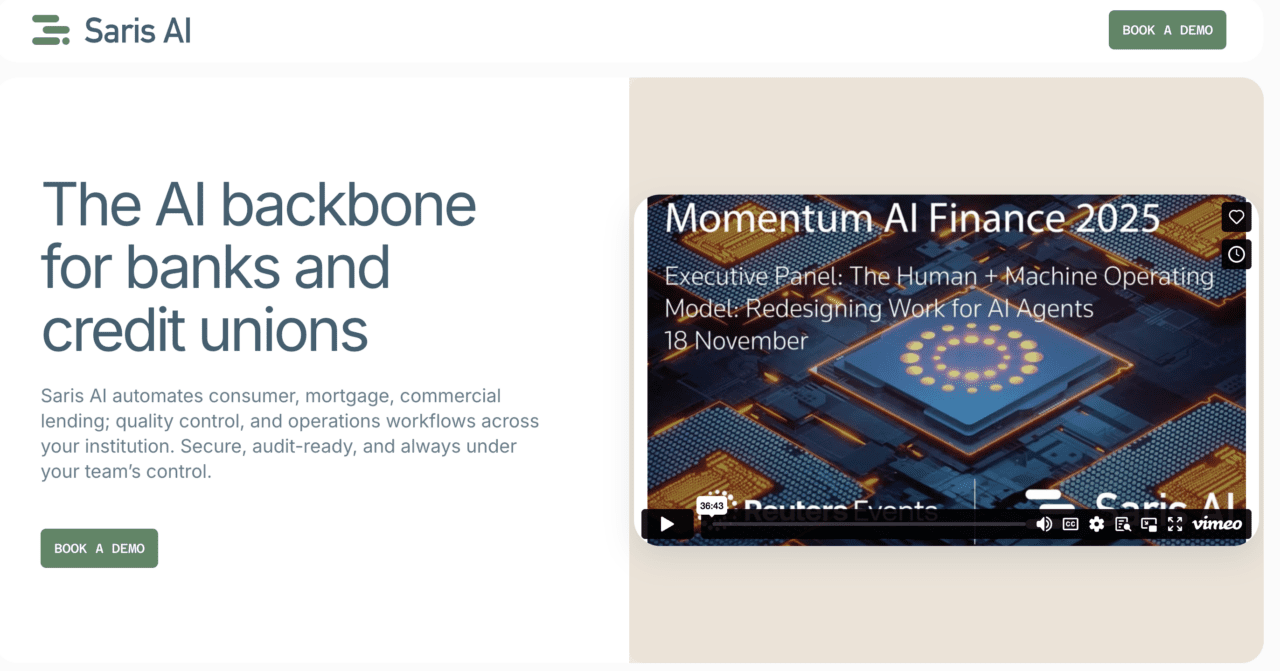
Founded in 2024 and headquartered in San Francisco, California, Saris AI is an agentic AI solution that builds and launches AI agents to automate back-office workflows. The company helps banks and credit unions scale their operations without adding headcount by automating 90% of their tasks with zero change management.
Saris AI securely integrates with core banking platforms, loan origination systems, document repositories, and communication tools to help organizations lower workflow costs.
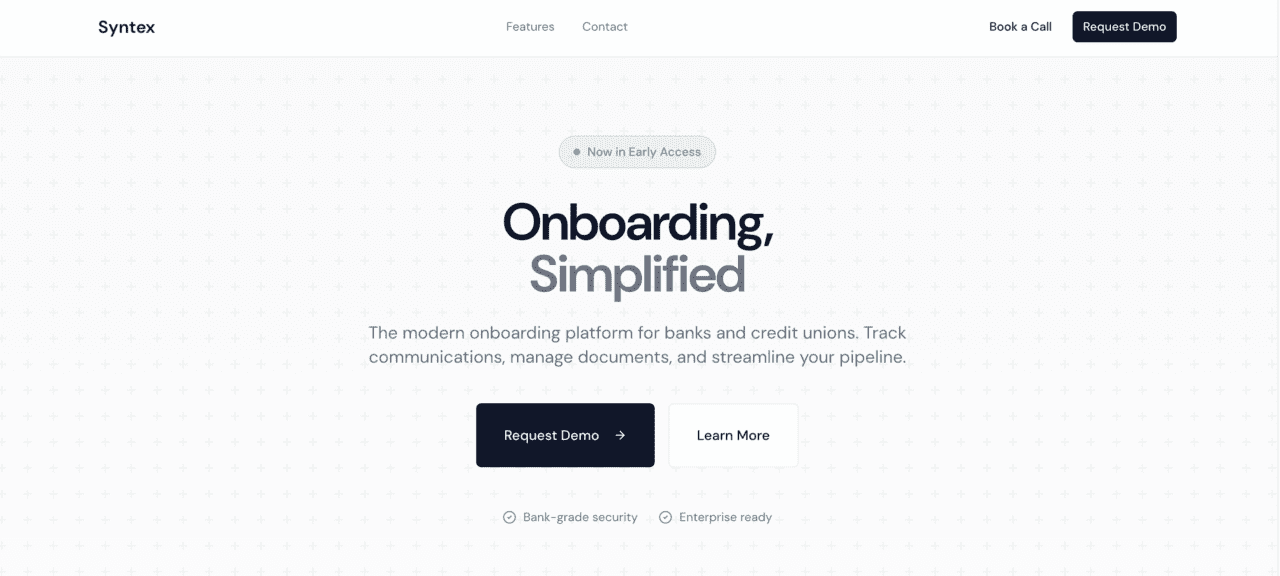
Syntex’s digital onboarding software helps banks and credit unions verify documents, track approvals, and reduce small-business onboarding to a matter of days.
Founded in 2025, the company offers a self-serve client intake with document verification; provides real-time tracking of documents, approvals, and ownership; and reduces onboarding from weeks to days with a Reg B audit trail.
Why banks should care
For financial institutions, the promise of AI extends well beyond simply delivering a better customer experience. In 2026, fintechs are bringing great opportunities to help firms modernize legacy operations without dramatically increasing costs or headcount.
Banks face mounting pressure to process more data, respond faster to customers, and maintain compliance in today’s increasingly complex regulatory environment. AI platforms that can surface insights from transaction data, automate internal workflows, and help teams navigate complex systems bring a practical way to improve productivity and decision-making.
FinovateSpring 2026 will take place at The Sheraton San Diego on May 5 through 7. Register today using this link and save 20%.Finovate attracts 600 bankers from across the spectrum—afrom the largest US banks to regional banks, community banks, and credit unions.
Embedded finance orchestration platform AAZZUR has announced a partnership with electronic money institution Wallester.
Wallester will integrate its card issuing infrastructure into AAZZUR’s regulated partner ecosystem.
Headquartered in Berlin, Germany, AAZZUR made its Finovate debut at FinovateEurope 2026 in London.
Embedded finance orchestration platform AAZZUR has teamed up with EU-based electronic money institution (EMI) and Visa Principal Member Wallester. The partnership will integrate Wallester’s card issuing infrastructure into AAZZUR’s partner ecosystem. This will allow AAZZUR to offer Wallester’s card issuing capabilities to its clients, enabling them to access issuing services via a single integration.
“Our focus is on simplifying access to regulated financial infrastructure,” AAZZUR CEO Philipp Buschmann said. “Businesses increasingly require flexibility in how they structure and deploy financial services, and partnerships like this ensure we can provide broader issuing capability through a single, coordinated framework.”
AAZZUR’s platform works as an orchestration layer that connects businesses to regulated partners offering payments, banking, and other financial services. AAZZUR consolidates these connections in a unified operational framework to streamline the deployment of financial products and services and reduce the amount of operational fragmentation often experienced by companies building embedded finance offerings. This week’s partnership with Wallester adds to the issuing options available through AAZZUR’s ecosystem and will be valuable for those companies operating in the European market that want compliant and scalable card programs.
“By integrating our capabilities into AAZZUR’s orchestration layer, we are creating a seamless path for their clients to access Visa Principal Member services,” Jana Marinkovikj, Wallester White Label and Direct Partners Affiliate Manager, said. “This collaboration ensures that businesses seeking a complete financial stack can easily incorporate our scalable card programs as a core component of their solution.”
Headquartered in Estonia, Wallester is an electronic money institution (EMI) and Visa partner that specializes in digital financial solutions and card issuance in the European Economic Area (EEA) and the UK. Founded in 2016, Wallester offers a white-label embedded finance solution that enables businesses to integrate financial services directly into their platforms, as well as a corporate expense management solution, Wallester Business, that provides instant access to virtual and physical Visa cards, expense tracking, budget analytics, and seamless integration with accounting systems. Sergei Astafjev is Co-Founder, CEO, and Chairman of the company’s management board.
Founded in 2020, AAZZUR made its Finovate debut at FinovateEurope 2026 in London. At the conference, the Berlin-based fintech demonstrated the effectiveness of its Smart Finance Blocks. This solution is a suite of modular, plug-and-play fintech components that enable businesses to build and/or embed financial services into their customer journeys. Smart Finance Blocks can be combined, deployed, and branded for specific use cases, turning complex API services into ready-to-use solutions. Users can deploy Smart Finance Blocks without investing in a tech stack, making embedded finance products and services easier and faster to launch as well as less expensive.
AAZZUR’s partnership with Wallester comes just a month after the firm reported that it was working with financial education platform, and fellow Finovate alum, Doshi. The collaboration combines Doshi’s education-led engagement engine with AAZZUR’s orchestration technology to enable banks and other institutions to leverage customer engagement with financial education content to help customers use the financial products and services more effectively.
“Doshi turns financial education into real engagement, empowering corporates, banks, and fintechs alike to advise their customers on how to make better use of the services available to them,” Buschmann said. “AAZZUR’s job is to make sure this engagement can be acted upon instantly, connecting the right customers to the right products and facilitating the launch of the financial services customers want and need, rapidly and with minimal integration work. To put it another way, AAZZUR’s middleware and frontend makes Doshi’s insights actionable.”
JP Morgan Payments and Mirakl are partnering up to offer agentic commerce to JP Morgan Payments’ merchant customers.
The companies are integrating Mirakl’s Nexus platform with JP Morgan Payments’ infrastructure to enable secure transactions when AI agents shop on behalf of consumers.
Mirakl will manage product discovery, order lifecycle, and marketplace orchestration, while JP Morgan Payments provides payment processing, tokenization, and fraud protection for autonomous purchases.
JP Morgan Payments is teaming up with intelligent commerce operating system Mirakl to enable agentic commerce for merchants. The new infrastructure is designed to support autonomous transactions for consumers seeking to use AI agents to execute purchases on their behalf.
Specifically, JP Morgan Payments will integrate Mirakl Nexus into its payments infrastructure to power secure transactions when AI agents shop on consumers’ behalf. Mirakl’s AI commerce engine Nexus connects shoppers and merchants to agentic platforms, facilitates autonomous discovery, and enables transactions and post-sales management.
“Agentic commerce requires both intelligent commerce infrastructure and trusted payment infrastructure working in concert,” said Mirakl Co-founder and Co-CEO Adrien Nussenbaum. “Mirakl Nexus is key to unlocking agentic commerce—optimizing product catalogs for AI discovery and enabling merchants to sell directly through LLM channels like Gemini, Copilot, and Perplexity, and JP Morgan Payments brings the payment and risk management capabilities that enable AI agents to support user-verified purchases securely and at enterprise scale.”
Mirakl and JP Morgan Payments are partnering to support agentic commerce by enabling AI agents to autonomously discover, evaluate, and purchase products. Mirakl’s Nexus platform will manage commerce orchestration and the full order lifecycle, while JP Morgan Payments will provide secure payment processing, fraud protection, and global payment infrastructure. Together, the companies aim to deliver a unified solution that allows merchants to integrate agentic commerce capabilities at scale, combining eCommerce management with reliable payment and risk systems across markets and channels.
Mirakl was founded in 2012 and helps brands such as Macy’s, Decathlon, Carrefour, Asos, and Airbus Helicopters compete in the platform economy. Mirakl’s operating system enables 450+ marketplaces and a network of over 100,000 third-party marketplace sellers to launch, scale, and operate marketplaces. The company also offers AI-powered multichannel selling tools, as well as retail media products.
JP Morgan Payments anticipates that combining these capabilities with its own infrastructure will make agentic commerce more approachable for merchants. This infrastructure includes secure payment processing, tokenization for AI agent transactions, and fraud protection to ensure consumer safety, merchant control, and brand integrity.
Merchants using JP Morgan Payments will be able to create differentiated shopping experiences. By serving AI agents and Model Context Protocol Apps, offering richer product information, more sophisticated recommendation capabilities, and seamless autonomous purchasing flows, retailers will stand out to both AI agents and their end customers.
“We are entering an era where AI agents won’t just assist with shopping, they will transact,” said JP Morgan Payments Global Head of Merchant Services Mike Lozanoff. “As agents move from browsing to buying, the differentiator won’t be ‘AI’—it will be governance: identity, consent, limits, and interoperability at global scale. Our job is to make that autonomy safe and auditable, with verified agent identity, user-controlled permissions, and bank-grade risk management built into every payment. We are working in earnest to guide our merchants as they engage with agentic commerce, help agents create a scalable experience, and work with the industry to define standards.”
Agentic commerce is on the rise and there is no doubt that it will reshape how consumers shop online. As AI agents begin to handle product discovery, research, and purchasing on behalf of consumers, merchants will need new systems designed for both consumers as well as agent-driven interactions. With Mirakl’s commerce orchestration tools, JP Morgan Payments will help provide the infrastructure for this new frontier of commerce. The company is currently working with select retailers and merchants in a closed beta program, and plans to offer broader availability later this year.
Mastercard is launching a Virtual C-Suite for small business customers this week, introducing agentic AI agents that act as digital executives to provide strategic insights and decision-making support.
The new Virtual C‑Suite is a set of agentic AI-powered tools that are specifically focused on small and medium-sized businesses, which represent roughly 90% of enterprises across the globe and more than half of global employment. By introducing AI agents that mimic executive roles such as CFO, Mastercard is aiming to close the gap between the resources available to large enterprises and those accessible to small businesses.
Mastercard is using its vast experience in payments, data, and security to bring a deeper understanding of how a customer’s money moves. Virtual C-Suite brings intelligence into small businesses’ accounting systems, business software, and banking applications to analyze business performance, identify risks and opportunities, predict likely outcomes, and recommend actions. The tool relies on insights from the billions of transactions processed on Mastercard’s network annually, combined with a business’ financial activity to provide relevant, trusted recommendations on how businesses pay, get paid, and manage working capital.
“Small businesses are the cornerstones of communities, but it’s easy for owners to lose sight of the passions that inspired them when they’re buried in spreadsheets and stretched across multiple roles,” said Mastercard Global Head of Small and Medium Enterprises Mark Barnett. “We hear these pressures from entrepreneurs every day. With Virtual C-Suite, we are bringing the innovative technology, quality data at scale, and strategic expertise usually available to large enterprises to small business owners. Our goal is to turn operational complexity into clarity—helping entrepreneurs regain time, make smarter decisions, and translate their ambition into measurable growth.”
After integrating the new tool, business users and their teams will have access to dashboards and natural language conversational platforms through which they can ask agents direct questions about their accounts, trends, or recommended actions.
Virtual C-Suite will initially launch with a Virtual CFO capability. Mastercard will make additional executive-function roles over time, delivered through financial institutions, accounting platforms, and software providers.
The launch is part of Mastercard’s broader push into agentic AI. The company’s Virtual C-Suite is an advancement beyond basic analytical capabilities, recommending and executing actions across the commerce lifecycle. The new offering highlights how payments networks are adding value by bringing AI intelligence layers to small businesses, combining transaction data with agentic AI to deliver financial insights that traditionally required dedicated finance teams.
Virtual C-Suite’s small business focus is among a series of Mastercard’s recent initiatives aimed at SMEs. In 2024, the company introduced Biz360, a platform designed to help entrepreneurs consolidate and manage the digital tools they rely on to run their operations. Mastercard also rolled out Small Business Navigator to connect business owners with productivity services and remote talent resources, and introduced an SME credit card with built-in cybersecurity protections to help small businesses defend against growing digital threats.
Digital analytics platform Quantum Metric launched its Felix Agentic solution this week.
The new offering analyzes digital experiences to uncover critical insights, explain behavioral changes, and quantify business impacts.
Founded in 2015 and headquartered in Colorado Springs, Colorado, Quantum Metric won Best of Show in its Finovate debut at FinovateEurope 2021.
Quantum Metric, which won Best of Show at FinovateEurope 2021, unveiled its Felix Agentic solution this week. Built inside Quantum Metric, Felix Agentic is an autonomous insight engine that analyzes digital experiences to reveal critical insights, explain changes, and quantify impacts across workflows and KPIs.
One challenge for organizations looking to use agentic systems is having the requisite deep, contextual data to operate reliably at scale. Even those organizations that have the data they need face hurdles when it comes to transforming that data into actionable insights. Felix Agentic offers a range of features to help convert complex customer behavior and other signals into clear insights about how that behavior is impacting the business. This enables companies to uncover potential areas of friction or complexity that are inhibiting revenue growth or creating customer churn.
These features include Felix Chat, an agentic conversational interface that delivers instant, quantified answers to queries involving customer experience and behavior analysis, performance and operational metrics, business impacts, product and feature insights, and more. Felix Chat takes analytics beyond basic AI copilots and represents a growing shift toward natural language, insight-first interactions with enterprise data. Felix Agentic also provides AI agents to automatically monitor, analyze, and alert users to opportunities that can improve key business metrics. Working in the background, Felix Agentic’s AI agents provide a transition away from dashboards that ‘report’ change to intelligent systems that ‘explain’ change.
Felix Agentic also features an in-UI assistant, or Copilot, that enables users to build and update dashboards, metrics, and cards directly within their workflow using natural language. The Copilot enables users to ask for contextual explanations about changes in behavior, why those changes matter, and the size of the impact.
“For years, teams have relied on insights and dashboards alone to understand what happened,” Quantum Metric noted on its LinkedIn page this week. “Felix Agentic changes that with intelligent, proactive guidance that helps teams prioritize what matters and drive impact faster.”
Quantum Metric won Best of Show in its Finovate debut at FinovateEurope 2021, and returned later the same year for FinovateSpring. The company’s technology helps banks differentiate their digital experience, enhance digital adoption, and boost internal efficiency. With use cases for product, engineering, customer support, marketing, and UX teams, Quantum Metric’s digital analytics platform helps companies capture data, uncover the “why” behind customer behavior, and take insight-driven action.
Quantum Metric began 2026 with significant momentum. The company noted that 2025 was its strongest expansion year to date, including its best performance growth yet in the EMEA region. Quantum Metric also announced that Felix AI adoption had reached 25% of its largest enterprise customers, with deployments evolving from pilot programs to core operations. With financial services companies such as Western Union and Bank of Montreal among its customers—as well as 20% of the Fortune 500—Quantum Metric today captures high-fidelity experience insights from approximately half of the world’s Internet users.
Founded in 2015, Quantum Metric is headquartered in Colorado Springs, Colorado. Mario Ciabarra is CEO.
In 2026, some of the most innovative companies in fintech are expected to obtain banking charters in the US. From bunq to Zerohash, challenger banks and crypto infrastructure companies alike have determined that the next best step for their businesses is a license to offer full banking services to customers in the United States.
What’s interesting about the companies that are seeking US banking charters now is how they tend to fall into two broad camps: the neobank challengers and the crypto-insurgents. How do these two camps see the opportunity in the US and does either camp have an advantage in terms of the likelihood of success?
The challengers: From neobank to “real bank”
Many of the fintechs currently seeking US bank charters are some of the best known names in the industry. These include the UK’s Revolut, the EU’s bunq, Brazil’s Nubank—even the US’s PayPal, which sees a bank charter as a way to expand its operations in the States.
“Securing capital remains a significant hurdle for small businesses striving to grow and scale,” former PayPal CEO and President Alex Chriss said in December. “Establishing PayPal Bank will strengthen our business and improve our efficiency, enabling us to better support small business growth and economic opportunities across the US.”
For international firms, expanding operations is a major, though not the only, reason for coming to America. In the case of Nubank, which secured conditional approval from the US Office of the Comptroller of the Currency (OCC) in January, the goal is more than just expanding operations. As David Vélez, founder and CEO of Nu Holdings explained, “It’s an opportunity to prove our thesis that a digital-first, customer-centric model is the future of financial services globally.” While insisting that the company’s focus would remain on Latin America, Vélez noted “This step allows us to build the next generation of banking in the United States.”
Revolut also cited bringing a proven customer experience to the US as part of its rationale when it announced that it had applied to the OCC and Federal Deposit Insurance Corporation for a US national bank charter. “Filing for a national bank charter is a major milestone toward our vision of building the world’s first truly global banking platform,” Revolut Co-Founder and CEO Nik Storonsky said. “This charter will give us the direct control needed to innovate faster and deliver the Revolut experience to millions more Americans as we move toward our goal of 100 million customers.”
The cryptos: On the road to regulatory maturity
The other major category of aspirants for US bank charters is the crypto community. This includes stablecoin issuers like Circle as well as cryptocurrency exchange companies like Kraken. Circle secured conditional approval from the OCC in December to establish a national trust bank, named First National Digital Currency Bank. The company’s statement announcing the approval shed light on the reason why crypto companies like Circle are seeking bank licenses in the US.
“As a public company, we’re focused on operating under rigorous regulatory oversight and building the infrastructure that allows digital dollars like USDC to become a core part of global finance,” Circle CEO, Co-Founder, and Chairman Jeremy Allaire said. “This important milestone will give the world’s leading institutions greater clarity and confidence to build on Circle’s platform as stablecoins and blockchain technology move rapidly into the mainstream.”
For businesses in this space, the rewards of a US bank charter go beyond the ability to market products and services to a new market—even one as large as the US. For these firms, the chance to build and secure institutional credibility via a US banking license is an opportunity that cannot be missed. Combined with benefits such as direct access to payment rails, reserve backing, digital asset custody, and tokenization, it is little surprise that some of the most innovative companies in DeFi are seeking out US banking licenses. Speaking on behalf of Ripple, which secured conditional approval to establish a national trust bank in December, CEO Brad Garlinghouse emphasized the importance of a bank charter for regulatory compliance and public trust.
“The conditional approval of our trust bank charter represents a massive step forward—setting the highest standard for stablecoin compliance with both federal and state oversight,” Garlinghouse said. “While anti-innovation bank lobbyists may claim otherwise, we are ensuring RLUSD is the most transparent and responsibly managed stablecoin in the market today.”
Risk, opportunity, and cutting out the middleman
However different the reasons may be for neobanks and digital asset companies seeking out US banking licenses right now, there is an interesting commonality between the two camps. In both instances, firms are seeking ways to transition away from the “intermediary model” in which fintechs rely on sponsoring banks. There are myriad reasons why this decade-long paradigm has endured and why it is proving inadequate for many firms, such as growing awareness of risk (including both financial institution and third-party risk), as well as new opportunities (such as the OCC’s 2021 national bank trust policy shift).
But the general takeaway is that some of the most innovative fintechs in our industry are concluding that rather than try to “unbundle” or partner with a bank, it might now be the best strategy to just become one.
SumUp announced a new, free offering, powered by Sage, that will help UK merchants prepare for new compliance obligations from the Making Tax Digital for Income Tax (MTD) mandate, which comes into effect in April.
The new offering leverages AI to streamline workflows and reduce the administrative burden for merchants, while helping merchants meet MTD requirements.
Founded in 2012, SumUp won Best of Show in its Finovate debut at FinovateEurope 2013 in London.
Just in time for tax season, international payments provider, SumUp, is launching a new tax preparation offering. Powered by Sage, the solution will be embedded into the SumUp platform interface and is designed to help merchants in the UK deal with new tax reporting regulations coming into effect in April.
“At SumUp, we are committed to building a world where every merchant can thrive,” SumUp SVP of Global Banking Felix Lamouroux said. “Merchants don’t start a business for the administrative side of things, yet they are increasingly having to adapt to stay on top of new regulations.”
Specifically, the new regulation—Making Tax Digital for Income Tax (MTD)—will mandate that sole traders with incomes in excess of £50,000 per year record their income and expenses digitally and send quarterly tax reports to the HMRC instead of full tax returns. Unsurprisingly, sole traders have some work to do in order to be ready to comply by the April 6 deadline; according to research from Sage, 70% of sole traders are not prepared to meet compliance obligations, instead still relying on spreadsheets (or worse, pen and paper) to complete their self-assessments. The new offering from SumUp brings finance-grade AI capabilities into everyday workflows to help sole traders streamline their income tax reporting and ensure compliance with HMRC requirements including MTD.
“Making Tax Digital for Income Tax represents a significant shift for sole traders, and too many are still unprepared for the change ahead,” SVP for Fintech & Embedded Services at Sage, Gordon Stuart, said. “By embedding Sage’s accounting and tax capabilities, including AI-powered auto-categorization of transactions, directly into the SumUp interface and experience, we’re removing complexity where small businesses already manage their money.”
The integration of Sage’s embedded accounting technology transforms the payments, expense, and banking data already in the SumUp ecosystem into compliant MTD for income tax reporting. SumUp automatically captures all relevant revenue streams—not just digital transfers—without manual input, recording and categorizing income and expense data in real time. The integration not only enables sole traders to prepare and file directly to the HMRC from within the SumUp interface, it also gives users a real-time estimate of tax liabilities to facilitate forward-looking cash flow management.
“This collaboration brings income tax reporting into everyday workflows, helping sole traders stay on top of their obligations without needing specialist knowledge or additional software. It’s a clear example of how embedded accounting technology can meet small businesses where they are and make compliance simpler, more intuitive, and more accessible,” Stuart added.
Founded in 1981 and headquartered in Newcastle upon Tyne, England, Sage specializes in providing software solutions for payroll, financial management, human resources, and more. The company’s Sage Intacct solution is a cloud accounting and financial management platform that enables users to connect data, reduce manual tasks, and leverage AI agents and automation to secure real-time insights. Used by more than 30,000 finance teams and with 350+ integrations, Sage Intacct has helped institutions close books 70% faster and achieve a fivefold return on investment (ROI) within six months.
SumUp won Best of Show in its Finovate debut at FinovateEurope 2013. In the years since then, the company has grown into an international payments solutions provider serving more than four million merchants in 37 markets. SumUp’s partnership news with Sage comes just a month after the company unveiled its latest card reader, Solo Lite, a portable and easy-to-use payment solution for small businesses and entrepreneurs throughout Europe.
“Solo Lite benefits from over a decade of learning from merchants—it’s always been our quest to make business as simple for the 4+ million businesses of all sizes we support globally,” SumUp Chief Hardware Officer Tomer Sabag said. “When it came to designing Solo Lite, it was critical that we brought to market a product that wasn’t just affordable but powerful, and could be a day-to-day partner of a merchant.”
Founded in 2012, SumUp is headquartered in London. Luke Griffiths is the company’s UK CEO, appointed in October 2025.
Airwallex launched its Yield treasury product for US businesses that allows customers to move idle balances into money market funds to generate higher returns.
First introduced in Australia in 2023, Yield has expanded to multiple regions and has now surpassed $1 billion in assets under administration.
By embedding treasury yield directly into its financial platform, Airwallex is competing with fintech treasury tools from companies like Stripe, Brex, and Wise that help businesses earn returns on operational cash.
Business financial management tool Airwallex unveiled that it is bringing its treasury management tool called Yield to the US after testing the product in the region in early January.
Originally debuted in Australia in 2023, Yield gives customers an alternative to traditional savings accounts, which notoriously offer a low APR. The product allows customers to move funds from their Airwallex cash balances into a money market fund that yields a higher return than funds held in traditional savings accounts.
Unlike traditional interest-bearing accounts, Yield functions more like a treasury management tool that allows businesses to sweep idle balances into money market funds while maintaining operational liquidity within the same platform.
The product was initially available to wholesale customers, then expanded to all Australian businesses after Airwallex obtained an Australian Financial Services License in July 2024. Since then, Airwallex expanded Yield to Hong Kong, Singapore, New Zealand, and to businesses registered in the European Economic Area (EEA), surpassing $1 billion in assets under administration.
“Topping $1 billion is a testament to the demand for a new kind of banking experience–one that is global, digital-first, and institutional-grade,” said Airwallex Co-founder and CEO Jack Zhang. “With the launch of Yield in the US, we are closing the gap in the market for a unified platform. We are giving US businesses a seamless way to operate across currencies, while ensuring their working capital is actively generating value, not sitting in an idle account.”
Funds held in Yield are invested through a J.P. Morgan US Government Money Market Fund, which helps customers put their idle balances to work. The offering gives businesses access to yields comparable to those available in institutional money market funds.
In addition to offering higher yields, Airwallex allows small businesses to shift their cash balances in and out of high-yield accounts overnight, with no minimum lock-up periods. This helps customers maximize their return on idle cash while retaining the ability to shift funds to meet financial obligations like payroll. Additionally, Airwallex brings a business’ money movement to a single dashboard, allowing customers to move funds between payments, payouts, corporate cards, and Yield accounts.
Airwallex’s Yield helps the company compete with fintech treasury platforms such as Stripe, Brex, and Wise, which have introduced similar products designed to help businesses earn returns on idle operating cash. As interest rates have risen over the past several years, traditional banks have also become competitors as banks turn operational accounts into yield-generating treasury tools.
Founded in 2015, Airwallex holds 80 licenses and permits that enable customers to operate in 200+ countries and regions and support multi-currency checkout at scale. In 2025 alone, the company extended its regulated and local capabilities across 12 new markets, securing licenses and launching products in France, the Netherlands, Israel, Canada, Korea, Japan, New Zealand, Malaysia, Vietnam, Brazil, Mexico, and the UAE.
In January, Airwallex acquired Paynuri, an entity that holds payment gateway and prepaid electronic payment instrument licenses, in order to expand into South Korea.