Rain Launches Rewards Loyalty Capability

Rain Launches Rewards Loyalty Capability
  • Rain has launched Rewards, a program that allows stablecoin card issuers to offer branded loyalty programs with points, travel rewards, and statement credits directly within their own apps.
  • The offering builds on Rain’s 2025 acquisition of rewards platform Uptop and is another example of fintech infrastructure providers expanding beyond payments into adjacent services like loyalty, identity, fraud prevention, and treasury management.
  • As stablecoin card programs mature, providers are increasingly competing on customer engagement and retention, making rewards and other value-added services essential rather than optional features.

Stablecoin infrastructure platform Rain launched Rewards this week, a new loyalty capability for its card issuing stack. With Rewards, partners running Rain’s card programs can offer rewards for their cardholders in a fully branded experience.

Rain was founded in 2021 and has since launched more than 100 programs on its stablecoin-powered payment infrastructure platform. The company allows partners to move, store, and use stablecoins instantly through global payment cards, rewards, on and off ramps, digital wallets, and cross-border rails. Rain’s cards work at more than 175 million merchant locations in over 220 countries and territories.

The new Rewards capability is available to help every Rain partner compete with traditional fiat programs that have built loyal customer bases that drive higher spend. Just as with traditional card programs in the fiat realm, partners set the program name, define earn rates, and configure rewards redemption at the program level. The redemption experience for end customers is built into the partner’s app. Customers can apply points to a statement balance or redeem them through a white-labeled travel portal for hotels and flights. Rain plans to add more redemption offers soon.

“Card programs that win today are the ones that give people a reason to keep spending, and rewards have always been one of the most reliable ways to do that,” said CEO and Co-Founder Rain Farooq Malik. “What our team has built lets any partner launch a loyalty program that feels like theirs. The economics and the branding are entirely in their hands, and Rain has removed the integration work and vendor overhead that has historically kept rewards out of reach for so many programs.”

Powering the new Rewards program is Rain’s 2025 acquisition of onchain rewards platform Uptop. At the time, the deal signaled Rain’s intention to expand beyond payments infrastructure and into customer engagement tools. Rather than treating rewards as an add-on service, Rain is integrating loyalty directly into its platform so that stablecoin card programs can offer many of the same experiences that consumers have come to expect from traditional credit and debit card products.

Rain’s acquisition of Uptop is another example of the growing appetite among fintech infrastructure providers to own more of the services that sit adjacent to payments. Rather than acting solely as transaction processors, infrastructure companies are increasingly building or acquiring capabilities such as rewards, identity, fraud prevention, stablecoin settlement, and treasury management. The strategy helps providers capture a larger share of potential revenue while making their platforms more difficult for customers to replace.

The launch comes as the stablecoin card market is starting to form its own identity. Early crypto card programs differentiated themselves through access to digital assets, but they also need to compete with traditional card issuers on customer experience, engagement, and retention. As stablecoin-powered payment products become more mainstream, features like rewards, travel perks, and loyalty programs are likely to become table stakes rather than differentiators.

The announcement follows a successful beta with Avalanche Card, a crypto-backed Visa card that allows users to spend their USDC and AVAX stablecoins anywhere Visa is accepted. During the trial, cardholders enrolled in the Rewards program spent 25% more than those without it.



Photo by Cihan Yüce

MassPay and Coinbase Ink Strategic Stablecoin Partnership

MassPay and Coinbase Ink Strategic Stablecoin Partnership
  • Global payout orchestration platform MassPay has announced a strategic partnership with cryptocurrency exchange Coinbase.
  • The partnership will combine MassPay’s global payout network with Coinbase’s infrastructure and institutional-grade security of digital assets.
  • Coinbase was founded in 2012 by Brian Armstrong. The company made its Finovate debut at FinovateSpring 2014.

International payout orchestration platform MassPay and cryptocurrency exchange Coinbase have teamed up to give businesses around the world stablecoin-powered cross-border payout capabilities.

“Stablecoin rails are becoming the standard for how global businesses move money, and our partnership with MassPay is a great example of that shift in action,” Coinbase Head of Infrastructure Products Alec Lovett said. “MassPay’s enterprise clients can now fund in USD, settle in USDC, and pay recipients globally—all within the infrastructure they already use. Coinbase handles the custody, compliance, and onchain infrastructure in the background, so MassPay can stay focused on delivering high-quality service to their clients.”

The partnership will combine MassPay’s single-API global payout network with Coinbase’s regulated digital asset infrastructure and institutional-grade security, as well as the company’s extensive global licensing footprint. This will enable corporate customers, marketplaces, and platforms using MassPay to fund disbursements in USD—converting to USDC via Coinbase—or make deposits directly in USDC. These entities can then pay recipients in USDC, other digital assets, or in local fiat currency. While Coinbase’s APIs manage wallet infrastructure, custody, and the onchain layer, MassPay manages last-mile payout orchestration worldwide.

The integration is designed to remove the operational complexity of managing stablecoin onramps, wallet infrastructure, liquidity, and compliance independently. Instead, the strategic partnership between Coinbase and MassPay will give businesses a single, unified platform to move money and make payouts to anyone, anywhere.

“Stablecoins have moved from experiment to infrastructure—and businesses need a way to operationalize that shift without rebuilding their entire payment stack,” MassPay CEO Ran Grushkowsky said. “Our partnership with Coinbase gives enterprises a turnkey path to fund in USD, move value onchain, and pay anyone in the world in the currency that works best for them. That’s what the future of global payouts looks like, and we’re building it now.”

Founded in 2019 and headquartered in Las Vegas, Nevada, MassPay offers a payout orchestration platform that enables businesses, marketplaces, direct sales organizations, content creator platforms, and other companies to make payouts to local rails, stablecoins, mobile wallets, and more in 180+ countries. The company offers fast onboarding, customized solutions, and the ability to work with the customer’s payment provider of choice.

MassPay’s partnership with Coinbase comes just weeks after the company announced an expansion of its integration with financial platform Circle and its Circle Payments Network (CPN) Managed Payments settlement solution. The integration allows MassPay customers to fund, manage, and send payouts using stablecoins, without having to manage digital assets or blockchain infrastructure directly.

A Finovate alum since 2014, Coinbase today offers a wallet and platform for digital currency trading, staking, safekeeping, spending, and transferring. The largest US-based cryptocurrency exchange and the world’s biggest custodian of bitcoin, Coinbase has ecosystem partners in more than 100 countries, and has $294 billion in assets on its platform. Founder Brian Armstrong is Coinbase’s CEO.


Photo by Sean Pollock on Unsplash

Oh KOHO! Canadian Fintech Reaches Unicorn Status Ahead of Bid for Banking License

Oh KOHO! Canadian Fintech Reaches Unicorn Status Ahead of Bid for Banking License

Canadian fintech KOHO has raised C$130 million in new funding, boosting the company’s valuation to C$1.33 billion and earning the firm unicorn status. The Series E investment provides KOHO with the initial capital base it requires to secure a federal banking license, and boosts KOHO’s total capital raised to $507 million.

The round featured participation from both new and existing investors. Among the former were Mubadala, the Abu Dhabi-based sovereign investor, and Savano Capital, an investment firm based in Baltimore, Maryland. Also contributing to the round were new investors Tobi Lütke, founder and CEO of Shopify, and Michael Linford, COO of Affirm. Existing investors involved in the funding were Portage Ventures, Drive Capital, BDC Capital, HOOPP, and Eldridge.

“We’ve spent years earning the trust of Canadians who deserve better from their financial institutions, and this investor group reflects a shared belief that we’re just getting started,” KOHO CEO Daniel Eberhard said. “We’ve focused on building the infrastructure, the regulatory relationships, and the trust with Canadians to do this right. The investor group we’ve assembled reflects a shared knowledge that the next great Canadian bank needs to be built differently, and that KOHO is the team to build it.”

This last point is what makes the KOHO news especially interesting. Unlike the US, Canada’s banking system is highly concentrated, arguably one of the most concentrated in the world. The so-called “Big Five” banks—Royal Bank of Canada, TD Bank, Bank of Nova Scotia, Bank of Montreal, and CIBC—hold more than 80% of Canadian banking assets and 84% of deposits, serving the overwhelming majority of Canadian households and businesses. When the country’s National Bank of Canada is added to the Big Five, creating the “Big Six,” the dominance of the country’s traditional banking firms is only more stark.

Founded in 2014 in Vancouver, British Columbia, and operating out of Toronto, Ontario, KOHO could be a very interesting player in the Canadian banking market should the firm obtain a federal banking license. The company currently serves more than one million Canadians with banking services including no-fee accounts, a prepaid Mastercard, credit-building tools, and services like overdraft protection and roundups. Having processed $20 billion in transactions since inception, and now an official Payments Service Provider member of Payments Canada, KOHO also benefits from having a digital-first advantage over its rivals in the Big Five (or Six). In recent weeks, the company has added features such as phone support and its first in-app contest, Double Your Pay, to boost its Direct Deposit offering. KOHO added cryptocurrency trading to its app in May, courtesy of a partnership with Canadian crypto trading platform Ndax.

Would Canadian banking customers be willing to switch to KOHO? A study released by JD Power last fall indicated that there was a widening “satisfaction gap” in which customer satisfaction with the country’s Big Five banks declined 7 points (on a 1,000-point scale) to 604. Compare this to the customer satisfaction score for the country’s mid-sized banks, which increased by 5 points to 649. The report noted that the difference in satisfaction reflects a growing preference for “high-impact banking experiences related to ease of use and personalization.” Younger customers, unsurprisingly, as well as higher-income households, digital-first consumers, and even recent immigrants have been among those most commonly indicating an interest in fintech alternatives that are associated with these preferences.

This is an area where KOHO could have an advantage. At the same time, issues such as trust and customer inertia are likely to stem any large-scale shift away from Canada’s big banks. Also, KOHO is unlikely to challenge these larger financial institutions in many of their key services such as mortgages, business banking, and wealth management and investment services—at least in the near term. As such, it might be more appropriate to see KOHO’s pursuit of a banking license as part of the company’s strategy to grow via new capacities, such as holding deposits directly, as well as offer a broader range of products, enhance unit economics, and innovate on the customer experience, rather than a direct threat to the country’s incumbents.

“One of my favorite things about KOHO is that the only way we win is if millions of Canadians choose us,” Eberhard wrote on the company’s LinkedIn page. “We cannot out-spend or out-market. We have to out-build. The progress we have made reflects the progress our users have made. So while we feel very proud of what’s behind us, we’re much more humbled by what’s in front of us.”


Photo by Praveen Kumar Nandagiri on Unsplash

Fintech Rundown: A Rapid Review of Weekly News

Fintech Rundown: A Rapid Review of Weekly News

After rumors swirled last week about Nuvei’s plans to acquire Payoneer, the deal has been made official this week. Nuvei has agreed to acquire the global payments solutions company for $2.75 billion to bolster its payments infrastructure. There’s plenty of other fintech news to catch up on this week, so we’ll continue to add more announcements as the week progresses.


Digital banking

CorTrust Bank selects Jack Henry to provide for local communities with competitive, flexible offerings.

Payments

Nuvei to acquire Payoneer for $2.75 billion.

Coinbase’s new tool can help agents trade and pay for premium research.

Financial literacy

Barclays to acquire GoHenry.

Lending

AKUVO launches AKUVO IQ, a new portfolio intelligence solution.


Photo by Marina Leonova

Finovate Global Egypt: Investing in Unicorns and Point of Sale Financing Startups

Finovate Global Egypt: Investing in Unicorns and Point of Sale Financing Startups

This week’s edition of Finovate Global features recent fintech developments from Egypt.


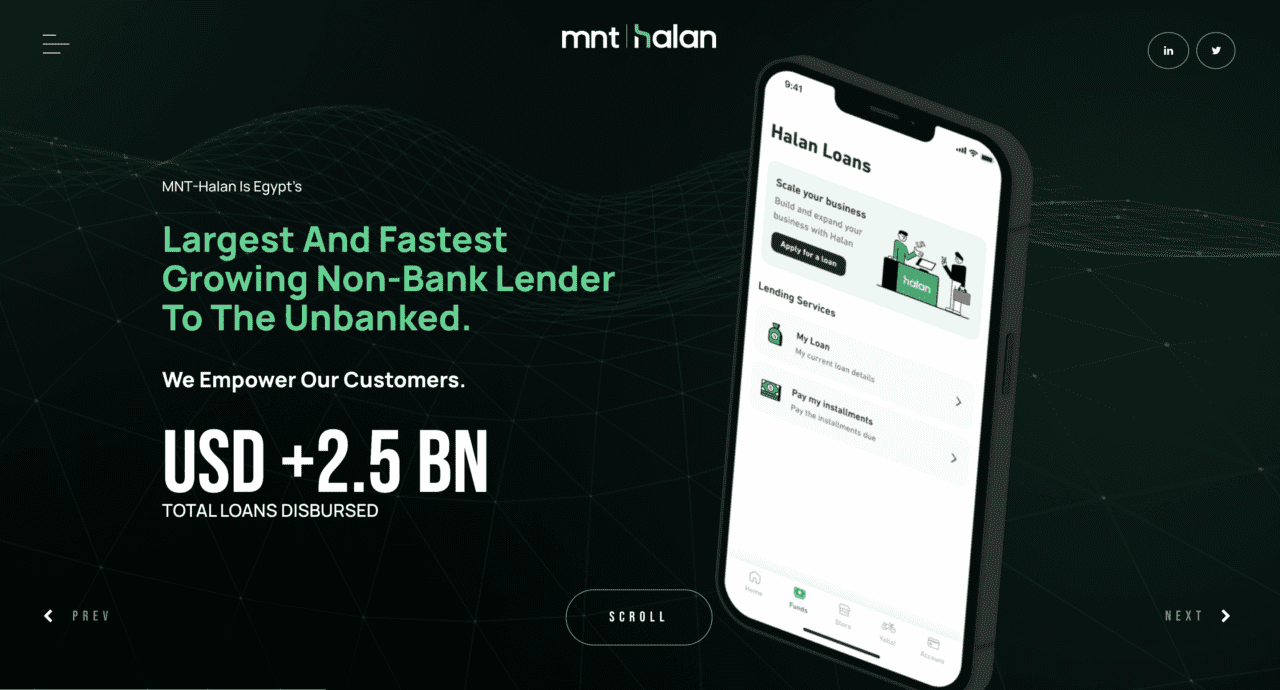
MNT-Halan Achieves $1.4 Billion Valuation with Latest Investment

An investment from Al Ahly Capital, the investment arm of the National Bank of Egypt, has boosted the valuation of Egyptian fintech MNT-Halan to $1.4 billion. The investment represents the first closing of a new round for the firm; a second closing is expected as part of the ongoing funding. Reports indicate that the company has received an initial infusion of $30 million out of what will be a $70 million-plus funding round. In any event, MNT-Halan noted that the capital will help the company expand its operations in Egypt, as well as support growth in the region.

Currently operating in Egypt, Turkey, and the UAE, as well as in Pakistan, where it owns a bank that serves micro and small businesses, MNT-Halan offers a range of digital financial services including both consumer and business lending, payments, e-wallets, savings, investments, and e-commerce tools. The company achieved unicorn status in 2023, becoming the first Egyptian fintech to earn a valuation above $1 billion.

“While we have partnered with more than 30 Egyptian banks and financial institutions, this is the first time a commercial bank has become an equity partner in our journey, making this a particularly important milestone for us,” MNT-Halan Founder and Chairman Mounir Nakhla said. “Together, we will redefine access to financial services for small and micro businesses, as well as people living in remote towns and villages across Egypt who have historically been underserved.”

Headquartered in Giza, MNT-Halan has more than 1.5 million quarterly active users. The firm has disbursed more than $15.5 billion in loans and served more than eight million customers globally since its founding in 2018.


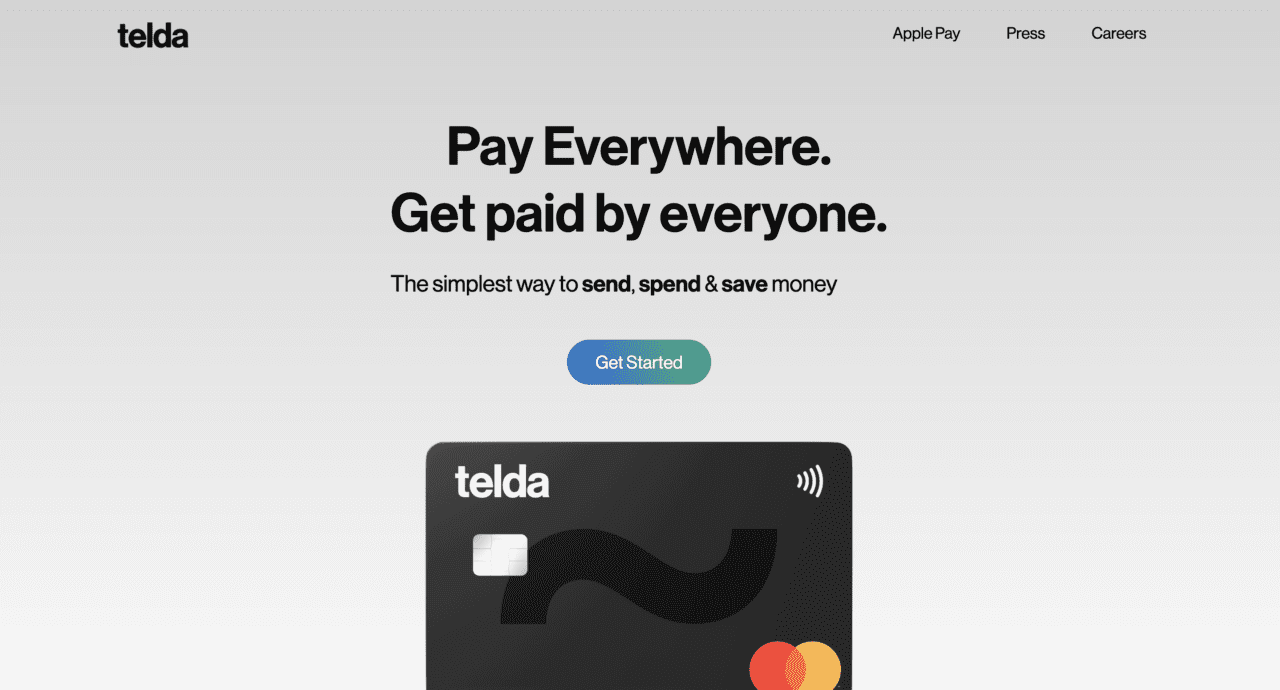
Telda and Mastercard Team Up on New Integrated Payments Offering

A partnership between Mastercard and Cairo-based financial brand Telda will bring a new integrated financial services solution to consumers in Egypt. The new offering will seamlessly connect everyday payments and investment wallets within the Telda app for an experience that is inclusive, accessible, and integrated.

“By embedding Mastercard’s digital capabilities within Telda’s platform, we are creating a seamless bridge between everyday payments and investment opportunities, empowering users to manage, grow, and access their wealth instantly,” Mastercard Country Manager for Egypt, Iraq, Lebanon, and Syria Mohamed Assem said. “Together, we are redefining financial inclusion and supporting Egypt’s vision for a fully digital, unified financial ecosystem.”

Designed for Millennials and GenZ consumers, Telda offers an app that enables users to send and request money as easily as sending a text message. The company’s Telda Mastercard can be used online or in-store, as well as to withdraw cash from any ATM worldwide. Telda offers instant payment notifications to keep users apprised of transactions, and spend categorization functionality to help users understand their spending habits better.

“Telda was founded with a bold vision to redefine the financial services experience,” Telda CEO Ahmed Sabbah said. “Today, the integration of daily payments and the investment wallet within a single app through our collaboration with Mastercard marks a significant leap forward, giving individuals immediate control over their money.”


Blnk Secures $37 Million in Funding

Egyptian Buy Now, Pay Later outfit Blnk has raised $37 million in combined debt and equity. The equity component, led by Algebra Ventures and featuring participation from SANAD Fund for MSME, Endeavor Catalyst, and Emirates International Investment Company, amounted to $12.5 million. Debt facilities from local banks, totaling $24.6 million, completed the round.

“This new round of funding positions us to strengthen our profitability—expanding our reach, diversifying our offerings and doubling down on our commitment to unlocking financial access for millions of consumers in Egypt and beyond,” Blnk Co-founder and CEO Amr Sultan said.

Blnk offers inclusive financing programs for all Egyptians, less than 4% of whom have access to credit cards. This means that many Egyptians can only afford to buy products with cash or after borrowing money from hard money lenders at high interest rates. In response to this, Blnk’s point-of-sale financing options offer instant approvals in minutes and allow borrowers to apply with just their National ID and mobile phone number at the stores they are already shopping at.

“Since our seed round in 2022,” the company noted on its LinkedIn page earlier this week, “Blnk has grown to serve more than one million customers, built a loan portfolio exceeding EGP 1 billion, and reached profitability in 2025. Today, 75% of our customers were previously unbanked or underserved, while more than 35% are women.”

Blnk’s approach to financial risk assessment relies on dynamic, data-driven risk maps. The company’s proprietary AI analyzes hyper-local variables to identify patterns that guide precise credit decisioning. Blnk also leverages specialized machine learning models to provide real-time, precise Probability of Default (PD) predictions which support instant credit decisions with risk-based pricing.

Founded in 2020, Blnk is headquartered in Giza.


Here is our look at fintech innovation around the world.

Latin America and the Caribbean

  • Montevideo, Uruguay-based cross-border payment company Bamboo teamed up with Swedish payment network Centiglobe to streamline cross-border B2B and B2C payments throughout Latin America.
  • Mexican fintech Clip unveiled its digital wallet ecosystem Mi Clip.
  • The Fintech Times looked at the current fintech landscape in Costa Rica.

Asia-Pacific

  • Singapore-based payments and treasury management platform Sunrate introduced Sunrate.AI, a new category of AI-native global payment infrastructure for complex enterprise workflows.
  • Three Japanese banks—MUFC, Mizuho, and Sumitomo Mitsui Bank—announced plans to issue a Yen-backed stablecoin in 2026.
  • XTransfer, a cross-border financial and risk management service company based in Shanghai, inked a Memorandum of Understanding (MoU) with Societe Generale.

Sub-Saharan Africa

  • South Africa-based payments service provider (PSP) Kwik Payments has gone live on the ACI Payments Orchestration Platform.
  • MTN Group Fintech, the fintech arm of African telecom MTN Group, announced a strategic partnership with Ant International to enhance mobile money services.
  • A new proposal from Kenya’s legislature, Finance Bill 2026, could bring additional tax reporting and compliance requirements for virtual asset providers and digital payment platforms.

Central and Eastern Europe

  • Estonian white-label banking platform Wallester has been granted a license from the FCA to enable the firm to expand to the UK.
  • Lloyds Banking Group secured approval from the Bank of Lithuania to acquire electronic money institution Curve Europe.
  • The Fintech Latvia Association signed a Memorandum of Understanding with the UK’s Innovate Finance to foster knowledge exchange and joint business initiatives.

Middle East and Northern Africa

Central and Southern Asia


Photo by Roaming Pictures on Unsplash

Veritus CEO Joshua March on Deploying Compliant AI Voice Agents in Financial Services

Veritus CEO Joshua March on Deploying Compliant AI Voice Agents in Financial Services

More and more banks and financial services companies are leveraging AI-powered communications to enhance the customer experience with faster response times and reduce operational costs. However, there is a wealth of key issues that institutions need to address in order to deploy technologies like AI voice agents safely and effectively while remaining compliant with an ever-shifting range of regulations.

In this interview, recorded at FinovateSpring 2026 in San Diego, California, earlier this year, William Mills, CEO of William Mills Agency, talks with Joshua March, Founder and CEO of Veritus, about how these challenges and how AI voice and text agents are transforming banking and financial services.

“The operational benefits from AI are so immense that no financial institution can really make the decision to be left behind. Everyone has to make this leap. So the question is not ‘are we going to do it?’ It’s ‘just how do we do it in a compliant and safe way.’ Our philosophy is that by being 100% focused on the needs of these regulated financial entities and building in all of the compliance capabilities—not just in how the AI agents are speaking and the guardrails around that to prevent hallucinations and ensure compliance, but also in, for example, a TCPA compliant outbound dialer, TCPA compliant on the channel orchestration—we’ve built multiple layers of compliance at every single step.”

Veritus enables lenders to deploy AI-powered compliant voice, SMS, andemail agents across the entire loan lifecycle, from origination to recovery. Founded in 2025 and headquartered in San Francisco, California, Veritus helps lenders frustrated with stalled applications, limited service hours, rising delinquency costs, and other pain points. Veritus’ Negotiation Engine is a rules-based solution that dynamically offers payment plans, settlements, and hardship options based on individual company policies. Veritus helps providers increase the number of funded loans, improve recovery rates, scale instantly while maintaining brand consistency, all while remaining compliant with FDCPA, TCPA, FCRA, GLBA, and state-specific regulations.

Joshua March founded Veritus in 2025. He previously was Co-Founder and CEO of SCiFi Foods, a cultivated meet company backed by a16oz. Before that, March was Co-Founder and CEO of Conversocial, a call center software firm that was acquired by Verint.


Photo by Jumping Jax on Unsplash

Feedzai Unveils Fraud Intelligence Network, Feedzai IQ Score

Feedzai Unveils Fraud Intelligence Network, Feedzai IQ Score
  • Fincrime prevention company Feedzai has launched its Feedzai IQ Score, an AI-native, network-derived fraud risk solution for banks of all sizes.
  • The new offering provides banks and other financial institutions with real-time access to anonymized, aggregated insights from the company’s global transaction network.
  • A Finovate alum since 2014, Feedzai’s fraud prevention technology processes 120 billion events annually and secures $9 trillion in payments every year.

Financial crime prevention specialist Feedzai announced the availability of Feedzai IQ Score. The new offering is an AI-native network-derived fraud risk scoring solution for banks large and small. Delivered via a single API and available on the AWS Marketplace, Feedzai IQ Score provides banks with real-time access to anonymized, aggregated insights from the company’s $9 trillion global transaction network.

“Fraud has outpaced what any single institution can stop alone,” Feedzai Chief Product Officer Pedro Barata said. “Feedzai IQ Score puts an end to isolated defense by giving banks access to collective insights from across our entire network. Today, we open up this product to institutions of all sizes who now have a ready-made way to make smarter fraud decisions and modernize their defenses without the disruption of fully overhauling infrastructure.”

Feedzai IQ Score helps financial institutions deal with a paradox in the field of fraud prevention in which the data used to prevent fraud is typically restricted to internal sources. The growing sophistication of financial criminals has made this limited view of data untenable. Additionally, network-based fraud risk scoring can be a boon for regional and middle-sized financial institutions that may not have the internal data volume or resources to build sophisticated fraud models independently. Feedzai IQ Score enables these institutions to access anonymized, network-level intelligence, while keeping customer data secure. Feedzai noted that its new offering delivers proven detection gains with 4x more fraud detected and 50% fewer alerts compared to traditional rules-based strategies.

There is no historical data requirement for banks in order to use Feedzai IQ Score, nor is there a lengthy model training process or heavy operational lift. Via expert AI models that have been trained and validated across Feedzai’s network, banks and other institutions can move from integration to value realization in days.

“Network fraud intelligence sharing is becoming increasingly important in the monitoring of fragmented fraud signals within the financial ecosystem,” Chartis Senior Research Principal Philip Mackenzie said. “We considered this capability to be a key differentiator of Feedzai’s IQ Score solution, which combines real-time cross-institutional fraud insights and collective intelligence across a range of financial institutions.”

Founded in 2008, Feedzai made its Finovate debut at FinovateEurope 2014. Today, the San Mateo, California-based company leverages trusted AI to defend consumers and transactions against financial crime, fraud, and money laundering in real time. Feedzai’s technology processes 120 billion events annually and secures $9 trillion in payments every year. The company’s Tier 1 bank clients have reported detecting 62% more fraud with Feedzai compared to their previous solution, 73% fewer false positives, and 25% faster model development. Co-founder Nuno Sebastião is Feedzai’s CEO and Chairman.

5 Things to Know about TradFi’s Move to Control Digital Money Infrastructure

5 Things to Know about TradFi’s Move to Control Digital Money Infrastructure

Late last week, a handful of the largest US banks revealed a plan to launch their own tokenized deposit network.

JPMorgan, Citi, Bank of America, Wells Fargo, and other major banks will launch the new network, which is set to launch by mid-2027. The banks are launching this new network in partnership with The Clearing House (TCH), a bank-owned consortium that operates critical US payment infrastructure, including the RTP network, which enables real-time payments between participating financial institutions.

The initiative will connect traditional banking infrastructure with blockchain-based payments while keeping deposits inside the banking system. Here are five things banks and fintechs should know.

TradFi’s answer to stablecoins

With a market value of more than $316 billion, stablecoins are no longer a crypto experiment. Stablecoin issuance is projected to reach between $3 trillion and $4 trillion by 2030. This growth has the attention of some of the largest banks in the world, warranting a coordinated response.

Similar to stablecoins, a tokenized network offers 24/7 infrastructure and programmable payments, allowing banks to deliver many of the benefits associated with stablecoins. Most notably, the tokenized deposits network will not require customers to move funds outside the traditional banking system, meaning banks will be able to retain their deposits.

Because tokenized deposits are still bank deposits, they retain the same regulatory treatment, accounting treatment, and credit-risk profile as traditional deposits. Tokenized deposits are different from traditional deposits in that they are represented on blockchain infrastructure instead of existing bank ledgers.

It’s about controlling infrastructure

For much of the past decade, fintech competition centered on who could best distribute products and services. Fintechs and banks competed to acquire customers, launch new apps, and build better digital experiences. Recently, however, firms have shifted their focus to controlling the infrastructure that powers financial services.

This race toward infrastructure can be seen in Stripe acquiring Bridge to gain stablecoin infrastructure, Visa’s and Mastercard’s recent investment in stablecoin settlement capabilities, and in banks’ efforts to build tokenized deposit networks. Rather than competing for customer relationships, these companies are positioning themselves to own the rails that move money.

The new tokenized deposit network creates a shared infrastructure layer for programmable deposits and real-time settlement, allowing participating banks to ensure they remain at the center of digital money movement.

The initial target is corporate treasury, not consumers

The new tokenized deposits network will initially be aimed at corporate treasury, which means it will likely not reach consumers before 2028.

TCH expects early demand to come from multinational corporations seeking treasury automation, real-time liquidity management, cross-border payments, and programmable payments. These are the same use cases that have helped stablecoins gain traction among businesses.

While some of these workflows and use cases are applicable to retail clients, businesses stand to benefit the most from real-time settlement, programmable payments, and always-on liquidity management. For that reason, the battle between tokenized deposits and stablecoins may take place in corporate treasury long before it reaches the consumer wallet.

A tokenized network offers 24/7 infrastructure

One of the biggest benefits of blockchain-based payments is that they do not operate on traditional banking schedules that have batch processing at the end of each day.

The new proposed network would allow tokenized deposits to settle 24 hours a day, 7 days a week. This continuous movement helps banks compete with stablecoin networks that already offer near-instant transfers at any time.

Smaller institutions will eventually need a position

With large financial institutions taking the lead on this new tokenized deposits network, where does that leave smaller community banks and credit unions? These smaller institutions will need to find their role in a world where money increasingly moves on programmable infrastructure.

Fortunately for these smaller institutions, the network is expected to be available to banks across the US, not just the largest institutions. As different digital asset infrastructure matures, financial institutions may need to determine their stance on whether they will issue, connect to, custody, or simply enable access to these new forms of digital money.


Photo by Markus Winkler on Unsplash

Klarna Unveils High Yield Savings Account

Klarna Unveils High Yield Savings Account
  • Klarna launched a high-yield savings account paying up to 3.38% APY, adding deposits and savings tools to its growing portfolio of consumer financial products.
  • The move builds on Klarna’s existing banking ambitions. The company already holds $12.3 billion in deposits globally and has offered interest-bearing accounts in Europe since 2021.
  • As Klarna expands from BNPL into savings, payments, P2P transfers, and stablecoins, it is increasingly positioning itself as a full-service digital bank rather than a standalone payments provider.

Digital payments app Klarna is starting to look more like a bank ecosystem. The Sweden-based company has launched a high-yield savings account, adding to its existing suite of banking tools.

The fintech’s new savings account, which currently pays 3.38% APY or higher, does not require a minimum deposit, charge monthly fees, or require a direct deposit. It also offers built-in tools like round-ups, scheduled transfers, and savings goals. While Klarna is partnering with FDIC-insured WebBank, which is holding the funds, users can fund the account in the Klarna app.

Klarna already offers flexible payment tools, debit and credit payment cards, a shopping platform, and mobile telco plans. Savings is a natural next step for Klarna, especially since the company has offered interest-bearing accounts in Europe since 2021. Today, the company holds $12.3 billion in deposits across eleven markets.

“The average American earns less than half a percent on their savings, not because better options don’t exist, but because their bank hasn’t had to compete,” said Klarna CEO and Co-founder Sebastian Siemiatkowski. “Klarna is already where millions of Americans manage their everyday spending. Now it’s where they save too.”

As with many high-yield savings accounts, the percentage yield on Klarna’s new savings account is subject to change. According to the fine print, users can open up to three accounts and can boost their APY by becoming a Klarna member. The higher yield will be paid on balances of up to $50,000.

The new launch follows Klarna’s move into the public markets after its IPO in September of 2025. Today, the company counts over 119 million global active users and 3.4 million transactions per day. While it has not provided updated figures for its Balance accounts, Klarna reported that its Balance accounts held $14 billion in 2025. Given the higher yield that the new savings accounts pay, it is reasonable to assume that much of the funds in the Balance accounts will be moved to the new savings accounts.

Klarna debuted peer-to-peer (P2P) capabilities in 13 European markets earlier this year. And while it has not yet launched similar P2P capabilities in the US, the company will likely do so after it moves its stablecoin (KlarnaUSD) from a testnet to the mainnet. The launch of the savings account places Klarna another step closer to becoming a full-service digital bank. Klarna has built its brand around buy now, pay later, but is increasingly expanding into deposits, payments, and everyday banking.

Members First Credit Union Partners with Mahalo Banking

Members First Credit Union Partners with Mahalo Banking
  • Digital banking solutions provider Mahalo Banking has partnered with Members First Credit Union of Utah.
  • Members First CU will deploy Mahalo’s Thoughtful Banking platform as part of an overall modernization initiative that will also involve a transition to the Corelation Keystone core platform.
  • Mahalo Banking, based in Troy, Michigan, won Best of Show in its Finovate debut at FinovateFall 2023 in New York. Jim Stickley is CEO.

Utah-based Members First Credit Union has teamed up with Mahalo Banking as part of a technology modernization drive that will involve the financial institution deploying Mahalo’s Thoughtful Banking platform as well as transitioning to the Corelation Keystone core platform.

Members First CU CEO Darryn Hodgson indicated that selecting a digital banking provider that could evolve with the institution was key. Hodgson also praised Mahalo’s culture, level of commitment, and collaboration, noting that it reflected “the same member-first philosophy that drives our credit union.” Mahalo’s Thoughtful Banking platform will provide improved mobile functionality and a streamlined overall experience for the credit union’s members, with enhanced digital account opening capabilities to be introduced later after the initial launch. Hodgson added that ease of use was another major factor in choosing Mahalo, which is known for its incorporation of neurodiverse functionality that helps financial institutions serve customers and members with a range of cognitive and sensory challenges. “We have members across multiple generations,” Hodgson said, “and it was important to choose a solution that was approachable and easy to navigate.”

In addition to deploying Mahalo’s Thoughtful Banking, Members First CU will also transition to the Corelation Keystone core platform. Mahalo’s solution will serve as the member-facing digital experience for Members First CU, delivering online, digital, and mobile banking functionality.

“Credit unions today need technology partners that are flexible, responsive, and committed to continuous collaboration,” Mahalo COO Denny Howell said. “Members First is taking a thoughtful approach to modernization by aligning its digital banking and core strategies around long-term agility and member experience. We are proud to support its team with a platform designed to simplify the member journey while enabling faster innovation and stronger operational flexibility.”

A member-focused financial cooperative, Members First Credit Union was founded in 1958 and serves communities in northern Utah. Launched as the Thiokol Employees Credit Union, the financial institution has grown into a 13,000-member entity with more than $206 million in assets. Members First Credit Union offers a full range of financial services including deposit accounts, consumer lending, credit cards, home equity loans, and digital banking solutions.

Mahalo Banking won Best of Show in its Finovate debut at FinovateFall 2023 in New York. At the conference, the Troy, Michigan-based fintech demonstrated its online banking solution that fully integrates comprehensive neurodiverse functionality directly into its platform. The functionality enables credit unions to support a wider range of members, including those with unique needs due to autism, dyslexia, epilepsy, ADD/ADHD, color blindness, and more.

Mahalo Banking’s partnership announcement with Members First Credit Union comes just weeks after the fintech reported that CU Hawai’i Federal Credit Union had selected its Thoughtful Banking platform. The decision is also part of a strategic dual implementation that saw the credit union announce a core conversion to Corelation Keystone.

“The feedback we received from other credit unions about Mahalo’s platform and partnership approach was overwhelmingly positive,” CU Hawai’i President and CEO James Takamine said. “Beyond the technology, it was clear that Mahalo’s team and culture are truly aligned with how we serve our members. The dedicated focus on usability, security, and collaboration made Mahalo the clear choice for our long-term digital strategy, especially as we undergo our core conversion to Keystone.”


Photo by Nils Huenerfuerst on Unsplash

3forge Unveils Application Fabric for Finance, 3forge Enterprise

3forge Unveils Application Fabric for Finance, 3forge Enterprise

For companies involved in the business of empowering developers to build business-critical fintech applications, the world has changed a great deal over the past decade. From the rise of AI to a sea-change in regulatory priorities that has increased scrutiny on third-party relationships, fraud and risk management, consumer data protections, and more, the task of providing fintech developers with the tools they need to innovate has only become more challenging.

This makes the recent news from 3forge, a New York-based fintech that has been empowering fintech designers and developers for 15 years, all the more interesting.

“We started 3forge in New York, in 2011, to build a transformative platform enabling your designers and developers to build applications in a fraction of the time and cost, with a focus on business-critical scale, performance, and interoperability,” 3forge Founder and Chief Technology Officer Robert Cooke said from the Finovate stage at the beginning of the company’s Finovate debut in 2022.

Today, the New York-based fintech announced the launch of its application fabric for finance. 3forge Enterprise unifies real-time data, business logic, AI, and application development in a single operational environment. This gives financial institutions a production-ready continuum from data to deployed application. 3forge Enterprise provides a data gateway that unifies current-state access to real-time and historical tables, streams, and procedures across data nodes in the 3forge fabric. The technology enables developers and applications to publish, subscribe, query, and insert data via native connectivity in Java, Python, and C++, and provides failover support and integrations across JDBC, Pandas, and SQLAlchemy libraries. 3forge Enterprise also provides MCP server and AI agent access, live prompting and agentic development, and an operations hub that centralizes the management of 3forge deployments.

“For years, financial institutions treated data platforms, business logic, and applications as separate architectural domains,” Cooke said. “That separation made sense operationally, but it is increasingly inefficient for high-value capital markets workflows. As AI raises the stakes, models and agents need more than disconnected data estates and fragmented application logic.”

3forge Enterprise uses three layers to transform platforms into an enterprise-wide fabric for financial systems: a governed real-time intake and exhaust layer for financial data, an application engine and AI-assisted development layer for building and running financial workflows that helps users move from data to production, and an operational control layer to facilitate managing deployments at scale. Combined, these layers enable vendor platforms, internal systems, and AI-powered applications to access real-time and historical data via unified queries, streams, APIs, and agents. At the same time, 3forge Enterprise preserves the entitlements, auditability, and production controls needed for capital markets.

“An application fabric brings data, decisions, execution, AI, and applications onto the same controlled, auditable foundation,” Cooke explained. “For tier-one financial institutions, 3forge Enterprise provides a way to extend and modernize complex existing infrastructure. For mid-market banks, broker-dealers, hedge funds, and asset managers, it provides access to a production-ready application fabric without having to build one from scratch.”

Founded in 2011 and headquartered in New York, 3forge made its Finovate debut at FinovateFall 2022. At the conference, the company showed how its Full Stack Enterprise platform enables developers to quickly build customized business-critical solutions with an emphasis on workflow transparency, real-time visualization, and data discovery without limitation.


Photo by Vincenzo Marotta on Unsplash

Banking Circle to Power Money Movement for Bridge

Banking Circle to Power Money Movement for Bridge
  • Stripe-owned stablecoin infrastructure platform Bridge is partnering with Banking Circle to enable clients to move stablecoins into and out of local currencies, with support for EUR, GBP, USD, and soon AUD.
  • The partnership combines Bridge’s stablecoin capabilities with Banking Circle’s regulated banking infrastructure, correspondent banking network, and local clearing access to facilitate cross-border payments and fiat-to-stablecoin conversions.
  • The deal reflects the growing convergence of traditional banking and stablecoin infrastructure, as businesses increasingly seek regulated on- and off-ramps that make stablecoins practical for everyday global payments.

Banking Circle, a Luxembourg-based bank, announced today that Stripe-owned stablecoin infrastructure platform Bridge is using it to move money across the globe.

Banking Circle’s money movement infrastructure enables Bridge’s clients to move stablecoins in and out of local currencies. Currently, Banking Circle supports EUR and GBP, and plans to offer support for AUD in the third quarter of this year. Bridge will also use Banking Circle’s SWIFT capabilities to allow its clients to send and receive USD.

By offering stablecoin on- and off-ramps to and from local currencies, Bridge is giving its clients the flexibility to send and receive payments in multiple European currencies without having to worry about holding the currencies themselves.

“As payment businesses continue to expand globally, access to reliable, scalable banking infrastructure is critical,” said Banking Circle Chief Digital Assets Officer Kirit Bhatia. “Banking Circle provides regulated banking rails, local clearing access, multi-currency accounts and cross-border payment capabilities through a single integration, helping companies simplify operations and accelerate growth in new markets.”

As a fully regulated, licensed bank, Banking Circle offers Bridge access to its correspondent banking network for global payments. The company was founded in 2013 to provide payments, banking, and lending infrastructure to financial institutions and regulated payment businesses.

The partnership highlights the growing convergence between stablecoin infrastructure providers and traditional banking institutions. While Bridge offers businesses a way to move value using stablecoins, Banking Circle provides the regulated banking rails, local clearing access, and correspondent banking relationships needed to move funds into and out of local currencies.

“Banking Circle’s API-led infrastructure and multi-currency capabilities support our continued global expansion,” said Bridge Head of Product Mai Leduc Blount. “By making it seamless for businesses to convert between fiat and stablecoins, we ensure that any business can use stablecoins for everyday expenses, all around the world.”

Bridge was founded in 2022 to serve as an alternative payment method to compete with SWIFT and credit cards and was acquired by Stripe in 2024 for $1.1 billion. Bridge’s technology allows businesses to move, store, and accept stablecoins using just a few lines of code. The company’s Issuance APIs help clients issue their own stablecoin and accept USD, EUR, USDC, USDT or any other stablecoin.


Photo by Tom Fisk