This site is operated by a business or businesses owned by Informa PLC and all copyright resides with them. Informa PLC's registered office is 5 Howick Place, London SW1P 1WG. Registered in England and Wales. Number 8860726.
Finovate Blog
Tracking fintech, banking & financial services innovations since 1994
FinovateEurope 2026 wrapped up last week, but the fintech conversations are still flowing across social media. The two-day event was packed with meaningful conversations, fast-paced demos, a reunion of familiar faces, and new connections.
And while speakers and attendees were busy talking and learning about all things fintech and banking, Finovate’s photographer was capturing the event in more than 1,000 photos.
The photos are broken down into three categories, and we’ve pulled in a few photos as well as highlights to help summarize FinovateEurope via pictures. If you’re looking for a full content summary, check out our event summary blog post.
Some of the best discussions happen off stage. And with almost a dozen networking sessions baked into the event, there were a lot of valuable ideas exchanged in the hallways and on the networking floor. Heightening this experience were a live caricaturist and, even though fintech has a magic of its own, a magician.
Between panel discussions, fireside chats, and keynote presentations, the FinovateEurope stage hosted some of the brightest minds in fintech (and I’m not just saying that because I was on stage). We heard from founders on their biggest challenges, venture capitalists on the state of funding as we move into 2026, and bankers on how they actually measure the value of AI pilots.
The more than 20 companies that demoed their newest technology on stage showcased some of the most cutting edge ideas in fintech. From identity verification to core modernization, banks and fintechs face a lot of challenges. These fintechs took the stage to show their newest technology in under seven minutes.
If you attended FinovateEurope in London last week, you may have noticed that the energy of the event felt different.
In previous years, the conversation leaned heavily toward experimentation. This year, it shifted toward execution. Across the demo stage, panel sessions, and hallway conversations, it was clear that fintech is maturing. And that maturity is reshaping how banks create, partner, and serve customers.
AI moves from experimentation to operationalization
Agentic AI dominated the agenda in a pragmatic way that eschewed hype for reality.
Speakers discussed the importance of governed agentic AI that protect users with guardrails, auditability, and human oversight. Among these protective barriers, trust, explainability, and regulatory alignment were highlighted as central design principles when implementing agentic AI tools. It is clear that the conversation has shifted from “Can AI agents work?” to “How do we deploy them safely inside regulated institutions?”
Fraud and identity also pulsed throughout conversations about AI, as new technologies are evolving these elements from singular checks to continuous behavioral intelligence. The topics of responsible AI and the impact of AI on the future workforce were also front and center, with standing-room-only crowds on the AI stage discussing governance, skill atrophy, and ethical deployment.
As one attendee said, “When it comes to AI, speed may win attention, but trust wins the relationship.”
Customer experience: from product-centric to embedded
In the Analyst All-Stars session, much of the conversation centered on customer-centricity. Banks are moving from product-centric models to embedded, predictive, and contextual financial experiences.
In my panel discussions on embedded and challenger banking, we explored how digital lending is moving closer to the customer as part of the journey. Executing embedded lending is about being present at the moment of need in the correct channel.
Other panel discussions and keynotes offered more insights around improving the customer experience:
Customers compare bank journeys to every digital experience they have.
Onboarding remains a major friction point.
Personalization and channel choice are now expectations.
Balancing compliance, risk, and conversion requires smarter orchestration.
Challenger banks continue to influence customer expectations, especially when it comes to how they think about brand and community. Many conversations along these lines considered the benefits of collaboration. In fact, over 70% of fintech product launches now involve strategic partners, and panels on platform banking reinforced that partnerships are structurally necessary to compete.
Payments, tokenization, and agentic commerce
Many of the payments discussions highlighted the fact that instant payments are becoming mainstream, but geography and behavior matter. By increasing the speed of payments, fraud also accelerates. This shift is pushing institutions toward implementing “friendly friction,” with biometrics and AI-powered detection.
While not highlighted quite as much, the topic of agentic commerce was brought up in the payments track. If (or when?) bots become customers, banks must rethink identity verification and value-chain control. With ISO 20022 becoming the common language for blockchain-based value exchange, tokenization and programmable money will become key pieces of infrastructure.
Capital is maturing
Most of the investors on the networking floor and up on stage agreed that fintech funding rebounded globally in 2025. Today, capital efficiency and unit economics have returned to the center of strategy. To keep up, founders are tightening business models and refining their distribution strategies. Additionally, panelists mentioned that community-backed capital structures, which add accountability, are increasingly being used alongside traditional venture funding.
Beyond the stage
The Women in Fintech panel was one of the most popular sessions. The overflowing crowd was a reminder that inclusion plays a role in organizational growth. Geopolitical risk, national security strategy, and regulatory shifts also underscored the fact that financial services innovation does not happen in isolation.
Thanks to all of our speakers who braved the stage to share their insights, and to everyone who attended. You all make up such a great community and we truly could not do this without you all!
Payment and data security infrastructure company Bluefin and tokenization and vaulting platform Basis Theory have announced a strategic partnership.
The partnership will enable businesses to implement a unified token strategy to help them manage payment fragmentation between cloud-native tokenized platforms and in-person environments.
Bluefin made its Finovate debut at our developers conference FinDEVr SiliconValley. Basis Theory debuted at FinovateSpring 2022.
A strategic partnership between Bluefin and Basis Theory will enable businesses to deploy a unified token strategy across environments. Spanning in-store, call center, online, and backend systems, the partnership aligns Bluefin’s PointConex platform with Basis Theory’s tokenization capabilities to securely and consistently capture, tokenize, and use sensitive payment data across channels. This will enable firms with hybrid and omnichannel payment methods to manage payment fragmentation between cloud-native tokenized platforms and in-person payment environments more effectively. Enterprises can implement the strategy without expanding PCI scope or introducing additional integration-related complexity.
“As organizations expand into hybrid payment experiences, PointConex provides a standardized way to secure in-person payment rails without adding new compliance or integration complexity,” Bluefin Founder and Chief Strategy Officer Ruston Miles said. “By aligning with modern, independent tokenization platforms like Basis Theory, we enable a consistent approach to protecting payment data across all channels while preserving flexibility and data ownership.”
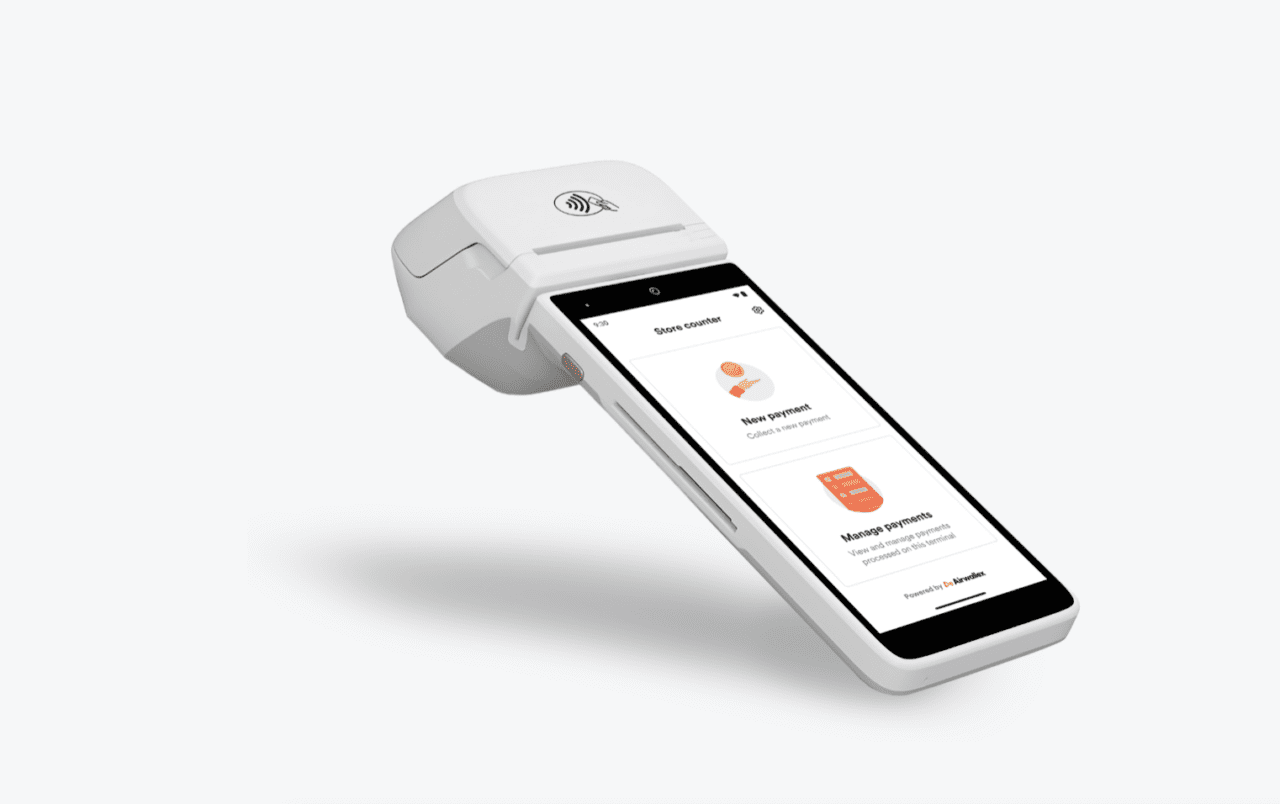
Bluefin’s PointConex platform provides processor-agnostic, card-present orchestration with PCI-validated P2PE. The platform is designed as a no-code proxy instead of a gateway or API-based integration, and supports more than 125 certified devices across leading manufacturers. PointConex enables service providers to access certified in-person payment rails without interrupting existing workflows or increasing compliance burdens. Basis Theory’s platform securely captures and vaults sensitive payment data via modern APIs for enterprise companies and SaaS platforms. Through the strategic partnership, customers will be able to expand their digital token strategies into in-person payment environments, enabling them to participate in a future-ready payments architecture while maintaining control over their data.
“Our partnership helps merchants connect customer spending data across in-store and online channels,” Basis Theory CEO and Co-founder Colin Luce said. “Merchants gain a more consistent checkout experience, wherever customers choose to pay, while maintaining strong security and flexibility across their payment environments.”
Making its Finovate debut at FinovateSpring 2022, Basis Theory demonstrated how its technology helps developers securely work with sensitive data. The company showed how its solution gives developers a secure and compliant environment to interact with their most sensitive data to conduct KYC, initiate bank transfers, or query the data without decrypting it.
Basis Theory’s partnership with Bluefin comes on the heels of the firm’s announcement that it has teamed up with Checkout.com in an alliance that will help merchants securely capture, store, use, and update payment data without adding additional compliance burdens with a broader PCI scope. Last fall, Basis Theory secured $33 million in funding in a round led by Costanoa Ventures, Stage 2 Capital, and Moneta VC.
Founded in 2007 and headquartered in Atlanta, Georgia, Bluefin introduced itself to Finovate audiences at our developers conference, FinDEVr SiliconValley 2014. In the more than a decade since then, the company has grown into an end-to-end payment infrastructure company with 35,000 clients across 60 countries and more than 300 integration partners.
We’re fresh off an outstanding FinovateEurope conference in London (meet our Best of Show winners!) and already gearing up for our Spring event in San Diego. In the meanwhile, here’s a look at some of the fintech headlines that have crossed the wire in recent days. Be sure to check back here at the Fintech Rundown all week long for updates!
Digital banking
Oklahoma-based Blue Sky Bank partners with Jack Henry, deploying the fintech’s Banno Digital Platform along with other integrated solutions.
UK-based embedded insurance company Wriskacquired real-time financial intelligence platform Atto to build an integrated embedded finance platform.
DeFi
Payoneerteams up with stablecoin infrastructure platform and Stripe company Bridge to support its launch of new embedded stablecoin capabilities.
Netherlands-based paytech and stablecoin issuer Quantozteams up with Visa, enabling the firm to issue irtual Visa debit cards as serve as a BIN-sponsor for third-party fintechs and platforms.
London called—and our FinovateEurope 2026 demoing companies answered!
After a full day of live fintech demonstrations showcasing solutions for challenges in lending, payments, wealth management, and more, the attendees of FinovateEurope have made their decision as to which companies will receive Finovate’s highest honor: Best of Show.
As Finovate VP and Master of Ceremonies Greg Palmer noted, this year’s competition was as tough as it has ever been—which reflects well not just on the winners, but also on all the companies that demoed their latest innovations before our audience of fintech and financial services professionals from around the world. Nevertheless, as the saying goes, there can only be one (or, in this case, three)—and here they are: the winners of Best of Show for FinovateEurope 2026!
R34DY for its ABLEMENTS solution that enables rapid AI transformation, allowing banks to achieve faster delivery, lower IT costs and comprehensive differentiation via context-aware modernization. Demo video.
Serene for its technology that transforms a compliance burden into sustainable growth, with insights that optimize collections, reduce arrears, empower front-line teams, and safely expand lending to underserved markets. Demo video.
Tweezr for its solution that helps organizations transform and grow by accelerating TTM and increasing developer productivity for both legacy system maintenance and modernization (or even obviating modernization all together). Demo video.
A hearty congratulations to our trio of Best of Show winners and a profound thanks to all of the companies that demoed their latest fintech innovations on the Finovate stage this week. It seems as if each year the competition just gets tougher, and we salute those companies—from scholarship-winning startups to veteran incumbents—whose innovations bring greater personalization, security, and value to individuals, businesses, and communities.
Next up for Finovate is our event in sunny San Diego—FinovateSpring 2026—scheduled for May 5 through 7. We hope to see you there!
Notes on methodology:
1. Only audience members NOT associated with demoing companies were eligible to vote. Finovate employees did not vote.
2. Attendees were encouraged to note their favorites during each day. At the end of the last demo, they chose their three favorites.
3. The exact written instructions given to attendees: “Please rate (the companies) on the basis of demo quality and potential impact of the innovation demoed.”
4. The three companies appearing on the highest percentage of submitted ballots were named “Best of Show.”
5. Go here for a list of previous Best of Show winners through 2014. Best of Show winners from our 2015 through 2025 conferences are below:
With its home in London, it is no surprise that FinovateEurope often showcases the highest number of demoing companies headquartered outside of the United States. What’s especially interesting about this year’s cohort of FinovateEurope demoing companies, however, is the percentage of non-US companies compared to the total: more than 77% of this year’s demoers hail from countries other than the US. Check them out below and then join us next week for FinovateEurope 2026!
Founded in 2019, AAZZUR empowers brands to launch embedded finance solutions with a single integration, unlocking new revenue streams and enhancing customer engagement.
Founded in 2021, Candour Identity boosts onboarding conversions, reduces fraud losses, enables daily biometric use, and supports regulatory complaince to help instituions scale their digital offerings.
Founded in 2024, FINTRAC automates workflows to deliver stronger controls, richer analytics, and lower costs across the model lifecycle. The company’s Model Ops platform helps banks and other financial institutions manage their most complex models and calculations.
Founded in 2025, Francis empowers financial institutions and fintechs to make the most of open finance by leveraging AI. The company’s technology turns fragmented financial data into actionable wealth insights.
From simple workflows to complex cases such as commercial loans and mortgages, Intuitech delivers AI agents capable of automating over 90% of manual tasks, shortening approval times and lowering costs. The company was founded in 2018.
Keyless replaces outdated multi-factor authentication (MFA) with biometrics, improving the user experience and saving millions. Founded in 2019, Keyless was acquired by fellow Finovate alum Ping Identity.
Maisa boosts business efficiency by automating end-to-end processes with traceability, hallucination-resistance, and governance, in regulated industries such as banking and financial services. Maisa was founded in 2024.
Mifundo enables banks and other financial institutions to grow their business volume by up to 15% by enabling them to better serve foreign and cross-border customers throughout Europe. The company was founded in 2022.
Founded in 2020, MyPocketSkill is a digital technology company at the nexus of fintech and edtech that offers solutions to help Gen Z to save, invest, and become more money savvy.
Founded in 2024, Neuralk AI makes predictive capability a viable option at every point where tabular data is available. The company’s technology delivers superior performance compared to traditional machine learning and large-language models.
Opentech partners with banks and card issuers, supporting digital transformation with secure, compliant, and scalable payment solutions. The company combines UX design with software engineering via a co-design model that accelerates delivery while ensuring equality and reliability.
Founded in 2019, R34DY offers an automated system, ABLEMENTS, that enables rapid AI transformation for banks, enabling them to deliver new products faster, lower IT costs, and differentiate themselves via context-aware modernization.
Sea.dev provides embeddable AI for business lending. The company’s technology automates underwriting workflows, to enable credit analysts to focus on higher-value analysis, faster decision-making, and growth. Sea.dev was founded in 2024.
Founded in 2023, Serene combines behavioral insights, predictive intelligence, and financial data to enable institutions to identify and understand early signs of fraud, vulnerability, and financial stress.
Founded in 2025, Skill Studio AI transforms training documents into engaging, AI-powered learning experiences. The company’s platform reduces training costs, accelerates compliance readiness, and scales globally.
Tweezr—Tel Avi, Israel and Amsterdam, the Netherlands
Tweezr empowers institutions to transform and grow by accelerating time-to-market and boosting developer productivity for both maintaining legacy systems as well as for modernization initiatives. The company was founded in 2024.
As banks digitize their lending processes and seek to expand credit access across borders, it is becoming increasingly difficult to make fast, accurate credit decisions. To mitigate risk, lenders need real-time insights into spending habits, automated functionality, and visibility into a broader set of data, especially as they seek to improve speed, enhance the customer experience, and maintain compliance.
At FinovateEurope 2026, a new group of fintechs will showcase how they are addressing these challenges by bringing intelligence and automation directly into the lending process. From sourcing alternative credit data to deploying AI-driven lending agents, the companies below are helping banks and lenders modernize credit decisioning while keeping risk in check.
FinovateEurope 2026 will take place at London’s InterContinental O2 on February 10 and 11. Tickets are available now. Visit our FinovateEurope hub today and save your spot!
Intuitech brings live AI agents into lending workflows to automate manual, time-consuming processes across origination and servicing. The company helps lenders streamline tasks including data collection, validation, and borrower interactions. This automation helps reduce operational burden while improving speed and consistency.
By embedding AI agents directly into clients’ lending operations, Intuitech enables them to scale their lending activity without requiring additional talent in-house. The automated approach helps bring modern credit delivery to lenders of all sizes.
Mifundo’s technology enables customers to assess cross-border credit risk by sourcing and standardizing credit data from across European markets. The company helps lenders better evaluate borrowers with international financial histories by assess creditworthiness for mobile, expatriate, and cross-border customers. Mifundo enables banks to reach more borrowers, as many are underserved by traditional credit systems and therefore are overlooked.
With remote work becoming more popular and the potential for cross-border lending increasing, firms are realizing that there is a gap in data for European credit markets. Mifundo closes this gap by expanding access to reliable credit information, ultimately helping lenders minimize risk while unlocking new lending opportunities across borders.
sea.dev provides real-time risk insights designed to help lending teams make better credit decisions across the loan lifecycle. The company’s platform aggregates and analyzes borrower, portfolio, and market-level data to offer lenders clearer visibility into risk exposure, ultimately supporting faster approvals.
sea.dev enables lending teams to continuously monitor risk and adapt decisions as inputs change. The company’s more dynamic, insight-driven approach helps lenders explore more products and serve new borrower segments.
Why banks should care
With more consumer data available than ever before, lenders can now underwrite loans more effectively, especially for customers who were once considered risky or had limited credit histories. This abundance of data also introduces new challenges, including inaccurate, unclean, or cross-border information that can complicate analysis and require specialized expertise. Fortunately, new tools are emerging to help automate data collection, filtering, and validation. These tools have the potential to enable lenders of all sizes to expand their reach and better serve a broader customer base.
Compliance and fraud prevention platform Sumsub has teamed up with digital asset infrastructure solutions provider Fireblocks to provide Travel Rule compliance.
The Travel Rule is a regulation mandated by the Financial Action Task Force (FATF) designed to fight money laundering and terrorist financing. The rule requires financial institutions and Virtual Asset Service Providers (VASPs) to share specific information about the sender and receiver of funds during certain transactions. Enacted to defend traditional financial transactions from money laundering and terrorist financing, the rule has been extended to cover cryptocurrencies and digital assets.
Courtesy of the partnership, Sumsub’s Travel Rule solution will be natively integrated into the Fireblocks platform. This will provide both financial institutions and VASPs with real-time, automated, and dynamic verification for virtual asset transactions. Fireblocks users will benefit from complete control over compliance workflows, enabling them to customize these workflows to fit their preferred risk profiles. The integration features automated and encrypted Travel Rule data exchange between VASPs, supporting faster and more secure stablecoin payments.
“We’re excited to partner with Fireblocks to bring native Travel Rule compliance directly into one of the world’s leading digital asset infrastructure platforms,” the company noted on its X page. “Together we’re setting a new standard for Travel Rule compliance—secure, automated, and designed for scale—helping businesses power faster, safer, and fully compliant stablecoin payments.”
The Sumsub/Fireblocks partnership comes at a time of increased interest in stablecoins, with stablecoin volumes nearing $1 trillion per month in 2025, twice the levels of the previous year. The rise of stablecoins has put pressure on the fragmented settlement rails and compliance workflows of VASPs and other financial institutions. Further, evolving regulations—from MiCA in the European Union to the latest moves from the FATF—are driving firms to improve their ability to manage financial risks associated with virtual assets, including both implementation and operationalization of the Travel Rule.
“As digital asset payments and stablecoin adoption accelerate, our customers need compliance solutions that are robust and operationally seamless,” Fireblocks SVP of Corporate Development & Partnerships Adam Levine said. “By integrating Sumsub’s Travel Rule solution directly into the Fireblocks platform, we’re giving institutions the flexibility to meet global regulatory requirements while maintaining efficient, streamlined transaction workflows.”
Per the partnership, Fireblocks will remain the hub for transaction processing. Sumsub will provide secure, real-time Travel Rule data exchange to enrich the transaction workflow, facilitating access to 1,800+ VASPs across top protocols including GTR, CODE, Sygna, the Sumsub protocol, and more. The data sharing between counterparties in virtual asset transfers is fully embedded in the Fireblocks platform to ensure scalable, friction-free compliance.
New York-based Fireblocks is a digital asset infrastructure company that helps organizations build, manage, and scale their businesses on the blockchain. The company streamlines stablecoin payments, settlement, custody, tokenization, and trading operations across a large ecosystem of banks, payment providers, stablecoin issuers, exchanges, and custodians. Fireblocks counts 2,200 organizations among its customers including Finovate alums like Worldpay and Revolut. The company secures more than $10 trillion in digital asset transactions across 100 blockchains.
Founded in 2015 and headquartered in London, Sumsub (“Sum & Substance”) made its Finovate debut at FinovateEurope 2020 in Berlin, Germany. At the conference, the company demonstrated its all-in-one technical and legal solution to help firms meet KYC/KYB/AML requirements. The company’s technology helps accelerate verification, reduce costs, and detect fraud, and is used by more than 4,000 companies around the world. Andrew Sever is company Co-Founder and CEO.
Data, analytics, and technology company Equifax unveiled Credit Abuse Risk, a new solution to help lenders fight first-party fraud.
The new offering leverages machine learning to identify common first-party fraud tactics such as credit washing and loan stacking.
News of Equifax’s Credit Abuse Risk predictive model comes on the heels of the launch of the company’s Synthetic Identity Risk tool. The solution empowers institutions to identify when fraudsters are using fake identities to set up credit accounts and obtain loans.
A new offering from international data, analytics, and technology company Equifax will help protect lenders from first-party fraud. Credit Abuse Risk is a new predictive model that leverages FCRA-regulated data to spot fraud tactics such as credit washing and loan stacking. The model will help lenders make more confident lending decisions.
“By focusing on application behavior in real time, Credit Abuse Risk quickly helps to reduce the potential for fraud and related costs,” Equifax Chief Product Officer for US Information Solutions Felipe Castillo said. “This supports a more confident lending environment and helps keep credit available for consumers.”
In a world of phishing and deepfakes, first-party fraud is a type of financial crime that often goes overlooked in conversations about fraud prevention. First-party fraud, unlike third-party fraud, involves fraud committed by the actual customer or account holder rather than by an external party impersonating someone else. Credit Abuse Risk is designed to detect two specific forms of first-party fraud: loan stacking, in which an individual applies for multiple loans in a short period of time with no intention of repaying the debt, and credit washing, in which an individual attempts to remove accurate but negative information from their credit report. Credit Abuse Risk identifies the behaviors associated with these types of fraud during prequalification, account origination, or portfolio review, enabling lenders to adjust loan terms based on FCRA-compliant insights.
Powered by machine learning, Credit Abuse Risk offers enhanced insights derived from behavioral indicators that detect atypical credit activity, and provides targeted decisioning that addresses the lifecycle of fraud. Credit Abuse Risk features comprehensive portfolio protection covering all credit tiers and actionable intelligence that empowers lenders to make real-time, regulated decisions on credit terms. This includes FCRA-compliant scoring with adverse action reason codes to ensure transparency in the event of application denials, restrictive credit term modifications, and related actions.
Credit Abuse Risk is part of Equifax’s suite of fraud solutions and works alongside the company’s Synthetic Identity Risk tools. Introduced earlier this month, Equifax’s Synthetic Identity Risk uses machine learning algorithms to detect fraud patterns—such as those related to synthetic identity fraud—that are often difficult to spot using traditional methods. Synthetic identity fraud occurs when a fraudster combines aspects of a real identity with fake data to create a new, fictitious identity. The fraudster then uses these fictitious identities to open credit accounts and secure loans on which they eventually stop making payments. The fact that these synthetic identities often include real data and appear in mostly legitimate means that these frauds can be difficult to detect and can persist for long periods of time. Equifax estimates that charge-offs per known synthetic identity cost companies on average $13,000.
“Synthetic identity fraud is a rapidly growing threat impacting the consumer lending ecosystem,” Castillo said. “With Synthetic Identity Risk, Equifax strengthens lenders’ fraud defenses, helping them to uncover hidden risks and ultimately shift from reactive loss recovery to proactive prevention. In doing so, they not only reduce their financial losses but they (also) safeguard and build long-term trust with their legitimate customers.”
Headquartered in Atlanta, Georgia, Equifax made its Finovate debut at FinovateFall 2011 in New York. The company’s differentiated data, analytics, and cloud technology help financial institutions, companies, employers, and public agencies make better decisions with more confidence. Along with Experian and TransUnion, Equifax runs one of the three major credit reporting agencies in the US, has nearly 15,000 employees around the globe, and operates or has investments in 24 countries in North America, Central and South America, Europe, and the Asia-Pacific region.
Equifax is publicly traded on the NYSE under the ticker EFX and has a market capitalization of $24 billion.
The countdown is on! FinovateEurope 2026 lands in London on February 10 through 11 at the InterContinental O2 in London, and the global fintech community is gearing up for one of the year’s most engaging events.
The two-day conference will feature more than 1,000 senior decision-makers, including bankers, investors, founders, and fintech leaders as they uncover what’s next in fintech and banking. You’ll see over 20 live demos of cutting-edge technology with 100+ expert speakers offering insights that go well beyond buzzwords.
If you already have your ticket (if you don’t, there’s still time to register), here’s how to make the most of your days on-site:
Download the ConnectMe app and create your profile to start networking, set your schedule, and view the agenda.
The invitation-only Leaders+ and Impact+ sessions begin on February 9 at 6:00 pm.
Registration and networking begins at 8:15 am on February 10 and the day concludes with the Best of Show announcement during the evening cocktail reception, which starts at 4:30 pm.
Breakfast and networking begins at 8:15 am on February 11 and the day concludes with the Investor All Stars panel, which wraps up at 4:30 pm.
Bring your badge each day. You’ll need it for entry!
Plan your travel time to the venue, especially if you’re commuting or taking public transport.
Dress code? Business casual to business formal. Be comfortable, but ready to make an impression.
Need help? Stop by the registration desk or find a Finovate team member for assistance.
Follow #FinovateEurope on LinkedIn and Twitter for live updates and key takeaways.
Whether your goal is to track early fintech trends, forge new partnerships, or benchmark your strategy against peers, FinovateEurope delivers. With elite networking, live product insights, and industry-shaping conversations all under one roof, this conference promises to kick off 2026 with fresh ideas and real momentum.
Varo raised $123.9 million in a Series G round led by Warburg Pincus and Coliseum Capital.
The bank will use the investment to scale its chartered banking and lending platform.
Alice Milligan, former chief marketing officer at Morgan Stanley, and Kevin Watters, former division chief executive officer at JPMorgan, have joined Varo’s Board of Directors.
Digital challenger bank Varolanded $123.9 million in financing this week. The Series G round, which boosts Varo’s total funding to $1.1 billion, was led by existing investor Warburg Pincus and new investor Coliseum Capital Management. Also contributing to today’s investment are existing investors such as Northview.
For new investor Coliseum Capital Management, the appeal lies in Varo’s ability to use its charter to compete with incumbent banks while expanding its product depth. “We are thrilled to join Warburg Pincus as long-term, collaborative partners, and support Varo’s work to expand its customer value proposition and to further differentiate from traditional banks,” said Coliseum Capital Management co-founder and Managing Partner Chris Shackelton. “We believe Varo is building a resilient and scalable platform from which to capitalize on a significant market share opportunity.”
Varo was founded in 2017 and secured a bank charter three years later. The fintech’s banking platform brings digital-first bank tools, from money management to lending, credit building, and savings accounts and tools. Varo offers two lending products, Varo Advance and Varo Line of Credit, which together generated $547 million in volume last year. The bank’s lending tools are powered by the company’s machine learning models that supplement traditional credit data, allowing the bank to lend to non-traditional borrowers.
As part of today’s announcement, Varo disclosed that Alice Milligan, former chief marketing officer at Morgan Stanley, and Kevin Watters, former division chief executive officer at JPMorgan, have joined its Board of Directors.
From a governance and operating perspective, Varo’s board sees the company’s combination of regulated banking discipline and modern technology as a key differentiator in a crowded challenger market. “Varo has built something rare: a technology-first customer experience paired with the governance and risk discipline required of a nationally chartered bank,” said Varo Bank Board of Directors Alice Milligan and Kevin Watters. Watters reports that Varo will use today’s funds to support the company’s next phase of growth by scaling its lending and banking platform.
“This combination of new capital, Coliseum’s partnership, and experienced banking leaders joining our board, is propelling Varo into its next phase of growth,” said Varo Bank CEO Gavin Michael. “We remain focused on operating with discipline and delivering meaningful impact for our customers.”
US-based Varo is one of the few true challenger banks that operate with their own bank charter, a structural advantage that gives it direct control over deposits, lending, customers, and unit economics. But a charter alone does not guarantee scale. Varo is still small when compared to competitors such as Chime, which operates under a sponsor banking model and has tens of millions of users. And while SoFi is Varo’s closest chartered competitor, the gap between the two is widening. SoFi recently reported record Q4 2025 results, including $1 billion in net revenue, $174 million in net income, and one million new members added in a single quarter.
As bank charters increasingly become table stakes in the challenger banking field, Varo will need to focus on scaling by differentiating its offerings and channels to reach new markets, especially as international players like Nubank, which just received regulatory approval to operate in the US, bring their customer-winning strategies to the US.
Welcome to the first week of February! Both FinovateEurope and Valentine’s Day are just around the corner, and there’s lots to love about this week’s fintech news headlines. Below, we’ve aggregated the top news in fintech for the week. We’ll continue to add more announcements as the week progresses.
Verisavelaunches credit card processing fee optimization program for professional services firms.
NCR Atleos and Heart of England Co-operative extend relationship to enhance financial inclusion.
STAR Financial Bank partners with CorServ to meet demand for enhanced commercial credit cards.
dLocalpartners with DHL Express Brazil to automate Pix payments and accelerate parcel release.
Wealth management
UK-based Novum Investment Managementsecures investment form UK local government pension fund to launch and scale Doris, a new offering to help transition people from saving to investing.
NymCardenables stablecoin settlement with Visa in the Gulf Cooperation Council (GCC) region including countries such as Saudi Arabia, the UAE, and Oman.
Credit, data, and analytics
Analytics software firm FICOforges global partnership with technology consulting and digital solutions provider Tech Mahindra to help companies integrate AI-powered decisioning and advanced analytics.