Building Financial Inclusion: Elizabeth McCluskey, Director of the Discovery Fund at CMFG Ventures

Building Financial Inclusion: Elizabeth McCluskey, Director of the Discovery Fund at CMFG Ventures

What is venture capital doing to help promote fintech innovators who come from underrepresented groups and communities?

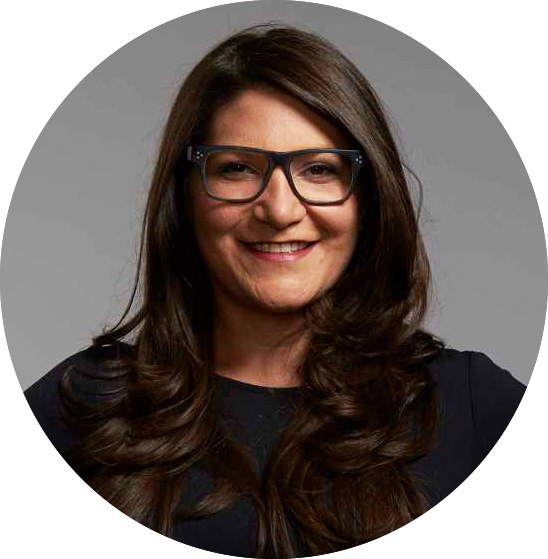
We caught up with Elizabeth McCluskey, Director of The Discovery Fund at CMFG Ventures, to talk about her work in supporting underrepresented entrepreneurs that are building solutions to drive financial inclusion.

We discussed her own extensive experience in financial services, working in both investment banking and wealth management before moving to venture capital. We also learned why she believes it is important to invest in female founders and founders from communities that are underserved by traditional financial institutions.


Why did you decide to transition from investment banking and wealth management to venture capital? What do you enjoy about working at a venture capital firm?

Elizabeth McCluskey: Investment banking is transactional. I enjoyed being part of transformational deals for companies but missed being there for the long-term impact. When I pivoted to wealth management, I was able to develop more longevity in client relationships, but the investments were focused on public equities with which I had minimal connection. These experiences led me to find the ideal balance in venture capital. Now I can build more intimate relationships with portfolio companies and invest in people and ideas that are meaningful and important to me. It brings joy and satisfaction to support their long-term growth and success.

Tell me more about your current role at CMFG Ventures and the Discovery Fund.

McCluskey: CMFG Ventures is the venture capital arm of CUNA Mutual Group. CMFG Ventures invests in fintechs to help financial institutions grow and provide a brighter financial future for all. The firm adds value to fintechs by leveraging its well-established network of over 6,000 financial institutions and suite of complimentary technology solutions. Since 2016, CMFG Ventures has invested in nearly 50 fintech companies and its Discovery Fund has invested in 14 additional early-stage companies led by BIPOC, LGBTQ+, and women founders.

I am the director of the Discovery Fund. The Discovery Fund was created to support underrepresented entrepreneurs who are building solutions for financial inclusion. We plan to invest $15 million over the next three years in early-stage fintech companies. Through my role, I’m able to see the full scope of venture capital investing, including but not limited to:

  • Sourcing deals and meeting entrepreneurs
    • Conducting due diligence
    • Negotiating the terms of the deal
    • Providing long-term support for entrepreneurs’ journeys by helping them scale, network, and find the resources they need to continue to succeed.

Why is it important to invest in diverse founders, especially women-led businesses? And what qualities you look for when investing in these companies?

McCluskey: Women entrepreneurs receive less than 3% of venture capital funding. This staggering number demands that we take a step back and focus on supporting diverse founders, especially women-led businesses, to improve equity in the venture capital space. This is not just the right thing to do – it’s good business. A 2018 BCG study concluded that women-founded businesses yielded two times as much revenue per dollar invested as those founded by men.

Women and diverse founders who have been historically underserved by traditional financial services are working hard to create the financial inclusion they wish they had. We are investing in entrepreneurs like them who are deeply connected to the problems they’re solving. Empowering underrepresented leaders is already creating new opportunities for liquidity management, wealth management, credit access, asset protection, and more.

Can you share more about the women-led businesses that CMFG Ventures invests in and supports? How are they helping make the financial services industry more inclusive?

McCluskey: CMFG Ventures has made investments in multiple women-led companies, such as The Beans, Climb, Caribou, and Frich to help the financial services industry become more inclusive.

  • The Beans simplifies the path to financial balance through evidence-based design and cutting-edge technology, so consumers stress less about money and focus on what they love.
  • Climb is a student lending and payments platform intended to make career education more affordable and accessible.
  • Caribou enables financial advisers to engage their clients in healthcare planning to support life transitions and build stronger financial futures.
  • Frich makes money social. It helps Gen Z develop better financial habits leveraging the power of community and benchmarking.

These female-driven fintechs are transforming the financial services space and improving the financial lives of everyday Americans.

What advice do you typically share with women founders? What about those looking to break into the VC space?

McCluskey: I would give the same advice to women founders as I do with men: always ask for feedback, especially to better understand why someone is telling them “no”. Founders who send updates over time allow me to track their progress, including growth and consistency of their business plans. In several cases, I’ve ended up investing in companies that I passed on in earlier rounds. And even if someone says “no” to doing business together, they can still be a valuable ally. Attempt to stay in touch and leverage their networks. People are often willing to share their connections and provide valuable guidance.

As for those looking to break into the VC space, I believe it is slowly becoming more inclusive and representative, yet it is still a very network-based profession. Similar to my advice for entrepreneurs, start with one person you know (or cold outreach via alumni networks, common interest groups, etc.). From there, ask every person you talk to for an introduction to at least one other person. Focus on growing your network with the goal of building genuine relationships, not necessarily getting a job right away. This is a long-term investment in your career.

We’re more than halfway through the 2022, what do you predict for the rest of the year?

McCluskey: After record levels of investments in 2021, we all knew things had to cool off. However, I believe the pace at which this has happened surprised VCs and entrepreneurs alike.

In fact, startup funding has fallen by 23% over the last 3 months, bringing us back to 2019 levels. For many, it probably feels like the sky is falling, but there is still a significant amount of money in circulation. Venture capitalists today, and by extension founders, are more focused on “real” metrics versus vanity metrics when deciding which companies to fund. The companies that will do well in the second half of the year will have measurable revenues, not just wait lists, and will be managing costs and runway to drive profitability, not endless cash burn.



Photo by Dom J

Black-Owned Fintech Kinly Partners with Data Aggregation and Enhancement Platform MX

Black-Owned Fintech Kinly Partners with Data Aggregation and Enhancement Platform MX
  • Black-founded and run fintech Kinly announced a partnership with open finance company MX.
  • The partnership will bring MX’s financial data aggregation and enhancement solutions to Kinly via the Lehi, Utah-based company’s open finance APIs.
  • MX is a multiple-time, Finovate Best of Show winner. Founded in 2020, Atlanta, Georgia-based Kinly has raised $20 million in funding.

Kinly, a digitally-oriented financial services company dedicated to helping African Americans build generational wealth, has teamed up with financial data aggregation and enhancement solutions platform MX to power its custom-built financial tools.

Headquartered in Atlanta, Georgia and founded in 2020 by CEO Donald Hawkins, Kinly leverages financial education, savings and wealth building, and other strategies to help improve financial outcomes. The company offers a deposit account, a Visa debit card, early wage access, overdraft protection up to $100, and cash back rewards for purchases made at participating Black-owned businesses as well as thousands of popular retailers. There are no hidden fees, no minimum balance required, and Kinly customers can also take advantage of fee-free ATM withdrawals nationwide. Deposits are FDIC-insured, and Kinly’s banking services are provided by The Bancorp Bank.

Hawkins praised MX for both its mission and its “passion for diversity.” He added, “I’ve been impressed with MX’s world-class financial data platform for years and look forward to partnering with them. MX’s open finance APIs will help fuel our mission to help serve and improve the financial livelihood of our broad community.”

The partnership with Lehi, Utah-based MX – a multiple-time Finovate Best of Show winner – will bring valuable data aggregation and enrichment to Kinly courtesy of MX’s open finance APIs. This connectivity will enable Kinly to quickly and securely link to and verify data for a wide variety of financial use cases ranging from account opening and money movement to underwriting.

“Working closely with Kinly to help provide data enhancement and personalized financial advice for the Black community aligns perfectly with our mission to empower the world to be financially strong,” MX Chief Product Officer Brett Allred said. “We’re big fans of Kinly and the underrepresented community it serves and look forward to its continued growth and ongoing partnership into the future.”

Kinly joins a growing ecosystem of Black and African American-based financial institutions, including Greenwood, CapWay, and Guava. The company has raised a total of $20 million in funding courtesy of a $5 million seed round in November of 2020 and a $15 million Series A round in August of 2021. Forerunner Ventures led Kinly’s Series A, which featured participation from Kapor Capital, Anthemis Group, and Point72 Ventures, as well as from individual investors from the world of professional sports such as Marshawn Lynch and Kevin Durant.


Photo by Elijah O’Donnell

Pride or Prejudice? How Transparency Can Help Banks Better Serve LGBTQ+ Communities

Pride or Prejudice? How Transparency Can Help Banks Better Serve LGBTQ+ Communities

As Pride Month draws to a close, we wanted to take a look at the impact that banks and other financial services companies have on LGBTQ+ communities.

The issues that face LGBTQ+ communities when it comes to financial services are as varied as these communities themselves are. They range from simply allowing cardholders to determine how they will be identified on their own bank cards, to healthcare-related savings and investment planning, to learning which financial institutions respect LGBTQ+ individuals and their values – as well as those institutions who work against them.

We caught up with Chris Luton, Director of Customer Care with Oakland, California-based Beneficial State Bank, to talk about the relationship between banks – especially community banks – and LGBTQ+ communities. We also discuss Beneficial State Bank’s efforts in this regard – as a “values-based bank” – as well as the bank’s own development as a community financial institution in the age of digitization.


Tell us about Beneficial State Bank. What makes you unique in your community?

Chris Luton: Beneficial State Bank is a for-profit, mission-driven bank whose owners are institutions governed in the public interest. Instead of working to maximize shareholder profits, we work to maximize prosperity for our communities and our clients, while maintaining strong business performance and serving as a model for ethical banking.

The bank was founded to serve a triple bottom line of environmental sustainability, social equity, and prosperity. The intention was to prove that this banking model could be sustainable, and influence the banking system to substantially change its practices. 

All of these qualities differentiate us from most banks. For instance, we invest in and work with community organizations that are often turned away by traditional banks. We offer socially-conscious individuals, small businesses, and nonprofits the unique opportunity to put their money toward causes they believe in. 

What does it mean to be a values-based bank?

Luton: This means prioritizing our values just as much as our profits, which is captured in our triple bottom line of environmental sustainability, social equity, and prosperity. 

In practice, this means that our values guide our investment decisions. All of Beneficial State Bank’s investments are mission-aligned, and we aim for at least 75% of that lending to go toward the highest-impact organizations and initiatives. We then work to ensure that the rest never goes toward projects or organizations that cause harm. 

For example, we invest in environmental sustainability, affordable housing, social justice, and health and well-being. Meanwhile, we never invest in fossil fuels, payday lenders, private prisons, or weapons manufacturers.

What can banks do to better serve and support the LGBTQ+ community?

Luton: Right now, some of the nation’s biggest banks fund anti-LGBTQIA+ policies through political donations. If the millions put toward these discriminatory policies were instead invested in organizations that protect and uplift the LGBTQIA+ community, banks could make huge progress in a more positive direction. For better or worse, money is hugely influential, especially in our political process. Banks could better serve the LGBTQIA+ community by leveraging this power for good. 

Banks should also consider how their policies and practices impact their LGBTQIA+ customers and employees. At Beneficial State Bank, we strive to create a welcoming and inclusive customer experience — for example, we make it as easy as we can for clients to change their name and gender on any official communications.  

Ultimately, it’s important that banks try to see the big picture on this issue by looking beyond performative celebrations during Pride Month. Members and allies of the LGBTQIA+ community are looking for more than just a rainbow logo or special blog post, and the community’s needs don’t suddenly end once Pride month is over. Support for the LGBTQIA+ community should last all year long. Companies should also look at their overall impact to see if it’s consistent with their messaging. For instance, they might claim to support the LGBTQIA+ community while funding discriminatory politicians or having discriminatory internal policies.

What changes do banks need to make internally to better support their LGBTQ+ employees?

Luton: It starts with building a welcoming and inclusive environment where employees feel safe and empowered to be themselves. We make an effort to hold space for connection among our LGBTQIA+ employees and their allies, and host Pride celebrations every year. Benefits and policies should also be inclusive. For instance, we make sure employees can add domestic partners and their children to their insurance plans, regardless of marital status. 

How can banks help consumers make better banking choices that are aligned with their values?

Luton: The first step is transparency. Consumers can’t make better banking choices if they don’t know where their money is going. Unfortunately, a lot of banks aren’t transparent about where their money goes. Banks need to be honest about their investments so consumers can learn, engage, and make banking choices that are more aligned with their values. 

Values-based institutions like Beneficial State Bank are upfront about our investments. For example, our goal is always for at least 75% of our commercial loan dollars to go to mission-aligned businesses – i.e., those working on issues like affordable housing or renewable energy. We also never lend in non-mission-aligned sectors, such as fossil fuel extraction, private prisons, or weapons manufacturing.

Mighty Deposits is a great resource for discovering how your bank is using your money, and what better options might be out there. Beyond the banking sector, Data for Progress has also released the latest version of its Pride Corporate Accountability Project, which looks at how many Pride sponsors and Fortune 500 companies are funding anti-LGBTQ+ campaigns. 

Digital transformation is a big topic in banking. How has this trend impacted Beneficial State Bank?

Luton: A big milestone in our own digital transformation was the PPP lending process in 2020. We did a substantial amount of lending that required all hands on deck. This actually gave us confidence in bringing up a new platform quickly and effectively. Since then, we’ve improved our digital and online functions, increased efficiency and speed, and lowered our cost of delivery.  

The bank also recently closed on an equity investment of $218 million from the U.S. Treasury’s Emergency Capital Investment Program (ECIP), which will support expanded lending to small businesses, and low- and moderate-income consumers. Our first priority is investing in the bank’s capacity so we can better serve our customers. This will include technological capacities like automation and infrastructure. 

Where do you hope to see Beneficial State Bank in the next three to five years?

Luton: With this recent investment from the U.S. Treasury, we see the next few years as a time of growth and an opportunity to demonstrate the power of values-based banking. We see ourselves continuing our work with marginalized customers and communities on a larger scale, expanding our investments in people and organizations making positive change in the world, and influencing other banks to do the same. 

Our ultimate vision is an economy that restores our planet and extends prosperity to all people. We can achieve this vision if more banks decide that doing good and doing well are not mutually exclusive.


Photo by Markus Spiske

Women in Fintech: Leveraging New Technologies to Expand Access to Financial Advice

Women in Fintech: Leveraging New Technologies to Expand Access to Financial Advice

How does technology help financial advisors do their jobs better? What does it mean to be “customer-focused” when it comes to financial health? And how does an organization successfully pursue a commitment to financial inclusion as a company, while simultaneously supporting and reinforcing a commitment to diversity, equality, and inclusion within a company?

We talked with Christina Walls, Chief Marketing Officer of intelliflo, about intelliflo’s evolution into a comprehensive digital investment platform. We also discussed the firm’s determination to help its clients leverage technology to reach more customers from more diverse backgrounds and investment sophistication levels. Toward the end of our conversation, we talked about the key role of equality in the diversity and inclusion conversation, and what can be done to bring more women into leadership roles within fintech and financial services.

Why was intelliflo formed a year ago? What is the strategy behind the combined company brand?

Christina Walls: What makes what we’re doing at intelliflo so exciting is how we’re addressing the challenges that financial advisors around the world have using technology to expand access to advice. That’s why our parent company, Invesco, combined five digital wealth companies into a single, API-driven platform – intelliflo – so we can offer financial advisors a holistic digital platform designed to serve investors throughout the entire advisory lifecycle. Our technology delivers the digital tools financial advisors need to better serve modern investors and widen access to financial advice.

What was your role in bringing together the five previously separate companies and modernizing the marketing function?

Walls: Validating the opportunity for five companies to come together as one new global brand, culture, and market proposition in the U.S., U.K., and Australia was the first step. Next, the marketing team built a modern, omni-channel marketing function that delivers against global and local business needs. We focused on training colleagues for new jobs and recruiting talent We also embedded new processes and a MarTech stack including sales enablement and CX/EX listening platforms that align with our modern, 360, digital CX/EX experience mindset versus traditional marketing funnel acquisition methodology.

Our new global brand is bold, personable, and challenges the status-quo. The experiences we deliver for all consumers of our brand – colleagues, clients, or partners – need to “feel” different. Every decision we made underpins our business purpose and strategy. The new marketing function was repositioned from previously reactive and tactical to a strategic, commercial, and customer-focused partner for the business.

What were some of your biggest challenges and successes during this project?

Walls: The biggest success is seeing our efforts help advisors grow and improve their clients’ financial health. Advisors are increasingly challenged to accomplish more with less resources; they need open, digital, and cloud-based technology to serve clients of all ages and sophistication levels. With intelliflo, advisors can meet clients where they are, including across digital channels, providing a personalized experience with greater collaboration and communication.

Since March 2021, we have seen increases across all marketing metrics. For example, one omni-channel solution campaign led to a 73% rise in sales YOY in January 2022.

The biggest challenge was planning and executing a new global brand launch during the pandemic and virtually building a new marketing function, business culture, and relationships. I’m so appreciative of the hard work of all my colleagues at intelliflo, who are passionate, proud, and dedicated to our business purpose; without them we wouldn’t be where we are now.

Why did you help intelliflo evolve from D&I to DEI?

Walls: In today’s world, diversity and inclusion can’t work without equality. Companies with D&I policies do a great job of recruiting people from diverse backgrounds, welcoming and celebrating those differences, and making them feel included in the organization, but with all evolution comes revolution.

At intelliflo, our culture relies on ensuring every colleague, regardless of their background, race, gender, etc. is included, has an equal share of voice, and is confident to challenge any level of seniority of the business for the greater good of delivering our business purpose – widening access to financial advice. We must all focus on equality; it is the critical bridge between diversity and inclusion.

As part of our newly created employee value proposition and DEI focus, we’ve recently formed a DEI ally network. We are dedicated to educating colleagues and building greater awareness for all colleagues, customers, clients, partners, industries, and communities, from the inside out.

What more do you think can be done to support women in fintech?

Walls: Progress has been made, but there’s still much work to be done. This isn’t just about delivering a gender metric. For the industry to change we need to highlight the value women bring, especially when it comes to diversity of thought. We should increase access to funding for women-led fintechs, hire more women at all levels of the business, widen access to professional networks in the industry, implement more policies, and continue reporting gender equality metrics, like the pay gap.

Male allies are also important. I’m fortunate to have many male allies at both intelliflo and Invesco and am personally dedicated to continuing the great work all genders have pushed forward in advocating women and removing biases for future generations to forge a gender equal world.

Gender is only one example of equality. Many other traditionally underrepresented groups also need a voice. We must hold ourselves and each other accountable to eradicate these biases and promote greater DEI for everyone.


Photo by George Milton

Data Fueled Decision Making : Our Women’s History Month Conversation with SmartAsset’s Meghan Lapides

Data Fueled Decision Making : Our Women’s History Month Conversation with SmartAsset’s Meghan Lapides

Finovate’s celebration of Women’s History Month continues with this conversation with Meghan Lapides, who recently became Chief People Officer for SmartAsset.

Founded in 2012, SmartAsset is an online hub for consumer-focused financial information and advice. The company reaches approximately 75 million people each month via its educational content, personalized financial calculators, and other tools. SmartAsset also powers SmartAdvisor, a nationwide marketplace that helps connect consumers with financial advisors.

We caught up with Ms. Lapides to discuss her goals as Chief People Officer, the evolution of human resources and talent management in the tech industry, and how a smart “People strategy” can help companies grow.


Why did you decide to take the opportunity to be Chief People Officer for SmartAsset?

Meghan Lapides: SmartAsset’s mission of helping people get better financial advice really spoke to me. Planning for your future is incredibly important and many people start late. Being part of a company that helps people think smartly and early about financial planning is something that aligns with my personal mission of helping people. When I met the leadership team and members of the People team, I knew this was the place for me. Their passion and intelligence combined with our CEO’s vision was the right combination of factors that confirmed my decision to join SmartAsset.

Is SmartAsset your first fintech? Is there anything unique about building a People strategy in fintech compared to other tech companies you have worked for?

Lapides: Yes, SmartAsset represents my first professional experience in the fintech space! One of the things I love about Human Resources is that when you change companies you get the opportunity to learn an entirely new industry. I love what I do, so I find it exciting to be doing what I love and applying my expertise in a completely new environment. I’ve been lucky to work in multiple different industries, including enterprise SAAS, consumer, and professional services, as well as different fields, such as advertising, public relations, technology, and fashion, so I’ve embraced these opportunities to learn something new. When I was considering my next move, I was interested in companies that were in the fintech space and also mission driven – SmartAsset was both of those things! I also wanted another professional opportunity to be a part of building something great, impactful, and meaningful. I’m thrilled that SmartAsset checked all of those boxes and honored that they selected me to oversee and scale their People department.

How has talent acquisition and management changed over the years that you have been involved in human resources?

Lapides: It’s wild to think about it now, but in my first recruiting coordinator role, we didn’t have an Applicant Tracking System. We used paper files to track candidates and I typed the labels for those files on a typewriter! We went from antiquated processes like that to new intelligent systems that help source great candidates and mitigate bias while offering data collection and analysis to iterate and improve on processes that make the most impact. “Data Fuels Our Decisions” is one of SmartAsset’s core values, and I’m happy that today’s HR systems allow us to make informed decisions in an efficient and timely manner.

When I was thinking of going into HR after studying to be a Marriage & Family Counselor in college, I spoke to a family friend who was the COO of a huge company about whether or not it was the right move. He told me that “Personnel was not for me. I was too creative for that.” We still joke that I have spent the last 20 years proving him wrong.

I’ve been lucky to work for progessive, people-centric organizations, but I’ve seen a huge increase in flexibility and creativity when it comes to managing talent. But more than that, especially post-pandemic, the People team not only has a seat at the table, but also we are key influencers in setting the strategy for the company’s most valuable resource: its people. The intersection of the business and our people is where our team sits and the two can’t be successful without the other. Highly engaged, happy and healthy employees build strong businesses. Businesses that allow people to make an impact internally and externally are the ones that attract the best talent. I am energized by being able to spend my time focusing on building a strong business and a culture that gives our Assets the best chance of success and allows our employees to grow.

What is most important to you in terms of leadership development within a company?

Lapides: Openness and shared vision. We all know how important mission, vision, and values are in building culture – but it’s very important for leadership to have a shared vision on what leadership looks like and how you can support each other to be successful from both the top down and the bottom up. I also think in order for a company to be truly successful – and have a highly engaged workforce – you need to have the openness to create a place where people can come as they are, lead as they are, and celebrate diversity in all forms.

What role can diversity and inclusion policies play to help drive growth and expansion?

Lapides: When you are creating products and services for the world, you need to look like the world you are creating it for. Studies show that the more diverse companies are, typically the more successful they are. But DEI is way more important than financial success. It helps DEI and company expansion to remove barriers to entry, reduce bias, open your recruiting pipeline, and create a safe, open, and equitable culture. When it comes to retaining your best talent, companies must ensure that their workplace allows people to be themselves, engage in real world events and issues, and also create a culture of belonging.

SmartAsset made the decision to remain a remote-first company. This helps our DEI strategy because it removes geographical barriers and helps us to be more accommodating of diverse work styles. Being a remote-first company further allows us to hire talent more quickly to support our rapid expansion given the fact that there are fewer geographic barriers.

What are some of the challenges a People strategy faces as businesses get bigger? How do companies overcome or manage them?

Lapides: Scaling a company is a huge challenge. Processes that worked at 50, 100, or 200 employees don’t always hold up at 500, 1,000, or 2,000. People teams also tend to run lean at a startup, so it’s really important to put talent behind that team – especially as you scale – to ensure the needs of your employees are met and you can get ahead of big projects and initiatives.

Are there any other issues you think might be worth highlighting about your new role?

Lapides: SmartAsset is a remote-first company, which is incredibly exciting because it allows us to hire the best talent wherever they are in the country. However, that comes with challenges as well. We are looking for opportunities to focus on asynchronous workflows to allow people to do their best work in their own time zones, but also have the ability to collaborate across different teams. We are focused on allowing the flexibility for both independent work and cross collaboration, and creating an environment that allows people to build relationships, focus on what is important, further build our culture, and continue to do great work.


Photo by Pavel Danilyuk from Pexels

Women First: Finovate Celebrates Fintech’s Female Leadership

Women First: Finovate Celebrates Fintech’s Female Leadership

As part of Finovate’s continued celebration of Women’s History Month and female-led fintech, we are taking a moment to showcase the women whose companies demoed their latest innovations at our Finovate conferences last year.

Hanna Wu

CEO and Co-Founder, Amplify Life Insurance, FinovateFall. Headquartered in San Francisco, California, and founded in 2019, Amplify helps people build wealth through permanent life insurance.

Katherine Regnier

CEO and Founder, Coconut Software, FinovateSpring. Headquartered in Saskatoon, Saskatchewan, Canada, and founded in 2007, Coconut Software provides a platform for financial institutions to help them improve customer digital and in-person engagement.

Janice Diner

CEO and Founder, Horizn, FinovateFall (Best of Show winner). Headquartered in Toronto, Ontario, Canada, and founded in 2011, Horizn helps banks accelerate digital banking knowledge, fluency, and adoption for both customers and employees.

Laurie Rowley

CEO, Icon Savings Plan, FinovateFall. Headquartered in San Francisco, California, and founded in 2019, Icon Savings Plan provides portable retirement savings plans, the next generation in workplace savings.

Ana Inés Echavarren

CEO, Infocorp, FinovateFall (Best of Show winner). Headquartered in Montevideo, Uruguay, and founded in 1994, Infocorp offers a smart digital platform that provides banks with fast and flexible solutions to deliver superior customer experiences.

Lindsay Holden

CEO, Long Game, FinovateFall (Best of Show winner). Headquartered in San Francisco, California, and founded in 2015, Long Game is a gamified finance app that helps banks acquire new customers and increase engagement with their current Millennial and Generation Z customers.

Ksenia Yudina

CEO, UNest, FinovateFall. Headquartered in Hollywood, California, and founded in 2020, UNest is the leading provider of financial planning, savings, and investment tools for parents to help their children reach their dreams.

Yamini Bhat

CEO and Co-Founder, Vymo, FinovateSpring, FinovateFall. Headquartered in San Francisco, California, and founded in 2013, Vymo offers a sales acceleration platform for financial services firms like Berkshire Hathaway, AXA, and BNP Paribas.


Photo by RODNAE Productions from Pexels

From Equipment Financing to Product Quality, African American Executives Take the Finovate Stage

From Equipment Financing to Product Quality, African American Executives Take the Finovate Stage

As part of our commemoration of African American History Month, our Alumni Profile feature for this week showcases two African Americans who represented their companies at Finovate events in 2021.


Nathan Gibbons

Nathan Gibbons is Chief Operating Officer of Innovation Finance USA, the company behind QuickFi, a fully digital mobile, self-service business equipment financing platform. QuickFi made its Finovate debut at FinovateAsia during the summer of 2021 and returned to the Finovate stage later that year for FinovateFall.

“Businesses acquire new equipment as they grow, and most equipment is financed by banks or manufacturer finance companies through leases and loans, similar to the way that automobiles are financed by consumers,” Gibbons explained at the beginning of QuickFi’s demo last year. “In fact, roughly a trillion dollars of business equipment is financed each year in the U.S.”

“Unfortunately, the equipment financing process is lengthy, opaque, and takes days or weeks to complete. And this is a real problem. Because there are literally millions of businesses whose growth and success is stifled by a slow, antiquated, equipment financing process.”

Previous to joining Innovation Finance, Gibbons was an executive with First American Equipment Finance, serving as Vice President for five years and as Project Manager for six. Educated at the University of Rochester, where he earned a B.A. in Spanish, Gibbons received his MBA from the University’s Simon Business School. He is both a Certified Lease and Finance Professional (CLFP) and a Certified DISC Behavioral Analyst. He is also a member of the Board of Directors for the Equipment Leasing and Finance Association and the CLFP Foundation.

Headquartered in Fairport, New York, and founded in 2018, QuickFi has partnered with companies like Johnson Controls, SANY America, and Juniper Networks. The company was recognized last November by the 2021 Asset Finance Connect UK Conference and Awards by Asset Finance International. The following month, QuickFi was named a 2021 Pan Finance Award winner in the Innovative Commercial Financial Platform, USA category.


Anthony Heckman

Anthony Heckman is Head of Business Development and Growth for and founding member of unitQ, a product quality monitoring platform that enables fintechs and other companies to pursue a data-driven approach to product quality and enhancement. The company made its Finovate debut at FinovateFall in New York last September.

“We’ve built a world-class, machine learning platform. And today, I’m going to show you how we help some of the best companies in the world – companies like Chime, BRD, Truebill, and Pinterest — fix the right quality issues faster,” Heckman said last year at FinovateFall. “And by doing so, (we help them) improve product quality, (and) important metrics like retention and app store ratings. We’re cutting ‘time to fix’ for some of the best engineering organizations in the world so they can win in hyper-competitive markets like fintech.”

A graduate of the University of Southern California, where he received his Bachelors degree, Heckman earned his JD from the University of Pennsylvania Carey Law School. He is mentor with Defy of Northern California, an organization that helps current and formerly incarcerated men, women, and youth develop the skills they need to pursue legal business opportunities and careers. Heckman is also a board member of Safe & Sound, an organization that works to prevent child abuse.

Based in Burlingame, California and founded in 2017, unitQ raised $30 million in Series B funding last fall in a round led by Accel. With partners including Chime, HelloFresh, NerdWallet and, most recently, PagerDuty, unitQ gives product managers a single, platform with which to observe and benchmark user feedback and product quality signals. Earlier this month, the company unveiled its February 2022 unitQ Scorecard of the highest-ranking apps with the best product quality across a range of different industries.


Photo by nappy from Pexels

A Baker’s Dozen of African American Influencers in Fintech and Financial Services

A Baker’s Dozen of African American Influencers in Fintech and Financial Services

As part of Finovate’s continued commemoration of Black History Month, we’re showcasing some of the African American fintech and financial services influencers and leaders who are driving innovation and inclusion in our industry.

If you’ve ever lamented the lack of African Americans in the typical fintech influencer lists issued year after year, then hopefully this sampler of African American fintech entrepreneurs, technologists, and founders will help bring a little more color to the face of fintech.


Harry Alford III

Alford (LinkedIn) is Head of Institutional Sales at Coinbase Cloud where he is focused on sales and business development via partnerships and collaborations with financial institutions, businesses, and fintech startups. He is also co-founder of Humble Ventures, a Washington, D.C.-based venture development firm that supports and invests in founders and organizations that build solutions for diverse communities.

Jacqueline M. Baker

Baker (LinkedIn) is Vice President of Startup Programming at the AARP Innovation Labs where she leads a team dedicated to identifying promising startups via pitch competitions and accelerators. An expert in modern etiquette, leadership, and disruptive innovation, Baker is also founder and principal consultant at Scarlet Communications, an Upper Marlboro, Maryland-based firm that offers modern leadership guidance, professional training and coaching.

Marla Blow

Blow (LinkedIn) is President and Chief Operating Officer of the Skoll Foundation, an organization that invests in, networks, and champions social entrepreneurs and social innovators. In her role at Skoll, Blow leads the firm’s program, grants, investments, and financial management, including its operations, endowments and portfolio partnerships. She is also a member of the board of directors for Square Financial Services.

Asya Bradley

Bradley (LinkedIn) is co-founder and Chief Operating Officer at First Boulevard, a neobank and fully inclusive financial services company dedicated to helping Black Americans build generational wealth. Also the founder of #HowSheWorks, an inclusive grassroots community of founders and allies from underrepresented communities, Bradley has previously worked as SVP of Revenue at banking-as-a-service innovator SilaMoney, and as VP of Partnerships at identity verification specialist – and Finovate alum – Socure.

Chris Brummer

Brummer (LinkedIn) is a professor and faculty director at the Institute of International Economic Law at Georgetown University Law Center. He has lectured frequently on topics ranging from financial inclusion and equity to financial regulation and global governance. A member of the board of directors of Fannie Mae and the co-founder of the Fintech Beat Podcast, Brummer is author of a number of books including Fintech Law in a Nutshell and Cryptoassets: Legal, Regulatory, and Monetary Perspectives.

Thasunda Brown Duckett

Duckett (LinkedIn) is President and CEO of TIAA, a Fortune 100 financial services company that provides investing, retirement, and banking advice to academic, medical, non-profit and public sector professionals. Duckett has an extensive background in financial services, including executive tenures at JP Morgan Chase and Fannie Mae. She is a member of the board of directors at a number of organizations including NIKE, and the Economic Club of New York, as well as being part of the Dean’s Advisory Board for the Baylor University Hankamer School of Business.

Roger W. Ferguson, Jr.

Ferguson J. (LinkedIn) is the former President and CEO of retirement services company TIAA. He was previously Head of Financial Services at Swiss Re and a member of the company’s Executive Committee. He also served as Vice Chairman of the Board of Governors with the Federal Reserve from 1999 to 2006. A Harvard University graduate, earning a B.A. in Economics, a J.D., and a PhD in Economics from the institution, Ferguson Jr. also spent 13 years as an associate and partner with McKinsey & Company.

Jon Fortt

Fortt (LinkedIn) is Co-Anchor of CNBC’s TechCheck (previously Squawk Alley) where he specializes in the intersection of technology, finance, and innovation. Formerly a senior writer with Fortune, Fortt is an author, designer, and publisher of an educational course called The Black Experience in America that draws on diverse sources ranging from Shakespeare to Toni Morrison.

Donald Hawkins

Hawkins (LinkedIn) is co-founder and CEO of First Boulevard, the “unapologetically Black, digitally native bank” designed to help African Americans build generational wealth. An ICBA Bankers’ Choice 2020 recipient, Hawkins is a serial entrepreneur who, before launching First Boulevard, founded Griffin Technologies, a Kansas City, Missouri-based firm that helps community banks and credit unions improve customer engagement, boost sales, and compete with larger financial institutions.

Netta Jenkins

Jenkins (LinkedIn) is Vice President of Global Inclusion at Unqork, a no-code application platform that helps businesses build complex, customized software solutions faster while keeping costs low. Recognized by Forbes as one of the top seven anti-racism educators in the world, Jenkins is also co-founder of Dipper, a digital safe-space and community for professionals of color to share their experiences in the workplace.

Rodney Williams

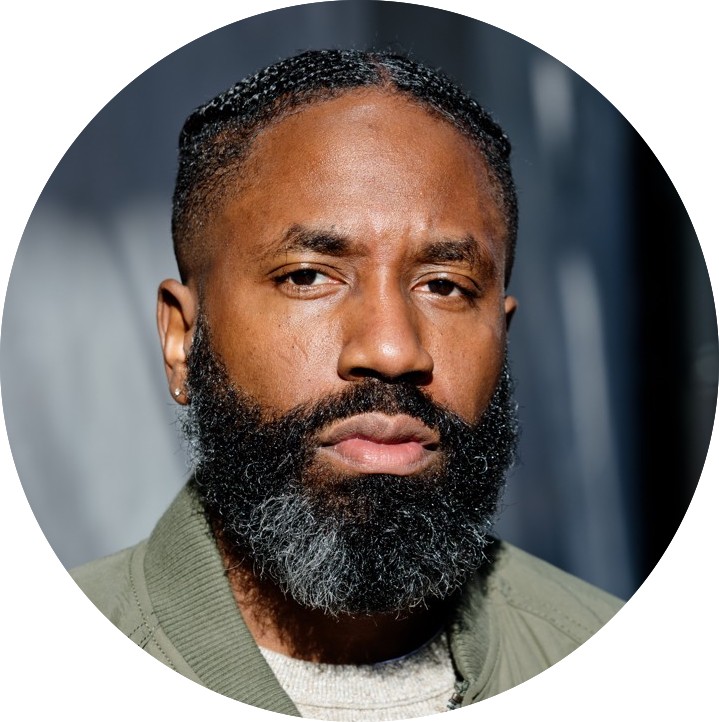
Williams (LinkedIn) is co-founder and Chairman of SoLo Funds, a fintech that serves underrepresented communities in the U.S. by providing an alternative lending option that emphasizes equity and empowerment. Williams also co-founded ultrasonic data platform LISNR, a technology company that provides secure person-present authentication. A Henry Crown Fellow at The Aspen Institute and a Techstars Mentor, Williams received his MBA in Finance and Supply Chain Management from Howard University in Washington, D.C. Find out more about Williams and SoLo Funds in our interview from earlier this month.

Teri Williams

Williams (LinkedIn) is President and Chief Operating Officer at OneUnited Bank, the largest Black-owned bank in the U.S. She is responsible for both implementing the bank’s strategic initiatives as well as managing the day-to-day operations of the institution. She has led OneUnited Bank in its consolidation of four local banks into a cohesive, national brand that provides affordable financial services for all while supporting economic development and wealth building in urban communities. An executive with OneUnited Bank for more than 26 years, Williams was previously a Vice President at American Express.

Dana L. Wilson

Wilson (LinkedIn) is a professional speaker and consultant who helps financial services firms create inclusive workspaces. She is also founder and CEO of CHIP (Changing How Individuals Prosper), a B2B2C marketplace for companies seeking Black and Latino financial professionals. A Diversity, Equity & Inclusion Award Winner and self-described “FinServ Techie”, Wilson is also the host of The Included Series Podcast, a program that features people of color sharing their personal financial journeys.


Photo by Rebrand Cities from Pexels

Bridging the Gap: A Conversation with Rodney Williams of SoLo Funds

Bridging the Gap: A Conversation with Rodney Williams of SoLo Funds

Finovate kicks off its African-American History Month commemoration with a conversation with Rodney Williams, co-founder of SoLo Funds. Along with company co-founder Travis Holoway, Williams was named to Cause Artist’s “40 Social Entrepreneurs to Watch for in 2022.”

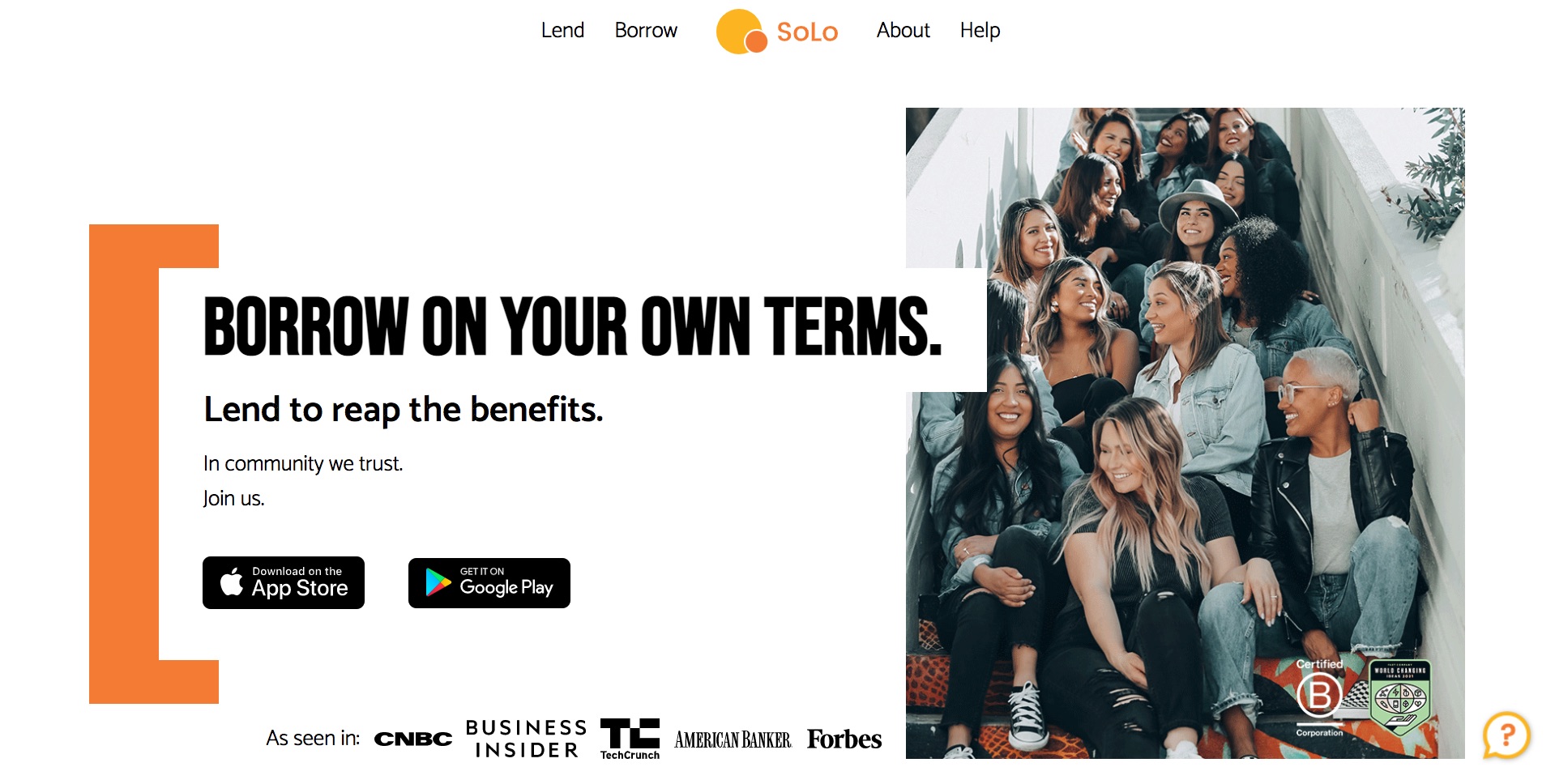
SoLo Funds is a mobile lending platform that brings borrowers and lenders together for peer-to-peer microloans – with terms set by the borrower. Headquartered in Los Angeles, California, SoLo Funds has processed more than 150,000 loans and served more than 400,000 customers since 2018. The company serves as a viable, non-predatory option for the nearly 80% of Americans who live paycheck to paycheck.

Featured in Tech.co’s “Seven Tech Startups to Watch Out for in 2022”, SoLo Funds in December became the only African-American owned fintech to acquire B Corp certification. This designation, granted by global nonprofit network B Lab, is given to companies that achieve a balance between “purpose and profit.” SoLo Funds earned a 10 out of 10 for its impact business model and 4.1 out of 5 for customer stewardship. “By SoLo Funds certifying as a B Corporation, it has met the highest form of verification for its commitment to people and the planet,” B Lab U.S. and Canada Director of Equitable Growth Andy Fyfe said.

We caught up with Rodney Williams to discuss SoLo Funds and its mission to improve the lives of “responsible, yet largely ignored” underbanked individuals and their families.


What problem does SoLo Funds solve and who does it solve it for? 

Rodney Williams: SoLo Funds is a solution for anyone who has ever had the need for emergency funds. The unfortunate reality is that more than 6 in 10 adult Americans can’t afford $1,000 for an emergency expense. That’s over 100 million people, and oftentimes, it is our most vulnerable communities who bear this burden. Situations like this are why payday lenders have become some of the most prevalent businesses in the U.S., outnumbering the number of McDonald’s restaurants by a factor of two. 

SoLo Funds was created to provide a new opportunity for cash-strapped Americans. As a first-of-its-kind, on-demand marketplace, SoLo puts borrowers in control by allowing them to access emergency funds in an average of 30 minutes. They are entirely in charge of the terms of their loan, including how much to tip lenders and how much to donate to SoLo Funds’ operations – a portion of which now gets reintegrated to communities in need through SoLo Causes. 

This is the first time a financial platform has offered borrowers a completely voluntary fee structure. We aim to become the leading financial technology company for underserved communities who have been anchored down and left without options for too long. 

What in your background gave you the confidence to tackle this challenge? 

Williams: The inspiration for SoLo Funds grew out of my own and my cofounder Travis Holoway’s personal experiences. There were times where our parents would have an electric bill due on a Friday, but wouldn’t get paid until Monday, so we would have our electricity shut off because we weren’t granted a grace period. Other times, our parents had to decide between paying the bills or paying to fix the tire on the car. Travis and I grew up nearly 400 miles away from each other, but the older I got, the more I realized that these experiences weren’t unique to me. 

Communities share a lot of similar qualities, but never has anyone tried to scale a solution for them. This was the inspiration for SoLo Funds, and what gave us the drive to bring the intimate knowledge of our communities to the world of FinTech. What has ensued is a product and solution for everyone. 

SoLo Funds recently became the only African-American owned fintech to acquire B Corp certification. What does this achievement mean for SoLo going forward? 

Williams: This was a huge milestone for SoLo Funds in its development. B Corp certification represents a balance of profit and values and, as a company working to achieve a more inclusive world, this not only serves as validation that we are doing that, but it also serves as a model. Fintech is not just for corporate bottom lines; it can be a tool that can truly democratize and build generational wealth for people who have been disenfranchised for so long. 

Tell us about your favorite feature of SoLo Funds platform/technology. 

Williams: As I mentioned, SoLo Funds was born out of lived experiences. This is decades of knowledge poured into a platform that provides a new way for people to learn and better their lives. The most remarkable thing about SoLo Funds is that it bridges the knowledge gap between what people are told about how to manage finances, and what they really should be doing to put themselves in the best financial situation possible. Because borrowers can set their own terms for their loans, they have the power to choose what and when they’ll pay. And we’ve seen tip and donation numbers go down as borrowers progress on the platform and understand what it costs to obtain capital.

SoLo provides an opportunity for people to learn and better their lives. This is a tool that changes peoples’ lives and gives them the ability to do what they want to do. Skills are transferable. SoLo is experiential. Books only get you so far, and there is always risk. Making bad financial decisions is a part of life. If we don’t start to teach the power of financial literacy, people will fail to understand why it’s so important. 

You recently announced a partnership with Habitat for Humanity and United Way. How did this partnership come about and what are its goals?

Williams: We launched SoLo Causes to build on our work to serve folks in need. For our corporate philanthropy, we wanted to choose partners that would go out and do good in the communities in which our users live. Our first non-profit partners, United Way and Habitat for Humanity, match our values and impact our users’ communities. The program is dedicated to reintegrating potential profits into the communities that need it most. SoLo has committed that by 2023, 100% of our donation revenue will be distributed to non-profits. Ultimately, the goal is to reinvent how the system works for people. Once someone who lives paycheck to paycheck can stop worrying about paying for their next utility bill or fixing a leak in their home, they can start to build their lives and their wealth. 

As a founder, what do you think is the most important factor when it comes to building a strong team? 

Williams: A strong team has to be able to complement each other through their strengths, weaknesses, backgrounds, and experiences. This is the key not only to building a strong team but, at SoLo, this also is the key to building a team that provides the best services to our users. We believe that in order to meet our users where they’re at, we have to understand their needs and how they operate. SoLo users come from diverse backgrounds – nearly 60 percent of them identify as a minority, 60 percent report being female, and 40 percent of borrowers are low-income. Too many companies have tried to put these people in a box, forcing top-down approaches that are really the same traditional financial services repackaged. If we don’t create a team that can identify with the lived experiences of these people, then we will ultimately fail as a company trying to help them. 

What can we expect from SoLo Funds in 2022? 

Williams: SoLo Funds will continue to build a mission-driven business. Our B Corp announcement and the launch of SoLo Causes have solidified our commitment to underserved communities, but it’s just the beginning of what we have to come. We are working on a series of new banking services which we will gradually roll-out. These are meant to offer users the ability to build and sustain credit where they were previously excluded in the traditional financial system. Additionally, we are excited to launch a global mission. The United States isn’t the only place where access to emergency funds is an issue. We plan to launch SoLo Funds in our first global market, increasing financial accessibility for millions. 


Photo by Christina Morillo from Pexels

Mastercard Launches Touch Card to Support Visually Impaired Consumers

Mastercard Launches Touch Card to Support Visually Impaired Consumers

Mastercard introduced its latest innovation to help ensure that visually impaired and partially sighted consumers can use its spending and credit solutions as readily as any other cardholder. The company’s Touch Card, announced this week, enables the visually impaired to easily determine whether the Mastercard they are holding is a credit, debit, or prepaid card thanks to a few simple design elements to the physical card itself.

At a time when payment cards are becoming sleeker, eschewing the boldly embossed letters and numbers that have distinguished these cards for decades, the new Touch Card features a new design that, while not bucking the trend toward flatter, thiner cards, provides the kind of tactile cues that visually impaired consumers can use to select and use the right card. With a series of notches on the side of the card – a round notch for credit cards; a broad, square-shaped notch for debit cards; and a triangular notch for prepaid cards – Mastercard’s new Touch Card is another example of what Mastercard Chief Marketing and Communications Officer Raja Rajamannar called innovation “driven by the impulse to include.”

“The Touch Card will provide a greater sense of security, inclusivity, and independence to the 2.2 billion people around the world with visual impairments,” Rajamannar said. “For the visually impaired, identifying their payment cards is a real struggle. This tactile solution allows consumers to correctly orient the card and know which payment card they are using.”

The new cards have been endorsed by The Royal National Institute of Blind People (RNIB) in the U.K. and by VISIONS/Services for the Blind and Visually Impaired in the U.S. Co-designed by augmented identity specialist IDEMIA, Mastercard’s Touch Card works with bot point-of-scale terminals and ATMs, meaning that the new solution can be readily deployed at scale.

“With one in seven people experiencing some form of disability,” Rajamannar said, “designing these products with accessibility in mind gives them equal opportunity to benefit from the ease and security of a digital world. No one should be left behind.”

It is worth mentioning that the Touch Card is only one of Mastercard’s initiatives to empower those with visual impairments. The company includes its signature melody, which signifies that card transactions have been completed successfully at the checkout counter, among these efforts.


Photo by Marina Leonova from Pexels

CreditRich Founder Angel Rich to Take Financial Literacy to the Next Level

CreditRich Founder Angel Rich to Take Financial Literacy to the Next Level

Not all partnerships in fintech involve companies. In fact, one of the most interesting partnerships in fintech in recent days might be a union between people – not an alliance among corporations.

Angel Rich, who made history this spring as the first African-American woman to secure an institutional partnership with one of the Big Three major credit bureaus, announced her engagement to Karl Jones, Director of Corporate Partnerships at ansrsource, this week. “What’s better than one future Black billionaire?” Rich asked on her LinkedIn page by way of sharing the engagement news. “Two. Thanks for all of your love and support on our engagement. Karl Jones and I are very excited to make an impact with our union.”

Rich’s company, WealthyLife, launched its AI-powered fintech app, CreditRich in April, collaborating with Finovate/FinDEVr alum Experian. The app enables individuals to use their spare change or “round ups” to pay for bills and other expenses. CreditRich promotes financial wellness by allowing users to prioritize debt payments – or to use the app’s algorithm to find and pay first those bills that have the most impact on the user’s credit score. Users can make one-time deposits to accelerate any debt repayment, as well as make contributions to a family member’s account to enable them to pay down debt and improve their credit score. The CreditRich app is currently available on the Android operating system, with an iOS expected soon.

“It makes sense to put financial literacy, intelligent billpay, and credit management together on a smartphone to help people increase their credit scores faster and easier,” Rich said late last year on the news that actor, singer, and songwriter Naturi Naughton had joined WealthyLife as Chief Branding Officer. “I don’t want people to experience the same hurdles I did after graduating from college with $180,000 of debt.”

Also the founder of Black Tech Matters, an organization dedicated to promoting ethnic diversity in STEM, Rich said she is looking forward to collaborating with Jones to advance financial education technology solutions. ansrsource, where Jones is Director of Corporate Partnerships, specializes in helping companies leverage digital technology to enhance their training and development strategies. The Dallas, Texas-based company’s clients range from 42,000-student Arizona State University to construction manufacturing firm Hilti.

As BlackNews.com noted, the union between financial literacy and digital education represented by Rich and Jones also represents a union of rivals. Rich is an alum of the famous HBCU (historically black college/university) Hampton University in Virginia. Jones is a graduate of the equally-legendary HBCU Howard University in Washington, D.C.


Photo by Git Stephen Gitau from Pexels

Boss Insights and the Brave New World of Business Data as a Service

This image has an empty alt attribute; its file name is pexels-davyd-bortnik-3058762-1024x731.jpg

Earlier this year in our conversation on diversity in fintech and financial services, we looked at a partnership between Paybby, a challenger bank focused on Black and Brown communities; Carver Federal Savings Bank, an African-American owned bank; and Finovate alum Boss Insights.

Today, we pick up that conversation from the fintech’s perspective, talking with Boss Insights founder and CEO Keren Moynihan about her company’s innovations in the field of business-data-as-a-service, its participation in the Paycheck Protection Program, and the importance of impact and meaning when it comes to providing financial services.

Boss Insights specializes in Business Data as a Service. What does this mean?

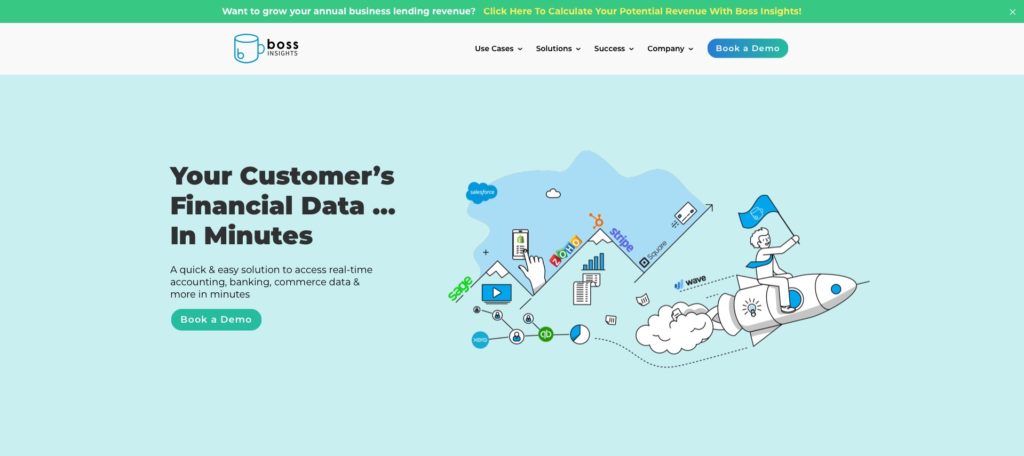
Moynihan: We work with fintechs and private lenders, banks, and credit unions. We work with their business lending groups; it could be small and medium business lending, SBA, invoice factoring, commercial, all sorts of business lending types. And what we are giving the lenders is access to their business customers’ financial data in minutes. It sounds impossible, but actually only takes the lenders one hour of their time to set up.

What we’re enabling is for them to be able to pull real-time accounting information, banking, or commerce information on demand.

When you look back on 2020, what are your biggest takeways?

Moynihan: In March 2020 I was speaking with (a reporter) at a conference and she asked for a direct quote responding to “how are fintechs and entrepreneurial companies going to be responding to COVID?” And I’ll never forget it because I said, “Look, fintechs thrive on challenges and this is an unprecedented challenge but we will be looking at ways to respond to it.” Two hours later, we all got an order that the economy was going to shut down, that we were all going to isolate. I don’t think anyone knew what was happening. I called the reporter and said “I know what I said, but …” I knew I was going to eat my words, because this was on another level. She laughed and said, of course, and she appreciated my call.

That was more than a year ago. The next two weeks were an onslaught. This was before PPP. This was before any kind of government funding and people really did not know what was happening. And unless you were in it, it’s really hard to describe it. What we did as a company was that we saw in all the news articles there wasn’t enough personal protection equipment, we started to get reports out of Italy, it was a really scary time. Now people at Boss Insights could not create masks. But we did see that if you stopped a company from being able to make sales, they are not going to be able to say alive and to be able to grow.

I asked myself, how do you support the economy? Right away we said we will offer part of our technology for free for any lenders who will support new businesses. And by new businesses, I meant new business relationships with the lender. That is a harder uplift. And as a result of that, everything started to grow for us. Technology companies reached out. Banking companies reached out. We were covered in an industry journal and, as a result of just that one piece, we had so many people call us. And we learned so much just by being able to say we can help.

This image has an empty alt attribute; its file name is BossInsights_homepage_May2021-1024x456.jpg

How much of what you’ve learned will you be able to translate into new initiatives and future growth?

Moyinhan: There are a lot of things that I see changing, and then there’s an even bigger category of things I wish would change and hope will change. And time will tell. One word, very overused, is digitization. That’s going to endure. CB Insights reported that banks were losing about 1% market share each year, so give or take 9% or 10% over a nine year period. In 2020, 9% was lost in one year. A couple more years like that and we’re looking at a very different economy.

That really made the industry stand up and take notice. Back in March 2020, the same lenders that were telling me that they had everything under control and were ready to go, were the same ones that admitted to me on private calls that they were placing orders for laptops at Costco. They literally could not get laptops from regular commercial suppliers and were ordering them from Costco because they couldn’t get them anywhere else.

This points to one trend: people were a lot more honest about where they were (in terms of digital transformation) because you couldn’t just say you had digitized, it was actually being tested. I believe that trend is going to endure because the expectations of people, of businesses, have changed. We all ordered groceries online for awhile. I don’t think that was true before 2020. We are all expecting that these documents and forms that you have to go into branches for will be available online.

That is the biggest thing I can say that has changed. The one thing that I hope will change is the collaboration. We put out something in the American Banking Association saying that social distancing led to social collaboration. What I mean by that is that people stopped talking and they started listening. This includes Boss Insights. We stopped talking about what we’re selling and we started just asking “what do you need?” And I do hope that trend continues. It’s mirrored in other areas outside of financial services. We think these things were long overdue. It’s not a trend that is continuing in the way that I would have hoped. But I do see a lot of changes and this issue surfaced in the second round of PPP. People were open to having conversations. They brought decision-makers in the room. People didn’t want to have high-level discussions. They wanted to clearly tell you “I need this. Can you get it for me?” Then it’s our turn to talk about what we can do.

That amount of collaboration is unprecedented before COVID, and we just hope that it continues.

Tell us about the importance of working with small business owners who struggled to access support from relief programs like PPP.

Moyinhan: In the middle of PPP I was on a podcast called The Powerful Ladies podcast and it was with Kara Duffy. All of this got arranged because of Sharifah Hardie, who also runs a podcast and we had been on her podcast also. There was a woman there named Ronda Brunson. She has a consulting practice where she works with people to educate them on financial health, people who would not necessarily have had that training. We learn a lot of things in school, but financial health is not one of them, and if you have not had that education elsewhere where are you going to get it? She empowers people.

As I’m listening to all of these incredibly accomplished women and what they do in their business lives, she heard what I was doing. I was a little bit the oddball out because I was working with businesses and everyone else was working with individuals. She said, “I hear what you do, but the first round of PPP got a little bit of social notice because it’s supporting large businesses.” The second round of PPP did correct for this. But at that time we didn’t know that was going to happen. She said “how are you actually working to get capital into the hands of people who wouldn’t get access to it?”

I knew exactly what she meant. I knew that she meant people who were either female-run companies or visible minority-run companies. She didn’t say it explicitly, but that was exactly what she meant because those were the people that she was working with on a daily basis.

The way the lending industry works is that it’s based on a percentage of the amount of the loan. Everything is based on that. The costs are the same whether the loan is two million dollars or $200,000 – so who’s going to get more resources? It’s not that banks and credit unions and private lenders are trying to do it this way, it’s that the costs don’t scale down but the revenue does. What I saw from banks at that time is they were working until two or three in the morning. What I’ve heard from the CEO of Carver Bancorp, Michael Pugh, is that he’s been on the phone with clients to get their documents in – which people couldn’t believe, but this is the dedication. And what (Brunson) was asking me was: “what exactly are you doing to ensure your technology gets in the hands of people who will make sure that the disenfranchised will get access?”

And I never forgot it and I started looking immediately. Because for the people at Boss Insights, it is about accelerating business lending from months to minutes. But it’s also about impact and meaning and making sure businesses are evaluated on their merit. It is because of Paybby that we got connected to Carver. And it is because of Paybby and Carver that we are in a position to answer her and say, Ronda, now I can tell you we are doing something.

In some ways, we just started listening. We listened for when the SBA announced that there was going to be a week in advance for lenders focused in this area. And we listened when Paybby said “we have a lender who is ready to do this uplift.” And the collaboration that Paybby and Carver and Boss Insights have is a daily investment to make sure that things are running smoothly so businesses can apply.

Read more about the partnership between Paybby, Carver Federal Savings Bank, and Boss Insights.


Photo by Davyd Bortnik from Pexels