Insurtech Eleos Launches AI Voice Agent

Insurtech Eleos Launches AI Voice Agent
  • Embedded income protection and life insurance provider Eleos has launched its AI Voice Agent.
  • The new offering is designed to provide customers with always-on, around-the-clock assistance, backed by human customer service professionals.
  • Eleos made its Finovate debut at FinovateEurope 2024 in London. Kiruba Shankar Eswaran is Co-Founder and CEO.

London-based insurtech Eleos recently unveiled its AI Voice Agent. The new solution will provide always-on, 24/7 customer service, including the ability to make outbound calls to prospective clients. The AI Voice Agent draws answers from actual Eleos policy documents to address customer queries regarding issues such as policy coverage updates, claims information, how to cancel existing policies, and more.

“We’re committed to making protection simple, accessible, and always available,” Eleos Life CEO and Co-Founder Kiruba Shankar Eswaran said. “Our voice agent extends this mission by giving customers the support they need, exactly when they need it—whether that’s at midnight or mid-afternoon. We’re removing barriers to access and empowering our customers to manage their protection with confidence.”

Eleos emphasized that its new AI Voice Agent is designed to support, not replace, human customer service professionals. Rather, the AI agent will serve customers with basic queries, as well as those who have difficulty reading online content or writing emails. In all instances, customers will have ready access to a human agent via phone, email, or WhatsApp.

Eleos’ AI Voice Agent is the latest iteration of the company’s ongoing investment in AI-powered technology. In August, Eleos unveiled Theea, an intelligent chatbot that guides customers through their insurance application with step-by-step instructions and personalized coverage calculations.

“Life insurance is one of the most important financial decisions people can make, but too often it feels out of reach,” Eswaran said when Theea was launched. “With Theea, we’re changing that by building awareness through clear, jargon-free guidance, improving access with on-demand, multilingual support, and driving engagement by giving people the confidence to explore and choose coverage in their own time. Our mission has always been to make protection simple and inclusive, and Theea is a powerful step in that direction.”

An insurtech specializing in embedded term life insurance, disability insurance, and income protection in both the US and UK, Eleos made its Finovate debut at FinovateEurope 2024. At the conference, the company showed how it partnered with consumer brands to embed life insurance and income protection into their online journeys. Eleos demonstrated how the company leverages partner data to raise awareness of the importance of life insurance and income protection, provide quotes on various insurance products, and expedite the application process.



Photo by Peter Spencer

Fidelity International Taps Tink for Account Top-Ups via Pay by Bank

Fidelity International Taps Tink for Account Top-Ups via Pay by Bank
  • Fidelity International is partnering with Visa-owned Tink to offer pay by bank account top-ups, giving investors a faster, more seamless way to fund ISAs, SIPPs, cash management accounts, and general investment accounts.
  • Tink’s pay by bank enables real-time, secure bank-to-bank transfers, settling in under 40 seconds and reducing friction, fraud risk, and costs associated with manual transfers or card-based payments.
  • Pay by bank adoption is accelerating across Europe, driven by lower fees, faster settlement, and open banking growth.

Global asset manager and retirement savings firm Fidelity International has teamed up with Visa’s open banking platform Tink. Fidelity will leverage Tink’s pay by bank tool to enable account top-ups for its personal investing customers and advised clients.

Adding the account top-up capability will allow Fidelity International users to quickly add funds to their ISAs, SIPPs, cash management accounts, and general investment accounts. With Tink’s pay by bank, users can send funds directly from their bank accounts using their secure bank log-in details. The funds are sent on fast rails that settle the transaction in less than 40 seconds on average and offer real-time payment confirmation.

“Fidelity’s focus is always on making investing as accessible and straightforward as possible. Partnering with Tink to offer pay by bank gives both our personal investors and our advised clients a fast, convenient way to fund accounts—reducing friction and improving the overall customer experience,” said Fidelity International Chief Digital Officer, Global Platform Solutions, Ian Hood. “By integrating pay by bank, we’re expanding our digital payments infrastructure to offer a modern, secure alternative to traditional methods like manual bank transfers, helping users move money quickly and safely.”

Founded in 2012, Tink was an early player in Europe’s open banking ecosystem. The Sweden-based company was acquired by Visa in 2022 for $2 billion and today offers a wide variety of products ranging from payments to account data to risk decisioning and finance management. With 3,000+ connections to all major banks across Europe, Tink processes 10 billion transactions per year across 19 geographical markets.

Pay by bank is one of Europe’s fastest-growing payment methods, driven by lower transaction costs, faster settlement times, and a shift toward open banking–powered digital payments. For merchants, direct bank-to-bank transfers eliminate interchange fees and reduce chargeback risk, making the payment experience both cheaper and less prone to fraud. Consumers benefit from a smoother checkout flow, fewer authentication steps, and greater security due to strong customer authentication.

According to Juniper Research, there are currently 183 million open banking users worldwide, a number expected to surpass 645 million by 2029. The combination of cost efficiency, real-time settlement, higher authorization rates, and improved fraud controls positions it as one of the most strategically important payment innovations in the market today and offers the potential for it to become a mainstream payment option.

For Tink, Fidelity’s rollout is another signal that pay by bank is moving from early adoption into mainstream financial services. As Tink Head of Payments Ian Morrin noted, “Pay by bank represents the next evolution of open banking payments, delivering a fast, secure way to pay directly from your bank account. As adoption accelerates, we’re thrilled to see leading institutions like Fidelity put open banking at the heart of their payments experiences to make topping up investment accounts more seamless.”


Photo by Karola G

ID-Pal Acquires KYB Specialist, NorthRow

ID-Pal Acquires KYB Specialist, NorthRow

ID-Pal’s strategic acquisition of NorthRow, a specialist in compliance solutions, will enhance the Irish company’s compliance intelligence for Know Your Business (KYB), Know Your Customer (KYC), and Anti-Money Laundering (AML) operations. The move will combine ID-Pal’s AI-powered verification platform with NorthRow’s expertise in KYB and business due diligence, enabling ID-Pal to offer a single solution for ensuring one perpetual risk view for both individuals and organizations.

Terms of the transaction were not disclosed, but post-acquisition, NorthRow’s services and operations will operate without interruption under ID-Pal. The acquisition comes at a time when new regulations in the UK, and the US Corporate Transparency Act, are putting pressure on compliance teams and making strategies like continuous KYC, AML, and KYB monitoring essential features.

In a statement on the company’s website, ID-Pal Founder and CEO Colum Lyons put the acquisition in the context of his own firm’s founding. “Alongside co-founders James O’Toole and Robert O’Farrell, ID-Pal was created to support businesses with accurate identity verification built on privacy preservation,” Lyons said. “As the financial services space becomes more regulated, and with AI-driven document fraud becoming the biggest threat our industry has faced, it is essential that businesses have a unified view of the risks ahead and how to manage them. Our acquisition of NorthRow allows ID-Pal to unify this process with one comprehensive platform that defends businesses against fraud at every entry point and avoids noncompliance fines.”

The acquisition builds on ID-Pal’s identity verification tools, adding native end-to-end KYB checks to provide continuous monitoring of changes in a business’s status, structure, or directors. The deal also helps ID-Pal deliver on its goal of providing scalable, AI-powered solutions that can tackle ever-evolving compliance challenges. NorthRow’s technology will help companies adapt to regulatory changes worldwide by providing real-time data on companies, from ownership structure to financial health.

ID-Pal will also benefit from expanding its portfolio with major financial services companies such as Caxton, Equifax, and Hargreaves Lansdown. Caxton COO Alana Parsons praised the strategic acquisition for creating “a powerful platform for the future.” Parsons added, “We’re excited to start working with ID-Pal and to benefit from the innovation in KYC and KYB risk intelligence that this partnership will deliver.”

ID-Pal most recently demoed its technology at FinovateFall 2025 in New York. At the conference, the company showed how its ID-Detect solution provides an additional layer of verification designed to detect evidence of document fraud. ID-Detect is a standard feature of ID-Pal’s identity verification, helping businesses deal with the growing challenge of AI-generated fake identification cards and other documents. ID-Pal’s technology is used in more than 250 jurisdictions, covering more than 16,000 document types and accessing 400+ trusted data sources.


Photo by Caio Cardenas

Wealthfront Files S-1, Targeting $2 Billion IPO

Wealthfront Files S-1, Targeting $2 Billion IPO
  • Wealthfront filed an S-1 with the SEC, planning to raise up to $485 million by offering 34.6 million shares at $12 to $14 each, targeting a $2 billion valuation.
  • The wealthtech firm was founded as kaChing and rebranded to Wealthfront in 2010 and has expanded from robo-advisory into high-insurance checking, savings, and credit products.
  • The IPO follows a previously canceled $1.4 billion UBS acquisition, and positions Wealthfront among a new wave of fintechs going public, including eToro, Chime, and Klarna.

Wealthtech firm Wealthfront revealed this week that it has filed an S-1 with the US Securities and Exchange Commission, taking its first formal step toward an IPO.

According to the filing, Wealthfront plans to offer 34.6 million shares at $12 to $14 each, which would raise up to $485 million and value the company near $2 billion. The company plans to list on the Nasdaq under the ticker symbol WLTH.

Founded in 2008 and making its Finovate debut as kaChing a year later, the company rebranded to Wealthfront in 2010 and has since solidified its place as a pioneer in the wealthtech space. Since launch, Wealthfront has evolved its platform to add challenger banking features such as a checking account with up to $8 million in FDIC insurance, which is made possible via the company’s partnerships with 32 program banks. The fintech also offers a high-yield savings account, a portfolio line of credit, an automated bond ladder, and is working on a mortgage lending product.

Wealthfront generally targets younger investors who hold an average balance of $67,000, while 180,000 of its clients hold more than $100,000 in assets and over 10,000 clients have assets more than $1 million in assets on the platform.

This isn’t Wealthfront’s first move toward an exit. In January 2022, the company formed a $1.4 billion deal to be acquired by UBS. At the time, that price reflected a premium of at least 2x on Wealthfront’s most recent private market valuation. Wealthfront called the acquisition a “strategic partnership” that would enable the company to offer new services and give its customers access to “UBS’s industry-leading investing insights and research.”

Two weeks after unveiling the acquisition plans, however, UBS called off the deal. Shareholders were reportedly spooked, as it came during a period of significant decline in fintech valuations. Notably, however, Wealthfront’s current $2 billion target valuation is significantly higher than the $1.4 billion acquisition price UBS had offered in 2022, which would equate to roughly $1.55 billion in today’s dollars after adjusting for inflation.

In going public, Wealthfront is in good company with other fintechs including eToro, which debuted in January of 2025; Chime, which went public in June of 2025; and Klarna, which debuted in September 2025 after postponing the move for six months.

With the S-1 now public, Wealthfront will enter the SEC review process and prepare for a roadshow, which places its likely IPO window in early 2026.

Backbase and Unblu Transform Self-Service Banking into Human-Connected Experiences

Backbase and Unblu Transform Self-Service Banking into Human-Connected Experiences
  • Backbase and Unblu have forged a new strategic partnership to transform self-service banking into a trusted, human-connected experience that combines the best of both worlds.
  • The partnership will integrate Unblu’s Conversational Engagement Platform with Backbase’s AI-powered banking solution, adding features such as live chat, voice and video calling, and AI-powered chatbots.
  • Both Unblu and Backbase most recently appeared on the Finovate stage at FinovateFall 2021 in New York. Backbase is a four-time Best of Show winner that first demoed on the Finovate stage in 2009.

A new strategic partnership between Backbase and Unblu is designed to help transform self-service banking into a trusted, human-connected experience. The two companies will offer a joint solution that combines Unblu’s Conversational Engagement Platform with Backbase’s banking platform, adding features such as live chat, voice and video calling, co-browsing, and AI-powered chatbots.

“Digital banking should never come at the expense of human connection,” Backbase Global VP of Marketplace Mayank Somaiya said. “By embedding Unblu’s collaboration tools into our ecosystem, banks can deliver effortless transitions from automated service to expert guidance, helping customers feel supported throughout their digital journey.”

The goal is to enable customers to transition seamlessly from digital self-service to human-assisted interactions in a single engagement. The solution will enable relationship managers, case workers, and frontline service agents to access the customer’s individual context in order to better serve them. A unified employee workbench connects capabilities that were previously isolated across the bank’s tech stack. This empowers bank employees to deliver seamless human-digital interaction within the Backbase platform, benefit from AI-enhanced productivity that automates routine tasks and produces real-time insights, and maintain complete regulatory compliance via encrypted communications, audit trails, and built-in data residency controls.

Use cases for the joint offering include onboarding and account opening, wealth management, customer service, and enabling hybrid branch experiences. The pre-integrated solution will be available to Backbase customers around the world in early 2026.

“We’re excited to partner with Backbase to help financial institutions deliver the kind of personal, frictionless customer experiences today’s users expect,” Unblu Co-CEO Jens Rabe said. “By bringing our digital interaction tools directly into the Backbase platform, we’re enabling banks to build deeper relationships while maintaining the compliance and security standards they can’t compromise on.”

A Finovate alum since 2009, Backbase is a four-time Finovate Best of Show winner. Based in Amsterdam, Backbase offers an AI-powered banking platform that helps banks modernize their operations across retail, SME, commercial, and private banking, as well as wealth management. Backbase has enabled financial institutions to achieve year-over-year increases in retail transactions by 51%, customer satisfaction rates of 78%, and app onboarding in less than five minutes. Founded in 2003, Backbase forged a partnership with Facilization, a consulting, system integration, and financial services software firm, in October. The company also teamed up with Akkuro, a core banking technology provider, and Prove, a digital identity company, in September. Founder Jouk Pleiter is Backbase’s CEO.

Founded in 2008 and headquartered in Basel, Switzerland, Unblu most recently demoed its technology on the Finovate stage at FinovateFall 2021. At the conference, the company showed how its technology helps 170+ financial institutions around the world deliver an “in-person” experience online. The company’s customers include UBS, Deutsche Bank, and Intesa Sanpaolo, and the firm has forged partnerships with fintechs—and fellow Finovate alums—such as Temenos, Avaloq, Q2, and ebankIT.

Just days after the company announced its partnership with Backbase, Unblu reported that founder and Co-CEO Luc Haldimann would be transitioning into the newly created role of Chief Strategy Officer. Rabe, who joined the company as Chief Marketing Officer and later served as the firm’s Chief Operating Officer, has been serving as Co-CEO and will become the company’s sole CEO as of January 2026.

“Luc built Unblu from the ground up and shaped it into an internationally respected technology leader,” Rabe said. “As CEO, I look forward to continuing the collaboration with Luc in his new strategic role to ensure Unblu remains at the forefront of secure, human-centered digital engagement.”


Photo by Javier M. on Unsplash

FinovateEurope is Coming Up. Here Are My Top Agenda Picks.

FinovateEurope is Coming Up. Here Are My Top Agenda Picks.

The holiday season is well underway, and once it wraps up, FinovateEurope will be right around the corner. And with fintech evolving faster than ever, next year’s event, taking place February 10 and 11 in London, is shaping up to be one of the most important gatherings of the year for anyone working in financial services, banking, and fintech. The event features more than 100 expert speakers, 30+ live demos, and a packed agenda with deep dives into AI, embedded finance, decentralized finance, and cross-border banking.

As someone who studies and writes about fintech, here are the handful of sessions I’m most excited about and why I think they matter for the next wave of fintech:

Keynote Address: AI First Banking – Why Agentic AI is Truly A New Frontier In Banking

Alpesh Doshi, Managing Partner at Redcliffe Capital will examine how banks can harness agentic AI, discuss agentic commerce, and take a look at a future where bots are customers.

AI, Everything, Everywhere, All At Once: Getting Beyond The Hype – How Financial Institutions Can Use AI To Make Money Or Save Money

This panel, featuring Theo Lau, book author and Founder of Unconventional Ventures; Arthur J. O’Connor, Academic Director of Data Science & Generative AI at CUNY School of Professional Studies; and Norman Tambach, Group Chief Financial Officer at Mashreq; will spend 25 minutes filtering out AI hype from reality. The group will unpack how to measure the success of AI investments, reveal what they see as the biggest opportunities when it comes to leveraging AI, examine AI regulation, and more.

Analyst All Stars: How financial services have been changed forever

This is always one of my favorite sessions, because it offers a fast-paced look at the top up-and-coming trends. Four leading fintech analysts will each be given seven minutes on stage to present their analysis of what has changed, what is new, and what is coming next in the industry.

Digital Banking In The Artificial Intelligence Era – How Can Banks Adapt To Serving Non-human Customers?

This fireside chat with David Birch, Principal at 15Mb, will offer a peek into the new era of digital banking, one that will be fueled by AI. While banks are prepping their own AI tools for internal use, consumers are also adapting to the AI-first world. Birch will discuss how banks can serve the new era of non-human customers.

Live Demo Sessions + 30+ Fintech Innovation Showcases

Far more than just talking points, Finovate’s hallmark demos give attendees a first look at real, deployable fintech products across payments, lending, compliance, and more. For anyone serious about fintech transformation or looking for new tools, the demo stage is the best place to see the future before it hits the market.

As FinovateEurope gets closer, we’ll be covering more highlights and takeaways from the agenda, as well as speaker highlights and a deeper dive into the demos. If you missed it, be sure to take a closer look at three of the Executive Briefing sessions.

Credolab Unveils Income Prediction Model

Credolab Unveils Income Prediction Model
  • Behavioral and device metadata analytics innovator Credolab has unveiled its Income Prediction Model.
  • The new offering will enable lenders to estimate applicant income using privacy-consented smartphone metadata. This will help them serve would-be borrowers with limited credit histories and proof-of-income.
  • Founded in 2016, Credolab made its Finovate debut at FinovateAsia 2018 in Singapore. Peter Barcak is Co-Founder and CEO.

One of the biggest challenges for lenders seeking to expand into new markets—especially emerging, underbanked, and digital-first markets—is accessing accurate proof-of-income and credit history information. Even in a world in which open banking is embraced—making financial data more accessible overall—customers who have little data to share will remain on the outside, unable to benefit from a growing range of critical banking and financial services.

To meet this challenge, behavioral and device metadata analytics company Credolab has launched its Income Prediction Model. The new offering leverages machine learning to enable lenders to estimate applicant income by using privacy-consented smartphone metadata. The solution analyzes thousands of anonymized behavioral signals that, put together, correlate with income levels. These signals include app ownership patterns, device model and age, and interaction habits. Individual client institutions can train models on their own specific datasets and customize them based on the unique characteristics of their local populations. Importantly, Credolab’s Income Prediction Model never accesses personally identifiable information (PII) or demographic data like age, gender, or education.

Credolab uses proprietary feature engineering to convert raw metadata—collected with explicit user consent via its SDK—into more than 11 million behavioral features. The technology uses selection strategies based on information value, correlation filtering, and gradient boosting to narrow these features into a few dozen highly predictive indicators. The models use elastic-net logistic regression and tree-based ensemble techniques and validate them with out-of-time and out-of-sample testing to ensure both robustness and explainability.

“In many markets, a lack of verified income data is the biggest barrier to financial inclusion,” Credolab Co-founder and CEO Peter Barcak said. “Our new model gives lenders a privacy-safe and statistically sound way to infer income levels using only device behavior. It’s a powerful step toward fairer, faster, and more inclusive credit decisions, especially among populations for whom traditional data simply doesn’t exist.”

Founded in 2016 and headquartered in Singapore, Credolab made its Finovate debut at FinovateAsia 2018. Since then, the company has become the device and behavioral data partner for more than 150 banks, financial services companies, and fintechs around the world. The company’s solutions for risk management, fraud prevention, and insight-driven marketing have delivered decreases of up to 21.9% in the cost of risk and fraud, increases of up to 32% in applicant approval rates, and decreases of up to 28% in the cost of acquisition.


Photo by Christian Dubovan on Unsplash

Payments Fintech Sokin Raises $50 Million to Build Out Global Infrastructure

Payments Fintech Sokin Raises $50 Million to Build Out Global Infrastructure
  • Sokin raised $50 million in Series B funding, bringing its total raised to $96 million and boosting its valuation to $300 million following 100% year-over-year revenue growth.
  • The fintech offers global payments, multi-currency accounts, and treasury tools across 170+ countries, positioning itself as a fast-scaling competitor in the $56 trillion cross-border payments market.
  • Investors see Sokin as part of a new wave of infrastructure-focused payments challengers aiming to solve cross-border complexity at a global scale.

Global payments fintech Sokin raised $50 million in Series B funding this week. The round boosts the UK-based company’s total raised to $96 million since it was founded in 2019.

Today’s investment was led by Prysm Capital with additional contributions from Watershed Ventures and existing investors including investment funds managed by Morgan Stanley Expansion Capital, Aurum Partners, Gary Marino, former Chief Commercial Officer at PayPal, and Mark Britto, former Chief Product Officer at PayPal. 

With the new round, Sokin’s valuation has increased to $300 million. Prysm said that it invested in Sokin because of its “rapid and profitable growth” in the global business payments market, a subsector that is projected to see $56 trillion in transaction volume by 2030. The company’s revenues have increased by 8x since 2022, rising 100% year-over-year since then.

“Sokin is at a transformative stage, having demonstrated impressive year-on-year business growth,” said Prysm Capital Co-founder and partner Muhammad Mian. “The company is perfectly positioned to become the definitive leader in cross-border payments. Critically, Sokin has already built the infrastructure to capitalize on what we see as a huge addressable market.”

Sokin’s platform brings together global payments, payment acceptance, and treasury management tools to support businesses operating across borders. The company provides access to more than 70 currencies and enables customers to hold 26 currencies in multi-currency accounts, facilitating transactions in over 170 countries.

“We’ve spent the past six years building a comprehensive financial infrastructure that makes global business faster and more efficient,” said Sokin CEO and Founder Vroon Modgill. “For too long, payments, treasury management, and international accounts have been fragmented and outdated. We’ve built the platform that brings it all together, and this funding lets us accelerate that vision globally.”

In the next year, Sokin will continue to build out its global infrastructure across Asia, the Middle East, and South America, including securing additional regional licenses and banking partnerships. Sokin will also invest in its platform and embedded solutions to expand its accounts payable and receivable capabilities.

This funding round positions Sokin on a growing list of challengers building global payments infrastructure, competing not just with banks but also with new providers like Airwallex, Nium, and Rapyd. Investor appetite for these organizations shows that the winners in this new era of payments will be those that solve cross-border complexity at the infrastructure level, not just through front-end interfaces. If Sokin can turn its rapid revenue growth into market share, it may emerge as a key operator in the growing cross-border payments market.


Photo by Pixabay

Fintech Rundown: A Rapid Review of Weekly News

Fintech Rundown: A Rapid Review of Weekly News

The final month of the year is upon us. And with some of the season’s biggest holidays only weeks away, expect a crush of news from banks, fintechs, and other financial service providers over the next several days. We’ll keep you in the know—right here on Finovate’s Fintech Rundown!


Digital Banking

Southland Credit Union chooses Eltropy’s unified conversations platform via its partnership with digital sales and service platform provider Alkami Technology.

Digital bank Grasshopper and digital banking platform provider Narmi announced new enhancements to their Model Context Protocol (MCP) server, including expanded functionality to support ChatGPT and OAuth 2.0-based data access authorization.

interface.ai introduces agentic AI BankGPT platform purpose-built for credit unions and community banks.

Lending

Nova Credit unveils its Eligibility Compass to modernize eligibility verification for affordable and public housing.

FIS expands its asset finance platform to include US consumer auto finance capabilities.

Insurtech

Insurance payments company SnapRefund launches digital claim payments solution ClaimsSnap.

Insurtech startup Pibit.AI secures $7 million in Series A funding to leverage AI to enhance the underwriting process.

Fraud prevention

DataVisor announces availability of its DEFEND training, a free, self-pace program to help workers better defend themselves against fraud and AML threats.

Digital banking fraud prevention and payment security company Entersekt unveils Entersekt Orkestrate, which makes it easier to add authentication and real-time decisioning to digital banking systems.

Payments

Payments company Stuut Technologies raises $29.5 million in Series A funding in a round led by Andreessen Horowitz.


Photo by Oliver Kiss on Unsplash

Kraken Debuts Debit Card with 1% Cash Back

Kraken Debuts Debit Card with 1% Cash Back
  • Kraken is launching the Krak Card, a crypto-to-fiat debit card offering 1% cash back and multi-asset spending across 400+ crypto and fiat currencies, with initial rollout in the UK and EU.
  • The card supports direct deposit, no foreign exchange or monthly fees, and flexible funding rules that let users choose which assets cover each purchase.
  • With the Krak Card, Kraken is positioning itself closer to a full-service financial platform, further blurring the lines between TradFi and DeFi and enabling everyday spending of digital assets.

Cryptocurrency exchange platform Kraken revealed plans to launch a crypto-to-fiat debit card that pays 1% cash back rewards on all purchases. The Krak Card will first be available to users in the UK and EU, and will be offered to customers in additional markets in the coming weeks. 

In addition to paying rewards, the Krak Card also allows direct deposit for salaries and offers expanded wealth-building opportunities. Kraken anticipates that the new upgrades will bring users one step closer to replacing their traditional banking relationships by helping them explore the unique opportunities available within digital assets.

“To us, everything is money. You should be able to use whatever assets you hold to pay for everyday goods and services in the digital era we live in,” said Kraken Global Head of Consumer Mark Greenberg. “From groceries to getaways, the Krak Card makes value move freely, no matter who you are or how you choose to store your money.”

Powered by Mastercard, the physical Krak Card comes in two color options and is available in a virtual format, as well. With no foreign exchange or monthly fees, the card delivers instant spending using multiple balances with no FX or monthly fees. Uniquely, the Krak Card offers multi-asset spending, supporting more than 400 crypto and fiat assets. Purchases can be funded from either crypto, fiat, or a mix of both. The app lets users preset which assets are used first and allows them to exclude specific holdings from payments.

The 1% cash back on every purchase is paid in either the local fiat currency or Bitcoin. The cash back rewards help differentiate Kraken from other debit products, as it is quite rare to find a debit card that pays cash back.

Since its debut six months ago, the Krak app has seen over 450,000 downloads in over 130 countries. Kraken expects that the launch of its debit card will accelerate this number. In the coming months, Kraken plans to launch new features, including credit products, additional card options, enhanced merchant rewards, simplified onboarding, and broader support for assets.

Kraken’s move, as it positions itself against traditional banks and neobanks, is an example of the pending convergence of traditional finance (TradFi) and decentralized finance (DeFi). By combining multi-asset spending, direct deposit, and cash-back rewards into a single debit product, Kraken is offering another way to spend crypto while building an everyday money hub. The new capabilities allow consumers to bridge their digital assets and real-world payments without the friction of conversions or fees.


Photo by Karola G

Klarna Debuts KlarnaUSD Stablecoin

Klarna Debuts KlarnaUSD Stablecoin
  • Klarna revealed plans to launch KlarnaUSD, a new stablecoin built on Stripe and Paradigm’s Tempo blockchain.
  • Set to debut on the Tempo mainnet in 2026, KlarnaUSD will leverage early access to Tempo for testing and integration.
  • The move positions Klarna to capture value in the $120 billion cross-border payments market, using stablecoins to cut costs for both consumers and merchants as stablecoin usage surpasses $27 trillion annually.

Two months after reaching one million card sign-ups in the US, BNPL leader Klarna has revealed plans to launch its own stablecoin, KlarnaUSD.

Klarna is launching its new stablecoin on the Tempo blockchain. Launched in September 2025, Tempo is an independent, layer-1 blockchain created by Stripe and Paradigm that’s built for payments. KlarnaUSD is built on Open Issuance by stablecoin infrastructure platform Bridge.

“With 114 million customers and $118 billion in annual GMV, Klarna has the scale to change payments globally: with Klarna’s scale and Tempo’s infrastructure, we can challenge old networks and make payments faster and cheaper for everyone,” said Klarna Co-founder and CEO Sebastian Siemiatkowski. “Crypto is finally at a stage where it is fast, low-cost, secure, and built for scale. This is the beginning of Klarna in crypto, and I’m excited to work with Stripe and Tempo to continue to shape the future of payments.”

Klarna will launch its stablecoin on the Tempo mainnet in 2026. Tempo has granted Klarna early access to its infrastructure in advance of the KlarnaUSD launch to allow the fintech to conduct advanced testing, prototyping, and integration.

Klarna and Stripe first teamed up in 2021 when they partnered to allow Stripe users in 20 countries to offer Klarna’s BNPL option, with Stripe as the preferred payments partner in the US and Canada. The partnership between Klarna and Stripe’s blockchain, Tempo, deepens the relationship between the two players.

Today’s announcement comes as cross-border payments are estimated to generate $120 billion in transaction fees annually, and as stablecoin transactions top $27 trillion a year. Launching its own stablecoin isn’t just a way for Klarna to jump on a recent trend. The company will leverage the benefits of stablecoins to reduce costs for both consumers and merchants.


Photo by appshunter.io on Unsplash

FinovateEurope 2026: AI, Embedded Finance, and Women in Fintech

FinovateEurope 2026: AI, Embedded Finance, and Women in Fintech

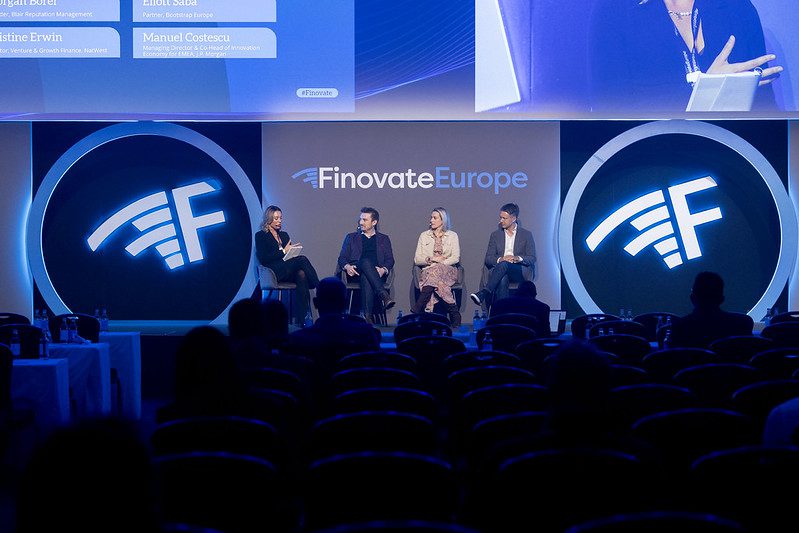
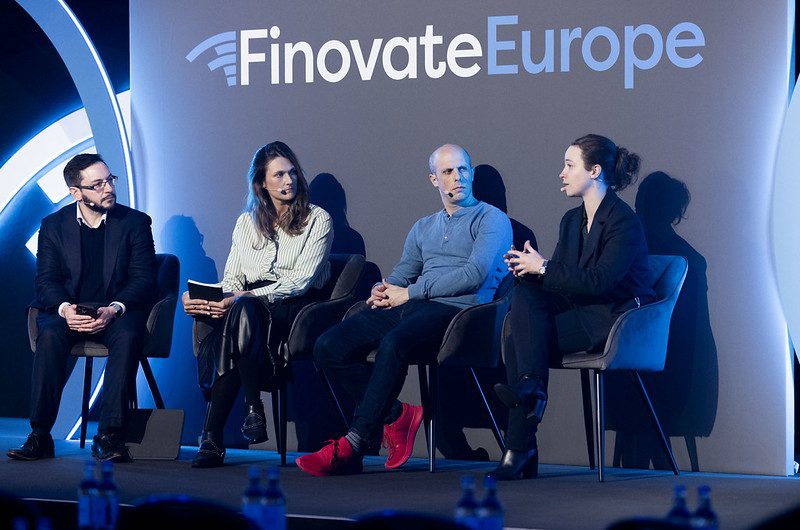
The agenda for FinovateEurope 2026 (February 10—11) in London is still taking shape. We’ve already shared a preview of some of the top themes that the conference will address. Today we’re looking at a trio of Executive Briefings that will offer attendees concentrated deep dives on a few key issues and trends in fintech and financial services.

This year, women in fintech, integrating AI into financial services, and the embedded finance revolution are the three areas of focus for our FinovateEurope Executive Briefings. Stay tuned for more on our moderators and speakers. For now, check out this advance look at how we’re tackling these top issues for 2026.


Women in Fintech: How Can We All Make Sure We Are Moving The Needle?

Ladies first! Tuesday morning will feature the first of three Executive Briefings at FinovateEurope: our Women in Fintech Briefing. This session, open to all attendees, will examine and discuss the status of women in fintech and financial services today. From strategies to encourage intentional change at the executive level to ideas on how to make mentoring relationships successful, our Women in Fintech Briefing will share experiences with successful initiatives to grow and retain female talent. The session will also explore ways that fintech and financial services professionals can drive change in their companies and the industry, at large.

How Can We All Make Sure We Are Moving the Needle? And How Can We Support Women in the Toughest Job Market We Have Seen In Years? Tuesday, February 10. 10:40am—11:20am


The AI Competitive Imperative: Ten Solutions You Need to Know About Today

On Tuesday afternoon our Executive Briefing on the increasing importance of AI in fintech and financial services will take place. This session will focus on practical, real-world applications of AI technology in core financial services operations ranging from fraud prevention and compliance to lending and customer intelligence. Our Executive Briefing on AI will discuss every aspect of the integration process: from pilot to production, emphasizing the best practices that have enabled leading financial institutions to successfully deploy AI-powered solutions to increase profitability, lower costs, boost efficiency, and better engage customers.

The AI Competitive Imperative & the Ten Solutions You Need to Know About Today. Tuesday, February 10. 3:20pm—4:00pm


From Embedded Finance to Platform Banking

On Wednesday, Day Two of FinovateEurope, we will present our Executive Briefing on the latest developments in the field of embedded finance and the growth of platform banking.

Embedded finance continues to be one of the most revolutionary developments in fintech. As the ability to offer banking and financial services becomes increasingly ubiquitous, what are the opportunities for banks to expand their own distribution footprint? This session will examine the current challenges faced by banks from nonbank rivals and discuss ways—including platform banking—that can enable them to compete with the integrated user experiences from Big Tech, Big Retail, and super apps.

From Embedded Finance to Platform Banking—How Can Banks Capture This Huge Opportunity, Create a Robust API Strategy & Defend Against Super Apps & Ecosystem Threats? Wednesday, February 11. 11:30am—12:10pm