IMPACT+ Showcases Early-Stage Fintech Innovation at FinovateEurope 2026

IMPACT+ Showcases Early-Stage Fintech Innovation at FinovateEurope 2026

This year, FinovateEurope 2026 is bringing a new addition to our annual showcase of innovative fintech. Our invitation-only Impact+ event, held on Monday, 9 February, is a unique opportunity for investors to meet and network with fintech startups that have developed solutions for a variety of challenges currently facing banks, financial services providers, and their customers and members. As part of the program, the evening will feature a series of four-minute pitches from eight startups selected in collaboration with London & Partners, Fintech Sandbox, and other leading startup specialists.

“I’m delighted to unveil the Impact+ Founders & Funders program at FinovateEurope 2026,” Heather Stowell, Finovate VP and Director of Demos, said. “The eight startups pitching to investors as part of the February 9 session are presenting cutting-edge ideas and technologies from across fintech and finserv. It’s inspiring to see this level of innovation from such young companies and exciting to foresee the connections coming up for them with investors.”

Exclusively for investors and startups, Impact+ takes place Monday, 9 February—the evening before FinovateEurope 2026 begins in earnest. The program starts at 6pm and ends with a networking and drinks reception beginning at 7:15pm.


Anna Tsiganchuk—CEO & Co-Founder, Aleta Index

A product leader with a foundation in design, a passion for AI innovation, and a track record of building and scaling impactful solutions, Tsiganchuk is CEO and Co-Founder of Aleta Index.

Aleta Index is an AI-powered platform that analyzes alternative data sets including news and social media to expose bias and source credibility to enable business analysts and researchers to make better decisions and develop more accurate prediction models driven by machine learning. Founded in 2024, Aleta Index is headquartered in London.


Filiberto Tasca—CEO & Co-Founder, Aurea Hub

With a strong conviction that the third internet revolution of Web 3.0, decentralized finance (DeFi), and the metaverse will have a significant impact on every aspect of society, Tasca is CEO and Co-Founder of Aurea Hub.

Aurea is the EU-native B2B infrastructure for on-chain finance. The company offers a white-label, fully-compliant Wallet-as-a-Service (WaaS) platform that serves as a neutral technological bridge to empower banks, fintechs, and merchants to integrate digital assets and stablecoins into their existing applications.


Barak Katz—CEO & Founder, DotzLink

An alum of Tel Aviv University and Harvard Business School with more than a decade of Chief Executive experience, Katz is founder and CEO of DotzLink.

DotzLink is creating a financial protection platform designed to fight the growing challenge of scams and financial abuse. The company’s AI-powered technology provides real-time detection, proactive protection, and actionable insights to help seniors and families stay safe and financially secure. Founded in 2025, DotzLink is headquartered in Tel Aviv, Israel.


Máté Jendrolovics—CEO & Founder, Intuitech

With a background as a consultant with the Boston Consulting Group (BCG) and Head of Digital at Hungary’s Gránit Bank, Jendrolovics is CEO and founder of Intuitech, an Agentic AI and digital solutions provider for companies in the financial industry.

Intuitech is a 200+ member, full-stack development and AI services studio—launched in 2018—that empowers banks, insurers, consultancies, and other firms to reach their digital potential, from customer applications and automated platforms to sophisticated back-office and AI solutions. The company is based in Budapest, Hungary.


Joshua Ojo—CEO & Founder, Ndewo Finance

An innovator with a background in mathematics and a strong passion for using technology to solve business challenges, Ojo is CEO and founder of Ndewo Finance.

Ndewo Finance offers a platform for “credit invisibles”—people with significant gaps in their credit files. The company leverages alternative data sources such as home credit history and transactional data to enable underbanked and unbanked individuals to access financial and non-financial services such as rents, mortgages, student loans, credit cards, retail financing, and more. Ndewo Finance is based in Manchester, UK.


Rukayyat Kolawole—CEO & Co-Founder, PaceUP Invest

Dedicated to breaking barriers and reshaping financial empowerment, Kolawole is CEO and Co-Founder of Wealthtech PaceUp Invest.

PaceUp Invest is a B2B and B2C hyperpersonalized wealth technology platform that leverages AI, behavioral science, inclusive cultural context, and human expertise to drive financial wellness. The platform offers multilingual guidance and integrates seamlessly with banks, corporations, insurers, and digital financial apps. Headquartered in Mannheim, Germany, PaceUp Invest was founded in 2020.


Savannah Price—Founder & CEO, Serene

A FinTech London Rising Star for 2025, Price is Founder and CEO of Serene, the infrastructure for financial care that empowers banks, lenders, and fintechs to provide customers with better financial outcomes.

Serene combines behavioral insights, predictive intelligence, and financial data to detect early indications of vulnerability, fraud, or potential distress. This enables financial institutions to do more than just identify risk, but also to understand, predict, and prevent it. Headquartered in London, UK, Serene was founded in 2023.


Mariana Barona—CEO & Co-Founder, Synthera AI

With a background as an analyst at Goldman Sachs and an education from the University of Cambridge, Barona is CEO and Co-Founder of Synthera AI.

Headquartered in London, Synthera AI generates synthetic yield curves, equities, FX prices, and other financial instruments to enable professional investors to test their portfolios on realistic but unseen market scenarios using generative AI. The company’s synthetic data redefines portfolio analysis with AI-driven dynamic scenario testing, predictive analytics, and deep portfolio insights.



Photo by Ben Wicks on Unsplash

FinovateEurope 2026 Sneak Peek Series: Part 5

A look at the companies demoing at FinovateEurope in London on February 10. Register today using this link and save 20%.

FINTRAC

TRAC by FINTRAC is the governance layer for regulated analytics – making calculations auditable, repeatable, and self-documenting by default.

Features

  • Includes a governed execution layer compatible with modern analytics architectures
  • Embeds auditability, repeatability, and documentation directly into execution
  • Eliminates manual processes and controls

Who’s it for?

Any financial institution that has to execute models and calculations in a highly governed fashion to meet regulatory or internal governance requirements.

Maisa

Maisa allows business users to deploy Digital Workers that automate complex banking operations with full explainability and traceability.

Features

  • Production-ready in 6 weeks, integrates with systems
  • Natural language onboarding and deterministic execution
  • Every output includes a complete audit trail, auto-QAs without human in the loop

Who’s it for?

Global and regional banks, wealth management firms, insurance companies, and financial services providers with complex operational processes requiring regulatory compliance.

MyPocketSkill

MyPocketSkill is an AI-infused platform helping Gen Z earn, save, and learn about money. Supported by PocketAI, their award winning platform helps 13 – 25 year olds become more financially capable.

Features

  • Adaptive
  • Personalized
  • Impactful

Who’s it for?

Financial institutions looking to appeal to Gen Z customers.

Syntex

Syntex is a digital onboarding portal for account opening and lending that pre-qualifies clients, shortens onboarding to less than two days, supports Reg B compliance, and increases deposits by 40%.

Features

  • Client self-serve intake reduces onboarding from 30–45 days to 2–3 days
  • Delivers a 40% increase in conversion rates and deposits
  • Provides Reg B tracking of application completeness and decision timelines

Who’s it for?

Small banks, community banks, and credit unions.

Five Fintechs Delivering Core Modernization, AI Transformation, and Productivity

Five Fintechs Delivering Core Modernization, AI Transformation, and Productivity

One of the biggest challenges for financial institutions, large and small, is core modernization and digital transformation. Whether to facilitate automation to streamline workflows or to deploy new products and services faster, modernization and transformation are key to ensuring that banks and financial institutions can grow revenues, expand into new markets, and meet regulatory obligations with regard to security and privacy for customers.

At FinovateEurope 2026 next month, five fintechs will demonstrate how their innovations are helping banks and financial institutions transform their systems and operations to boost productivity and lower costs. From AI-driven automation that delivers seamless deployment of new solutions to AI-powered learning technologies that keep employee skills up to date, these companies are leveraging enabling technologies to make banks better.

FinovateEurope 2026 will take place at London’s InterContinental O2 on February 10 and 11. Tickets are available now. Visit our FinovateEurope hub today and take advantage of big early-bird savings!


R34DY

R34DY empowers banks and other financial institutions with AI-driven automation for seamless integration and rapid deployment of solutions. The company’s ABLEMENTS solution enables rapid AI transformation, allowing banks to deliver new offerings faster, lower IT costs, and achieve competitive differentiation via context-aware modernization. Headquartered in Budapest, Hungary, R34DY was founded in 2019.


Tweezr

Tweezr helps businesses grow and transform by accelerating time-to-market (TTM) and boosting developer productivity for both legacy-system maintenance and modernization. The company’s technology serves as an AI-powered surgical code assistant that identifies exactly where changes are needed across tens of millions of lines of code without breaking critical functionality. Founded in 2024, Tweezr is headquartered in Tel Aviv, Israel.


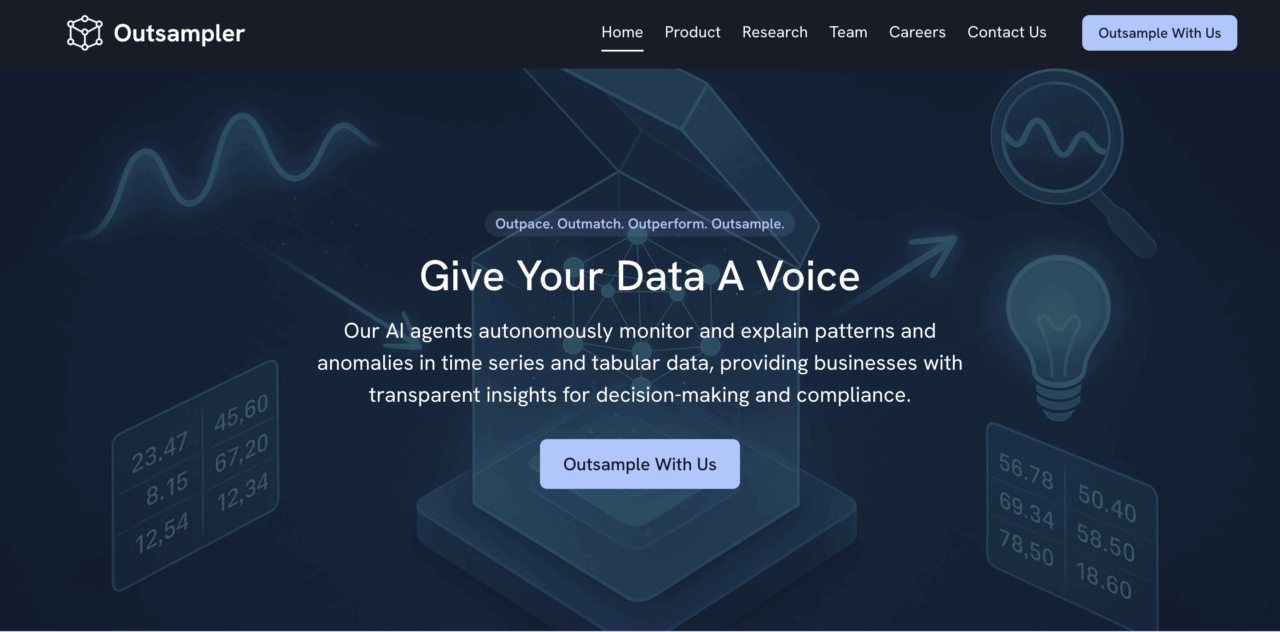
Outsampler

Outsampler helps asset managers better interact with their data and models. With its AI conversational agents that turn complex time-series and tabular data into natural language dialogue, Outsampler’s technology boosts research productivity by 40%, enabling portfolio managers to focus on high-value client engagement. Headquartered in Berkeley, California, the company was founded in 2025.


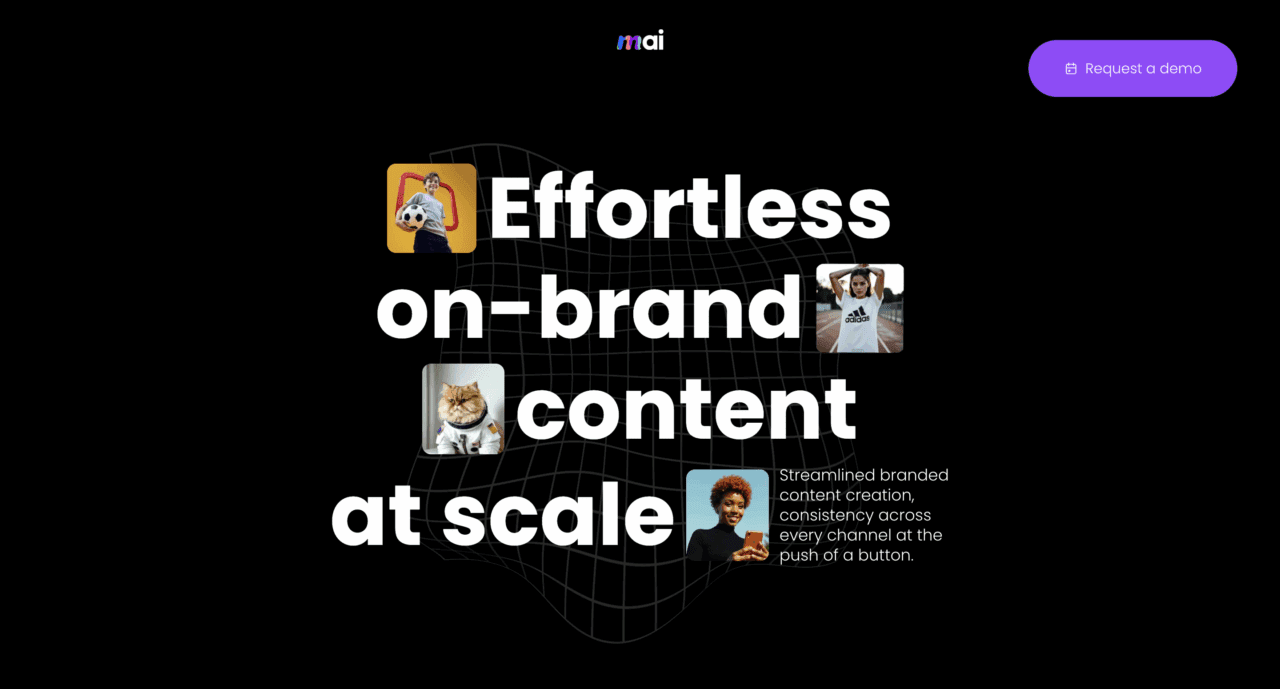
mAI Edge

mAI Edge transforms the challenges of external creative production into internal marketing infrastructure. The company’s BrandOS is a brand operating system for banks and financial services companies that enables them to create streamlined branded content at scale with consistency across every channel. mAI Edge was founded in 2025.


Skill Studio AI

Skill Studio AI offers AI-driven training that accelerates compliance readiness from weeks to minutes, reduces trading costs by 95%, and scales internationally with support for 180 languages. The company’s technology transforms training documents into engaging, AI-powered learning experiences that boost learner engagement and help keep workforce skills up to date. Headquartered in Dublin, Ireland, Skill Studio AI was founded in 2025.


Why Banks Should Care

For banks and financial institutions that are still on the path toward modernization and digital transformation, the rise of technologies such as AI offers a major opportunity to streamline operations, reduce costs, and offer a much wider range of products and services. Partnering with innovative companies that specialize in working with banks and financial services companies will enable FIs to integrate new technologies at their own pace and for the preferred use cases that matter most to themselves and their customers.

At the same time, the solutions offered by these fintechs remind us that transformation is not just about legacy cores and systems. True modernization in financial services also involves using enabling technologies to make it easier for front- and back-office workforces, including developers and technical talent, to meet increasingly complex responsibilities. From ever-changing regulations to ever-evolving customer expectations, these fintechs are putting new technologies to work in support of people as well as processes.


Photo by Pixabay

FinovateEurope 2026 Sneak Peek Series: Part 4

A look at the companies demoing at FinovateEurope in London on February 10. Register today using this link and save 20%.

Elephant

Elephant by Pipl delivers identity intelligence and fraud signals to help businesses verify users, detect risk, and make confident decisions across onboarding, payments, and compliance.

Features

  • Identity resolution (fully GDPR compliant)
  • Actionable fraud and trust signals
  • Faster, more accurate onboarding decisions

Who’s it for?

Banks, fintech lenders, payment providers, marketplaces, and digital platforms.

Opentech

Opentech’s OpenPay for Merchants (O4M) brings Buy Now, Pay Later into merchant-owned journeys, turning checkout into a new distribution channel for bank consumer credit.

Features

  • Offers merchant touchpoints as a consumer credit distribution channel
  • Delivers a pre-qualified customer base for consumer credit offers
  • Provides access to detailed spending data

Who’s it for?

Banks and institutions offering consumer credit. Card issuers willing to offer payments products embedded into digital assets of merchants.

Sea.dev

Sea.dev automates business underwriting workflows, eliminating copy-paste and document collection so that credit analysts can focus on higher-value analysis, faster decisions, and growth.

Features

  • Embeds underwriting-grade AI capabilities straight into existing workflows
  • Enables expert teams with human-in-the-loop control
  • Offers full auditability

Who’s it for?

Business lenders and loan origination systems.

FinovateEurope 2026: Innovation, Regulation, and Transformation in the AI Era

FinovateEurope 2026: Innovation, Regulation, and Transformation in the AI Era

What trends are driving fintech innovation in the UK and Europe as 2026 begins?

With FinovateEurope 2026 kicking off in just two weeks, we are showcasing some of the major themes in banking and financial services that will be addressed—on the demo stage as well as through our keynote addresses, fireside chats, and panel discussions—when the conference begins on Tuesday, 10 February.

From agentic AI to post-quantum cryptography, the enabling technologies of today are transforming banking and financial services. Making the most of these innovations to better serve customers, create new revenue streams, and successfully compete in an ever-more complex marketplace is the goal of every banker and financial services professional. Come see the solutions for yourself this year at FinovateEurope 2026.


Innovations in Verification, Fraud Prevention, and Workflow Automation

From the demo stage, expect to see a range of innovations in identity verification and fraud prevention. With the proliferation of technologies ranging from faster payments to agentic AI to digital assets, ensuring that consumers and businesses are able to engage in these services safely has become increasingly important. Additionally, with technologies like AI empowering a new generation of fraudsters and financial criminals, a wide range of innovators are developing solutions that target specific vulnerabilities and attack vectors with continuous surveillance and defense.

Also among the top trends reflected in the demoing companies at this year’s FinovateEurope are innovations in embedded finance and open finance. As paths toward unlocking new revenue streams and deepening customer engagement, both embedded finance and open finance offer financial institutions unique opportunities and are increasingly supported by regulatory guidance in both the UK and across Europe.

Another area where we will see a great deal of innovation this year at FinovateEurope is in workflow automation and system modernization. A number of companies will be demoing solutions that do everything from enhancing developer productivity to accelerating compliance readiness to managing complex models and calculations for banks and other financial institutions. The sheer variety of startups in this space—many of them hailing from Eastern and Central European nations—is a testament to the range of challenges that fintech is capable of solving. It also speaks well of the number of technologists from outside of fintech that are turning their talents toward problems in banking and financial services.


Modernization and Transformation in the Age of AI

Many of the same themes from the live demos will also be manifest on the plenary stage. With regard to modernization, for example, FinovateEurope will examine the ways that fintech, AI, and the cloud could help transform legacy banking. The conference will also look at the challenge of modernizing legacy authentication, specifically by moving to technologies like post-quantum cryptography (PQC) that are designed to secure systems against threats from quantum computers. To the problem of fraud and financial crime, speakers will discuss the use of network APIs to fight scams and how banks and fintechs can work together to meet the unique cybersecurity challenges of the AI age. Accomplishing all of this while avoiding additional friction for the user is a top theme and chief concern for banks and financial services companies alike.

Other key themes such as personalization, open banking, and open finance will also be topics of discussion at this year’s conference. Both in the context of wealth management and retail banking, open data promises not only more engaging, personalized experiences for customers, but also provides financial institutions with better, more data-driven decision-making; more efficient operations; and better risk management.

Unsurprisingly, AI continues to be a main theme in any conversation on technology, banking, and financial services. FinovateEurope’s keynotes and special addresses will investigate issues such as how generative AI is shaping the future of mobile banking as well as the rise of agentic AI and the challenge of “nonhuman customers” such as AI-powered bots and agents. Other presentations will discuss the EU’s AI Act and its implications for banks and financial services providers, as well as “lessons learned” from tech giants like Google, Meta, and Microsoft and their AI innovation journeys.

It is fair to say that innovations in AI continue to drive what’s possible in fintech, and the number of mainstage special addresses at FinovateEurope covering different use cases and applications of AI reflect this fact. Indeed, for another year, FinovateEurope is featuring an industry stage dedicated specifically to applications of AI for banking and financial services. But while AI is a clearly major force in technological innovation, it is just one of a number of technologies—along with open finance/banking/data, embedded finance, and DeFi—that continues to transform fintech.

FinovateEurope 2026 comes to London’s Intercontinental O2, 10 February through 11 February. Tickets to the conference are on sale now. Register today to save your spot at the first big fintech event of the year!


Photo by Samuel Sweet

FinovateEurope 2026: Meet the Keynotes!

FinovateEurope 2026: Meet the Keynotes!

FinovateEurope 2026 is only weeks away—but there’s still time to grab your ticket and save your spot. Be sure to visit our registration page today and take advantage of early bird savings!

We recently kicked off our FinovateEurope 2026 Sneak Peek series to help you get to know this year’s demoing companies. Today, we’re sharing a look at the content side of things: starting with four keynote addresses—two for Tuesday and two for Wednesday—that you won’t want to miss.

From the impact of geopolitics on financial decision-making to the rise of agentic AI to the possibilities of open banking and open finance, these FinovateEurope keynotes will explain how the most significant trends in fintech and financial services are impacting bankers and financial services professionals—and will share insights on how to make the most of these exciting new developments and innovations.


The Global Economic Outlook & the Escalation of Geopolitical Risk and the Impact on Banks and their Customers

Manas Chawla, Founder and Chief Executive of London Politica, is a political risk expert who has advised heads of state, UN agencies, and a range of Fortune 500 companies on how to navigate geopolitical risk and volatility. Chawla is also the Director of the Oxbridge Diplomatic Academy.

London Politica is the world’s largest political risk advisory for social impact. Founded in 2020, the organization leverages a global network of more than 300 experts to provide locally grounded insight with a global perspective.

Catch Chawla’s presentation at 10:20 am on Tuesday, 10 February!


AI-First Banking—Why Agentic AI is Truly a New Frontier in Banking

Alpesh Doshi, Managing Partner at Redcliffe Capital, will discuss how banks can harness agentic AI to reimagine a range of business process. With a focus on delivering real value for both customers and banks, Doshi’s keynote address will help bankers understand how they should be thinking about a Brave New World in which bots are the customers.

Redcliffe Capital specializes in investing and building companies that help enterprises and entrepreneurs leverage innovation in technology such as digital transformation, data, and artificial intelligence.

Catch Doshi’s presentation at 3:50 pm on Tuesday, 10 February!


Finding a Commercial Model for Open Banking in Europe—What is the State of the Market & Where Have We Seen Real Success Stories for Retail Customers & Corporates?

Taner Akcok, Head of Global API Banking, Deutsche Bank AG, is a serial entrepreneur, intrapreneur, and investor. With two exits on his resume and a spot on the Forbes 30 Under 30 roster in Europe, Akcok has extensive experience with API platforms, open banking, banking-as-a-service (BaaS), embedded finance, and contextual banking.

Germany’s Deutsche Bank is the country’s leading financial institution. Founded in 1870 to support emerging German businesses, Deutsche Bank today includes investing, corporate, and retail banking among its core services along with asset and wealth management. The institution operates in more than 70 countries and trades publicly on the Frankfurt and New York Stock Exchanges.

Catch Akcok’s presentation at 2:30 pm on Wednesday, 11 February!


Open Data Will Enable Hyper-Personalization—How Do You Do It & What Do Customers Actually Want?

Jurgen Vandenbroucke, Director at everyoneINVESTED, has more than two decades of experience in financial services. He combines expertise in financial engineering, behavioral finance, and digital innovation to transform the way people think about investing. With a PhD in Applied Economics, Vandenbroucke’s mission is to make investing easy, personal, valuable, and reliable.

everyoneINVESTED empowers financial institutions around the world to boost digital investment engagement via solutions based in behavioral science, regulatory compliance, and user-centric design. The company is the WealthTech spin-off of KBC Group and is a recognized WealthTech 100 company.

Catch Vandenbroucke’s presentation at 3:10 pm on Wednesday, 11 February!

FinovateEurope 2026 Sneak Peek Series: Part 3

A look at the companies demoing at FinovateEurope in London on February 10. Register today using this link and save 20%.

Intuitech

Intuitech solves the financial industry’s reliance on slow, manual, and risk-prone workflows that inhibit scalability and create inefficiencies and high operational costs.

Features

  • Achieves 5x faster time-to-cash
  • Drives 15%+ additional credit growth
  • Automates over 95% of workflows

Who’s it for?

Banks, insurance companies, and financial entities with high document processing.

Outsampler

Outsampler lets finance professionals answer complex quantitative questions by talking to their data and models, with guaranteed numerical accuracy, full auditability, and on-premise privacy.

Features

  • Unlocks insights from previously untapped numerical data
  • Cuts manual data analysis time by ~50%
  • Delivers 100% numerically accurate results with full traceability

Who’s it for?

Investment analysts, investment researchers, asset managers, risk managers, and portfolio managers.

Serene

Serene’s AI orchestration layer, MySerene, turns behavioral risk insight into real-time, context-aware guidance for frontline teams supporting vulnerable customers.

Features

  • Provides a real-time snapshot view of risk indicators and vulnerability signals
  • Generates context-aware conversational guidance for better engagement
  • Delivers auditable, explainable, consumer duty–aligned support

Who’s it for?

Financial institutions, including retail and challenger banks, credit-card issuers, alternative lenders, and credit unions; secondary markets, including insurance, utilities, and telecoms providers.

Skill Studio AI

Skill Studio AI automates compliance training updates by turning documents into engaging, AI-training instantly, reducing costs and keeping content up to date.

Features

  • PDF-to-Course Wizard drastically reduces time-to-launch from weeks to hours
  • AI-Course Tutor creates courses based on company context
  • Interactive Avatar creates engaging learner experiences

Who’s it for?

Small-to-medium-sized financial institutions: Banks, insurance companies, and financial consulting firms.

Two Compliance and Risk Fintechs Turning Controls into Competitive Advantage

Two Compliance and Risk Fintechs Turning Controls into Competitive Advantage

Financial institutions are scaling digital products, expanding into new markets, and automating their decision-making more than ever in 2026, which makes managing controls, models, and regulatory obligations just as important as stopping fraud.

At FinovateEurope 2026, two new fintechs are showing how banks can move beyond manual processes and static controls toward more dynamic, data-driven approaches to compliance and risk. Check out how the following companies are helping banks reduce cost, improve transparency, and turn regulatory requirements into tools for smarter decision-making.

FinovateEurope 2026 will take place at London’s InterContinental O2 on February 10 and 11. Tickets are available now. Visit our FinovateEurope hub today and take advantage of big early-bird savings!


FINTRAC

UK-based FINTRAC helps financial institutions automate controls and workflows across the model lifecycle, enabling stronger governance with less manual effort. Its platform replaces fragmented, spreadsheet-driven processes with centralized controls, audit-ready documentation, and richer analytics that improve transparency across risk, compliance, and model management teams.

Because its tools are integrated into banks’ existing systems, FINTRAC allows banks to reduce costs while maintaining regulatory compliance in real-time.


Serene

Serene helps firms turn compliance and collections data into actionable insights by helping lenders optimize arrears management, reduce defaults, and expand access to credit by combining compliance discipline with frontline intelligence.

Serene positions compliance as a feedback loop that improves decision-making across collections and lending operations. The company offers organizations data and guidance to enable them to balance risk management with customer outcomes while remaining compliant.

Why banks should care

As banks continue to digitize lending, payments, and risk decisioning, compliance and control functions can no longer rely on manual processes. In fact, regulators are increasingly expecting firms to implement continuous governance, which places more pressure on teams to move faster, adopt AI-driven models, and reduce operational cost.

Fintechs like FINTRAC and Serene are good examples of how compliance and risk intelligence are being embedded into everyday operations. By automating controls and leveraging compliance data for actionable insights, banks can improve transparency, strengthen risk management, and scale more confidently.

FinovateEurope 2026 Sneak Peek Series: Part 2

A look at the companies demoing at FinovateEurope in London on February 10. Register today using this link and save 20%.

Candour Identity

Candour Identity offers identity verification that continuously prevents rapidly evolving fraud attempts and provides a frictionless user experience for everyday use.

Features

  • Counters rapidly evolving fraud attempts
  • Delivers continuous fraud prevention
  • Provides a great user experience for everyday use

Who’s it for?

Banks, financial services, and telecom operators.

Darwinium

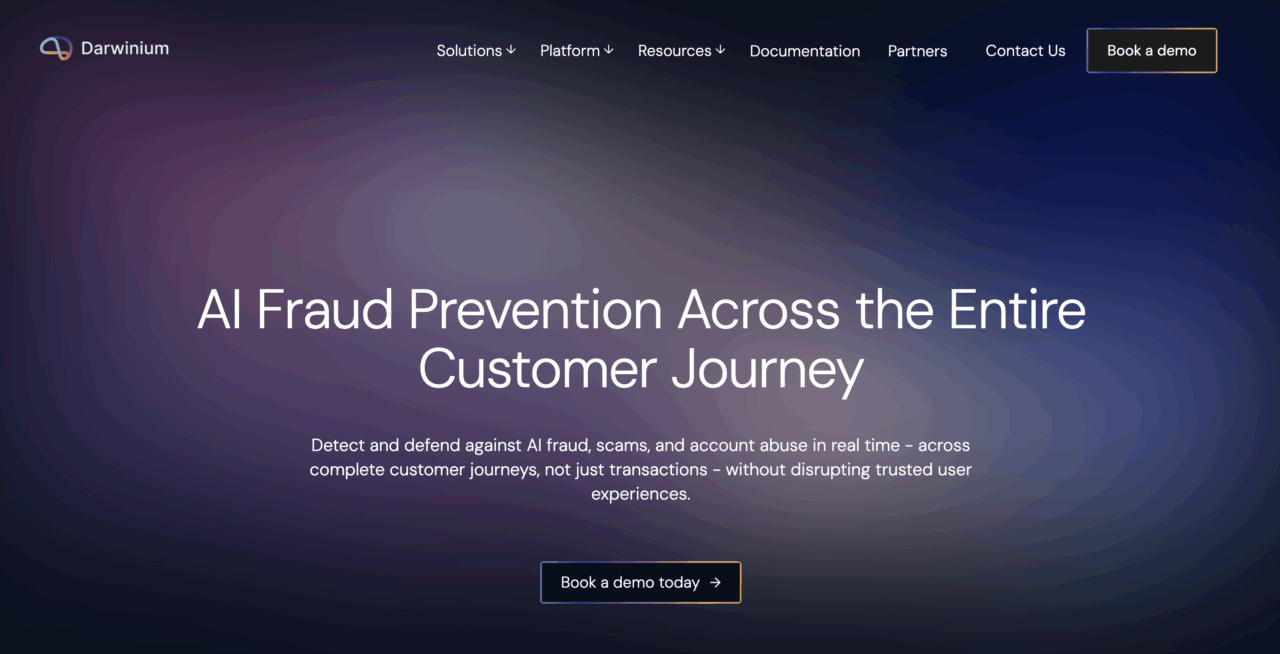
Darwinium is an AI fraud prevention platform born in the age of AI, using advanced AI tools to defeat the latest attacks, including scams, mules, and app cloning.

Features

  • Deploys in minutes at the perimeter edge
  • Protects touchpoints in the customer journey without an engineering resource
  • Uses adversarial AI red-teaming and an AI copilot to close the loop between detection and remediation

Who’s it for?

Banks, fintechs, enterprises, and SMBs.

Hagbad

Hagbad is a fintech platform that digitalizes social group savings into secure, transparent financial infrastructure, enabling communities to build financial visibility and long-term economic growth.

Features

  • Offers digital, invite-only group savings with automated contributions and payouts
  • Provides transparent, auditable records that strengthen trust and accountability
  • Delivers intelligent insights that support financial growth

Who’s it for?

Individuals and communities using group savings, particularly cash-based, diaspora, and ethically motivated users seeking secure, transparent, and interest-free financial tools.

Tweezr

Tweezr turns legacy code into system knowledge and business process maps, helping banks deliver safer core changes faster while avoiding risky big-bang programs.

Features

  • Presents explainable impact analysis and dependencies
  • Delivers business process maps and feature evolution
  • Offers incident investigation with end-to-end traceability

Who’s it for?

Banks, credit unions, and payment providers.

FinovateEurope 2026 Sneak Peek Series: Part 1

A look at the companies demoing at FinovateEurope in London on February 10. Register today using this link and save 20%.

AAZZUR

AAZZUR is an easy and cost-effective way for brands and platforms to seamlessly integrate financial products and increase customer value.

Features

  • 10x cheaper and 4x faster: Launches banking and cards in 4 to 6 months
  • 70+ plug-and-play modules and use case packages: Delivers hassle-free embedded finance
  • Vendor-agnostic orchestration: Offers one integration for 30+ fintech partners

Who’s it for?

Challenger brands and mid-stage fintechs.

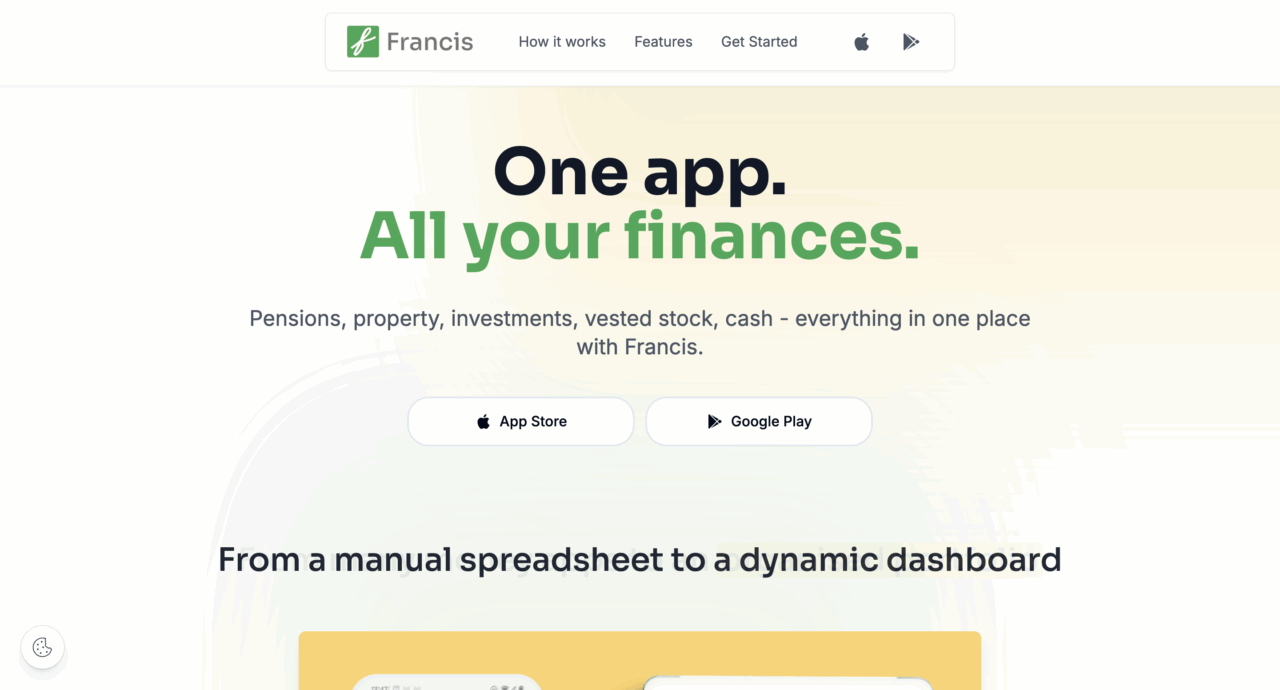
Francis

Francis is a personal finance AI for people in tech that turns fragmented financial data into actionable wealth insights. Pensions, property, investments, cash – all data in one place.

Features

  • Tracks all pensions and ISAs in one place
  • Checks and optimizes investment fees
  • Benchmarks the user’s portfolio against a market index
  • Estimates total investable cash

Who’s it for?

Francis is for all of the unadvised, mass-affluent tech and digital professionals with global compensation, starting with big tech in the UK.

mAI Edge

mAI BrandOS is an AI-powered creative system for banks. Fine-tuned per brand, it generates publish-ready, compliant marketing content across dozens of channels in minutes.

Features

  • Fine-tuned per brand: Encodes visual identity, tone, and compliance rules
  • Delivers publish-ready outputs: No manual rework or supplier delays
  • Provides built-in governance: Audit trails, GDPR compliant, EU AI Act ready

Who’s it for?

Tier 1 and Tier 2 retail and commercial banks or insurance companies in CEE, DACH, and Western Europe.

R34DY

ABLEMENTS is a context engineering platform that transforms complex IT landscapes, systems, data, processes, and architecture into AI-ready intelligence that enables enterprise transformation.

Features

  • Automates legacy discovery
  • Accelerates M&A integration
  • Drives digital transformation and AI enablement

Who’s it for?

Banks, credit unions, and enterprises struggling with legacy complexity and system integrators delivering digital transformation and M&A integration.

Four Innovators in Embedded Finance, Open Finance & Banking Infrastructure

Four Innovators in Embedded Finance, Open Finance & Banking Infrastructure

While perhaps not as flashy as AI or blockchain technology, embedded finance, open banking, and open finance are already transforming the way individuals and businesses interact with banks, financial service providers, and even retail organizations. By enabling firms to leverage partnerships and APIs to offer services and products they would struggle to offer on their own, these technologies give companies a tremendous opportunity not only to enhance their offerings with greater efficiency and personalization, but also to expand their product lines, provide new solutions, and secure new sources of revenue.

This week, in our continuing series previewing companies that will demonstrate their latest innovations at FinovateEurope 2026, we showcase four companies that are helping banks and other financial institutions take advantage of the opportunities made possible by embedded finance, open banking, and open finance.

FinovateEurope 2026 will take place at London’s Intercontinental O2 on February 10 and 11. Tickets are available now. Visit our FinovateEurope hub today and take advantage of big early-bird savings!


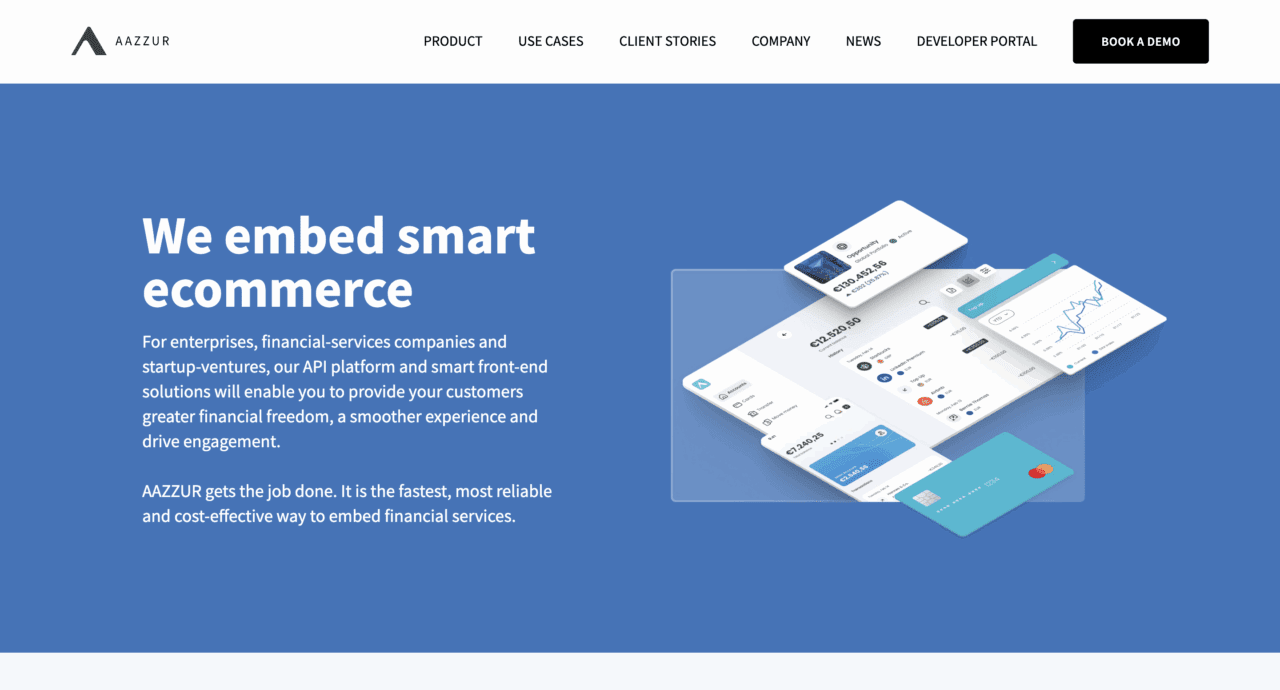
AAZZUR

AAZZUR enables brands—both small and medium-sized businesses as well as large corporations—to launch their own embedded finance solutions with a single integration. The company’s open banking platform serves as a layer above banks and fintechs, facilitating the exchange of data, messages, and transactions to boost satisfaction, retention, and monetization, while enhancing the way fintechs work with banks. Headquartered in Berlin, Germany, AAZUR was founded in 2017.


Francis

Francis enables financial institutions and fintechs to leverage AI to resolve challenges in their open finance initiatives. The company’s technology transforms fragmented financial data from pensions, property, investments, cash, and other sources into actionable wealth insights. Francis uses AI to process unstructured data and integrates it with market data, providing a holistic view of both personal and business finances. Founded in 2025, Francis is based in London, England.


Opentech

Opentech, a digital payments and transaction enrichment services provider, develops and operates full-stack solutions currently deployed by financial institutions and service providers in Italy, Switzerland, and Austria. The company’s open and scalable platform fosters interoperability between banks, card issuers, and international payment networks. Founded in 2003, Opentech is headquartered in Rome, Italy.


Hagbad

Hagbad works with organizations to digitize trust-based savings. The company modernizes traditional group savings systems through its secure digital platform, enabling compliant engagement, expanding customer reach, and promoting inclusive growth via a regulated, culturally aligned financial infrastructure. Hagbad’s platform features automated tracking and real-time transparency to ensure that contributions, payouts, and group activity are effectively monitored. Headquartered in the UK, Hagbad was launched in 2025.


Why banks should care

Embedded finance, open banking, and open finance offer banks an exceptional opportunity to introduce new products and services and to compete more effectively with rivals in both Big Tech and Big Retail. All three innovations foster increased accessibility, enabling financial institutions reach customers where they are. They also support greater personalization, empowering firms to offer more tailored financial products to customers, while simultaneously creating new revenue sources to diversify beyond traditional banking offerings.

Catch these and other innovative fintech companies next month at FinovateEurope 2026. With less than a month to go, there’s no better time than now to visit our FinovateEurope hub and secure your spot to the first big fintech conference of the year!


Photo by Ashkan Forouzani on Unsplash

Four Identity and Fraud Startups Laying the Foundation for Digital Finance

Four Identity and Fraud Startups Laying the Foundation for Digital Finance

As we enter the next era of digitization 2.0, identity verification and fraud prevention have moved from supporting roles to critical infrastructure. At the same time, advances in AI are making it easier for bad actors to circumvent legacy controls, increasing both the complexity and the stakes of managing digital risk.

From onboarding new customers to authenticating transactions and preventing losses in real time, banks and fintechs are under pressure to strike the right balance between security and user experience. Fortunately, fintechs are tackling this challenge head-on, building identity and fraud controls that reduce friction, strengthen trust, and make digital finance scalable. The four companies below are building some of the most cutting-edge tools in this segment and will showcase their solutions on the demo stage at FinovateEurope, which takes place February 10 and 11 in London.


Candour Identity

Candour Identity aims to improve digital onboarding by combining identity verification, biometrics, and fraud prevention into a single workflow. The platform is designed to help financial institutions increase conversion rates while maintaining regulatory compliance, enabling ongoing biometric authentication beyond initial onboarding. By supporting daily identity checks for login and payment use cases, Candour reduces fraud losses without introducing additional friction for legitimate users.


Darwinium

Darwinium helps organizations detect and prevent fraud while minimizing friction for trusted customers. Its platform distinguishes between high-risk and low-risk users in real time, allowing banks and fintechs to provide a “VIP” experience to good customers while applying stronger controls where needed. The approach is designed to reduce fraud losses without sacrificing the overall customer experience.


Elephant

Elephant targets false declines and chargebacks, two persistent challenges in digital payments. By improving transaction decisioning, the company helps businesses approve more legitimate transactions while reducing downstream fraud and disputes. The result is higher authorization rates, fewer customer complaints, and lower operational costs tied to chargeback management.


Keyless

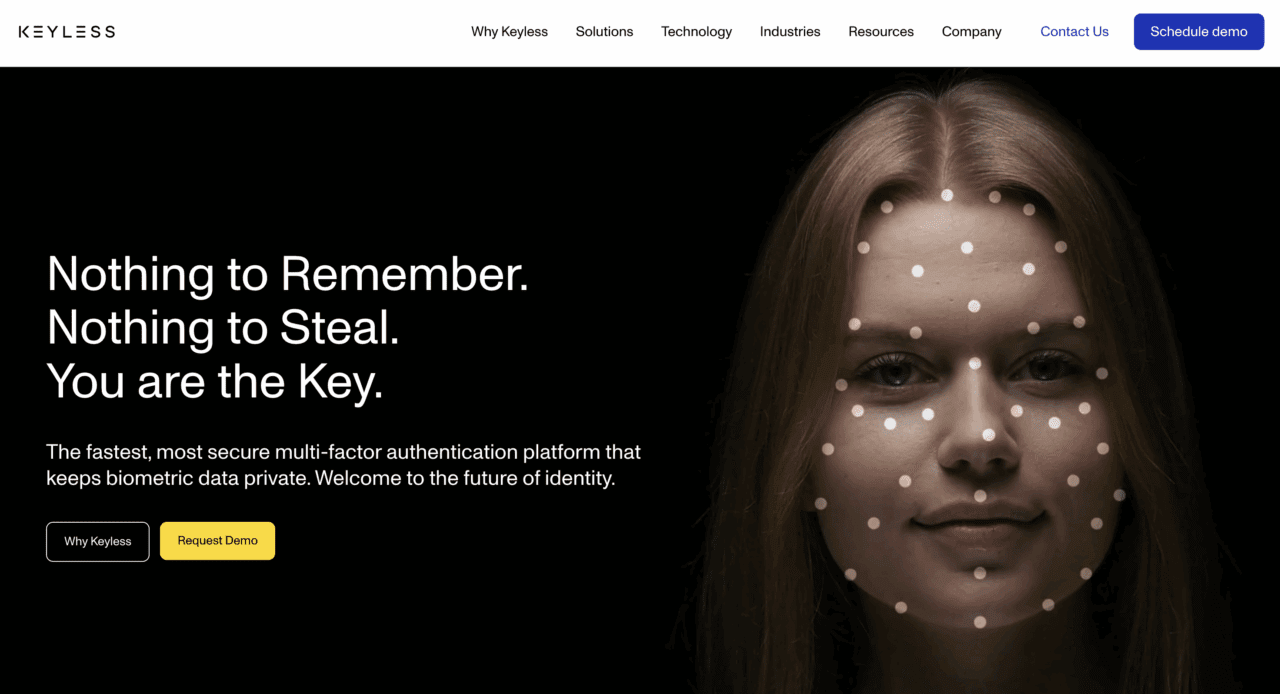
With Keyless, users are the key. The company’s technology replaces traditional multi-factor authentication methods, such as one-time passwords, with biometric authentication. Keyless’s technology enables passwordless and tokenless login experiences while maintaining strong security controls. By removing reliance on call centers and manual recovery flows, Keyless aims to improve user experience and significantly reduce authentication-related costs for banks. Keyless was acquired by Ping Identity in November 2025.

Why banks should care

Digital channels are increasingly becoming the primary point of interaction with customers, shifting the importance of verification technologies. The companies highlighted above show how banks, payments firms, and marketplaces can reduce fraud and operational costs while improving customer experience by applying smarter, more adaptive controls. Rather than relying on rigid rules or legacy authentication methods that can easily be spoofed using AI, modern identity and fraud platforms allow banks to approve more good customers, intervene only when risk is real, and scale digital growth without sacrificing trust.

To watch these companies demo their newest tools in person, register for FinovateEurope, see what’s new, and shake hands with the innovators.


Photo by Tima Miroshnichenko