Is IMPACT for You? Funders & Founders Event Comes to FinovateFall

Is IMPACT for You? Funders & Founders Event Comes to FinovateFall

Running alongside FinovateFall on September 11 in New York City, IMPACT Funders & Founders is a special opportunity for innovative fintech startups and scale-ups to connect with venture capitalists, corporate investors, and industry leaders.

For investors, IMPACT offers an early look at some of the best investment prospects in fintech, targeted one-on-one meetings with startups, and insights from experts on common challenges faced by fintech investors today. For founders and startups, IMPACT provides opportunities to network individually with top VCs, angel investors, and private equity firms, pitch directly to leading investors, and learn from veteran fintech executives on how to grow and scale.

IMPACT is a one-of-a-kind event. But is IMPACT for you? Here’s a look at our updated agenda, including a peek at our Pulse Roundtables, a special opportunity for candid, off-the-record conversations between funders, founders, and attendees.

Remember that IMPACT Funders & Founders is its own event and requires a separate pass from FinovateFall 2026. Create your package and secure your Funder or Founder & Startup Pass at our IMPACT Funders & Founders hub.


The day begins with IMPACT Funder & Founder Meetings: pre-scheduled, 10-minute, one-on-one meetings directly connecting startups with active investors. This session is followed by a dual-track conference-within-a-conference with one stage dedicated to the issues and concerns of fintech startups and another stage focused on the challenges faced by fintech investors. Each stage will consist of keynotes, fireside chats, and power panels covering a range of topics from AI and investment trends to tokenized assets and navigating regulatory change.

For Funders

Opening Keynote: The Future of Venture Capital: Navigating Change. This opening keynote will focus on how AI, tokenized assets, and innovative fund structures are reshaping the venture capital landscape.

Power Panel: GP-LP Evolution and Market Dynamics. This power panel will explore evolving dynamics between GPs and LPs, including co-investment trends, GP-led transactions, and strategies for navigating global capital flows.

Keynote: The Advantage Shift: How AI, Regulation, and Trust are Reshaping Competitive Advantage. Featuring Cate Taylor, CEO of communications and corporate affairs advisory firm Bayes Global.

Lightning Round Presentations: These 10-minute talks feature industry professionals sharing their insights on key issues in fintech and investing, including:

  • Mindset Ventures Managing Partner Boaz Albaranes on The Liquidity Problem: How Venture Capital Adapts to 15-Year Private Companies
  • Sidecut Ventures Managing Partner Mike Ma on Why Capital Efficiency is Replacing Growth-at-all-Costs
  • Thomson Reuters Ventures Investor Alex Carvalho on Fintech Valuations After the Reset: What Deserves a Premium Multiple?
  • Global PayTech Ventures Managing Partner Kristofer Perez on The Return of Consumer Fintech: AI Enables Opportunities in Lending, Payments, and Personal Finance

Check out the Pulse Roundtables! Our Pulse Roundtables are a unique opportunity for candid, peer-led conversations between attendees. For Funders, we’re featuring discussions on distribution as the new moat and the evolving landscape of crypto and digital assets.

For Founders

Fireside Chat: A Fintech Success Story. This fireside chat will highlight the pivotal moments that defined a company’s trajectory.

Power Panel: Fundraising Playbook—Tactics That Work Now. This power panel will discuss best practices for startups seeking funding, from the first meeting to the term sheet.

Keynote: The Visibility Gap and How to Get Found in the Era of AI. Featuring Greg Matusky, Founder and CEO of financial services PR agency Gregory, and host of the AI-focused podcast The Disruption is Now.

Fireside Chat: AI as Your Growth Engine. This fireside chat will focus on how startups are using AI to scale faster and cheaper. This chat will be moderated by Steven Ramirez, CEO of Beyond the Arc, in conversation with Fintech Sandbox Co-Founder Sarah Biller.

Lightning Round Presentations: These 10-minute talks feature industry professionals sharing their insights on key issues in fintech and investing, including:

  • Launch Factory Partner Alessandro Rinaldi on Building Strategic Networks and Advisory Boards
  • Accutive Fintech Strategist and Evangelist Derek Corcoran on GTM Strategy: From Zero to Market Traction
  • Finkr COO and Co-Founder Paul Mullins on Talent Strategy: Building High-Performing Fintech Teams

Don’t forget the Pulse Roundtables! For Founders, we’re offering conversations on developing scalable operational strategies and coordinating go-to-market efforts with growth and market expansion, as well as a look at how to leverage AI-driven insights to optimize customer acquisition, retention, and deal closure.

The day concludes with our IMPACT Startup Spotlight, featuring a series of pitches from a curated group of fintech startups and scale-ups. Scheduled for the spotlight are:

  • Fed Alcius, Founder, Rends.ai
  • Annie Burtoff, Founder, Confidio
  • Alisha Chowdhury, CEO & Co-Founder, Kiro Money
  • Betiana Darderes, Founder & CEO, Palomonte Labs
  • Alex De Marco, Founder & CEO, MoneyStack
  • Paigaam Dhaliwal, Co-Founder, Alt Indices
  • Mario Jiménez Gárate, Founder & CEO, CredX.AI
  • Carla Garcia, Founder & CEO, My Plan Keeper
  • Connor Gillooly, Founder & CEO, CreditMark
  • Anaïs Howland, Founder & CEO, Oasive
  • Timothy Li, CEO, LendAPI
  • Vijay Parwari, Founder & CEO, Code Comprehend
  • Bart Vanhaeren, Co-Founder & CEO, Young Early Starters
  • Brett Vasconcellos, Co-Founder & CEO, Paywhere
  • Jay Zigmont, Founder & Chief Visionary, Childfree Trust

LendAPI Partners with EDGE to Integrate Cashflow Intelligence

LendAPI Partners with EDGE to Integrate Cashflow Intelligence
  • Loan origination and management platform LendAPI has partnered with cashflow bureau EDGE.
  • The partnership will enable LendAPI to help lenders integrate cashflow intelligence into their lending workflows, giving them access to EDGE consumer reports, scores, and risk attributes.
  • Founded in 2024, LendAPI won Best of Show in its Finovate debut at FinovateFall 2025 in New York.

Loan origination and management platform LendAPI has teamed up with cashflow bureau EDGE. The partnership will enable lenders to access EDGE consumer reports, cashflow scores, and risk attributes directly within LendAPI’s decisioning and servicing workflows.

EDGE aggregates bank account and transaction data, transforming it into explainable, machine-learning-derived scores and attributes for lending and rental screening. LendAPI is used by credit unions, community banks, and consumer and embedded finance lenders to configure products, automate decisioning, originate loans, and manage portfolios from a unified lending platform. The partnership will make EDGE cashflow bureau intelligence available to LendAPI customers. EDGE consumer reports, cashflow-derived scores, and risk attributes will be accessible inside LendAPI’s Rules Studio and Model Studio. This data will also be available to inform post-origination servicing via LendAPI’s loan management system, Embarc.

Access to EDGE will enable lenders using LendAPI to incorporate cashflow intelligence into the workflows where credit decisions are made and managed. One use case, which also underscores the ability of EDGE to reach creditworthy, underserved borrowers, is conducting thin-file income and ability-to-pay assessments on unsecured personal installment products such as Buy Now, Pay Later and debt consolidation loans. EDGE enables lenders to build cashflow-informed policies such as these and test them in a sandbox environment before putting them into production.

“Our customers do not want another data contract to administer,” LendAPI Co-Founder and CEO Timothy Li said. “EDGE scores and attributes are now configurable in Model Studio and Rules Studio, so a lender can stand up a cashflow-informed credit policy in an afternoon, validate it against their own portfolio, and carry those insights through to servicing in Embarc.”

LendAPI’s partnership with EDGE comes as the cashflow bureau unveils an expanded suite of scores, including an Account Health Score, a Liquidity Stability Score, and an Early Payment Default (EPD) score. The Account Health Score gives lenders a current view of a borrower’s financial health. The Liquidity Stability Score evaluates near-term repayment capacity for products such as cash advance and earned wage access. The EPD Score assesses the risk of early default for installment and other longer-duration credit. The newly expanded suite is built on EDGE’s growing data lake of bank transaction and loan performance data from its network of participating lenders.

The partnership will also make EDGE’s bank aggregation solution, EdgeConnect, available through the LendAPI platform to give lenders a single path from account data to cashflow bureau intelligence inside a unified lending ecosystem. EDGE joins nearly 30 data and infrastructure providers available via the LendAPI partner catalog.

“EDGE was built to help lenders act on cashflow data, not just access it,” EDGE Founder and CEO Brian Reshefsky said. “Our partnership with LendAPI gives lenders a direct path to use EDGE consumer reports, scores, and attributes inside the systems where lending teams already work. That is how cashflow intelligence moves from standalone analysis to improved decision-making across the lending lifecycle.”

Chicago, Illinois-based EDGE offers a predictive intelligence platform that uses alternative data for consumer risk scoring and predictive behavioral mapping. The company’s data lake combines consumer-permissioned bank transaction data with loan performance at scale to deliver predictive risk analytics and modeling attributes curated for immediate action in underwriting decisions. Founded in 2021, the company helps lenders boost conversions of consumers who are often overlooked when traditional risk assessments are used.

Founded in 2024 and headquartered in Irvine, California, LendAPI won Best of Show in its Finovate debut at FinovateFall 2025. At the conference, the company demonstrated how its all-in-one platform enables lenders to launch a variety of financial products in minutes with full underwriting, model implementation, and third-party data integration.


Photo by Tierra Mallorca on Unsplash

Brazil’s Inter Pag Selects ACI Worldwide for Payment Orchestration

Brazil’s Inter Pag Selects ACI Worldwide for Payment Orchestration
  • Inter Pag has partnered with ACI Worldwide to modernize and scale its merchant acquiring infrastructure as Brazil’s payments market evolves.
  • ACI’s acquiring platform will bring payments intelligence, AI-driven fraud prevention, analytics, ecommerce tools, and orchestration to Inter Pag, which serves more than 100,000 Brazilian businesses.
  • The deal reflects a broader shift driven by real-time payments like Pix, as acquirers increasingly differentiate themselves through fraud prevention, intelligence, orchestration, and other value-added services.

Inter Pag, the merchant acquiring business of Brazil’s Banco Inter, has partnered with ACI Worldwide to modernize its payments infrastructure and support its next phase of growth.

Specifically, ACI Worldwide’s ACI Acquiring Platform will provide Inter Pag with cloud-enabled acquiring capabilities, payments intelligence, AI-driven fraud prevention, analytics, ecommerce tools, and payment orchestration. Inter Pag anticipates that tapping ACI’s acquiring platform will help simplify operations and strengthen resiliency while supporting its efforts to scale, innovate, and bring new payment services to market.

“Modernizing our acquiring infrastructure is an important part of our strategy as we continue to evolve our payments capabilities and strengthen the experience we provide to merchants,” said Banco Inter Head of Technology Gustavo Cunha Borges. “We were looking for a platform that would provide the flexibility, scalability, and resilience required for the next phase of our modernization journey. The ACI Acquiring platform provides a strong foundation to support innovation, operational efficiency and future growth.”

Inter Pag serves more than 100,000 small and medium-sized businesses across Brazil, enabling merchants to accept debit and credit cards through physical POS terminals, Tap to Pay on mobile devices, Pix payments, and payment links integrated with Banco Inter’s digital account. Since Pix launched in 2020, the instant payments system has grown to nearly 170 million users and is now the country’s most widely used payment method.

The rise of Pix and other alternative payment methods is also changing the demands placed on Brazil’s acquirers, which increasingly need infrastructure capable of handling higher transaction volumes, real-time payments, stronger fraud controls, and faster product development.

“Brazil has become one of the most dynamic payments markets in the world. The success of Pix, the growth of digital commerce, and rapidly changing merchant expectations are accelerating the need for modernization across the acquiring industry,” said Brazil ACI Worldwide Head of Sales Vlademir Santos. “Reliable, secure and resilient payment processing remains essential, but increasingly acquirers also need payments intelligence, AI-driven insights, orchestration capabilities, and the flexibility to innovate faster. Modern payments infrastructure is no longer just about processing transactions. It’s about turning payments into a strategic growth engine.”

The rise of real-time payments across the globe is changing the role of merchant acquirers. As rails such as Pix make instant payments increasingly ubiquitous, acquirers have an opportunity to differentiate themselves through the services surrounding the transaction, including fraud prevention, payments orchestration, analytics, and merchant tools. For fintechs, Brazil offers insight into how competition may evolve from simply facilitating the transaction into adding intelligence and value around it as real-time payments mature.


Photo by Kaique Rocha

Fintech Rundown: A Rapid Review of Weekly News

Fintech Rundown: A Rapid Review of Weekly News

It’s Monday again, which means it’s time for another look at the weekly fintech news. So far this week, there’s a spike in business banking news. Here’s a look at what else is trending. We’ll continue to add more announcements as the week progresses.


Business banking

Starling launches agentic AI assistant for business.

Helcim closes $53 million CAD Series C funding round to power payments for small and mid-sized businesses across North America.

Payload secures strategic investment from Fifth Third for its embedded business payments platform.

Stablecoins and tokenized deposits

Standard Chartered and HSBC execute first live tokenized deposit transaction on Swift’s blockchain-based ledger.

Decentralized finance

Binance launches Binance Agent OS, a developer platform built as part of Binance Intelligence.

Credit union technology

Member Driven Technologies (MDT) partners with AI development and consulting firm OnTrac AI to extend MDT’s Transcormational Consulting capabilities with deeper AI readiness, strategy, and implementation expertise.

Open finance

Personetics and Plaid team up to help banks secure a broader view of customers’ financial lives and enhance personalization efforts.


Photo by Mikhail Nilov

Finovate Global Germany: Spend Management, Embedded Finance, and Instant Payments

Finovate Global Germany: Spend Management, Embedded Finance, and Instant Payments

This week’s edition of Finovate Global features the latest fintech headlines from Germany.


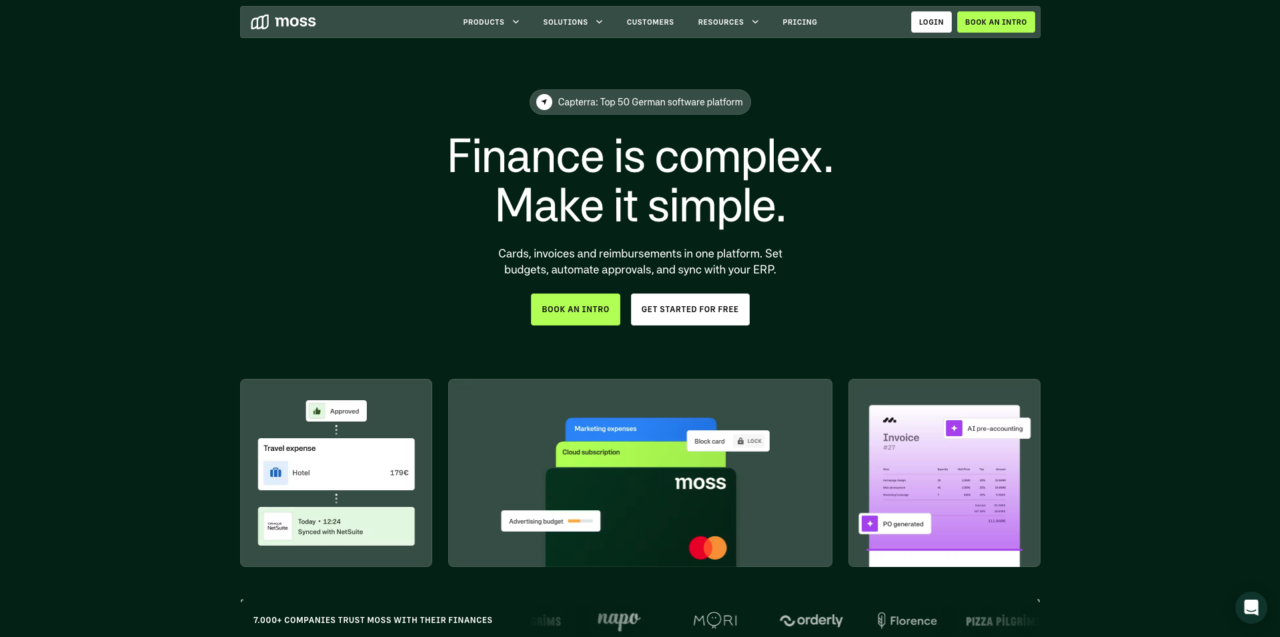
Berlin-based spend management platform Moss raises capital

Germany has a new fintech unicorn.

Moss, a spend management platform based in Berlin, has raised €30 million ($35 million) in Series C funding. The round was led by Portage and Cherry Ventures. It brings the company’s total funding to more than €200 million ($234 million) and gives the firm a valuation of more than €1 billion. The funding will enable Moss to develop additional AI agents to automate financial processes for small and medium-sized companies.

“This round reflects the trust of customers and partners in shaping the future of finance,” Moss CEO and Co-Founder Ante Spittler said in a LinkedIn post announcing the investment. “It allows us to expand beyond spend management and further build out our Finance AI product suite. Soon, Moss will allow customers to configure agents for every finance job while maintaining full control over every step and decision taken. This is Finance AI, shaped by you.”

Founded in 2019 by Spittler, Anton Rummel, Ferdinand Meyer, and Stephan Haslebacher, Moss was among the first fintechs to offer corporate credit cards to German startups. Today, the company combines corporate cards, invoice management, reimbursements, real-time budgeting, and automated accounting in a single platform. Moss leverages agentic AI to automatically categorize and reconcile transactions and reports that its AI agents process more than two million transactions a month.

The investment also paves the way for Moss’ development of what the company and investor Cherry Ventures refer to as Finance AI: “AI that prepares the work, shows its reasoning down to the ledger account, and takes no consequential action without the team’s sign-off,” Cherry Ventures noted in a LinkedIn post. “Moss asked its customers what they wanted from AI and built exactly that, control at every step.” Cherry Ventures was referring to a Moss survey that indicated that 48% of financial leaders identified “control” as their top priority when it came to deploying AI, with only 6% wanting AI to have “full autonomy.”

Moss serves more than 5,000 businesses and generates more than €70 million in annual revenue. In addition to its Berlin headquarters, the company has offices in Tallinn and Amsterdam.


YouLend partners with comrce on embedded capital

Embedded finance platform YouLend and e-commerce software platform for German SMEs comrce have forged a strategic partnership to help small businesses access working capital directly from within their current e-commerce operations. The partnership will combine comrce’s e-commerce platform with YouLend’s embedded finance technology to enable Germany’s 24,000 merchants to explore potential financing options.

“With YouLend, we are expanding our e-commerce offering with a service that can support merchants as they take their next steps towards growth,” comrce Head of Partner Management Amirah Hadry said.

YouLend and comrce have been partners since May, but are just now formally announcing their alliance. The partnership will make information about YouLend financing options available alongside the software and communications channels used by merchants to manage orders, inventory, accounting, and customer service. comrce will direct merchant financing queries to YouLend, which manages the financing process via its digital platform.

“comrce is part of the day-to-day operations of around 24,000 merchants,” YouLend General Manager Europe Leonard Strigel said. “Now, we are bringing them flexible financing options to give them greater access to growth capital. Our partnership demonstrates how embedded financing is incredibly vital to the day-to-day success of small businesses.”

Founded in 2015 and headquartered in the UK, YouLend offers an embedded financing platform that powers e-commerce, payments, and technology firms ranging from Amazon to SumUp. The company operates in more than 11 markets across the UK, EU, and US.

A leading e-commerce software hub, comrce offers specialized e-commerce solutions such as Billbee (automated order processing), Amainvoice (accounting software), Replyco (e-commerce helpdesk), and VentoryOne (inventory management) from a single location. Headquartered in Twistetal, Germany, and founded in 2023, comrce gives retailers an integrated ecosystem for automation, multichannel management, and revenue optimization.


N26 integrates with Instant Payments System Wero

Berlin-based neobank N26 has unveiled its support for Wero, the new pan-European instant payment system, via its mobile app. The launch makes the payment service available to eligible customers in Germany and France, with a gradual rollout to other markets planned for the future.

N26 joined the payment system in December 2025, entering into a strategic collaboration that has culminated in the August launch. Embedding Wero into the N26 app’s native transfer flow will enable users to benefit from a single European payment standard for daily digital transactions. The integration will allow users to send and receive funds instantly with individuals who do not hold an N26 account without requiring bank details or an additional app. Transfers are powered by SEPA Instant and the Wero network and arrive in the recipient’s account in less than 10 seconds.


“Instant payments without an IBAN have been a core N26 feature since our inception,” N26 Chief Product and Business Officer Daniel Lappas said. “With Wero, we’re extending this seamless experience to the broader European banking ecosystem, bringing the simplicity N26 customers already know to even more people.”

A European digital bank with a German banking license, N26 offers secure, digital-native banking to millions of customers across 24 markets. Founded in 2013, N26 offers bank accounts, debit cards, international transfers, savings and investments, and insurance products. Today, the bank holds more than €10.5 billion in customer deposits and reported annual revenue of more than €500 million in 2025, marking the firm’s first full year of net profitability. N26 started the year with the launch of its N26 for under 18s solution, a debit card designed for children aged 7 to 17 and managed via their parent’s N26 app.


Here is our look at fintech innovation around the world.

Central and Southern Asia

  • India-based digital financial services firm Navi secured an investment of $100 million from Dutch asset manager Prosus.
  • India’s RazorPay unveiled Vulcan, its AI payments foundational model, powered by NVIDIA and AWS.
  • IBS Intelligence looked at how wealthtech is driving growth in India’s fintech sector.

Latin America and the Caribbean

  • Brazilian digital bank PicPay introduced an integration with ChatGPT, enabling customers to access financial data via generative AI.
  • Banco Plata, a Mexican neobank, announced its expansion into Colombia.
  • Uber invested in Chilean fintech Galgo to support the firm’s motorcycle financing business.

Asia-Pacific

Sub-Saharan Africa

  • South African payment gateway Onafriq partnered with Dubai-based credit infrastructure company _able and Visa to expand credit access in Africa.
  • Nigerian fintech Pouchers raised $500,000 in pre-seed funding to scale its stablecoin-powered cross border payments business.
  • Mastercard and Flash teamed up to expand access to digital payments in the Democratic Republic of the Congo (DRC).

Central and Eastern Europe

  • The European Investment Fund (EIF) has partnered with Polish national development bank, Bank Gospodarstwa Krajowego (BGK), to launch a €30 million venture capital fintech fund.
  • Berlin-based AI-powered spend management platform Moss raised €35 million in Series C funding, earning a valuation of €1 billion.
  • PPRO teamed up with Blik to develop agentic commerce capabilities for local payments in Poland.

Middle East and Northern Africa

  • Digitally native bank Yomo secured preliminary approval from the Central Bank of Egypt.
  • UAE-based payment gateway Telr teamed up with Jordanian commerce platform Jet Application.
  • Oman-based bank Sohar International launched its innovation hub to support the country’s fintech ecosystem.

Photo by Meduana on Unsplash

17 Fintechs Innovating in Modern Banking Infrastructure, Payments, and Operations

17 Fintechs Innovating in Modern Banking Infrastructure, Payments, and Operations

There may be no clearer use case for AI than leveraging the technology to transform manual processes and boost operational efficiency. From cross-border payments to document management to fraud investigation to underwriting, fintech innovators have embraced AI to empower banks, credit unions, lenders, and other financial institutions to become more efficient, analyze data better, cut costs, meet compliance obligations, and provide more personalized service to their customers and members.

Beyond simply deploying AI, these fintechs in many cases represent an emerging generation of infrastructure providers that facilitate bank and credit union modernization without requiring them to “rip and replace” their existing core systems. By helping banks and credit unions meet emerging regulatory mandates, boost efficiency, and compete with rivals within and outside of financial services while keeping the cost of modernization low, these innovators are key partners for financial services firms that are eager to deploy new technologies but are wary of the risks of making too many wholesale changes at once.

In this final installment of our look at the demoing companies of FinovateFall 2026, we showcase a diverse group of fintech innovators automating processes and modernizing operations in areas such as payments infrastructure, regtech, lending, fraud prevention, wealth management, and more.


3 Degrees

3 Degrees provides community banks and credit unions with technology to launch modern, embedded cross-border payments that enhance the customer experience and generate new revenue. The solution is available for any country, currency, rail, or payout method.


Donevia

Donevia helps credit unions acquire, convert, and retain members by combining a member onboarding platform with an AI-powered backend performance layer. The solution provides a KPI dashboard to track and improve team performance and delivers AI-powered cross-sell recommendations and call transcription.


FinQub

FinQub offers a no-code orchestration layer for fintech workflows and compliance, replacing disconnected vendor dashboards with a single defensible decision graph. The solution delivers decisions in seconds rather than days and makes every decision examiner-defensible for seven years.


Finzly

Finzly offers a cloud-based payments platform for banks, enabling them to offer modern global transaction banking via Finzly’s real-time operating system Finzly BankOS. Easily integrated into banks’ core systems, Finzly’s technology can be used to centrally process ACH, FedWire, RTP, SWIFT, and FedNow payments.


Glide

Designed especially for credit unions, Glide is a digital account opening, lending, and onboarding platform that leverages AI for document collection and member intelligence. The solution offers embedded identity verification, fraud detection, and instant funding.


Go Abacus

Go Abacus’ Go.AI is an on-prem AI platform for financial institutions that delivers private large language models, secure data indexing, and auditable AI assistants built for regulatory environments. The solution offers permission-aware outputs with full response control over what the AI is saying, with all outputs aligned to regulatory requirements.


Kato

Kato offers compliance-first automation that helps lenders scale, reduce servicing costs by up to 80%, increase recoveries, and free up agents so they can focus on higher-value issues. Lenders use Kato to automate thousands of calls, producing a 15x ROI on recoveries and an 80% reduction in cost per call.


MHC Automation

MHC specializes in providing AI-powered SaaS solutions for document and payment automation in highly regulated industries. The company offers end-to-end customer communications workflows that integrate with any system, as well as low-code/no-code software that empowers business users.


Mobena

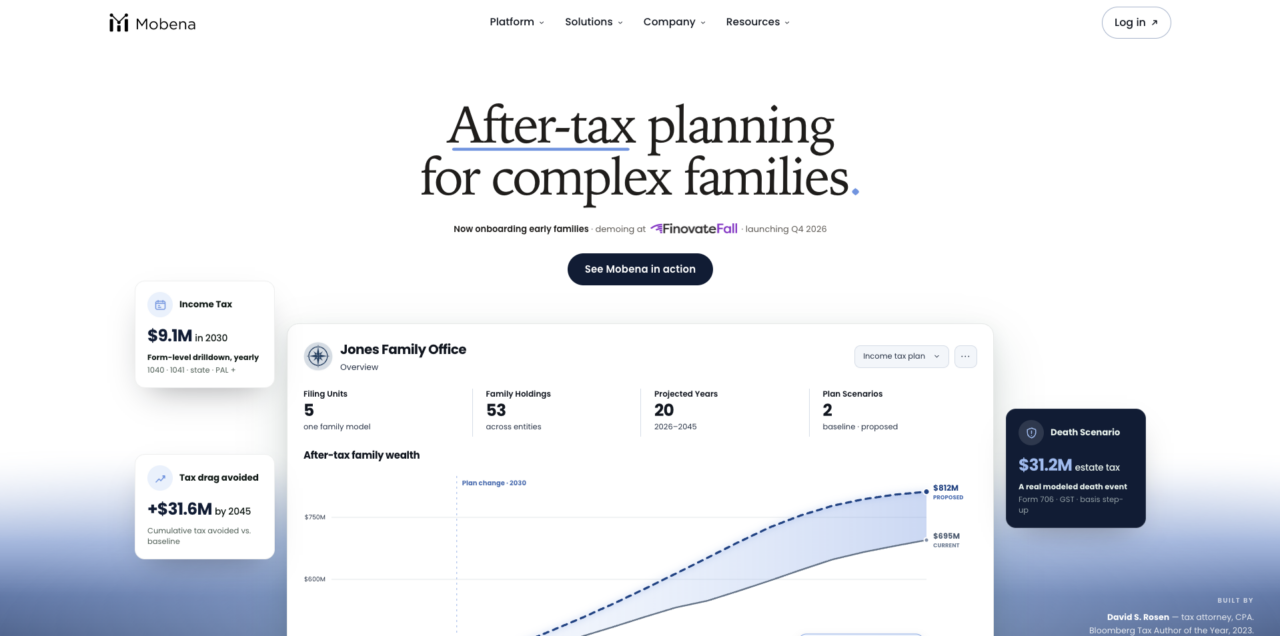
Mobena is an integrated income tax, estate planning, and wealth management platform built for complex families. The technology models income tax for an entire family over any period of time, calculates income tax at a CPA level, and accurately models grantor and non-grantor trusts.


Naehas

Financial institutions leverage Naehas’ platform to manage offers, automate disclosures, and review marketing content at enterprise scale to ensure regulatory compliance. The platform creates governed campaigns in minutes rather than months, binds each offer to approved disclosures at creation, and tracks every customer action with real-time fulfillment.


Neural Payments

Neural Payments’ Payments Hub connects banks and credit unions to every major payment rail and wallet in the US via a single, fully branded integration. The solution delivers adaptive routing and fraud controls and offers branded P2P and FedNow functionality in-app. Institutions can go live with the technology in 90 days.


On Time Harvest

On Time Harvest is a SaaS financial management platform and mobile app that helps individuals, families, and small businesses secure real-time cash-flow visibility, forecast discretionary income, manage shared finances, and make smarter financial decisions. The platform provides lending readiness, shared dashboards, and responsible BNPL planning.


SLC Digital

SLC Digital helps organizations prevent account takeover and high-risk digital fraud through the most secure and private communication channel available for digital authentication. The company provides identity theft and fraud prevention and supports continuous regulatory compliance, while lowering operational costs, and increasing customer trust.


Tacnode

Tacnode is a Context Lake: a single database that provides every AI agent and service with the same live, semantic context to ensure the accuracy of real-time financial decisions. The company’s Context Lake platform unifies transactional and analytical workflows in a single system, combining real-time performance, PostgreSQL compatibility, and cloud-native scalability.


Transvision

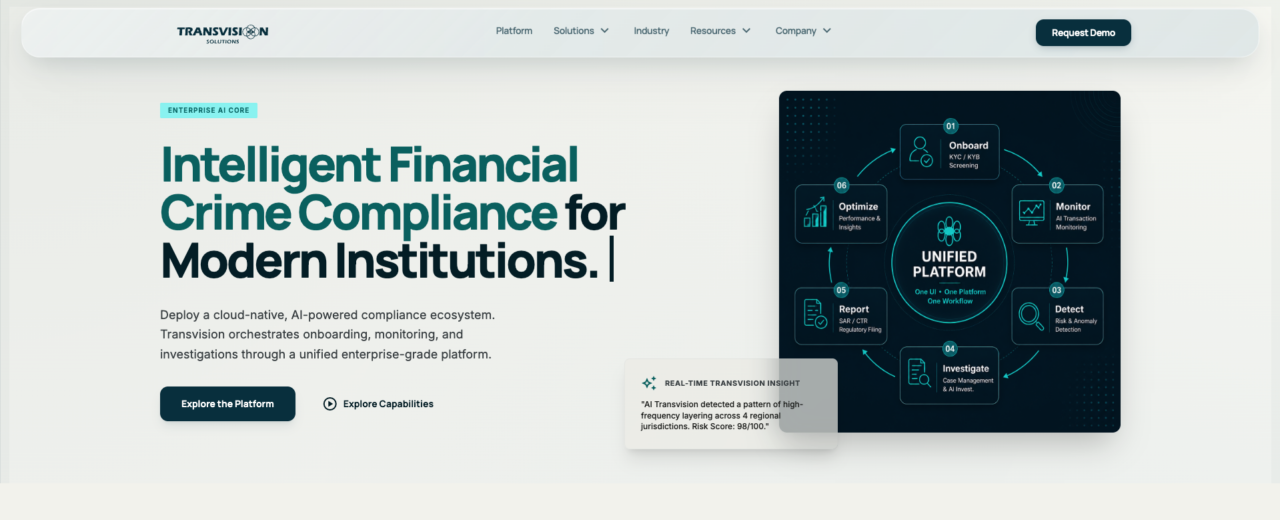
Transvision Solutions’ STAR AI is an autonomous AML investigation engine that runs 150+ intelligent checks to provide a complete, auditable investigation in less than five minutes. The solution delivers end-to-end autonomous investigations across KYC, sanctions, transactions, UBO, as well as ML risk scoring with explainability and LLM-generated SAR narratives.


Valcori Automated Solutions

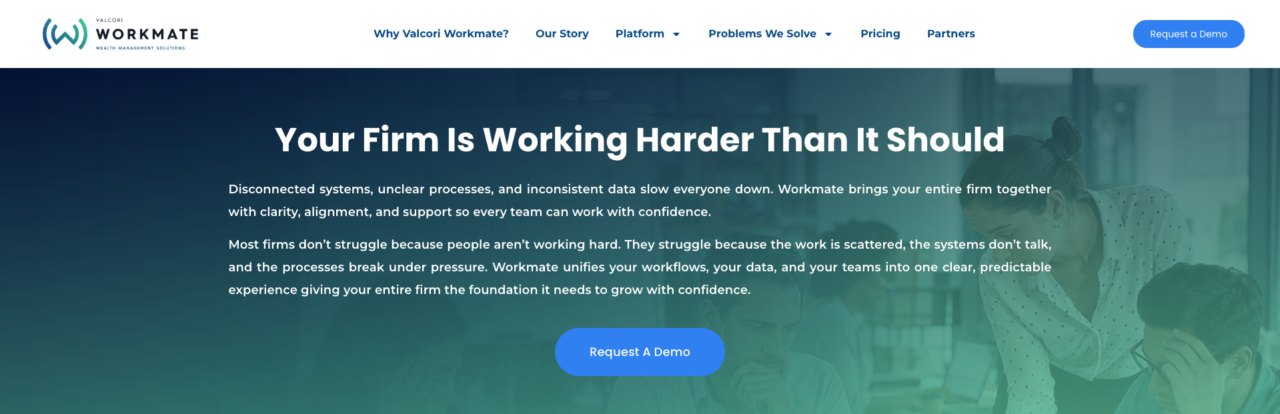
Valcori Workmate unifies workflows, data, and teams to reduce friction, increase transparency, and unlock efficient, scalable growth for independent wealth management firms. The company offers AI-driven tools that boost efficiency and simplify the daily demands of running a wealth management business via intelligent, collaborative technology.


Vertyx

Vertyx leverages headless AI to enable financial institutions and lenders to remain engaged with homeowners beyond the close of the loan. The company’s platform also automates servicing workflows, lowering service costs and features AI-powered quality control and compliance monitoring that covers the entire portfolio.


Why banks and credit unions should care

For some time, the biggest challenges to bank, credit union, and lender technology modernization were cost, complexity, and risk. These remain reasonable concerns. Major core platform overhauls are expensive, as are enabling new technologies like AI, and trying to integrate AI tools into current operations can seem like an overwhelming task, especially if the right technical talent is not on hand.

Fortunately, fintechs today are capable of responding to these challenges with solutions that automate manual processes to cut costs overall, as well as new, modular AI-enabled tools that do not require major “rip and replace” operations. A number of these innovators also offer professional services on an ongoing basis to ensure that implementations stay on track and new technology deployments do exactly what they are designed to do. Increasingly, for banks, credit unions, lenders, and other financial services providers, the question is not whether to modernize, but how to find the modernization partners that are the best fits for the institution’s goals.


Photo by drmakete lab on Unsplash

9 Fintechs Personalizing Customer Engagement and Financial Wellness

9 Fintechs Personalizing Customer Engagement and Financial Wellness

For years, financial institutions have talked about delivering more personalized experiences. But personalization is evolving beyond simply putting a customer’s name in a message or recommending a product based on broad demographic segments. In the last few years, banks and fintechs have been using behavioral and transactional data, AI, incentives, and contextual insights to understand what customers need and deliver relevant experiences at the moments when they are most likely to act.

At FinovateFall 2026, taking place September 9 through 11 in New York, a diverse group of companies will demonstrate new approaches to customer engagement and financial wellness. Their technologies range from hyper-personalized digital banking and transaction intelligence to financial education, community commerce, loan repayment incentives, and investing tools for the next generation. Below, we’ve highlighted nine companies that will take the stage at FinovateFall to illustrate how financial institutions can turn customer data and everyday financial interactions into opportunities to build stronger, more valuable relationships.


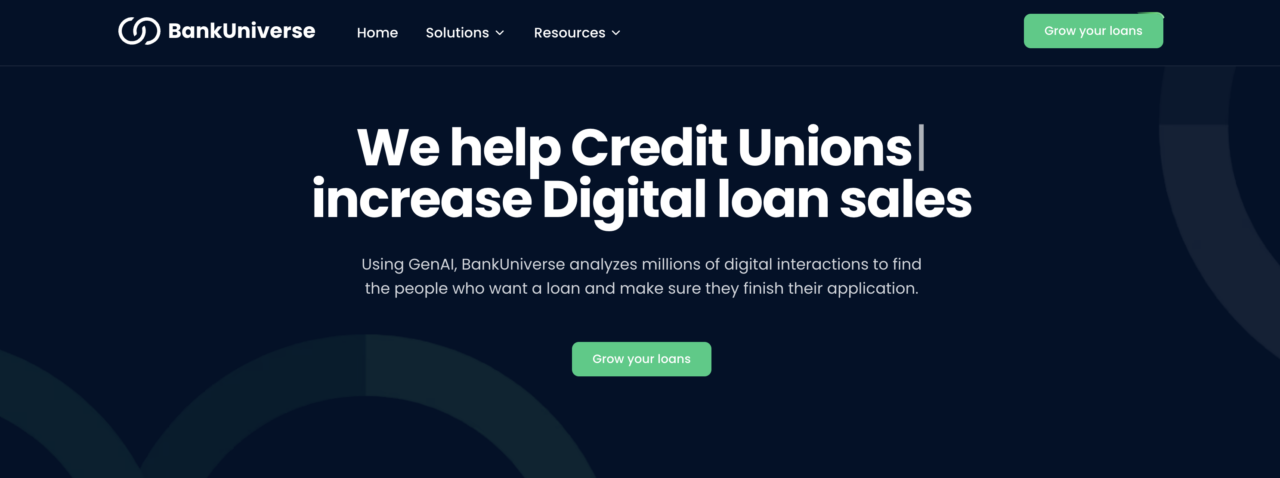
BankUniverse

BankUniverse helps financial institutions identify consumers who demonstrate an intent to purchase a financial product and then improve the digital journey that converts those prospects into customers. Its privacy-first platform analyzes digital interactions using GenAI and helps banks optimize product journeys and target relevant audiences without sharing sensitive personal information with third parties. The company says its technology can increase digital sales by more than 20%.


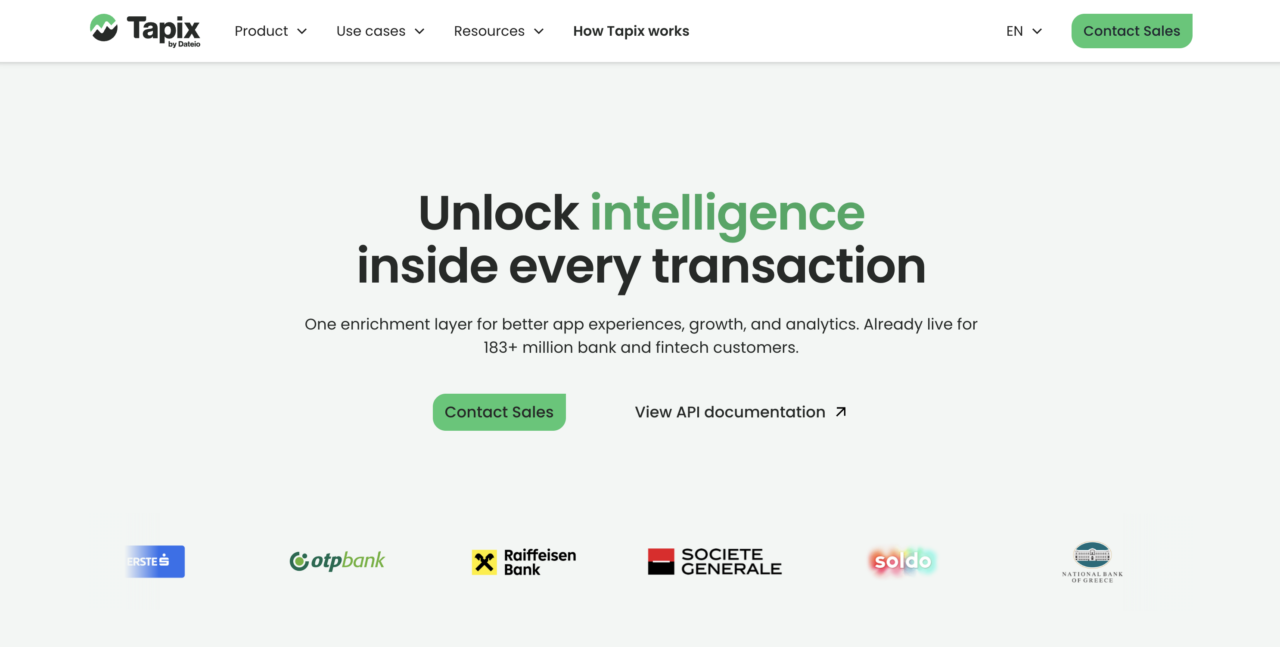
Tapix by Dateio

Tapix turns raw payment data into usable transaction intelligence, enriching transactions with information such as merchant names, logos, locations, and categories. That cleaner data foundation can power everything from clearer transaction histories and subscription identification to personal financial management, customer analytics, and hyper-personalized communications. Tapix can also help reduce disputes and chargebacks by giving customers a clearer understanding of where and how they spent their money.


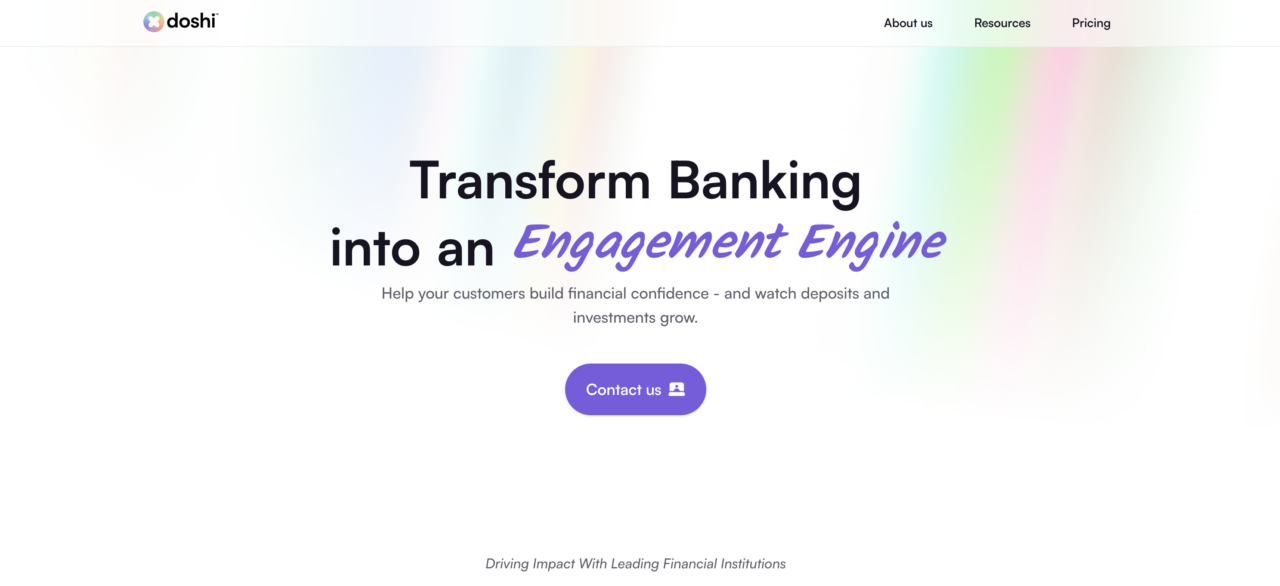
Doshi

Doshi provides an AI-native engagement layer that combines financial education with gamification to help banks better understand when customers may be ready for additional financial products. As users learn and interact with educational experiences, Doshi turns behavioral signals into product-readiness insights that financial institutions can use to deliver more timely and relevant engagement. The approach gives banks a way to connect financial wellness initiatives with measurable customer growth.


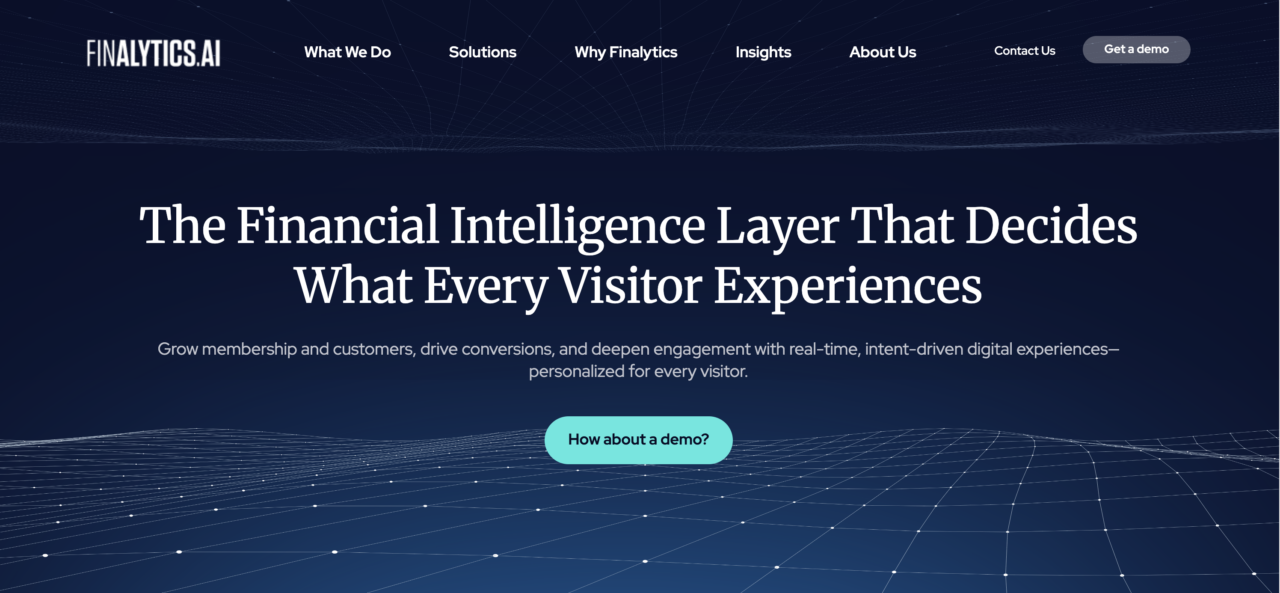
Finalytics.ai

Finalytics.ai helps financial institutions create “segment-of-one” digital experiences using behavioral, transactional, and third-party data. Its AI models continuously analyze available information to determine which content, messages, and offers are most relevant to an individual visitor at a particular moment. The result is a digital banking experience designed around individual intent rather than broad customer segments.


GenAspire

GenAspire helps community financial institutions build relationships with the next generation of customers through a white-labeled teen banking app and financial literacy program. Students learn about saving, budgeting, and spending through lessons, quizzes, rewards, and real-world financial experiences, while parents retain visibility and controls. For credit unions and community banks, GenAspire also serves as an acquisition channel, distributing their branded banking experience through school partnerships and helping institutions establish relationships with young customers before they select their first primary financial institution.


Goodbuy

Goodbuy helps credit unions turn community commerce into a customer engagement and growth channel. Its credit union-branded marketplace connects individual members with local small businesses, giving businesses exposure to new customers while providing members with incentives to shop locally using their financial institution’s cards. The model is designed to drive small business account acquisition and deposits while also generating greater card usage and interchange revenue.


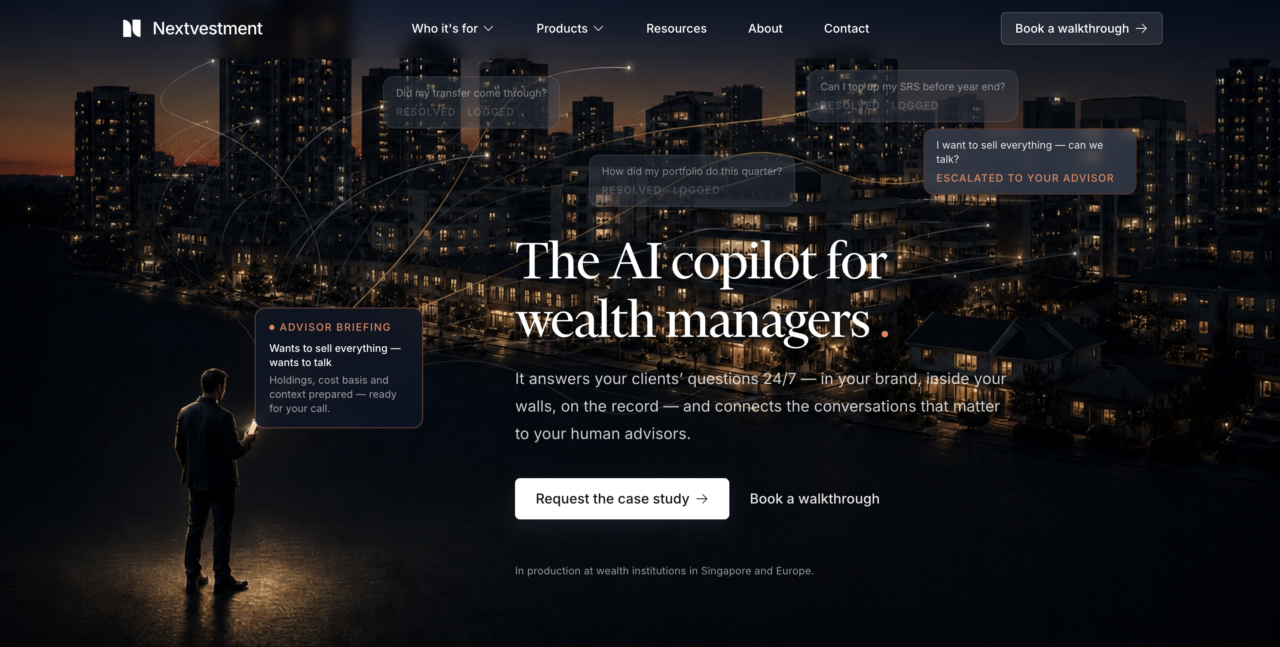
Nextvestment

Nextvestment brings AI-powered self-service to wealth management, allowing clients to explore investment ideas and financial questions on their own while helping advisors identify moments when human intervention may add the most value. The platform is designed to improve engagement without replacing the existing advisory relationship, giving clients greater freedom to explore while helping advisors focus their attention where it is most needed.


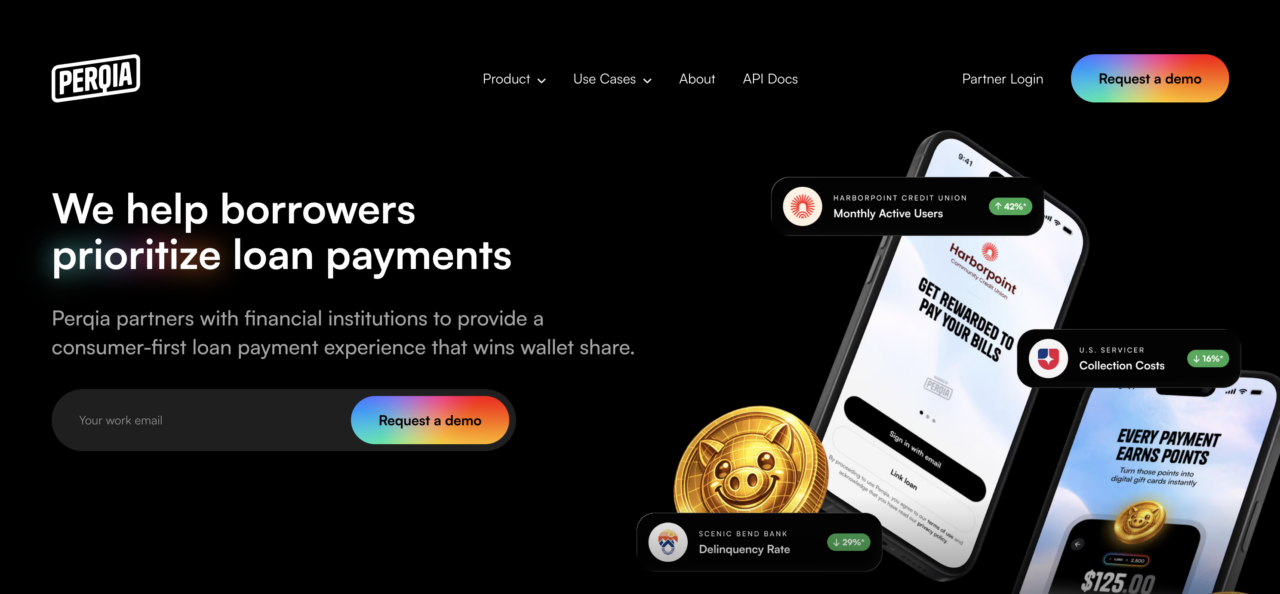
Perqia

Perqia helps lenders improve loan repayment behavior by turning payments into a more engaging customer experience. The platform uses cash-flow-timed incentives and rewards to encourage borrowers to prioritize their loan payments and pay before accounts become delinquent. Borrowers receive a self-service experience with visibility into upcoming payments and incentives, while lenders gain insights that can help improve engagement, reduce delinquencies, and lower collection costs.


Young Early Starters

Young Early Starters (YES) combines financial education with real-world investing to teach children how markets and long-term investing work. Designed for children ages eight to 18, the platform allows young users to learn about companies and investing before putting real money into stocks and ETFs. Parents set budgets and limits and approve individual trades, pairing hands-on investing experience with more than 300 educational lessons. For banks and other financial institutions, the model offers another avenue for establishing financial relationships earlier in a customer’s life.


Why banks should care

Personalization has historically been treated largely as a marketing challenge. Banks would determine which customers fit a segment, identify the product most likely to appeal to that segment, and deliver a targeted message. But the companies above demonstrate a broader opportunity built on better transaction data, behavioral signals, rewards, financial education, and AI. These tools can indicate when a customer is ready for a new financial product, encourage positive repayment behavior, create engagement long before a customer needs a financial product, and help banks determine what an individual customer needs in real time.

In 2026, customer engagement is more than clicks, logins, and open rates. Banks and credit unions need to give customers reasons to deepen their relationships and keep coming back. The companies coming to the FinovateFall 2026 demo stage show how financial institutions can use technology to make those interactions more relevant, timely, and useful.


Photo by Gustavo Fring

Conversational AI Platform for Financial Services OmniAI Rebrands as Monumint

Conversational AI Platform for Financial Services OmniAI Rebrands as Monumint

OmniAI, an agentic AI firm that made its Finovate debut at FinovateFall 2025 last year in New York, has rebranded as Monumint.

“This is more than a new name. It’s the next chapter of our company,” the firm began its LinkedIn post discussing the rebranding. “As financial services enters the era of AI, every customer should still receive a personal, high-touch experience,” the post continued. “We believe conversational AI is the foundation that makes that possible. That’s why we’re becoming Monumint.” The new name of the firm was inspired by the strength and endurance of monuments, “structures that have been built to last … just like the relationships financial institutions build with their customers.”

Monumint offers a conversational AI platform for financial institutions. The company’s technology leverages agentic AI to manage the entire borrower lifecycle across email, SMS, and voice. Monumint’s AI agents support account opening, loan origination, servicing, and collections, verifying and pre-qualifying applicants, collecting documents, responding instantly to balance, payment, and account queries, and, when necessary, providing empathetic, policy-guided outreach to enhance the collections process. This includes routing hardship signals directly to human agents.

The company’s rebrand comes at a time when a growing number of banks and credit unions that have built their businesses around relationship banking are facing challenges from technology-enabled rivals who are making it easier for customers to open accounts, secure the assistance and advice they need, and move money quickly without requiring a branch visit or dealing with a call center. The instant access that consumers increasingly expect in other aspects of life is quickly becoming an expectation among consumers of banking and financial services. Enabling community banks, credit unions, and lenders to deliver this access through innovative technologies like agentic AI will empower these firms to compete more effectively for the engagement—and deposits—of the financial services consumers in their communities and beyond.

“The next generation of financial services will be built around personal relationships at massive scale,” the company noted in a rebrand announcement on its website. “The winners will not be the institutions with the biggest balance sheets, but the ones that can give every customer a banker in their pocket, available across every channel, with the context to help and the judgment to know when a human should step in.”

As OmniAI, Monumint made its Finovate debut at FinovateFall 2025 in New York. The company showed how its AI agents for lending accelerate borrower onboarding, delivering faster responses and fewer delays for borrowers, as well as fewer drop-offs and cleaner data to enable lenders to make faster, smarter credit decisions. Each agent is trained on the financial institution’s workflow, guiding applicants from intake through to underwriting-readiness, gathering documents, verifying data in real time, asking contextual questions, and escalating issues as needed to human professionals.

Monumint is a Y Combinator alum, joining the accelerator as a member of the Winter 2024 cohort. Tyler Maran (CEO) and Anna Pojawais (CTO) are the company’s co-founders.


Photo by K. Mitch Hodge on Unsplash

APL FCU Teams Up with Spiral for Personalized Savings and Charitable Giving

APL FCU Teams Up with Spiral for Personalized Savings and Charitable Giving
  • APL Federal Credit Union has teamed up with digital banking engagement firm Spiral to give its members new, seamless ways to save and donate to their favorite charitable causes.
  • The credit union, which uses the Alkami Digital Banking Platform, will embed Spiral’s Roundup Center and Giving Center, innovations demoed last year at FinovateFall 2025 in New York.
  • Spiral’s partnership with APL FCU comes just a few weeks after the fintech announced a similar partnership with California-based Foothill Credit Union.

APL Federal Credit Union, a Maryland-based credit union, has partnered with Spiral to give its members new ways to save for their financial goals through everyday purchases while seamlessly supporting local and national charities.

“Credit unions have a unique opportunity to drive deposits and primary relationships by helping people make financial progress every day,” Spiral Founder and CEO Shawn Melamed said. “APL FCU is showing how digital banking can help members save more, give back to the causes they care about, and strengthen the communities they serve.”

APL FCU will embed Spiral’s Roundup Center into the Alkami Digital Banking Platform it uses, enabling members to automatically round up debit card purchases and direct the spare change toward their savings goals or their favorite charitable causes. The credit union will also deploy Spiral’s Giving Center, which allows members to seamlessly donate to their preferred charities directly from their digital accounts. The Giving Center also lets members create a portfolio of favorite charities, track the impact of their charitable gifts, and receive a report on their donations for tax purposes.

“Helping our members achieve financial success has always gone hand in hand with supporting our local communities,” APL FCU Chief Strategy & Growth Officer Kevin Marvel said. “With Spiral, members can automatically grow their savings and support the causes they care about through everyday banking, making saving and giving a natural part of their daily lives.”

Serving individuals and families who live, work, attend school, or conduct business in Howard County, Maryland, APL FCU was founded in 1954 by eight employees of The Johns Hopkins University Applied Physics Laboratory. The institution was a pioneer in online banking, launching the service in 1996, and secured its community charter in 2000, enabling APL FCU to offer memberships to individuals other than APL employees. Today, the financial institution has more than 31,000 members and total assets of $700+ million.

Founded in 2019 and headquartered in New York, Spiral made its Finovate debut at FinovateFall 2025. At the conference, the company demonstrated how its Savings Center and Giving Center for banks and credit unions help financial institutions grow deposits, increase engagement, and boost loans. Savings Center leverages personalization, gamification, and automation to help account holders build better financial habits and reach their financial goals. Giving Center enables account holders to manage their charitable giving and easily donate to both local and national charities.

Spiral’s partnership announcement with APL FCU comes just days after the New York-based fintech reported that Foothill Credit Union, a Southern California-based financial institution, will also embed Spiral’s Roundup Center and Giving Center into its digital banking platform. With $660+ million in total assets and approximately 29,300 members, Foothill Credit Union serves employees of specific school districts, hospitals, government municipalities, and Select Employer Groups (SEGs) across the San Gabriel Valley, as well as immediate family members of eligible employees.


Photo by Hannah Busing on Unsplash

Oxford Bank Partners with Swaystack to Drive Customer Engagement

Oxford Bank Partners with Swaystack to Drive Customer Engagement
  • Onboarding and engagement specialist Swaystack has partnered with Oxford Bank of Michigan and Cascade Federal Credit Union of Washington State.
  • Oxford Bank and Cascade FCU will both use Swaystack’s gamified onboarding and engagement solution to enhance and streamline onboarding, account funding, direct deposit switching, and more.
  • Headquartered in Miami, Florida, Swaystack made its Finovate debut at FinovateFall 2026.

Customer onboarding and engagement specialist Swaystack has teamed up with Oxford Bank, the oldest commercial bank in Oakland County, Michigan. Swaystack will bring its gamified onboarding and engagement solution to the bank’s customers within Jack Henry’s Banno digital banking platform, helping customers fund accounts, switch direct deposits, and transfer subscriptions from the first login.

“We’ve always believed that earning a customer’s trust means showing up at every step of their financial life,” Oxford Bank Chief Operating Officer Nancy Rosentrater said. “With Swaystack, we can now do that digitally—walking customers through funding their account, switching their direct deposit, moving their subscriptions—helping them grow with us through new products and referrals. It’s a complete ecosystem that turns a new account into a primary relationship.”

The partnership between Swaystack and Oxford Bank comes as the trend of banking consumers maintaining relationships with multiple financial institutions has accelerated significantly in recent years. A report from J.D. Power noted that in the third quarter of 2025, 52% of newly opened checking accounts were additional accounts rather than replacement accounts. This puts significant pressure on banks, credit unions, and digital banking providers. As consumers continue to divide their financial activity across institutions, the ability of any individual institution to earn customers’ savings deposits, direct deposits, and trust is tested. Unfortunately, as Swaystack CEO and Co-Founder Har Rai Khalsa explained, the traditional solutions to this challenge have often failed to work for many community banks and credit unions.

“Most banks chasing this problem end up buying four or five different tools and spend(ing) years trying to make them work together,” Khalsa said. “We built Swaystack so that community banks like Oxford Bank only need one platform. Everything from the first deposit to the next product moves as a single connected journey, each step setting up the one that follows. For Oxford, that means real growth from customers they already have. We are giving a bank that has earned trust for over a century a modern way to deliver it, while maintaining what makes people trust them in the first place.”

Founded in 2024 and headquartered in Miami, Florida, Swaystack made its Finovate debut at FinovateFall 2025 in New York. At the conference, the company’s CEO and founder demonstrated Swaystack’s gamified onboarding platform, which enables banks and credit unions to boost engagement with experiences that activate primacy, reduce dormancy, and transform new accounts into lasting relationships.

Swaystack’s partnership with Oxford Bank comes a month after the fintech announced a similar partnership with Washington-based Cascade Federal Credit Union. As with Oxford Bank, Cascade FCU will pair Swaystack’s onboarding technology with the Banno digital banking platform.

“We have always known our strongest growth comes from the members we already serve, but personalizing that outreach at scale was something our team could not do by hand,” Cascade FCU VP of Marketing Ashley Smart said. “Swaystack enables us to guide every member through these first decisions, and it turns the referral instinct we have rewarded for years into something that happens naturally as part of the experience.”

Cascade FCU was founded in 1952, and has more than 10,900 members. The credit union was initially chartered to serve workers of the Great Northern Railway and today is the financial home for more than 100 employer groups throughout Washington State and has $370+ million in assets. Headquartered in Kent, the member-owned, not-for-profit institution offers checking, savings, money market, certificates of deposit, IRAs, and youth savings accounts, as well as a full range of lending options, including auto, home, personal, and student loans, and credit cards.

Interested in companies developing innovative new solutions for credit unions and their members? Check out our latest look at the Credit Union Spotlight, coming to FinovateFall 2026 next month in New York!


Photo by Geansebastian Rodriguez from Pexels

What Montana Taught Me About the Future of Community Banking

What Montana Taught Me About the Future of Community Banking

Growing up in Montana, community banking was the only type of banking I ever knew until I left town for college. My best friend’s mom worked at the bank down the street, and all of the tellers recognized my parents when we walked into the branch. My mom started her own business by obtaining a working line of credit after presenting a business plan and a promise.

As a kid, I thought every town worked this way. Now, decades later, looking back on those experiences offers important insights into banking.

Community banking, especially in a small town, has always depended on trust, reputation, personal connections, and long-term relationships. When I switched to a digital-only bank in 2006, that sense of connection largely disappeared. My relationship with the bank felt less personal and more centered on the transactions I was making.

That disconnect may help explain why so many fintechs now invest heavily in recreating digitally what community banks have spent generations building in person. Personalization, customer engagement, financial wellness, AI assistants, and customer relationship management may sound modern, but the underlying ideas are not. Community banks have long relied on knowing their customers, understanding their needs, and building loyalty over time. In 2026, those same goals remain priorities across the financial services industry.

Because community banks already understand many of the qualities customers value most, they do not need to imitate megabanks. They do, however, need technology that helps them extend those strengths. With the right partners, community banks can serve customers faster, automate manual work, strengthen fraud detection, and give employees more time to focus on meaningful customer interactions. The opportunity will help strengthen the relationship-driven model by supporting it with digital tools and workflows that meet rising customer expectations.

This technology gap is exactly what the Community Bank Spotlight at FinovateFall seeks to bridge. On September 11, we’re hosting a special breakfast session open only to community banks and a few selected fintechs, that will provide executives a place to share best practices, talk through common challenges, and discover innovative solutions.

If you’re interested in attending the Community Bank Spotlight at FinovateFall, reach out to [email protected] to get yourself on the guest list. Keep in mind that space is limited, and only community bank employees are eligible to attend.

Fintech Rundown: A Rapid Review of Weekly News

Fintech Rundown: A Rapid Review of Weekly News

Will World Liberty Financial, the crypto venture linked to President Donald Trump, secure a bank charter? Will PayPal sell itself to Stripe? There’s a lot to mull over in the fintech headlines as the week begins. Be sure to check back here at Finovate’s Fintech Rundown all week long for the latest in news and announcements.


Digital banking

Regional financial institution Flagstar Bank ($87.7 billion in assets) partners with Fiserv to support its core modernization strategy.

Oman-based BankDhofar introduces youth accounts to promote financial literacy among the country’s young adults.

Agentic AI

Alipay unveils China’s first full-stack agentic commerce platform.

Payments

Payment acceptance solutions company Ingenico raises €150 million from a group of investors led by PIMCO.

TransFi launches JARVIS, a proprietary AI-powered compliance intelligence platform for cross-border payments.

Payfuture and Payouts.com team up to launch local payment rails for India payouts.

Wealth management

Retirement and savings specialist Standard Life launches its AI Coach to help guide customers through the home buying process.

Fraud prevention

Datavault AI announces its acquisition of CyberCatch in an all-cash deal combining data monetization and defensive security.

Equifax UK launches Automatic Watchlist Monitoring (AWM) to help regulated businesses in the UK to automate anti-money laundering (AML) compliance.

Insurtech

Data and AI company SAS teams up with international reinsurance provider Swiss Re to enhance catastrophe risk intelligence.


Photo by Pascal Debrunner on Unsplash