
Meet the Keynotes: FinovateSpring Spotlights Innovations in AI

Meet the Keynotes: FinovateSpring Spotlights Innovations in AI

Are you interested in how AI can help banks, credit unions, and other financial institutions boost engagement, offer new products and services, and grow revenues? This year, FinovateSpring 2026, taking place in sunny San Diego, California, May 5-7, is set to deliver the latest insights into innovations in AI that enable financial services providers to compete more effectively in the 21st century.

In special addresses and keynotes over three days, FinovateSpring will showcase how AI can enhance customer experiences through greater personalization, improve contact center efficiency using agentic AI, and more. Featuring a range of AI experts and innovators, the conference will highlight how banks and financial institutions can maximize AI and successfully deploy what many believe is the most revolutionary technological innovation of our time.

FinovateSpring 2026 will be held at the Sheraton San Diego Hotel and Marina, May 5-7. Buy your ticket. Book your room. And join us for the next, must-attend event on the fintech conference calendar!


AI That Makes It to Production: Deploying Trusted CX in Days, Not Months

Merlin Bise, CTO of Inbenta AI, will show how organizations can go from zero to product-ready AI in less than a week, how to deploy assistants that understand customers in any language, eliminate hallucination risk with traceable and explainable responses, and integrate AI solutions into existing CX infrastructure—no platform replacement required.

Headquartered in Texas, Inbenta delivers enterprise AI solutions to more than 1,000 organizations, including BBVA, Deutsche Bank, and Samsung. The company’s flagship Encore platform serves companies in financial services, e-commerce, healthcare, and more with 98% accuracy, near-zero hallucinations, full auditability, and 850+ integrations that eliminate vendor lock-in.

See the keynote on Tuesday, May 5, 10:25am!


From Plateau to Compound: Why the AI That Got You to 65% Call Resolution Will Never Get You to 100%

Henry Pezzo, Sales Director at Omilia, will discuss the challenge of how to effectively deploy AI in enterprise contact centers. He will explain how an agentic, self-learning platform that monitors every interaction, identifies what to improve, and builds better agents automatically can serve as an alternative to manual tuning, vendor dependency, and generic language models.

Based in Larnaca, Cyprus, and founded in 2002, Omilia specializes in AI-driven customer service transformation. The company’s self-learning agentic CX platform enables enterprises to automate interactions with precision, empowering agents in real time and delivering seamless, personalized experiences across channels.

See the keynote on Tuesday, May 5, 2:00pm!


Scaling Support Without Losing Trust: How Acorns is Rebuilding Customer Care with AI

Trish Vogeler, Support Systems & Tools Lead for Acorns, and Stacy Osorio, Director of Customer Success for Cresta, will explain how Acorns is rethinking customer care to understand the key drivers of customer satisfaction. Vogeler and Osorio will discuss how Acorns uses AI to surface actionable insights from customer interactions, redesign quality assurance around behaviors, and introduce automation via voice AI agents that enhance rather than compromise the human experience.

Acorns offers straightforward tools to help Americans manage their finances better—from wiser spending to smarter saving and investing. The company’s Acorns Early is a smart money app and debit card that helps children develop sound financial wellness skills as they grow up. Since its inception in 2014, Acorns has helped more than 13 million customers save and invest more than $22 billion.

Headquartered in Sunnyvale, California, and founded in 2017, Cresta combines AI and human intelligence to turn customer conversations into competitive advantages. Cresta uses AI agents, AI-augmented human agent assistance, and quality management to transform contact centers, improve the customer experience, and grow revenues. The company counts firms such as Alaska Airlines, Cox Communications, and Intuit among its customers.

See the keynote on Tuesday, May 5, 3:20pm!


Invisible Infrastructure, Visible Results: The Case for Agentic Orchestration in Financial Services

Jawwad Rasheed, Financial Services Transformation Lead for Camunda, will discuss the challenges that financial services organizations face when embedding and scaling AI into their core operations. He will explain the importance of agentic orchestration, which is often the missing ingredient in AI strategy that enables businesses to avoid the agentic value trap and break through the automation ceiling.

Headquartered in Berlin, Germany, and founded in 2008, Camunda is a leader in agentic orchestration, automating complex business processes—including high-value knowledge work—across agents, people, and systems. The company offers production-ready, enterprise-grade agents with built-in governance to manage business-critical processes.

See this keynote on Wednesday, May 6 at 12:30pm!


Creating Trust and Loyalty Through AI-Enhanced CX

Jon Lakefish, Founder of Lakefish Group, will explore the most powerful AI tools currently available that enable individuals and teams to enhance the customer experience, improve communication, and boost operational efficiency. Lakefish will focus on practical applications instead of theory and will introduce the latest agentic platforms that are transforming AI’s role in organizations.

Headquartered in Duvall, Washington, Lakefish Group is an AI-driven marketing and branding firm that leverages 20+ years of strategic expertise with the power of AI and the gig economy to deliver campaigns that compete with billion-dollar brands at a fraction of the cost. The company specializes in AI consulting, brand identity development, and strategy advisory services.

See this keynote on Wednesday, May 6 at 12:45pm!


Other scheduled keynotes include:

The Global Economic & Geopolitical Outlook & the Direction of Travel for the US Economy—Manas Chawla, Founder and Chief Executive, London Politica. Tuesday, May 5 at 10:40am.

Why Agentic AI is Truly a New Frontier in Financial Services & How Agentic Commerce Will Reshape the Retail Landscape—Chris Nichols, President of Institutional Banking, SouthState Bank. Thursday, May 7 at 10:00am.

The $84 Trillion Handover: What Banks Need to Understand About Gen Z’s AI-First Relationship with Money—Tyler Brown, Industry Analyst, tylerbrown.co. Thursday, May 7 at 3:00pm.


Photo by Immo Wegmann on Unsplash

Counting on Community: FinovateSpring Showcases Community Banks

Counting on Community: FinovateSpring Showcases Community Banks

For years, Finovate has championed credit unions and the fintechs that serve them through our Credit Union Spotlight. This year at FinovateSpring 2026, Finovate is bringing that same level of attention and insight to the world of community banking with our FinovateSpring Community Bank Spotlight. Taking place on Wednesday morning, May 6, our Community Bank Spotlight is a new and unique opportunity for community bank leaders and employees to network with each other, share best practices, and meet with fintech innovators that have developed solutions specifically for community banks and their customers.

Consumer interest in community banks is strong and community banking leaders are expressing optimism about their near-term outlook. A survey conducted by the American Bankers Association (ABA) in 2026 indicated that more than half (58%) of community banks expected significant growth in their geographic footprint this year. This included more than 20% of respondents noting that they anticipate growth beyond their current footprint in 2026. Additionally, these institutions and their leaders are ready to embrace new technologies in order to run their businesses better. Half of the community banks surveyed indicated that they planned to use technologies like AI to reduce costs.

Nevertheless, community banks face major challenges—perhaps the most significant being the growing gap between bank customer expectations and what many banks, especially community banks, can deliver operationally. A new report—the Integris 2026 Banking Trust and Technology Report—uses data from dual surveys of US banking executives and 1,000 bank customers to show how the high level of trust that customers have in their banks is at risk of being undermined by anxiety over the role of new technologies such as AI. Writing about the report in a recent blog post, the Independent Community Bankers of America (ICBA) noted: “While customers continue to place high trust in local institutions, that trust is increasingly fragile, influenced by cybersecurity visibility, AI decision making, and the perceived maturity of a bank’s technology infrastructure.”

What can leaders and employees of community banks expect from this year’s inaugural Community Bank Spotlight? The session will begin with networking over coffee and breakfast to allow attendees to connect with each other and speak candidly about issues they may not want to share with the broader Finovate audience. Following the networking session and breakfast, a curated selection of fintechs will be invited to introduce themselves and explain how their innovations can help solve challenges for community banks and their customers. Session attendees will have the opportunity to learn about each company during the session, and can follow up with those fintechs that most interest them.

Attendees of our Community Bank Spotlight will also benefit from access to the full conference—including more than 50 innovative fintech demos; insightful, expert speakers from banking, fintech, and technology; as well as high-impact networking with members of the broader financial services and fintech industries.

“Community banks are increasingly attractive to fintech innovators, and smaller FIs are looking more and more for new technologies as they seek to enhance their offerings and grow,” Finovate VP and Director of Fintech Strategy for Informa Festivals Greg Palmer said. “The Community Bank Spotlight is a perfect venue for both sides to come together and have the vital conversations they all need to plan for the future.”

If you are an employee of a community bank and would like to be a part of our Community Bank Spotlight at FinovateSpring this year, contact our Engagement Manager [email protected] to secure your spot on the guest list!

And if you are a fintech looking to show community banks how your innovation can help them grow deposits and offer new, engaging services to their customers, drop us a line at [email protected] to learn more about how to participate!


Photo by Nikola Tomašić on Unsplash
Five Fintechs Helping Banks Build and Launch Better Financial Products

Five Fintechs Helping Banks Build and Launch Better Financial Products

Launching and scaling new products isn’t as simple as developing a new tool and making it live. There are plenty of tasks that need to be considered alongside the actual product release, including governance and compliance, marketing and social campaigns, consumer testing and surveying, finding and fixing vulnerabilities, and consumer follow-up.

At FinovateSpring 2026 in San Diego, we’re hosting five fintechs that are making this next phase of product launches possible. Check out the variety of capabilities and learn more about the companies behind them below.


PentEdge

PentEdge AIMS gives community banks and credit unions an examiner-ready AI governance platform that’s purpose-built for the $500 million to $100 billion institutions navigating federal AI risk guidance. Founded in 2025, the North Creek, New York-based company delivers a real-time scoring dashboard with a view of AI exposure across a portfolio, offers pre-built vendor AI risk profiles, and provides audit-ready PDFs for examiners.


Intention.ly

Intention.ly’s Advisor Brand Builder (ABB) helps firms build a differentiated brand, website, and content engine in a matter of days to enable advisors to attract ideal clients and outpace competitors. Among the company’s engagement options are a diagnostic assessment, a fractional CMO and COO, an outsourced marketing team, and more. Headquartered in King of Prussia, Pennsylvania, Intention.ly was founded in 2021.


PwC

Customer Link by PwC offers banks a set of “synthetic customers” through which they can test products, pricing, and experiences. Firms can use results to quickly generate quant data and turn survey crosstabs into clear, segment-specific growth actions.

Founded in 1998, PwC provides clients with a wide range of capabilities, including consulting, cybersecurity, AI, audit, and more. The company is headquartered in New York.


Rezliant

Rezliant’s Maestro Pulse helps fintechs, payment providers, and small financial institutions automatically fix security vulnerabilities in their codebases, PII (Personally Identifiable Information) data flows, and API integrations. The company provides contextualized triage of fintech vulnerabilities, automates remediation of multiple critical flaws simultaneously, and delivers effortless two-click fixes directly from email notifications.

Headquartered in Mesa, Arizona, Rezliant was founded in 2023.


Kato

Founded in 2024, Kato helps lenders scale with compliance-first automation. The San Francisco-based company’s technology helps firms reduce servicing costs up to 80%, increasing recoveries by 1%, and freeing agents to focus on high-value work.


Why banks should care

While it seems like the hard work of a new product launch is the planning and development phase, the reality is that execution is where most initiatives succeed or fail. Banks are expected to move faster, create and develop more frequently, and deliver better customer experiences. Doing so, however, requires navigating compliance requirements, validating product-market fit, securing systems, and effectively bringing products to market.

Platforms that support these adjacent functions help reduce the friction that often slows product launches. They enable banks to move from idea to execution more efficiently, while minimizing risk and ensuring alignment with regulatory expectations. In an environment where speed and precision both matter, having the right infrastructure around product launches can be the saving grace that changes a product from a failure into a success.


Want to attend? Now is the time to lock it in. Get 40% off this week only with code FKV2794ART (ends April 17): https://informaconnect.com/finovatespring/purchase/select-package/?vip_code=FKV2794ART


Photo by Monstera Production

Four Fintechs Driving Payments, Infrastructure, and Embedded Finance

Four Fintechs Driving Payments, Infrastructure, and Embedded Finance

Financial infrastructure is becoming increasingly valuable as it powers payments and financial products. Instead of operating within closed systems, banks are now operating within broader ecosystems in which customers expect seamless integrations, faster money movement, and financial services experiences that become invisible within the customer journey.

Fintechs are working to satisfy the demand for this infrastructure using API-driven tools that can support real-time payments, cross-border transactions, and embedded finance use cases. At FinovateSpring 2026, we’re hosting a group of fresh fintechs that will showcase their solutions designed to simplify payments, modernize infrastructure, and unlock new revenue opportunities. From digital asset infrastructure to cross-border payments and operational platforms, these four companies leading the way.


AlphaPoint

AlphaPoint enables smaller financial institutions to adopt stablecoin payments and treasury capabilities without the cost and complexity of building in-house infrastructure. Its platform provides the tools banks need to support digital asset transactions, helping them modernize payments and compete with larger, more technologically advanced players.

Founded in 2013 and headquartered in New York, AlphaPoint gives banks a faster path to integrating blockchain-based financial services, positioning them to participate in real-time, programmable money.


Quanto

Quanto helps businesses reduce operational friction across financial workflows by streamlining back-office processes, allowing companies to focus on growth.

Founded in 2025 and headquartered in Chicago, Quanto helps organizations scale more efficiently, reduce complexity, and accelerate time to scale.


Reativ

Reativ’s cloud-based treasury management system offers financial institutions real-time visibility into cash positions, liquidity, and risk. Its platform combines automation and AI-driven insights to help banks optimize cash usage, reduce operational costs, and improve decision-making.

Designed for regional and community banks as well as credit unions, Reativ can reduce operational expenses by up to 50% while enhancing regulatory readiness. Founded in 2026 and headquartered in Portland, Oregon, the company offers a modern, centralized approach to treasury management.


Clockout

Clockout helps financial institutions drive deposit growth and customer engagement through embedded financial wellness tools. Its platform is designed to increase direct deposits, boost per-user revenue, and differentiate banks and credit unions in competitive markets.

Founded in 2022 and headquartered in Tennessee, Clockout enables institutions to deepen relationships with their customers while creating new revenue opportunities tied to everyday financial activity.

Why banks should care

Banks are under pressure to offer faster money movement, integrate with third-party platforms, and meet rising customer expectations. At the same time, firms need to manage costs and are constrained by legacy systems.

Fintechs are helping bridge this gap with solutions that simplify treasury management, enable stablecoin and real-time payments, and streamline operational workflows that allow institutions to modernize without large-scale overhauls. At the same time, embedded finance and deposit-driving tools create new opportunities to grow balances, increase revenue per customer, and stay competitive in an increasingly platform-driven financial ecosystem.


Photo by Artur Łuczka on Unsplash

FinovateSpring Showcases Credit Unions in Special Spotlight Session

FinovateSpring Showcases Credit Unions in Special Spotlight Session

For the fourth year in a row, Finovate is hosting its Credit Union Spotlight. Coming to FinovateSpring 2026 next month on May 7, the Spotlight is an exclusive gathering space for credit unions and the fintechs that serve them and their members. Taking place on Thursday morning, the session is an opportunity for credit union executives to network with each other and speak candidly with a small, curated group of fintechs about new, innovative solutions designed specifically for credit unions.

Finovate’s Credit Union Spotlight comes at a time when a growing number of Americans are joining credit unions. According to the National Credit Union Administration, 2.4 million Americans joined credit unions in 2025, which brought total credit union membership to more than 144 million. Total assets in federally insured credit unions rose by $126 billion last year, or 5.4%, to $2.43 trillion.

At the same time, credit unions today face a range of challenges. Embedded finance is helping create new rivals from the technology and retail sectors. Technologies such as AI are making it possible for community financial institutions to offer a range of new services and products. But effectively harnessing these technologies and making them work for members while retaining the human, personal touch that defines the credit union experience remains a top concern. Other major issues include regulatory compliance at a time of increasingly complex requirements and keeping members safe in the age of AI-enabled financial criminals. Fortunately, a growing number of fintechs have taken on these challenges, specifically as they apply to community financial institutions like credit unions. These are the fintechs that will be a part of our Credit Union Spotlight at FinovateSpring next month.

“Credit unions represent an exciting growth opportunity for fintech innovators, and credit unions are increasingly looking at new technologies as they seek to enhance their offerings and grow their memberships,” Finovate VP and Director of Fintech Strategy for Informa Festivals Greg Palmer said. “The Credit Union Spotlight is a perfect venue for both sides to come together and have the vital conversations they all need to plan for the future.”

What can credit union professionals expect from the Spotlight? The nearly two-hour session will start with a networking breakfast to enable attendees to connect with each other and discuss their concerns and issues candidly in a peer setting. Following the breakfast, the Spotlight will introduce a select group of fintechs whose solutions are geared toward helping solve common challenges faced by credit unions. These fintechs will introduce themselves to the attendees in a round-robin fashion, ensuring that everyone has the opportunity to meet and learn about each company. Then, attendees will have an opportunity to follow up with fintechs whose innovations are most interesting or relevant to them and their institution.

If you are a credit union executive and would like to be a part of our Credit Union Spotlight, we want to hear from you! Contact our Engagement Manager, [email protected], to learn more about FinovateSpring’s Credit Union Spotlight and to save your spot on the guest list!

Five Companies Powering Financial Wellness and Consumer Engagement

Five Companies Powering Financial Wellness and Consumer Engagement

For financial institutions, growth involves deepening relationships with existing customers. At a time when switching financial institutions comes at a low cost and fintechs offer many of the same benefits as traditional banks, customer engagement and financial wellness have become strategic priorities.

For traditional financial institutions whose offerings can seem static, providing personalized experiences that help customers save smarter, build better financial habits, and feel more in control of their financial lives can help retain and win over clients. The banks that succeed will be those that can embed themselves into customers’ day-to-day financial decisions.

At FinovateSpring 2026, five companies are focused on helping banks do exactly that. From savings and financial wellness tools to engagement platforms and next-generation consumer experiences, these solutions are designed to drive loyalty, increase product adoption, and deliver measurable value to both customers and institutions.


Plinqit

Business HYS by Plinqit helps banks compete for deposits while giving small and medium-sized businesses (SMBs) more effective ways to manage their cash. The platform is designed to drive deposit growth by offering high-yield savings experiences tailored to business customers, an area where many traditional banks have struggled to differentiate.

Headquartered in Ann Arbor, Michigan and founded in 2015, Plinqit enables financial institutions to attract and retain SMB deposits without overhauling their existing infrastructure which ultimately helps level the playing field to compete against larger competitors and digital-first challengers.


Goodfin

Goodfin is expanding access to alternative investments by opening institutional-grade opportunities to a broader range of investors. Its platform is designed to help financial institutions and fintechs offer differentiated wealth-building tools such as private equity, venture capital, and pre-IPO deals that go beyond traditional stocks and bonds.

Founded in 2022 and headquartered in San Francisco, Goodfin enables banks to meet growing customer demand for access to alternative assets, while positioning themselves as gateways to more sophisticated investment opportunities.


Level

Level helps auto lenders reduce losses by identifying and recovering missed value in total loss insurance claims. Its AI-powered claims management platform centralizes workflows into a single portal, enabling lenders to detect undervalued claims and dispute them at scale.

Backed by licensed claims experts, Level combines automation with human oversight to increase recoveries, reduce deficiency balances, and accelerate time to payment. Headquartered in New York and founded in 2023, the company offers banks, credit unions, and lenders a way to improve operational efficiency while directly impacting the bottom line.


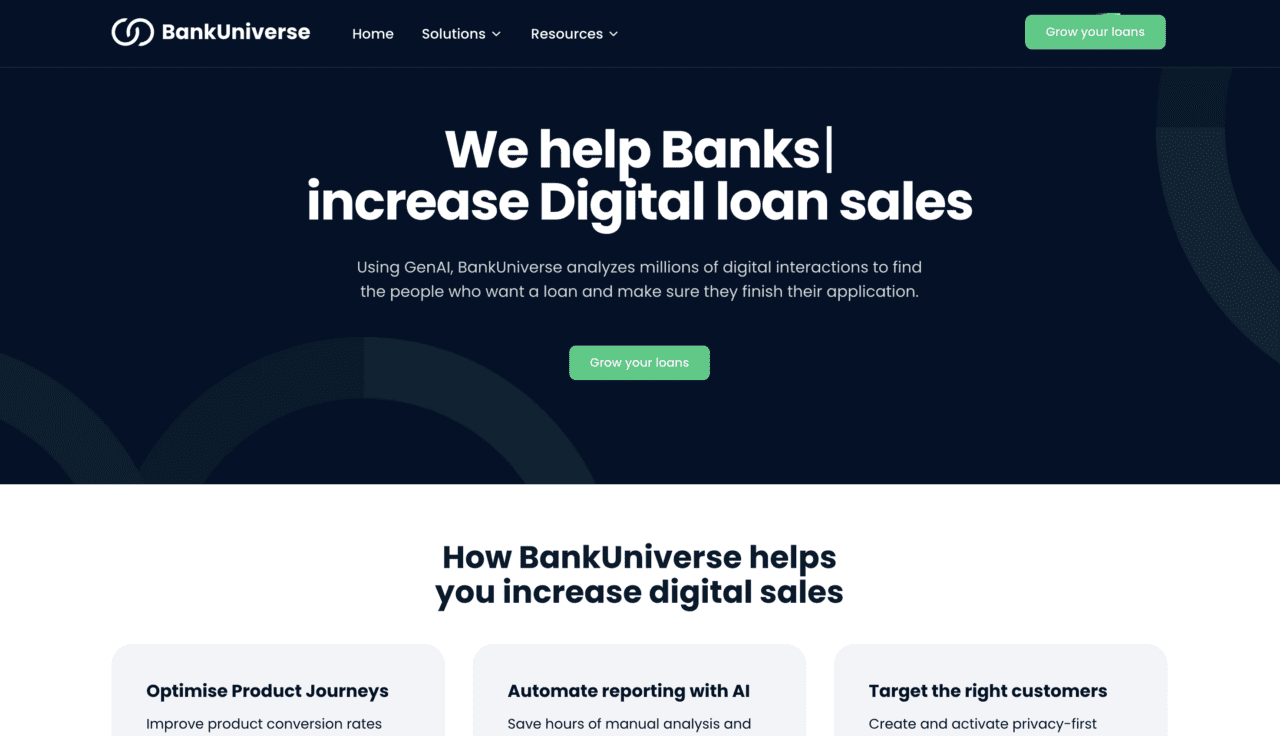
BankUniverse

BankUniverse delivers a privacy-first intent engine that helps financial institutions identify and convert high-value prospects without relying on sensitive personal data. By analyzing user intent signals rather than personal identifiers, the platform enables banks to drive digital sales while maintaining strong data privacy standards.

Founded in 2024 and headquartered in Greece, BankUniverse helps institutions increase conversion rates while navigating growing regulatory and consumer expectations around data protection.


Bluum Finance

Bluum Finance provides a unified platform for embedded investing, combining brokerage, custody, and reporting into a single API. Its infrastructure allows financial institutions and fintechs to launch fully compliant investment offerings quickly, without the complexity and cost typically associated with building these capabilities in-house.

Founded in 2025 and headquartered in Los Angeles, Bluum enhances its offering with AI-powered advisory tools that deliver personalized investment experiences. The platform is built for a wide range of providers looking to bring investing into their existing customer journeys.

Why banks should care

Financial wellness and engagement are quickly becoming primary drivers of growth instead of nice-to-have features. Banks are under pressure to increase deposits, deepen relationships, and create new revenue streams while competing with fintechs that are often more agile and user-focused. Platforms that help customers save more effectively, access new investment opportunities, or receive more personalized financial guidance can translate directly into higher balances, stronger loyalty, and increased product usage.

At the same time, these tools enable banks to expand their role in customers’ financial lives without significantly increasing operational complexity. Whether it’s embedding investing capabilities, improving digital acquisition, or unlocking overlooked sources of value in existing portfolios, financial wellness platforms offer a practical way for institutions to drive both customer outcomes and business performance.


Photo by www.kaboompics.com

Tracking the Top Fintech Trends at FinovateSpring 2026

Tracking the Top Fintech Trends at FinovateSpring 2026

FinovateSpring 2026 comes to sunny San Diego, California, from May 5 to 7. Tickets are on sale and going fast. Save your spot, book your room, and get ready for a full-court press on many of the biggest issues in fintech today: from AI and embedded finance to stablecoins and hyperpersonalization in the customer experience.

Today we highlight eight top fintech trends that will dominate the conversation at FinovateSpring this year—from main stage plenary keynotes to executive briefings and special spotlight sessions. We’re also showcasing where on the agenda you can find presentations and panel discussions on each theme.


It’s All About Agentic AI

AI is undeniably the most compelling and in-demand technology in banking and financial services today—and the innovation in AI that is attracting the most attention is agentic AI. Agentic AI systems are designed with a degree of autonomy and decision-making ability that allows them to complete an expanding range of tasks independently without requiring human intervention. In a relatively short time, this technology has evolved from pilot projects to powering e-commerce, fraud prevention, automated investment, credit risk assessment, and more.

Agentic AI sessions at FinovateSpring


Getting Serious about Stablecoins in Financial Services

With growing use cases in financial services and increasing regulatory clarity, stablecoins have become the most constructive innovation to emerge from the DeFi movement. From cross-border payments and remittances to serving as a stable medium of exchange, store of value, and hedge against volatility for cryptocurrency users, stablecoins enable banks and other financial institutions to leverage blockchain innovation while benefitting from price stability.

Stablecoin sessions at FinovateSpring


Making Embedded Finance Work for Banks

While much of the conversation about embedded finance focuses on how it empowers non-financial entities to offer financial services, it is also true that embedded finance offers banks and other financial services providers a way to scale and diversify their offerings while reaching new markets, customers, and members.

Embedded finance sessions at FinovateSpring


A Heat Check on the Open Banking Opportunity in the US

Open banking and finance are thriving in many places around the world, and while there have been gains in the US, it still lags behind peers in Europe and Australia. The absence of a regulatory mandate makes open banking in the US largely a market-driven phenomenon, but the continued debate over Section 1033 of the Dodd-Frank Act (which ensures consumers can access their financial data upon request) creates uncertainties and challenges for banks and fintechs regarding data sharing and the extent of customer control over their data.

Open banking sessions at FinovateSpring


Fighting Financial Crime: New Challenges, New Solutions

Using AI to stay ahead of AI-wielding fraudsters and financial criminals has been a key strategy for fintechs and financial institutions aiming to protect themselves and their customers. At the same time, a growing number of companies are recognizing that, beyond technological solutions, collaborating to fight common fraud threats offers significant benefits compared to firms relying solely on their own resources.

Financial crime and cybersecurity sessions at FinovateSpring


Leveraging Data, Analytics, and AI to Enhance the Customer Experience

With more data than ever before at their disposal and powerful new analytical capabilities—including AI—at hand, financial institutions are looking at ways to better serve their customers and members with increasingly personalized products and services. In many ways, the ability to meet customers where they are—at home, on the go, or in the middle of a transaction—is increasingly seen as an opportunity for financial institutions to differentiate their offerings, as well as learn from and compete more effectively against non-financial rivals.

Hyperpersonalization sessions at FinovateSpring


Third-Party Risk and Building Better Partnerships in the Post-SVB Era

How are banks and fintechs addressing partnership and third-party risk in the post-SVB era? As regulators sharpen their focus on the risks in bank-fintech partnerships—and a growing number of fintechs decide to “cut out the middleman” and become banks themselves—it remains critical that banks and fintechs understand what it takes to build constructive alliances and collaborations that benefit all stakeholders—including regulatory bodies.

Third-party risk/Bank-fintech partnership sessions at FinovateSpring


Customers Still Count on Credit Unions and Community Banks

Large national banks may have the lion’s share of customer money, but with 73% of Americans having favorable views of credit unions compared to 56% of Americans having favorable views of national banks, it is hard not to see an opportunity for smaller financial institutions to leverage that trust into bigger customer bases, memberships, and deposits. Credit unions and community banks that embrace modernization and fintech innovation will be best positioned to offer the kind of services and products that often attract customers to national brands.

Community banks and credit union sessions at FinovateSpring

Five Companies Advancing Credit Access and Lending Infrastructure

Five Companies Advancing Credit Access and Lending Infrastructure

One of the great promises of fintech innovation is the idea of democratizing finance. This includes everything from helping more deserving borrowers secure access to credit to helping a new generation of savers and investors learn good habits that will ensure financial wellness from young adulthood through retirement. As much of the fintech world becomes increasingly—and understandably—obsessed with the latest developments in AI and decentralized finance, a sizable contingent of innovators continues to solve practical problems for students, young savers, and credit-starved small businesses.

This year at FinovateSpring 2026 in San Diego, May 5 to May 7, we will introduce five fintechs that will show how their latest innovations use advanced technologies to simplify international payments for students, boost financial literacy for teens and their families, and enhance small business lending with AI-powered underwriting and alternative data.


Crebit Pay

Crebit Pay is a stablecoin-powered FX platform enabling low-cost, near-instant global payments for students, while helping credit unions onboard and serve international members.

Crebit Pay’s platform provides near-instant settlement and is 4-10% cheaper than traditional FX. It serves underserved corridors ignored by major providers, offering a stablecoin infrastructure that is fully invisible to users, fiat in and fiat out.

Founded in 2025, Crebit Pay is headquartered in San Francisco, California.


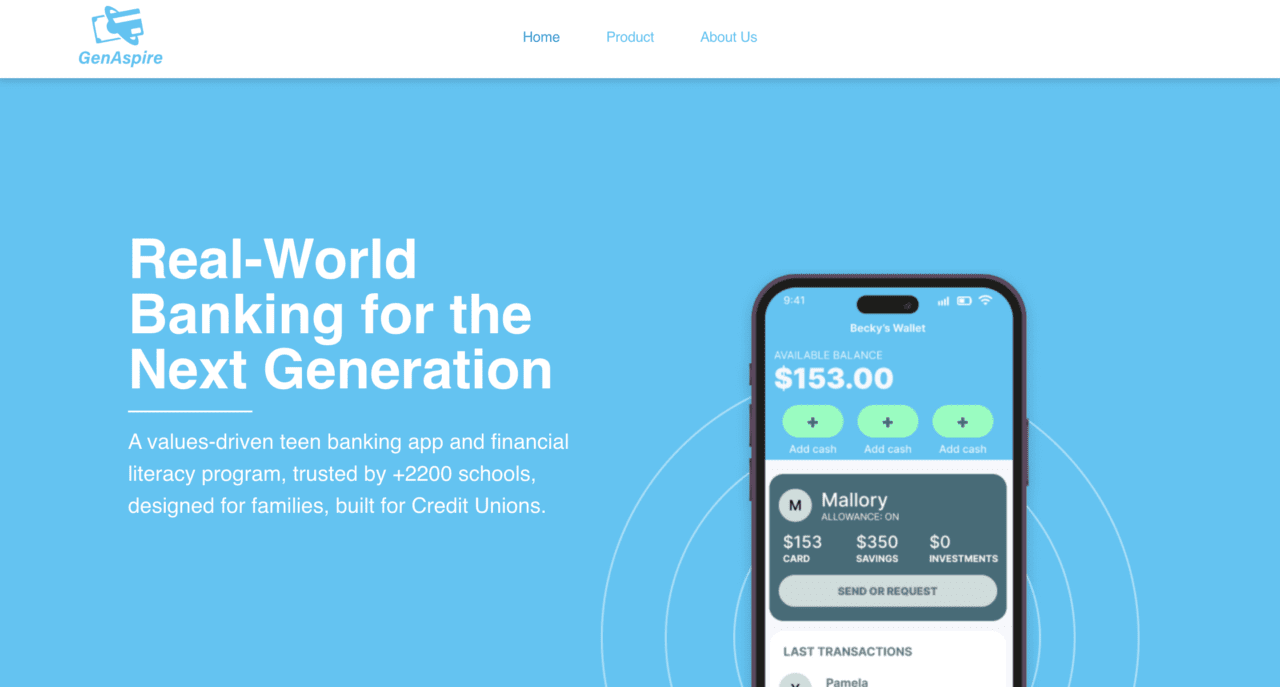
GenAspire

GenAspire offers real-world banking for the next generation. The company’s values-driven teen banking app and financial literacy program is trusted by more than 2,200 schools, designed for families, and built for community financial institutions. Designed for credit unions and community banks, GenAspire’s technology gamifies teen banking and incentives financial literacy.

Headquartered in Boynton Beach, Florida, GenAspire was founded in 2025.


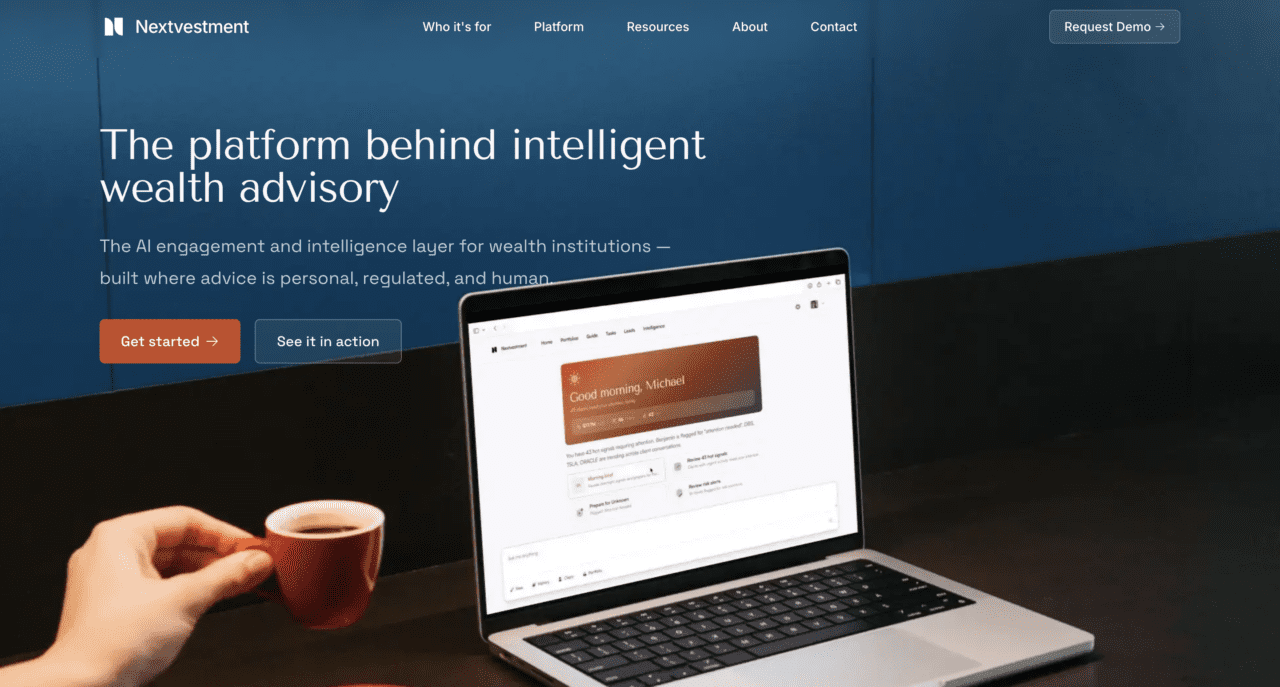
Nextvestment

Nextvestment enables safe self-service exploration while guiding advisors to intervene at the right moments, improving client engagement and advisor productivity without changing advisory models. The company’s generative AI platform, designed for financial institutions, family offices, and individual advisors, delivers real-time insights, proactive compliance, and personalized client experiences.

Founded in 2024, Nextvestment is headquartered in Singapore.


PROVIDR

PROVIDR approves more qualified SME loans faster and cheaper but without additional risk through AI-driven, alternative-data underwriting, while reducing costs, improving accuracy, and growing market share. The company’s agentic credit platform gives loan officers the resources they need to make faster lending decisions, with more accuracy and full control.

Headquartered in Boston, Massachusetts, PROVIDR was founded in 2025.


Vine Financial

Vine Financial enables lenders to scale commercial portfolios without adding staff, accelerate deal approvals, and adopt responsibly—turning underwriting from a manual bottleneck into a strategic advantage. The company’s platform lets financiers and borrowers collaborate more effectively, orchestrating the process to ensure that deals flow smoothly.

Founded in 2019, Vine Financial is headquartered in Austin, Texas.

Why banks should care

Expanding access to underserved markets, enhancing financial literacy, and improving operational efficiency and productivity are three areas where fintechs like these can help banks reach more customers, boost engagement, and generate better margins. At a time when it is becoming increasingly difficult for financial institutions to differentiate themselves from the crowd, strategies that can help them attract new customers and empower current customers to become better stewards of their own financial lives are critical.

All of these goals also represent practical opportunities to use technologies such as AI and decentralized finance. AI is making it easier for lenders to analyze both traditional and alternative data to uncover qualified borrowers that traditional underwriting strategies have tended to overlook. Decentralized finance is poised to revolutionize payments, making low-cost, near-instant payment options more broadly available, helping financial institutions better serve international customers while creating new potential revenue streams. Lastly, the ability of AI and DeFi to help eliminate inefficiencies and reduce costs is another main reason why banks and other financial institutions should look closely at the real-world applications of these still-evolving technologies.


If you are enjoying our preview of the companies demoing at FinovateSpring this year, then join us in San Diego on May 5 through May 7. Tickets are on sale now. Save your spotBook your room. And bring your sunscreen!

Photo by Andrea Piacquadio

Celebrating the Women of FinovateSpring 2026: Founders, Leaders, and Innovators

Celebrating the Women of FinovateSpring 2026: Founders, Leaders, and Innovators

Finovate’s celebration of Women’s History Month continues!

This year FinovateSpring 2026 will feature a dozen female fintech founders and co-founders in its demo company line-up. Today, as part of our commemoration of Women’s History Month, we are excited to showcase these innovators, whose solutions are helping banks, credit unions, and lenders bring new financial products and services to their customers and members.

“I’m thrilled to welcome these incredible female founders to FinovateSpring,” Finovate VP and Director of Demos Heather Stowell said. Their innovative technologies and groundbreaking ideas are a testament to the transformative power of diversity in fintech. It has been inspiring to seek out and encourage these companies to apply to demo, and I can’t wait to see their vision come to life on stage.”


Meenakshy Iyer, Co-Founder and Chief Product Officer, ContexQ

ContexQ is forensic Graph AI that detects fraud, money laundering, and hidden beneficial ownership by seeing the relationships every other AI misses. Headquartered in Singapore, ContexQ was founded in 2024.

Simmi Sen, Co-Founder, Crebit Pay

Crebit Pay is a stablecoin-powered FX platform enabling low-cost, near-instant global payments for students, while helping credit unions onboard and serve international members. Headquartered in San Francisco, California, Crebit Pay was founded in 2025.

Anna Joo Fee, Founder and CEO, Goodfin

Goodfin expands access to institutional-grade investing opportunities. Its platform opens doors to private equity, venture capital, pre-IPO deals, and alternative asset classes that are typically reserved for large institutions or ultra-high-net-worth clients. Headquartered in San Francisco, Goodfin was founded in 2022.

Kelly Waltrich, Founder and CEO, Intention.ly

Intention.ly’s Advisor Brand Builder delivers a completely differentiated brand, website, and content engine in days, helping advisors attract ideal clients and outpace competitors. Headquartered in King of Prussia, Pennsylvania, Intention.ly was founded in 2021.

Alisha Chowdhury, Founder, Kiro Money

Kiro Money helps financial institutions grow deposits and product adoption by embedding intent-aware guidance that converts user uncertainty into action inside their platforms. Headquartered in San Francisco, California, Kiro Money was founded in 2024.

Zarina Tsomaeva, Founder and CEO, Loquat

Loquat enables banks and credit unions to scale faster by digitizing onboarding, cutting review times by 80% and unlocking new deposit growth. Headquartered in Miami, Florida, Loquat was founded in 2018.

Annabelle Lin, Co-Founder and Chief Revenue Officer, Nextvestment

Nextvestment enables safe self-service exploration while guiding advisors to intervene at the right moments, improving client engagement and advisor productivity without changing advisory models. Headquartered in Singapore, Nextvestment was founded in 2024.

Lisa Pent, Founder and CEO, PentEdge

PentEdge‘s AIMS gives community banks and examiner-ready AI governance platform—purpose-built for the $500 million to $100 billion institution navigating today’s federal AI risk guidance. Headquartered in North Creek, New York, PentEdge was founded in 2025.

Kathleen Craig, Founder and CEO, Plinqit

Business HYS by Plinqit levels the playing field for banks looking for much-needed deposit growth and for SMBs looking to do more with their cash. Headquartered in Ann Arbor, Michigan, Plinqit was founded in 2015.

Riya Jagetia, Co-Founder and CEO, Socratix AI

Socratix AI helps financial institutions cut fraud losses, reduce false positives, and scale operations without adding headcount—driving efficiency, trust, and stronger customer relationships. Headquartered in San Francisco, California, Socratix AI was founded in 2025.

Ashley Parekh, Co-Founder and CEO, Syntex

Syntex is digital onboarding software for banks that verifies documents, tracks approvals, and reduces small business onboarding from weeks to days. Headquartered in San Francisco, California, Syntex was founded in 2025.

Caitlyn Truong, Co-Founder and CEO, Zengines

Zengines modernizes off mainframes without losing critical logic, satisfying auditors faster, and making legacy systems searchable so transformation and compliance don’t stall. Headquartered in Bedford, Massachusetts, Zengines was founded in 2020.


Catch these and many more innovative fintech founders and CEOs this year at FinovateSpring 2026 in San Diego, May 5 through May 7! Tickets are on sale now. Save your spot. Book your room. And bring your sunscreen!

Five Innovators Transforming Financial Decisioning with Data and Analytics

Five Innovators Transforming Financial Decisioning with Data and Analytics

How can banks, credit unions, and other financial institutions transform the massive volumes of data they process every day into actionable insights that can drive better decision-making, identify inefficiencies, and engage more customers? How will technologies like AI specifically help financial institutions challenged by competition from non-bank rivals, ever-evolving consumer expectations, and regulatory uncertainty?

This year at FinovateSpring 2026, we are showcasing five innovative fintechs that will demonstrate their solutions to help banks, credit unions, and other financial institutions boost productivity, manage risk, and create compelling experiences for their customers and members.


Bloomfire

Bloomfire transforms financial organizations by centralizing knowledge, accelerating decision-making, ensuring regulatory compliance, reducing operational costs, and driving revenue growth through improved productivity.

Founded in 2011, Bloomfire is based in Austin, Texas.


ContexQ

ContexQ is a forensic Graph AI that detects fraud, money laundering, and hidden beneficial ownership by seeing the relationships every other AI misses.

Headquartered in Singapore, ContexQ was founded in 2024. The company’s technology resolves fragmented identities across more than one billion entities in 12+ languages, predicts emerging fraud patterns using Graph Transformers, and unifies risk and revenue intelligence in one graph.


Finalytics.ai

Finalytics.ai enables financial institutions to instantly unleash the power of AI by offering segment-of-one digital experiences for visitors informed by behavioral, transactional, and third-party data.

Founded in 2021, Finalytics.ai is headquartered in San Francisco, California.


Socratix.ai

Socratix AI helps financial institutions cut fraud losses, reduce false positives, and scale operations without adding headcount—driving efficiency, trust, and stronger customer relationships.

Headquartered in San Francisco, California, Socratix AI was founded in 2025.


Whatfix

Whatfix is an AI-native digital adoption platform that helps banks and other financial institutions accelerate system adoption, enforce compliance, and achieve measurable outcomes across mission-critical workflows.

Founded in 2013 and headquartered in San Jose, California, Whatfix offers technology that provides real-time contextual guidance powered by AI-driven ScreenSense, product analytics tied to workflow adherence and business outcomes, and mirror + AI roleplay for risk-free simulation and behavioral training.

Why banks should care

Managing risk, providing compelling personal experiences for customers, and keeping costs low are three paramount challenges for banks, credit unions, and other financial institutions in 2026. Fortunately, all three are areas where technologies such as automation, machine learning, and AI have proven their effectiveness in detecting fraud, customizing user journeys, and identifying workflow inefficiencies and bottlenecks.

Meeting these challenges by embracing fintech innovation is not only a way for banks to ensure regulatory compliance, stay ahead of fraudsters, and become more efficient—it also offers opportunities for specialization and differentiation within the field. At a time when more and more companies are adding financial services to their product mix, innovations that also help banks and credit unions stick out from the crowd are as valuable as ever.


If you are enjoying our preview of the companies demoing at FinovateSpring this year, then join us in San Diego on May 5 through May 7. Register today using this link and save 20%.

Photo by Markus Winkler

Five AI Platforms Reimagining Banking Operations and Intelligence

Five AI Platforms Reimagining Banking Operations and Intelligence

In 2026, financial services have jumped well beyond the AI experimentation phase. At this point, firms are no longer considering whether or not to adopt AI, and are instead thinking about deployment strategies that will improve operations, decision-making, and internal productivity.

When organizations apply AI to their everyday processes, they can analyze data more effectively, automate workflows, glean insights, and help teams make better decisions with less manual effort. Regardless of the subsector, AI-driven platforms are becoming essential to creating modern banking infrastructure.

At FinovateSpring 2026, a fresh group of five companies will demonstrate their newest technologies that help banks turn AI from a buzzword into a practical tool for operational intelligence and efficiency.


Ventus AI

Founded in 2025, Ventus AI transforms raw banking transaction data into semantic customer intelligence to enable personalized experiences, smarter analytics, and human-centered digital banking without changing core infrastructure.

The Delaware-based company helps banks and wealth managers turn transactions into dynamic personas, proactively detect customer life events, and offer plug-in intelligence for any core banking system.


Zengines

Zengines addresses data transformation challenges to modernize mainframes without losing logic. The platform helps organizations work with legacy code to seamlessly migrate data into modern systems. The company offers two products: Data Lineage, which offers critical and easy-to-understand insights into firms’ legacy systems; and Data Migration, which empowers business analysts to drive the entire process without coding expertise.

Headquartered in Bedford, Massachusetts, Zengines’ modern approach makes legacy systems searchable, which helps firms satisfy auditors faster so transformation and compliance don’t stall.


Lyzr AI

Lyzr Architect is an enterprise AI platform that converts natural language into governed, production-ready agentic applications. Founded in 2023, the company offers a platform that enables secure, compliant deployment across banking, financial services, and insurance enterprises.

The New Jersey-based company helps convert natural language into production-grade multi-agent applications, provides deterministic validation with governance and audit logging, and offers full-stack apps, exportable code, and GPU-optimized model execution.


Saris AI

Founded in 2024 and headquartered in San Francisco, California, Saris AI is an agentic AI solution that builds and launches AI agents to automate back-office workflows. The company helps banks and credit unions scale their operations without adding headcount by automating 90% of their tasks with zero change management.

Saris AI securely integrates with core banking platforms, loan origination systems, document repositories, and communication tools to help organizations lower workflow costs.


Syntex

Syntex’s digital onboarding software helps banks and credit unions verify documents, track approvals, and reduce small-business onboarding to a matter of days.

Founded in 2025, the company offers a self-serve client intake with document verification; provides real-time tracking of documents, approvals, and ownership; and reduces onboarding from weeks to days with a Reg B audit trail.

Why banks should care

For financial institutions, the promise of AI extends well beyond simply delivering a better customer experience. In 2026, fintechs are bringing great opportunities to help firms modernize legacy operations without dramatically increasing costs or headcount.

Banks face mounting pressure to process more data, respond faster to customers, and maintain compliance in today’s increasingly complex regulatory environment. AI platforms that can surface insights from transaction data, automate internal workflows, and help teams navigate complex systems bring a practical way to improve productivity and decision-making.


FinovateSpring 2026 will take place at The Sheraton San Diego on May 5 through 7. Register today using this link and save 20%. Finovate attracts 600 bankers from across the spectrum—afrom the largest US banks to regional banks, community banks, and credit unions.

Photo by Google DeepMind

80% of Demos Locked In for FinovateSpring 2026

80% of Demos Locked In for FinovateSpring 2026

FinovateSpring 2026 takes place in sunny San Diego on May 5-7. Register to attend by March 20 and save $400.

With just two months to go, the excitement for FinovateSpring 2026 is building as our demo lineup fills up fast.

On May 5 and 6, more than 50 fintech and financial services companies will take the stage to showcase their latest innovations, giving attendees a front-row seat to the cutting edge of fintech.

Every demo is handpicked to highlight fresh, impactful technologies that solve real-world challenges and drive efficiency. This is the place to be to see where the industry is headed and discover solutions that can transform your business.

Here’s a sneak peek at what our 2026 demo lineup will help you achieve:

  • Revolutionize payments: Enable low-cost, near-instant global transactions with stablecoin-powered FX.
  • Empower financial wellness: Offer integrated Earned Wage Access solutions to retain customers.
  • Boost deposits: Add digital business savings accounts to your strategy.
  • Approve smarter loans: Use AI-driven underwriting to reduce costs and expand SME market share.
  • Gain cash visibility: Automate treasury management with real-time insights.
  • Simplify compliance: Reduce back-office work and save money with tailored, attorney-reviewed solutions.
  • and more!

And that’s just the beginning!

Stay tuned as we reveal the full lineup in the coming weeks. Whether you’re looking to solve a specific challenge or simply want to stay ahead of the curve, FinovateSpring 2026 is where innovation meets opportunity.

_________________________________________________________________________________________

Celebrate Cinco de Mayo with us!
FinovateSpring kicks off on May 5, but the festivities start early in San Diego. Explore vibrant Cinco de Mayo celebrations the weekend before and on the day itself in iconic neighborhoods like the Gaslamp Quarter and Old Town.

On May 5, we’ll bring the holiday spirit to FinovateSpring with themed lunches, special drinks, and more!

Stay tuned for more details, and get ready to enjoy San Diego while discovering the latest in fintech innovation.