This site is operated by a business or businesses owned by Informa PLC and all copyright resides with them. Informa PLC's registered office is 5 Howick Place, London SW1P 1WG. Registered in England and Wales. Number 8860726.
Finovate Blog
Tracking fintech, banking & financial services innovations since 1994
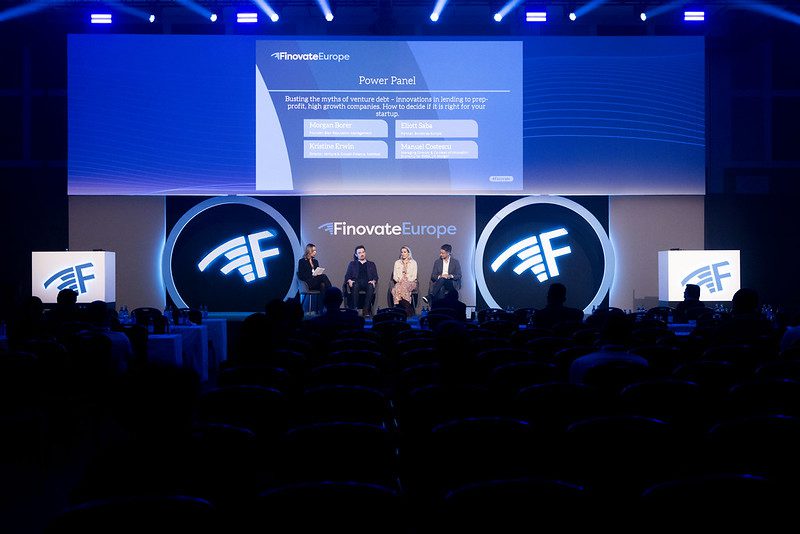
The countdown is on! FinovateEurope 2026 lands in London on February 10 through 11 at the InterContinental O2 in London, and the global fintech community is gearing up for one of the year’s most engaging events.
The two-day conference will feature more than 1,000 senior decision-makers, including bankers, investors, founders, and fintech leaders as they uncover what’s next in fintech and banking. You’ll see over 20 live demos of cutting-edge technology with 100+ expert speakers offering insights that go well beyond buzzwords.
If you already have your ticket (if you don’t, there’s still time to register), here’s how to make the most of your days on-site:
Download the ConnectMe app and create your profile to start networking, set your schedule, and view the agenda.
The invitation-only Leaders+ and Impact+ sessions begin on February 9 at 6:00 pm.
Registration and networking begins at 8:15 am on February 10 and the day concludes with the Best of Show announcement during the evening cocktail reception, which starts at 4:30 pm.
Breakfast and networking begins at 8:15 am on February 11 and the day concludes with the Investor All Stars panel, which wraps up at 4:30 pm.
Bring your badge each day. You’ll need it for entry!
Plan your travel time to the venue, especially if you’re commuting or taking public transport.
Dress code? Business casual to business formal. Be comfortable, but ready to make an impression.
Need help? Stop by the registration desk or find a Finovate team member for assistance.
Follow #FinovateEurope on LinkedIn and Twitter for live updates and key takeaways.
Whether your goal is to track early fintech trends, forge new partnerships, or benchmark your strategy against peers, FinovateEurope delivers. With elite networking, live product insights, and industry-shaping conversations all under one roof, this conference promises to kick off 2026 with fresh ideas and real momentum.
Varo raised $123.9 million in a Series G round led by Warburg Pincus and Coliseum Capital.
The bank will use the investment to scale its chartered banking and lending platform.
Alice Milligan, former chief marketing officer at Morgan Stanley, and Kevin Watters, former division chief executive officer at JPMorgan, have joined Varo’s Board of Directors.
Digital challenger bank Varolanded $123.9 million in financing this week. The Series G round, which boosts Varo’s total funding to $1.1 billion, was led by existing investor Warburg Pincus and new investor Coliseum Capital Management. Also contributing to today’s investment are existing investors such as Northview.
For new investor Coliseum Capital Management, the appeal lies in Varo’s ability to use its charter to compete with incumbent banks while expanding its product depth. “We are thrilled to join Warburg Pincus as long-term, collaborative partners, and support Varo’s work to expand its customer value proposition and to further differentiate from traditional banks,” said Coliseum Capital Management co-founder and Managing Partner Chris Shackelton. “We believe Varo is building a resilient and scalable platform from which to capitalize on a significant market share opportunity.”
Varo was founded in 2017 and secured a bank charter three years later. The fintech’s banking platform brings digital-first bank tools, from money management to lending, credit building, and savings accounts and tools. Varo offers two lending products, Varo Advance and Varo Line of Credit, which together generated $547 million in volume last year. The bank’s lending tools are powered by the company’s machine learning models that supplement traditional credit data, allowing the bank to lend to non-traditional borrowers.
As part of today’s announcement, Varo disclosed that Alice Milligan, former chief marketing officer at Morgan Stanley, and Kevin Watters, former division chief executive officer at JPMorgan, have joined its Board of Directors.
From a governance and operating perspective, Varo’s board sees the company’s combination of regulated banking discipline and modern technology as a key differentiator in a crowded challenger market. “Varo has built something rare: a technology-first customer experience paired with the governance and risk discipline required of a nationally chartered bank,” said Varo Bank Board of Directors Alice Milligan and Kevin Watters. Watters reports that Varo will use today’s funds to support the company’s next phase of growth by scaling its lending and banking platform.
“This combination of new capital, Coliseum’s partnership, and experienced banking leaders joining our board, is propelling Varo into its next phase of growth,” said Varo Bank CEO Gavin Michael. “We remain focused on operating with discipline and delivering meaningful impact for our customers.”
US-based Varo is one of the few true challenger banks that operate with their own bank charter, a structural advantage that gives it direct control over deposits, lending, customers, and unit economics. But a charter alone does not guarantee scale. Varo is still small when compared to competitors such as Chime, which operates under a sponsor banking model and has tens of millions of users. And while SoFi is Varo’s closest chartered competitor, the gap between the two is widening. SoFi recently reported record Q4 2025 results, including $1 billion in net revenue, $174 million in net income, and one million new members added in a single quarter.
As bank charters increasingly become table stakes in the challenger banking field, Varo will need to focus on scaling by differentiating its offerings and channels to reach new markets, especially as international players like Nubank, which just received regulatory approval to operate in the US, bring their customer-winning strategies to the US.
Welcome to the first week of February! Both FinovateEurope and Valentine’s Day are just around the corner, and there’s lots to love about this week’s fintech news headlines. Below, we’ve aggregated the top news in fintech for the week. We’ll continue to add more announcements as the week progresses.
Verisavelaunches credit card processing fee optimization program for professional services firms.
NCR Atleos and Heart of England Co-operative extend relationship to enhance financial inclusion.
STAR Financial Bank partners with CorServ to meet demand for enhanced commercial credit cards.
dLocalpartners with DHL Express Brazil to automate Pix payments and accelerate parcel release.
Wealth management
UK-based Novum Investment Managementsecures investment form UK local government pension fund to launch and scale Doris, a new offering to help transition people from saving to investing.
NymCardenables stablecoin settlement with Visa in the Gulf Cooperation Council (GCC) region including countries such as Saudi Arabia, the UAE, and Oman.
Credit, data, and analytics
Analytics software firm FICOforges global partnership with technology consulting and digital solutions provider Tech Mahindra to help companies integrate AI-powered decisioning and advanced analytics.
Payoneer is expanding local collection capabilities across Indonesia and in the Mexican Peso.
The investments aim to scale infrastructure and capabilities that support Payoneer’s global payments and commerce ambitions.
With nearly 2 million customers, Payoneer aims to offer further improved local access and cross-border payment efficiency through 2026.
Global payments company Payoneer made moves to help companies doing business in Indonesia and Mexico this week. The New York-based company expanded its global payment platform in Indonesia and enhanced local collection services in Mexico.
The new capabilities aim to help customers transact and receive funds from local buyers and ecommerce platforms. Payoneer anticipates its platform will facilitate the funds faster and at a lower cost, ultimately helping businesses tap into new, global markets.
In Indonesia, Payoneer will help small businesses collect funds from local businesses. The company aims to offer more control over foreign exchange management while providing increased access to a trade in the largest ecommerce market in Southeast Asia.
For global businesses looking to collect funds in the Mexican Peso, Payoneer has expanded its collection services in that currency. With the expansion, the company is aiming to reduce friction for global sellers who need to collect funds across multiple channels, supporting shifting international demand.
“Global trade is dynamic—reshaping in response to macro factors and trade policy,” said Payoneer SVP of Treasury and Payment Services Derek Green. “For over 20 years, Payoneer has supported and enabled our customers’ global ambitions. By expanding our capabilities in critical markets like Mexico and Indonesia, we continue to empower our customers as they look to expand into fast-growing markets, leveraging our ecommerce marketplace ecosystem to enable access to customer demand on Amazon Mexico, Walmart, Mercado Libre, and Shopee.”
Payoneer was founded in 2005 to help SMBs transact, do business, and grow globally. The company’s global financial stack helps remove barriers and simplify cross-border commerce to make it easier for businesses to connect to the global economy, pay, get paid, manage their funds across multiple currencies, and grow their businesses.
The new capabilities launched this week add to Payoneer’s existing local collection infrastructure across North America, Europe, Latin America, and Asia Pacific.
In today’s announcement, Payoneer disclosed that it plans to expand local collection capabilities in other high-growth markets in Latin America and Asia Pacific later this year to support its almost 2 million customers.
Nubank has received conditional approval from the US OCC to form a national bank, marking a major regulatory milestone as it begins the setup phase for entering the US market.
Unlike past challenger bank attempts, Nubank enters the US from a position of strength, with more than 127 million customers, strong engagement, and $783 million in quarterly net income.
Regulators require Nubank to fully fund the bank within 12 months and begin operations within 18 months.
Brazil-based digital bank Nubank (also known as Nu) just achieved a long-standing goal. The fintech received conditional approval from the US OCC for the formation of a de novo national bank, Nubank, N.A.
Announcing the approval, Nu Founder and CEO David Vélez framed the move as a strategic validation of the company’s long-held belief in digital-first banking. “This approval isn’t just an expansion of our operation; it’s an opportunity to prove our thesis that a digital-first, customer-centric model is the future of financial services globally,” said Vélez. “While we remain fully focused on our core markets in Brazil, Mexico, and Colombia, this step allows us to build the next generation of banking in the United States.”
The conditional approval, granted about four months after Nu initially submitted its application, places the company in the early setup stage of forming a US national bank. During this period, Nu must meet a series of requirements set by the OCC and secure additional approvals from the FDIC and the Federal Reserve. Regulators also require the company to fully fund the bank within 12 months and begin operations within 18 months.
After Nu receives full regulatory approval for a national bank charter, it will operate under a comprehensive federal framework that allows it to launch deposit accounts, credit cards, lending, and digital asset custody. Nu plans to establish strategic hubs in Miami, San Francisco, Northern Virginia, and the North Carolina Research Triangle.
Cristina Junqueira, Nu’s co-founder and CEO of its emerging US business, highlighted the regulatory milestone as a step toward establishing credibility and competitiveness in a crowded market. “Receiving federal approval for a national bank charter is a significant step in our journey to becoming a solid, compliant, and competitive regulated institution in the US,” said Junqueira. “We look forward to delivering the transparent, efficient financial experiences already trusted by more than 127 million customers around the world to our future customers in the US.”
Founded in 2013, Nu has operated in its home country of Brazil as a fully regulated financial institution since 2016 and announced that it plans to obtain its full banking license this year. The fintech also operates in Colombia and has an expansion plan in Mexico, where it is waiting on approval from the Comisión Nacional Bancaria y de Valores to organize as a banking institution.
While international expansion efforts have been slow, the company’s customer acquisition growth has not. With more than 127 million customers, Nu is known throughout fintech for its high customer engagement level, reaching an activity rate exceeding 83%. In the third quarter of last year, the fintech reached a record revenue of $4.2 billion, which represents a 39% year-over-year growth.
It’s important to note that Nu’s entrance into the US market will likely succeed where other challenger banks have failed. Monzo, N26, and Bunq have all tried and failed to secure a US license from the OCC, while Revolut still does not have a US banking license, either. The difference is that Nu is massively profitable with relatively low customer costs. The company reported $783 million in net income in the last quarter alone.
For Nu, which caters to a largely Hispanic customer base, the US is full of opportunity. There are more than 65 million Hispanics living in the US, many of whom are left out of traditional banks in the US due to high fees, limited access to credit, and legacy onboarding models that fail to reflect their financial realities. Nu’s success in Latin America has been built on designing for inclusion at scale. The fintech boasts transparent pricing, an intuitive digital experience, and unique underwriting. Bringing this successful model to the US while navigating one of the world’s most demanding regulatory environments, would be a huge win for Nu, and perhaps could serve as a model for other overseas challengers seeking to launch in the US.
Core banking platform 10x Banking has teamed up with Australian asset manager and lender Remara.
Remara will use 10x Banking’s core banking platform to bring new lending and investment solutions to market faster.
Headquartered in London, 10x Banking won Best of Show in its Finovate debut at FinovateEurope 2023.
Cloud-native core banking platform 10x Bankingannounced a partnership with Australian asset manager and alternative lender Remara. The firm will leverage 10x Banking’s core banking platform to launch new mortgage, commercial lending, term investment, and novated lease products faster.
The Sydney-based firm sought a partner that could support the unique financial products Remara offers to its clients. The company highlighted 10x Banking’s API-first and event-driven architecture, which will enable Remara to bring new products to market quickly and give the company the control it needs to differentiate its offerings. The new core banking platform will also support Remara as it scales across Australia and the Southeast Asian region. The company noted in its partnership statement that the APAC core banking market is expected to grow by more than 10% CAGR through 2032.
“Remara’s decision to select 10x reflects both the maturity of Australia’s alternative lending scene and the broader shift towards next-generation core technology in the region,” 10x Banking Founder and CEO Antony Jenkins said. “We’re committed to supporting innovative financial providers that make banking better for everyone. Our partnership with Remara is the latest proof point that cloud-native platforms deliver real differentiation and tangible value, both to businesses and end users. This is our ninth ANZ client, underlying the impact our local strategy is having for new and established players.”
Headquartered in Sydney, New South Wales, Australia, Remara is an alternative asset manager that offers specialty finance, middle-market lending, and tactical credit strategies that are not typically available to investors via banks or traditional brokers. Remara offers at-call, 6-month, and 12-month cash management funds; investment grade, high-yield, and credit income funds; as well as a real estate fund that provides exposure to small and medium scale developments. Founded in 2019, Remara has more than $3 billion AUD in assets under management.
“10x Banking’s platform puts us in the driving seat for product and delivery flexibility, letting Remara go to market faster with innovative, specialist lending solutions that really meet our customers’ needs,” Remara Managing Partner Andrew McVeigh said. “Australia’s financial services sector is modernizing fast, and being able to offer something different to the market is vital. With 10x, we can do that, building on a best-of-breed core foundation and executing on our vision for growth.”
10x Banking was founded in 2016, and won Best of Show in its Finovate debut at FinovateEurope 2023. The company’s technology enables banks to deploy next-generation core banking solutions via a cloud-native, SaaS core banking platform. This empowers firms to deliver new products, services, and customer experiences to customers—both retail and corporate—faster and with less cost. 10x Banking’s partnership announcement with Remara comes a little over a month after the company reported that it was working with Audax Financial Technology to help banks in Asia Pacific, Europe, and the Middle East scale new digital products and services and modernize their core banking systems.
As FinovateEurope returns to London on February 10 and 11, the spotlight on the second day of the conference shifts from demos to deep discussion. On February 11, FinovateEurope’s Industry Stages run in parallel with one another, giving attendees the opportunity to dive into strategic conversations shaping financial services in 2026.
This year’s event features five Industry Stages: Artificial Intelligence; Banking, Regulation & Risk; Customer Experience; Lending; and Payments. Each stage is designed to offer banking and fintech leaders more than just theory. The sessions focus on what’s working in practice, what’s breaking under the pressure of new technology and regulations, and what institutions need to rethink about their current operations.
Artificial Intelligence: from pilots to production
The AI stage will feature discussions on one of the biggest challenges facing financial institutions today: moving beyond experimentation. The sessions will explore lessons learned from early AI agent pilots, governance frameworks to combat “shadow AI”, and how banks can scale AI responsibly. Highlights include a keynote from Richard Davies, CEO of Allica Bank, who will speak about the realities of implementing AI in production. The stage will also host panels tackling ROI, data readiness, and responsible AI as a competitive necessity.
Customer Experience: personalization without losing the human touch
On the Customer Experience stage, the conversation moves past buzzwords to focus on execution. Sessions will examine how open data enables hyper-personalization, why mindset can be the biggest challenge, and how banks can retain empathy while scaling. A standout power panel brings together leaders from J.P. Morgan, Invesco, and PolyAI to explore what banks can learn from other industries as customer expectations are being reset by the evolution of enabling technologies.
Payments: instant, intelligent, and under threat
Payments are quickly evolving across the globe, especially with new regulations such as PSD3 and new capabilities and enabling technologies such as instant payments, stablecoins, and cross-border modernization. Panels will focus on how data-centricity and AI can unlock growth while strengthening security, especially as fraud losses and cyber threats keep rising.
Banking, regulation & risk: resilience in a volatile world
Regulatory pressure and operational resilience will be the center of the conversation on this stage, where discussions will span DORA, dispute management, and the risks embedded in cloud and AI adoption. These sessions are especially relevant for banks navigating complex vendor ecosystems while being asked to do more, faster, and with greater accountability.
Lending: capturing the embedded opportunity
The Lending stage will look at how banks can reclaim growth by meeting unmet needs, especially in small business and embedded lending. Panelists will explore how AI is reshaping credit decisioning, how regulation is evolving, and where incumbents can realistically compete with fintech challengers.
Together, these five Industry Stages on February 11 will offer a concentrated look at the decisions that will define banking’s next chapter. If you register for FinovateEurope before January 30, you can still save £300.
This year, FinovateEurope 2026 is bringing a new addition to our annual showcase of innovative fintech. Our invitation-only Impact+ event, held on Monday, 9 February, is a unique opportunity for investors to meet and network with fintech startups that have developed solutions for a variety of challenges currently facing banks, financial services providers, and their customers and members. As part of the program, the evening will feature a series of four-minute pitches from eight startups selected in collaboration with London & Partners, Fintech Sandbox, and other leading startup specialists.
“I’m delighted to unveil the Impact+ Founders & Funders program at FinovateEurope 2026,” Heather Stowell, Finovate VP and Director of Demos, said. “The eight startups pitching to investors as part of the February 9 session are presenting cutting-edge ideas and technologies from across fintech and finserv. It’s inspiring to see this level of innovation from such young companies and exciting to foresee the connections coming up for them with investors.”
Exclusively for investors and startups, Impact+ takes place Monday, 9 February—the evening before FinovateEurope 2026 begins in earnest. The program starts at 6pm and ends with a networking and drinks reception beginning at 7:15pm.
Anna Tsiganchuk—CEO & Co-Founder, Aleta Index
A product leader with a foundation in design, a passion for AI innovation, and a track record of building and scaling impactful solutions, Tsiganchuk is CEO and Co-Founder of Aleta Index.
Aleta Index is an AI-powered platform that analyzes alternative data sets including news and social media to expose bias and source credibility to enable business analysts and researchers to make better decisions and develop more accurate prediction models driven by machine learning. Founded in 2024, Aleta Index is headquartered in London.
Filiberto Tasca—CEO & Co-Founder, Aurea Hub
With a strong conviction that the third internet revolution of Web 3.0, decentralized finance (DeFi), and the metaverse will have a significant impact on every aspect of society, Tasca is CEO and Co-Founder of Aurea Hub.
Aurea is the EU-native B2B infrastructure for on-chain finance. The company offers a white-label, fully-compliant Wallet-as-a-Service (WaaS) platform that serves as a neutral technological bridge to empower banks, fintechs, and merchants to integrate digital assets and stablecoins into their existing applications.
Barak Katz—CEO & Founder, DotzLink
An alum of Tel Aviv University and Harvard Business School with more than a decade of Chief Executive experience, Katz is founder and CEO of DotzLink.
DotzLink is creating a financial protection platform designed to fight the growing challenge of scams and financial abuse. The company’s AI-powered technology provides real-time detection, proactive protection, and actionable insights to help seniors and families stay safe and financially secure. Founded in 2025, DotzLink is headquartered in Tel Aviv, Israel.
Máté Jendrolovics—CEO & Founder, Intuitech
With a background as a consultant with the Boston Consulting Group (BCG) and Head of Digital at Hungary’s Gránit Bank, Jendrolovics is CEO and founder of Intuitech, an Agentic AI and digital solutions provider for companies in the financial industry.
Intuitech is a 200+ member, full-stack development and AI services studio—launched in 2018—that empowers banks, insurers, consultancies, and other firms to reach their digital potential, from customer applications and automated platforms to sophisticated back-office and AI solutions. The company is based in Budapest, Hungary.
Joshua Ojo—CEO & Founder, Ndewo Finance
An innovator with a background in mathematics and a strong passion for using technology to solve business challenges, Ojo is CEO and founder of Ndewo Finance.
Ndewo Finance offers a platform for “credit invisibles”—people with significant gaps in their credit files. The company leverages alternative data sources such as home credit history and transactional data to enable underbanked and unbanked individuals to access financial and non-financial services such as rents, mortgages, student loans, credit cards, retail financing, and more. Ndewo Finance is based in Manchester, UK.
Rukayyat Kolawole—CEO & Co-Founder, PaceUP Invest
Dedicated to breaking barriers and reshaping financial empowerment, Kolawole is CEO and Co-Founder of Wealthtech PaceUp Invest.
PaceUp Invest is a B2B and B2C hyperpersonalized wealth technology platform that leverages AI, behavioral science, inclusive cultural context, and human expertise to drive financial wellness. The platform offers multilingual guidance and integrates seamlessly with banks, corporations, insurers, and digital financial apps. Headquartered in Mannheim, Germany, PaceUp Invest was founded in 2020.
Savannah Price—Founder & CEO, Serene
A FinTech London Rising Star for 2025, Price is Founder and CEO of Serene, the infrastructure for financial care that empowers banks, lenders, and fintechs to provide customers with better financial outcomes.
Serene combines behavioral insights, predictive intelligence, and financial data to detect early indications of vulnerability, fraud, or potential distress. This enables financial institutions to do more than just identify risk, but also to understand, predict, and prevent it. Headquartered in London, UK, Serene was founded in 2023.
Mariana Barona—CEO & Co-Founder, Synthera AI
With a background as an analyst at Goldman Sachs and an education from the University of Cambridge, Barona is CEO and Co-Founder of Synthera AI.
Headquartered in London, Synthera AI generates synthetic yield curves, equities, FX prices, and other financial instruments to enable professional investors to test their portfolios on realistic but unseen market scenarios using generative AI. The company’s synthetic data redefines portfolio analysis with AI-driven dynamic scenario testing, predictive analytics, and deep portfolio insights.
A look at the companies demoing at FinovateEurope in London on February 10. Register today using this link and save 20%.
FINTRAC
TRAC by FINTRAC is the governance layer for regulated analytics – making calculations auditable, repeatable, and self-documenting by default.
Features
Includes a governed execution layer compatible with modern analytics architectures
Embeds auditability, repeatability, and documentation directly into execution
Eliminates manual processes and controls
Who’s it for?
Any financial institution that has to execute models and calculations in a highly governed fashion to meet regulatory or internal governance requirements.
Maisa
Maisa allows business users to deploy Digital Workers that automate complex banking operations with full explainability and traceability.
Features
Production-ready in 6 weeks, integrates with systems
Natural language onboarding and deterministic execution
Every output includes a complete audit trail, auto-QAs without human in the loop
Who’s it for?
Global and regional banks, wealth management firms, insurance companies, and financial services providers with complex operational processes requiring regulatory compliance.
MyPocketSkill
MyPocketSkill is an AI-infused platform helping Gen Z earn, save, and learn about money. Supported by PocketAI, their award winning platform helps 13 – 25 year olds become more financially capable.
Features
Adaptive
Personalized
Impactful
Who’s it for?
Financial institutions looking to appeal to Gen Z customers.
Syntex
Syntex is a digital onboarding portal for account opening and lending that pre-qualifies clients, shortens onboarding to less than two days, supports Reg B compliance, and increases deposits by 40%.
Features
Client self-serve intake reduces onboarding from 30–45 days to 2–3 days
Delivers a 40% increase in conversion rates and deposits
Provides Reg B tracking of application completeness and decision timelines
AML compliance platform Dotfile has teamed up with stablecoin issuance platform Bastion to provide onboarding and risk management for stablecoin programs.
The partnership will deliver comprehensive verification, AI-powered compliance screening, and the ability to adapt to local jurisdictions and multiple regulatory regimes.
Headquartered in Paris, France and founded in 2021, Dotfile made its Finovate debut at FinovateEurope 2024 in London.
AI-powered AML compliance platform Dotfile has forged a partnership with Bastion to provide onboarding and risk management for enterprise-grade stablecoin programs. Bastion, which powers secure and compliant stablecoin issuance, wallets, on/off ramps, cards, and yield products for financial institutions, will benefit from a comprehensive verification platform with AI-powered compliance and the ability to adapt to multiple regulatory contexts.
“Bastion’s enterprise focus demands flexible, auditable onboarding that scales,” Dotfile Founder and CEO, Vasco Alexandre, said. “Together, we’re enabling a compliant path from treasury to consumer rollouts.”
As stablecoins are maturing into enterprise-grade financial instruments, a greater range of companies and brands are exploring ways to use their own branded stablecoins for operations such as treasury management and consumer payments. In order for them to do so safely and compliantly, these firms will need modern KYC capabilities to ensure an engaging user experience as well as meet regulatory requirements. The partnership between Dotfile and Bastion will deliver an all-in-one solution for the safe and secure onboarding of institutions (KYB) as well as individuals (KYC). The platform leverages AI to automate sanctions and PEP screening, document verifications, and risk assessments. It also ensures compliance with local regulatory requirements with bank-level due diligence across jurisdictions.
“Bastion has been hyper-focused on compliance and ensuring we operate under the highest level of regulation as we work to bring stablecoin implementation to life for some of the world’s largest enterprises,” Bastion Chief Risk & Compliance Officer Rohan Kohli said. “Partners like Dotfile help us meet those standards in a scalable and efficient way.”
Bastion builds regulated stablecoin infrastructure for modern money movement. Businesses around the world leverage Bastion’s technology to issue, orchestrate, convert, transfer, and scale white-label stablecoins. Founded in 2023, Bastion recently announced a partnership with Sony Bank to power the Japanese financial institution’s stablecoin program infrastructure. Nassim Eddequiouaq is Bastion’s co-founder and CEO.
Headquartered in Paris, France, Dotfile was founded in 2021. The company made its Finovate debut at FinovateEurope 2024, demonstrating how its platform enables businesses to streamline verification and onboarding, automatically evaluate risk profiles, and manage risk in real-time. Dotfile’s technology increases productivity, reduces operational costs, and accelerates customer onboarding processes.
One of the biggest challenges for financial institutions, large and small, is core modernization and digital transformation. Whether to facilitate automation to streamline workflows or to deploy new products and services faster, modernization and transformation are key to ensuring that banks and financial institutions can grow revenues, expand into new markets, and meet regulatory obligations with regard to security and privacy for customers.
At FinovateEurope 2026 next month, five fintechs will demonstrate how their innovations are helping banks and financial institutions transform their systems and operations to boost productivity and lower costs. From AI-driven automation that delivers seamless deployment of new solutions to AI-powered learning technologies that keep employee skills up to date, these companies are leveraging enabling technologies to make banks better.
FinovateEurope 2026 will take place at London’s InterContinental O2 on February 10 and 11. Tickets are available now. Visit our FinovateEurope hub today and take advantage of big early-bird savings!
R34DY empowers banks and other financial institutions with AI-driven automation for seamless integration and rapid deployment of solutions. The company’s ABLEMENTS solution enables rapid AI transformation, allowing banks to deliver new offerings faster, lower IT costs, and achieve competitive differentiation via context-aware modernization. Headquartered in Budapest, Hungary, R34DY was founded in 2019.
Tweezr helps businesses grow and transform by accelerating time-to-market (TTM) and boosting developer productivity for both legacy-system maintenance and modernization. The company’s technology serves as an AI-powered surgical code assistant that identifies exactly where changes are needed across tens of millions of lines of code without breaking critical functionality. Founded in 2024, Tweezr is headquartered in Tel Aviv, Israel.
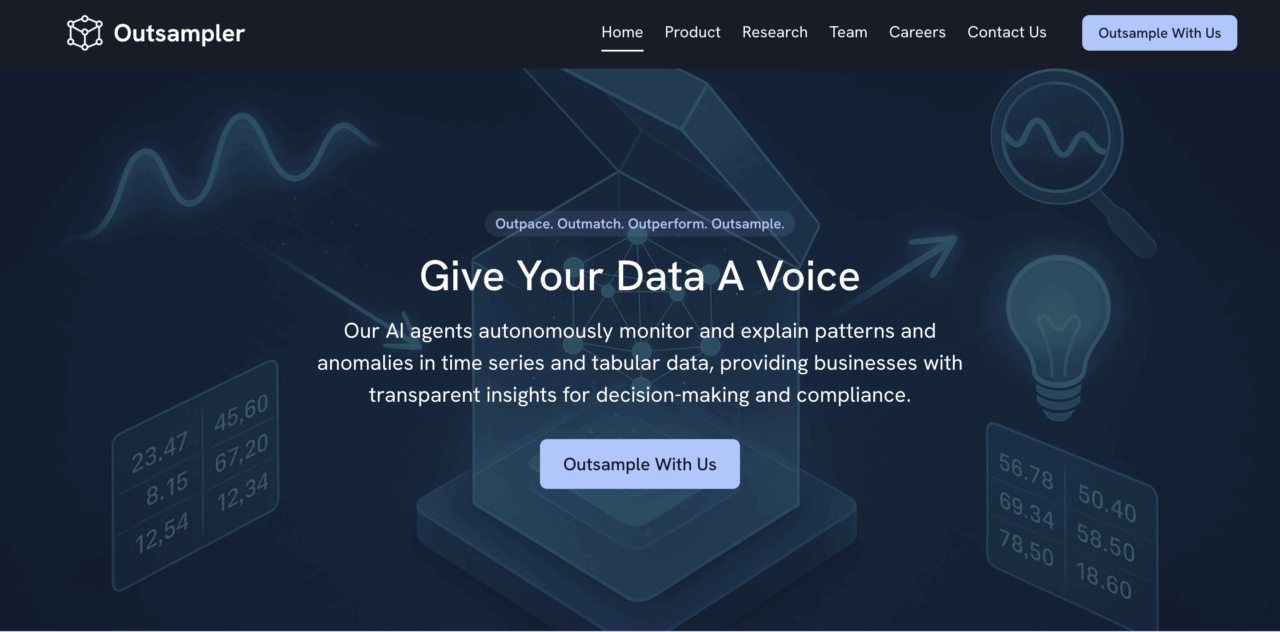
Outsampler helps asset managers better interact with their data and models. With its AI conversational agents that turn complex time-series and tabular data into natural language dialogue, Outsampler’s technology boosts research productivity by 40%, enabling portfolio managers to focus on high-value client engagement. Headquartered in Berkeley, California, the company was founded in 2025.
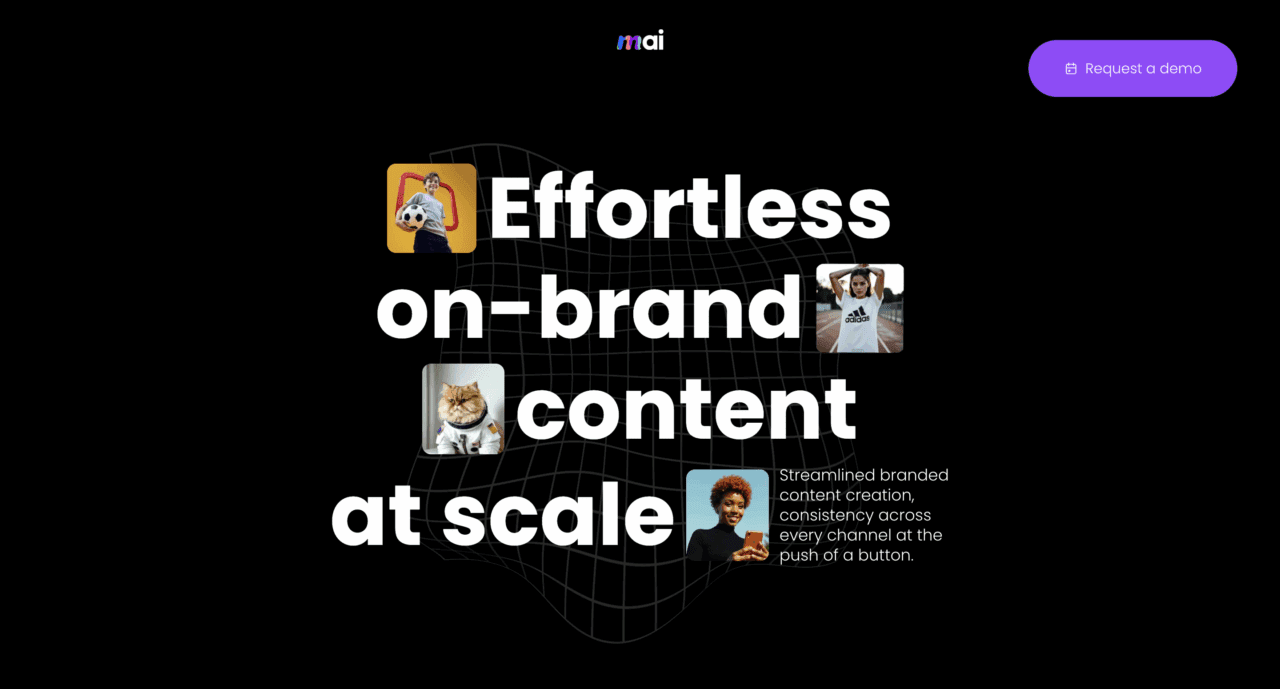
mAI Edge transforms the challenges of external creative production into internal marketing infrastructure. The company’s BrandOS is a brand operating system for banks and financial services companies that enables them to create streamlined branded content at scale with consistency across every channel. mAI Edge was founded in 2025.
Skill Studio AI offers AI-driven training that accelerates compliance readiness from weeks to minutes, reduces trading costs by 95%, and scales internationally with support for 180 languages. The company’s technology transforms training documents into engaging, AI-powered learning experiences that boost learner engagement and help keep workforce skills up to date. Headquartered in Dublin, Ireland, Skill Studio AI was founded in 2025.
Why Banks Should Care
For banks and financial institutions that are still on the path toward modernization and digital transformation, the rise of technologies such as AI offers a major opportunity to streamline operations, reduce costs, and offer a much wider range of products and services. Partnering with innovative companies that specialize in working with banks and financial services companies will enable FIs to integrate new technologies at their own pace and for the preferred use cases that matter most to themselves and their customers.
At the same time, the solutions offered by these fintechs remind us that transformation is not just about legacy cores and systems. True modernization in financial services also involves using enabling technologies to make it easier for front- and back-office workforces, including developers and technical talent, to meet increasingly complex responsibilities. From ever-changing regulations to ever-evolving customer expectations, these fintechs are putting new technologies to work in support of people as well as processes.
ThetaRay has launched Ray, an Agentic AI investigation suite designed to help banks automate and standardize transaction monitoring investigations amid rising alert volumes and regulatory scrutiny.
The platform targets growing regulatory demands from frameworks such as the EU’s AMLR and FinCEN’s AML/CFT directives by delivering faster, more consistent, and audit-ready investigations with traceable, explainable AI.
Ray helps firms create compliance-critical workflows and scale AML operations without relying on manual processes or increasing headcount.
Financial crime detection company ThetaRay has launched a new set of tools to help firms keep up with evolving regulations in the face of advanced fraud. Called Ray, the new Agentic AI investigation suite aims to help banks conduct transaction monitoring investigations.
Ray is embedded into ThetaRay’s Investigation Center, an Agentic investigation suite designed for banks, fintechs, and payments platforms balancing high alert volumes with rising regulatory demands. Ray combines autonomous investigations with on-demand analyst support. The fintech anticipates Ray will ultimately help banks reduce the time it takes to resolve cases and create more consistency in investigations that span internal teams and jurisdictions. ThetaRay created Ray toautonomously handle the full investigation by validating the geolocation, analyzing patterns, and scanning adverse media to prepare a structured, audit-ready case-file document.
The launch is strategic and comes at a time when regulators across the globe are raising their expectations for investigative quality and documentation. The EU’s new Anti-Money Laundering Regulation (AMLR) and AML Authority framework require stronger due diligence, more rigorous monitoring and record-keeping, and consistent compliance controls across jurisdictions. In the US, FinCEN’s AML and Counter Financing of Terrorism (CFT) directives require transparent, evidence-based investigations and Suspicious Activity Report (SAR) narratives.
“This is an incredibly important moment for us and for the industry,” said ThetaRay CEO Brad Levy. “I couldn’t be more energized by the opportunity to tackle one of the biggest challenges in financial crime compliance. Our mission is simple: to help make global markets more modern and secure for all. The future will be shaped by people who care and by megatechs and specialized fintechs working closely together to raise the bar for transparency, accountability, and lasting trust.”
However, as regulators require higher investigative quality, documentation, and more defensible decisions, alert volumes continue to rise and place a strain on investigation teams, requiring manual data gathering.
“Financial institutions are moving beyond experimentation toward real, production-grade use of Agentic AI in compliance-critical environments,” saidMicrosoft Global Head of AI Strategy and GTM for Payments and Banking Tyler Pichach. “Platforms like Ray demonstrate how Agentic AI, when deployed on a secure and governed cloud like Microsoft Azure, can help banks modernize complex investigation workflows while meeting regulatory expectations for transparency, control, and trust.”
With Ray, firms can prepare for this increased strain by using it to automate evidence collection, behavioral and counterparty analysis, open-source checks, and document review and narrative generation. Built and deployed on Microsoft Azure, Ray offers an on-demand AI assistant that supports questions from analysts and deeper exploration.
“Manual investigations inevitably vary from analyst to analyst. Ray introduces a consistent reasoning framework across the entire operation, reducing subjectivity, and ensuring that each case, no matter who handles it, stands up to scrutiny,” said ThetaRay Regulatory Affairs Manager David Shapiro. “Most importantly, Ray was built so that every decision is traceable back to evidence. In a regulatory environment that demands transparency, AI explainability is the foundation.”
As regulators require more defensible, consistent, and transparent investigations, financial institutions are under pressure to modernize workflows that rely on manual analysis and fragmented tools. By embedding Agentic AI directly into the investigation process, ThetaRay is positioning Ray amid the next generation of AML operations in which regulators require speed, consistency, and explainability.
Founded in 2013, ThetaRay offers transaction monitoring, transaction and customer screening, and customer risk assessment suites to help firms fight financial crime. The Israel-based company helps its 100+ institutional clients leverage AI to monitor 15 billion transactions valued at $20 trillion on an annual basis.