The Pitfalls of the 95% Confidence Paradigm for Banking Data Quality

The Pitfalls of the 95% Confidence Paradigm for Banking Data Quality

The following is a sponsored post from Ted O’Connor, SVP and Head of Business Development—Sell Side, with global fintech company Arcesium.

Arcesium delivers an advanced data, operations, and analytics platform used by some of the world’s most sophisticated financial institutions, including hedge funds, banks, institutional asset managers, and private equity firms.


Every bank is in a different stage of its data journey. Recently, while attending the InvestOps Europe conference in Paris, one of the presenters mentioned that when it comes to gauging the level of confidence banking leadership has in the integrity of its data, 95% confidence in their data is the barometer to which they need to adhere. Ninety-five percent has always been a desirable grade to get on a paper or in a class, but is it good enough when talking about a multinational bank operating in dozens of jurisdictions?

Like the air we breathe, data is odorless, colorless, silent, and hard to measure. That is, until data is presented next to dollar signs on a disclosure report, balance sheet, or interminable spreadsheet; then it becomes real. The past few years have seen financial institutions grappling with suddenly ballooning volumes of financial data, not an easy ask for legacy data systems and banks that might run on scores of different systems.

The 95% confidence fallacy

While a 95% confidence interval[i] in data is the target, banks really have only 80-90% confidence in their data today. In a 2024 study of sell-side reference data operations, over 90% reported that poor data quality caused issues in clearing and settlement, risk management, and regulatory reporting, with 80% citing challenges in automated trading and market connectivity emanating from inaccurate data.[ii] Moreover, that 80-90% is a bit of an illusion. Here’s the reality. Say, I am a bank CTO or chief data scientist, and I have 80% confidence in the data that is coming to me via any type of transaction. I then push that data into the clearing or matching process. Then, I push it into the settlement process—and there’s cash movement that goes along with this. That data keeps getting pushed from one process to the next, to the next, and the next, which means there’s a little bit of degeneration that happens all the way through. By the time I get to the end of my processes, I have 50% confidence in my data, and that little anomaly from the first process becomes a serious data problem 10 steps later. However, this is an inscrutable problem to recognize, much less solve. It depends on the robustness of the institution’s existing data and operational infrastructure, the stage of its data transformation journey, and the asset classes and structures involved.

Meanwhile, the risk of getting it wrong is high. On the undesirable end of the 95% spectrum, Citi shelled out about a billion dollars in fines in the last five years for irregularities in its regulatory reporting data and governance failures, and responded by spending millions modernizing its technology.[iii] Deutsche Bank, Wells Fargo, and Mitsubishi Bank are examples of institutions that have worked through confidential supervisory findings called Matters Requiring Attention (MRAs) and Matters Requiring Immediate Attention (MRIAs). Many of these have been rooted in data processes. In this context, even 95% (and even if it were a true 95%) isn’t enough for global banks—UBS, for instance, has a balance sheet larger than the Swiss economy. A Swiss bailout of such a bank is challenging. The risk needs to be near-zero, which means confidence needs to be near-perfect.

Is AI the key?

AI has lit a fire in the bellies of buy-side and sell-side institutions alike, as they know their data house must be in order for the AI house to be in order. According to Deloitte, “Banks’ AI readiness is often slowed by the data foundations that models depend on. Poor infrastructure can result in data sprawl, vulnerability, and limited data-led innovation, limiting model efficacy.”[iv] But once a bank has their AI game in place, it can play a pivotal role in bringing order to the data chaos. There are several data quality management functions that AI agents are already helping with. For example, one financial institution recently leveraged generative AI to automate data lineage capture and metadata generation, achieving 40% to 70% productivity gains in specific tasks.[v]

AI presents ready-assistance for unstructured data, in particular. If managing structured data is like sorting pre-labeled packages, managing unstructured data with AI is like instantly reading thousands of handwritten letters, identifying key facts in each one, and organizing those facts into a searchable spreadsheet—a task impossible for humans at scale. But, again, the art of the possible when it comes to AI will come back to data quality; it will require institutions to centralize their data management capabilities, with an emphasis on tools that support strong data lineage and reporting accuracy.

The 100% data confidence paradigm

Having a 95% data confidence barometer presents several pitfalls when executing tech transformations. Regulatory considerations, data governance challenges (especially with unstructured data), surging market volumes, private credit, and the adoption of AI in the financial services industry are forces that cannot be ignored. Realistically, banking leaders need to keep their eyes on the 100% prize for quality data management.[vi] Everybody under the roof will do a better job if they trust that the information they do their jobs with is reliable, timely, and precise.


[i] Investopedia, May 6, 2025. https://www.investopedia.com/terms/c/confidenceinterval.asp#toc-explain-like-im-five

[ii] Acuity Knowledge Partners, November 2024. https://assets.ctfassets.net/cy2jgjrgaerj/5V6yrRfzYZU1LXqUgvulAD/ed8d59627717a3fafe96f36123d36e8e/increasing-efficiency-in-sell-side-reference-data-management-fow.pdf

[iii] Banking Dive, July 11, 2024. https://www.bankingdive.com/news/citi-occ-fed-135-million-penalties-2020-orders-data-quality-risk-management-control-fraser-hsu/721061/

[iv] Deloitte, October 30, 2025. https://www.deloitte.com/us/en/insights/industry/financial-services/financial-services-industry-outlooks/banking-industry-outlook.html

[v] BCG, May 6, 2025. https://www.bcg.com/publications/2025/tech-banking-transformation-starts-with-smarter-tech-investment

[vi] Arcesium, February 2, 2026. https://www.arcesium.com/resources/driving-trusted-data-framework-for-banks?utm_source=one-off&utm_medium=display&utm_campaign=MC-2026-Q1_SS-Data-Quality-To-Do-List&utm_content=finovate-sponsored-article

Successfully Implementing AI in Banking: Insights from Allica Bank CEO Richard Davies

Successfully Implementing AI in Banking: Insights from Allica Bank CEO Richard Davies

This article is brought to you in collaboration with Gregory.

AI is rapidly reshaping the competitive landscape in banking, and for many institutions, the real challenge lies not in experimentation, but in implementation. Richard Davies, CEO of Allica Bank, has been focused on exactly that: how to successfully deploy AI across an organization and drive meaningful adoption at scale.

Founded in 2020, Allica is a digital bank focused on established small and medium-sized businesses. To date, it has lent over £3 billion and been twice named by Deloitte as the UK’s fastest growing technology company. In 2025 the Financial Times identified it as the second fastest growing company in Europe.

Richard delivered a fascinating keynote address at FinovateEurope, titled: “Successfully Implementing AI & Scaling Adoption: What Are the Challenges Around Rolling Out to Production?”. Afterwards, we sat down with him to talk about what it really takes to embed AI into a bank’s operating model.

Tell us a little more about your role as CEO of Allica Bank and what you’re focused on at the moment?

Richard Davies: Allica is a fintech bank focused on established small and medium-sized businesses. We typically define that as businesses with five or more employees or at least £500,000 in revenue. So we’re not talking about the very smallest microbusinesses, but those that are at a point where things start to get more complex and there are multiple staff to support.

We find these businesses fall into a gap between the corporate banking divisions and retail banking divisions of the major banks. That’s the space we focus on.

We have been building Allica for five or six years now and provide a full stack of services, including current accounts, cards and all types of lending. Increasingly, we are moving into financial operations areas such as spend management and cash flow forecasting. Alongside that, we have been thinking hard about how we can apply AI to power many elements of what we do across the organisation.

In your keynote, you spoke about successfully implementing AI and scaling adoption. What do you see as the biggest challenges for banks when it comes to rolling AI out in practice?

Davies: I would group it into three main areas:

First, ensuring that AI adoption happens across the whole company, rather than sitting in an innovation lab or small specialist team. A big focus for us has been getting people bought in, upskilled and confident, and encouraging teams to create their own simple, agentic use cases. I am a big believer that bottom-up adoption tends to win over purely top-down mandates.

Second is software engineering and product development. Around a third of our staff are in engineering, and that is probably the area that has seen the greatest progress in AI tooling. We have focused on helping people move towards more T shaped or full stack roles, and ensuring our tech stack is AI enabled to unlock significant productivity gains. Depending on what you measure, we are seeing productivity improvements of two to ten times.

Finally, there are more complex agentic use cases. We have specialized teams working on these, and we have been learning a lot over the past two years about what it takes to get them live in production. It’s exciting because beyond engineering, you start solving real world problems that consume a lot of human time and can be inconsistent when done manually.

A lot of banks are investing in AI at the moment. How should they decide where it makes the most sense to focus first?

Davies: My view is that you should not overly narrow your focus. If you pick two areas, you are neglecting ten others, and those areas will fall behind.

Perhaps I have the luxury of leading a fintech organization that is naturally inclined towards this, but I think AI needs to be embraced across the company. Where you do need focus is on infrastructure, including data quality, enabling access to different AI models and ensuring that is done company wide.

If I had to pick one area with immediate and certain benefit, it would be engineering. The productivity unlock in software development is huge. If teams are still working in traditional ways, they need to move quickly, not just for the company’s benefit, but for their own careers. The industry is shifting rapidly, and people need the skills and experience to keep up.

Beyond the technology itself, what changes do banks need to make internally for AI to really become part of how they operate?

Davies: Culture is a big part of it. People need to lean into it. You need the infrastructure in place, as well as training and upskilling so people feel confident using AI.

At the same time, organizations need to remain risk aware. Different AI use cases carry different risks, and teams need to understand those.

In many ways, it’s similar to previous organizational transformations, such as moving from traditional waterfall practices to agile. The enablers are not conceptually different, but it does require deliberate leadership and a clear view of how you enable the organization to change.

From what you’ve seen at FinovateEurope so far, what themes or conversations around AI in banking have stood out to you the most?

Davies: Some of the most interesting conversations have been happening off stage. Recently, we have seen software company valuations come under pressure following major AI model releases, with the view that people can now build their own software more easily.

At the same time, traditional banks have re-rated quite significantly over the past year. In the UK, share prices are up roughly 80 percent. It creates an interesting dynamic.

Fintech has at times in the past been viewed by investors as a poor relation to software, but in reality, building a fintech is much harder than building a pure software company. You have complex regulatory requirements and balance sheet considerations that software firms do not.

It feels like there may be a shift happening in the relative valuation of where companies with real assets versus asset light software companies. For many fintechs, particularly those with strong fundamentals, that could ultimately be a net positive.


Photo by Google DeepMind

From Process Automation to Industry Reimagination

From Process Automation to Industry Reimagination
This is a sponsored blog post from Capgemini, a financial services consulting and technology firm.

Unlock large-scale growth with cloud-powered AI agents

  • Cloud and AI agents boost efficiency and personalization, but adoption remains nascent.
  • Cloud-powered AI agents unlock value by automating tasks and enabling real-time, personalized CX.
  • To maximize impact, financial institutions must redesign processes and align cloud-AI strategies with compliance.

AI is rapidly becoming a cornerstone of almost every industry. Today, it’s everywhere – discussed, adopted, and integrated across sectors. Now, we’re entering the era of agentic AI. Here’s what it means for financial services. 

According to Capgemini’s latest World Cloud Report – Financial Services 2026, 87% of financial institutions have implemented some form of AI, but only 10% are using AI agents at scale. This gap represents a major opportunity for banks, insurers, and market operators to move beyond basic automation and embrace the AI-driven revolution. 

Meanwhile, cloud platforms have evolved from simple infrastructure providers into powerful innovation engines. Today, they enable AI-driven transformation across the entire value chain, delivering speed, resilience, and compliance in a highly regulated environment. Together, cloud and AI promise faster time-to-market, hyper-personalized experiences, and greater operational agility. However, according to the report, success requires more than technology. It demands a cultural change, robust governance, and a clear roadmap.   

Adapt: Embracing AI evolution and cloud’s changing role 

AI has traveled an impressive path, from early machine learning models to generative AI and now agentic AI. These intelligent agents go beyond responding to prompts, and now autonomously manage workflows, make decisions, and learn continuously. For financial services, this means moving past traditional tools like robotic process automation toward systems that can handle complex tasks like underwriting, fraud detection, and customer onboarding with minimal human intervention. 

According to the report, 75% of banks and 70% of insurers already deploy AI agents for customer service. Other top use cases include fraud detection, loan processing, and claims handling. Yet, despite these advances, only one tenth of firms have scaled AI agents’ enterprise-wide, signaling untapped potential. 

Cloud is the enabler of this evolution. Hybrid and multi-cloud strategies are gaining traction, with 26% of financial institutions migrating more than half of their workloads to hybrid environments. The reasons include scalability (87% of respondents), legacy modernization (86% of respondents), and compliance (32% of respondents).

Forge: Creating business value with cloud-powered AI agents 

By utilizing the scalability and flexibility of cloud platforms, firms can gain efficiency, optimize operations, innovative topline growth and deliver superior CX.

These agents automate manual tasks such as underwriting and credit scoring, reducing errors and accelerating turnaround times. With orchestration capabilities and unified large language model layers, they enable seamless coordination across workflows and drive real-time decision-making. 

Building on these efficiency gains, AI agents also help institutions evolve toward autonomous operating models. Tasks once dependent on human oversight, like risk scoring and policy servicing, are increasingly performed by AI, freeing employees to focus on more strategic initiatives. This shift is supported by smaller, task-specific models that improve speed, explainability, and compliance while reducing compute costs. 

Customer experience is another key dimension. Intelligent agents deliver hyper-personalized interactions, proactive query resolution, and faster service, helping banks and insurers boost acquisition, engagement, and retention.  

Orchestrate: Building a cloud-native, AI-centric future 

The orchestration phase is where strategy meets execution. Financial institutions are mapping business processes to identify where cloud-based AI agents can deliver the greatest optimization. Capgemini’s latest report divides these into 4 categories:  

  • Quick wins – high-value and easy to adopt 
  • Open for evaluation – strategic but more complex 
  • Need for education – simple to adopt but offer limited value  
  • Investigate – low in both priority and ease of adoption.  

Quick wins like credit underwriting and CRM-integrated sales stand out as ideal starting points for rapid returns. 

Orchestration goes far beyond technology deployment. It demands strong governance and compliance frameworks. With 96% of executives citing regulatory complexity as a major barrier, institutions must embed explainability, fairness, and accountability into AI systems from the start.

At the same time, numerous behavioral challenges still remain. In fact, 92% of leaders report skill gaps and cultural resistance. Overcoming these requires enterprise-wide AI literacy programs, clear communication of benefits, and collaborative development models.

Closing thoughts 

AI agents are poised to redefine financial services, unlocking speed and innovation. Firms should start with a clear buy-or-build strategy that weighs solutions, internal capabilities, compliance, scalability, and privacy, supported by resilient cloud infrastructure. 

Leaders must drive an AI-first culture by securing stakeholder buy-in, prioritizing high-value use cases, and enforcing safeguards like human oversight and transparency. Training teams and democratizing access to tools accelerates adoption and creativity. 

Embedding these initiatives into digital transformation and cloud strategies enables specialized agents, autonomous operations, and multi-agent collaboration. Combined with a solid cloud strategy to cut costs and remove geographic limits, this approach positions financial institutions to lead the next era of agility, personalization, and growth, where those who act boldly will set the pace for the industry. 

Download the report today.

Implementing AI in Your Organization: Three Key Steps in Your Journey

Implementing AI in Your Organization: Three Key Steps in Your Journey

This article is sponsored by VASS Intelygenz.

Successfully integrating AI into core business services isn’t a straightforward approach—this requires strategic foresight into AI and how it best aligns with business, regulatory compliance, and operational efficiency.

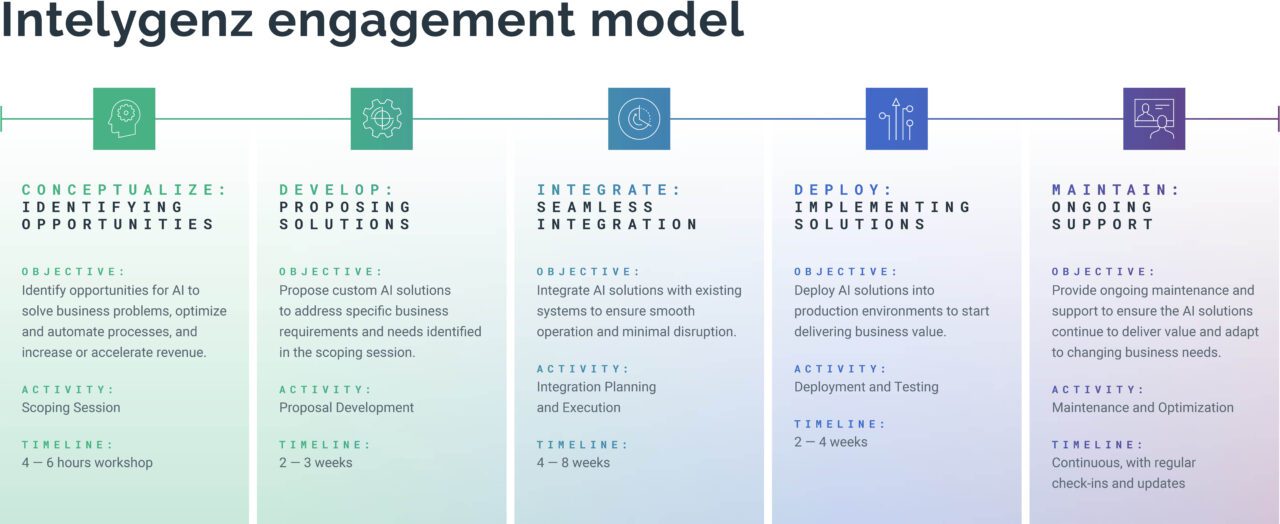
Putting this into action and delivering AI solutions can drive real impact, especially for those in the financial industry. At VASS Intelygenz, we personalize services for our customers, automate their manual operations, and improve efficiencies. We work through the whole AI project lifecycle, conceptualizing, developing, deploying, and maintaining custom AI solutions that solve real business problems. All of which are reshaping how financial institutions operate by enhancing their client interactions and uncovering new market opportunities.

However, AI is not as simple as flipping a switch. According to a Gartner research, only 15% of AI solutions deployed by 2022 will be successful, let alone create ROI positive value. The path from implementation to achieving measurable ROI can feel complex and daunting. Identifying the right solutions, navigating the complexities of AI, and ensuring AI initiatives deliver measurable ROI have often led financial institutions to a standstill when it comes to their AI implementation.

With over two decades of expertise in machine learning and AI, we’ve helped financial institutions unlock the potential of AI to deliver real business value. Here, we outline three key lessons to keep in mind as you start your AI implementation process.

1. Align AI With Your Business and Change Management Strategy

The most successful AI initiatives start with a clear alignment to your business goals. Instead of jumping into technology innovations, identify the core challenges your organization is facing and determine how AI can address them. Are you looking to reduce operational costs? Improve customer retention? Prevent fraud? Only then should you consider which AI solutions will address these challenges.

Actively involve key stakeholders, including leadership and operational teams, during the implementation phase. This collaborative approach ensures that everyone understands the strategy, leading to smoother implementation and better ROI.

It’s integral that you invest in training and communication to help employees adopt AI tools with confidence, so they become champions of the technology rather than resistors.

2. Make Sure to Implement AI Safely

While the potential of AI-powered solutions in finance are vast, the risks are equally significant. Financial organizations deal with highly sensitive information and operate in tightly regulated environments. Implementing AI safely is non-negotiable.

The finance industry is a signifier of importance when it comes to balancing innovation and compliance. AI systems within finance that automate credit scoring or detect fraudulent activities must adhere to strict regulations and industry-specific requirements. Before adoption, ensure that your AI solutions meet ethical guidelines, operational standards, and legal compliance.

Another critical consideration is explainability. Stakeholders, from board members to customers, need clarity on how AI systems get to their conclusions. Choose solutions that incorporate transparency tools, such as explainable AI models, so you can maintain trust while also fulfilling regulatory requirements.

3. Have Confidence in Proof of Concepts (PoCs)

AI is advancing rapidly, and businesses that hesitate to move beyond pilot projects risk missing out on its full potential. To maximize ROI, you must scale your first steps into AI with a fully integrated, organization-wide solution.

While pilot projects allow you to test AI solutions on a small scale, their impact remains limited without transitioning to full-scale deployment. Leading organizations are fast-tracking this process, transforming successful PoCs into actionable, large-scale AI systems. This shift enables businesses to get ahead of their competition, enhance profitability, and reduce costs.

Implementing AI successfully into your financial organization involves more than just an interest in emerging technologies. It requires alignment with your unique business strategy, identifying your challenges as well as having ROI in the forefront of your mind.

At VASS Intelygenz, we bring over 20 years of experience to the table, with a proven process that streamlines AI adoption, from scoping opportunities to rapid experimentation, so you can unlock value quickly and deliver ROI faster. We’re committed to helping financial institutions unlock the true potential of AI.

Want to learn more about this topic? Join us at our presentation at FinovateSpring on May 7th at 2:45pm to explore real-life examples and strategies for implementing transformative AI. Find out more here.

Transforming Emerging Identities Into New Customers

Transforming Emerging Identities Into New Customers

This article is sponsored by Lexis Nexis.

Across the world, growing numbers of young people, new-to-country immigrants, and other groups are poised to enter the financial system as customers of credit, loans, remittances, and more. By 2030, 75% of consumers in emerging markets will be between the ages of 15 and 34.

Companies that can safely onboard and serve this population of emerging identities can unlock significant growth potential and improve financial inclusion. But for the banking and payments systems of the world, emerging identities often complicate traditional approaches to recognizing trusted customers.

  • Younger demographics haven’t had as much time to build up a record of working, borrowing and purchasing.
  • New-to-country immigrants might not have acquired financial products or proof of residence outside of their birth countries.
  • Older consumers that live communally and don’t have a driver’s license may seem risky.

Identity verification needs to keep pace with all of these changes, and more.

Emerging Identities Provide Superb Camouflage For Synthetic IDs

From the business world’s perspective, emerging identities can seem to appear out of nowhere, often with robust digital profiles but fewer physical identifiers. Unfortunately, these profiles also strongly resemble third-party synthetic identities, cobbled together by fraudsters from real, modified, and fake bits of identity information.

Since first materializing in the US more than 10 years ago, synthetic identities have spread to other major financial economies. Recent analysis found three million high-risk synthetic identities in circulation in the UK alone, with the volume increasing at a rate of over 500% between 2020 and 2023.

With global losses from synthetic identities estimated at up to $40 billion, businesses must be cautious of this rising threat as they attempt to find ways to onboard emerging identities.

It’s bad business to reject low-risk emerging identities. Even flagging them for manual review increases operational costs and degrades the applicant’s onboarding experience, starting the new relationship with an unproductive atmosphere of mistrust.

How Synthetic Identities Cloud The Search For Emerging Identities

There are two types of synthetic identities, broadly speaking. First-party synthetics are alternate identities that consumers create for themselves, for a specific purpose—and not always with malicious intent. However, these identities often collide with the real identity they are augmenting, and do not pass validity checks.

Third-party synthetics are more malicious in nature. These are sometimes referred to as “Frankenstein” identities because a third party cobbles together pieces of identities from legitimate and fictitious sources into one imaginary digital identity they can leverage for cybercrime. These are managed via disposable email addresses and phone numbers, to help maintain anonymity.

Credit bureaus have become an unexpected, but reliable ‘source’ of synthetic identities. It’s hard for criminals to fabricate an identity through credentialed sources like voter registration, a property deed, or a professional certification. On the other hand, it’s relatively easy to submit multiple credit applications to stimulate the creation of a credit profile.

How To Tell Synthetic Identities From Emerging Identities

Though synthetic identities can appear very similar to emerging identities, smart analysis backed by robust intelligence can reveal telltale patterns of synthetic fraud. For example, synthetic identities are 7x more likely than emerging identities to have no first-degree relatives, 20x more likely to appear in multiple credit applications in a short time period and 7x more likely to first show up at a credit bureau at an unusually late age.

Businesses Are Finding New Ways To Safely Onboard Emerging Identities

Competing more effectively in the emerging consumer market starts with an accelerated customer acquisition process that speeds approvals for legitimate customers while mitigating fraud threats. Balancing faster approvals with increased confidence demands identity verification that accurately assesses applicant identity and behavior patterns in real time.

Because emerging identities appear without historic data, businesses need more diverse sources of context around risk.

  • Seek out alternative data sources. For example, education sources can help to verify younger demographics.
  • Clarify a bigger picture. Robust collaborative intelligence networks help to set an identity’s desired action in the broader context of their past and real-time interactions with other organizations, in different industries and even across borders.
  • Authenticate documents with liveness checks. More advanced solutions can verify and authenticate valid documentation without much disruption to the user experience.
  • Layer insights for a more comprehensive view of identity. How is the user behaving? Are they mobile? Are they submitting many applications in a short period of time? Does the email, device or location carry risk signals? The sum of these insights clarifies risk more than any one contributing factor.

Both customers and businesses win when emerging identities can be verified reliably and distinguished from synthetic identities. More legitimate consumers access the financial services they want. Businesses acquire more customers safely while reducing costs and better focusing manual fraud risk assessments.

Streamly Snapshot: Unpacking the Impact of Automation in Finance

Streamly Snapshot: Unpacking the Impact of Automation in Finance

Automation has helped the financial services industry advance rapidly. It not only helps firms save costs and better serve users, but it has also influenced everything from customer service to regulatory compliance. However, as the industry continues to embrace automation, what should financial institutions consider to ensure innovation doesn’t overshadow empathy and trust?

In this Streamly video, Finovate Research Analyst David Penn and ShareFile Director of Sales for Financial Services Matt Geiger speak about the transformative effects of automation on the finance sector. They explore the opportunities, challenges, and the balance required to implement automation effectively while maintaining a human touch.

“In some ways, automation is awesome because we can take these workflows and have our people focus on more specialized activity… The place that we need to find when we’re talking about automation is to find the balance between [automation and manual activity]. What should I automate and what should I have as a personalized customer experience that’s not automated where humans can interact with each other? And we need to have a balance of both of those things.”

ShareFile provides secure document sharing and workflow automation solutions for companies in a range of industries. Founded in 2005, the North Carolina-based company helps its financial services clients document workflow automation, enhance and simplify their client collaboration, and it also aids them in regulatory compliance.

Matt Geiger has been with ShareFile for three years and currently serves as the company’s Director of North American Sales. With over 20 years in tech sales, Matt develops go-to-market strategies that deliver exceptional value. Before ShareFile, he spent 13 years in the partner community, building strategic alliances and driving success. Matt began his career as a teacher and coach, shaping his leadership style and commitment to team development.


Photo by Pavel Danilyuk

Streamly Snapshot: Disrupting the Market with Refunds-as-a-Service

Streamly Snapshot: Disrupting the Market with Refunds-as-a-Service

One of the latest developments in the payments space, Refunds-as-a-Service, promises to bring innovation to an area of customer experience – refunds – in which more than a trillion dollars of value are exchanged every year.

In today’s Streamly interview, Jeremy Balkin, Founder and CEO of TodayPay, talks with me about his path from a Managing Director at J.P. Morgan to the launch of his refunds-as-a-service startup. Balkin explains the inspiration behind the decision, the company’s progress to date, as well as TodayPay’s upcoming direct-to-consumer product launch.

“We’re the world’s first dedicated refund payment network. It’s an alternative payment method for both merchants and consumers to receive refunds. We’re pioneering a category we like to call refunds-as-a-service, serving merchants, marketplaces, insurers, issuers, and consumers to get a better refund experience.”

A finalist in the “Top Emerging Fintech” category of the 2024 Finovate Awards, TodayPay enables merchants to offer their customers instant refunds over a variety of payment choices, including cashback. A pioneer in the field of Refunds-as-a-Service, TodayPay is part of the Visa Fasttrack program.

Before launching TodayPay, Jeremy Balkin was a Managing Director for J.P. Morgan in New York City where he led fintech innovation and corporate development in the payment space.


Photo by Andrea Piacquadio

Streamly Snapshot: Creating Revenue Streams for Community Banks and Credit Unions

Streamly Snapshot: Creating Revenue Streams for Community Banks and Credit Unions

Community banks and credit unions have long been the cornerstone of local economies. As technology and consumer preferences evolve, however, so must their revenue strategies.

Today’s Streamly video highlights a conversation I had with Rob Thacher, CEO at BankShift, a banking-as-a-service platform. During our conversation, Thacher and I discussed embedded finance, leveraging data to create personalized products, fintech partnerships, subscription services, and BankShift’s Brand on Banking.

BankShift built a business model all around the credit union space because they give dividends back to their members. And so we built a Brand on Banking ecosystem that enables community banks and credit unions to be different and have a new revenue stream. Financial institutions can embed their own technology inside that brand for revenues, for loyalty, and control.

BankShift creates a digital banking platform that helps community banks and credit unions generate new revenue streams, enforce control, and build loyalty. The company’s SDK provides low-code tools that help financial institutions create a branded, a unified app with a single login and a money transfer tool. The Oregon-based company was founded in 2020.


Photo by Museums Victoria on Unsplash

Finovate Webinar: Innovations in AI-Powered Observability

Finovate Webinar: Innovations in AI-Powered Observability

The idea of a black box has always been unacceptable in financial services. Financial institutions must be able to explain to clients and regulators how decisions are made – are they fair, justified, and sensible?

This is where observability comes in and it can do much more than setting your moral compass right.

Join Dynatrace, Deloitte, and AWS on October 24 at 2 pm Eastern for a 45-minute live webinar tailored for executives in the financial services industry. This session will feature a panel of experts discussing the latest strategies for modernizing financial services infrastructure and applications through AI-powered observability.

In this in-depth discussion, the panel will explore the integration of AI-powered observability and financial services, focusing on how organizations can enhance their operations, ensure data protection, and comply with regulations. The experts will delve into the transformative potential of AI, including Generative AI, in boosting overall productivity and maintaining regulatory compliance.

Why should you attend?

  • Gain strategic insights: Learn from industry leaders about the latest trends and strategies in AI-powered observability tailored specifically for financial services.
  • Enhance operational efficiency: Discover how to leverage AI and automation to streamline operations, mitigate risks, and ensure compliance.
  • Real-world applications: See live demonstrations and hear real-life use cases from Dynatrace customers, showcasing practical implementations and outcomes.
  • Interactive learning: Participate in a live Q&A session with experts, allowing you to get personalized answers to your specific challenges and questions.

Among the panel of experts is Wayne Segar, Field CTO at Dynatrace; Paul Barnhill, Managing Director at Deloitte; and Eric Baran, Principal Segment Leader- DevOps – Global Financial Services at AWS.

Learn more or register today.


Photo by Ron Lach

From AI Hype to Reality: Key Strategies for Financial Institutions to Achieve Business Value

From AI Hype to Reality: Key Strategies for Financial Institutions to Achieve Business Value

In the financial services sector, artificial intelligence (AI) is often heralded as a transformative force capable of revolutionizing everything from customer engagement to fraud detection. However, as the excitement around AI continues to grow, so do the challenges associated with its implementation. According to the latest McKinsey Global Survey on AI, AI adoption is accelerating, with 72% of organizations using AI in at least one business function in 2024, up from 50% in previous years. However, the challenges of achieving tangible business value remain substantial. The survey highlights that organizations need to focus on aligning AI projects with strategic business goals to achieve success (McKinsey, “The State of AI in Early 2024”).

The journey to successful AI implementation in financial services is not about jumping on the latest technology bandwagon; it is about identifying core business challenges, choosing the right AI strategy, and following a robust engagement methodology. Here’s how financial institutions can move beyond the AI hype and achieve real, measurable business value.

1. Start with the business challenge, not the technology

The key to successful AI deployment begins with a comprehensive understanding of the specific business problems that need to be addressed. Too often, organizations are drawn to AI’s potential without a clear roadmap for its application, leading to projects that flounder in development or fail to deliver a return on investment (ROI). McKinsey notes that “the business goal must be paramount,” emphasizing the importance of identifying the most promising business opportunities and working backward to potential AI applications rather than pursuing tech for tech’s sake (McKinsey, “The State of AI in Early 2024”).

For financial institutions, this means asking critical questions: What are the pain points that, if resolved, would yield the most significant benefits? Whether it’s enhancing customer engagement, improving fraud detection, or optimizing operational efficiency, defining the challenge upfront ensures that AI initiatives are grounded in strategic business needs rather than technological fascination.

2. Evaluate: build, buy, or partner

Once the business challenge is identified, the next step is to determine the most effective strategy for deploying AI. This involves a critical decision: whether to build a custom solution, buy an existing one, or partner with an AI expert.

  • Build: Custom solutions offer the highest degree of specificity and alignment with unique business processes, but they require significant time, resources, and in-house expertise. For institutions with complex, industry-specific needs, building an AI solution may be the most effective approach, but it also carries the highest risk.
  • Buy: Off-the-shelf solutions provide a faster route to deployment and can be cost-effective for common challenges. However, they may not offer the flexibility needed to adapt to specific business environments. McKinsey’s latest research shows that while 50% of organizations are using off-the-shelf generative AI models, the high performers are increasingly moving toward significant customization or developing proprietary models to meet specific needs (McKinsey, “The State of AI in Early 2024″).
  • Partner: Partnering with a specialized AI consultancy, like Intelygenz, allows organizations to leverage deep technical expertise and experience while focusing on rapid implementation. A trusted partner can guide institutions through the complexities of AI deployment, ensuring that the solution is tailored to deliver the maximum business impact. This approach combines the benefits of both build and buy strategies, mitigating risks and accelerating time to value.

3. Implement with a proven engagement methodology

The pathway from AI concept to value realization is rarely linear. To navigate this complexity, financial institutions need a structured, end-to-end engagement methodology that enables rapid development and deployment while ensuring alignment with strategic objectives. Accenture’s “Tech Vision 2024” report emphasizes that adopting an agile, iterative approach to AI deployment enables organizations to see faster returns on investment and adjust quickly to evolving business needs (Accenture, “Tech Vision 2024″).

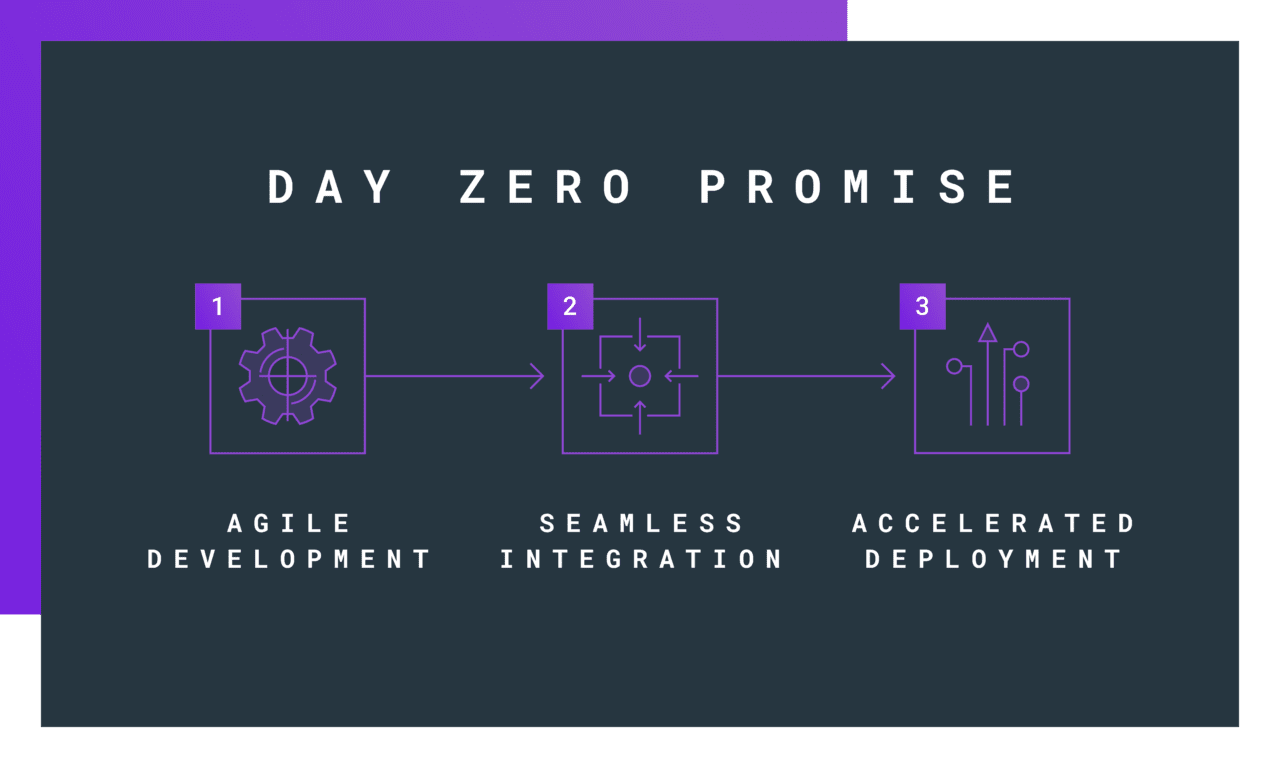
Intelygenz’s “Day Zero Promise” embodies this approach. Our methodology begins with a rigorous scoping session to align AI projects with strategic business outcomes from the very beginning. This is followed by:

  • Agile Development: An iterative approach that allows for continuous refinement and adaptation of AI solutions to evolving business needs.
  • Seamless Integration: Close collaboration with internal IT and business teams ensures that AI solutions integrate smoothly with existing systems and workflows.
  • Accelerated Deployment: Fast-tracking the time to value by deploying AI solutions in a matter of weeks, not months or years.

By maintaining a relentless focus on delivering measurable ROI, Intelygenz helps financial institutions avoid the common pitfalls of AI implementation and ensures that AI initiatives contribute directly to business growth.

4. Focus on flexibility and cost-efficiency

For many financial institutions, one of the barriers to AI adoption is the perceived cost and complexity. However, AI does not have to be prohibitively expensive or rigid. Intelygenz positions itself as a more flexible and cost-efficient alternative to top-tier AI companies. We deliver high-quality AI solutions without the overhead and rigidity often associated with larger providers, making us an ideal partner for organizations looking to innovate while managing costs.

5. A collaborative approach to AI success

AI projects are not just technical endeavors; they are fundamentally business transformations. A collaborative approach between the AI partner and the organization is crucial for success. At Intelygenz, we engage closely with our clients throughout the entire process, ensuring that every AI solution is not only technically robust but also aligned with the organization’s strategic goals. This partnership approach has led to real-world success stories where financial institutions have transformed AI from a buzzword into a business-critical capability.

Learn More at FinovateFall

For financial services leaders looking to leverage AI effectively, the path to success involves a thoughtful strategy that prioritizes business value over technology for technology’s sake. At FinovateFall, Chris Brown, President of Intelygenz USA, will delve deeper into these themes during his keynote session, ‘Beyond the Hype: Delivering Real Business Value with AI in Financial Services’. Attendees will learn how to identify the right business challenges, evaluate strategic options for AI deployment, and implement solutions that drive tangible ROI.

Join us on day two of FinovateFall to gain actionable insights and see how Intelygenz’s expert consultancy and implementation services can help your institution harness the true potential of AI.

Putting the Recipient First: How to Prioritize the Customer Experience in Your Payments Strategy

Putting the Recipient First: How to Prioritize the Customer Experience in Your Payments Strategy

 📅 Wed, August 21, 2024     🕙 10:00 am ET     ⌛ 1 hour

In today’s instant digital economy, providing your customers with a unique experience can translate to a crucial advantage for your firm. Your payments strategy plays a critical role in this.

Join this webinar and discover how to design a customer-centric payments strategy driven by choice, convenience, and speed.

Key takeaways:

  • Understanding Customer Needs: Learn how to identify and analyze the specific needs and preferences of your customers when it comes to payment options.
  • Seamless Payment Processes: Explore strategies for creating smooth and frictionless payment experiences that enhance customer satisfaction.
  • Discover: Find out how to personalize payment experiences to build stronger customer relationships and loyalty.

Hear from:

10 Strategies Fintechs Can Use to Acquire More Customers Right Now

10 Strategies Fintechs Can Use to Acquire More Customers Right Now

This is a sponsored article by Glassbox.

Fintech leaders, C-suite executives, and investors are facing an epic challenge: How do we adapt our customer acquisition strategies as the landscape becomes more competitive? In this article, we’ll highlight the challenges fintech companies face in customer acquisitions and the benefits of digital experience intelligence (DXI) in understanding your customer behaviors and challenges. Armed with those insights, you’ll be better able to navigate the ever-evolving fintech environment to grow your customer base and nurture your existing customers.

Want to know which of your marketing assets was most viewed by new conversions? Done!

Wondering where the common dropoff points are in your mobile app? No sweat.

Here are ten ways DXI can inform and refine customer acquisition strategies for fintech companies to acquire more of their ideal customers.

1. Identifying Acquisition Opportunities

Digital experience intelligence enables your organization to measure and analyze how users interact with your website or mobile app. Analyzing these journeys provides insight into pain points and areas of high engagement for potential customers. This initial informational process can help you tailor your product offerings and marketing outreach to engage your ideal customers.

Note: Be sure you’re targeting your ideal customers – the ones who truly need and will benefit from your products or services. Understanding who they are, and making that extra effort, will pay off with a client base that is bought in and wants your solutions to work for them.

2. Data-Driven Optimization

Leveraging insights from digital experience intelligence can help identify which marketing channels attract your target audience. In addition, user behavior analysis can measure the effectiveness of ad campaigns to optimize them across different channels.

👉🏻 For tips on gaining and retaining digital banking customers, check out this guide: 5 Mobile App Optimization Best Practices for Banks.

3. Personalization at Scale

Personalizing customer experiences is one of the most effective ways to increase engagement and conversion rates, especially during the consideration and decision-making stages. A digital experience intelligence platform like Glassbox is the easiest and most effective way to gain critical insights into how users interact with your platform.

You can then use that data to segment customers by a variety of metrics to provide more relevant, personalized digital experiences. The data gained can also be used to inform product recommendations, web content, and marketing messages, as well as cater to specific preferences, all of which can boost engagement and conversions.

4. Mobile Optimization

Nearly 40% of app uninstallations occur because people are simply not using the app. The best way to understand why customers are abandoning your app is by measuring and monitoring your customer journeys. Armed with that information, you can refine your app to ensure it’s relevant, intuitive, and user-friendly so your users are never tempted to select “Remove app.”

5. A/B Testing for Optimization

Data-driven insights are the holy grail of refining customer acquisition strategies. A/B testing enables companies to understand which versions of websites, apps, and offers perform best in attracting and converting potential customers. The insights you gain can inform continuous improvement of user experience and refine your customer acquisition strategies.

6. Proactively Addressing Customer Pain Points

Technology like Real User Monitoring (RUM) and newer iterations like Real User Experience (RUX) enable fintech companies to quickly detect and resolve technical issues.

The ability to swiftly address user experience pain points and intercept technical snags before they escalate can transform your customer’s journey from one of frustration into a smooth and responsive experience that makes them feel valued. With 80% of consumers reporting that customer experiences need to be improved, proactive engagement is your golden ticket to differentiation.

7. Unlocking More Substantial Customer Feedback with AI

Voice of the Customer (VoC) data captures customer feedback so you can gain a deeper understanding of their digital experiences. However, VoC data only represents the vocal minority—our internal analysis found that only about 4% of users provide feedback.

Fintech companies can now leverage AI to automatically compare these rated interactions to similar interactions across the entire user base. We do this at Glassbox with our Voice of the Silent (VoS) tool, which makes it easier to understand what the majority is experiencing, even when they blow off satisfaction surveys.

8. Building Customer Trust Through Transparency

Building customer trust is the most direct path to loyalty. Digital experience intelligence reveals where users hesitate to provide information or engage, which can reveal areas for improving transparency about data privacy and security measures. Addressing those concerns demonstrates your commitment to user safety, which puts you further along the path to customer trust and loyalty.

9. Clear The Biggest Hurdle: Knowing What Your Customers Want

With fintech products and services flooding the market, customers have an exhausting supply of options if you fall short of their expectations for seamless digital experiences. Understanding how they experience interactions with your website or mobile app is critical to effectively measuring, analyzing, improving, and ultimately ensuring customers feel understood and appreciated.

10. Make Customer Acquisition Everyone’s Business

Customer acquisition should be an all-encompassing, organization-wide effort – not just the job of marketing or product development. Lasting relationships are supported at multiple levels and in diverse ways, and playing that message on repeat is essential to making it stick.

Want to see what DXI actually looks like in action? Click around in Glassbox’s self-guided platform tour.